
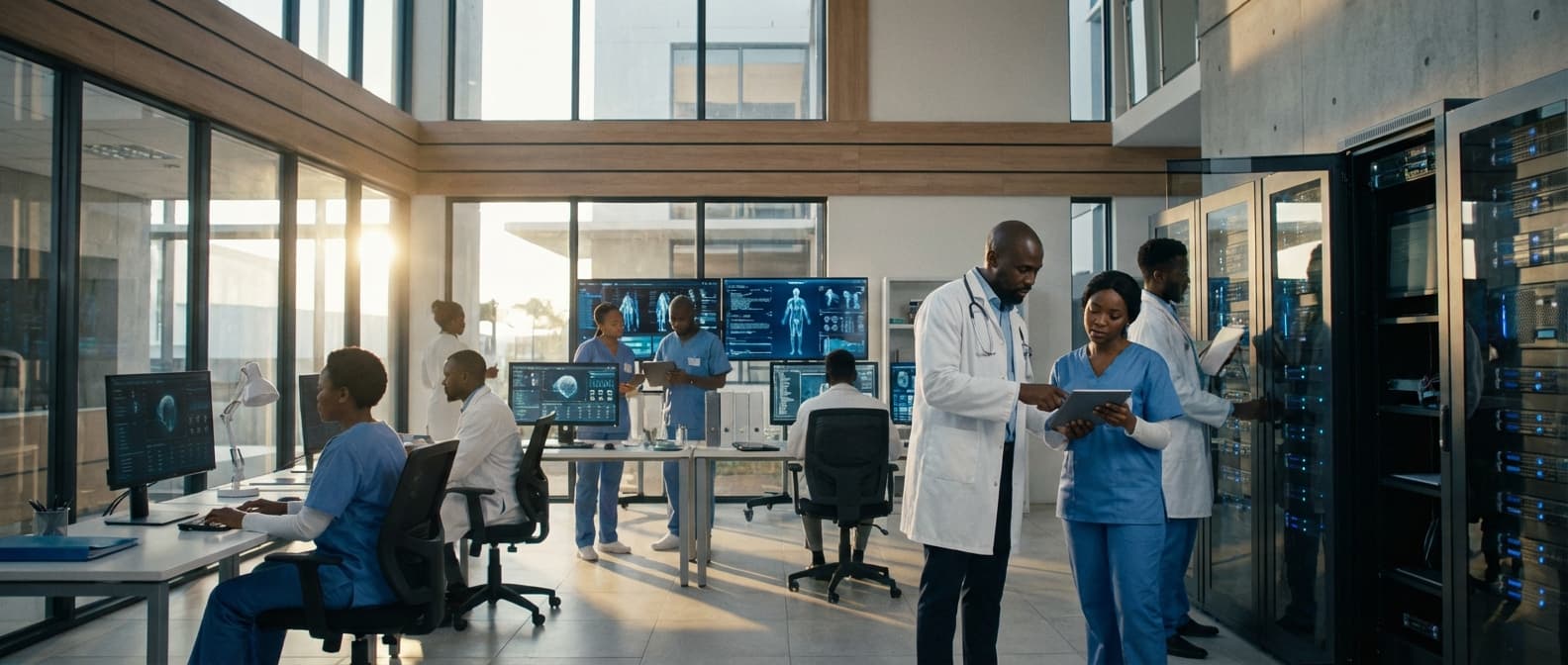
Tele-Radiology in Comoros
Engineering Excellence & Technical Support
24/7 access to certified radiologists providing rapid, accurate remote interpretation of diagnostic imaging studies. High-standard technical execution following OEM protocols and local regulatory frameworks.
Advanced Neurological Imaging Interpretation
Access to subspecialist radiologists provides expert interpretation of complex neurological scans, including MRI and CT, enabling early diagnosis and effective management of stroke, tumors, and other critical conditions.
Prompt Diagnostic Imaging Access
Bridging geographical gaps, tele-radiology delivers rapid diagnostic imaging interpretation for X-rays, ultrasounds, and other modalities, ensuring patients receive timely and accurate diagnoses even in remote areas.
Secure Data Transfer & Collaboration
Utilizing secure, HIPAA-compliant platforms, patient imaging data is transmitted and stored safely, facilitating seamless collaboration between local healthcare providers and remote radiologists for enhanced patient care.
What Is Tele-radiology In Comoros?
Tele-radiology in the Comoros refers to the practice of interpreting medical images (such as X-rays, CT scans, and MRIs) remotely by qualified radiologists. This service addresses the significant challenge of limited access to specialized radiological expertise within the Comorian archipelago, which often faces shortages of trained personnel and advanced imaging equipment in its healthcare facilities. The core of tele-radiology involves the secure transmission of digital medical images from a local healthcare provider in the Comoros to a radiologist situated elsewhere, often in a different country or region, for interpretation and reporting. This process is facilitated by specialized Picture Archiving and Communication Systems (PACS) and teleradiology platforms that enable efficient data transfer and communication between the referring physician and the remote radiologist. The primary objective is to provide timely and accurate diagnostic services to patients who would otherwise experience delays or be unable to access such critical evaluations, thereby improving patient outcomes and healthcare equity.
| Who Needs Tele-Radiology in the Comoros? | Typical Use Cases |
|---|---|
| Patients requiring radiological diagnostics in remote or underserved areas of the Comoros with limited or no on-site radiologists. | Interpretation of routine X-rays for conditions like fractures, pneumonia, or tuberculosis screening. |
| Healthcare facilities lacking specialized radiologists (e.g., neuroradiologists, interventional radiologists, pediatric radiologists). | Advanced imaging studies such as CT scans and MRIs for complex diagnoses, including stroke, trauma, and oncological evaluations. |
| Hospitals and clinics with limited diagnostic imaging equipment or outdated technology. | Emergency department evaluations requiring urgent radiological interpretation to guide immediate patient management, especially outside of standard working hours. |
| Situations requiring second opinions or specialized expertise not locally available. | Follow-up imaging for chronic conditions requiring consistent monitoring and expert interpretation. |
| Public health initiatives and screening programs that necessitate widespread diagnostic capabilities. | Post-operative imaging to assess surgical outcomes and identify complications. |
Key Components and Aspects of Tele-Radiology in the Comoros:
- Secure Digital Image Transmission: Utilizing robust encryption protocols and high-bandwidth internet connections (where available) to transmit DICOM-compliant medical images.
- Remote Diagnostic Interpretation: Radiologists accessing and reviewing images on specialized workstations to provide diagnostic reports.
- Reporting and Feedback Mechanisms: Efficient generation and delivery of diagnostic reports to the referring clinician in the Comoros, often with integrated communication tools for clarification.
- PACS and RIS Integration: Interfacing with existing or newly implemented Picture Archiving and Communication Systems (PACS) and Radiology Information Systems (RIS) for image management and workflow efficiency.
- Quality Assurance and Accreditation: Adherence to international standards for radiology interpretation and reporting to ensure diagnostic accuracy and patient safety.
- Training and Support: Provision of technical and clinical support to local healthcare personnel managing imaging equipment and patient data.
- Cost-Effectiveness Considerations: Balancing the investment in technology and infrastructure against the cost of providing local specialized services and potential improvements in patient management.
Who Needs Tele-radiology In Comoros?
The Comoros, an archipelago nation in East Africa, faces unique challenges in healthcare delivery due to its geographical dispersion and limited access to specialized medical services. Tele-radiology, the practice of interpreting radiological images remotely, presents a compelling solution to bridge these gaps, particularly in ensuring equitable access to diagnostic imaging for its population. This technology can significantly improve diagnostic accuracy and speed, leading to better patient outcomes, especially in remote or underserved areas. It also offers a way to overcome the scarcity of trained radiologists within the country, allowing local healthcare facilities to leverage global expertise.
| Customer/Department | Key Needs Addressed by Tele-Radiology | Specific Services Expected |
|---|---|---|
| Primary Healthcare Centers | Limited access to diagnostic imaging, lack of trained radiologists, remote locations. | Remote interpretation of basic X-rays, ultrasound, and CT scans (if available); initial screening and diagnostic support. |
| District Hospitals | Shortage of radiologists, need for diverse expertise, high patient load. | Second opinions, subspecialty interpretations (e.g., neurology, oncology, orthopedics), quality assurance, teleradiology reporting. |
| Ministry of Health | National healthcare strategy, equitable access, workforce development, public health surveillance. | Centralized oversight, cost-effective solutions, standardized reporting protocols, data analysis for public health trends. |
| Private Clinics & Diagnostic Centers | Enhanced service offerings, competitive advantage, specialized interpretations. | Advanced imaging interpretation, rapid turnaround times, access to subspecialist opinions. |
| Medical Schools & Training Institutions | Limited exposure to diverse cases, remote learning capabilities, practical training. | Case-based learning, remote supervision of trainees, access to a large database of radiological images. |
Target Customers and Departments for Tele-Radiology in Comoros:
- Primary Healthcare Centers (Dispensaries & Health Posts): These facilities often lack even basic X-ray equipment, let alone trained radiologists. Tele-radiology can enable them to send images from portable or basic X-ray units (where available) for interpretation, facilitating early diagnosis and management of conditions like pneumonia, fractures, and tuberculosis.
- District Hospitals (Hospitals de District): These hospitals are the primary referral points for primary healthcare centers and may have some imaging capabilities (e.g., X-ray, possibly ultrasound). Tele-radiology is crucial for providing advanced interpretations, subspecialty opinions, and managing a higher volume of cases.
- Comorian Ministry of Health: As the overarching authority, the Ministry of Health is a key stakeholder. Implementing tele-radiology can be part of a national strategy to modernize healthcare infrastructure, improve public health outcomes, and address healthcare workforce shortages. They can act as a central coordinating body for procurement, training, and regulatory frameworks.
- Private Clinics and Diagnostic Centers: While less common, a growing private sector could also benefit from tele-radiology to enhance their service offerings, provide specialized interpretations for complex cases, and compete with public healthcare facilities.
- Medical Schools and Training Institutions: Tele-radiology platforms can serve as invaluable tools for training aspiring radiologists and technicians, providing exposure to a wider range of cases and remote learning opportunities.
Tele-radiology Process In Comoros
The tele-radiology process in Comoros is a vital service for improving access to diagnostic imaging in a region with limited specialist radiologists. It involves transmitting radiological images remotely for interpretation by off-site radiologists. This workflow aims to bridge geographical barriers and enhance the quality of patient care by leveraging technology.
| Stage | Description | Key Participants | Technology/Tools Used | Outcomes |
|---|---|---|---|---|
| Inquiry and Request Generation | A referring physician at a local clinic or hospital in Comoros identifies the need for a radiological examination (e.g., X-ray, CT scan, MRI). They fill out a request form, providing patient details, clinical history, and the specific examination required. | Referring Physician, Local Healthcare Staff | Paper-based forms, Electronic Health Record (EHR) system (if available) | Clear indication of the diagnostic imaging need, patient information is captured. |
| Image Acquisition and Transmission | The radiological examination is performed using available equipment. The resulting images are then digitized (if not already digital) and securely transmitted to a central tele-radiology hub or directly to the tele-radiology service provider. Data security and patient privacy are paramount during transmission. | Radiographer/Technologist, IT Support (local) | Digital imaging equipment (DR, CR, CT, MRI), DICOM standards, Secure VPN, encrypted data transfer protocols, PACS (Picture Archiving and Communication System) for storage and retrieval. | Digital radiological images are ready for interpretation, data is securely stored. |
| Teleradiologist Assignment and Interpretation | Upon receipt of the images, the tele-radiology platform assigns the case to an available and qualified remote radiologist based on their subspecialty and workload. The radiologist reviews the images, accesses the clinical information, and performs the interpretation. | Teleradiologist (off-site), Tele-radiology Platform Administrator | Tele-radiology platform software, DICOM viewers, secure communication channels (chat, video conferencing). | Diagnostic interpretation of the images, identification of any abnormalities. |
| Report Generation and Communication | The teleradiologist dictates or writes a comprehensive diagnostic report, including findings, impressions, and recommendations. This report is then uploaded back to the tele-radiology platform. The report is made accessible to the referring physician in Comoros. | Teleradiologist, Local Healthcare Staff | Speech recognition software, word processing software, tele-radiology platform, secure email or EHR integration. | Formal diagnostic report is generated and communicated back to the referring physician. |
| Follow-up and Integration | The referring physician receives the report and uses it to guide patient management and treatment. Any necessary follow-up imaging or consultations are arranged. The tele-radiology system may also track outcomes to improve service efficiency and quality. | Referring Physician, Patient, Specialist Physicians (if needed) | EHR system, tele-radiology platform, clinical decision support tools. | Informed patient care, optimized treatment plans, potential for continuous service improvement. |
Tele-Radiology Workflow in Comoros
- Inquiry and Request Generation
- Image Acquisition and Transmission
- Teleradiologist Assignment and Interpretation
- Report Generation and Communication
- Follow-up and Integration
Tele-radiology Cost In Comoros
Tele-radiology services in Comoros, while still an emerging field, offer a potential solution to the scarcity of specialist radiologists on the islands. The cost of these services is influenced by a variety of factors, making it difficult to provide a single, definitive price range. However, by understanding these contributing elements, one can better estimate the potential expenses for patients or healthcare facilities seeking tele-radiology consultations and interpretations.
| Imaging Modality | Estimated Price Range (Comorian Franc - KMF) per study | Notes |
|---|---|---|
| X-ray (Plain Radiography) | 20,000 - 50,000 KMF | Includes interpretation and report generation for standard X-rays (e.g., chest, bone). |
| Ultrasound (Abdominal, Pelvic, etc.) | 30,000 - 70,000 KMF | Covers interpretation of common ultrasound examinations. |
| CT Scan (e.g., Head, Chest, Abdomen) | 60,000 - 150,000 KMF | Cost varies based on the anatomical region and complexity. May be higher for contrast-enhanced scans. |
| MRI Scan (e.g., Brain, Spine, Joints) | 100,000 - 250,000 KMF+ | Generally the most expensive modality due to specialized equipment and interpretation. Prices can escalate significantly for complex cases or specific sequences. |
| Emergency/Rush Interpretation (any modality) |
| Applicable for urgent requests requiring immediate attention. |
Key Pricing Factors for Tele-Radiology in Comoros:
- Type of Imaging Modality: The complexity and equipment required for different imaging types (e.g., X-ray, CT scan, MRI, ultrasound) directly impact costs. CT and MRI scans are generally more expensive to interpret due to their intricate nature and the volume of data generated.
- Urgency of the Report: Expedited or emergency interpretations will typically command a higher fee than routine readings. This reflects the on-call availability and rapid turnaround time expected for critical cases.
- Radiologist's Expertise and Specialization: Highly specialized radiologists (e.g., neuroradiologists, pediatric radiologists) may charge more for their niche expertise, especially if they are scarce in the region.
- Volume of Work/Contractual Agreements: Healthcare facilities or large organizations may negotiate volume-based discounts or fixed-fee contracts for ongoing tele-radiology services, leading to lower per-study costs compared to ad-hoc requests.
- Technology and Platform Costs: The underlying tele-radiology platform, including software, cloud storage, and secure data transmission, contributes to the overall cost. The provider's investment in robust and reliable infrastructure will be factored in.
- Distance and Communication Infrastructure: While tele-radiology aims to overcome geographical barriers, the cost of reliable internet connectivity in remote areas of Comoros could indirectly influence pricing, as providers may factor in potential technical challenges.
- Administrative Overhead and Support: The costs associated with managing the tele-radiology service, including administrative staff, billing, and customer support, are also passed on to the end-user.
- Regulatory and Compliance Costs: Adherence to local healthcare regulations and data privacy laws can add to operational expenses, which may be reflected in the service fees.
Affordable Tele-radiology Options
Tele-radiology offers significant cost savings and improved accessibility to diagnostic imaging services. By leveraging remote specialists, healthcare providers can reduce overhead associated with in-house radiology departments, such as staff salaries, equipment maintenance, and facility costs. Affordable tele-radiology options are becoming increasingly common, driven by technological advancements and a growing demand for flexible and cost-effective healthcare solutions. Value bundles and smart cost-saving strategies are key to maximizing these benefits.
| Strategy | Description | Cost-Saving Benefit |
|---|---|---|
| Value Bundles | Pre-negotiated packages of services, often including a set number of reads per month, specific subspecialties, or tiered pricing based on volume. These bundles simplify budgeting and provide predictable costs. | Predictable expenses, potential for volume discounts, simplified procurement. |
| Tiered Pricing Models | Costs are structured based on the volume of studies interpreted. Higher volumes typically result in lower per-study costs. | Economies of scale, lower cost per image as volume increases. |
| Subspecialty Pooling | Accessing a larger pool of subspecialists remotely means not having to hire and maintain dedicated in-house specialists for rare cases. This reduces the need for expensive niche expertise. | Reduced need for expensive in-house subspecialists, efficient utilization of expert time. |
| Shared Infrastructure and Technology | Tele-radiology providers often leverage shared IT infrastructure, cloud-based solutions, and advanced AI tools, spreading the cost of these expensive technologies across multiple clients. | Lower upfront investment in technology, access to advanced tools without direct purchase. |
| Flexible Staffing Models | Tele-radiology allows for flexible staffing based on peak and off-peak hours or specific departmental needs, avoiding the costs of maintaining a full-time, always-on in-house team. | Reduced labor costs, optimized staffing levels. |
| Focus on Core Competencies | Outsourcing radiology interpretation allows healthcare facilities to focus their resources and personnel on direct patient care and other core operational areas. | Reallocation of internal resources, potential for increased efficiency in other departments. |
Key Components of Affordable Tele-Radiology
- On-demand and subspecialty coverage
- Reduced turnaround times for reports
- Improved access to expert interpretation
- Scalability to meet fluctuating demand
- Integration with existing PACS/RIS systems
Verified Providers In Comoros
In the Comoros, accessing reliable and trustworthy healthcare providers is paramount. Franance Health stands out as a beacon of quality, offering a curated network of verified professionals and facilities. This verification process is not a mere formality; it involves a rigorous assessment of qualifications, experience, regulatory compliance, and adherence to ethical standards. Choosing Franance Health means opting for a healthcare journey characterized by expertise, safety, and patient-centered care. Their commitment to excellence ensures that every provider within their network has met stringent criteria, offering peace of mind to individuals and families seeking medical attention in the Comoros.
| Criteria | Franance Health's Approach | Benefit to Patients in Comoros |
|---|---|---|
| Medical Qualifications & Licensing | Mandatory verification of all degrees, certifications, and valid licenses from recognized bodies. | Ensures providers possess the necessary education and legal authority to practice. |
| Professional Experience | Thorough review of past work history, specializations, and areas of expertise. | Connects patients with experienced professionals best suited for their specific health needs. |
| Regulatory Compliance | Confirmation of adherence to Comorian healthcare regulations and international best practices. | Guarantees that providers operate within legal and ethical frameworks. |
| Patient Feedback & Reputation | Incorporation of patient testimonials and established reputation assessment. | Provides insights into patient satisfaction and the overall quality of care. |
| Ethical Standards | Assessment of commitment to patient confidentiality, informed consent, and professional conduct. | Upholds the highest ethical standards in patient care and interaction. |
Why Franance Health is the Best Choice for Verified Providers in Comoros:
- Rigorous Verification Process: Franance Health employs a multi-faceted approach to verify all healthcare providers, ensuring they meet high standards of medical competence and ethical practice.
- Access to Qualified Professionals: Gain access to a network of doctors, specialists, and medical facilities in the Comoros who have been thoroughly vetted.
- Enhanced Patient Safety: The verification process prioritizes patient safety by confirming that providers adhere to established protocols and regulatory requirements.
- Commitment to Excellence: Franance Health is dedicated to providing a superior healthcare experience through its network of top-tier medical professionals.
- Trust and Reliability: Partnering with Franance Health offers the assurance that you are engaging with credible and dependable healthcare services.
Scope Of Work For Tele-radiology
This Scope of Work (SOW) outlines the technical deliverables and standard specifications required for the implementation and operation of a Tele-Radiology service. It aims to ensure seamless integration, high-quality image interpretation, and robust data security.
| Specification Category | Requirement | Details/Notes |
|---|---|---|
| Image Quality | Display Resolution | Minimum 2048x1536 (3MP) for grayscale, 1024x768 (1MP) for color (depending on modality). Gamma correction and luminance uniformity. |
| Image Quality | DICOM Conformance | Platform must be DICOM 3.0 compliant for image import/export, storage, and query/retrieve. |
| Security | Data Encryption | End-to-end encryption for data in transit (TLS 1.2 or higher) and at rest (AES-256). |
| Security | Access Control | Role-based access control (RBAC) with multi-factor authentication (MFA) for all users. |
| Security | HIPAA/GDPR Compliance | Adherence to relevant data privacy regulations, including anonymization/pseudonymization where required. |
| Performance | Image Load Time | Average load time for a standard CT/MRI series < 5 seconds over the defined network bandwidth. |
| Performance | System Uptime | Minimum 99.9% uptime for the Tele-Radiology platform. |
| Interoperability | HL7 Integration | Support for HL7 messages for order entry (ORM) and results reporting (ORU). |
| Interoperability | VNA Compatibility | Ability to integrate with or act as a Vendor Neutral Archive (VNA). |
| Support & Maintenance | Service Level Agreement (SLA) | Defined response and resolution times for critical incidents. |
Technical Deliverables
- Secure and reliable Tele-Radiology platform (PACS/RIS integration, VNA compatibility, cloud or on-premise deployment options)
- High-resolution diagnostic imaging workstations with dual monitors and calibrated displays
- High-speed, secure internet connectivity (minimum bandwidth requirements specified)
- DICOM-compliant image acquisition and transmission capabilities
- Real-time or near real-time image viewing and manipulation tools
- Secure communication channels for radiologist-clinician interaction (e.g., secure chat, voice/video conferencing)
- Audit trails and logging for all system activities
- Data backup and disaster recovery plan
- Integration with existing hospital IT infrastructure (e.g., EMR/EHR, AD/LDAP)
- Training materials and sessions for IT staff and end-users
Service Level Agreement For Tele-radiology
This Service Level Agreement (SLA) outlines the performance standards and guarantees for the tele-radiology services provided by [Tele-Radiology Provider Name] (hereinafter referred to as 'Provider') to [Client Name] (hereinafter referred to as 'Client'). This SLA aims to ensure timely and reliable diagnostic imaging interpretation, contributing to optimal patient care.
| Service Component | Service Level Target | Measurement Method | Client Responsibility |
|---|---|---|---|
| Urgent Study Report Turnaround Time | 95% of urgent studies reported within 2 hours of receipt. | Time from study upload confirmation to report availability in Client's PACS/platform. | Clear and accurate designation of 'Urgent' status during study transmission. |
| Routine Study Report Turnaround Time | 98% of routine studies reported within 24 hours of receipt. | Time from study upload confirmation to report availability in Client's PACS/platform. | Accurate and complete patient and study information provided. |
| System Uptime Guarantee | 99.9% uptime, excluding Scheduled Downtime. | Monitoring of Provider's platform availability and accessibility. | Proper network connectivity and access to the Provider's platform. |
| Report Availability | Finalized reports accessible via Client's PACS/EHR integration or secure web portal. | Verification of report delivery and accessibility by the Client. | Timely retrieval and integration of reports into the Client's workflow. |
| Communication of Service Interruptions | Notification of Unscheduled Downtime within 30 minutes of identification. | Email and/or phone notification to designated Client contacts. | Maintaining up-to-date contact information with the Provider. |
Key Definitions
- Report Turnaround Time (RTT): The time elapsed from the successful transmission of a diagnostic imaging study by the Client to the Provider, until the finalized radiology report is made available to the Client.
- Urgent Study: A study designated by the Client as requiring immediate interpretation due to critical clinical suspicion or patient condition. Urgent studies will be clearly marked by the Client during transmission.
- Routine Study: Any study not designated as urgent.
- System Uptime: The percentage of time the Provider's tele-radiology platform and associated services are available and accessible to the Client for study transmission and report retrieval.
- Scheduled Downtime: Planned maintenance or upgrades to the Provider's systems, which will be communicated to the Client in advance.
- Unscheduled Downtime: Any interruption to the Provider's services not caused by Scheduled Downtime.
- Business Hours: [Specify Client's Business Hours, e.g., Monday to Friday, 8:00 AM to 6:00 PM Local Time].
Frequently Asked Questions

Ready when you are
Let's scope your Tele-Radiology in Comoros project in Comoros.

Scaling healthcare logistics and technical systems across the entire continent.