
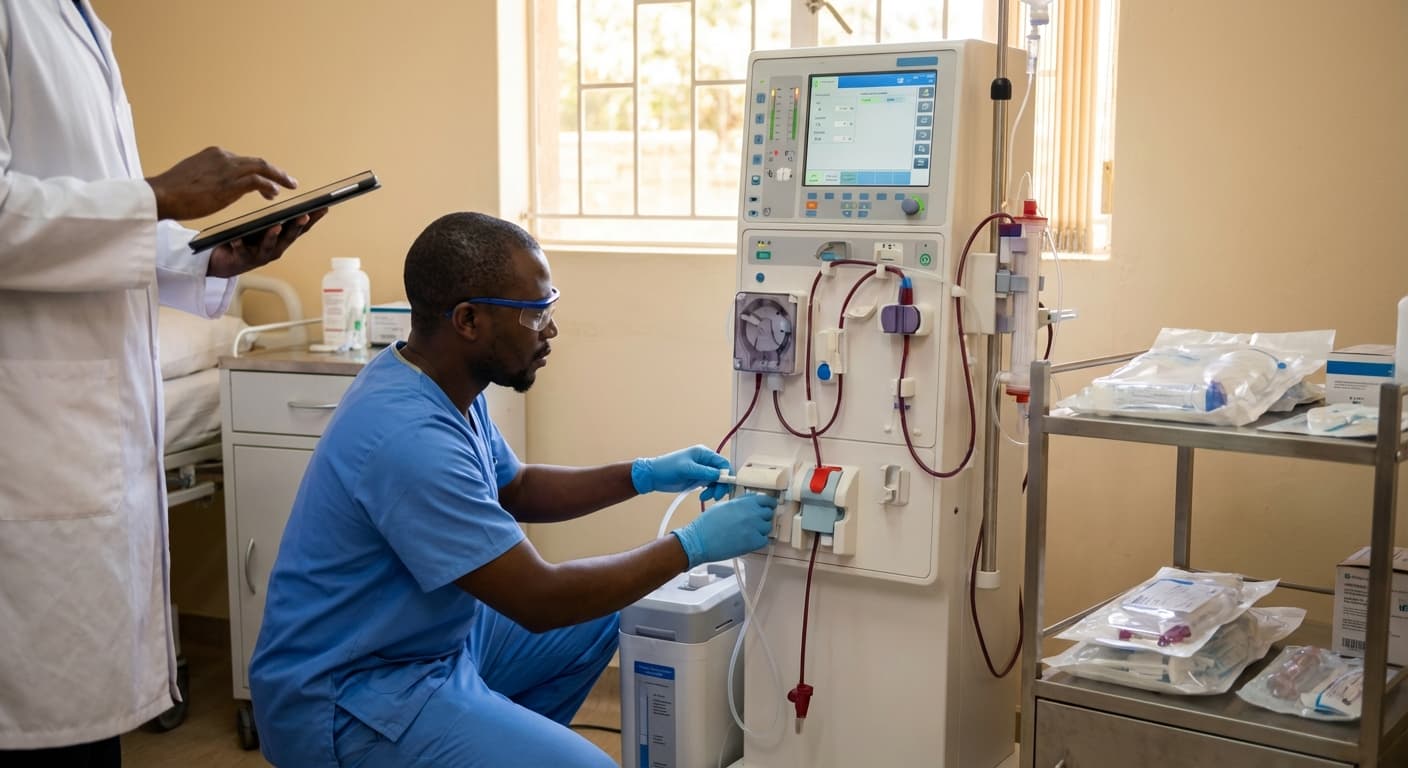
Hemodialysis Machine Installation Service in Comoros
Engineering Excellence & Technical Support
Hemodialysis Machine Installation Service High-standard technical execution following OEM protocols and local regulatory frameworks.
Certified Biomedical Technicians
Our installation team consists of highly trained and certified biomedical technicians with extensive experience in hemodialysis machine setup, calibration, and validation, ensuring optimal performance and patient safety.
Adherence to International Standards
We strictly adhere to international and local regulatory standards for medical equipment installation, guaranteeing compliance and the highest level of quality for your hemodialysis units in Comoros.
Integrated Water Treatment System Setup
Beyond machine installation, we offer comprehensive setup of compliant hemodialysis water treatment systems, crucial for delivering safe and effective dialysis in the Comorian healthcare environment.
What Is Hemodialysis Machine Installation Service In Comoros?
Hemodialysis machine installation service in Comoros refers to the specialized process of setting up, configuring, and testing hemodialysis machines within healthcare facilities located in the Comoros archipelago. This service ensures that the complex medical equipment is operational, safe, and compliant with relevant medical standards and regulatory requirements specific to the region. It encompasses a range of technical and logistical activities.
| Who Needs Hemodialysis Machine Installation Service in Comoros? | Typical Use Cases | ||
|---|---|---|---|
| Renal Dialysis Centers: New or existing centers requiring the setup of new machines or replacement of outdated equipment. | Hospitals with Nephrology Departments: Facilities expanding their dialysis capabilities or establishing new renal care units. | Government Health Initiatives: Public health programs aimed at increasing access to renal replacement therapy in underserved areas. | Private Healthcare Providers: Clinics and hospitals investing in advanced medical technology to offer specialized treatments. |
| Establishing New Dialysis Units: Setting up hemodialysis facilities from scratch in regions with limited or no existing infrastructure. | Capacity Expansion: Increasing the number of dialysis stations within an existing center to accommodate a growing patient population. | Equipment Upgrades and Replacements: Installing newer, more advanced hemodialysis machines with enhanced features and improved patient safety. | Emergency Replenishment: Replacing malfunctioning or damaged equipment to ensure continuity of care for patients undergoing regular dialysis treatments. |
Key Components of Hemodialysis Machine Installation Service:
- Site Assessment and Planning: Evaluating the intended installation location to ensure it meets the technical requirements for power supply (voltage stability, grounding), water quality (filtration, purification systems), waste disposal, and adequate space for the machine and associated equipment.
- Equipment Delivery and Unpacking: Safe transportation and careful unpacking of the hemodialysis machine and its accessories, ensuring no damage occurs during transit or handling.
- Physical Installation and Connection: Mounting the machine, connecting it to the necessary utilities (power, purified water lines, drainage), and integrating it with any pre-existing or newly installed dialysis infrastructure.
- Calibration and Configuration: Adjusting machine parameters according to manufacturer specifications and specific patient needs, including flow rates, dialysate composition, temperature, and pressure settings.
- Water Treatment System Integration: Connecting and configuring the dialysate water purification system (e.g., reverse osmosis, deionization) to ensure the production of medical-grade water essential for dialysis.
- Testing and Validation: Performing comprehensive functional tests, including priming cycles, simulated dialysis treatments, and alarm system verification, to ensure accurate and reliable operation.
- Operator Training: Providing technical training to biomedical engineers, technicians, and nursing staff on the proper operation, maintenance, troubleshooting, and safety protocols of the installed hemodialysis machine.
- Documentation and Handover: Providing all necessary technical manuals, warranty information, installation reports, and a formal handover of the operational equipment to the healthcare facility.
Who Needs Hemodialysis Machine Installation Service In Comoros?
Hemodialysis machine installation services are crucial for healthcare facilities in Comoros looking to establish or expand their renal care capabilities. This service ensures that vital equipment is set up correctly, safely, and efficiently, enabling the provision of life-saving treatments for patients suffering from kidney failure. The demand for such services is driven by the increasing prevalence of chronic kidney disease and the need for advanced medical infrastructure to manage it.
| Customer Type | Primary Need | Relevant Departments |
|---|---|---|
| Public Hospitals and Government Health Centers | Providing essential renal care to a broad population, often serving as the primary healthcare provider for kidney disease management. | Nephrology, Internal Medicine, Dialysis Centers |
| Private Hospitals and Clinics | Expanding service offerings to attract patients requiring specialized treatments, aiming for comprehensive healthcare solutions. | Nephrology, Dialysis Centers |
| Non-Governmental Organizations (NGOs) | Establishing or upgrading medical infrastructure in underserved areas to improve access to critical treatments. | Dialysis Centers, General Wards |
| International Aid Organizations | Supporting the development of healthcare systems by providing and installing advanced medical equipment. | Nephrology, Dialysis Centers |
| New Medical Facility Developers | Ensuring state-of-the-art equipment is operational from the outset to offer comprehensive medical services. | Nephrology, Dialysis Centers, Internal Medicine |
Target Customers and Departments for Hemodialysis Machine Installation Service in Comoros
- {"items":["Public Hospitals and Government Health Centers","Private Hospitals and Clinics","Non-Governmental Organizations (NGOs) focused on healthcare","International Aid Organizations setting up or supporting medical facilities","New medical facility developers"],"title":"Target Customers"}
- {"items":["Nephrology Departments","Internal Medicine Departments","Dialysis Centers","Intensive Care Units (ICUs) for acute kidney injury management"],"title":"Key Departments Requiring Installation"}
Hemodialysis Machine Installation Service Process In Comoros
This document outlines the typical workflow for Hemodialysis Machine Installation Services in Comoros, from initial inquiry to final execution. The process is designed to ensure efficient and compliant setup of vital medical equipment, meeting the specific needs of healthcare facilities in the region.
| Stage | Key Activities | Responsible Party | Outcome |
|---|---|---|---|
| Inquiry & Needs Assessment | Client expresses need, service provider gathers requirements. | Healthcare Facility, Service Provider | Clear understanding of client needs. |
| Site Survey & Technical Evaluation | On-site inspection of infrastructure, assessment of utilities. | Service Provider Technician/Engineer | Identification of site requirements and potential challenges. |
| Proposal & Quotation | Preparation of detailed service proposal and cost estimate. | Service Provider | Client receives comprehensive offer for approval. |
| Contract & Agreement | Formal signing of service contract. | Healthcare Facility, Service Provider | Legally binding agreement. |
| Equipment Delivery & Pre-Installation Checks | Machine arrival and initial inspection. | Logistics Team, Service Provider | Equipment confirmed and undamaged. |
| Installation & Connection | Physical setup and utility hookups. | Service Provider Technicians | Machine physically installed. |
| Testing & Calibration | Verification of machine functionality and accuracy. | Service Provider Technicians | Machine confirmed to be operational and calibrated. |
| Basic Operator Training | Instruction on machine operation and safety. | Service Provider Trainer | Client staff trained on basic use. |
| Handover & Documentation | Formal transfer of responsibility and provision of documents. | Service Provider, Healthcare Facility | Client receives installed machine and all necessary paperwork. |
| Post-Installation Support | Addressing immediate concerns and ensuring satisfaction. | Service Provider | Client satisfaction and smooth transition to operation. |
Hemodialysis Machine Installation Service Workflow in Comoros
- {"title":"1. Initial Inquiry & Needs Assessment","description":"The process begins with a healthcare facility in Comoros contacting the service provider with a requirement for hemodialysis machine installation. This stage involves understanding the client's specific needs, including the type and number of machines, the intended location of installation, existing infrastructure, and any unique site requirements. A preliminary discussion might involve the client providing machine model numbers and technical specifications."}
- {"title":"2. Site Survey & Technical Evaluation","description":"A qualified technician or engineer from the service provider will conduct a thorough site survey at the client's facility. This survey assesses critical aspects such as: electrical power supply (voltage, grounding, surge protection), water supply quality and pressure, drainage systems, ventilation, space availability for the machine and accessories, and accessibility for equipment delivery. Any potential infrastructure deficiencies or modifications needed are identified."}
- {"title":"3. Proposal & Quotation Generation","description":"Based on the needs assessment and site survey, a detailed proposal and quotation are prepared. This document outlines the scope of work, including machine unpacking, assembly, connection to utilities (water, power, drainage), initial testing, calibration, basic operator training, and any necessary ancillary services. It also specifies timelines, costs, and payment terms. This proposal is submitted to the client for review and approval."}
- {"title":"4. Contract & Agreement","description":"Upon acceptance of the proposal, a formal contract or service agreement is signed by both parties. This legally binding document details the responsibilities of the service provider and the client, including warranty information, liabilities, and dispute resolution mechanisms."}
- {"title":"5. Equipment Delivery & Pre-Installation Checks","description":"The hemodialysis machines and any associated accessories are delivered to the client's facility. Before installation commences, a final check of the equipment against the order and an inspection for any transit damage is performed. The installation team ensures all necessary tools and materials are on-site."}
- {"title":"6. Installation & Connection","description":"The certified technicians meticulously install the hemodialysis machines according to manufacturer guidelines and local health and safety regulations. This involves: assembling the machine components, connecting it to the pre-assessed and prepared electrical, water, and drainage systems. All connections are secured and checked for leaks or faults."}
- {"title":"7. Testing & Calibration","description":"Once physically installed, the machines undergo rigorous testing and calibration. This includes: power-on tests, functional checks of all modules (e.g., pumps, sensors, dialysate delivery), pressure testing, and calibration of critical parameters like conductivity and temperature to ensure accurate operation. Performance is verified against manufacturer specifications."}
- {"title":"8. Basic Operator Training","description":"The installation service typically includes basic training for the healthcare facility's designated operators. This covers essential machine operation, safety protocols, basic troubleshooting, and routine cleaning procedures. Training materials and user manuals are provided."}
- {"title":"9. Handover & Documentation","description":"Upon successful installation, testing, calibration, and training, the machine is formally handed over to the client. All relevant documentation, including installation reports, test results, calibration certificates, warranty information, and operator manuals, are provided. A sign-off sheet confirms the completion of the service."}
- {"title":"10. Post-Installation Support & Follow-up","description":"The service provider may offer a period of post-installation support to address any immediate issues or queries. Follow-up calls or visits might be scheduled to ensure the machines are functioning optimally and to gather feedback on the installation process. This stage also sets the groundwork for ongoing maintenance contracts."}
Hemodialysis Machine Installation Service Cost In Comoros
The cost of installing a hemodialysis machine in Comoros can vary significantly based on several factors. These factors influence the final price, making it crucial for healthcare facilities to understand them when budgeting for such essential equipment. The installation process itself involves not just the physical setup of the machine but also the integration with existing infrastructure and necessary support systems.
Key pricing factors include:
- Type and Model of Hemodialysis Machine: Different machines have varying complexities, technological features, and manufacturing costs, directly impacting installation expenses. High-end, feature-rich models will naturally command higher installation fees.
- Site Preparation and Infrastructure: This is a major cost driver. It includes the need for specialized electrical outlets (often with backup power considerations), plumbing for water purification and drainage, appropriate ventilation, and sufficient space. If existing infrastructure is inadequate, significant renovations will be required.
- Water Treatment System Installation: Hemodialysis requires highly purified water. The installation of a robust and compliant water treatment system (reverse osmosis, deionization) is a critical and often expensive component of the overall setup. The complexity and capacity of the system will dictate its cost.
- Ancillary Equipment and Consumables: Beyond the main machine, other essential items like dialysis chairs, trolleys, sharps containers, and initial consumable supplies (dialyzers, tubing, dialysate concentrate) need to be factored in. Their procurement and setup contribute to the overall cost.
- Technician Fees and Labor: The cost of skilled technicians, whether from the manufacturer or a third-party service provider, is a significant portion of the installation budget. Their expertise, travel expenses (especially if international), and duration of work will all influence this cost.
- Training: Proper training for medical staff and technicians on operating and maintaining the hemodialysis machine is vital for patient safety and machine longevity. The scope and duration of training programs will add to the overall expense.
- Warranty and Maintenance Packages: While not strictly installation, upfront negotiations for warranty periods and the cost of initial maintenance contracts often influence the perceived value and total outlay at the time of installation.
- Import Duties and Taxes: As Comoros is an island nation, import duties, taxes, and shipping costs for the machine and associated equipment can add substantially to the final price.
Estimated Cost Ranges in Comorian Franc (KMF):
Given the limited publicly available specific pricing data for Comoros, these ranges are estimates based on common industry pricing structures and the factors mentioned above. Actual quotes will vary significantly.
- Basic Installation (excluding machine cost and major infrastructure): This might cover the physical setup of a machine in a pre-equipped room with basic plumbing and electrical. Estimated range: KMF 500,000 - KMF 1,500,000.
- Standard Installation (including moderate site preparation and basic water treatment setup): This would involve bringing a room up to standard, including essential plumbing, electrical work, and a simpler water purification system. Estimated range: KMF 1,500,000 - KMF 5,000,000.
- Comprehensive Installation (including significant infrastructure upgrades, advanced water treatment, and full setup): This covers extensive renovations, a robust multi-stage water treatment system, and potentially integration with backup power solutions. Estimated range: KMF 5,000,000 - KMF 15,000,000+.
These figures are for the installation service and do not include the cost of the hemodialysis machine itself, which can range from KMF 5,000,000 to over KMF 30,000,000 depending on the model and manufacturer.
| Installation Scope | Estimated Cost Range (KMF) |
|---|---|
| Basic Installation (minimal site prep) | 500,000 - 1,500,000 |
| Standard Installation (moderate site prep, basic water treatment) | 1,500,000 - 5,000,000 |
| Comprehensive Installation (major infrastructure, advanced water treatment) | 5,000,000 - 15,000,000+ |
Factors Influencing Hemodialysis Machine Installation Costs in Comoros
- Type and Model of Hemodialysis Machine
- Site Preparation and Infrastructure Requirements
- Water Treatment System Installation Complexity
- Cost of Ancillary Equipment and Initial Consumables
- Skilled Technician Fees and Labor Expenses
- Training for Medical and Technical Staff
- Warranty and Initial Maintenance Package Costs
- Import Duties, Taxes, and Shipping Costs
Affordable Hemodialysis Machine Installation Service Options
Securing affordable hemodialysis machine installation services is crucial for healthcare facilities to provide essential patient care. This involves understanding various service options, the concept of value bundles, and implementing effective cost-saving strategies. Affordable installation doesn't necessarily mean compromising on quality or compliance, but rather finding the most efficient and economical path to a functional and safe dialysis unit. This guide explores these aspects to empower facilities in making informed decisions.
| Value Bundle Component | Description | Cost-Saving Impact |
|---|---|---|
| Comprehensive Installation Package | Includes site assessment, all necessary plumbing, electrical, and HVAC modifications, machine setup, water system integration, and initial testing and calibration. | Bundling these services can often result in a lower overall price compared to hiring separate contractors. Reduces administrative overhead in managing multiple vendors. |
| Equipment Purchase + Installation Discount | Many manufacturers offer discounted installation services when machines are purchased directly from them. | Significant savings on the installation itself, as it's often subsidized or integrated into the equipment price. |
| Installation + Extended Warranty/Service Plan | Bundling the initial installation with an extended warranty or a preventative maintenance service plan. | Provides peace of mind and predictable maintenance costs. Often offered at a reduced combined rate, preventing unexpected repair bills. |
| Water Treatment System Integration | Installation of the hemodialysis machine integrated with the necessary water purification and treatment systems. | Ensures a seamless and compliant water supply, crucial for patient safety. Bundled integration often means specialized expertise and potentially discounted components. |
| On-site Training Included | Installation services that incorporate comprehensive training for clinical staff on machine operation, troubleshooting, and basic maintenance. | Reduces the need for external training and minimizes operator errors, leading to fewer service calls and downtime. Empowers staff for more efficient daily operations. |
Key Considerations for Affordable Hemodialysis Machine Installation
- Understanding Installation Scope: Clearly defining what the installation entails is the first step. This includes site preparation, plumbing, electrical work, ventilation, water treatment systems, and machine calibration.
- Service Provider Expertise: Opting for providers with proven experience in hemodialysis machine installations ensures adherence to medical device regulations and best practices.
- New vs. Refurbished Equipment: While installation services are often tied to the purchase of new machines, consider the cost-effectiveness of high-quality refurbished machines and their associated installation packages.
- Ongoing Maintenance Agreements: Integrating installation costs with long-term maintenance plans can often lead to bundled discounts and predictable operational expenses.
- Regulatory Compliance: Ensuring all installation work meets local, national, and international healthcare facility standards is paramount, and services that guarantee this are invaluable.
- Phased Installation: For larger facilities or budget constraints, a phased installation approach can spread costs over time.
- Remote vs. On-site Support: Exploring options for remote diagnostics and troubleshooting can reduce the need for frequent on-site technician visits, leading to cost savings.
- Training and Staff Competency: Installation services that include comprehensive staff training on machine operation and basic maintenance contribute to long-term efficiency and reduce reliance on external support.
Verified Providers In Comoros
Finding reliable and credentialed healthcare providers is paramount for individuals and families in Comoros. Franance Health has emerged as a leading force in verifying and promoting healthcare professionals who meet the highest standards of expertise, ethical practice, and patient care. Their rigorous credentialing process ensures that patients can access safe, effective, and trustworthy medical services. Choosing a Franance Health-verified provider offers peace of mind, knowing you are in the hands of qualified professionals dedicated to your well-being.
| Provider Type | Franance Health Verification Benefits | Why This is Crucial for Patients |
|---|---|---|
| General Practitioners | Ensures adherence to standard medical protocols and up-to-date diagnostic techniques. | Patients can trust that their initial health concerns will be accurately assessed and managed. |
| Specialists (e.g., Cardiologists, Pediatricians) | Confirms specialized training, board certifications, and experience in specific medical areas. | Guarantees access to expert care for complex or chronic conditions, leading to better treatment outcomes. |
| Surgeons | Verifies surgical competency, a clean track record, and adherence to sterile procedures. | Provides assurance of a safe and effective surgical experience, minimizing risks and complications. |
| Dentists | Confirms qualifications in dental procedures, hygiene practices, and patient safety protocols. | Ensures quality dental care, from routine check-ups to complex treatments, promoting oral health. |
| Pharmacists | Verifies licensing, knowledge of drug interactions, and dispensing accuracy. | Guarantees the safe and correct distribution of medications, crucial for patient safety and treatment efficacy. |
| Diagnostic Technicians (e.g., Radiologists, Lab Technicians) | Confirms proficiency in operating medical equipment and interpreting diagnostic results. | Ensures accurate and reliable test results, which are vital for correct diagnoses and treatment plans. |
Why Franance Health Credentials Matter:
- Rigorous Verification Process: Franance Health employs a multi-stage vetting process that includes academic qualifications, professional licenses, past performance reviews, and background checks.
- Commitment to Ethical Practice: Verified providers adhere to a strict code of ethics, prioritizing patient confidentiality, informed consent, and non-discrimination.
- Demonstrated Expertise: Credentials confirm a provider's specialized knowledge and skills in their respective fields of medicine.
- Enhanced Patient Safety: The verification process significantly reduces the risk of encountering unqualified or fraudulent practitioners.
- Improved Healthcare Access: By highlighting credible providers, Franance Health facilitates easier access to quality healthcare services for the community.
- Continuous Professional Development: Franance Health often encourages or requires ongoing training and education for its verified professionals, ensuring they stay updated with the latest medical advancements.
Scope Of Work For Hemodialysis Machine Installation Service
This Scope of Work (SOW) outlines the requirements for the installation services of hemodialysis machines. The objective is to ensure that the hemodialysis machines are installed correctly, safely, and in accordance with all relevant manufacturer guidelines, medical device regulations, and facility protocols. This document details the technical deliverables, standard specifications, and responsibilities of the service provider and the client.
| Section | Description | Key Deliverables/Specifications | ||
|---|---|---|---|---|
| Initial evaluation of the installation site to ensure it meets all requirements for machine operation. | Site readiness report, including assessment of power, water, drainage, ventilation, and space. | Recommendations for any necessary site modifications. | |
| Safe transportation of hemodialysis machines from the point of origin to the installation site. | Verification of machine serial numbers against purchase orders. | Careful unpacking and inspection of machines for any visible damage during transit. | |
| Physical mounting and connection of the hemodialysis machine. | Connection to appropriate power outlets, ensuring correct voltage and grounding. | Integration with water treatment systems and drainage infrastructure. | Proper routing and securing of all cables and hoses. |
| Connection of the hemodialysis machine to the facility's validated water treatment system. | Verification of water quality parameters (e.g., conductivity, microbial levels) as per standards. | Ensuring compliance with AAMI standards or equivalent local regulations. | |
| Performing pre-operational checks and system diagnostics. | Calibration of all sensors and parameters according to manufacturer specifications. | Running test cycles to confirm machine functionality and accuracy. | |
| Post-installation inspection to ensure all connections are secure and all components are functioning as intended. | Verification against the manufacturer's installation checklist. | Documentation of all test results and calibration data. | |
| On-site training for clinical staff on the operation, basic troubleshooting, and routine maintenance of the installed hemodialysis machines. | Training session duration and content as per manufacturer guidelines or client agreement. | Provision of user manuals and training materials. | |
| Completion and submission of all relevant installation and testing reports. | Handover of the installed machines, including all documentation, to the client. | Formal sign-off by the client accepting the completed installation. | |
| Adherence to all relevant safety regulations (e.g., OSHA, local health and safety standards). | Compliance with medical device installation regulations and standards (e.g., FDA, CE marking requirements where applicable). | Ensuring proper waste disposal procedures for packaging and any removed components. |
Key Objectives
- Ensure the safe and functional installation of hemodialysis machines.
- Verify that installations meet manufacturer specifications and industry standards.
- Minimize disruption to patient care during the installation process.
- Provide necessary training and documentation for effective machine operation and maintenance.
- Achieve client satisfaction through timely and efficient service delivery.
Service Level Agreement For Hemodialysis Machine Installation Service
This Service Level Agreement (SLA) outlines the agreed-upon service standards for the installation of Hemodialysis Machines. It defines the response times for service requests and the uptime guarantees for the installed machines. This SLA is an integral part of the contract between [Your Company Name] (hereinafter referred to as "Provider") and [Client Company Name] (hereinafter referred to as "Client") for the provision of Hemodialysis Machine Installation Services.
| Service Level | Response Time (Business Hours) | Uptime Guarantee |
|---|---|---|
| Installation & Initial Setup | Within 4 business hours of scheduled installation appointment. | N/A (Focus on successful installation) |
| Standard Technical Support (Non-Emergency) | Within 8 business hours of Service Request acknowledgement. | 98% uptime (excluding scheduled maintenance) |
| Priority Technical Support (Urgent Issue Impacting Patient Care) | Within 4 business hours of Service Request acknowledgement. | 99% uptime (excluding scheduled maintenance) |
Key Definitions
- Installation Service: Refers to the process of delivering, setting up, and configuring Hemodialysis Machines at the Client's designated facility.
- Service Request: Any formal communication from the Client to the Provider requesting technical assistance, support, or reporting an issue related to the installed Hemodialysis Machine.
- Response Time: The maximum allowable time from the acknowledgment of a Service Request to the initiation of troubleshooting or diagnostic work by the Provider's technical team.
- Uptime: The percentage of time that the Hemodialysis Machine is operational and available for use, excluding scheduled maintenance and planned downtime.
- Downtime: The period during which the Hemodialysis Machine is not operational or available for use.
- Scheduled Maintenance: Pre-planned maintenance activities conducted by the Provider to ensure the optimal performance and longevity of the Hemodialysis Machine.
- Emergency Service: A critical Service Request that significantly impacts patient care and requires immediate attention.
Frequently Asked Questions

Ready when you are
Let's scope your Hemodialysis Machine Installation Service in Comoros project in Comoros.

Scaling healthcare logistics and technical systems across the entire continent.