
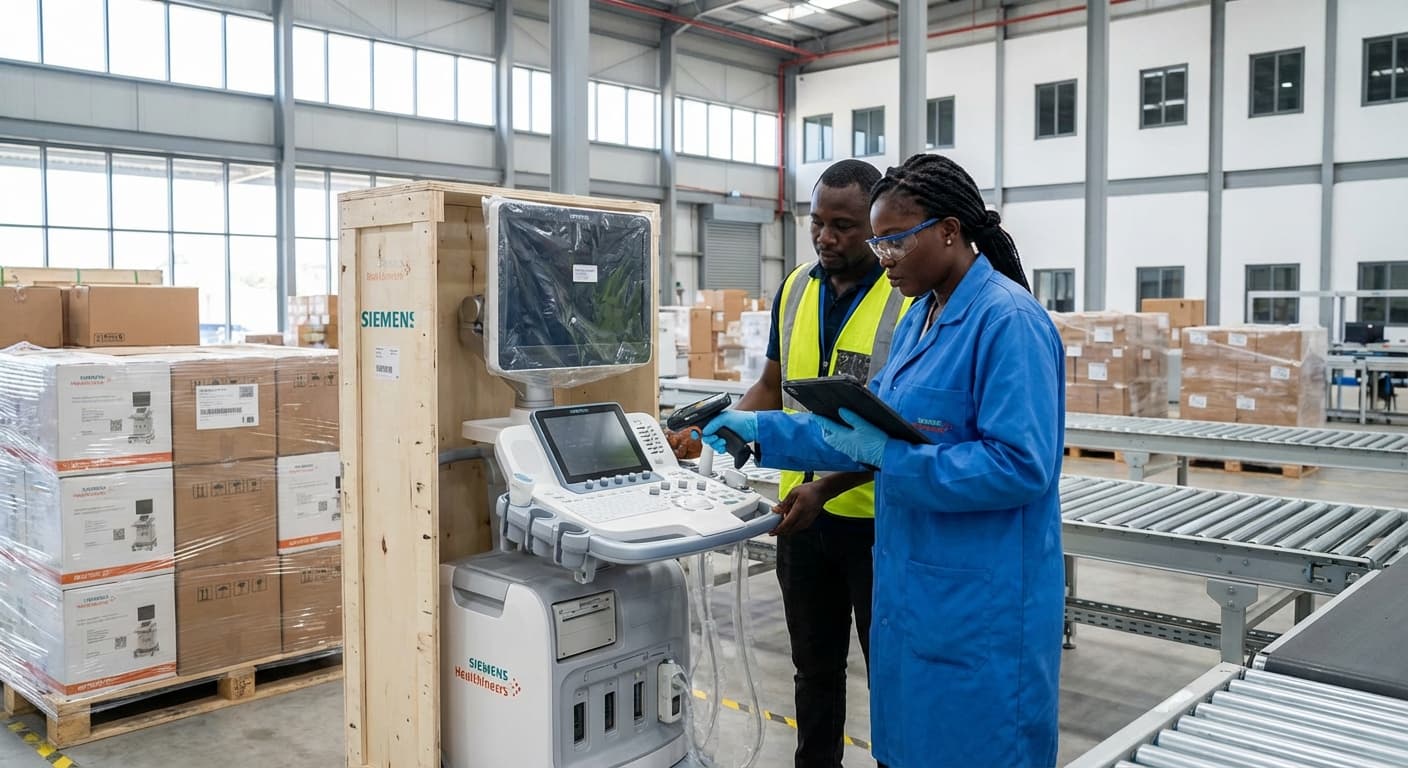
Warehouse Receiving Inspection Service (Medical Equipment) in Comoros
Engineering Excellence & Technical Support
Warehouse Receiving Inspection Service (Medical Equipment) High-standard technical execution following OEM protocols and local regulatory frameworks.
Rigorous Quality Assurance
Our Comorian receiving inspection service employs a multi-point checklist for all incoming medical equipment, ensuring strict adherence to international quality standards and manufacturer specifications. This includes visual examination, functional testing (where applicable), and verification of serial numbers and documentation.
Compliance & Certification Verification
We meticulously verify the authenticity and validity of all certifications and regulatory compliance documents for medical equipment arriving in Comoros. This safeguards against counterfeit or non-compliant products, ensuring patient safety and avoiding costly delays or penalties.
Expedited & Secure Handling
Leveraging local expertise, our team facilitates the swift and secure transfer of medical equipment from port to storage. We prioritize efficient documentation processing and offer secure on-site inspection capabilities to minimize handling risks and expedite the availability of essential medical supplies for Comorian healthcare facilities.
What Is Warehouse Receiving Inspection Service (Medical Equipment) In Comoros?
Warehouse Receiving Inspection Service (Medical Equipment) in Comoros refers to the systematic verification and assessment of medical equipment upon its arrival at a designated warehouse facility within the Comoros. This service ensures that received medical equipment conforms to specified quality standards, contractual agreements, regulatory requirements, and is in a condition suitable for its intended use. It is a critical quality control process within the medical supply chain.
| Who Needs It? | Typical Use Cases |
|---|---|
| Healthcare Facilities (Hospitals, Clinics, Diagnostic Centers) in Comoros: | Receiving newly procured medical devices, consumables, and capital equipment. |
| Medical Equipment Suppliers and Distributors (Operating in Comoros): | Verifying incoming stock from manufacturers or international suppliers before distribution to end-users. |
| Government Health Ministries or Agencies (Comoros): | Inspecting imported medical equipment procured for public health programs or emergency response. |
| Non-Governmental Organizations (NGOs) and Humanitarian Organizations (Operating in Comoros): | Ensuring the quality and suitability of donated or purchased medical supplies for aid projects. |
| Third-Party Logistics (3PL) Providers Managing Medical Equipment Warehousing in Comoros: | Fulfilling contractual obligations for quality assurance during the receiving process on behalf of clients. |
| Manufacturers or their Representatives (Overseeing Comorian Market): | Quality assurance of returned medical equipment or equipment for specific consignment arrangements. |
| International Aid Organizations or Donors: | Ensuring that medical equipment intended for the Comorian population meets stipulated quality and safety standards before deployment. |
Key Aspects of Warehouse Receiving Inspection Service (Medical Equipment) in Comoros:
- Verification of Documentation: Cross-referencing received items against purchase orders, invoices, packing lists, and import permits.
- Physical Inspection: Assessing the integrity of packaging, identifying any signs of damage, tampering, or contamination.
- Product Identification and Verification: Confirming the exact make, model, serial number, and quantity of each item against specifications.
- Condition Assessment: Evaluating the physical condition of the equipment, including checking for defects, wear, or signs of previous use (if applicable).
- Functionality Testing (where feasible): Performing basic operational checks to ensure immediate functionality, as per agreed protocols.
- Compliance Check: Verifying adherence to relevant national (Comorian) and international standards, and any specific client requirements.
- Sampling and Testing (if required): In some cases, samples may be taken for laboratory analysis to confirm material composition or sterility.
- Inventory Management Integration: Recording the receipt and status of inspected items within warehouse management systems (WMS).
- Reporting: Generating detailed inspection reports, including any discrepancies, damages, or non-conformities identified.
Who Needs Warehouse Receiving Inspection Service (Medical Equipment) In Comoros?
Warehouse receiving inspection services for medical equipment are crucial in Comoros for a variety of organizations and departments that handle the procurement, storage, and distribution of vital healthcare supplies. These services ensure that medical equipment is received in optimal condition, compliant with specifications, and ready for use, thereby safeguarding patient safety and operational efficiency.
| Target Customer | Relevant Departments | Key Needs Addressed |
|---|---|---|
| Government Health Ministries and Agencies | Procurement Department, Logistics & Supply Chain Department, Quality Assurance Department | Ensuring compliance with national standards, verifying the integrity of procured equipment, preventing financial loss due to damaged or incorrect deliveries, maintaining public trust in healthcare infrastructure. |
| Hospitals and Clinics (Public and Private) | Procurement/Purchasing Department, Biomedical Engineering Department, Inventory Management, Clinical Department Heads (requiring the equipment) | Verifying that purchased equipment meets clinical specifications, ensuring immediate availability of functional equipment for patient care, reducing downtime, preventing the use of faulty devices that could harm patients, optimizing budget allocation. |
| Non-Governmental Organizations (NGOs) & International Aid Organizations | Logistics Department, Program Management, Procurement Team, Operations Management | Confirming that donated or purchased medical supplies are fit for purpose, ensuring efficient distribution to target populations, maintaining accountability for aid resources, verifying quality of equipment in resource-constrained environments. |
| Medical Equipment Suppliers and Distributors | Warehouse Management, Quality Control Department, Logistics Department, Sales Department | Validating inbound shipments from manufacturers, ensuring stock integrity before onward distribution, meeting contractual obligations with healthcare providers, minimizing returns and warranty claims, maintaining their reputation for quality. |
| Research Institutions and Laboratories | Laboratory Management, Procurement Officer, Scientific Staff | Ensuring specialized equipment is received without damage, verifying that performance specifications are met for accurate research outcomes, safeguarding sensitive experiments from faulty equipment. |
| Disaster Relief and Emergency Response Agencies | Operations and Logistics, Emergency Procurement, Field Operations Management | Rapid verification of critical medical supplies and equipment during emergencies, ensuring immediate deployment of functional tools, minimizing risks to responders and affected populations. |
Who Needs Warehouse Receiving Inspection Service (Medical Equipment) in Comoros?
- Government Health Ministries and Agencies
- Hospitals and Clinics (Public and Private)
- Non-Governmental Organizations (NGOs) involved in healthcare
- International Aid Organizations
- Medical Equipment Suppliers and Distributors
- Research Institutions and Laboratories
- Pharmacies with large medical device inventories
- Disaster Relief and Emergency Response Agencies
Warehouse Receiving Inspection Service (Medical Equipment) Process In Comoros
This document outlines the workflow for the Warehouse Receiving Inspection Service of Medical Equipment in Comoros, detailing the process from initial inquiry to the final execution and reporting. The service ensures that all incoming medical equipment meets predefined quality, safety, and compliance standards before being accepted into the warehouse.
Key Objectives:
- Verify the integrity and functionality of received medical equipment.
- Ensure compliance with Comorian regulations and international standards.
- Prevent the entry of substandard or non-compliant medical devices.
- Maintain accurate records of inspections for traceability and accountability.
Stakeholders Involved:
- Client/Importer: The entity responsible for importing the medical equipment.
- Warehouse Provider: The facility where the equipment will be stored.
- Inspection Service Provider: The entity performing the receiving inspection.
- Regulatory Authorities (e.g., Ministry of Health): Relevant government bodies overseeing medical equipment import and use.
| Step | Description | Responsible Party | Deliverable/Outcome | Key Considerations |
|---|---|---|---|---|
| The Client/Importer contacts the Inspection Service Provider to request warehouse receiving inspection for incoming medical equipment. | Client/Importer, Inspection Service Provider | Service Request Form/Quote Issued | Scope of service, fees, and estimated timelines are discussed and agreed upon. |
| The Inspection Service Provider reviews the import permits, shipping documents, manufacturer's specifications, and any existing certifications provided by the Client. | Inspection Service Provider | Confirmation of document completeness | Ensures all necessary paperwork is in order before physical inspection. |
| The Inspection Service Provider coordinates with the Client and Warehouse Provider to schedule the inspection at the designated warehouse facility. | Inspection Service Provider, Client/Importer, Warehouse Provider | Agreed inspection date and time | Must align with equipment arrival and warehouse operational hours. |
| The imported medical equipment arrives at the designated warehouse facility. | Client/Importer, Warehouse Provider | Equipment physically present at warehouse | Secure unloading and staging of equipment. |
| Inspectors visually examine the equipment for damage, verify the make, model, serial numbers against documentation, and check packaging integrity. | Inspection Service Provider | Inspection Checklist completed | Verification against packing lists, invoices, and purchase orders. |
| For select equipment, basic functional tests are performed to ensure operational readiness. This depends on the type of equipment and the agreed scope. | Inspection Service Provider | Functional Test Report (if applicable) | May involve powering on, checking basic functions, or simulating specific operations. Requires qualified personnel. |
| Inspectors verify the presence and accuracy of user manuals, warranty information, maintenance logs (if applicable), and any required regulatory compliance documents. | Inspection Service Provider | Documentation Verification Record | Ensures all necessary support materials and compliance proofs are present. |
| A comprehensive inspection report is generated, detailing findings, observations, and any discrepancies. If compliant, a Certificate of Receiving Inspection is issued. | Inspection Service Provider | Inspection Report, Certificate of Receiving Inspection (if compliant) | Reports should be clear, objective, and supported by evidence (photos, test results). |
| The Inspection Report and Certificate (or notification of non-compliance) are shared with the Client/Importer. The Client makes decisions regarding acceptance or rejection. | Inspection Service Provider, Client/Importer | Client's decision on equipment acceptance | Timely communication is crucial. |
| If equipment is found to be non-compliant, the Client/Importer, in coordination with the Inspection Service Provider and potentially regulatory authorities, determines the corrective actions (e.g., return, re-inspection, disposal). | Client/Importer, Inspection Service Provider, Regulatory Authorities | Resolution of non-compliance issues | Follows established protocols for handling non-conforming products. |
Warehouse Receiving Inspection Service Workflow (Medical Equipment) in Comoros
- Inquiry & Service Request
- Pre-Inspection Documentation Review
- On-Site Inspection Scheduling
- Arrival of Equipment at Warehouse
- Physical Inspection & Verification
- Functional Testing (where applicable)
- Documentation Verification (Post-Inspection)
- Reporting & Issuance of Certificate
- Client Notification & Decision Making
- Action on Non-Compliant Equipment
Warehouse Receiving Inspection Service (Medical Equipment) Cost In Comoros
The cost of warehouse receiving inspection services for medical equipment in Comoros can vary significantly due to several influencing factors. These services are crucial for ensuring the quality, integrity, and compliance of medical devices upon arrival, protecting both patient safety and the reputation of healthcare providers and suppliers. The local currency in Comoros is the Comorian Franc (KMF).
| Service Scope | Estimated Price Range (KMF) | Notes |
|---|---|---|
| Basic Visual Inspection & Documentation Check (per unit) | 5,000 - 15,000 | Suitable for consumables or simple equipment; verifies outward appearance and presence of essential documents. |
| Standard Inspection (per unit) | 15,000 - 50,000 | Includes visual check, basic functional verification (if applicable), and confirmation of quantity against order. |
| Comprehensive Inspection (per unit) | 50,000 - 200,000+ | For complex or high-value equipment. Involves detailed functional testing, calibration, quality checks, and extensive documentation review. Price highly dependent on equipment type. |
| Expedited Service Surcharge (percentage of base cost) | 25% - 75% | Applied for urgent requests, often requiring off-hours or immediate deployment. |
| Minimum Service Fee (per engagement) | 20,000 - 50,000 | Applies to small or single-item inspections to cover administrative and basic deployment costs. |
Key Pricing Factors for Warehouse Receiving Inspection Services in Comoros:
- Type and Complexity of Medical Equipment: High-value, complex, or specialized medical equipment (e.g., imaging machines, advanced surgical instruments, sterile processing equipment) will naturally incur higher inspection costs due to the expertise and specialized tools required for their assessment. Simple consumables or basic diagnostic tools will be less expensive.
- Volume and Quantity of Equipment: A larger shipment of medical equipment will generally lead to a higher overall inspection cost, though per-unit costs might decrease with bulk. Conversely, a small, single-item inspection might have a higher minimum fee.
- Scope of Inspection: The depth and breadth of the inspection are primary cost drivers. This can range from a basic visual check for damage and documentation verification to a comprehensive functional test, calibration, and validation against manufacturer specifications. More extensive inspections require more time, skilled personnel, and potentially specialized equipment.
- Required Documentation and Reporting: The level of detail and formality required in the inspection report impacts cost. Detailed reports with photographic evidence, compliance checklists, and non-conformance documentation will be more expensive than a simple sign-off.
- Urgency and Turnaround Time: Expedited inspection services, requiring immediate attention and potentially overtime for inspectors, will come with a premium charge.
- Location and Accessibility of Warehouse: If the warehouse is in a remote or difficult-to-access location, travel time and expenses for the inspection team can increase the overall cost.
- Accreditation and Qualification of the Inspection Provider: Reputable inspection agencies with established accreditations and experienced, certified inspectors will typically charge more, reflecting their reliability and expertise. Smaller, less established providers might offer lower rates.
- Regulatory Compliance Requirements: If the inspection needs to verify compliance with specific Comorian or international medical device regulations, this can add complexity and thus cost to the service.
- Customization and Special Requests: Any unique requirements or custom inspection protocols requested by the client will influence the pricing.
- Market Demand and Competition: The number of available inspection service providers in Comoros and the general demand for such services can also play a role in price setting.
Affordable Warehouse Receiving Inspection Service (Medical Equipment) Options
Securing an affordable and reliable warehouse receiving inspection service for medical equipment is crucial for maintaining compliance, ensuring product integrity, and preventing costly returns or recalls. This service verifies that incoming medical equipment matches purchase orders, is free from damage, and meets all specified quality and regulatory standards. Finding the right service involves understanding different pricing models, identifying value-added bundles, and implementing cost-saving strategies.
| Value Bundle Option | Description | Cost-Saving Strategies | Ideal For |
|---|---|---|---|
| Basic Visual & Documentation Check | Verifies incoming items against purchase orders, checks for obvious external damage, and confirms presence of essential documentation (e.g., user manuals, certificates). | Negotiate lower rates for high-volume, consistent shipments. Focus on critical documentation checks only. | Low-risk, high-volume equipment; initial quality control step. |
| Standard Inspection Package | Includes basic checks plus limited functional testing (e.g., powering on, basic operational checks) and serial number verification. | Annual or multi-year contracts with guaranteed volume. Pre-negotiated rates for common equipment types. | Most standard medical devices and equipment requiring moderate assurance of functionality. |
| Comprehensive Quality Assurance Bundle | Encompasses full functional testing, calibration verification (if applicable), detailed damage assessment, and in-depth regulatory compliance checks. | Outsource entire inspection process rather than hiring in-house staff. Leverage bundled services for reduced per-unit cost. Utilize bundled training for your internal teams if partial inspection is done in-house. | High-value, complex, or highly regulated medical equipment where utmost assurance is paramount. |
| On-Demand Inspection Services | Inspections performed on an as-needed basis, often for specific shipments or problematic items. | Clear communication of needs to avoid unnecessary services. Establish pre-approved inspection protocols to expedite requests. | Businesses with unpredictable shipment volumes or occasional critical inspections. |
| Integrated Supply Chain Audit | Extends beyond receiving to include inventory audits, storage condition checks, and pre-shipment inspections for outbound goods. | Partner with a provider offering a full suite of services for consolidated pricing. Long-term partnerships for economies of scale. | Companies seeking end-to-end quality control and supply chain efficiency. |
Key Considerations for Affordable Medical Equipment Receiving Inspection
- Scope of Inspection: Clearly define what needs to be inspected (e.g., visual inspection, functional testing, documentation verification, serial number matching).
- Frequency and Volume: The regularity and quantity of inspections will significantly impact cost.
- Service Provider Expertise: Look for providers with specific experience in medical equipment and relevant regulatory knowledge (e.g., FDA, ISO).
- Reporting Requirements: The level of detail and format of inspection reports needed.
- Turnaround Time: Faster turnaround times may come at a premium.
- Geographic Location: Proximity of the service provider to your warehouse can affect travel costs.
- Technology Integration: Whether the service provider offers digital reporting or integrates with your existing inventory management systems.
Verified Providers In Comoros
In the Comoros, finding reliable healthcare is paramount. Franance Health has emerged as a leading provider, distinguished by its rigorous credentialing process and commitment to exceptional patient care. This stringent verification ensures that all healthcare professionals and facilities associated with Franance Health meet the highest international standards for competence, ethics, and patient safety. Choosing Franance Health means opting for a network of trusted and qualified medical experts, offering peace of mind and access to quality healthcare services in the Comoros.
| Provider Type | Verification Criteria | Franance Health Advantage |
|---|---|---|
| Doctors | Valid Medical License, Degree Accreditation, Board Certification, Clinical Experience, Peer Reviews | Ensures only board-certified and experienced physicians with clean records are part of the network. |
| Hospitals & Clinics | Facility Accreditation (e.g., JCI-equivalent), Compliance with Health Regulations, Quality Improvement Programs, Infection Control Protocols | Guarantees that facilities adhere to international safety and quality standards for patient care. |
| Specialists | Subspecialty Training Verification, Fellowship Credentials, Proven Track Record in Specific Field | Provides access to highly specialized medical expertise with verified qualifications. |
| Nurses & Allied Health Professionals | Nursing/Professional Licenses, Educational Qualifications, Continuing Professional Development | Confirms that all healthcare support staff are qualified and up-to-date with their training. |
Why Franance Health is the Best Choice for Verified Providers in Comoros:
- Rigorous Credentialing: Franance Health employs a multi-stage verification process for all its providers, including verification of medical licenses, educational qualifications, professional experience, and background checks.
- International Standards: Providers are assessed against globally recognized benchmarks for medical excellence, ensuring adherence to best practices in diagnosis, treatment, and patient management.
- Commitment to Ethics: A strong emphasis is placed on the ethical conduct of healthcare professionals, ensuring patient trust and confidentiality.
- Patient Safety Focus: Franance Health prioritizes patient safety through continuous monitoring and evaluation of provider practices.
- Comprehensive Network: Access to a wide range of specialists and healthcare services, all vetted and approved by Franance Health.
- Seamless Experience: Simplified access to quality healthcare, reducing the burden of searching for and verifying providers independently.
Scope Of Work For Warehouse Receiving Inspection Service (Medical Equipment)
This Scope of Work (SOW) outlines the requirements for Warehouse Receiving Inspection Services for medical equipment. The service aims to ensure that all incoming medical equipment meets predefined quality, safety, and functional standards before being accepted into warehouse inventory. This involves a comprehensive inspection process covering physical integrity, documentation verification, and basic functional checks, adhering to established technical deliverables and standard specifications.
| Service Component | Description | Technical Deliverable | Standard Specification |
|---|---|---|---|
| Document Verification | Review of all accompanying documentation (e.g., Certificate of Analysis, User Manuals, Calibration Certificates, FDA 510(k) clearance, packing slips, invoices) for accuracy and completeness. | Verified documentation package; Discrepancy log for missing or inaccurate documents. | As per manufacturer's documentation requirements; Relevant regulatory body standards (e.g., FDA, ISO 13485). |
| Physical Inspection | Visual inspection of equipment for any signs of damage (e.g., dents, scratches, cracks), contamination, or tampering. Verification of proper packaging and labeling. | Pre-shipment damage report; Detailed condition report with photographic evidence for any defects. | No visible damage impacting functionality or safety; Clear and legible labeling matching product specifications. |
| Component Verification | Confirmation that all ordered components, accessories, and spare parts are present and correct as per the purchase order and packing list. | Component checklist reconciliation; List of missing or incorrect components. | All specified components included; Correct part numbers and quantities as per documentation. |
| Basic Functional Check (if applicable and feasible) | For equipment that can be powered on without requiring specialized setup or sterility procedures, perform a basic functional check to ensure it powers on and basic indicators are operational. | Functional check report indicating power-on status and basic operational indicators; List of equipment not passing basic checks. | Equipment powers on successfully; All basic indicators (e.g., power light, screen display) function as expected. |
| Identification and Labeling Check | Verification of serial numbers, model numbers, and any required regulatory markings (e.g., CE, UL) against documentation and product specifications. | Labeling verification checklist; Report of any discrepancies in identification. | Serial numbers, model numbers, and regulatory markings match documentation and product specifications; All markings are clear and legible. |
| Packaging Integrity | Assessment of inbound packaging for damage that may have compromised the equipment during transit. | Packaging damage report (if significant). | Packaging is intact and provides adequate protection for the contained equipment. |
| Non-conformance Reporting | Prompt and detailed reporting of any identified non-conformities, including a description of the issue, relevant documentation, and photographic evidence. | Formal Non-Conformance Report (NCR) for each identified issue. | NCRs include but are not limited to: date of discovery, description of non-conformity, affected item(s), inspector name, photographic evidence, recommended disposition (e.g., quarantine, return to vendor). |
| Inspection Report | Consolidated report detailing the results of all inspection activities, including a summary of accepted and rejected items, and a list of all non-conformities. | Final Inspection Report (daily/weekly as agreed). | Report includes: date of inspection, list of inspected items, quantity accepted, quantity rejected, summary of non-conformities, and overall inspection outcome. |
Key Objectives and Deliverables
- Verification of received medical equipment against purchase orders and packing lists.
- Assessment of physical condition to identify any damage, defects, or discrepancies.
- Confirmation of compliance with manufacturer specifications and regulatory requirements.
- Documentation of inspection findings through detailed reports and photographic evidence.
- Identification and reporting of any non-conformities or deviations from expected standards.
Service Level Agreement For Warehouse Receiving Inspection Service (Medical Equipment)
This Service Level Agreement (SLA) outlines the terms and conditions for the Warehouse Receiving Inspection Service for Medical Equipment. It defines the expected response times and uptime guarantees to ensure efficient and reliable inspection processes for critical medical equipment shipments.
| Metric | Target (Business Hours) | Measurement Method | Consequences of Failure |
|---|---|---|---|
| Inspection Request Acknowledgement | 1 Hour | Timestamp of request submission vs. timestamp of acknowledgement by Service Provider. | Service Credit of 5% of monthly inspection fee for the affected shipment. |
| Inspection Commencement (Standard Equipment) | 4 Business Hours | Timestamp of request submission vs. timestamp of first physical inspection activity by Service Provider. | Service Credit of 10% of monthly inspection fee for the affected shipment. |
| Inspection Commencement (High-Priority/Complex Equipment) | 2 Business Hours | Timestamp of request submission vs. timestamp of first physical inspection activity by Service Provider. (Requires pre-classification of equipment type). | Service Credit of 15% of monthly inspection fee for the affected shipment. |
| Initial Inspection Report Delivery | 8 Business Hours (following commencement) | Timestamp of inspection commencement vs. timestamp of initial report delivery to the client. | Service Credit of 10% of monthly inspection fee for the affected shipment. |
| Service Uptime Guarantee | 99.8% | Monthly calculation: (Total Scheduled Operational Hours - Downtime Hours) / Total Scheduled Operational Hours * 100. Downtime excludes scheduled maintenance with advance notice. | For every 0.5% decrease below 99.8% in a given month, a Service Credit of 5% of the monthly inspection fees will be applied. A cumulative downtime exceeding 2 hours in a single month will result in a 10% Service Credit. |
Key Service Commitments
- Purpose: To ensure timely and accurate inspection of incoming medical equipment, verifying against purchase orders, specifications, and quality standards.
- Scope: This SLA covers the inspection of all incoming medical equipment shipments delivered to the designated warehouse facility.
- Definitions:
- Inspection Request: A formal notification from the shipping party or internal system requesting inspection of a specific shipment.
- Response Time: The maximum elapsed time from the submission of an Inspection Request to the initiation of the inspection process by the Service Provider.
- Uptime Guarantee: The percentage of time the inspection service is available and operational, excluding scheduled maintenance and unforeseen outages.
- Service Provider: The entity responsible for performing the warehouse receiving inspection.
Frequently Asked Questions

Ready when you are
Let's scope your Warehouse Receiving Inspection Service (Medical Equipment) in Comoros project in Comoros.

Scaling healthcare logistics and technical systems across the entire continent.