
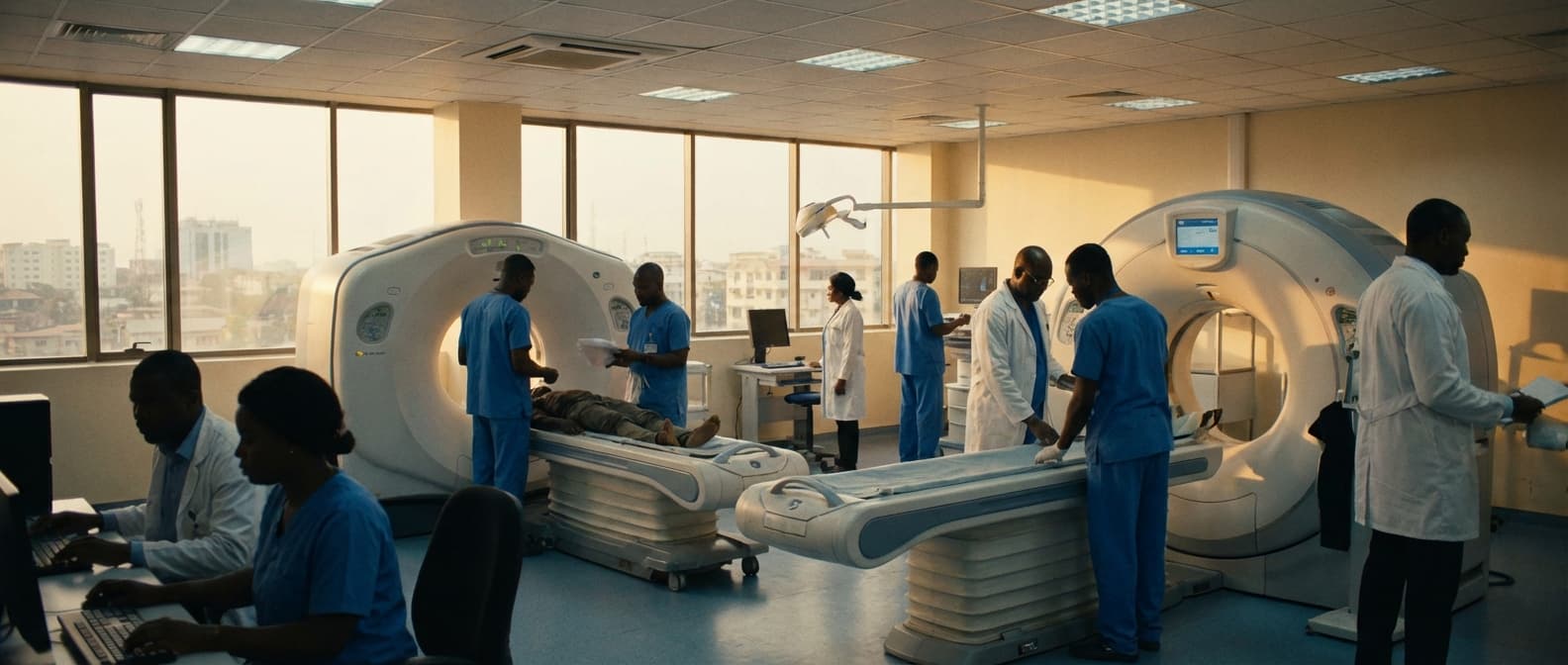
Imaging Acceptance Testing & QA in Comoros
Engineering Excellence & Technical Support
Commissioning and periodic QA for CT/MRI/X‑ray/US/Mammo. High-standard technical execution following OEM protocols and local regulatory frameworks.
Advanced DICOM Conformance Testing
We perform rigorous DICOM conformance testing for all imaging modalities, ensuring seamless integration with existing PACS and RIS systems. Our Comoros-based team leverages specialized tools to validate adherence to DICOM standards, mitigating interoperability issues and guaranteeing accurate data exchange for improved diagnostic workflows.
Image Quality Assurance & Artifact Detection
Our QA protocols include comprehensive image quality assessments and artifact detection for X-ray, CT, and MRI. We utilize quantitative metrics and expert visual inspection to identify and document any anomalies, ensuring diagnostic clarity and patient safety within Comoros' healthcare facilities.
Local Regulatory & Safety Standard Validation
We ensure all imaging equipment meets Comoros' specific national health regulations and safety standards. Our acceptance testing includes verification of radiation dose management, equipment calibration, and essential safety features, providing peace of mind and compliance for local medical providers.
What Is Imaging Acceptance Testing & Qa In Comoros?
Imaging Acceptance Testing & Quality Assurance (QA) in Comoros refers to the systematic verification and validation processes applied to medical imaging systems and their associated workflows. This service ensures that imaging equipment (e.g., X-ray, CT, MRI, Ultrasound) and software function according to predefined specifications, clinical requirements, and regulatory standards within the Comorian healthcare infrastructure. The objective is to guarantee the reliability, accuracy, safety, and efficiency of diagnostic imaging procedures, ultimately impacting patient care outcomes.
| Stakeholder/Entity | Reason for Need | Typical Use Cases |
|---|---|---|
| Hospitals and Clinics (Public & Private) | To ensure the reliability and accuracy of diagnostic imaging for patient diagnosis and treatment planning. Compliance with national health regulations. | Installation of new imaging equipment (e.g., CT scanner), upgrade of PACS/RIS systems, routine QA checks on existing X-ray units, validation of ultrasound probes for diagnostic accuracy. |
| Ministry of Health/Regulatory Bodies | To enforce quality standards, ensure patient safety, and maintain a safe level of radiation exposure. Granting or renewing licenses for imaging facilities. | Auditing of imaging departments to verify compliance with safety protocols, inspection of newly installed mammography units, review of QA reports from healthcare providers. |
| Medical Imaging Equipment Vendors/Manufacturers | To ensure their products meet the required performance specifications and are deployed correctly in the Comorian market. Facilitating product acceptance by clients. | Pre-shipment testing of imaging modalities, on-site installation verification, post-installation performance validation, demonstrating compliance to local health authorities. |
| Third-Party Service Providers (Maintenance & Support) | To confirm that maintenance and repair activities do not compromise image quality or system functionality. Validating the effectiveness of service interventions. | Post-maintenance verification of image quality for MRI machines, acceptance testing after major system upgrades, calibration checks after routine servicing of fluoroscopy systems. |
| Healthcare Insurance Providers | To ensure that diagnostic procedures are conducted using reliable equipment and methodologies, justifying reimbursement for imaging services. | Verification of imaging equipment standards in accredited facilities, assessment of image quality for complex diagnostic cases submitted for review. |
What Imaging Acceptance Testing & QA Involves:
- System Performance Evaluation: Assessing imaging quality, resolution, signal-to-noise ratio (SNR), artifacts, and radiation dose levels against established benchmarks and manufacturer specifications.
- Functionality Testing: Verifying all operational features, including image acquisition, processing, display, storage, archiving (PACS integration), and retrieval.
- Workflow Integration Testing: Evaluating the seamless integration of imaging systems with other hospital information systems (HIS), electronic health records (EHR), and laboratory information systems (LIS).
- User Interface (UI) and User Experience (UX) Testing: Ensuring intuitive operation, ease of use for radiographers and clinicians, and adherence to ergonomic principles.
- Regulatory Compliance Verification: Confirming adherence to relevant national and international standards for medical devices, radiation safety, and data privacy applicable in Comoros.
- Calibration and Configuration Checks: Validating that all system parameters and calibrations are set correctly and maintained throughout the operational life.
- Disaster Recovery and Business Continuity Planning (DR/BCP) Validation: Testing backup and recovery procedures for imaging data and system availability.
- Security Auditing: Assessing the security of imaging data against unauthorized access, breaches, and cyber threats.
- Training and Documentation Review: Ensuring adequate training materials and user documentation are available and accurate for the Comorian healthcare staff.
Who Needs Imaging Acceptance Testing & Qa In Comoros?
In Comoros, imaging acceptance testing and Quality Assurance (QA) are crucial for ensuring the reliability, accuracy, and safety of medical imaging equipment and the resulting diagnostic data. While the adoption of advanced imaging technologies might be nascent or growing, establishing robust QA processes from the outset is vital for patient care, efficient healthcare operations, and preventing costly errors and equipment failures. This is not a luxury but a necessity for any healthcare provider aiming to deliver quality diagnostics.
| Customer Type | Primary Need for Imaging QA | Key Departments Involved |
|---|---|---|
Who Needs Imaging Acceptance Testing & QA in Comoros? Target Customers & Departments
- {"items":["Public Hospitals & Clinics","Private Hospitals & Diagnostic Centers","Specialized Medical Practices (e.g., Cardiology, Neurology)","Government Health Ministries & Regulatory Bodies","Medical Equipment Suppliers & Distributors (offering installation and maintenance services)"],"title":"Target Customers"}
- {"items":["Radiology Departments","Cardiology Departments (for echocardiography, cardiac CT/MRI)","Neurology Departments (for MRI, CT scans, EEG interpretation related to imaging)","Oncology Departments (for diagnostic and treatment planning imaging)","Emergency Departments (for rapid diagnostics)","Surgical Departments (for pre-operative and intra-operative imaging guidance)","Maternity & Obstetrics Departments (for ultrasound)","Pathology Departments (for digital pathology imaging)"],"title":"Target Departments"}
Imaging Acceptance Testing & Qa Process In Comoros
The Imaging Acceptance Testing & QA Process in Comoros, like in many other regions, is a systematic approach designed to ensure that newly procured or implemented imaging equipment (such as MRI, CT scanners, X-ray machines, ultrasound devices, etc.) meets all specified requirements, performs reliably, and is safe for patient use. This process is crucial for healthcare providers to guarantee quality patient care and avoid costly downtime or errors. The workflow typically begins with an inquiry and culminates in the successful execution and sign-off of the testing procedures. This ensures that the imaging technology functions as expected, adheres to regulatory standards (where applicable in Comoros), and integrates seamlessly into the clinical environment.
| Phase | Key Activities | Responsible Parties | Deliverables/Outcomes |
|---|---|---|---|
| Inquiry & Requirements Gathering | Define needs, review specs, identify stakeholders | Healthcare Facility (Clinical Dept., IT, Admin), Potential Vendor | Needs assessment document, preliminary requirements list |
| Vendor Selection & Procurement | Issue RFP, evaluate bids, negotiate contract | Healthcare Facility (Procurement, Technical Committee), Vendors | Signed contract, purchase order |
| Pre-Installation & Site Preparation | Site survey, infrastructure readiness check, logistics planning | Vendor, Healthcare Facility (Biomedical Eng., IT, Facilities) | Site readiness report, confirmed delivery schedule |
| Installation & Initial Setup | Hardware installation, software configuration, basic checks | Vendor (Certified Technicians) | Installed and powered-on equipment, initial configuration complete |
| Acceptance Testing & QA | Execute test plan (functional, performance, safety, integration, UAT) | Healthcare Facility (Biomedical Eng., IT, Clinical Users, QA Team), Vendor | Test reports, documented test results, identified issues |
| Issue Resolution & Re-testing | Troubleshoot, fix defects, re-execute relevant tests | Vendor, Healthcare Facility (Technical Support) | Resolved issues, re-test reports |
| Final Acceptance & Sign-off | Review results, confirm acceptance, sign certificate | Healthcare Facility (Authorized Representatives), Vendor | Signed Acceptance Certificate, official handover |
| Post-Acceptance & Ongoing QA | Routine maintenance, performance monitoring, ongoing support | Healthcare Facility (Biomedical Eng., Clinical Staff), Vendor (Service) | Operational equipment, maintenance logs, ongoing service |
Imaging Acceptance Testing & QA Process Workflow in Comoros
- 1. Inquiry & Requirements Gathering:
- Initial Interest: A healthcare facility (hospital, clinic, diagnostic center) expresses interest in acquiring new imaging equipment or has already procured it.
- Needs Assessment: Defining the specific imaging modalities required, their intended clinical applications, and expected performance benchmarks.
- Specification Review: Thoroughly reviewing the manufacturer's technical specifications, user manuals, and any contractual agreements.
- Stakeholder Identification: Identifying key personnel involved, including clinical users (radiologists, technicians), IT support, biomedical engineering, procurement officers, and vendor representatives.
- Budget and Timeline Definition: Establishing realistic budget constraints and project timelines for procurement, installation, and testing.
- 2. Vendor Selection & Procurement (if applicable):
- Tender/RFP Process: Issuing Requests for Proposals (RFPs) or tenders to potential vendors, outlining detailed technical and service requirements.
- Bid Evaluation: Assessing vendor proposals based on technical capabilities, pricing, warranty, service agreements, and past performance.
- Contract Negotiation: Finalizing contracts with the selected vendor, ensuring all agreed-upon specifications and acceptance criteria are documented.
- 3. Pre-Installation & Site Preparation:
- Site Survey: The vendor or a designated third party conducts a site survey to assess the physical space, power requirements, environmental conditions (temperature, humidity), and network connectivity.
- Infrastructure Readiness: Ensuring the facility has the necessary infrastructure (e.g., shielded rooms for MRI, adequate power supply, cooling systems, network ports) in place before equipment delivery.
- Logistics Planning: Coordinating delivery schedules and ensuring safe transport of the equipment.
- 4. Installation & Initial Setup:
- Equipment Delivery & Unpacking: The imaging equipment is delivered and carefully unpacked.
- Physical Installation: The vendor's certified technicians install the hardware according to manufacturer guidelines and safety standards.
- Software Installation & Configuration: Installing and configuring the operating system, imaging software, PACS (Picture Archiving and Communication System) integration, and any necessary peripherals.
- Basic Functionality Check: A preliminary check to ensure the equipment powers on and basic components are recognized.
- 5. Acceptance Testing & Quality Assurance (QA):
- Test Plan Development: Creating a comprehensive test plan that outlines specific test cases, procedures, and expected outcomes based on the initial requirements and manufacturer specifications. This plan should cover functional, performance, safety, and integration aspects.
- Functional Testing: Verifying that all features and functionalities of the imaging equipment operate as intended. This includes image acquisition parameters, reconstruction algorithms, user interface responsiveness, and safety features.
- Performance Testing: Evaluating the equipment's speed, image quality (resolution, contrast, noise levels), and throughput against predefined benchmarks.
- Image Quality Assessment: Using phantoms (test objects with known properties) and actual patient images (anonymized if necessary) to assess image quality. Radiologists play a key role in this evaluation.
- Safety Testing: Ensuring all safety mechanisms are operational and the equipment complies with relevant safety standards. This might include radiation safety checks for X-ray, CT, and fluoroscopy, and electromagnetic compatibility (EMC) tests.
- Integration Testing: Verifying the seamless integration of the imaging equipment with existing hospital systems, such as PACS, HIS (Hospital Information System), and RIS (Radiology Information System).
- User Acceptance Testing (UAT): Clinical end-users (radiologists, technologists) perform tests using the equipment in a simulated clinical environment to ensure it meets their workflow needs and is user-friendly.
- Documentation Review: Checking that all provided documentation (user manuals, service manuals, warranty information) is accurate and complete.
- 6. Issue Resolution & Re-testing:
- Defect Reporting: Any discrepancies or issues identified during testing are formally reported to the vendor.
- Troubleshooting & Rectification: The vendor is responsible for diagnosing and rectifying the reported issues.
- Re-testing: Once fixes are implemented, the affected tests are re-executed to confirm resolution and ensure no new issues have been introduced.
- 7. Final Acceptance & Sign-off:
- Formal Acceptance Meeting: A meeting is held with all stakeholders to review the test results and confirm that all acceptance criteria have been met.
- Acceptance Certificate: Upon successful completion of testing and resolution of all issues, a formal acceptance certificate is signed by the authorized representatives of the healthcare facility and the vendor.
- Handover & Training: The equipment is officially handed over, and comprehensive training is provided to the clinical and technical staff.
- 8. Post-Acceptance & Ongoing QA:
- Routine Maintenance: Establishing a schedule for preventive maintenance as per manufacturer recommendations.
- Performance Monitoring: Continuously monitoring the equipment's performance and image quality.
- Troubleshooting & Support: Utilizing the vendor's service contract for ongoing technical support and issue resolution.
- Periodic Audits: Conducting periodic audits to ensure continued compliance with quality standards and patient safety.
Imaging Acceptance Testing & Qa Cost In Comoros
Imaging Acceptance Testing (IAT) and Quality Assurance (QA) costs in Comoros are influenced by a combination of local market dynamics, the complexity of the imaging system, and the vendor's operational overhead. The pricing is typically project-based, and a detailed understanding of the scope of work is crucial for accurate estimations. Factors such as the number of imaging devices, the types of imaging modalities (e.g., X-ray, CT, MRI, ultrasound), the required testing protocols, the duration of the testing period, and the level of expertise needed from QA engineers all play a significant role in the final cost. Additionally, vendor reputation, their presence and established infrastructure in Comoros, and the associated travel and accommodation expenses for remote teams can impact pricing. Standard acceptance testing might cover basic functionality and calibration, while comprehensive QA could involve extensive performance validation, integration testing with existing hospital information systems (HIS) or Picture Archiving and Communication Systems (PACS), and user training validation. The local currency, the Comorian Franc (KMF), is used for all transactions, and pricing will be presented within this context.
| Service Type | Estimated Cost Range (KMF) | Description of Services Included |
|---|---|---|
| Basic Imaging Acceptance Testing | 200,000 - 500,000 KMF | Verification of core functionalities, basic calibration, and initial performance checks for standard imaging equipment. |
| Comprehensive Imaging Acceptance Testing | 500,000 - 1,500,000 KMF | Includes basic testing plus in-depth performance validation, image quality assessment, integration checks, and initial user familiarization. |
| Specialized Imaging QA (e.g., advanced CT/MRI) | 800,000 - 2,500,000+ KMF | Focuses on high-precision modalities, advanced protocol testing, complex image reconstruction validation, and specialized software QA. Costs can escalate significantly with complexity. |
| Full-Service QA & Acceptance Testing (including site integration) | 1,500,000 - 5,000,000+ KMF | Encompasses end-to-end testing from hardware to software, integration with hospital systems (HIS/PACS), workflow validation, user training verification, and detailed reporting. |
| Per-Device Testing (as an add-on or small project) | 50,000 - 200,000 KMF | Cost for testing individual imaging devices, often when part of a larger rollout or as a supplementary service. |
Key Pricing Factors for Imaging Acceptance Testing & QA in Comoros
- Complexity of Imaging Modalities (e.g., basic X-ray vs. advanced MRI)
- Number of Imaging Devices to be Tested
- Scope and Depth of Testing Protocols (e.g., basic functional vs. comprehensive performance)
- Duration of Acceptance Testing and QA Period
- Vendor Expertise and Experience in Comoros
- Travel and Accommodation Costs (for external QA teams)
- Integration Requirements (with HIS/PACS)
- Reporting and Documentation Standards
- User Training and Validation Components
- Regulatory Compliance Requirements (if applicable)
- Urgency of the Testing Project
Affordable Imaging Acceptance Testing & Qa Options
Ensuring the accuracy, consistency, and reliability of medical imaging systems is paramount for patient care and regulatory compliance. However, the cost of comprehensive imaging acceptance testing (AT) and quality assurance (QA) can be a significant barrier for many healthcare providers, especially smaller clinics or those with limited budgets. This document outlines affordable options, focusing on value bundles and cost-saving strategies to make robust imaging AT and QA accessible.
| Value Bundle Options | Description | Cost-Saving Strategy |
|---|---|---|
| Basic Modality QA Package | Includes essential daily, weekly, and monthly QA tests for a specific imaging modality (e.g., X-ray, Ultrasound). Performed by trained in-house staff with vendor-provided tools or checklists. | Reduces reliance on external service contracts for routine checks. Empowers in-house team for immediate issue identification. |
| Comprehensive Acceptance Testing (Tiered) | Offers tiered packages for new equipment acceptance. Tier 1: Critical function and safety checks. Tier 2: Adds image quality and performance benchmarks. Tier 3: Includes advanced protocol validation and vendor-specific features. | Allows institutions to select the level of testing that fits their budget and risk tolerance. Avoids overspending on unnecessary comprehensive testing for less critical systems. |
| Cross-Modality QA Program | Bundles QA testing for multiple imaging modalities within a department (e.g., CT, MRI, Mammography). Can be managed by a dedicated in-house QA specialist or a streamlined external service. | Economies of scale when contracting for multiple modalities. Centralized management simplifies scheduling and reporting. |
| Remote Monitoring & QA Support | Leverages vendor-provided remote access to imaging systems for performance monitoring, basic QA checks, and troubleshooting. Supplemented by periodic on-site visits. | Reduces travel costs for external service providers. Enables proactive identification of issues before they impact patient care. Shorter, more targeted on-site visits. |
| Training & Certification Programs | Offers training for biomedical engineers or technologists to perform specific AT/QA tasks, including the use of specialized phantom kits and software tools. | Builds internal capacity, reducing the need to pay external personnel for tasks that can be managed in-house. Increases staff skill set and job satisfaction. |
| Phantom & Test Tool Leasing/Sharing | Instead of outright purchase, explore leasing options for advanced phantom kits or test equipment. Consider shared resources between different facilities or departments. | Lower upfront investment for specialized equipment. Spreads the cost of expensive tools over their usage. |
Key Considerations for Affordable Imaging AT & QA
- Defining Essential Testing Parameters: Not all tests are equally critical for every imaging modality or clinical application. Prioritize based on regulatory requirements, clinical impact, and risk.
- Leveraging In-House Expertise: Training existing staff (e.g., technologists, biomedical engineers) to perform certain QA tasks can significantly reduce external service costs.
- Strategic Outsourcing: Identify which tests or modalities are best suited for external vendors and which can be managed internally.
- Utilizing Standardized Protocols: Adopting industry-standard QA protocols can streamline testing, reduce the need for custom procedures, and facilitate easier comparison and benchmarking.
- Phased Implementation: Instead of a one-time, all-encompassing AT, consider a phased approach, focusing on critical systems first and expanding over time as budget allows.
- Preventative Maintenance Integration: Combine AT/QA with routine preventative maintenance to maximize technician time and minimize disruptions.
Verified Providers In Comoros
Finding reliable and credentialed healthcare providers is paramount for ensuring quality care, especially in a region like Comoros. Franance Health stands out as a premier organization that rigorously vets and verifies its network of medical professionals. Their commitment to credentialing signifies a dedication to patient safety, ethical practice, and clinical excellence. By choosing providers associated with Franance Health, patients can be assured of receiving care from individuals who have met stringent standards, possess recognized qualifications, and maintain a commitment to ongoing professional development. This focus on verified expertise translates directly into a higher level of trust and confidence for individuals seeking medical services in Comoros.
| Credentialing Aspect | Franance Health's Approach | Benefit to Patients in Comoros |
|---|---|---|
| Medical Education & Training | Verification of degrees, diplomas, and residency completion from accredited institutions. | Confirmation that providers have received formal and recognized medical education. |
| Licensure & Registration | Thorough checks to ensure all practitioners hold valid and current licenses to practice in their respective specialties. | Guarantees legal and authorized practice, preventing unqualified individuals from offering services. |
| Professional Experience | Review of work history, including previous roles, responsibilities, and duration of practice. | Ensures providers have practical experience relevant to their specialization. |
| Competency & Skills Assessment | While not always formal, their network selection implies assessment of clinical judgment and patient management skills. | Access to providers who are likely to demonstrate a high level of medical competence. |
| Ethical Standards | Adherence to a code of conduct and a commitment to patient welfare. | Patients can expect respectful, honest, and professional interactions. |
| Continuing Professional Development (CPD) | Encouragement or requirement for providers to stay updated with the latest medical advancements. | Ensures patients receive care informed by current best practices and research. |
Why Franance Health Credentials Matter for Comoros Patients
- Ensures adherence to internationally recognized medical standards.
- Promotes patient safety through rigorous background checks and qualification verification.
- Guarantees that practitioners have legitimate and current licenses to practice.
- Indicates a commitment to ethical medical practices and patient-centered care.
- Provides a layer of assurance regarding the competency and experience of healthcare professionals.
- Facilitates access to specialists with verified expertise in various medical fields.
Scope Of Work For Imaging Acceptance Testing & Qa
This document outlines the Scope of Work (SOW) for Imaging Acceptance Testing & Quality Assurance (QA), detailing the technical deliverables and standard specifications required to ensure the successful implementation and ongoing performance of imaging systems. The objective is to verify that the imaging solution meets all defined functional, performance, and usability requirements before final acceptance and during ongoing operations.
| Deliverable | Description | Standard Specifications / Acceptance Criteria | Format | Owner |
|---|---|---|---|---|
| Test Plan | Comprehensive document outlining the strategy, scope, resources, schedule, and methodology for acceptance testing and QA. | Includes defined entry and exit criteria for each testing phase, risk assessment, and contingency plans. Aligns with project management methodologies. | PDF, DOCX | QA Lead / Project Manager |
| Test Cases | Detailed step-by-step instructions for executing tests, including expected results and pass/fail criteria. | Covers all functional requirements, performance benchmarks, and user workflows. Traceable to requirements. | Spreadsheet (Excel, Google Sheets), Test Management Tool | QA Team |
| Test Environment Configuration Report | Documentation detailing the setup and configuration of the testing environment, including hardware, software, network, and data. | Environment mirrors production as closely as possible. All configurations documented for reproducibility. | PDF, DOCX | System Administrator / QA Team |
| Functional Test Results | Records of the execution of functional test cases, indicating passed, failed, or blocked status for each. | All critical and major functionalities must pass. Deviations documented and justified. | Test Management Tool, Spreadsheet | QA Team |
| Performance Test Results | Data and analysis of system performance under various load conditions, including response times, throughput, and resource utilization. | Meets or exceeds pre-defined performance benchmarks (e.g., <X seconds response time for Y concurrent users). | PDF, CSV, Test Management Tool | Performance Test Engineer |
| Usability and UAT Feedback Report | Summary of feedback from end-users regarding the system's ease of use, intuitiveness, and overall satisfaction. | Key usability issues identified and addressed. User acceptance confirmed. | PDF, DOCX | UAT Lead / Business Analyst |
| Security Test Report | Results of security vulnerability scans, penetration testing, and compliance checks. | Identified vulnerabilities are addressed and remediated according to severity. Compliant with security policies. | PDF, DOCX | Security Analyst |
| Integration Test Report | Documentation of successful integration with other systems, including data flow and interface functionality. | All interfaces function as expected, with accurate data exchange. | PDF, DOCX | QA Team / Integration Specialist |
| Defect Log / Bug Report | A centralized repository of all identified defects, including severity, status, and resolution. | All critical and major defects resolved and verified. Defined SLAs for defect resolution. | Defect Tracking System (e.g., JIRA, Bugzilla), Spreadsheet | QA Team / Development Team |
| Regression Test Report | Results of re-testing previously passed functionalities after code changes or defect fixes to ensure no new issues were introduced. | No new critical or major defects introduced as a result of changes. | Test Management Tool, Spreadsheet | QA Team |
| Test Summary Report | A comprehensive overview of all testing activities, including scope, objectives, methodology, findings, and final recommendation for acceptance. | Clear recommendation on system readiness for deployment based on test results. | PDF, DOCX | QA Lead |
| Imaging Standard Compliance Document | Verification that the imaging system adheres to relevant industry standards (e.g., DICOM, HL7, HIPAA, GDPR). | All relevant standards are met and documented with evidence. | PDF, DOCX | Compliance Officer / QA Team |
Key Stages of Imaging Acceptance Testing & QA
- Planning and Test Case Development
- Environment Setup and Configuration
- Functional Testing
- Performance Testing
- Usability and User Acceptance Testing (UAT)
- Security Testing
- Integration Testing
- Regression Testing
- Reporting and Defect Management
Service Level Agreement For Imaging Acceptance Testing & Qa
This Service Level Agreement (SLA) outlines the performance expectations and commitments for Imaging Acceptance Testing & Quality Assurance (QA) services. It defines response times for issues and defines uptime guarantees for the testing environment.
| Service Metric | Severity Level | Response Time Target | Resolution Time Target | Uptime Guarantee |
|---|---|---|---|---|
| Imaging Acceptance Testing & QA Environment Availability | Critical (System Down, no testing possible) | 15 minutes | 4 hours | 99.9% (Monthly) |
| Imaging Acceptance Testing & QA Environment Availability | High (Significant functionality impaired, testing severely impacted) | 30 minutes | 8 business hours | 99.9% (Monthly) |
| Imaging Acceptance Testing & QA Environment Availability | Medium (Minor functionality impaired, testing possible with workarounds) | 2 business hours | 2 business days | 99.9% (Monthly) |
| Imaging Acceptance Testing & QA Environment Availability | Low (Cosmetic issues, minimal impact on testing) | 4 business hours | 5 business days | 99.9% (Monthly) |
| Test Case Execution & Reporting | All | N/A (Context-dependent, typically addressed within project timelines) | N/A (Context-dependent, typically addressed within project timelines) | N/A |
Key Service Metrics
- Response Times: Time taken to acknowledge and begin addressing reported issues.
- Uptime Guarantees: Percentage of time the Imaging Acceptance Testing & QA environment is operational and accessible.
Frequently Asked Questions

Ready when you are
Let's scope your Imaging Acceptance Testing & QA in Comoros project in Comoros.

Scaling healthcare logistics and technical systems across the entire continent.