
Total Cost of Ownership (TCO) & Lifecycle Budgeting Service in Comoros
Engineering Excellence & Technical Support
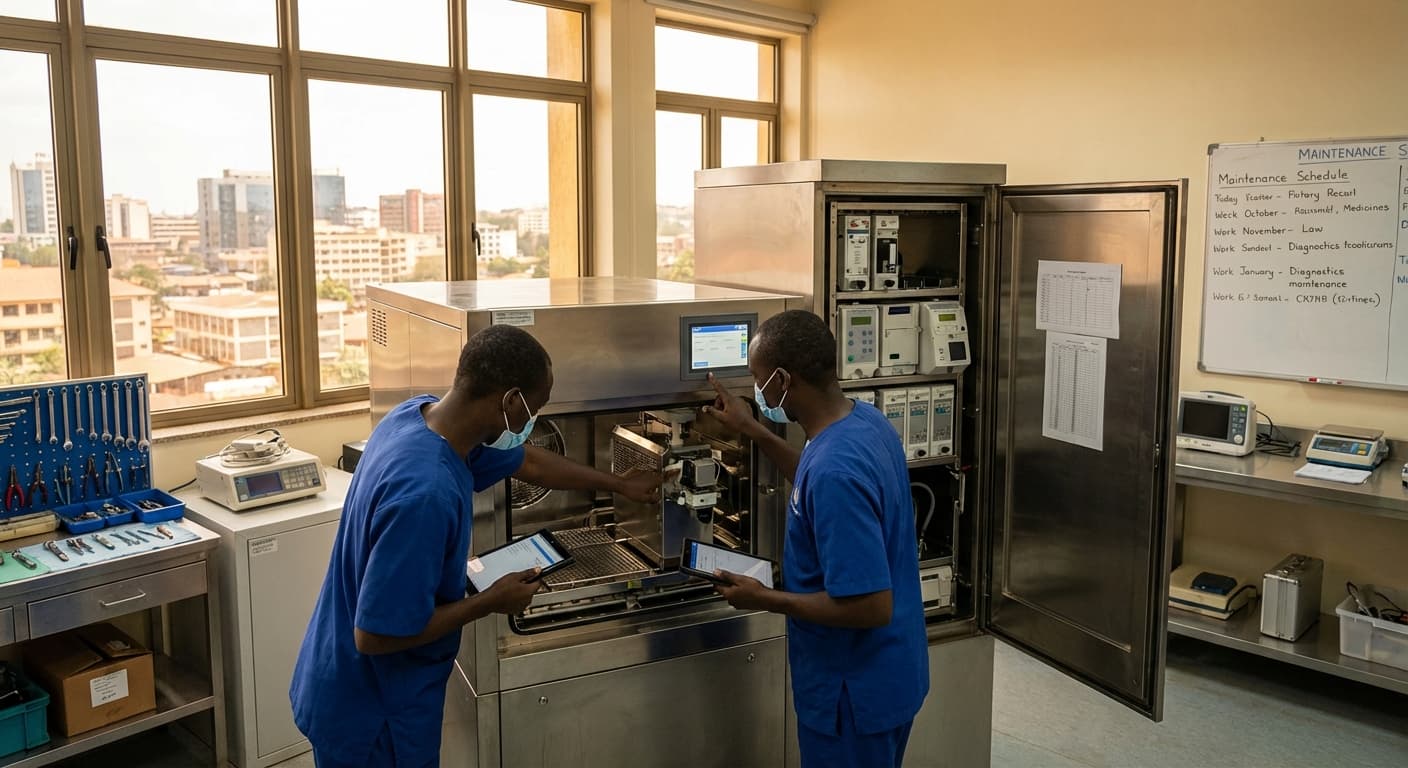
Total Cost of Ownership (TCO) & Lifecycle Budgeting Service High-standard technical execution following OEM protocols and local regulatory frameworks.
Optimized Procurement Strategies for Long-Term Savings
Leveraging data-driven analytics to identify cost-effective procurement channels and contract terms for critical assets, ensuring competitive pricing and minimizing upfront capital expenditure without compromising quality or performance throughout the asset's lifespan.
Predictive Maintenance Modeling for Reduced Operational Downtime
Implementing advanced predictive maintenance algorithms that analyze operational data to forecast potential equipment failures, allowing for proactive servicing and replacement planning. This minimizes costly unscheduled downtime and extends the operational life of assets, significantly impacting TCO.
Sustainable Lifecycle Management and End-of-Life Planning
Developing comprehensive lifecycle management plans that incorporate sustainable practices, including energy efficiency assessments, resource optimization, and responsible end-of-life disposal or recycling strategies. This not only reduces environmental impact but also mitigates future liabilities and potential disposal costs, enhancing long-term financial predictability.
What Is Total Cost Of Ownership (Tco) & Lifecycle Budgeting Service In Comoros?
Total Cost of Ownership (TCO) & Lifecycle Budgeting Service in Comoros refers to a comprehensive financial analysis and planning methodology that quantifies all direct and indirect costs associated with acquiring, operating, maintaining, and eventually disposing of an asset, project, or system over its entire lifespan. This service is crucial for strategic decision-making, ensuring that procurement and operational expenditures are optimized and aligned with long-term organizational goals within the Comorian economic and regulatory context. It moves beyond the initial purchase price to encompass every financial implication, enabling organizations to forecast, control, and minimize expenditures over time. This involves detailed data collection, sophisticated financial modeling, and ongoing performance monitoring.
| Who Needs TCO & Lifecycle Budgeting Service? | Typical Use Cases in Comoros | |||
|---|---|---|---|---|
| Government Ministries and Public Agencies: For infrastructure projects (roads, utilities), public transportation systems, and IT systems to ensure fiscal responsibility and long-term service delivery. | Procurement of large-scale infrastructure projects (e.g., port expansion, renewable energy installations) to assess long-term financial viability. | Acquisition of government fleet vehicles to understand total operational and maintenance expenditure. | Implementation of national IT systems (e.g., e-governance platforms) for budget forecasting and management. | |
| State-Owned Enterprises (SOEs): For capital investments in utilities, telecommunications, and transportation sectors to optimize asset management and profitability. | Investment decisions for upgrading or replacing critical infrastructure in sectors like electricity generation and water supply. | Evaluating the financial impact of new technology adoption in telecommunication networks. | Managing the lifecycle costs of industrial equipment in mining or manufacturing operations. | |
| Private Sector Businesses (especially larger enterprises): For significant capital expenditures, IT investments, fleet management, and strategic asset planning. | Evaluating the TCO of commercial fleet vehicles to optimize purchasing and operational strategies. | Assessing the long-term cost implications of cloud migration versus on-premise IT solutions. | Strategic planning for significant machinery or equipment upgrades in industries like agriculture or tourism. | Real estate development and management to understand the full lifecycle costs of buildings and facilities. |
| Non-Governmental Organizations (NGOs) and International Development Agencies: For managing donor-funded projects and ensuring sustainable operations. | Budgeting for long-term operational sustainability of development projects, such as water sanitation systems or educational facilities. | Assessing the TCO of vehicles and equipment used in humanitarian aid or development programs. | ||
| Financial Institutions: For assessing the risk and return profiles of investments that involve significant asset ownership or financing. | Evaluating the TCO of IT infrastructure for banking operations to inform investment decisions and risk management. | Financing long-term projects where understanding the total cost of ownership is critical for loan assessment. |
Key Components of TCO & Lifecycle Budgeting Service
- Initial Acquisition Costs: Purchase price, licensing, installation, implementation, and initial training.
- Operating Costs: Energy consumption, consumables, software subscriptions, personnel (salaries, benefits), and outsourced services.
- Maintenance and Support Costs: Scheduled maintenance, unscheduled repairs, spare parts, warranty management, and technical support contracts.
- Upgrade and Enhancement Costs: Costs associated with planned upgrades, feature enhancements, and system expansions.
- Downtime and Productivity Loss: Quantifiable impact of system failures or performance degradation on operational output.
- End-of-Life Costs: Decommissioning, disposal, data destruction, environmental compliance, and potential residual value.
- Risk Assessment and Mitigation: Identifying and quantifying potential financial risks and developing mitigation strategies.
- Scenario Planning and Sensitivity Analysis: Modeling different cost scenarios to understand potential variability and inform contingency planning.
- Performance Benchmarking: Comparing TCO against industry benchmarks and best practices.
- Reporting and Visualization: Presenting complex cost data in clear, actionable reports and dashboards.
Who Needs Total Cost Of Ownership (Tco) & Lifecycle Budgeting Service In Comoros?
Total Cost of Ownership (TCO) and Lifecycle Budgeting services are crucial for organizations aiming to optimize their financial planning, risk management, and strategic decision-making regarding assets and projects. In Comoros, while the market may be developing, these services offer significant advantages to a range of entities, particularly those involved in long-term investments, infrastructure development, and public sector management. Understanding the full spectrum of costs associated with an asset or project, from acquisition to disposal, allows for more informed budgeting, better resource allocation, and ultimately, enhanced financial sustainability.
| Target Customer Segment | Key Departments/Functions Benefiting | Why TCO & Lifecycle Budgeting is Important |
|---|---|---|
| Government Ministries and Agencies | Ministry of Finance, Ministry of Infrastructure, Ministry of Energy, Procurement Department | Ensures long-term financial viability of public projects, optimizes public spending, reduces unexpected costs, supports infrastructure planning, improves accountability. |
| Public Utilities | Operations & Maintenance, Finance & Accounting, Capital Planning, Engineering | Manages aging infrastructure, plans for asset replacement, optimizes operational efficiency, forecasts future expenditure for critical services, ensures service continuity. |
| Large Industrial Companies | Finance, Operations, Procurement, Engineering, Asset Management | Minimizes operational expenses, maximizes return on asset investment, informs strategic purchasing decisions, reduces downtime and maintenance costs, aids in capital budgeting. |
| Financial Institutions | Risk Management, Asset Management, Treasury, Operations | Evaluates the long-term financial implications of investments (e.g., IT systems, real estate), manages operational risks associated with assets, informs lending decisions for capital-intensive projects. |
| Infrastructure Development Companies | Project Management, Finance, Engineering, Legal | Accurately forecasts project costs over its entire lifespan, identifies potential cost overruns early, supports funding applications, manages project risk, optimizes construction and maintenance phases. |
| Transportation and Logistics Providers | Fleet Management, Operations, Finance, Maintenance | Optimizes vehicle acquisition and replacement cycles, reduces fuel and maintenance costs, improves route planning efficiency, forecasts operational expenditures, maximizes asset utilization. |
| Tourism and Hospitality Businesses | Finance, Operations, Facilities Management, Procurement | Manages the cost of property, plant, and equipment (hotels, vehicles, amenities), plans for renovations and upgrades, optimizes energy consumption, ensures long-term profitability through efficient asset management. |
| International Development Organizations and NGOs | Program Management, Finance, Procurement, Monitoring & Evaluation | Ensures the sustainability of projects beyond initial funding, optimizes resource allocation for long-term impact, demonstrates financial responsibility to donors, manages asset lifecycle in challenging environments. |
| Larger Educational Institutions and Healthcare Providers | Facilities Management, Finance, Procurement, Administration | Manages the lifecycle costs of buildings, equipment, and technology, plans for future capital expenditures, optimizes operational budgets, ensures the long-term availability and functionality of essential services and facilities. |
Target Customers for TCO & Lifecycle Budgeting Services in Comoros
- Government Ministries and Agencies
- Public Utilities (Water, Electricity, Telecommunications)
- Large Industrial Companies (e.g., manufacturing, mining, agriculture)
- Financial Institutions (banks, insurance companies)
- Infrastructure Development Companies
- Transportation and Logistics Providers
- Tourism and Hospitality Businesses (especially those with significant asset investments)
- International Development Organizations and NGOs operating in Comoros
- Larger Educational Institutions and Healthcare Providers
Total Cost Of Ownership (Tco) & Lifecycle Budgeting Service Process In Comoros
The Total Cost of Ownership (TCO) & Lifecycle Budgeting Service in Comoros provides a comprehensive approach to understanding and managing the financial implications of assets over their entire lifespan. This service is crucial for organizations in Comoros to make informed procurement and investment decisions, optimize operational expenditures, and ensure long-term financial sustainability. The workflow from initial inquiry to final execution is a structured process designed for clarity, collaboration, and accuracy.
| Stage | Key Activities | Deliverables | Key Stakeholders |
|---|---|---|---|
| 1. Initial Inquiry & Needs Assessment | Client contacts the service provider with a request for TCO/Lifecycle Budgeting. Initial discussion to understand client's goals, scope of assets, and specific challenges. Clarification of service offerings and preliminary scope definition. Understanding of the client's operational context in Comoros (e.g., infrastructure, regulatory environment, typical asset types). | Understanding of client's needs, preliminary scope, and objectives. Confirmation of service suitability. | Client (Decision Makers, Finance, Procurement, Operations), Service Provider (Consultant, Business Development) |
| 2. Proposal Development & Agreement | Based on the needs assessment, a detailed proposal is drafted. This includes scope of work, methodology, timeline, deliverables, fees, and terms of service. Client reviews and negotiates the proposal. A formal service agreement or contract is signed. | Formal Proposal, Service Agreement/Contract. | Client (Finance, Procurement, Management), Service Provider (Consultant, Project Manager) |
| 3. Data Collection & Asset Inventory | The core of the service begins with gathering comprehensive data. This involves identifying all relevant assets, their purchase costs, installation expenses, operational costs (energy, maintenance, labor), repair history, consumables, training needs, disposal costs, and any expected upgrades or modifications. Data sources can include client records, vendor information, and industry benchmarks relevant to Comoros. | Comprehensive Asset Register, Historical Cost Data, Operational Data, Maintenance Records, Expected Future Costs. | Client (Asset Managers, Finance, IT, Operations), Service Provider (Data Analysts, Consultants) |
| 4. TCO & Lifecycle Cost Modeling | Using the collected data, the service provider develops TCO models. This involves calculating all direct and indirect costs associated with each asset over its projected lifespan. This includes initial acquisition, operation, maintenance, support, and disposal. Advanced modeling may incorporate risk factors, inflation, and discount rates relevant to the Comorian economic context. | TCO Models for each asset/asset category, Lifecycle Cost Projections, Identification of Cost Drivers. | Service Provider (TCO Analysts, Financial Modeler), Client (for validation) |
| 5. Budget Development & Scenario Planning | Based on the TCO models, future budget requirements are forecasted. This phase includes developing multi-year lifecycle budgets, identifying capital expenditure (CapEx) and operational expenditure (OpEx) needs. Scenario planning might involve 'what-if' analyses for different operational strategies, asset replacement cycles, or economic fluctuations in Comoros. | Lifecycle Budgets, Capital Expenditure Plans, Operational Expenditure Forecasts, Scenario Analysis Reports. | Service Provider (Financial Planners, Consultants), Client (Finance, Budgeting Department) |
| 6. Report Generation & Presentation | A comprehensive report is compiled, summarizing the findings, methodologies, TCO calculations, lifecycle budgets, and recommendations. This report is then presented to the client's management and relevant stakeholders. The presentation will highlight key insights, cost-saving opportunities, and strategic implications for asset management and financial planning in Comoros. | Final TCO & Lifecycle Budgeting Report, Presentation Slides, Executive Summary. | Service Provider (Consultants, Project Manager), Client (Management, Stakeholders) |
| 7. Implementation Support & Monitoring | While not always part of the initial engagement, the service provider can offer support in implementing the recommendations. This might involve assisting with procurement strategies based on TCO, developing new maintenance protocols, or setting up systems for ongoing lifecycle cost tracking. Periodic monitoring of actual costs against the budget can be established. | Implementation Guidance, Revised Procurement Policies, Monitoring Frameworks (optional). | Service Provider (Consultants), Client (Procurement, Operations, Finance) |
| 8. Review & Optimization | For ongoing engagements, periodic reviews are conducted to assess the accuracy of the models, update cost data, and re-evaluate lifecycle budgets. This ensures that the TCO and lifecycle budgeting remain relevant and continue to support the client's strategic objectives in the dynamic environment of Comoros. Optimization may involve identifying new cost-saving measures or adjusting asset strategies. | Updated TCO Models, Revised Lifecycle Budgets, Optimization Recommendations, Performance Review Reports. | Service Provider (Consultants), Client (Management, Finance, Asset Managers) |
Workflow Stages:
- 1. Initial Inquiry & Needs Assessment:
- 2. Proposal Development & Agreement:
- 3. Data Collection & Asset Inventory:
- 4. TCO & Lifecycle Cost Modeling:
- 5. Budget Development & Scenario Planning:
- 6. Report Generation & Presentation:
- 7. Implementation Support & Monitoring:
- 8. Review & Optimization:
Total Cost Of Ownership (Tco) & Lifecycle Budgeting Service Cost In Comoros
The Total Cost of Ownership (TCO) and Lifecycle Budgeting service cost in Comoros is influenced by a variety of factors, reflecting the unique economic and operational landscape of the archipelago. Understanding these elements is crucial for businesses and organizations to accurately forecast expenses over the entire lifespan of an asset or project. The pricing is often a blend of local market conditions, the complexity of the assets/projects, the duration of the lifecycle, and the level of detail and expertise required from the service provider.
Key Pricing Factors in Comoros:
- Scope and Complexity of Assets/Projects: Larger, more intricate, or specialized assets (e.g., industrial machinery, large infrastructure projects) will naturally incur higher TCO and budgeting service costs than simpler ones (e.g., office equipment, small IT systems). This includes the number of components, interdependencies, and potential failure points.
- Lifecycle Duration: The longer the expected lifespan of an asset or project, the more detailed and comprehensive the TCO analysis needs to be. This includes planning for maintenance, upgrades, eventual disposal, and potential replacement costs over extended periods.
- Data Availability and Quality: The accuracy and accessibility of historical data on acquisition costs, operational expenses, maintenance records, and disposal costs significantly impact the service. If data is scarce or unreliable, the service provider will need to invest more time in research, data collection, and estimation, leading to higher costs.
- Market Volatility and Inflation: Comoros, like many island nations, can experience price fluctuations due to import costs, currency exchange rates (though the Comorian Franc is pegged to the Euro, indirect effects can still occur), and local inflation. TCO analyses must account for these potential future cost escalations.
- Service Provider Expertise and Reputation: Highly experienced consultants or firms with a proven track record in TCO analysis and lifecycle budgeting in the Comorian context will generally command higher fees. Their specialized knowledge of local regulations, supply chains, and operational challenges adds significant value.
- Level of Detail and Reporting: The depth of the TCO analysis and the format of the final reports can influence pricing. Detailed breakdowns of every cost category, scenario planning, risk assessments, and customized reporting dashboards will naturally be more expensive.
- Geographic Location and Accessibility: For assets or projects located in more remote areas of the Comoros, the cost of site visits, data collection, and expert travel can increase. Logistics and transportation expenses are a notable consideration.
- Regulatory and Compliance Requirements: Adherence to specific Comorian environmental regulations, safety standards, or import/export duties can add layers of complexity and cost to the lifecycle of an asset, which must be factored into the TCO and budgeting service.
- Technology and Tools Used: While less of a direct driver than other factors, the sophistication of the software and tools employed by the service provider for data analysis and modeling can influence efficiency and thus indirectly impact pricing.
Pricing Ranges in Local Currency (Comorian Franc - KMF):
It's challenging to provide definitive, universally applicable price ranges without specific project details. However, based on the factors above, we can outline potential ranges. These are indicative and can vary significantly.
For small to medium-sized projects or individual assets (e.g., a fleet of vehicles, an office IT infrastructure upgrade, a small construction project), a comprehensive TCO and lifecycle budgeting service might range from 500,000 KMF to 2,500,000 KMF.
For larger, more complex, or long-term projects (e.g., industrial plant lifecycle budgeting, major infrastructure development, multi-year asset management strategies), the costs could escalate from 3,000,000 KMF to 15,000,000 KMF or even higher, depending on the scale and duration.
Factors that would push pricing towards the higher end of these ranges include:
- Multi-year or multi-decade lifecycles.
- Highly specialized or technologically advanced assets.
- Extensive data collection and validation efforts required.
- In-depth risk analysis and scenario modeling.
- Requirement for frequent updates and ongoing consultancy.
- Projects with significant regulatory compliance hurdles.
Factors that would push pricing towards the lower end of these ranges include:
- Shorter asset lifecycles.
- Standardized or commonly understood assets.
- Readily available and high-quality historical data.
- Less complex operational environments.
- Simpler reporting requirements.
It is highly recommended to obtain customized quotes from service providers based on a detailed brief of the specific needs and the assets/projects in question. The value of a robust TCO and lifecycle budget lies in its ability to prevent unexpected costs, optimize resource allocation, and support strategic decision-making throughout the entire lifecycle.
| Project/Asset Size | Indicative Price Range (KMF) | Key Considerations |
|---|---|---|
| Small to Medium (e.g., vehicle fleet, office IT, small construction) | 500,000 - 2,500,000 | Shorter lifecycles, standardized assets, good data availability |
| Large to Complex (e.g., industrial plant, major infrastructure, multi-year strategies) | 3,000,000 - 15,000,000+ | Longer lifecycles, specialized assets, extensive data collection, risk analysis, remote locations, regulatory hurdles |
Key Pricing Factors for TCO & Lifecycle Budgeting Services in Comoros
- Scope and complexity of assets/projects
- Lifecycle duration
- Data availability and quality
- Market volatility and inflation
- Service provider expertise and reputation
- Level of detail and reporting
- Geographic location and accessibility
- Regulatory and compliance requirements
- Technology and tools used
Affordable Total Cost Of Ownership (Tco) & Lifecycle Budgeting Service Options
Our Affordable Total Cost of Ownership (TCO) & Lifecycle Budgeting service is designed to empower organizations with a comprehensive understanding of their asset's true financial impact over its entire lifespan. We go beyond initial purchase price to analyze all direct and indirect costs, enabling strategic financial planning, optimized resource allocation, and significant cost savings. Our service offers flexible value bundles tailored to your specific needs, coupled with proven cost-saving strategies that deliver tangible results.
| Cost-Saving Strategy | Description | Impact Area |
|---|---|---|
| Predictive Maintenance Planning | Utilizing data analytics to anticipate and address potential failures before they occur, reducing emergency repairs and downtime. | Operational & Maintenance Costs |
| Energy Efficiency Upgrades | Implementing technologies and practices that reduce energy consumption, leading to lower utility bills. | Operational Costs |
| Strategic Sourcing & Procurement | Negotiating better terms with suppliers, bulk purchasing, and exploring alternative vendors to reduce acquisition costs. | Acquisition Costs |
| Extended Asset Lifespan Initiatives | Implementing robust maintenance programs and upgrades to maximize the useful life of existing assets, delaying replacement costs. | Acquisition & Disposal Costs |
| Standardization & Consolidation | Reducing the variety of assets and software, leading to simplified support, training, and bulk purchasing discounts. | Acquisition, Operational & Support Costs |
| Disposal & Recycling Optimization | Exploring environmentally friendly and cost-effective disposal or resale options for end-of-life assets. | Disposal Costs |
| Performance Monitoring & Tuning | Regularly assessing asset performance to identify inefficiencies and opportunities for optimization. | Operational Costs |
Key Service Components & Value Bundles
- Comprehensive TCO Analysis: Detailed breakdown of acquisition, operation, maintenance, support, and disposal costs.
- Lifecycle Budgeting: Proactive financial planning for all phases of an asset's life.
- Risk Assessment & Mitigation: Identification of potential cost overruns and development of strategies to prevent them.
- Optimization Recommendations: Actionable insights to reduce expenditure without compromising performance or lifespan.
- Reporting & Dashboards: Clear, concise visualizations of TCO and lifecycle cost projections.
- Value Bundle 1: Foundation TCO Assessment: Ideal for organizations seeking an initial understanding of their key asset categories. Includes basic TCO calculation and a high-level cost summary.
- Value Bundle 2: Strategic Lifecycle Budgeting: For proactive financial planning. Incorporates TCO analysis with multi-year budget projections and scenario planning.
- Value Bundle 3: Enterprise-Wide Optimization: Our most comprehensive offering. Encompasses detailed TCO, advanced lifecycle budgeting, risk analysis, and continuous optimization recommendations across all relevant assets.
- Customizable Bundles: We can tailor a solution to meet your unique organizational requirements and budget constraints.
Verified Providers In Comoros
In Comoros, ensuring access to reliable and qualified healthcare is paramount. Franance Health stands out as a leading credentialing body, rigorously verifying healthcare providers to guarantee a high standard of care. Their meticulous process ensures that all listed providers meet stringent criteria for expertise, ethical conduct, and adherence to best practices. Choosing a Franance Health-verified provider in Comoros offers peace of mind, knowing you are entrusting your health to professionals who have undergone thorough scrutiny and are committed to delivering exceptional medical services.
| Provider Type | Franance Health Verification Criteria | Benefits for Patients |
|---|---|---|
| Doctors (General Practitioners & Specialists) | Valid medical license, board certification, proven experience, clean disciplinary record. | Access to qualified medical advice and treatment, accurate diagnosis, specialized care. |
| Nurses | Registered nursing license, relevant certifications, practical experience, adherence to nursing ethics. | Competent and compassionate care, assistance with daily medical needs, patient education. |
| Hospitals & Clinics | Accreditation from recognized health bodies, adherence to safety and hygiene standards, qualified staff, appropriate equipment. | Safe and well-equipped facilities, comprehensive medical services, efficient patient management. |
| Laboratories & Diagnostic Centers | Qualified technicians, calibrated equipment, adherence to quality control standards, accurate and timely results. | Reliable diagnostic testing, precise medical information for treatment planning. |
| Pharmacists & Pharmacies | Licensed pharmacists, proper storage and dispensing of medications, adherence to pharmaceutical regulations. | Safe and accurate dispensing of prescription and over-the-counter medications, professional pharmaceutical advice. |
Why Franance Health Credentials Matter in Comoros:
- Ensures providers meet rigorous standards of medical expertise and qualification.
- Guarantees adherence to ethical practices and patient safety protocols.
- Promotes transparency and trust in the healthcare system.
- Reduces the risk of receiving substandard or unqualified medical attention.
- Facilitates access to reliable and competent healthcare professionals.
Scope Of Work For Total Cost Of Ownership (Tco) & Lifecycle Budgeting Service
This Scope of Work (SOW) outlines the services provided for a comprehensive Total Cost of Ownership (TCO) and Lifecycle Budgeting analysis. The objective is to establish a clear understanding of all costs associated with an asset, system, or project throughout its entire lifespan, from acquisition to disposal. This analysis will inform strategic decision-making, optimize resource allocation, and mitigate financial risks.
| Technical Deliverable | Description | Standard Specification / Format | Purpose |
|---|---|---|---|
| TCO Model Framework | A structured model outlining all cost categories and sub-categories relevant to the TCO analysis. | Microsoft Excel or dedicated TCO software; clearly defined cost drivers and calculation logic. | Provides a standardized approach for cost aggregation and analysis. |
| Data Collection Templates | Standardized forms or spreadsheets for collecting cost data from different departments or sources. | Microsoft Excel or specified digital form; includes fields for cost type, source, period, currency, and assumptions. | Ensures consistent and comprehensive data capture. |
| Cost Breakdown Report | Detailed breakdown of costs by lifecycle phase, cost category, and sub-category. | PDF or Microsoft Excel; includes tables, charts, and graphs for visualization. | Provides transparency into where costs are incurred. |
| Lifecycle Budgeting Plan | A comprehensive budget that accounts for all projected costs over the asset/system/project's lifecycle. | Microsoft Excel or financial planning software; includes year-over-year projections, cash flow analysis, and contingency planning. | Facilitates long-term financial planning and resource allocation. |
| Scenario Analysis Report | Analysis of different potential future cost scenarios and their financial implications. | PDF or Microsoft Word; outlines assumptions, results, and recommended mitigation strategies for each scenario. | Informs risk management and strategic planning under uncertainty. |
| Final TCO & Lifecycle Budgeting Report | A consolidated report summarizing the TCO analysis, lifecycle budget, key findings, and strategic recommendations. | PDF document; includes executive summary, detailed analysis, charts, graphs, and actionable recommendations. | Provides a comprehensive overview for senior management and decision-makers. |
| TCO Model User Manual | Documentation explaining how to use, update, and maintain the TCO model. | PDF document; includes step-by-step instructions, FAQs, and troubleshooting guidance. | Enables self-sufficiency and ongoing use of the TCO model. |
Key Service Components
- TCO Framework Development: Designing and customizing a TCO model tailored to the specific asset/system/project.
- Data Collection & Validation: Gathering all relevant cost data from various sources and ensuring its accuracy and completeness.
- Cost Element Identification: Identifying all direct and indirect costs across different lifecycle phases.
- Lifecycle Phase Analysis: Breaking down costs by acquisition, operation, maintenance, support, upgrade, and disposal phases.
- Scenario Planning & Sensitivity Analysis: Developing and analyzing different cost scenarios and assessing the impact of key variables.
- Risk Assessment: Identifying potential cost overruns and financial risks.
- Reporting & Recommendations: Providing clear, actionable reports and recommendations for cost optimization and strategic budgeting.
- Knowledge Transfer & Training: Ensuring internal teams are equipped to utilize and maintain the TCO model.
Service Level Agreement For Total Cost Of Ownership (Tco) & Lifecycle Budgeting Service
This Service Level Agreement (SLA) outlines the response times and uptime guarantees for the Total Cost of Ownership (TCO) and Lifecycle Budgeting Service. It defines the expected performance and availability of the service to ensure clients can effectively manage their asset investments.
| Incident Severity | Definition | Response Time Target | Resolution Time Target | Uptime Guarantee Impact |
|---|---|---|---|---|
| Severity 1 (Critical) | Service is completely unavailable or core functionality is unusable, preventing significant business operations. | 1 Hour | 4 Business Hours | Significant impact, investigation immediately prioritized. |
| Severity 2 (High) | Major functionality is degraded, impacting a significant number of users or critical processes, but a workaround may exist. | 2 Business Hours | 8 Business Hours | High priority, resolution efforts will be ongoing. |
| Severity 3 (Medium) | Minor functionality is impaired, or a non-critical feature is not working as expected. Impact is limited. | 4 Business Hours | 2 Business Days | Standard resolution queue, continuous improvement efforts. |
| Severity 4 (Low) | General inquiry, request for information, or a minor cosmetic issue with no impact on functionality. | 8 Business Hours | As appropriate, generally within 3 Business Days | Addressed through regular support channels. |
Service Availability and Support Levels
- The TCO & Lifecycle Budgeting Service will be available 99.9% of the time, measured monthly. Planned maintenance will be communicated at least 48 hours in advance and will be scheduled outside of core business hours whenever possible.
- The service will include access to a dedicated support portal for submitting inquiries and reporting issues.
- Support will be available during standard business hours (Monday to Friday, 9:00 AM to 5:00 PM Local Time, excluding public holidays).
Frequently Asked Questions

Ready when you are
Let's scope your Total Cost of Ownership (TCO) & Lifecycle Budgeting Service in Comoros project in Comoros.

Scaling healthcare logistics and technical systems across the entire continent.