
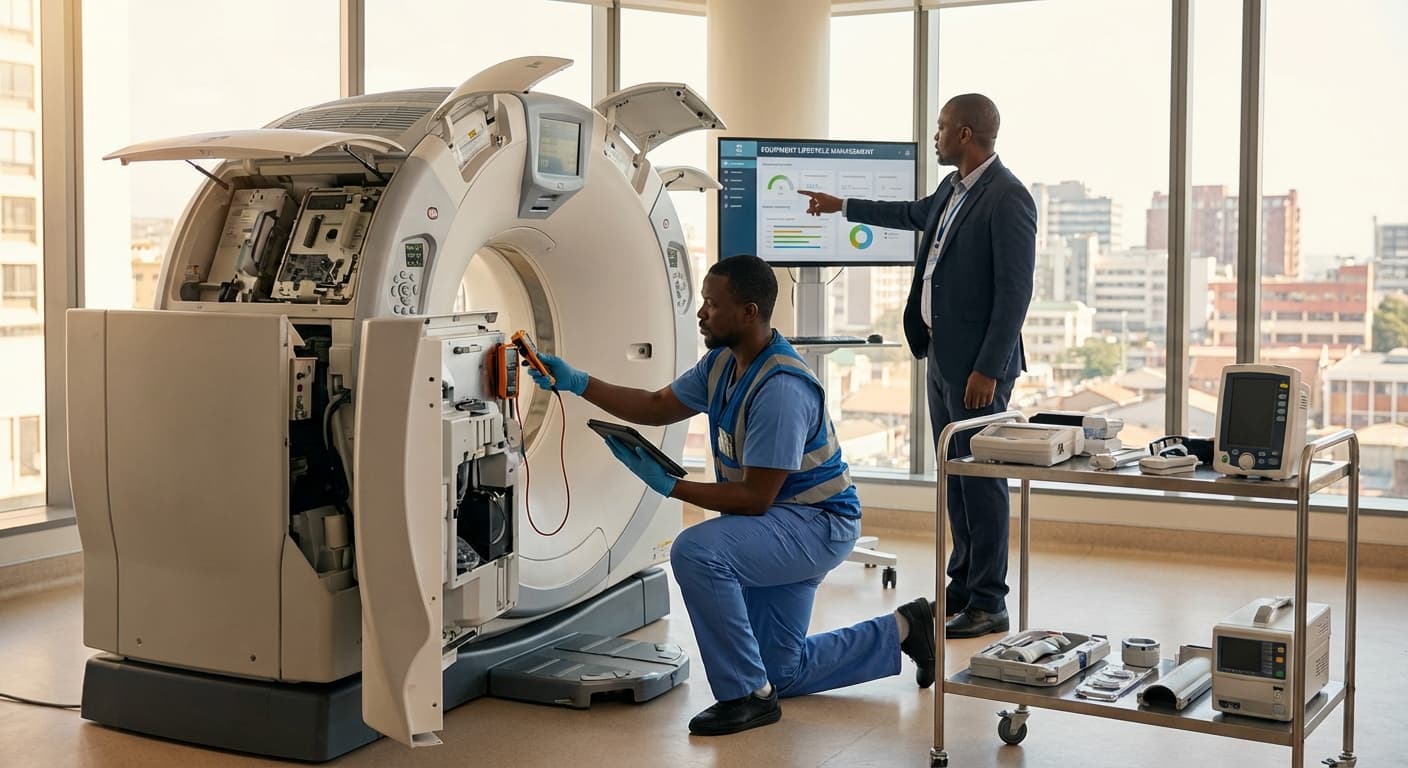
Equipment Replacement Planning & Obsolescence Strategy Service in Comoros
Engineering Excellence & Technical Support
Equipment Replacement Planning & Obsolescence Strategy Service High-standard technical execution following OEM protocols and local regulatory frameworks.
Proactive Obsolescence Mitigation for Critical Infrastructure
Leverage our advanced predictive analytics and lifecycle management tools to identify and address potential equipment obsolescence in your key assets across Comoros. We provide tailored strategies for early replacement or upgrade, minimizing operational disruptions and ensuring continued functionality for your vital infrastructure.
Optimized Lifecycle Costing for Equipment Investments
Our service delivers detailed lifecycle cost analysis for all equipment in your Comorian operations. By forecasting maintenance, repair, energy consumption, and eventual replacement costs, we empower you to make informed, cost-effective decisions, maximizing ROI and minimizing total cost of ownership.
Customized Obsolescence Roadmaps & Strategic Sourcing
We develop bespoke obsolescence roadmaps aligned with your specific business objectives in Comoros. This includes identifying reliable alternative suppliers and sourcing strategies for hard-to-find or end-of-life components, ensuring continuity of supply and mitigating risks associated with outdated technology.
What Is Equipment Replacement Planning & Obsolescence Strategy Service In Comoros?
Equipment Replacement Planning & Obsolescence Strategy Service in Comoros is a specialized offering designed to assist organizations in proactively managing their physical assets throughout their lifecycle. This service focuses on developing and implementing strategic approaches to identify, assess, and address the risks and opportunities associated with equipment aging, technological advancements, and eventual obsolescence. It aims to optimize capital expenditure, minimize operational disruptions, enhance safety, and maintain competitive advantage by ensuring that critical equipment is replaced or upgraded at opportune moments, thereby preventing costly failures, performance degradation, and the inability to procure spare parts or qualified maintenance support.
| Who Needs This Service? | Typical Use Cases | |||||
|---|---|---|---|---|---|---|
| Manufacturing Enterprises: Companies with significant investments in production machinery, assembly lines, and process control systems requiring continuous operation and optimal efficiency. | Telecommunications Providers: Managing networks of base stations, switching equipment, and transmission infrastructure where technological obsolescence is rapid and service reliability is paramount. | Energy & Utilities Sector: Critical infrastructure such as power generation turbines, transmission lines, substations, and water treatment facilities that demand long-term reliability and compliance. | Healthcare Institutions: Medical imaging equipment, diagnostic devices, and patient monitoring systems that require regular updates for accuracy, safety, and compatibility with evolving medical practices. | Transportation & Logistics: Fleet management, rail infrastructure, port equipment, and aviation components that are subject to rigorous safety standards and operational demands. | Government & Public Sector: Managing infrastructure assets, defense equipment, and essential public services where long-term planning and budget predictability are crucial. | Any organization with substantial, aging, or technologically evolving physical assets. |
| Preventing Unplanned Downtime: Proactively replacing aging machinery before it fails, thereby avoiding costly production stoppages and revenue loss. | Optimizing Capital Expenditure: Avoiding over-investment in equipment that still has significant service life and ensuring timely investment in next-generation technology. | Ensuring Regulatory Compliance: Replacing equipment that no longer meets current safety, environmental, or industry standards. | Enhancing Operational Efficiency & Performance: Upgrading to newer, more efficient equipment that reduces energy consumption and improves output quality. | Mitigating Cybersecurity Risks: Replacing legacy systems that may be vulnerable to cyber threats. | Improving Maintenance Effectiveness: Transitioning from reactive to proactive maintenance by replacing components or entire systems with higher reliability or better diagnostic capabilities. | Securing Spare Parts & Support: Planning replacements before manufacturer support or spare parts become unavailable for critical systems. |
Key Components of the Service
- Asset Inventory & Condition Assessment: Comprehensive cataloging of all relevant equipment, including specifications, acquisition dates, maintenance history, and current operational status. This often involves physical inspections and diagnostic testing.
- Lifecycle Cost Analysis: Evaluating the total cost of ownership for each asset, encompassing acquisition, operation, maintenance, repair, and eventual disposal or replacement costs. This informs cost-benefit analyses for replacement decisions.
- Obsolescence Risk Assessment: Identifying equipment that is approaching or has reached obsolescence due to factors such as end-of-life support from manufacturers, unavailability of spare parts, outdated technology, or regulatory non-compliance.
- Predictive Failure Analysis: Utilizing data analytics and forecasting models to predict potential equipment failures, enabling proactive maintenance or replacement scheduling before critical disruptions occur.
- Replacement/Upgrade Strategy Development: Formulating detailed plans for replacing or upgrading obsolete or underperforming assets, including timelines, budget allocations, procurement strategies, and integration plans for new equipment.
- Technology Roadmap Integration: Aligning equipment replacement plans with the organization's broader technology adoption roadmap and strategic objectives.
- Disposal & Decommissioning Planning: Developing environmentally responsible and compliant procedures for the disposal or decommissioning of retired assets.
- Risk Mitigation & Business Continuity: Incorporating contingency plans to address potential equipment failures and ensure business continuity during transition periods.
Who Needs Equipment Replacement Planning & Obsolescence Strategy Service In Comoros?
In Comoros, a robust Equipment Replacement Planning & Obsolescence Strategy Service is crucial for businesses and government entities that rely on specialized or critical equipment. This service helps organizations proactively manage the lifecycle of their assets, mitigate risks associated with aging technology, and ensure operational continuity. Without such a strategy, Comorian businesses face potential disruptions, increased maintenance costs, and a competitive disadvantage due to outdated infrastructure.
| Target Customer Type | Key Departments/Roles Involved | Why Equipment Replacement Planning & Obsolescence Strategy is Needed |
|---|---|---|
| Manufacturing Companies | Operations Management, Maintenance Department, Procurement Department, Finance Department | Ensuring production uptime, reducing breakdown costs, maintaining product quality, staying competitive with modern manufacturing techniques. |
| Telecommunications Providers | Network Operations Center (NOC), Engineering Department, IT Department, Finance Department | Maintaining network reliability and speed, preventing service outages, managing spectrum obsolescence, securing customer satisfaction. |
| Energy and Utilities | Asset Management, Operations & Maintenance, Engineering, Procurement, Regulatory Affairs | Ensuring reliable power and water supply, meeting safety standards, avoiding costly emergency repairs, managing infrastructure aging. |
| Healthcare Institutions | Biomedical Engineering Department, Procurement, Hospital Administration, IT Department | Ensuring accurate diagnostics and treatment, patient safety, compliance with medical standards, managing the high cost of medical equipment. |
| Government Ministries and Agencies | Procurement Unit, Technical Departments (e.g., Public Works, Defense), IT Management, Budget Office | Maintaining public service delivery, ensuring national security, efficient use of taxpayer funds, avoiding operational paralysis due to outdated infrastructure. |
| Maritime and Port Authorities | Port Operations, Engineering and Maintenance, Safety and Security Department, Procurement | Ensuring efficient cargo handling, safety of port operations, maintaining navigational aids, compliance with international maritime regulations. |
| Agricultural Cooperatives | Operations Management, Farm Managers, Maintenance Technicians, Procurement | Maximizing crop yields through efficient machinery, reducing downtime during critical planting/harvesting seasons, ensuring equipment reliability. |
| Hospitality and Tourism Operators | Facilities Management, IT Department, Procurement, Operations Management | Ensuring guest comfort and satisfaction, maintaining operational efficiency of facilities (e.g., HVAC, kitchens, IT systems), competitive service delivery. |
Target Customers in Comoros
- Manufacturing Companies
- Telecommunications Providers
- Energy and Utilities (Electricity, Water)
- Healthcare Institutions (Hospitals, Clinics)
- Government Ministries and Agencies (e.g., Transportation, Defense)
- Maritime and Port Authorities
- Agricultural Cooperatives with Mechanized Operations
- Large-scale Hospitality and Tourism Operators
Equipment Replacement Planning & Obsolescence Strategy Service Process In Comoros
This document outlines the workflow for our Equipment Replacement Planning & Obsolescence Strategy Service within the Comoros. The process is designed to be transparent, efficient, and tailored to the unique needs of our clients operating in the Comorian market. It spans from the initial client inquiry to the final execution of the agreed-upon strategy.
| Stage | Description | Key Activities | Deliverables/Outcomes | Responsible Party |
|---|---|---|---|---|
| Inquiry & Initial Consultation | The client expresses interest in our services, and an initial meeting is scheduled to understand their general requirements and the scope of potential engagement. | Client outreach, introductory call/meeting, high-level scope discussion. | Mutual understanding of service offering, preliminary identification of client needs. | Client, Service Provider (Sales/Consulting Team) |
| Needs Assessment & Data Gathering | A deep dive into the client's existing equipment inventory, operational environment, and strategic objectives related to replacement and obsolescence. | On-site or remote data collection (equipment lists, age, maintenance history, usage data, business goals), stakeholder interviews, site visits (if applicable). | Comprehensive inventory of existing assets, identification of critical equipment, understanding of current operational challenges and future plans. | Service Provider (Technical Consultants, Analysts), Client (Operations, IT, Procurement) |
| Analysis & Strategy Development | Utilizing gathered data to identify equipment at risk of obsolescence, analyze replacement costs, and formulate a strategic roadmap. | Data analysis (life cycle costing, risk assessment for obsolescence, technology trend analysis), development of replacement scenarios, creation of budget forecasts, risk mitigation planning. | Detailed obsolescence report, prioritized equipment replacement plan, financial projections, recommended strategies (e.g., phased replacement, upgrade paths, end-of-life management). | Service Provider (Technical Consultants, Financial Analysts, Strategists) |
| Proposal & Agreement | Presenting the developed strategy and proposed solutions to the client for review and approval, leading to a formal agreement. | Presentation of findings and recommendations, proposal document outlining scope, timeline, and costs, negotiation of terms, contract finalization. | Approved equipment replacement strategy, formal service agreement/contract. | Service Provider (Sales/Consulting Team), Client (Management, Procurement) |
| Implementation & Execution | Putting the agreed-upon strategy into action, which may involve procurement, installation, and decommissioning of equipment. | Procurement of new equipment, project management for installation/integration, decommissioning and disposal of old equipment, training (if applicable). | New equipment successfully integrated, old equipment responsibly managed, operational continuity maintained. | Service Provider (Project Managers, Technical Teams), Client (Operations, IT, Maintenance) |
| Monitoring & Review | Ongoing tracking of the implemented strategy's effectiveness and periodic reviews to adapt to changing circumstances. | Performance monitoring of new equipment, review of obsolescence trends, feedback collection, scheduled strategy review meetings, recommendations for adjustments. | Performance reports, updated strategy recommendations, long-term asset management insights. | Service Provider (Consultants), Client (Asset Management, Operations) |
Service Workflow Stages
- Inquiry & Initial Consultation
- Needs Assessment & Data Gathering
- Analysis & Strategy Development
- Proposal & Agreement
- Implementation & Execution
- Monitoring & Review
Equipment Replacement Planning & Obsolescence Strategy Service Cost In Comoros
Planning and executing equipment replacement and obsolescence strategies are crucial for businesses in Comoros to maintain operational efficiency, minimize downtime, and avoid costly emergency replacements. The cost of such services in Comoros is influenced by several factors, including the complexity of the equipment, the size and scope of the operation, the vendor's expertise, and the duration of the engagement. Generally, pricing for Equipment Replacement Planning & Obsolescence Strategy services in Comoros can range from a few hundred thousand to several million Comorian Francs (KMF), depending on the specific needs and the provider's fee structure.
| Service Scope/Complexity | Estimated Price Range (KMF) |
|---|---|
| Basic Consultation & Initial Assessment (e.g., for a small business with limited critical equipment) | 200,000 - 750,000 KMF |
| Comprehensive Equipment Lifecycle Analysis & Replacement Strategy (e.g., for medium-sized enterprises with diverse assets) | 750,000 - 3,000,000 KMF |
| Full Obsolescence Management Program Development & Implementation Support (e.g., for large industrial operations or organizations with significant technological dependencies) | 3,000,000 - 10,000,000+ KMF |
| Specialized Equipment (e.g., medical, industrial automation) - Per Unit Assessment/Strategy | 500,000 - 2,000,000 KMF (additional to broader program) |
Key Pricing Factors for Equipment Replacement Planning & Obsolescence Strategy Services in Comoros:
- Equipment Type and Complexity: The more specialized, critical, or technologically advanced the equipment, the higher the cost. This includes factors like machinery, IT infrastructure, vehicles, or specialized medical equipment.
- Scope of Services: A comprehensive service might include asset inventory, lifecycle assessment, risk analysis, replacement prioritization, vendor evaluation, and implementation support, leading to higher costs than a basic consultation.
- Number of Assets: The sheer volume of equipment to be assessed and managed directly impacts the time and resources required, thus influencing the price.
- Consultant/Vendor Expertise and Reputation: Highly experienced and reputable firms or individual consultants with a proven track record in asset management and obsolescence planning will command higher fees.
- Duration of Engagement: Short-term consultation will be priced differently than a long-term strategic partnership or project management role.
- On-site vs. Remote Services: While remote consultation might be more cost-effective, on-site assessments and planning sessions are often necessary for accurate evaluation and can incur additional travel and accommodation costs, especially in a geographically dispersed nation like Comoros.
- Data Availability and Quality: If the client has well-maintained and readily available asset data, it can reduce the consultant's data gathering effort and potentially lower costs.
- Market Conditions and Competition: The availability of local service providers and the general economic climate in Comoros can also play a role in pricing.
- Reporting and Documentation Requirements: The level of detail and the format of reports and documentation required will influence the time spent by the service provider.
Affordable Equipment Replacement Planning & Obsolescence Strategy Service Options
Our Affordable Equipment Replacement Planning & Obsolescence Strategy Service empowers businesses to proactively manage their asset lifecycle, minimize disruption, and optimize capital expenditure. By anticipating equipment obsolescence and planning replacements strategically, we help you avoid costly emergency repairs, unexpected downtime, and the financial strain of reactive purchases. Our service offers flexible value bundles tailored to your specific needs and budget, alongside proven cost-saving strategies designed to maximize your return on investment.
| Value Bundle | Core Services Included | Key Benefits | Target Business Size | Estimated Price Range |
|---|---|---|---|---|
| Essential Planning | Initial equipment audit, basic obsolescence risk assessment, replacement timeline recommendations. | Foundational understanding of asset health, avoidance of immediate critical failures. | Small to Medium Businesses (SMBs) | $X,XXX - $X,XXX per year |
| Strategic Growth | Comprehensive asset inventory, detailed obsolescence forecasting (3-5 years), cost-benefit analysis for replacement options, vendor negotiation support. | Informed long-term capital planning, optimized replacement scheduling, potential for bulk purchase discounts. | Medium to Large Enterprises | $X,XXX - $XX,XXX per year |
| Integrated Lifecycle Management | All Strategic Growth features plus: continuous monitoring of equipment performance and market trends, proactive maintenance strategy integration, end-of-life disposal planning, technology adoption roadmap. | Maximized ROI, minimized total cost of ownership, seamless integration of new technologies, proactive risk management. | Large Enterprises & Corporations | $XX,XXX+ per year |
| Customized Solution | Tailored to specific industry needs, unique asset types, or particular business challenges. Developed in consultation with your team. | Precisely addresses your most critical operational and financial concerns. | All Business Sizes (highly specific needs) | Quote-based |
Our Service Value Proposition
- Proactive Obsolescence Management: Identify and address potential equipment failures before they impact operations.
- Optimized Capital Allocation: Make informed decisions about when and what to replace, aligning with budget cycles.
- Reduced Downtime & Productivity Losses: Minimize unplanned outages through strategic replacements.
- Extended Equipment Lifespan: Implement maintenance strategies that maximize the useful life of existing assets.
- Negotiation Leverage: Gain an advantage when purchasing new equipment by understanding market trends and your replacement timeline.
- Compliance & Risk Mitigation: Ensure your equipment meets current standards and reduce risks associated with outdated technology.
Verified Providers In Comoros
When seeking reliable healthcare services in Comoros, identifying verified providers is paramount. Franance Health stands out as a leading organization dedicated to ensuring the quality and accessibility of medical care. Their rigorous credentialing process and commitment to excellence make them the optimal choice for individuals and families in Comoros.
| Franance Health Credentialing Criteria | Benefit to Patients in Comoros |
|---|---|
| Verification of Medical Licenses and Certifications | Ensures providers are legally qualified and authorized to practice. |
| Review of Educational Background and Training | Confirms providers have received appropriate and up-to-date medical education. |
| Assessment of Professional Experience and Competence | Guarantees that providers have practical skills and a proven track record. |
| Adherence to Ethical and Professional Standards | Upholds patient rights, confidentiality, and responsible medical practices. |
| Background Checks and Reference Verification | Adds an extra layer of security and trustworthiness to the provider selection. |
| Ongoing Performance Monitoring and Patient Feedback | Ensures continuous improvement and maintained high standards of care. |
Why Franance Health is the Best Choice for Verified Providers in Comoros:
- Rigorous Vetting Process: Franance Health employs a comprehensive and stringent vetting procedure for all healthcare professionals and facilities. This includes verifying medical licenses, educational qualifications, professional experience, and adherence to ethical standards.
- Commitment to Quality Assurance: Beyond initial credentialing, Franance Health actively monitors the performance and patient feedback of its network providers. This ongoing quality assurance ensures that patients consistently receive high-quality care.
- Extensive Network of Specialists: Franance Health has cultivated a broad network of medical professionals across various specialties, offering a wide range of healthcare services to meet diverse needs.
- Patient-Centric Approach: The organization prioritizes patient well-being and satisfaction. This is reflected in their focus on accessible appointments, clear communication, and compassionate care from their verified providers.
- Transparency and Trust: Franance Health is committed to transparency in its operations and credentialing. This builds trust with patients, assuring them that they are connecting with legitimate and competent healthcare providers.
- Facilitating Access to Care: By partnering with verified providers, Franance Health simplifies the process of finding and accessing reliable healthcare services in Comoros, reducing stress and uncertainty for patients.
Scope Of Work For Equipment Replacement Planning & Obsolescence Strategy Service
This Scope of Work (SOW) outlines the services for Equipment Replacement Planning and Obsolescence Strategy. The objective is to develop a comprehensive strategy and actionable plan for managing equipment lifecycle, identifying critical obsolescence risks, and planning for timely and cost-effective replacements. This will ensure continued operational reliability, minimize downtime, and optimize capital expenditure for equipment.
| Technical Deliverable | Description | Standard Specification / Format |
|---|---|---|
| Equipment Inventory Database | A comprehensive, structured database of all critical equipment, including manufacturer, model, serial number, installation date, last maintenance date, expected lifespan, criticality rating, and supplier information. | Microsoft Excel or equivalent relational database (e.g., Access, SQL Server). Data fields to include: Equipment ID, Name, Manufacturer, Model, Serial Number, Location, Installation Date, Commissioning Date, Expected Lifespan (years), Current Age (years), Criticality Level (High, Medium, Low), Maintenance History Summary, Last Major Overhaul Date, Current Condition Assessment, Supplier Name, Supplier Contact, End-of-Life (EOL) Date (if known), Obsolescence Risk Score. |
| Obsolescence Risk Assessment Report | Analysis of equipment vulnerabilities to obsolescence based on manufacturer announcements, component availability, support lifecycle, and technological advancements. Includes identification of high-risk equipment. | PDF Document. Sections to include: Executive Summary, Methodology, Detailed Assessment of Identified High-Risk Equipment (including specific obsolescence drivers), Impact Analysis (operational, financial, safety), Recommended Mitigation Strategies. |
| Equipment Lifecycle Management Policy & Procedures | Development of standardized policies and procedures for managing equipment from acquisition through disposal, with a focus on proactive obsolescence management. | Microsoft Word or PDF Document. To include: Equipment Acquisition Guidelines, Maintenance and Repair Procedures, Obsolescence Monitoring Protocol, Replacement Decision Framework, Disposal Procedures. |
| Equipment Replacement Prioritization Matrix | A matrix that prioritizes equipment for replacement based on criticality, obsolescence risk, remaining useful life, and available budget. | Microsoft Excel or integrated within the Equipment Inventory Database. Columns to include: Equipment ID, Equipment Name, Criticality, Obsolescence Risk Score, Remaining Useful Life (years), Replacement Cost Estimate, Urgency Rating (e.g., 1-5), Recommended Replacement Year, Budgetary Considerations. |
| Capital Expenditure (CAPEX) Plan for Equipment Replacement | A multi-year financial plan outlining budgeted expenditures for equipment replacement, aligned with the prioritization matrix and operational needs. | Microsoft Excel or integrated into financial planning software. To include: Annual breakdown of planned replacements, associated costs (equipment purchase, installation, commissioning, training), funding source identification, contingency planning. |
| Obsolescence Mitigation & Monitoring Tools | Recommendations and/or templates for tools and processes to proactively monitor for obsolescence and identify potential replacement candidates. | Various formats: Checklists (Microsoft Word/Excel), Subscription service recommendations (with justifications), defined data sources for monitoring (e.g., manufacturer EOL notifications, industry publications). |
| Final Project Report | A comprehensive report summarizing all findings, recommendations, and developed strategies, along with an executive summary for senior management. | PDF Document. Sections to include: Executive Summary, Project Objectives, Methodology, Key Findings, Developed Strategies (Obsolescence Management, Replacement Planning), Recommendations, Implementation Roadmap, Appendices (including all detailed reports and deliverables). |
Services Included
- Phase 1: Assessment and Data Collection
- Phase 2: Obsolescence Risk Analysis
- Phase 3: Replacement Planning and Strategy Development
- Phase 4: Documentation and Reporting
Service Level Agreement For Equipment Replacement Planning & Obsolescence Strategy Service
This Service Level Agreement (SLA) outlines the performance standards and commitments for the Equipment Replacement Planning & Obsolescence Strategy Service. This document defines the expected response times for critical events and guarantees a minimum uptime for the service delivery platform. The primary objective is to ensure proactive identification of end-of-life equipment, facilitate timely replacement planning, and mitigate risks associated with technological obsolescence, thereby optimizing operational efficiency and minimizing disruption.
| Service Component | Response Time Objective (for Critical Events) | Uptime Guarantee (Monthly) |
|---|---|---|
| Core Planning & Analysis Tools | 2 Business Hours | 99.5% |
| Obsolescence Identification & Reporting | 4 Business Hours | 99.0% |
| Notification & Alerting Systems | 1 Business Hour | 99.8% |
| Data Integration & Synchronization (if applicable) | 8 Business Hours | 98.5% |
Key Service Components & Definitions
- Equipment Replacement Planning: The process of forecasting and scheduling the replacement of existing equipment based on lifecycle data, performance metrics, and business needs.
- Obsolescence Strategy: A proactive approach to identify, manage, and mitigate the risks and impacts of equipment becoming outdated, unsupported, or no longer cost-effective.
- Service Delivery Platform: The software, tools, and interfaces used to deliver the Equipment Replacement Planning & Obsolescence Strategy Service, including reporting, analysis, and notification functionalities.
- Critical Event: Any situation that significantly impacts the ability to plan for equipment replacement or identify potential obsolescence, such as system unavailability or significant delays in reporting.
- Downtime: The period during which the Service Delivery Platform is unavailable to the client, preventing access to its functionalities.
- Response Time: The maximum time allowed from the initiation of a support request for a critical event to the commencement of investigation and remediation efforts by the service provider.
- Uptime Guarantee: The minimum percentage of time the Service Delivery Platform is available to the client over a defined period.
Frequently Asked Questions

Ready when you are
Let's scope your Equipment Replacement Planning & Obsolescence Strategy Service in Comoros project in Comoros.

Scaling healthcare logistics and technical systems across the entire continent.