
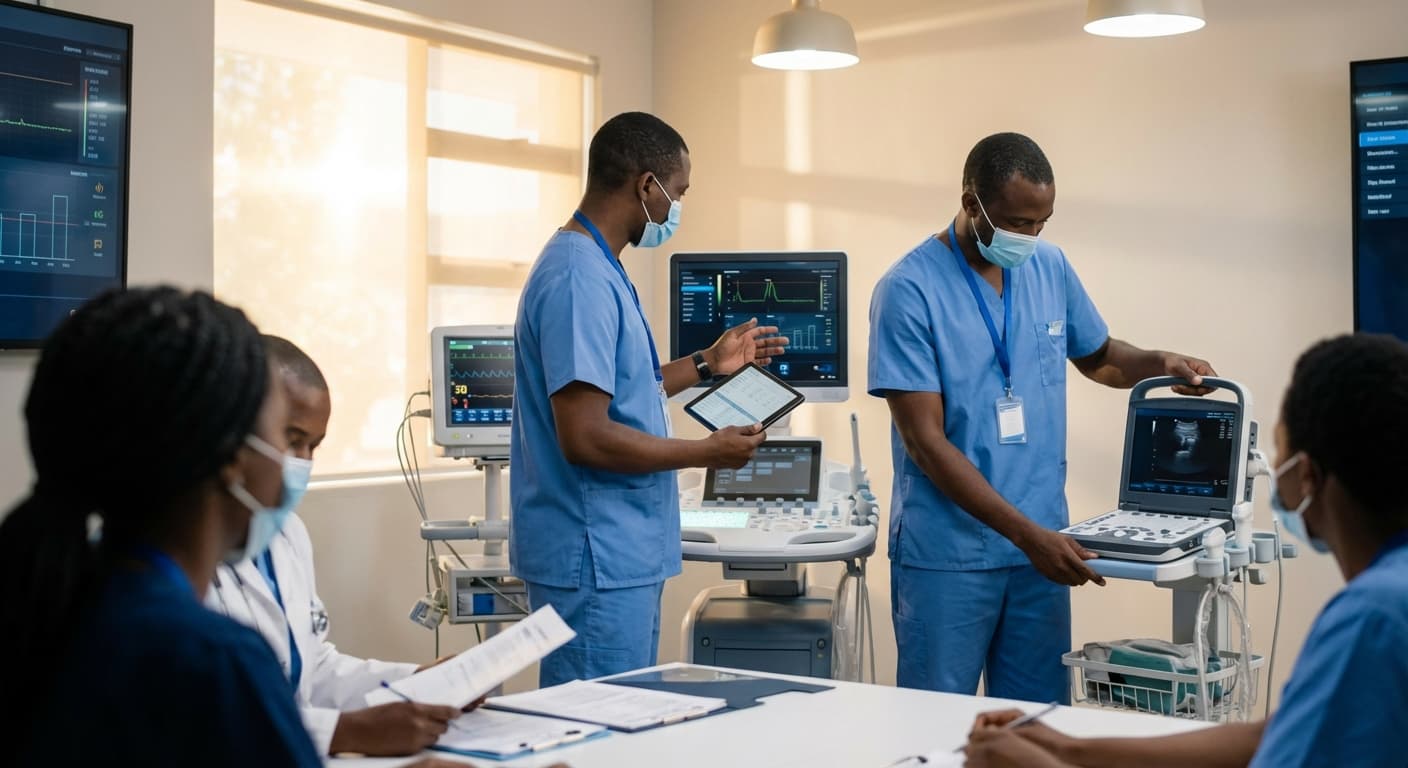
Clinical Needs Assessment for Medical Equipment in Comoros
Engineering Excellence & Technical Support
Clinical Needs Assessment for Medical Equipment High-standard technical execution following OEM protocols and local regulatory frameworks.
Comprehensive Needs Identification & Prioritization Framework
Develop and implement a robust framework for systematically identifying and prioritizing critical medical equipment needs across all levels of healthcare facilities in Comoros, factoring in disease prevalence, population demographics, and existing infrastructure limitations.
Data-Driven Resource Allocation & Gap Analysis
Leverage data analytics and geospatial mapping to conduct a detailed gap analysis of current equipment inventory versus optimal requirements, informing evidence-based resource allocation strategies and identifying areas for targeted investment and procurement.
Stakeholder Engagement & Capacity Building for Sustainability
Facilitate collaborative engagement with healthcare professionals, Ministry of Health officials, and local communities to ensure needs assessments are aligned with practical implementation realities and to build local capacity for equipment maintenance, operation, and future planning.
What Is Clinical Needs Assessment For Medical Equipment In Comoros?
A Clinical Needs Assessment for Medical Equipment in Comoros is a systematic, evidence-based process designed to identify and prioritize the medical equipment required to effectively deliver essential healthcare services within the Comorian healthcare system. This process aims to bridge the gap between existing healthcare capabilities and the equipment necessary to meet current and projected patient needs, considering the unique epidemiological profile, resource constraints, and infrastructure of the Comoros. It involves a multi-faceted evaluation encompassing clinical demand, technological appropriateness, operational feasibility, and financial sustainability of proposed equipment solutions. The assessment ensures that investments in medical technology are aligned with national health strategies, enhance diagnostic and therapeutic capabilities, improve patient outcomes, and optimize resource allocation within the Comorian context.
| Stakeholder Group | Role in Needs Assessment | Typical Contribution |
|---|---|---|
| Ministry of Health (Comoros) | Oversight and strategic direction | Defining national health priorities, providing epidemiological data, approving equipment acquisition plans. |
| Healthcare Facilities (Hospitals, Health Centers) | On-the-ground assessment and feedback | Providing data on patient flow, current equipment status, clinical workflows, and immediate equipment requirements. |
| Healthcare Professionals (Physicians, Nurses, Technicians) | Clinical expertise and operational insight | Identifying specific diagnostic and therapeutic needs, evaluating equipment usability, and assessing training requirements. |
| Medical Equipment Technicians/Engineers | Technical evaluation and feasibility assessment | Assessing infrastructure compatibility, maintenance requirements, and availability of local technical support. |
| International Development Partners/NGOs | Funding and technical assistance | Providing financial resources, specialized expertise, and support for implementation and capacity building. |
| Suppliers/Manufacturers | Information provision on equipment capabilities and specifications | Presenting product information, technical specifications, and cost estimates. |
Key Components of a Clinical Needs Assessment for Medical Equipment in Comoros:
- Epidemiological Data Analysis: Reviewing national and regional health statistics, disease prevalence, and incidence rates to determine the burden of specific conditions requiring diagnostic and therapeutic interventions.
- Current Service Delivery Analysis: Evaluating the existing healthcare infrastructure, including hospitals, health centers, and specialized units, to understand current service provision and identify areas of unmet need.
- Clinical Practice Review: Consulting with healthcare professionals (physicians, nurses, technicians) across various specialties to understand their diagnostic and treatment workflows and identify equipment gaps and limitations.
- Patient Population Profiling: Analyzing demographic data, including age, gender, socioeconomic factors, and geographic distribution, to understand the specific healthcare needs of different patient groups.
- Technological Appropriateness and Sustainability: Assessing the suitability of proposed equipment considering local environmental conditions (e.g., power stability, climate), availability of skilled personnel for operation and maintenance, and access to consumables and spare parts.
- Cost-Benefit Analysis and Financial Planning: Evaluating the capital and operational costs associated with recommended equipment, including training, maintenance, and consumables, and aligning these with available budgets and funding mechanisms.
- Infrastructure and Utility Assessment: Verifying the adequacy of existing infrastructure (e.g., power supply, plumbing, ventilation) to support the installation and operation of new medical equipment.
- Regulatory and Policy Alignment: Ensuring that proposed equipment aligns with national health policies, standards, and regulatory requirements in Comoros.
Who Needs Clinical Needs Assessment For Medical Equipment In Comoros?
A clinical needs assessment for medical equipment in Comoros is crucial for any entity involved in the provision, maintenance, or strategic planning of healthcare services. This systematic process identifies current and future needs for medical equipment, ensuring that available resources are appropriate, functional, and aligned with the healthcare priorities of the nation. Without a thorough assessment, there's a significant risk of procuring unsuitable equipment, leading to underutilization, waste of resources, and ultimately, compromised patient care.
| Target Customer/Entity | Key Departments Involved | Primary Motivations for Needs Assessment | Specific Needs/Concerns |
|---|---|---|---|
| Ministry of Health and Social Affairs | Planning Department, Procurement Department, Public Health Division, Curative Services Department | National healthcare planning, resource allocation, equitable access to care, disease burden management, infrastructure development | Identifying essential equipment for primary, secondary, and tertiary care; assessing existing equipment stock and maintenance capacity; forecasting future needs based on population growth and disease trends; standardizing equipment across facilities. |
| Public Hospitals and Clinics | Administration, Clinical Departments (e.g., Surgery, Pediatrics, Internal Medicine, Radiology, Laboratory), Biomedical Engineering/Maintenance Department | Improving patient care quality, optimizing service delivery, ensuring equipment functionality, training healthcare professionals, budget management | Determining specific equipment requirements for specialized units; assessing the condition and obsolescence of current equipment; identifying training needs for new equipment; managing spare parts and maintenance schedules. |
| Private Healthcare Facilities | Management, Clinical Departments, Technical Support Staff | Enhancing service offerings, competitive advantage, patient satisfaction, compliance with regulations | Identifying advanced or specialized equipment for niche services; ensuring alignment with market demand; optimizing return on investment for equipment purchases. |
| Non-Governmental Organizations (NGOs) | Program Management, Field Operations, Technical Advisors | Targeted interventions, community health improvement, specific disease program support, efficient resource utilization | Assessing equipment needs for mobile clinics, remote areas, or specific health campaigns (e.g., maternal health, infectious diseases); ensuring equipment suitability for local conditions and user capacity. |
| International Aid Organizations and Donors | Program Officers, Technical Specialists, Monitoring and Evaluation Teams | Effective aid distribution, sustainable healthcare systems, impact assessment, accountability to funders | Identifying critical equipment gaps to address through funding; ensuring procured equipment is appropriate for the Comorian context and can be maintained locally; verifying the effective use of donated equipment. |
| Medical Equipment Suppliers and Distributors | Sales Department, Technical Support, Product Specialists | Market intelligence, product development, targeted sales strategies, customer relationship management | Understanding current and future demand for specific equipment types; identifying areas with unmet needs; informing product development and adaptation for the Comorian market. |
| Healthcare Training Institutions | Curriculum Development, Faculty, Training Workshop Organizers | Providing hands-on training, equipping simulation labs, aligning curriculum with current medical practices | Identifying equipment for training purposes that mirrors that used in clinical settings; ensuring trainees are proficient with essential medical technologies. |
| Research Institutions (if applicable) | Researchers, Laboratory Technicians | Conducting medical research, data collection, advancing medical knowledge | Determining specialized equipment needs for research projects; ensuring access to advanced diagnostic and analytical tools. |
Target Customers and Departments Requiring Clinical Needs Assessment for Medical Equipment in Comoros:
- Ministry of Health and Social Affairs
- Public Hospitals and Clinics (National, Regional, and Local)
- Private Healthcare Facilities
- Non-Governmental Organizations (NGOs) involved in healthcare delivery
- International Aid Organizations and Donors
- Medical Equipment Suppliers and Distributors
- Healthcare Training Institutions
- Research Institutions (if applicable)
Clinical Needs Assessment For Medical Equipment Process In Comoros
This document outlines the comprehensive workflow for conducting a clinical needs assessment for medical equipment in Comoros. The process is designed to be systematic, ensuring that identified equipment aligns with the healthcare system's priorities, patient needs, and resource availability. The workflow progresses from the initial inquiry or identification of a need through to the final execution of procurement and implementation.
| Stage | Description | Key Activities | Responsible Parties | Deliverables |
|---|---|---|---|---|
| Inquiry and Initial Request | The process begins when a specific clinical need for medical equipment is identified or an inquiry is made by a healthcare facility, ministry department, or partner organization. | Submitting a formal request, outlining the perceived need, target facility, and initial justification. | Healthcare Facilities, Ministry of Health (MoH) Departments, NGOs, International Partners | Formal Request Document |
| Needs Identification and Prioritization | This stage involves a thorough assessment to confirm and prioritize the identified needs based on national health strategies, disease burden, and existing gaps. | Reviewing national health policies, epidemiological data, facility assessments, and stakeholder consultations. | Ministry of Health (Planning Unit, Technical Departments), Hospital Management, Clinical Specialists | Prioritized List of Equipment Needs, Needs Assessment Report (Draft) |
| Data Collection and Analysis | Gathering detailed information about the current state of healthcare services, existing equipment, and patient demographics at the target facilities. | Conducting site visits, interviews with healthcare professionals, patient flow analysis, and inventory of existing equipment. | Needs Assessment Team (Clinical Experts, Biomedical Engineers, Public Health Specialists), Facility Staff | Comprehensive Data Report, Gap Analysis, Patient Outcome Data |
| Equipment Specification and Justification | Defining the precise technical specifications, quantity, and rationale for each proposed piece of medical equipment. | Developing technical specifications (performance, safety, compatibility), defining quantity required, and providing clinical justification (e.g., impact on patient care, efficiency gains). | Clinical Specialists, Biomedical Engineers, Procurement Specialists, Needs Assessment Team | Detailed Equipment Specifications, Justification Documents |
| Resource Assessment and Feasibility Study | Evaluating the availability of financial, human, and infrastructural resources to support the acquisition, installation, and operation of the proposed equipment. | Assessing available budget, identifying required skilled personnel for operation and maintenance, evaluating existing infrastructure (power, space, water). | Ministry of Finance, Ministry of Health (Human Resources, Infrastructure Departments), Biomedical Engineering Department | Feasibility Report, Resource Gap Analysis |
| Budgeting and Funding Allocation | Developing a detailed budget for the selected equipment, including acquisition, installation, training, and ongoing maintenance costs, and securing funding. | Cost estimation for equipment, accessories, shipping, installation, training, and initial maintenance contracts. Identifying and securing funding sources. | Ministry of Health (Finance Department), Ministry of Finance, Funding Agencies, Donors | Approved Budget, Secured Funding Commitments |
| Procurement Planning and Execution | Developing and implementing a transparent and efficient procurement plan for acquiring the specified medical equipment. | Developing tender documents, conducting pre-qualification of suppliers, evaluating bids, awarding contracts, and managing logistics. | Ministry of Health (Procurement Unit), Central Tender Board, Legal Department | Procurement Plan, Awarded Contracts, Delivery Schedules |
| Installation, Training, and Commissioning | Ensuring that the acquired equipment is correctly installed, functional, and that relevant personnel are trained to operate and maintain it. | Site preparation, equipment installation, pre-installation checks, operational testing, user training, and technical maintenance training. | Suppliers/Manufacturers, Biomedical Engineers, Clinical Users, Training Institutions | Installed and Commissioned Equipment, Trained Personnel, Training Reports |
| Monitoring, Evaluation, and Maintenance | Continuously tracking the performance of the equipment, its impact on patient care, and ensuring its ongoing functionality through regular maintenance. | Routine equipment checks, performance monitoring, data collection on usage and outcomes, scheduled preventive maintenance, and corrective maintenance. | Biomedical Engineering Department, Healthcare Facilities, Ministry of Health (Monitoring & Evaluation Unit) | Performance Reports, Maintenance Logs, Impact Assessments |
Workflow Stages for Clinical Needs Assessment of Medical Equipment in Comoros
- Inquiry and Initial Request
- Needs Identification and Prioritization
- Data Collection and Analysis
- Equipment Specification and Justification
- Resource Assessment and Feasibility Study
- Budgeting and Funding Allocation
- Procurement Planning and Execution
- Installation, Training, and Commissioning
- Monitoring, Evaluation, and Maintenance
Clinical Needs Assessment For Medical Equipment Cost In Comoros
This document outlines a clinical needs assessment for medical equipment costs in Comoros. Understanding the pricing factors and ranges for essential medical equipment is crucial for effective healthcare planning, procurement, and resource allocation. The Comorian healthcare system faces unique challenges, including import dependencies, logistical complexities, and economic considerations that influence equipment pricing. This assessment aims to provide a foundational understanding of these costs to aid stakeholders in making informed decisions. The pricing of medical equipment in Comoros is influenced by a confluence of local and international factors, making it a complex landscape to navigate. These factors include:
1. Importation Costs: As a nation of islands, Comoros heavily relies on imported medical equipment. This entails significant costs related to international shipping, freight insurance, customs duties, and port handling charges. The distance from major manufacturing hubs and potential delays in transit can further inflate these expenses.
2. Local Taxes and Duties: The Comorian government imposes various taxes and duties on imported goods, including medical equipment. These can vary depending on the type of equipment and its classification, directly impacting the final retail price.
3. Distributor Markups and Local Agents: Local distributors and agents play a critical role in the supply chain. They add their operational costs (warehousing, sales, after-sales service) and profit margins, which are factored into the equipment's price. The level of competition among distributors can also influence these markups.
4. Currency Fluctuations: The Comorian franc (KMF) is pegged to the Euro. Fluctuations in the Euro's exchange rate against major currencies (like the US Dollar, where much medical equipment is priced) can directly impact the cost of imported goods. A weaker KMF against the Euro or the currency of origin for equipment will lead to higher costs in local terms.
5. Regulatory Compliance and Certification: Ensuring that medical equipment meets international and local safety and efficacy standards requires adherence to specific regulations and obtaining necessary certifications. These processes can incur costs that are passed on to the consumer.
6. Infrastructure and Logistics: The limited and sometimes challenging infrastructure within Comoros for transporting goods from ports to various healthcare facilities can add to logistical costs. Poor road networks or a lack of specialized transport can increase delivery times and expenses.
7. Equipment Complexity and Technology: The sophistication and technological advancement of the medical equipment are primary drivers of cost. Basic diagnostic tools will naturally be less expensive than advanced imaging systems or surgical robots.
8. Brand and Manufacturer Reputation: Well-established brands with a reputation for reliability and quality often command higher prices than lesser-known manufacturers.
9. After-Sales Service and Maintenance: The cost of warranties, spare parts, and trained maintenance personnel is often incorporated into the initial purchase price or as ongoing service contracts. Availability of local technicians and the cost of importing specialized parts are key considerations.
10. Bulk Purchasing Power: The ability of the Ministry of Health or larger hospitals to negotiate bulk purchase agreements can lead to discounted prices, which may not be available to smaller clinics or private practices.
Pricing Ranges (Estimated in Comorian Francs - KMF):
It is important to note that these are estimated ranges and can vary significantly based on the factors listed above. Actual quotes from suppliers are essential for precise budgeting. Prices are presented in Comorian Francs (KMF). As of recent exchange rates, 1 EUR ≈ 491.97 KMF. Therefore, international prices in USD or EUR will be converted to KMF using current market rates.
Basic Diagnostic Equipment:
- Thermometer (Digital): KMF 5,000 - 15,000
- Sphygmomanometer (Manual/Aneroid): KMF 10,000 - 30,000
- Stethoscope: KMF 10,000 - 40,000
- Otoscope/Ophthalmoscope Set: KMF 20,000 - 70,000
- Glucometer (with strips): KMF 15,000 - 40,000 (strips are recurring cost)
Laboratory Equipment (Basic):
- Microscope (Student/Basic Compound): KMF 100,000 - 300,000
- Centrifuge (Basic Benchtop): KMF 80,000 - 250,000
- Weighing Scale (Digital, Medical Grade): KMF 30,000 - 80,000
Imaging Equipment (Basic):
- Portable Ultrasound (Basic, 2D): KMF 1,500,000 - 4,000,000
- X-ray Machine (Fixed, basic, with accessories): KMF 5,000,000 - 15,000,000 (excluding installation and shielding)
Surgical and Emergency Equipment:
- Surgical Instrument Set (Basic General Surgery): KMF 100,000 - 500,000
- Anesthesia Machine (Basic, Manual): KMF 800,000 - 2,500,000
- Defibrillator (AED): KMF 500,000 - 1,200,000
- Patient Monitor (Basic, 3-5 parameters): KMF 300,000 - 800,000
Dental Equipment (Basic):
- Dental Chair (Basic Unit): KMF 1,000,000 - 3,000,000
- Dental X-ray (Intraoral): KMF 400,000 - 1,000,000
Sterilization Equipment:
- Autoclave (Tabletop, small): KMF 150,000 - 500,000
- Autoclave (Larger, Floorstanding): KMF 700,000 - 2,000,000
Pharmaceutical Refrigerator:
- Vaccine Refrigerator (Medical Grade): KMF 200,000 - 600,000
Key Considerations for Procurement:
- Source Verification: Always procure from reputable suppliers and manufacturers.
- Warranty and Service: Clearly understand the warranty terms and the availability of after-sales service and spare parts.
- Training: Factor in the cost and logistics of training for new equipment.
- Consumables: Account for the recurring cost of consumables (e.g., test strips, reagents, disposable supplies).
- Total Cost of Ownership: Consider not just the purchase price but also maintenance, repairs, consumables, and potential upgrades over the equipment's lifespan.
- Local Expertise: Engage with local healthcare professionals and procurement specialists who understand the Comorian context.
| Equipment Category | Type of Equipment | Estimated Price Range (KMF) |
|---|---|---|
| Basic Diagnostics | Thermometer (Digital) | 5,000 - 15,000 |
| Basic Diagnostics | Sphygmomanometer (Manual/Aneroid) | 10,000 - 30,000 |
| Basic Diagnostics | Stethoscope | 10,000 - 40,000 |
| Basic Diagnostics | Otoscope/Ophthalmoscope Set | 20,000 - 70,000 |
| Basic Diagnostics | Glucometer (with strips) | 15,000 - 40,000 |
| Laboratory (Basic) | Microscope (Student/Basic Compound) | 100,000 - 300,000 |
| Laboratory (Basic) | Centrifuge (Basic Benchtop) | 80,000 - 250,000 |
| Laboratory (Basic) | Weighing Scale (Digital, Medical Grade) | 30,000 - 80,000 |
| Imaging (Basic) | Portable Ultrasound (Basic, 2D) | 1,500,000 - 4,000,000 |
| Imaging (Basic) | X-ray Machine (Fixed, basic) | 5,000,000 - 15,000,000 |
| Surgical & Emergency | Surgical Instrument Set (Basic General Surgery) | 100,000 - 500,000 |
| Surgical & Emergency | Anesthesia Machine (Basic, Manual) | 800,000 - 2,500,000 |
| Surgical & Emergency | Defibrillator (AED) | 500,000 - 1,200,000 |
| Surgical & Emergency | Patient Monitor (Basic, 3-5 parameters) | 300,000 - 800,000 |
| Dental (Basic) | Dental Chair (Basic Unit) | 1,000,000 - 3,000,000 |
| Dental (Basic) | Dental X-ray (Intraoral) | 400,000 - 1,000,000 |
| Sterilization | Autoclave (Tabletop, small) | 150,000 - 500,000 |
| Sterilization | Autoclave (Larger, Floorstanding) | 700,000 - 2,000,000 |
| Cold Chain | Vaccine Refrigerator (Medical Grade) | 200,000 - 600,000 |
Key Factors Influencing Medical Equipment Pricing in Comoros
- Importation Costs (Shipping, Insurance, Duties)
- Local Taxes and Duties
- Distributor Markups and Local Agents' Margins
- Currency Fluctuations (KMF vs. EUR/USD)
- Regulatory Compliance and Certification Fees
- Infrastructure and Logistics Challenges
- Equipment Complexity and Technological Advancement
- Brand Reputation and Manufacturer
- After-Sales Service, Maintenance, and Spare Parts
- Bulk Purchasing Power and Negotiation Capabilities
Affordable Clinical Needs Assessment For Medical Equipment Options
Conducting a thorough clinical needs assessment for medical equipment is crucial for ensuring optimal patient care and efficient resource allocation. This process involves identifying the specific equipment required to meet the current and future clinical demands of a healthcare facility. Affordability is a key consideration, and healthcare providers can leverage various strategies to acquire necessary equipment without compromising quality. This includes understanding the concept of 'value bundles' and implementing effective cost-saving measures throughout the procurement and lifecycle of medical devices.
| Value Bundle Component | Description | Cost-Saving Strategy |
|---|---|---|
| Equipment Purchase | The acquisition of new or refurbished medical devices. | Negotiate bulk discounts; explore leasing or renting options for less frequently used or rapidly obsolescing equipment; consider certified pre-owned or refurbished equipment from reputable vendors. |
| Installation and Training | The process of setting up equipment and educating clinical staff on its operation. | Bundle installation and initial training into the purchase price; utilize vendor-provided remote training modules where appropriate; train in-house super-users to reduce reliance on external trainers. |
| Maintenance and Support | Ongoing service contracts, repairs, and technical assistance. | Negotiate multi-year service agreements for predictable costs; evaluate the Total Cost of Ownership (TCO) by comparing different service plans; consider in-house maintenance capabilities for common equipment types if cost-effective. |
| Consumables and Accessories | Essential supplies and add-ons required for equipment operation. | Source consumables from third-party suppliers with competitive pricing; establish inventory management systems to minimize waste and overstocking; explore compatible, generic consumables where clinically appropriate. |
| Software Upgrades and Integration | Updates to equipment software and seamless integration with existing IT systems. | Prioritize equipment with long-term software support; negotiate software update packages as part of the initial purchase; assess the need for integration based on workflow improvements and potential ROI. |
Key Components of an Affordable Clinical Needs Assessment
- Needs Identification: Accurately defining the clinical services offered and the patient populations served to determine the required equipment types and quantities.
- Technology Assessment: Evaluating the current technological landscape, identifying emerging innovations, and assessing their relevance and potential benefits.
- Usage Analysis: Quantifying the anticipated utilization of each piece of equipment to inform decisions about capacity and procurement volumes.
- Infrastructure Review: Assessing existing space, power, and IT infrastructure to ensure compatibility and avoid costly retrofits.
- Training and Maintenance Requirements: Factoring in the costs and logistics of user training, ongoing maintenance, and repair services.
- Budgetary Constraints: Establishing realistic budget allocations based on financial capacity and prioritizing essential equipment.
Verified Providers In Comoros
Navigating healthcare in a new country can be challenging. In Comoros, understanding which healthcare providers are trustworthy and offer the highest standards of care is paramount. Franance Health has established itself as a leading authority in verifying and accrediting healthcare facilities and practitioners, ensuring that patients receive safe, effective, and ethical medical services. Their rigorous vetting process and commitment to excellence make them the go-to resource for identifying the best healthcare options available in Comoros.
| Franance Health Verified Provider | Key Services/Specialties | Why They Are a Top Choice |
|---|---|---|
| Hôpital El-Maarouf (Moroni) | General medicine, surgery, pediatrics, maternity, emergency services | As a leading public hospital, its Franance Health verification signifies a commitment to standardized care and accessibility for the population. Their adherence to strict protocols ensures a reliable environment for a wide range of medical needs. |
| Centre Hospitalier Régional de Mutsamudu (Anjouan) | Comprehensive diagnostics, specialized consultations, surgical procedures, inpatient care | Franance Health's endorsement highlights this regional center's dedication to offering advanced medical services beyond basic care, making it a cornerstone of healthcare in Anjouan with a focus on patient well-being and quality treatment. |
| Clinique de la Baie (Moroni) | Outpatient consultations, diagnostics (laboratory and imaging), minor surgical procedures, preventative care | This private clinic's verification indicates a strong emphasis on patient comfort, efficient service delivery, and adherence to rigorous quality control. It's an excellent choice for accessible, high-quality outpatient care. |
| Polyclinique Djoumbé (Moroni) | Specialized medical consultations (e.g., cardiology, dermatology), physiotherapy, diagnostic services | Franance Health's recognition of Polyclinique Djoumbé underscores its capacity to offer specialized medical expertise and a multidisciplinary approach to patient care, ensuring comprehensive diagnostic and treatment options. |
Why Franance Health Credentials Matter in Comoros
- Unwavering Commitment to Quality: Franance Health’s accreditation process goes beyond basic licensing. It scrutinizes a provider's adherence to international best practices, patient safety protocols, infection control measures, and the qualifications of their medical staff.
- Enhanced Patient Safety: By choosing a Franance Health-verified provider, patients can be assured that the facility meets stringent safety standards, minimizing risks associated with medical procedures and treatments.
- Access to Skilled Professionals: Franance Health evaluates the expertise and ongoing training of healthcare professionals, ensuring that patients are treated by competent and up-to-date practitioners.
- Transparency and Trust: The accreditation process fosters transparency, providing patients with a reliable indicator of a provider's commitment to quality and ethical conduct.
- Improved Healthcare Outcomes: Facilities and providers that meet Franance Health’s high standards are more likely to deliver positive patient outcomes and a superior healthcare experience.
Scope Of Work For Clinical Needs Assessment For Medical Equipment
This Scope of Work (SOW) outlines the requirements for a comprehensive clinical needs assessment for medical equipment. The objective is to identify, prioritize, and define the specifications for essential medical equipment required to enhance patient care, improve diagnostic accuracy, and optimize operational efficiency within the specified healthcare facility. This assessment will involve a multi-disciplinary approach, engaging clinical staff, biomedical engineers, IT departments, and administrative stakeholders.
| Deliverable | Description | Standard Specifications/Format | Timeline (Indicative) |
|---|---|---|---|
| Project Kick-off Meeting Minutes | Documentation of initial meeting, outlining project objectives, scope, stakeholders, roles, and responsibilities. | Standard meeting minutes format, distributed electronically within 48 hours. | Week 1 |
| Current State Assessment Report | Detailed analysis of existing medical equipment inventory, its condition, utilization, maintenance history, and obsolescence. | Written report with executive summary, methodology, findings, and supporting data. Use of standardized data collection forms. | Week 3 |
| Clinical Workflow Analysis Documentation | Mapping of current clinical workflows for key departments and patient pathways, identifying pain points and areas for improvement through new or upgraded equipment. | Flowcharts, process diagrams, and narrative descriptions. Standardized workflow mapping templates. | Week 4 |
| Needs Prioritization Matrix | A ranked list of identified medical equipment needs based on clinical impact, patient safety, cost-effectiveness, regulatory compliance, and strategic goals. | Tabular format, clearly defining prioritization criteria and scoring. Use of a standardized template. | Week 5 |
| Technical Specifications for Prioritized Equipment | Detailed technical requirements for each prioritized piece of equipment, including performance characteristics, safety features, interoperability needs, power requirements, and environmental considerations. | Structured document for each equipment type, adhering to industry standards (e.g., ISO, IEC, ANSI) and specific regulatory requirements. Includes options for functional and performance specifications. | Week 7 |
| Gap Analysis Report | Quantification of the deficit between current equipment capabilities and desired clinical requirements. | Written report with executive summary, methodology, identified gaps, and impact assessment. Data presented in tabular and graphical formats. | Week 8 |
| Final Clinical Needs Assessment Report | A comprehensive report consolidating all findings, recommendations, technical specifications, budget estimates (preliminary), and a proposed implementation roadmap. | Formal written report with clear sections, executive summary, detailed findings, prioritized list of equipment, technical specifications, and appendices. Includes recommendations for procurement, training, and maintenance strategies. | Week 9 |
| Stakeholder Presentation and Validation Deck | Presentation materials to validate findings and recommendations with key stakeholders, facilitating feedback and buy-in. | Slide deck format (e.g., PowerPoint, Google Slides) with key findings, visualizations, and clear calls to action. | Week 10 |
| Approved Equipment List with Specifications | Final, validated list of medical equipment with agreed-upon technical specifications, ready for procurement processes. | Formal document in PDF format, signed by authorized representatives. Includes cross-references to detailed technical specifications. | Week 11 |
Key Activities and Phases
- Phase 1: Project Initiation and Planning
- Phase 2: Data Collection and Analysis
- Phase 3: Needs Prioritization and Gap Analysis
- Phase 4: Technical Specification Development
- Phase 5: Reporting and Recommendations
- Phase 6: Stakeholder Validation and Approval
Service Level Agreement For Clinical Needs Assessment For Medical Equipment
This Service Level Agreement (SLA) outlines the commitment of [Provider Name] to [Client Name] for the provision of Clinical Needs Assessment services for medical equipment. It defines the response times for service requests and the guaranteed uptime for critical assessment platform functionalities, ensuring timely and reliable support for your equipment planning and procurement processes.
| Service Request Type | Response Time Guarantee | Uptime Guarantee (Platform Functionality) |
|---|---|---|
| Critical Clinical Needs Assessment Request (e.g., emergency department expansion) | 1 business hour for initial acknowledgement, 4 business hours for initial assessment report draft. | 99.5% during standard business hours ([Start Time] - [End Time], [Timezone]) |
| Standard Clinical Needs Assessment Request (e.g., departmental upgrade) | 4 business hours for initial acknowledgement, 1 business day for initial assessment report draft. | 99.5% during standard business hours ([Start Time] - [End Time], [Timezone]) |
| General Inquiry / Clarification on existing assessment | 8 business hours for initial acknowledgement. | 99.5% during standard business hours ([Start Time] - [End Time], [Timezone]) |
| Urgent Platform Issue (affecting assessment completion) | 2 business hours for acknowledgement and initiation of troubleshooting. | 99.5% during standard business hours ([Start Time] - [End Time], [Timezone]) |
Scope of Service
- Clinical Needs Assessment for designated medical equipment categories.
- Identification of required equipment specifications based on clinical workflows and patient demographics.
- Prioritization of equipment needs based on clinical impact and strategic goals.
- Development of detailed assessment reports and recommendations.
- Access to the [Platform Name] assessment portal for collaborative review and feedback.
Frequently Asked Questions

Ready when you are
Let's scope your Clinical Needs Assessment for Medical Equipment in Comoros project in Comoros.

Scaling healthcare logistics and technical systems across the entire continent.