
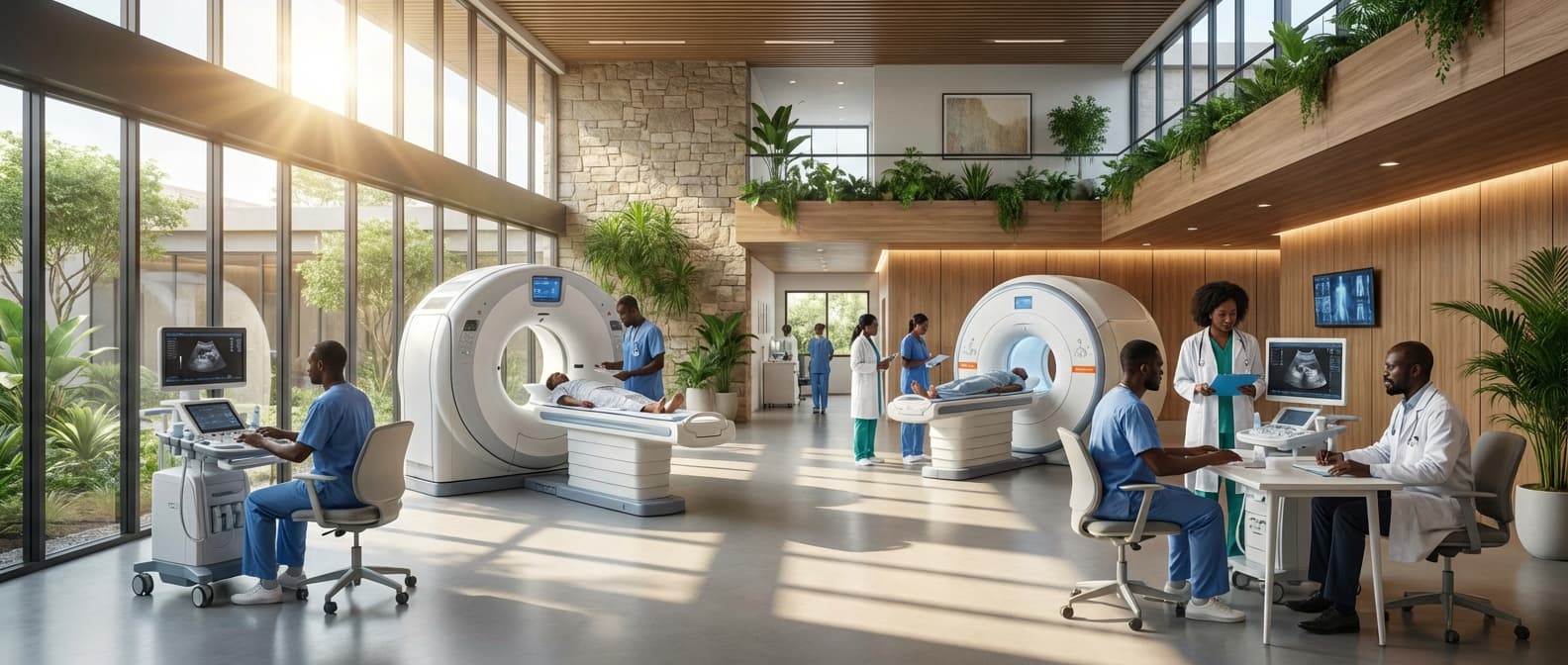
Diagnostic Imaging in Comoros
Engineering Excellence & Technical Support
High-resolution imaging systems including CT scanners, MRI, X-ray, and ultrasound technology for accurate clinical diagnosis. High-standard technical execution following OEM protocols and local regulatory frameworks.
Mobile Ultrasound Units Deployed
Strategic deployment of portable ultrasound machines to remote islands, expanding diagnostic capabilities beyond major healthcare centers and reaching underserved populations.
Transition to Digital X-ray Systems
Upgrade of traditional film-based X-ray units to modern digital systems, enabling faster image acquisition, improved image quality, and digital archiving for better patient management and referral.
Tele-radiology Network Established
Implementation of a tele-radiology platform connecting local imaging facilities with specialized radiologists off-island, facilitating rapid interpretation of complex cases and enhancing diagnostic accuracy.
What Is Diagnostic Imaging In Comoros?
Diagnostic imaging in Comoros refers to the use of advanced medical technologies to visualize the internal structures of the human body for diagnostic purposes. This field employs various imaging modalities to detect, characterize, and monitor diseases and injuries, playing a crucial role in modern healthcare delivery. The service involves the acquisition and interpretation of medical images, utilizing specialized equipment and trained professionals. The primary objective is to provide non-invasive or minimally invasive insights into anatomical abnormalities, pathological processes, and physiological functions, thereby guiding clinical decision-making and treatment planning. This service is essential for a broad spectrum of patients, encompassing individuals presenting with symptoms suggestive of internal disease, those requiring pre-operative assessment, post-operative monitoring, or follow-up for chronic conditions. Diagnostic imaging also plays a vital role in screening programs and in research settings for understanding disease progression.
| Patient Profile | Indications for Diagnostic Imaging | Typical Use Cases |
|---|---|---|
| Pediatric Patients | Suspected fractures, congenital anomalies, abdominal pain, neurological symptoms, trauma. | Skeletal imaging for fractures, ultrasound for appendicitis or intussusception, cranial ultrasound for hydrocephalus. |
| Adult Patients | Abdominal pain, chest pain, neurological deficits, trauma, suspected tumors, joint pain, monitoring of chronic diseases. | CT abdomen/pelvis for suspected appendicitis or bowel obstruction, chest X-ray for pneumonia, MRI brain for stroke, X-ray for suspected fractures. |
| Geriatric Patients | Falls, cognitive decline, joint pain, suspected osteoporosis, monitoring of degenerative conditions. | X-ray for hip fractures, MRI spine for spinal stenosis, bone densitometry (if available) for osteoporosis screening. |
| Pregnant Patients | Monitoring fetal development, assessment of obstetric complications. | Obstetric ultrasound for dating, anomaly scans, assessing placental position and amniotic fluid. |
| Trauma Patients | Suspected fractures, internal bleeding, organ damage, head injuries. | CT head for suspected intracranial hemorrhage, CT chest/abdomen/pelvis for multi-trauma, X-ray for extremity fractures. |
Diagnostic Imaging Modalities in Comoros (Illustrative)
- X-ray (Radiography): Utilizes electromagnetic radiation to create images of internal structures, particularly bone and dense tissues.
- Ultrasound (Sonography): Employs sound waves to generate real-time images of soft tissues, organs, and blood flow.
- Computed Tomography (CT) Scan: Generates cross-sectional images by combining multiple X-ray beams and computer processing.
- Magnetic Resonance Imaging (MRI): Uses strong magnetic fields and radio waves to produce detailed images of organs, soft tissues, bone, and virtually all other internal body structures.
Who Needs Diagnostic Imaging In Comoros?
Diagnostic imaging plays a crucial role in the healthcare system of Comoros by aiding in the diagnosis, monitoring, and treatment of a wide range of medical conditions. This technology is essential for providing accurate and timely medical care, especially in areas where clinical examination alone may be insufficient. The demand for diagnostic imaging services in Comoros is driven by the prevalence of various diseases and the need for specialized medical expertise.
| Customer Segment | Department/Service | Key Needs/Applications |
|---|---|---|
| General Population (Patients) | Primary Care, Outpatient, Emergency | Diagnosis of common ailments (e.g., fractures, infections, abdominal pain), initial screening, follow-up care. |
| Pregnant Women | Maternal and Child Health, Obstetrics/Gynecology | Antenatal ultrasound for fetal monitoring, detection of abnormalities, and assessment of maternal health. |
| Children | Pediatrics, General Care | Diagnosis of childhood illnesses, injuries, developmental issues, and infections. |
| Patients with Trauma/Injuries | Emergency Room, Orthopedics, Surgery | X-rays and CT scans for fracture identification, assessment of internal injuries, and surgical planning. |
| Patients with Suspected Infections | Internal Medicine, Infectious Diseases, Emergency | X-rays (e.g., chest X-ray for pneumonia/TB), ultrasounds, and CT scans to locate and assess the extent of infections. |
| Patients with Chronic Diseases | Internal Medicine, Cardiology, Pulmonology (where available) | Monitoring disease progression, assessing organ function, and guiding treatment (e.g., echocardiograms, CT scans for lung conditions). |
| Surgical Candidates | Surgery, Radiology | Pre-operative imaging to plan procedures, assess anatomy, and identify potential complications. |
| Public Health Programs | Public Health Departments, Outreach Programs | Screening for common conditions like tuberculosis (chest X-rays) and other prevalent diseases. |
| Medical Professionals | Radiology, All Clinical Departments | Accurate diagnostic information to support clinical decision-making, differential diagnosis, and treatment efficacy evaluation. |
Target Customers and Departments for Diagnostic Imaging in Comoros
- Primary healthcare facilities and clinics
- General hospitals
- Specialized medical centers
- Maternal and child health clinics
- Outpatient departments
- Emergency rooms
- Surgical departments
- Internal medicine departments
- Pediatric departments
- Radiology departments
- Pathology departments (for correlating with imaging findings)
- Oncology departments (where applicable)
- Public health initiatives and outreach programs
Diagnostic Imaging Process In Comoros
The diagnostic imaging process in Comoros, like in many healthcare systems, follows a structured workflow to ensure accurate and timely diagnosis. This process begins with a patient's medical need and culminates in the delivery of a diagnostic report. While resource availability might influence the specific technologies and turnaround times, the fundamental steps remain consistent.
| Stage | Description | Key Personnel Involved | Potential Challenges in Comoros |
|---|---|---|---|
| Patient Inquiry/Referral | A healthcare provider identifies the need for diagnostic imaging for a patient, either due to a new complaint or to monitor an existing condition. This leads to a referral to the imaging department. | Referring Physician/Clinician | Limited access to primary healthcare facilities, potential for delayed referrals. |
| Information Gathering and Pre-authorization | The imaging department receives the referral, reviews the patient's medical history, and gathers relevant clinical information. If applicable, insurance or government pre-authorization may be required. | Radiology Technician/Clerk, Referring Physician | Incomplete medical records, administrative delays for authorization. |
| Scheduling and Preparation | The patient is scheduled for the imaging procedure. Specific preparations, such as fasting, dietary restrictions, or medication adjustments, are communicated to the patient. | Radiology Technician/Clerk, Patient | Limited appointment slots, patient compliance with preparation instructions, communication barriers. |
| Image Acquisition (Scanning) | The patient undergoes the imaging procedure (e.g., X-ray, ultrasound, CT scan, MRI) using specialized equipment. The technologist positions the patient and operates the equipment to capture the images. | Radiology Technologist/Technician | Availability and maintenance of imaging equipment, power supply stability, availability of contrast agents (if needed). |
| Image Processing and Interpretation | The acquired images are processed (if digital) and then carefully reviewed by a radiologist who analyzes them for abnormalities and provides a professional interpretation. | Radiology Technologist/Technician, Radiologist | Shortage of qualified radiologists, limited access to advanced imaging software, remote interpretation challenges. |
| Report Generation and Dissemination | A detailed diagnostic report, including findings and recommendations, is generated by the radiologist. This report is then communicated back to the referring physician. | Radiologist, Administrative Staff | Handwritten reports (if digital systems are limited), slow communication channels, potential for lost reports. |
| Follow-up and Treatment Planning | The referring physician uses the imaging report to confirm or refine the diagnosis, discuss findings with the patient, and develop an appropriate treatment plan. | Referring Physician/Clinician, Patient | Challenges in patient follow-up due to geographical distance or cost, limited treatment options locally. |
Diagnostic Imaging Workflow in Comoros
- Patient Inquiry/Referral
- Information Gathering and Pre-authorization
- Scheduling and Preparation
- Image Acquisition (Scanning)
- Image Processing and Interpretation
- Report Generation and Dissemination
- Follow-up and Treatment Planning
Diagnostic Imaging Cost In Comoros
Diagnostic imaging costs in Comoros can vary significantly due to several factors. The availability of advanced equipment, the specialization of the medical facility, and the demand for specific procedures all play a role. Geographic location within the Comoros (e.g., Grande Comore vs. smaller islands) can also influence prices due to logistical challenges and resource distribution. Furthermore, the type of imaging modality – such as X-ray, Ultrasound, CT scans, or MRI – inherently dictates the complexity and cost of the procedure. The expertise of the radiologist and technician, as well as the consumables used, also contribute to the overall expense. While precise, publicly available price lists are uncommon, anecdotal evidence and comparisons with regional pricing suggest a general range for common diagnostic imaging procedures in Comorian local currency (Comorian Franc - KMF).
| Imaging Procedure | Estimated Cost Range (KMF) |
|---|---|
| Basic X-ray (e.g., Chest X-ray, Limb X-ray) | 15,000 - 40,000 |
| Ultrasound (Abdomen, Pelvis, Obstetric) | 20,000 - 50,000 |
| CT Scan (e.g., Head CT, Abdominal CT) | 80,000 - 200,000+ |
| MRI Scan (if available, highly specialized) | 150,000 - 400,000+ |
Factors Influencing Diagnostic Imaging Costs in Comoros
- Availability and sophistication of imaging equipment.
- Specialization and reputation of the medical facility.
- Geographic location within the Comoros.
- Type of imaging modality (X-ray, Ultrasound, CT, MRI).
- Expertise of medical professionals (radiologists, technicians).
- Cost of consumables and maintenance.
- Patient's insurance coverage (if applicable).
- Urgency of the procedure.
Affordable Diagnostic Imaging Options
Navigating diagnostic imaging can be daunting, especially when considering costs. Fortunately, several affordable options and cost-saving strategies exist. Understanding 'value bundles' and exploring alternatives can significantly reduce your out-of-pocket expenses while ensuring you receive necessary medical care.
| Cost-Saving Strategy | Explanation | Considerations |
|---|---|---|
| Shop Around and Compare Prices | Different facilities, even those performing the same imaging test, can have vastly different prices. Obtain price quotes from multiple providers in your area before scheduling. | Verify if the price includes both the facility fee and the radiologist's interpretation. Ask about any potential additional charges. |
| Utilize Freestanding Imaging Centers | These centers often have lower overhead costs than hospitals, which can translate to lower prices for diagnostic imaging procedures. | Ensure the center is accredited and that your physician accepts their reports. Some complex cases may still be better suited for hospital settings. |
| Negotiate Prices (Especially if Uninsured/Underinsured) | If you don't have insurance or have a high deductible, don't hesitate to ask for a discount. Healthcare providers are often willing to negotiate, especially for self-pay patients. | Be prepared to discuss your financial situation. Offer to pay in full at the time of service for a potential discount. |
| Explore Direct-to-Consumer Imaging Services | Several online platforms and companies offer pre-paid, bundled imaging packages at competitive prices, often bypassing traditional insurance billing. | Confirm the credentials of the imaging centers used by these services and ensure they are in-network with your ordering physician. |
| Understand Your Insurance Benefits | Know your deductible, copayments, coinsurance, and out-of-pocket maximum. Understand whether your insurance has preferred provider networks for imaging services. | Call your insurance company to confirm coverage for the specific imaging test and to inquire about in-network providers and their pricing. |
| Ask About Cash Pay Discounts | Even with insurance, if your deductible is high, paying in cash might be cheaper. Inquire about discounted cash prices. | This can be especially beneficial for routine screenings or if you're close to meeting your deductible and the cost of the scan would push you over. |
| Consider a Radiology Group's Own Imaging Center | Some radiology groups own their imaging centers. Inquiring directly with the group might reveal pricing advantages or bundled options. | This can sometimes streamline communication between the interpreting radiologist and the facility. |
Understanding Value Bundles in Diagnostic Imaging
- What are Value Bundles? Value bundles, often referred to as 'package pricing' or 'global fees,' combine the technical component (the cost of the equipment, facility, and staff) and the professional component (the radiologist's interpretation fee) into a single, often discounted, price. This can simplify billing and potentially offer savings compared to separate charges.
- Benefits of Value Bundles:
- Cost Predictability: Know the total cost upfront, aiding in budgeting and financial planning.
- Potential Savings: Bundled services are often priced lower than the sum of their individual parts.
- Streamlined Billing: Easier to understand and manage medical bills.
- Negotiating Power: For healthcare providers, offering bundles can be a competitive advantage, potentially leading to better pricing for consumers.
- Where to Find Value Bundles:
- Imaging Centers: Many freestanding imaging centers offer bundled pricing for common procedures.
- Hospitals (Outpatient): While less common than at dedicated centers, some hospitals may offer bundled pricing for specific outpatient imaging services.
- Insurance Companies: Some insurance plans may have preferred provider networks or specific bundled arrangements with imaging facilities.
- Direct-to-Consumer Services: Emerging platforms and companies are specifically creating bundled imaging packages for uninsured or high-deductible patients.
Verified Providers In Comoros
Finding reliable and credentialed healthcare providers is paramount for your well-being in Comoros. Franance Health stands out as a leader in verifying and showcasing these trusted professionals, ensuring you receive the highest quality of care. Their rigorous credentialing process goes beyond basic licensing, delving into the expertise, experience, and ethical standing of each practitioner. This commitment to thorough vetting means that when you choose a provider listed by Franance Health, you are selecting a professional who has met stringent standards and is dedicated to patient safety and optimal outcomes.
| Provider Type | Typical Franance Health Verification Includes | Benefits of Choosing a Franance Health Verified Provider |
|---|---|---|
| General Practitioners | Medical Degree, Medical License, Internship/Residency completion, Continuing Medical Education (CME) records | Access to primary care with a foundation of proven medical knowledge and ongoing professional development. |
| Specialists (e.g., Cardiologists, Dermatologists) | All GP verifications plus Board Certification in their specialty, Fellowship training (if applicable), Peer endorsements | Care from highly skilled experts with advanced training and recognized proficiency in their field. |
| Surgeons | All relevant medical and specialty verifications, Surgical residency completion, Hospital privileges, Evidence of successful procedures | Confidence in undergoing surgical procedures with practitioners who have demonstrated surgical competence and experience. |
| Dentists | Dental Degree, Dental License, Specialization certifications (e.g., Orthodontics), Continuing Dental Education (CDE) | Reliable dental care from professionals committed to oral health and up-to-date practices. |
| Nurses (RNs, NPs) | Nursing Degree, Nursing License, Specialization certifications, Continuing Education | Quality nursing care and advanced practice services from licensed and certified professionals. |
Why Franance Health Credentials Matter:
- Rigorous Verification Process: Franance Health employs a multi-faceted approach to verify credentials, including educational background, specialized training, board certifications, and peer reviews.
- Emphasis on Experience: Beyond qualifications, they assess the practical experience and track record of healthcare professionals.
- Commitment to Ethical Standards: Franance Health ensures providers adhere to the highest ethical codes of conduct, prioritizing patient rights and confidentiality.
- Up-to-Date Information: They maintain a dynamic database, ensuring provider information and specializations are current.
- Enhanced Patient Confidence: Knowing a provider is Franance Health-verified offers significant peace of mind and reduces the stress of finding care.
Scope Of Work For Diagnostic Imaging
This document outlines the Scope of Work (SOW) for Diagnostic Imaging services, detailing the technical deliverables and standard specifications required to ensure high-quality, reliable, and safe imaging procedures. The objective is to define the parameters for the provision and operation of diagnostic imaging equipment and services, covering both equipment maintenance and the provision of imaging studies.
| Deliverable Category | Specific Deliverable | Standard Specification / Requirement | Acceptance Criteria |
|---|---|---|---|
| Equipment | Diagnostic Imaging Modality (e.g., MRI, CT, X-ray, Ultrasound) | Latest generation technology, FDA/CE approved, appropriate field strength/resolution, built-in safety features, PACS compatibility. | Equipment meets all stated technical specifications, passes functional and performance tests, and is fully integrated with existing hospital IT infrastructure. |
| Equipment | Image Acquisition Software | Intuitive user interface, supports standard DICOM protocols, advanced post-processing capabilities, interoperability with PACS and RIS. | Software is installed, configured, and tested for seamless image acquisition and data transfer. |
| Maintenance | Preventive Maintenance Schedule | Manufacturer-recommended schedule, performed by certified technicians, includes detailed service reports. | All scheduled maintenance completed within specified timelines, documented with service reports and performance logs. |
| Maintenance | Corrective Maintenance Response Time | Guaranteed response time for equipment downtime (e.g., < 4 hours for critical failures), availability of spare parts. | Downtime resolution within specified response times, documented with incident reports. |
| Protocols | Imaging Protocol Manual | Comprehensive, evidence-based protocols for all common and specialized imaging procedures, tailored to patient demographics and clinical indications. | Manual approved by clinical stakeholders, protocols validated for diagnostic accuracy and patient safety. |
| Protocols | Protocol Optimization Review | Regular review and update of imaging protocols based on new clinical guidelines, technological advancements, and image quality feedback. | Periodic review meetings held, documented changes to protocols implemented and communicated. |
| Image Handling | Image Archival and Retrieval System (PACS) | Secure, high-capacity storage, robust retrieval capabilities, DICOM compliant, integration with RIS and EMR. | PACS system is operational, compliant with DICOM standards, and facilitates rapid image access. |
| Image Handling | Image Quality Standards | Adherence to established benchmarks for signal-to-noise ratio, spatial resolution, contrast resolution, and artifact reduction. | Regular image quality assessments performed, meeting or exceeding specified benchmarks. |
| Reporting | Radiology Information System (RIS) | Seamless integration with PACS and EMR, efficient workflow management, secure patient data handling, customizable reporting templates. | RIS system is fully functional and integrated, supporting efficient report generation and dictation. |
| Reporting | Radiologist Reporting turnaround time | Defined maximum turnaround times for various types of imaging reports (e.g., STAT, routine). | Average and maximum turnaround times for reports consistently meet or exceed defined targets. |
| Quality Assurance | Quality Control (QC) Program | Regular phantom scans, dose monitoring, image review by senior radiologists, and incident reporting system. | QC procedures are consistently performed, documented, and deviations are addressed. |
| Quality Assurance | Peer Review Process | Systematic review of a percentage of interpreted studies by independent radiologists to assess diagnostic accuracy and consistency. | Peer review conducted as per established frequency, findings documented and used for performance improvement. |
| Staffing | Qualified Imaging Technologists | Certified and licensed technologists with experience in specific modalities, adherence to safety protocols. | All technologists possess required certifications and licenses, demonstrate proficiency in their roles. |
| Staffing | Board-Certified Radiologists | Specialized radiologists for each modality, with current licensure and ongoing professional development. | Radiologists are board-certified, licensed, and actively participate in continuing education. |
| Compliance | Regulatory Compliance Documentation | Evidence of adherence to all relevant local, national, and international regulations (e.g., HIPAA, GDPR, ACR standards, radiation safety regulations). | All required licenses, permits, and certifications are up-to-date and readily available for inspection. |
| Security | Data Encryption and Access Control | Implementation of robust security measures to protect patient data, including encryption of data at rest and in transit, and role-based access controls. | Security protocols are implemented, tested, and audited regularly to ensure data confidentiality and integrity. |
Key Areas Covered
- Equipment Procurement and Installation
- Equipment Maintenance and Calibration
- Imaging Procedure Protocols
- Image Acquisition and Storage
- Reporting and Interpretation
- Quality Assurance and Control
- Staffing and Training
- Compliance and Regulatory Requirements
- Data Security and Privacy
Service Level Agreement For Diagnostic Imaging
This Service Level Agreement (SLA) outlines the performance standards and guarantees for diagnostic imaging services provided by [Your Company Name] to [Client Name]. It defines key metrics for response times and uptime to ensure the reliability and availability of these critical services.
| Service Component | Response Time Guarantee (Max) | Uptime Guarantee (Min) | Reporting/Notification of Outage |
|---|---|---|---|
| Image Acquisition and Storage | 5 minutes for initial acknowledgment; 30 minutes for successful storage | 99.9% | Within 15 minutes of detected or reported outage |
| Image Retrieval and Viewing (PACS Access) | 10 seconds for initial login; 20 seconds for image loading | 99.95% | Within 15 minutes of detected or reported outage |
| Report Generation and Delivery | 1 hour for initial report availability after radiologist sign-off | 99.8% | Within 30 minutes of detected or reported outage |
| Integration with EMR/EHR Systems | 5 minutes for data synchronization confirmation | 99.9% | Within 15 minutes of detected or reported outage |
| Scheduled Maintenance Window | N/A | N/A | Advance notice of 48 hours provided |
Key Performance Indicators (KPIs) and Guarantees
- Response Time: The time taken for the system to acknowledge and begin processing a request, such as image transfer initiation or report generation.
- Uptime: The percentage of time the diagnostic imaging service is available and fully functional for client access and use.
- Downtime: Any period during which the diagnostic imaging service is unavailable or not fully functional.
Frequently Asked Questions

Ready when you are
Let's scope your Diagnostic Imaging in Comoros project in Comoros.

Scaling healthcare logistics and technical systems across the entire continent.