
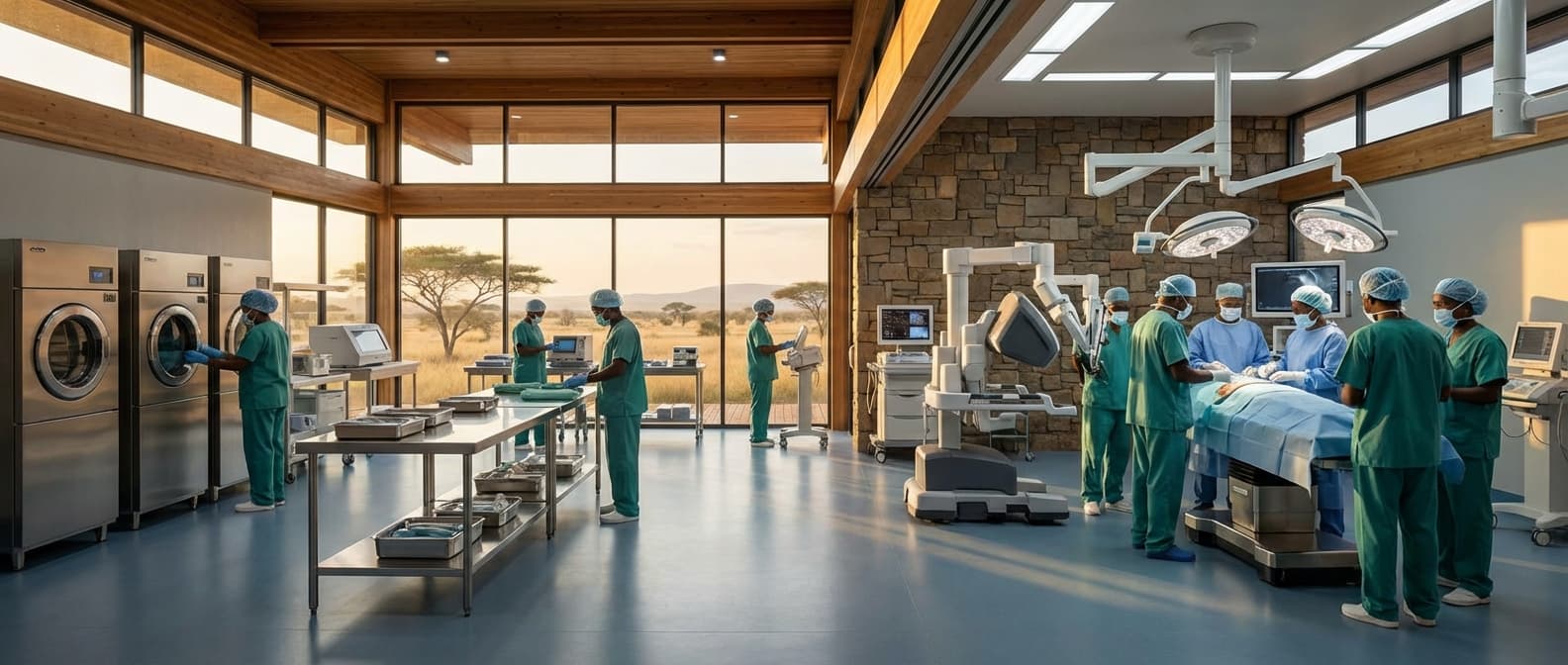
Medical Gas System Design & Installation in Comoros
Engineering Excellence & Technical Support
Medical gas pipeline systems: O2, N2O, air, vacuum High-standard technical execution following OEM protocols and local regulatory frameworks.
On-Site Oxygen Generation for Remote Clinics
Implementing PSA (Pressure Swing Adsorption) oxygen generators directly at remote healthcare facilities in Comoros ensures a continuous and reliable supply of medical oxygen, overcoming the logistical challenges of bulk cylinder delivery in island terrains.
Nitrous Oxide Distribution Network Integration
Designed and installed a state-of-the-art, corrosion-resistant medical gas pipeline system for hospitals, featuring a centralized Nitrous Oxide supply to operating theaters, enhancing anesthetic safety and efficiency across the archipelago.
Advanced Vacuum and Air System Optimization
Engineered and deployed high-efficiency medical vacuum and compressed air systems with redundant capabilities, ensuring critical suction and ventilation support are uninterrupted during surgical procedures and patient care in Comorian healthcare institutions.
What Is Medical Gas System Design & Installation In Comoros?
Medical gas system design and installation in Comoros refers to the specialized engineering and construction process of creating integrated networks for the safe and reliable delivery of medical gases to healthcare facilities. This encompasses the selection, procurement, installation, and commissioning of all components, ensuring compliance with national and international standards for medical gas purity, pressure, flow rates, and alarm systems. The service is critical for modern healthcare operations, providing essential gases such as oxygen, medical air, nitrous oxide, and vacuum.
| Service Aspect | Description | Who Needs It | Typical Use Cases |
|---|---|---|---|
| Design | Conceptualization and detailed engineering of the entire medical gas infrastructure, including gas source selection, network layout, material specification, and compliance with relevant codes (e.g., HTM 02-01, NFPA 99). This phase involves load calculations, risk assessments, and preparation of technical drawings and documentation. | New hospital constructions, major hospital renovations and expansions, specialized medical clinics, and critical care units. | Ensuring adequate and reliable supply of oxygen for respiratory support in operating rooms, intensive care units (ICUs), and general wards. Provision of medical air for ventilators and pneumatic devices. Delivery of nitrous oxide for anesthesia. Creation of vacuum for suction procedures. |
| Installation | The physical implementation of the designed system. This includes the procurement and installation of source equipment, the precise layout and welding of medical-grade piping, the connection of all ancillary components (valves, regulators, outlets), and adherence to stringent cleanroom and hygiene protocols during installation to prevent contamination. | Healthcare facilities requiring new medical gas infrastructure or upgrades to existing systems. This includes public and private hospitals, health centers, and specialized medical facilities. | Establishing a functional and safe delivery network for all essential medical gases. Integration of the system with building infrastructure. Ensuring all connection points are accessible and compliant with medical best practices. |
| Commissioning & Validation | A critical phase involving comprehensive testing and verification of the installed system to ensure it meets all design specifications and operational requirements. This includes pressure testing, leak detection, gas purity analysis, flow rate verification, and alarm system functionality checks, followed by final documentation and handover. | All healthcare facilities that have undergone design and installation of a medical gas system. This is a mandatory step for regulatory compliance and patient safety. | Confirming the integrity of the piping network, verifying the correct functioning of regulators and alarms, ensuring the purity and correct composition of medical gases, and providing a certified system ready for clinical use. |
Key Components of Medical Gas System Design & Installation
- Source Equipment: Oxygen concentrators, cryogenic tanks, medical air compressors, vacuum pumps, and nitrous oxide cylinder banks.
- Piping and Distribution: Medical-grade copper or stainless steel piping, pressure regulators, shut-off valves, and gas-specific outlets at patient connection points.
- Alarm Systems: Centralized and local alarms to monitor pressure, flow, and purity of medical gases.
- Control Panels: Manifold control panels for seamless switching between primary and reserve gas sources.
- Ventilation and Exhaust Systems: For safe handling of waste anesthetic gases (WAGs).
- Testing and Commissioning: Rigorous testing for leaks, pressure, purity, and flow before facility handover.
Who Needs Medical Gas System Design & Installation In Comoros?
Ensuring a reliable and safe medical gas supply is paramount for modern healthcare facilities. In Comoros, as in any nation striving for advanced medical care, the need for expert medical gas system design and installation spans across various healthcare institutions and their specialized departments. This service is crucial for facilities that rely on a consistent flow of medical gases for patient treatment, resuscitation, and surgical procedures. The design and installation process must adhere to stringent international standards and local regulations to guarantee patient safety and operational efficiency. Investing in a properly designed and installed medical gas system contributes directly to improved patient outcomes and the overall capacity of healthcare providers to deliver critical medical services.
| Customer Type | Key Needs & Services Required | Specific Departments of Interest |
|---|---|---|
| Public Hospitals | Upgrades to existing systems, new installations for expanding facilities, bulk supply solutions, compliance with national health standards, training for maintenance staff. | Operating Theaters, ICUs, ER, NICU, Pulmonary Dept. |
| Private Hospitals | State-of-the-art system design, integration with advanced medical equipment, high-purity gas supply, maintenance contracts, compliance with international standards. | All departments requiring life support and anesthesia, including specialized surgical suites. |
| Specialized Clinics (e.g., Surgical, Dialysis) | Customized system design for specific procedures, on-demand gas generation or tank solutions, precise flow control, safety features. | Operating rooms, recovery areas, dialysis units. |
| Government Health Ministries/Agencies | Oversight and regulation of medical gas infrastructure, support for public health initiatives, standardization of systems across facilities, capacity building. | All public healthcare facilities managed or regulated by the ministry. |
| NGOs & International Aid Organizations | Installation of medical gas systems in new or underserved facilities, provision of essential equipment and training for disaster relief or development projects. | Field hospitals, remote clinics, primary healthcare centers. |
Target Customers & Departments for Medical Gas System Design & Installation in Comoros
- Hospitals (Public and Private)
- Surgical Centers & Operating Theaters
- Intensive Care Units (ICUs) & Critical Care Units (CCUs)
- Emergency Rooms & Accident & Emergency Departments
- Neonatal Intensive Care Units (NICUs)
- Pulmonary/Respiratory Care Departments
- Anesthesia Departments
- Rehabilitation Centers with Respiratory Needs
- Dialysis Centers (requiring medical air/oxygen mixes)
- Ambulance Services (for onboard gas systems)
- Research Laboratories within Medical Institutions
- Veterinary Hospitals (for anesthetic gases)
Medical Gas System Design & Installation Process In Comoros
This document outlines the typical workflow for the design and installation of a medical gas system in Comoros, from initial inquiry to final execution and handover. The process is structured to ensure compliance with relevant standards, client requirements, and the unique logistical considerations of operating in Comoros.
| Phase | Stage | Key Activities | Deliverables/Outcomes | Considerations for Comoros |
|---|---|---|---|---|
| 1 | Inquiry & Initial Consultation | Receipt of client inquiry, initial project scope definition, site visit (if feasible), understanding client needs (types of gases, flow rates, pressure requirements, budget, timeline), preliminary risk assessment. | Project brief, initial site assessment report, preliminary proposal/quote, client sign-off for next phase. | Establish clear communication channels (potential language barriers), assess existing infrastructure, local availability of specific materials/skilled labor, travel logistics for site visits. |
| 2 | System Design & Planning | Detailed site survey and measurements, adherence to international standards (e.g., HTM 02-01, NFPA 99), creation of detailed schematics and layout drawings, equipment selection (manifolds, regulators, alarm systems, piping, outlets), pressure drop calculations, material specification, development of Bill of Materials (BOM), generation of construction drawings, obtaining necessary permits/approvals (local authorities). | Detailed design drawings (schematics, layouts), specifications for all components, Bill of Materials (BOM), construction schedule, project execution plan, permit applications. | Consideration of local building codes and regulations, potential for seismic activity, environmental conditions (humidity, temperature), availability of local electrical power, sourcing of materials with longer lead times. |
| 3 | Procurement & Logistics | Sourcing of all specified equipment and materials, vendor selection and negotiation, creation of purchase orders, management of shipping and customs clearance, coordination of delivery to the Comoros site. | Procured equipment and materials, customs clearance documentation, delivery manifests, confirmed shipment tracking. | Significant focus on reliable shipping agents, understanding customs duties and import regulations, contingency planning for potential delays at ports, secure storage of materials upon arrival. |
| 4 | Installation & Commissioning | Site preparation, installation of medical gas pipelines, manifold systems, alarm panels, and terminal units, pressure testing of piping, purging and flushing of the system, initial system checks, connection to gas sources. | Installed medical gas piping network, connected terminal units, functional manifold systems, preliminary pressure test reports. | Availability of qualified and trained installation teams (local and/or expatriate), strict adherence to safety protocols during installation, managing the logistics of tools and equipment, potential for power outages affecting work progress. |
| 5 | Testing, Validation & Handover | Comprehensive system testing (pressure, flow, purity, leak tests), operational verification of alarm systems, final validation and certification by authorized bodies, training of hospital staff on system operation and maintenance, handover of all documentation (as-built drawings, O&M manuals, test certificates). | Certified medical gas system, detailed test and validation reports, trained hospital staff, comprehensive handover documentation package. | Ensuring testing procedures are clearly understood by local personnel, facilitating access for any external certifying bodies, providing training in a manner that overcomes language barriers, ensuring all documentation is translated or easily understandable. |
| 6 | Post-Installation Support & Maintenance | Provision of warranty support, scheduled maintenance visits (as per contract), emergency repair services, spare parts management, ongoing technical support. | Functional and well-maintained medical gas system, documented maintenance records, readily available technical support. | Establishing a clear point of contact for ongoing support, availability of spare parts locally or through expedited shipping, training local technicians for routine maintenance and minor repairs. |
Medical Gas System Design & Installation Process in Comoros
- Phase 1: Inquiry & Initial Consultation
- Phase 2: System Design & Planning
- Phase 3: Procurement & Logistics
- Phase 4: Installation & Commissioning
- Phase 5: Testing, Validation & Handover
- Phase 6: Post-Installation Support & Maintenance
Medical Gas System Design & Installation Cost In Comoros
Designing and installing a medical gas system in Comoros, like anywhere else, involves a complex interplay of factors that dictate the overall cost. These systems are critical for patient care, providing essential gases like oxygen, medical air, nitrous oxide, and vacuum. The pricing is not static and can fluctuate significantly based on the project's scope, the chosen materials, the complexity of the installation, and the prevailing economic conditions in Comoros. Local currency pricing will be influenced by the Comorian Franc (KMF) exchange rate and the availability of specialized components and labor.
| System Component/Service | Estimated Cost Range (KMF) | Notes |
|---|---|---|
| Medical Gas Piping (per meter) | 15,000 - 40,000 KMF | Varies significantly based on material (copper, PEX), diameter, and installation complexity. Includes basic fittings. |
| Medical Gas Outlets (per unit) | 25,000 - 75,000 KMF | Includes wall plate, probe, gas-specific adapter, and rough-in components. Price depends on brand and functionality. |
| Pressure Regulators (per unit) | 30,000 - 150,000 KMF | Medical grade, gas-specific. Cost varies by flow rate, accuracy, and brand. |
| Manifold Systems (for cylinders/tanks) | 500,000 - 3,000,000+ KMF | Automatic or manual switchover. Depends on the number of gases and capacity. |
| Medical Air Compressor/Vacuum Pump | 1,000,000 - 5,000,000+ KMF | Medical grade, oil-free. Cost is highly dependent on capacity, redundancy, and brand. |
| Central Alarm System | 300,000 - 1,500,000 KMF | Monitors gas pressure, purity, and system status. Includes sensors and display units. |
| Design & Engineering Services | 5% - 15% of total project cost | Professional fees for schematic design, detailed design, and specifications. |
| Installation Labor (skilled) | 20,000 - 60,000 KMF per day per person | Reflects the need for specialized, certified technicians. Can be higher for expatriate specialists. |
| Commissioning & Testing | 500,000 - 2,000,000 KMF | Pressure testing, leak detection, purity analysis, flow testing, and documentation. |
| Small Clinic System (Basic Oxygen & Vacuum) | 5,000,000 - 15,000,000 KMF | Conceptual estimate for a limited number of outlets and basic equipment. |
| Medium Hospital Wing (Multiple Gases) | 20,000,000 - 70,000,000 KMF | Conceptual estimate for a more comprehensive system with several operating rooms and wards. |
| Large Hospital Complex (Full System) | 100,000,000+ KMF | Conceptual estimate for a major facility requiring a highly sophisticated and redundant system. |
Key Pricing Factors for Medical Gas System Design & Installation in Comoros
- System Scope and Size: The number of medical gas outlets required, the size of the facility (hospital, clinic, operating theaters, ICU, wards), and the types of gases needed are primary cost drivers. Larger and more complex systems naturally incur higher expenses.
- Type and Quality of Materials: The choice between copper piping, stainless steel, or specific polymer tubing for gas lines significantly impacts cost. High-grade, medical-specific fittings, valves, regulators, and alarm systems also add to the overall budget.
- Source of Medical Gases: The cost of the gas supply itself, whether through bulk liquid oxygen tanks, medical gas cylinders, or on-site generation systems (e.g., for medical air or oxygen), will be a recurring or upfront expense.
- Complexity of Installation: The layout of the building, accessibility for pipe routing, the need for specialized construction work (e.g., coring through walls), and integration with existing infrastructure will influence labor costs and the duration of the project.
- Specialized Equipment: This includes medical gas manifolds, vacuum pumps, air compressors, oxygen concentrators (if applicable), patient monitoring equipment, and central alarm systems. The brand and technological sophistication of this equipment play a crucial role in pricing.
- Labor Costs: The availability of skilled technicians and engineers experienced in medical gas system installation in Comoros is a critical factor. Higher demand for specialized skills or a shortage of local expertise can lead to increased labor costs. This also includes the cost of any expatriate labor if local expertise is insufficient.
- Regulatory Compliance and Certification: Adhering to international and local standards for medical gas systems (e.g., NFPA, ISO) may require specific testing, commissioning, and certification processes, which add to the project cost.
- Project Management and Engineering Fees: Design services, project planning, supervision, and commissioning all incur professional fees that contribute to the total expense.
- Location and Logistics: Transportation costs for materials and equipment to Comoros, especially if sourced internationally, can be substantial. Remote or difficult-to-access locations within the islands may also incur additional logistical expenses.
- Contingency and unforeseen circumstances: It's standard practice to include a contingency allowance for unexpected issues that may arise during design or installation.
- Market Conditions and Supplier Markups: Fluctuations in global material prices, import duties, taxes, and supplier profit margins will directly affect the final cost.
Affordable Medical Gas System Design & Installation Options
Designing and installing a medical gas system involves significant investment. However, by exploring affordable options, value bundles, and strategic cost-saving measures, healthcare facilities can optimize their budgets without compromising on safety or functionality. This guide outlines key considerations for achieving cost-effective medical gas system solutions.
| Cost-Saving Strategy | Description | Potential Benefits |
|---|---|---|
| Value Bundles | Pre-packaged solutions combining equipment, installation, and services. | Simplified procurement, predictable costs, potential discounts. |
| Phased Installation | Installing essential services first, with future expansions planned. | Manages upfront capital expenditure, allows for gradual implementation. |
| Modular Systems | Scalable equipment that can be expanded as needs evolve. | Avoids over-sizing, cost-effective for growing facilities. |
| Equipment Sourcing | Considering new, refurbished, or leased equipment options. | Reduced capital outlay, especially with certified refurbished units. |
| Supplier Bidding & Negotiation | Obtaining quotes from multiple vendors and negotiating terms. | Competitive pricing, better contract terms, ensured value. |
| Standardization | Using consistent equipment and component types throughout the facility. | Bulk purchasing discounts, simplified inventory and maintenance. |
| Energy Efficiency | Selecting energy-saving compressors and pumps. | Reduced operational costs (electricity bills) over system lifespan. |
| Preventative Maintenance | Implementing regular, scheduled maintenance plans. | Minimized downtime, reduced risk of costly emergency repairs. |
| Remote Monitoring | Utilizing systems to track gas levels and system performance remotely. | Early detection of issues, proactive problem-solving, reduced emergency service costs. |
Understanding Value Bundles and Cost-Saving Strategies
- Value Bundles: These are pre-packaged offerings from medical gas suppliers that combine equipment, installation services, and sometimes maintenance or monitoring into a single, often discounted, package. They simplify procurement, streamline project management, and can offer predictable costs.
- Phased Installation: For facilities with budget constraints, breaking down the installation into phases can be a viable strategy. Essential services can be installed first, with less critical systems or expansions added later as funds become available.
- Modular Systems: Opting for modular medical gas equipment allows for scalability. Facilities can start with a smaller system and expand it as their needs grow, avoiding the upfront cost of an oversized system.
- Equipment Sourcing: Carefully evaluate whether to purchase new, refurbished, or even leased equipment. Refurbished equipment can offer significant cost savings while still meeting stringent medical standards when certified by reputable providers.
- Supplier Negotiation and Bidding: Always solicit bids from multiple reputable medical gas system providers. Thoroughly negotiate terms, including payment schedules, warranty periods, and inclusion of all necessary components and labor.
- Standardization: Standardizing on specific types of equipment and components across the facility can lead to bulk purchasing discounts and simplify future maintenance and replacement processes.
- Energy Efficiency: Incorporating energy-efficient compressors and vacuum pumps can reduce long-term operational costs. While the initial investment might be slightly higher, the savings on electricity bills over the system's lifespan can be substantial.
- Preventative Maintenance Contracts: While an upfront cost, a well-structured preventative maintenance contract can prevent costly emergency repairs and system downtime, ultimately saving money and ensuring patient safety.
- Remote Monitoring and Alarms: Investing in remote monitoring systems for your medical gas supply can alert you to issues before they become critical, potentially avoiding expensive emergency service calls and disruptions.
- Local vs. National Suppliers: Consider the pros and cons of working with local versus national suppliers. Local suppliers might offer more personalized service and potentially lower travel costs for installation and maintenance, while national suppliers may have greater purchasing power and broader service networks.
Verified Providers In Comoros
In Comoros, navigating the healthcare landscape to find trusted and qualified providers is paramount. Franance Health stands out as a beacon of reliability, offering a curated network of verified healthcare professionals and facilities. Their rigorous credentialing process ensures that every provider within their network has met stringent standards for education, experience, and ethical practice. This commitment to verification offers patients peace of mind, knowing they are receiving care from competent and trustworthy individuals. Choosing a Franance Health-affiliated provider means opting for a higher standard of care, characterized by professionalism, expertise, and a patient-centered approach. Their network is designed to connect individuals with the best possible healthcare solutions available in Comoros, making them the premier choice for accessible and dependable medical services.
| Aspect | Franance Health Advantage | Benefit for Patients |
|---|---|---|
| Provider Verification | Strict credentialing and background checks. | Confidence in the qualifications and integrity of healthcare professionals. |
| Network Quality | Curated network of top-tier doctors and facilities. | Access to the most skilled and reputable medical experts in Comoros. |
| Service Standards | Emphasis on professional ethics and patient-centered care. | Experience healthcare that is both effective and compassionate. |
| Accessibility | Streamlined process for finding and connecting with verified providers. | Easier and more efficient access to necessary medical treatments. |
| Trust and Reliability | A brand synonymous with dependable healthcare solutions. | Reduced anxiety and greater assurance in the quality of medical services received. |
Why Franance Health Providers are the Best Choice in Comoros:
- Rigorous Credentialing Process: Ensures all providers meet high standards of qualification and ethical practice.
- Verified Expertise: Patients can trust the skills and knowledge of Franance Health-affiliated professionals.
- Enhanced Patient Safety: Reduced risk by partnering with pre-vetted and accredited healthcare entities.
- Access to Quality Care: Connects individuals with the most reputable and competent healthcare providers in Comoros.
- Patient-Centered Approach: Focuses on delivering compassionate and effective medical services.
- Peace of Mind: Offers assurance of receiving reliable and trustworthy healthcare.
Scope Of Work For Medical Gas System Design & Installation
This Scope of Work (SOW) outlines the requirements for the design and installation of a new medical gas system. It details the technical deliverables expected from the contractor and references standard specifications and codes that must be adhered to throughout the project. The objective is to ensure a safe, reliable, and compliant medical gas system that meets all applicable healthcare facility standards and regulatory requirements.
| Category | Standard/Code | Description |
|---|---|---|
| General Medical Gas Systems | NFPA 99 | Health Care Facilities Code (includes requirements for medical gas systems, vacuum systems, and air systems). |
| Piping and Materials | ASTM B819 | Standard Specification for Seamless Copper Tube for Medical Gas Systems. |
| Piping and Materials | ASTM B88 | Standard Specification for Seamless Copper Water Tube. |
| Fittings | ASTM B75 | Standard Specification for Seamless Copper Tube for General Purpose Applications. |
| Gas Outlets and Valves | NFPA 99 | Requirements for specific outlet types, connection standards, and valve specifications for different medical gases. |
| Alarm Systems | NFPA 99 | Specifications for pressure and vacuum alarms, including audible and visual indicators. |
| Manifolds | NFPA 99 | Requirements for automatic or manual manifolds for gas cylinder supply. |
| Ventilation | ASHRAE 170 | Ventilation of Health Care Facilities (provides guidelines for air changes, pressure relationships, and filtration relevant to medical gas rooms). |
| Welding and Brazing | ASME B31.9 | Building Services Piping (references for welding and brazing procedures for piping systems). |
Technical Deliverables
- Detailed design drawings and specifications for the medical gas system, including piping layouts, valve locations, outlet configurations, alarm systems, and manifold specifications.
- As-built drawings reflecting the final installed system.
- Operation and Maintenance (O&M) manuals, including system schematics, troubleshooting guides, and maintenance schedules.
- Compliance documentation demonstrating adherence to all relevant codes and standards.
- Pressure test reports for all medical gas piping.
- Purity test reports for all medical gases delivered to outlets.
- Performance verification reports for all system components and alarms.
- Training sessions for facility personnel on system operation and maintenance.
Service Level Agreement For Medical Gas System Design & Installation
This Service Level Agreement (SLA) outlines the guaranteed response times and uptime for the design and installation services of the Medical Gas System provided by [Your Company Name] to [Client Name]. This SLA is integral to the Master Service Agreement executed between both parties on [Date of MSA].
| Service Phase | Uptime Guarantee | Response Time (Business Hours) | Response Time (Off-Hours) | Resolution Time (Critical System Down - Business Hours) | Resolution Time (Critical System Down - Off-Hours) | Resolution Time (Non-Critical System Interruption - Business Hours) |
|---|---|---|---|---|---|---|
| Design Phase (Remote Support & Review) | N/A (Focus on deliverable timelines) | 2 Business Hours | 4 Business Hours | N/A | N/A | 4 Business Hours |
| Installation Phase (On-Site Support) | 99.9% Uptime for Installed & Commissioned Sections | 1 Business Hour (for on-site critical issues) | 2 Business Hours (for on-site critical issues) | 6 Business Hours | 12 Business Hours | 8 Business Hours |
Key Definitions
- Medical Gas System: Refers to the design, procurement, installation, and commissioning of all components related to the medical gas infrastructure at the client's facility, including but not limited to piping, valves, outlets, alarms, and control panels.
- Design Phase: The period during which technical specifications, drawings, and schematics for the Medical Gas System are developed and approved.
- Installation Phase: The period during which the physical components of the Medical Gas System are installed at the client's facility.
- Critical System Down: A state where the entire Medical Gas System, or a significant portion thereof, is non-operational, preventing the delivery of essential medical gases to patient care areas.
- Non-Critical System Interruption: A temporary disruption to a specific component or a localized section of the Medical Gas System that does not immediately impact patient safety or the ability to provide essential medical care, but requires timely resolution.
- Business Hours: Monday to Friday, 9:00 AM to 5:00 PM [Client's Time Zone], excluding public holidays.
- Response Time: The maximum time allowed for [Your Company Name] to acknowledge a reported incident and commence diagnosis or troubleshooting.
- Resolution Time: The maximum time allowed for [Your Company Name] to resolve a reported incident, bringing the system back to operational status.
Frequently Asked Questions

Ready when you are
Let's scope your Medical Gas System Design & Installation in Comoros project in Comoros.

Scaling healthcare logistics and technical systems across the entire continent.