
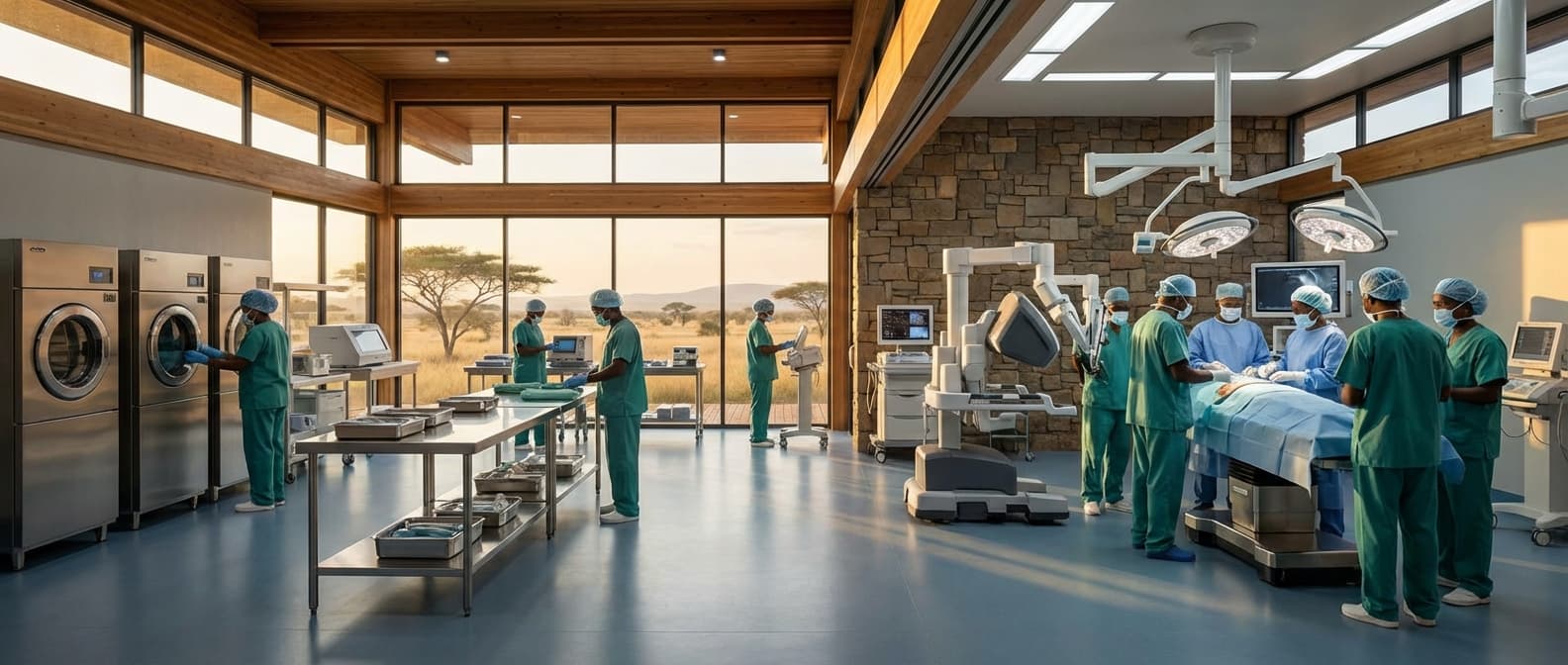
Endoscopy Reprocessing Validation in Comoros
Engineering Excellence & Technical Support
AER validation, SOP development and compliance High-standard technical execution following OEM protocols and local regulatory frameworks.
Advanced Bioburden Testing for Patient Safety
Implementing state-of-the-art bioburden testing protocols to rigorously quantify microbial contamination on endoscopes. This ensures a robust validation of the reprocessing cycle, guaranteeing the highest level of patient safety and infection prevention in Comorian healthcare facilities.
Chemical Indicator Performance Verification
Conducting precise verification of chemical indicator performance across multiple reprocessing cycles. This technical highlight confirms the efficacy of the chosen cleaning and high-level disinfection agents, providing objective evidence that critical parameters are consistently met during endoscopic instrument reprocessing.
Data-Driven Validation Protocol Optimization
Leveraging statistical analysis of validation data to identify trends and optimize reprocessing parameters. This technical approach ensures that the validation protocols for endoscopes in Comoros are not only compliant but also continuously improved for maximum effectiveness and efficiency.
What Is Endoscopy Reprocessing Validation In Comoros?
Endoscopy reprocessing validation in Comoros refers to the systematic process of verifying and documenting that flexible and rigid endoscopes, along with their associated accessories, are consistently and effectively reprocessed to a level of cleanliness and disinfection/sterilization that minimizes the risk of patient-to-patient transmission of infectious agents. This validation ensures that the adopted reprocessing protocols adhere to international standards and local regulatory requirements for medical device safety and infection control.
| Who Needs Endoscopy Reprocessing Validation? | Typical Use Cases/Scenarios | ||||||
|---|---|---|---|---|---|---|---|
| Healthcare Facilities in Comoros: Any hospital, clinic, or surgical center that utilizes flexible or rigid endoscopes for diagnostic or therapeutic procedures. This includes public and private sector facilities. | Routine Compliance Audits: Regular audits by local health authorities or accreditation bodies to ensure adherence to infection control standards. | Introduction of New Reprocessing Equipment or Protocols: Validation is mandatory when new automated endoscope reprocessors (AERs), cleaning agents, disinfectants, or sterilization methods are implemented. | Troubleshooting and Investigation: When there are concerns about the effectiveness of existing reprocessing protocols, such as increased rates of healthcare-associated infections (HAIs) linked to endoscopic procedures or equipment malfunctions. | Post-Equipment Malfunction or Repair: After significant repairs or servicing of endoscopy reprocessing equipment, to ensure it is functioning as intended. | Before and During Accreditation Processes: To demonstrate adherence to international and national standards for medical device reprocessing. | When Implementing New Endoscopic Technologies: The validation process extends to new types of endoscopes with unique reprocessing requirements. | Routine Quality Assurance Programs: As part of a continuous quality improvement initiative within the healthcare facility. |
Endoscopy Reprocessing Validation Involves:
- Cleaning Efficacy Assessment: Verifying that the initial manual and/or automated cleaning processes effectively remove all visible and microscopic debris, including biological matter.
- Disinfection/Sterilization Efficacy Assessment: Confirming that the subsequent high-level disinfection (HLD) or sterilization process reliably eliminates or inactivates all pathogenic microorganisms, including bacteria, viruses, fungi, and spores, to a predefined acceptable level.
- Process Parameter Verification: Ensuring that critical parameters of the reprocessing equipment (e.g., temperature, contact time, chemical concentration of disinfectants, water quality, rinse cycles) are consistently maintained within specified limits.
- Documentation and Record Keeping: Establishing and maintaining comprehensive records of all reprocessing steps, equipment performance, chemical usage, and validation test results for traceability and compliance.
- Personnel Training and Competency Assessment: Validating that staff involved in endoscopy reprocessing possess the necessary knowledge, skills, and undergo regular competency assessments to perform their duties correctly and safely.
- Water Quality Testing: Regularly testing the quality of water used for rinsing and in automated reprocessing equipment to ensure it meets the required standards (e.g., potable, bacteriologically controlled) to prevent recontamination.
- Environmental Monitoring: Implementing and validating environmental monitoring of reprocessing areas to ensure optimal conditions for safe and effective reprocessing.
Who Needs Endoscopy Reprocessing Validation In Comoros?
Endoscopy reprocessing validation is a critical process for ensuring patient safety and infection control in healthcare settings. In Comoros, as in any country performing endoscopic procedures, this validation is essential for all institutions that utilize reusable endoscopes. The primary goal is to confirm that the established cleaning and disinfection/sterilization protocols effectively eliminate or inactivate microorganisms, thereby preventing the transmission of infections between patients.
| Department/Service | Specific Need for Validation | Key Personnel Involved |
|---|---|---|
| Gastroenterology Department | Ensuring effective cleaning and disinfection of gastroscopes and colonoscopes to prevent the transmission of pathogens like H. pylori and viral infections. | Gastroenterologists, Endoscopy Nurses, Infection Control Practitioners |
| Pulmonology Department | Validating reprocessing of bronchoscopes to eliminate risk of respiratory infections, especially in immunocompromised patients. | Pulmonologists, Respiratory Therapists, Endoscopy Nurses, Infection Control Practitioners |
| Urology Department | Confirming the efficacy of sterilization/disinfection for cystoscopes and ureteroscopes to prevent urinary tract infections. | Urologists, Urology Nurses, Infection Control Practitioners |
| Gynecology Department | Ensuring safe reprocessing of hysteroscopes for procedures like diagnostic hysteroscopy and endometrial biopsy. | Gynecologists, Gynecology Nurses, Infection Control Practitioners |
| Surgical Departments (e.g., General Surgery, ENT) | Validating reprocessing of various endoscopes used in minimally invasive surgery (laparoscopes, arthroscopes, ENT scopes). | Surgeons, Surgical Nurses, Operating Room Technicians, Infection Control Practitioners |
| Infection Prevention and Control (IPC) Department/Team | Overseeing, implementing, and verifying the entire reprocessing validation process to ensure compliance with national and international guidelines. | Infection Control Practitioners, Hospital Administrators, Biomedical Engineers |
| Central Sterilization Supply Department (CSSD) / Endoscopy Reprocessing Unit | Directly responsible for the cleaning, disinfection, and/or sterilization of endoscopes and requires validation to confirm the effectiveness of their protocols. | CSSD Technicians, Biomedical Engineers, Endoscopy Nurses |
| Quality Assurance Department | Ensuring that all reprocessing procedures meet established quality standards and regulatory requirements. | Quality Assurance Officers, Hospital Administrators |
Target Customers & Departments in Comoros Requiring Endoscopy Reprocessing Validation
- Hospitals: All public and private hospitals performing gastrointestinal, pulmonary, urological, or other endoscopic procedures.
- Specialized Clinics: Clinics focusing on gastroenterology, pulmonology, urology, gynecology, or surgery that employ endoscopes.
- Diagnostic Centers: Facilities offering endoscopic diagnostic services.
- Government Health Agencies: Ministries of Health and regional health authorities responsible for overseeing healthcare quality and safety standards.
- Regulatory Bodies: Organizations tasked with accrediting and monitoring healthcare facilities.
- Professional Medical Associations: Groups representing endoscopists and other healthcare professionals involved in patient care and infection control.
Endoscopy Reprocessing Validation Process In Comoros
The Endoscopy Reprocessing Validation Process in Comoros ensures that flexible endoscopes are cleaned and disinfected according to established protocols, minimizing the risk of healthcare-associated infections. This process is crucial for patient safety and maintaining the integrity of medical equipment. The workflow spans from the initial inquiry to the final execution and documentation of validation.
| Phase | Description | Key Activities | Responsible Parties |
|---|---|---|---|
| Initial contact and understanding the validation needs for endoscopy reprocessing. | Contacting the relevant health authority or institution, defining the scope of validation (e.g., specific endoscope types, reprocessing units, number of cycles). | Healthcare Facility/Department, Regulatory Body (if applicable), Validation Team Lead |
| Assessing the current reprocessing environment and resources. | Inspecting the reprocessing area, availability of trained personnel, water quality, and environmental conditions. | Validation Team Lead, Infection Prevention and Control (IPC) Officer, Biomedical Engineering Department |
| Evaluating existing cleaning and disinfection protocols against national/international guidelines. | Reviewing Standard Operating Procedures (SOPs) for manual and automated reprocessing, comparing them with established guidelines (e.g., WHO, CDC). | Validation Team Lead, IPC Officer, Reprocessing Staff Representatives |
| Ensuring all reprocessing equipment and consumables are appropriate and functional. | Checking traceability and expiry dates of disinfectants, detergents, and enzymatic cleaners; verifying the calibration and functionality of automated reprocessors. | Biomedical Engineering Department, Pharmacy/Procurement Department, Validation Team |
| Performing actual reprocessing cycles under controlled conditions. | Following the established SOPs for pre-cleaning, manual cleaning, rinsing, high-level disinfection (HLD) or sterilization, and drying. | Reprocessing Staff, Validation Team Observer |
| Collecting data to confirm the effectiveness of the reprocessing process. | Conducting microbial testing (e.g., swab testing for protein, ATP levels, microbial counts) on scopes and reprocessing equipment; monitoring disinfection parameters (e.g., concentration, contact time, temperature). | Laboratory Technicians, Validation Team, Reprocessing Staff |
| Interpreting the collected data and identifying any deviations. | Analyzing test results, comparing them against acceptance criteria, and documenting any findings or trends. | Validation Team Lead, IPC Officer |
| Implementing necessary changes based on validation findings. | Developing and implementing corrective action plans for any identified deficiencies, followed by revalidation testing if required. | Department Manager, IPC Officer, Validation Team |
| Documenting the entire validation process and its outcome. | Compiling a comprehensive validation report including methodology, results, and conclusions; issuing a certificate of validation upon successful completion. | Validation Team Lead, Head of Healthcare Facility |
| Establishing a system for continuous monitoring and quality improvement. | Implementing regular internal audits, staff competency assessments, and ongoing monitoring of reprocessing parameters and outcomes. | IPC Officer, Department Manager, Quality Assurance Team |
Endoscopy Reprocessing Validation Process Workflow in Comoros
- Inquiry and Scope Definition
- Site Assessment and Readiness Evaluation
- Protocol Review and Standardization
- Equipment and Consumable Verification
- Process Execution (Cleaning & Disinfection)
- Validation Testing and Data Collection
- Data Analysis and Reporting
- Corrective Actions and Revalidation
- Final Report and Certification
- Ongoing Monitoring and Quality Assurance
Endoscopy Reprocessing Validation Cost In Comoros
The cost of endoscopy reprocessing validation in Comoros is influenced by several factors, making it challenging to provide a precise universal figure. These factors include the specific type of endoscope being validated, the complexity of the reprocessing protocol, the laboratory or service provider conducting the validation, and the availability of specialized equipment and consumables within the Comoros. Due to the limited infrastructure and potentially fewer specialized service providers compared to larger economies, costs might be on the higher side relative to the perceived value of the service. It's crucial to understand that validation often involves several stages, including initial cleaning verification, high-level disinfection (HLD) efficacy testing, and potentially sterilization validation for certain procedures. Each of these stages incurs costs associated with labor, reagents, consumables, and the operational expenses of the validation facility. The currency used is the Comorian Franc (KMF). Without direct access to local service provider price lists, it's difficult to give exact ranges. However, based on general principles of medical service costs in developing nations and the specialized nature of this service, we can estimate potential cost ranges for different aspects of the validation process.
| Validation Aspect | Estimated Cost Range (KMF) | Notes |
|---|---|---|
| Initial Cleaning Verification (e.g., visual inspection, protein detection tests) | 15,000 - 40,000 KMF | Covers labor, basic testing kits. |
| High-Level Disinfection (HLD) Efficacy Testing (e.g., microbial challenge testing, residual disinfectant testing) | 30,000 - 70,000 KMF per test cycle | More complex, requires specialized reagents and incubation. |
| Sterilization Validation (if applicable, e.g., for certain rigid endoscopes or accessories) | 50,000 - 120,000 KMF per validation | Involves biological indicators and potentially more extensive testing. |
| Comprehensive Validation Package (covering multiple aspects for a single endoscope type) | 80,000 - 200,000+ KMF | Likely to include initial cleaning, HLD efficacy, and potentially other checks. |
| On-site Consultation/Audit (if an external provider is engaged) | 20,000 - 50,000 KMF (per visit, excluding testing) | Covers travel and assessment time. |
Key Pricing Factors for Endoscopy Reprocessing Validation in Comoros
- Type of Endoscope: Flexible vs. rigid endoscopes, and specific models (e.g., gastroscopes, colonoscopes, bronchoscopes) can affect complexity and therefore cost.
- Reprocessing Protocol Complexity: The chosen disinfection or sterilization method (e.g., HLD with specific chemicals, steam sterilization) impacts the required validation procedures and reagents.
- Service Provider: Whether validation is conducted by an in-house hospital laboratory (if equipped) or an external specialized service provider (if available).
- Reagents and Consumables: The cost of chemical indicators, biological indicators, growth media, and other necessary testing supplies.
- Labor and Expertise: The time and skill required for trained personnel to perform the validation tests and interpret results.
- Equipment Calibration and Maintenance: Costs associated with ensuring validation equipment is accurate and functional.
- Geographic Location and Accessibility: Transportation of samples or personnel, and any logistical challenges within the Comoros.
Affordable Endoscopy Reprocessing Validation Options
Ensuring the proper reprocessing of endoscopes is critical for patient safety and infection prevention. However, the validation of these processes can be a significant expense for healthcare facilities. This document outlines affordable validation options, including value bundles and cost-saving strategies, to help institutions meet regulatory requirements without breaking the budget.
| Strategy | Description | Cost-Saving Mechanism | Considerations |
|---|---|---|---|
| Value Bundles from Reprocessing Equipment Manufacturers | Many manufacturers of automated endoscope reprocessors (AERs) and cleaning chemistries offer validation services or packages as part of their product offerings. These bundles often combine initial equipment validation with ongoing support and periodic revalidation. | Integrated service fees, potential for bulk discounts, streamlined processes with a single vendor. | Ensure the bundle meets all regulatory requirements for your specific region and scope. Evaluate the scope of validation included. |
| Third-Party Validation Services with Tiered Options | Several specialized third-party companies provide validation services. These providers are increasingly offering tiered service levels, allowing facilities to choose the level of testing that meets their needs and budget. | Access to expertise without in-house staffing, competitive pricing due to market specialization, ability to choose services only when needed. | Carefully compare quotes and the scope of services offered. Verify the laboratory's accreditation and adherence to relevant standards (e.g., AAMI TIR34). |
| Leveraging Manufacturer's Instructions for Use (IFU) Data | Regulatory bodies increasingly emphasize adherence to manufacturer's IFUs. For many validated cleaning chemistries and AERs, manufacturers have already conducted extensive validation studies. Facilities can leverage this existing data as part of their validation process, focusing on site-specific implementation. | Reduces the need for repetitive, costly laboratory testing. Focuses on process verification and performance monitoring. | Requires thorough review and understanding of the manufacturer's validation data. Demonstrating consistent adherence to the IFU is crucial. |
| Risk-Based Validation Approaches | Instead of a 'one-size-fits-all' approach, facilities can implement a risk-based strategy. This involves assessing the likelihood of contamination and the potential impact of inadequate reprocessing for different types of endoscopes and procedures. Validation efforts can then be prioritized based on these risk assessments. | Focuses resources on areas with the highest risk, potentially reducing the extent of validation needed for lower-risk scenarios. | Requires a robust risk assessment framework and clear justification for differing validation intensities. Needs to be defensible to regulatory bodies. |
| Internal Validation and Monitoring Programs | For certain aspects of reprocessing, well-designed internal monitoring programs can contribute to validation. This includes regular performance testing of AERs, chemical indicator use, and staff competency assessments. | Reduces reliance on external services for routine monitoring. Empowers in-house teams and builds expertise. | Requires comprehensive training for internal staff, robust documentation procedures, and a clear protocol for addressing any deviations identified. |
| Process Performance Qualification (PPQ) and Ongoing Monitoring | PPQ is a crucial step in validation. It involves testing the actual reprocessing system in its intended environment. Focusing on efficient PPQ and implementing a strong ongoing performance monitoring program (e.g., using biological indicators periodically, documenting cycles) can be more cost-effective than extensive upfront validation. | Ensures the system works as intended in the real-world setting. Early detection of issues prevents costly reprocessing failures. | Requires meticulous documentation and analysis of monitoring data. Calibration and maintenance of monitoring equipment are essential. |
Affordable Endoscopy Reprocessing Validation Options
- {"title":"Understanding the Need for Validation","description":"Validation is a documented process that provides a high degree of assurance that a specific process will consistently produce a result meeting predetermined specifications and quality attributes. For endoscopes, this ensures that cleaning and high-level disinfection (HLD) or sterilization effectively eliminates microorganisms."}
- {"title":"Traditional Validation Approaches (and their costs)","description":"Historically, validation involved extensive laboratory testing, often using surrogate microorganisms to simulate challenging scenarios. This typically included microbial challenge studies, biofilm studies, and residual testing. These methods are thorough but can be time-consuming and expensive, often requiring external laboratory services."}
- {"title":"Emerging and Cost-Effective Validation Strategies","description":"Fortunately, advancements in technology and a greater understanding of the science behind reprocessing have led to more affordable validation options. These strategies often leverage existing data, simplified testing, and strategic partnerships."}
Verified Providers In Comoros
Finding reliable healthcare providers is paramount, especially in regions where access to verified professionals can be challenging. In Comoros, "Franance Health" stands out as a leading entity committed to ensuring the quality and legitimacy of healthcare services. This document outlines the credentials and advantages of choosing Franance Health-affiliated providers.
| Provider Category | Franance Health Verification Benefits | Why They Are the Best Choice |
|---|---|---|
| General Practitioners | Ensures access to licensed and competent primary care physicians, reducing the risk of misdiagnosis or inadequate treatment. | Provides a trusted first point of contact for all health concerns, leading to better health outcomes and peace of mind. |
| Specialists (e.g., Cardiologists, Dermatologists, Pediatricians) | Guarantees that specialists possess advanced training and certifications in their respective fields, ensuring expert care for complex conditions. | Offers access to highly skilled specialists who can address specific health needs effectively and efficiently, avoiding unnecessary delays or referrals. |
| Surgeons | Confirms that surgeons have extensive experience, a proven track record of successful procedures, and operate in accredited facilities. | Provides confidence in surgical interventions, minimizing risks and maximizing the chances of successful recovery and long-term well-being. |
| Dentists | Ensures that dental professionals are qualified and adhere to strict hygiene and sterilization protocols. | Offers access to safe and effective dental care, promoting oral health and preventing serious dental issues. |
| Mental Health Professionals (Psychologists, Psychiatrists) | Verifies the credentials and ethical standing of therapists and psychiatrists, ensuring confidential and effective mental healthcare. | Provides a safe and supportive environment for addressing mental health challenges, crucial for overall well-being. |
Franance Health Credentials and Verification Process
- Rigorous vetting of medical professionals' qualifications and licenses.
- Verification of educational background from accredited institutions.
- Confirmation of professional experience and specialization.
- Adherence to international healthcare standards and best practices.
- Ongoing monitoring of provider performance and patient feedback.
- Partnerships with reputable international medical organizations for quality assurance.
Scope Of Work For Endoscopy Reprocessing Validation
This Scope of Work (SOW) outlines the requirements for validating the reprocessing procedures for flexible endoscopes. The objective is to ensure that all endoscopes are reprocessed in a manner that effectively eliminates or inactivates infectious agents, thereby preventing patient-to-patient transmission of healthcare-associated infections (HAIs). This validation will involve verification of cleaning efficacy, high-level disinfection (HLD) or sterilization efficacy, and the integrity of the reprocessing equipment and environmental controls.
| Technical Deliverable | Description | Standard Specification/Reference |
|---|---|---|
| Validation Plan | A detailed document outlining the scope, objectives, methodologies, acceptance criteria, and timeline for the validation study. | Based on current guidelines from relevant regulatory bodies and professional organizations (e.g., FDA, CDC, AAMI, ISG). |
| Cleaning Validation Report | Data and analysis confirming the removal of simulated or actual soil/organic matter from internal lumens and external surfaces of the endoscopes. | Residual protein, hemoglobin, and carbohydrate levels below established acceptable limits (e.g., manufacturer IFU, established benchmarks). |
| Microbiological Validation Report | Results of microbial challenge studies demonstrating the inactivation/elimination of specified microorganisms (e.g., bacteria, fungi, mycobacteria, spores) after HLD or sterilization. | Log reduction values (LRVs) meeting established standards for HLD or sterility assurance levels (SAL) for sterilization (e.g., 6-log reduction for vegetative bacteria, 3-log reduction for mycobacteria). |
| Equipment Performance Verification | Documentation confirming that AERs and other reprocessing equipment are functioning according to manufacturer specifications and are consistently delivering the correct process parameters (e.g., temperature, time, chemical concentration, flow rates). | Calibration records, performance qualification (PQ) testing results, and adherence to manufacturer IFU. |
| Environmental Monitoring Report | Data demonstrating that the endoscope reprocessing area meets environmental requirements for water quality (e.g., microbial counts, endotoxins), air quality, and temperature/humidity. | Water quality testing aligned with standards like AAMI TIR34; environmental monitoring per guidelines. |
| Final Validation Report | A comprehensive report summarizing all validation activities, data, analyses, acceptance criteria met, any deviations encountered, and a final conclusion on the validity of the endoscope reprocessing procedures. | Compliance with Good Validation Practice (GVP) principles and relevant regulatory requirements. |
Key Activities
- Develop and document a comprehensive validation plan.
- Perform laboratory testing to assess the efficacy of the cleaning process (e.g., residual organic material detection).
- Conduct microbial challenge studies to validate the effectiveness of the HLD or sterilization process against relevant microorganisms.
- Verify the performance of automated endoscope reprocessors (AERs) and other reprocessing equipment.
- Assess the adequacy of the endoscope reprocessing area environment (e.g., water quality, air quality).
- Review and confirm the manufacturer's instructions for use (IFU) for both the endoscopes and the reprocessing agents/equipment.
- Document all validation activities, results, and conclusions.
- Provide a final validation report outlining findings, recommendations, and confirmation of validation.
Service Level Agreement For Endoscopy Reprocessing Validation
This Service Level Agreement (SLA) outlines the performance standards for Endoscopy Reprocessing Validation services. It defines the expected response times for critical issues and the guaranteed uptime for the validation system and associated reporting tools. The aim is to ensure the continued safe and effective reprocessing of endoscopic equipment.
| Service Component | Service Level Objective (SLO) | Measurement Period | Remedy/Escalation |
|---|---|---|---|
| Endoscopy Reprocessing Validation System Availability | 99.5% Uptime | Monthly | Root cause analysis and corrective action plan. Potential service credits if repeated breaches occur. |
| Endoscopy Reprocessing Reporting Platform Availability | 99.8% Uptime | Monthly | Root cause analysis and corrective action plan. Potential service credits if repeated breaches occur. |
| Response Time for Critical Issues (System Failure impacting validation) | 1 Business Hour | Per Incident | Immediate acknowledgement and initiation of troubleshooting. Escalation to senior technical support within 2 business hours if resolution is not in progress. |
| Response Time for Non-Critical Issues (e.g., minor glitches, reporting queries) | 4 Business Hours | Per Incident | Acknowledgement and initiation of troubleshooting. Provide estimated resolution time. |
| System Updates and Maintenance | Scheduled during off-peak hours | As required | Advance notification of at least 48 hours for planned downtime. Emergency maintenance will be communicated with shortest possible notice. |
Key Performance Indicators (KPIs)
- Response Time for Critical Issues
- Uptime Guarantee for Validation System
- Uptime Guarantee for Reporting Platform
Frequently Asked Questions

Ready when you are
Let's scope your Endoscopy Reprocessing Validation in Comoros project in Comoros.

Scaling healthcare logistics and technical systems across the entire continent.