
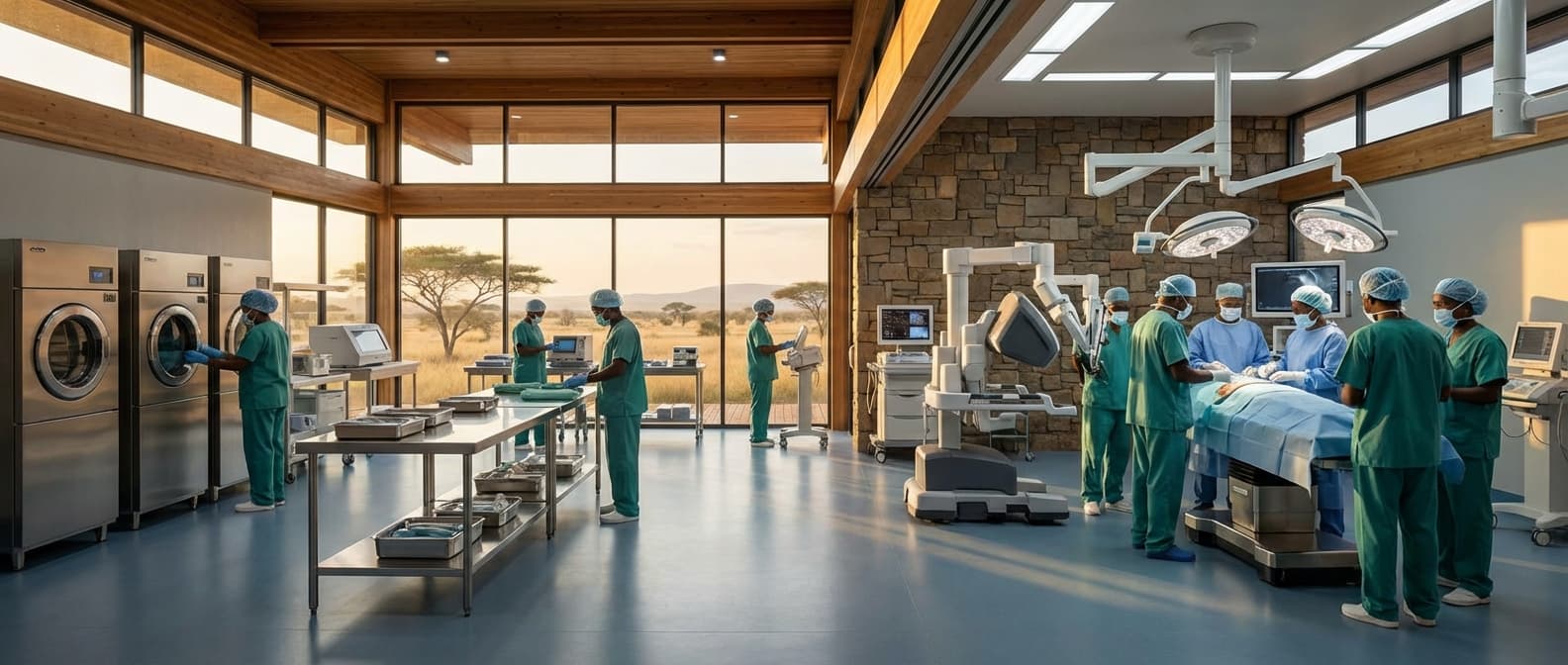
CSSD Design & Validation in Comoros
Engineering Excellence & Technical Support
CSSD workflow design, validation and process development High-standard technical execution following OEM protocols and local regulatory frameworks.
Sterilization Process Optimization
Implementation of advanced sterilization validation protocols (e.g., Bowie-Dick tests, biological indicators) tailored to Comorian climate conditions, ensuring optimal efficacy and patient safety across various sterilization modalities (autoclave, low-temperature sterilization).
Instrument Traceability & Monitoring Systems
Design and validation of robust instrument tracking systems, including barcode and RFID integration, to monitor the entire lifecycle of surgical instruments from decontamination to sterilization and back to the operating theatre, minimizing the risk of cross-contamination and improving workflow efficiency in Comorian healthcare facilities.
Decontamination Efficacy Validation
Development and validation of effective decontamination procedures for reusable medical devices, considering local water quality and availability of specialized detergents. This includes testing for residual organic matter and microbial load reduction to meet international standards within the Comorian context.
What Is Cssd Design & Validation In Comoros?
Central Sterile Supply Department (CSSD) design and validation in Comoros refers to the comprehensive process of planning, developing, and verifying the functionality and performance of a CSSD facility. This encompasses the architectural layout, equipment selection, workflow optimization, environmental controls, and adherence to international standards and local regulations for sterilization and disinfection processes. The primary objective is to ensure the safe and effective reprocessing of reusable medical devices, thereby mitigating the risk of healthcare-associated infections (HAIs).
| Stakeholder/Entity | Requirement/Need | Typical Use Cases |
|---|---|---|
| Hospitals and Healthcare Facilities (Public & Private) | To provide a safe and reliable supply of sterile instruments and medical devices to prevent HAIs and ensure patient safety. Compliance with national healthcare regulations. | Design of new CSSD units, renovation of existing facilities, procurement of new sterilization equipment, validation of reprocessing cycles for surgical instruments, endoscopes, respiratory equipment, and other reusable medical devices. |
| Surgical Centers and Clinics | To meet the demands of specialized procedures requiring sterile instruments. Ensuring compliance with accreditation bodies. | Establishing or upgrading CSSD capabilities for outpatient surgery, dental clinics, and specialized medical practices. Validation of processes for specific surgical kits. |
| Medical Device Manufacturers (for their own internal reprocessing needs or service centers) | To ensure the effective and validated reprocessing of their devices for maintenance or refurbishment. Compliance with regulatory requirements for device reprocessing. | Setting up or validating CSSD processes within a manufacturing facility or for third-party service providers responsible for device maintenance. Validation of reprocessing instructions for complex medical devices. |
| Government Health Authorities and Regulatory Bodies | To set standards and ensure compliance for infection prevention and control across healthcare facilities within Comoros. Patient safety oversight. | Developing national guidelines for CSSD operations, conducting facility inspections, reviewing validation documentation, and approving CSSD designs for new or renovated healthcare infrastructure. |
| Consulting Firms and Engineering Companies specializing in healthcare facility design | To offer expertise in the design, planning, and validation of CSSD facilities for clients in Comoros. Ensuring adherence to international best practices. | Providing end-to-end services for CSSD projects, from conceptual design and architectural planning to equipment procurement support, validation protocol development, and execution. |
Key Components of CSSD Design & Validation
- Facility Layout and Workflow: Designing an optimal spatial arrangement to segregate contaminated, clean, and sterile areas, facilitating a unidirectional flow of materials and personnel. This includes defining zones for receiving, cleaning, disinfection, inspection, packing, sterilization, storage, and distribution.
- Equipment Specification and Selection: Identifying and specifying appropriate sterilization (e.g., autoclaves, low-temperature sterilizers), disinfection (e.g., washer-disinfectors, chemical disinfectors), and ancillary equipment (e.g., ultrasonic cleaners, drying cabinets) based on the types of devices to be processed and the required throughput.
- Environmental Control Systems: Ensuring adequate ventilation, air filtration (HEPA), temperature, and humidity control within specific zones to prevent cross-contamination and maintain the integrity of sterile items.
- Material Handling and Storage: Implementing protocols and infrastructure for the safe transport, storage, and retrieval of sterile goods, often involving specialized shelving and inventory management systems.
- Sterilization Process Validation: Rigorous testing and documentation to confirm that the chosen sterilization processes (e.g., steam, ethylene oxide, hydrogen peroxide plasma) consistently achieve the required microbial kill rate for specific load configurations and medical devices.
- Cleaning and Disinfection Process Validation: Verifying the efficacy of cleaning and disinfection cycles using appropriate biological and chemical indicators to ensure the removal of organic debris and inactivation of microorganisms.
- Performance Qualification (PQ): Demonstrating through documented evidence that the CSSD systems and processes, under normal operating conditions, consistently produce results meeting predetermined specifications and quality attributes.
- Operational Qualification (OQ): Confirming that the equipment and systems operate as intended throughout their defined operating ranges.
- Installation Qualification (IQ): Documenting that the equipment and facility are installed according to design specifications and manufacturer recommendations.
- Training and Competency Assessment: Establishing robust training programs for CSSD personnel on standard operating procedures (SOPs), equipment operation, infection control principles, and regulatory requirements, with ongoing competency assessments.
- Regulatory Compliance: Ensuring adherence to relevant international standards (e.g., ISO 13485, AAMI ST series) and any specific national or local guidelines applicable in Comoros for medical device reprocessing.
Who Needs Cssd Design & Validation In Comoros?
The Central Sterile Supply Department (CSSD) is a critical component of any healthcare facility, ensuring the sterilization and reprocessing of medical devices. In Comoros, a nation increasingly focused on improving healthcare infrastructure and patient safety, the need for robust CSSD design and validation is paramount. This service is essential for ensuring that surgical instruments and other reusable medical equipment are free from harmful microorganisms, thereby preventing healthcare-associated infections (HAIs). Without proper design and rigorous validation, CSSD operations can be inefficient, costly, and pose a significant risk to patient well-being. Therefore, healthcare institutions and associated organizations in Comoros looking to elevate their infection control standards and comply with international best practices will find immense value in professional CSSD design and validation services.
| Target Customer/Department | Primary Need for CSSD Design & Validation | Specific Concerns/Benefits |
|---|---|---|
| Public Hospitals | Modernization of existing facilities or new construction to meet standards. Ensuring cost-effectiveness and efficiency of sterile processing operations. | Reducing HAIs, improving patient outcomes, optimizing resource allocation, meeting regulatory compliance. |
| Private Hospitals & Surgical Centers | Establishing a new, state-of-the-art CSSD. Enhancing reputation through superior patient safety. Attracting specialized surgical procedures. | Competitive advantage, enhanced patient trust, compliance with international accreditation bodies, optimized workflow for high-volume procedures. |
| Clinics with Surgical Facilities | Ensuring safe sterilization for minor surgical procedures. Compliance with basic infection control guidelines. | Preventing post-operative infections, maintaining a safe environment for patients and staff, efficient use of limited space and resources. |
| Maternity Wards | Sterilization of instruments used during deliveries and postpartum care. Maintaining a sterile environment for newborns and mothers. | Preventing puerperal infections, safeguarding infant health, ensuring safety of maternal care. |
| Dental Clinics | Sterilization of dental instruments to prevent cross-contamination. Ensuring patient safety during dental procedures. | Preventing transmission of infectious diseases, building patient confidence, compliance with dental hygiene standards. |
| Government Health Ministries/Agencies | Developing national healthcare infrastructure standards. Overseeing quality control and accreditation of healthcare facilities. | Establishing national guidelines for sterile processing, promoting uniformity in healthcare quality, supporting public health initiatives. |
| International Aid Organizations | Supporting the development and upgrading of healthcare facilities in Comoros. Providing technical expertise and funding for essential services. | Facilitating sustainable healthcare improvements, ensuring aid effectiveness through proper infrastructure, knowledge transfer to local professionals. |
Target Customers & Departments in Comoros Requiring CSSD Design & Validation
- Hospitals (Public and Private)
- Surgical Centers
- Clinics with Surgical Facilities
- Maternity Wards with Sterilization Needs
- Dental Clinics with Sterilization Needs
- Government Health Ministries/Agencies
- International Aid Organizations Supporting Healthcare
Cssd Design & Validation Process In Comoros
The CSSD (Central Sterile Services Department) design and validation process in Comoros is a comprehensive, multi-stage workflow aimed at establishing a functional, compliant, and efficient sterile processing facility. This process ensures that medical instruments and equipment are properly cleaned, disinfected, and sterilized to prevent healthcare-associated infections. The workflow begins with an initial inquiry and culminates in the successful validation and operationalization of the CSSD.
| Stage | Key Activities | Involved Parties | Deliverables | Timeframe (Indicative) |
|---|---|---|---|---|
| Initial contact from healthcare facility, understanding of current sterile processing limitations, identification of required capacity, scope of services, budget constraints, and relevant national/international guidelines. | Healthcare Facility Management, Ministry of Health Representatives, CSSD Consultants/Experts, Equipment Suppliers. | Needs Assessment Report, Preliminary Scope of Work, Budget Estimate. | 1-4 Weeks |
| Developing preliminary layout options, workflow analysis (decontamination, packaging, sterilization, storage), identification of major equipment types, space planning, and initial regulatory compliance review. | CSSD Consultants/Architects, Healthcare Facility Engineers, Infection Control Team. | Conceptual Layout Drawings, Workflow Diagrams, Preliminary Equipment List, Space Requirements. | 2-6 Weeks |
| Finalizing detailed architectural and MEP (Mechanical, Electrical, Plumbing) drawings, specifying exact equipment models, selecting materials, developing air handling and filtration systems, waste management plan, and detailed electrical/plumbing layouts. | Architects, MEP Engineers, CSSD Consultants, Structural Engineers, Equipment Manufacturers. | Detailed Architectural Drawings, MEP Schematics, Equipment Specifications, Material Schedules, Bill of Quantities (BoQ). | 6-12 Weeks |
| Tendering process for construction, procurement of building materials, construction of the CSSD facility according to approved designs, and ensuring adherence to quality standards. | Project Management Team, Contractors, Suppliers, Ministry of Health Oversight. | Constructed CSSD Facility, Certified Building Materials. | 6-18 Months (Varies greatly based on facility size and complexity) |
| Delivery and installation of all CSSD equipment (autoclaves, washer-disinfectors, drying cabinets, sealing machines, etc.), connection to utilities, and initial functional testing by manufacturers. | Equipment Suppliers/Installers, Biomedical Engineers, Facility Engineers, CSSD Consultants. | Installed and Functioning Equipment, Manufacturer's Test Certificates. | 2-8 Weeks |
| Rigorous testing and documentation to ensure the CSSD and its equipment operate as intended and meet performance specifications. This includes Installation Qualification (IQ), Operational Qualification (OQ), and Performance Qualification (PQ). | Validation Engineers, CSSD Consultants, Biomedical Engineers, Quality Assurance Team, Ministry of Health Inspectors. | IQ, OQ, PQ Documentation, Validation Reports, Certificates of Compliance. | 4-12 Weeks |
| Recruiting and training CSSD personnel on standard operating procedures (SOPs), equipment operation, infection control protocols, and emergency procedures. Development of SOPs and policies. | CSSD Manager, Clinical Educators, Infection Control Team, HR Department, Experienced CSSD Staff. | Trained Staff, Approved SOPs, Training Records. | 2-6 Weeks (Ongoing) |
| Official opening of the CSSD, commencement of full sterile processing services, implementation of quality monitoring systems, regular audits, maintenance schedules, and ongoing staff development. | CSSD Staff, Healthcare Facility Management, Quality Assurance Department, Ministry of Health. | Operational CSSD, Performance Monitoring Reports, Audit Findings, Improvement Plans. | Ongoing |
CSSD Design & Validation Process Workflow in Comoros
- Inquiry & Needs Assessment
- Conceptual Design & Planning
- Detailed Design & Engineering
- Procurement & Construction
- Equipment Installation & Commissioning
- Validation & Qualification
- Training & Staffing
- Operationalization & Continuous Improvement
Cssd Design & Validation Cost In Comoros
Designing and validating a Central Sterile Services Department (CSSD) in Comoros involves a range of costs influenced by several key factors. These include the size and complexity of the facility, the level of technology and automation desired, the specific equipment chosen, the regulatory compliance requirements, and the professional fees for design and validation services. Local market conditions, availability of specialized expertise, and import duties on equipment also play a significant role in the overall pricing. As Comoros is a developing nation, the availability of local suppliers and skilled technicians may be limited, potentially increasing costs due to reliance on imported goods and services. Furthermore, the stringent sterilization and disinfection standards required for CSSD operations necessitate careful planning and investment to ensure patient safety and infection control. The currency in Comoros is the Comorian Franc (KMF).
| Cost Component | Estimated Range (KMF) | Notes |
|---|---|---|
| CSSD Design Consultation (Initial) | 500,000 - 2,500,000 KMF | Covers initial needs assessment, conceptual design, and feasibility studies. |
| Architectural & Engineering Design | 3,000,000 - 15,000,000 KMF | Dependent on facility size, complexity, and level of detail. |
| Equipment Procurement (Washer-Disinfectors, Sterilizers, etc.) | 20,000,000 - 150,000,000+ KMF | Highly variable based on number, type, capacity, and automation of units. |
| Ancillary Equipment (Shelving, Workstations, Trackers) | 2,000,000 - 10,000,000 KMF | Includes storage, handling equipment, and IT solutions. |
| Installation & Commissioning | 5,000,000 - 30,000,000 KMF | Covers setup, testing, and initial operational checks. |
| Validation Services (IQ/OQ/PQ) | 3,000,000 - 20,000,000 KMF | Essential for regulatory compliance and ensuring equipment performance. Varies by number of validation cycles and complexity. |
| Infrastructure Modifications/Upgrades | 5,000,000 - 50,000,000+ KMF | If new plumbing, electrical, ventilation, or steam generation is required. |
| Project Management | 2,000,000 - 10,000,000 KMF | For overseeing the entire project lifecycle. |
| Contingency (10-20%) | Variable | Recommended for unforeseen costs. |
Key Pricing Factors for CSSD Design & Validation in Comoros
- Facility Size and Scope: Larger departments with more processing areas and higher throughput will incur greater design and validation costs.
- Technology and Automation: The selection of advanced, automated equipment (e.g., washer-disinfectors, sterilizers, tracking systems) significantly impacts the initial investment.
- Equipment Selection: The brand, model, capacity, and features of sterilization and disinfection equipment are primary cost drivers.
- Regulatory Compliance: Adhering to national and international standards (e.g., ISO, local health regulations) can require specific design elements and rigorous validation processes.
- Professional Fees: Costs for architects, engineers, CSSD consultants, and validation specialists are integral to the budget.
- Infrastructure Requirements: Modifications to existing infrastructure (e.g., plumbing, electrical, ventilation, steam generation) or new construction add to the overall expense.
- Training and Commissioning: Costs associated with training staff on new equipment and the commissioning process of the CSSD.
- Import Duties and Taxes: Charges on imported equipment and materials can substantially increase project costs.
- Location Specifics: Accessibility and logistical challenges in Comoros can influence transportation and installation costs.
Affordable Cssd Design & Validation Options
Designing and validating a Central Sterile Supply Department (CSSD) is crucial for patient safety and operational efficiency. While the initial investment can seem daunting, there are numerous affordable design and validation options available. These options focus on smart resource allocation, phased implementation, and leveraging existing infrastructure. Understanding value bundles and implementing cost-saving strategies can significantly reduce the overall expenditure without compromising quality or compliance.
| Value Bundle Type | Description | Cost-Saving Benefit |
|---|---|---|
| Integrated Design & Validation Package | Combines architectural design, equipment selection, and validation protocols into a single offering from one provider. | Reduces consultant fees, streamlines communication, and minimizes potential for conflicting recommendations. |
| Phased Equipment Procurement | Acquiring major equipment in stages, aligning with budget cycles and departmental growth. | Spreads capital expenditure, allows for learning from initial installations before committing to full capacity. |
| Refurbished Equipment & Warranty | Purchasing professionally refurbished medical equipment with a manufacturer's warranty. | Significant reduction in upfront capital cost compared to new equipment, with added assurance. |
| Modular Layout Design | Designing the CSSD using prefabricated or easily adaptable modules that can be expanded or reconfigured. | Lower initial construction costs, flexibility for future needs, and reduced installation time. |
| Software & Data Management Solutions | Implementing integrated software for tracking, sterilization monitoring, and inventory management. | Improves efficiency, reduces manual errors, enhances compliance reporting, and minimizes waste of supplies. |
| Training & Competency Assessment Bundles | Comprehensive training programs for staff on equipment operation, sterilization processes, and validation requirements. | Ensures correct usage, reduces equipment downtime due to misuse, and improves overall quality of reprocessing. |
Key Cost-Saving Strategies for CSSD Design & Validation
- Prioritize essential equipment based on patient load and procedure volume.
- Explore modular or phased design approaches to spread costs over time.
- Investigate refurbished or pre-owned equipment from reputable suppliers.
- Utilize standardized design templates and layouts where applicable.
- Partner with experienced consultants who offer bundled design and validation services.
- Focus on energy-efficient equipment and infrastructure to reduce long-term operating costs.
- Implement robust training programs to ensure efficient use of equipment and reduce errors.
- Consider outsourcing specific validation tasks that are not core competencies.
- Explore lean manufacturing principles for workflow optimization and waste reduction.
- Negotiate bulk purchasing agreements for consumables and cleaning agents.
- Develop comprehensive Standard Operating Procedures (SOPs) to minimize rework and errors.
Verified Providers In Comoros
Finding reliable and accredited healthcare providers is crucial for ensuring quality medical care. In Comoros, Franance Health stands out as a premier organization that rigorously vets and certifies healthcare providers, offering a trusted pathway to accessing the best medical professionals. Their stringent credentialing process ensures that all listed providers meet high standards of education, experience, and ethical practice, giving patients peace of mind.
| Provider Type | Franance Health Verification Benefits | Why It's the Best Choice |
|---|---|---|
| General Practitioners | Ensures competence in diagnosing and treating common ailments. Access to up-to-date medical knowledge. | Reliable first point of contact for your health needs, saving you time and uncertainty. |
| Specialist Physicians (e.g., Cardiologists, Dermatologists) | Confirms advanced training and expertise in specific medical fields. Verification of specialized certifications. | Guarantees you are seeing a doctor with the precise skills needed for your complex health concerns. |
| Surgeons | Rigorous review of surgical training, experience, and success rates. Compliance with sterile and safety protocols. | Minimizes risks associated with procedures by entrusting your care to proven surgical professionals. |
| Dentists | Verification of dental degrees and specializations. Assurance of adherence to oral hygiene and treatment standards. | Promotes optimal oral health through consultation with skilled and ethically practicing dentists. |
| Pharmacists | Confirmation of pharmacy degrees and licensure. Verification of prescription accuracy and drug interaction knowledge. | Ensures safe and effective medication management, reducing the risk of adverse drug events. |
Why Franance Health Credentials Matter
- Unwavering commitment to patient safety and quality of care.
- Thorough verification of medical licenses and certifications.
- Assessment of clinical experience and specialization.
- Adherence to ethical medical practices and professional conduct.
- Continuous monitoring of provider performance.
- Access to a network of highly qualified and trustworthy healthcare professionals.
Scope Of Work For Cssd Design & Validation
This Scope of Work (SOW) outlines the requirements for the design, validation, and documentation of a Central Sterile Supply Department (CSSD). The objective is to establish a functional, efficient, and compliant CSSD that meets all relevant healthcare standards and regulations for the safe reprocessing of medical devices. This includes defining the necessary technical deliverables and specifying the standard specifications to be adhered to throughout the project lifecycle.
| Technical Deliverable | Description | Standard Specifications / References |
|---|---|---|
| CSSD Functional Program | Detailed description of the CSSD's intended use, including types of instruments processed, patient volumes, sterilization modalities, workflows, and staffing requirements. | AAMI ST55, ISO 13485, local health authority regulations, hospital policies. |
| Conceptual Layout Drawings | Preliminary floor plans indicating the overall layout, spatial relationships between different zones (e.g., receiving, cleaning, inspection, packing, sterilization, storage, dispatch), and major equipment placement. | Building codes, accessibility standards (ADA), infection control guidelines, workflow efficiency principles. |
| Detailed Design Drawings (Architectural, Mechanical, Electrical, Plumbing) | Comprehensive drawings including room layouts, elevations, sections, lighting plans, HVAC systems, plumbing schematics, power distribution, and data network points. | ASHRAE standards, NFPA codes, local building regulations, specific equipment requirements. |
| Equipment Specifications & Schedules | Detailed technical specifications for all CSSD equipment (e.g., washers, disinfectors, sterilizers, sterile storage cabinets, instrument tracking systems), including performance requirements, utility needs, and safety features. | Manufacturer specifications, AAMI standards, ANSI/AAMI ST series, EN standards (e.g., EN 285, EN ISO 17665), CE marking requirements. |
| Workflow Diagrams | Visual representation of the entire CSSD process from soiled instrument receipt to sterile product dispatch, highlighting critical control points and material flow. | Lean manufacturing principles, infection control best practices, AAMI ST55. |
| HVAC Design and Airflow Specifications | Detailed design of the HVAC system, ensuring appropriate air changes per hour, temperature, humidity control, and positive/negative pressure differentials between zones. | ASHRAE 170 (Ventilation of Healthcare Facilities), infection control guidelines. |
| Water Quality Specifications | Requirements for water used in cleaning, disinfection, and sterilization processes, including purity levels and conductivity. | AAMI TIR34, EN ISO 17665-1, manufacturer recommendations. |
| Material and Finish Specifications | Selection of durable, non-porous, and easily cleanable materials for walls, floors, ceilings, and work surfaces. | Healthcare facility design guidelines, infection control recommendations, local building codes. |
| Instrument Tracking System Design | Specifications for a system to track instruments throughout their lifecycle within the CSSD, including data management and reporting capabilities. | Industry best practices for traceability, cybersecurity standards, HIPAA compliance (if applicable). |
| Validation Master Plan (VMP) | Comprehensive plan outlining the strategy and approach for all validation activities, including IQ, OQ, and PQ. | FDA guidelines (e.g., Process Validation Guidance), ISPE baseline guides, GAMP 5. |
| Installation Qualification (IQ) Protocols & Reports | Protocols and reports verifying that equipment is installed correctly according to manufacturer and design specifications. | GAMP 5, manufacturer installation manuals. |
| Operational Qualification (OQ) Protocols & Reports | Protocols and reports verifying that equipment operates within its defined operating ranges and parameters. | GAMP 5, manufacturer operating manuals, process parameters. |
| Performance Qualification (PQ) Protocols & Reports | Protocols and reports demonstrating that the validated CSSD processes consistently produce sterile products meeting all quality and safety requirements under normal operating conditions. | AAMI standards, EN standards, relevant sterilization efficacy requirements, worst-case challenge studies. |
| Standard Operating Procedures (SOPs) | Documented procedures for all CSSD activities, including receiving, cleaning, disinfection, inspection, assembly, packaging, sterilization, storage, and distribution. | AAMI ST55, manufacturer instructions for use (IFUs), infection control guidelines. |
| Training Materials and Records | Documentation for all training provided to CSSD personnel on equipment operation, SOPs, infection control, and safety. | Hospital training policies, regulatory requirements for staff competency. |
| As-Built Drawings | Finalized drawings reflecting any changes made during construction and installation. | Project documentation standards. |
| Commissioning Reports | Documentation of the testing and verification of all building systems and equipment. | Relevant engineering standards and codes. |
Key Project Phases and Activities
- Phase 1: Requirements Gathering & Conceptual Design
- Phase 2: Detailed Design & Engineering
- Phase 3: Procurement & Construction Support
- Phase 4: Equipment Installation & Commissioning
- Phase 5: Validation & Verification
- Phase 6: Training & Handover
- Phase 7: Post-Implementation Support
Service Level Agreement For Cssd Design & Validation
This Service Level Agreement (SLA) outlines the response times and uptime guarantees for Central Sterile Services Department (CSSD) design and validation services provided by [Your Company Name]. This agreement is intended to ensure the reliable and efficient functioning of your CSSD facilities and the processes therein.
| Service Category | Response Time (Business Hours) | Uptime Guarantee |
|---|---|---|
| Initial Consultation/Design Phase | 24 Business Hours | N/A (Service-based) |
| Validation Protocol Development | 48 Business Hours | N/A (Service-based) |
| On-site Validation Execution (Scheduled) | As per agreed project timeline | N/A (Project-based) |
| Troubleshooting & Technical Support (Post-Validation) | 8 Business Hours | N/A (Service-based) |
| Remote System Monitoring (if applicable) | Continuous | 99.5% Uptime |
Scope of Services
- CSSD facility layout and design consultation
- Equipment selection and integration planning
- Workflow optimization and process development
- Validation protocol development (IQ/OQ/PQ)
- Execution of validation activities
- Documentation and reporting of validation results
- Post-validation support and troubleshooting
Frequently Asked Questions

Ready when you are
Let's scope your CSSD Design & Validation in Comoros project in Comoros.

Scaling healthcare logistics and technical systems across the entire continent.