
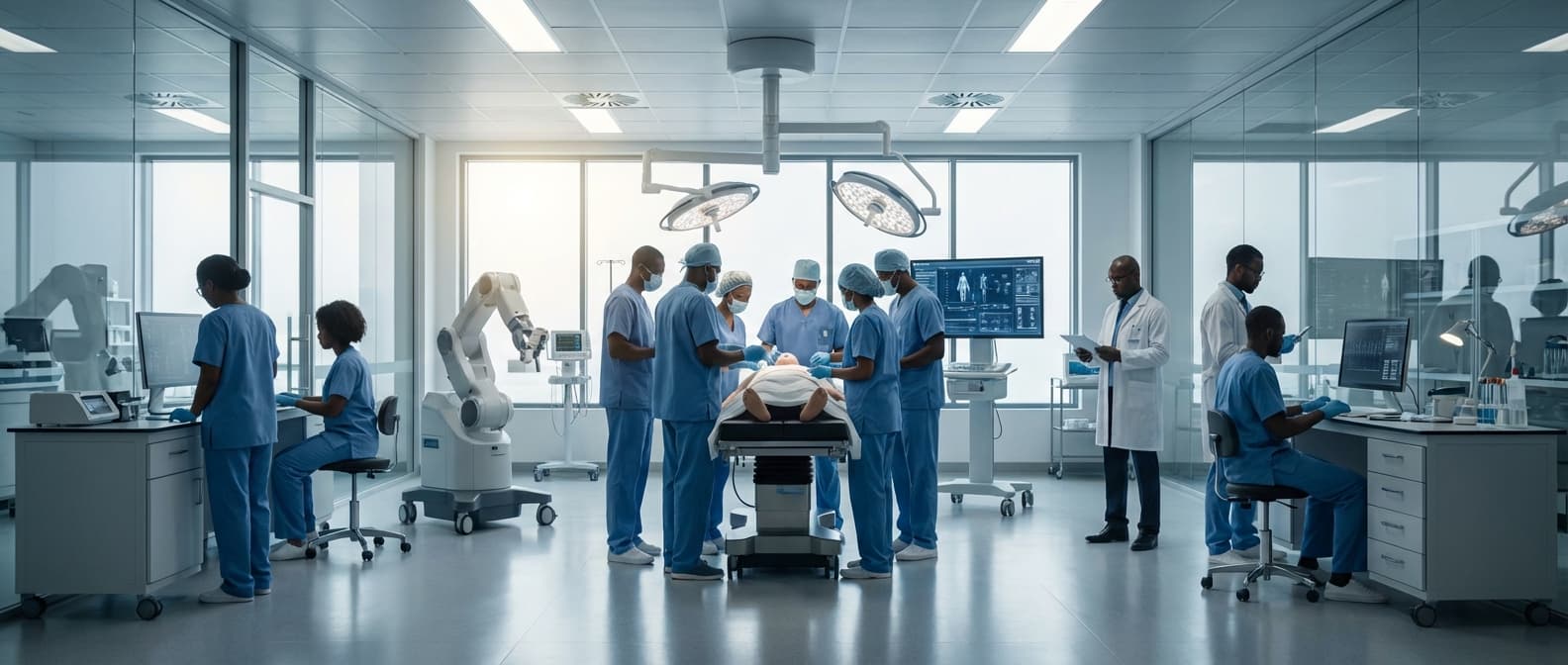
Managed Equipment Service (MES) in Comoros
Engineering Excellence & Technical Support
Long‑term equipment provision with uptime SLAs and lifecycle management. High-standard technical execution following OEM protocols and local regulatory frameworks.
Guaranteed Uptime for Critical Medical Devices
Our MES proactively monitors and maintains your vital medical equipment in Comoros, ensuring maximum operational uptime and minimizing the risk of service disruptions that could impact patient care. We leverage predictive analytics and a skilled local technical team to address potential issues before they escalate.
Predictable Budgeting and Reduced Operational Costs
Experience transparent and predictable operational expenses with our all-inclusive MES solution. By bundling maintenance, repairs, and spare parts into a fixed service fee, Comorian healthcare facilities can optimize their budgets and avoid unexpected capital expenditures, leading to significant long-term cost savings.
Access to Certified Local Technical Expertise
Our MES provides Comorian healthcare providers with direct access to a network of highly trained and certified local technicians. This ensures rapid response times, specialized knowledge of medical equipment specific to your facility, and reduced reliance on international support, fostering local capacity and efficiency.
What Is Managed Equipment Service (Mes) In Comoros?
Managed Equipment Service (MES) in Comoros refers to the outsourcing of the procurement, installation, maintenance, and lifecycle management of critical medical equipment to a specialized third-party provider. This service aims to ensure optimal performance, availability, and cost-effectiveness of healthcare technology within Comorian healthcare facilities. MES typically encompasses a comprehensive suite of services designed to alleviate the burden of equipment management from hospital administration and technical staff.
| Who Needs MES in Comoros? | Typical Use Cases in Comoros |
|---|---|
| Public Hospitals and Health Centers: Facilities with limited in-house biomedical engineering capacity, budget constraints for capital expenditure, and a need for reliable equipment operation to serve the general population. | Diagnostic Imaging Departments: Management of X-ray machines, ultrasound devices, CT scanners, and MRI scanners, ensuring high uptime for critical diagnostic services. |
| Private Clinics and Hospitals: Healthcare providers seeking to enhance service quality, reduce operational risks associated with equipment failure, and focus on patient care rather than equipment upkeep. | Operating Theaters: Ensuring the functionality of surgical equipment, anesthesia machines, and patient monitoring systems for safe and effective surgical procedures. |
| Specialized Medical Units: Departments requiring advanced or high-volume equipment, such as Intensive Care Units (ICUs), Cardiac Catheterization Labs, and Dialysis Centers, where continuous operation is paramount. | Laboratory and Pathology Services: Maintenance of sophisticated laboratory analyzers, microscopes, and other diagnostic instrumentation to ensure accurate and timely test results. |
| Government Health Ministries or Agencies: Organizations responsible for overseeing the national healthcare infrastructure and aiming to standardize equipment quality and maintenance across various facilities. | Primary Healthcare Facilities: Ensuring the reliability of essential equipment like refrigerators for vaccine storage, basic diagnostic tools, and sterilization equipment in remote or underserved areas. |
| Non-Governmental Organizations (NGOs) operating healthcare programs: Entities that may not have the infrastructure or expertise for extensive equipment management but require functional medical technology. | Dental Clinics: Management of dental chairs, X-ray units, and sterilization equipment. |
Key Components of Managed Equipment Service (MES) in Comoros:
- Procurement and Acquisition: Sourcing, selecting, and purchasing new medical equipment based on the facility's specific needs, budget, and technological advancements, often leveraging the provider's expertise and purchasing power.
- Installation and Commissioning: Professional installation, calibration, and testing of equipment to ensure it meets manufacturer specifications and regulatory requirements.
- Preventive Maintenance: Scheduled and proactive maintenance activities to minimize downtime, extend equipment lifespan, and prevent unexpected failures.
- Corrective Maintenance and Repair: Rapid response to equipment malfunctions, including diagnosis, repair, and replacement of faulty parts, often with guaranteed service level agreements (SLAs) for response and resolution times.
- Technical Support and Training: Providing on-site or remote technical assistance, troubleshooting, and training for clinical and biomedical staff on the proper operation and basic maintenance of equipment.
- Asset Management and Tracking: Maintaining a detailed inventory of all managed equipment, including serial numbers, maintenance history, and depreciation schedules, for better asset utilization and financial planning.
- Technology Refresh and Decommissioning: Planning and executing the upgrade or replacement of outdated equipment, as well as the safe and compliant decommissioning and disposal of end-of-life assets.
- Consumables Management: In some MES models, the management and supply of necessary consumables for the operation of specific equipment may also be included.
Who Needs Managed Equipment Service (Mes) In Comoros?
Managed Equipment Service (MES) offers comprehensive, outsourced management of critical medical equipment for healthcare facilities. This includes acquisition, maintenance, repair, replacement, and lifecycle management. In Comoros, where healthcare infrastructure and resources can be constrained, MES can be particularly beneficial. It allows healthcare providers to focus on patient care while ensuring reliable access to advanced medical technology, thereby improving diagnostic accuracy, treatment efficacy, and overall patient outcomes. MES can also help optimize equipment utilization, reduce downtime, and manage costs more predictably.
| Target Customer | Key Departments Benefiting from MES |
|---|---|
| Public Hospitals | Radiology/Imaging (X-ray, CT, MRI), Operating Theatres, Intensive Care Units (ICUs), Emergency Departments, Laboratory Services, Cardiology Departments |
| Private Clinics and Hospitals | Surgical Suites, Diagnostic Imaging Centers, Outpatient Clinics, Rehabilitation Services, Dental Departments |
| Specialized Medical Centers (e.g., Dialysis Centers, Maternity Hospitals) | Dialysis Units, Labor and Delivery Wards, Neonatal Intensive Care Units (NICUs), Diagnostic Laboratories |
| NGOs involved in healthcare delivery | Mobile Clinics, Remote Health Posts, Primary Healthcare Centers needing reliable diagnostic and treatment equipment |
| Government Health Ministries and Agencies | National health programs requiring standardized and well-maintained equipment across various facilities, Public health laboratories |
Who Needs Managed Equipment Service (MES) in Comoros?
- Public Hospitals
- Private Clinics and Hospitals
- Specialized Medical Centers
- Non-Governmental Organizations (NGOs) involved in healthcare delivery
- Government Health Ministries and Agencies
Managed Equipment Service (Mes) Process In Comoros
The Managed Equipment Service (MES) process in Comoros, while potentially nascent or adaptable, generally follows a structured workflow to ensure efficient and effective delivery of specialized equipment and its associated services. This workflow typically begins with an initial inquiry and culminates in the full execution and ongoing management of the service. The specific steps and their emphasis may vary depending on the provider and the nature of the equipment, but a common framework can be outlined.
| Stage | Key Activities | Responsible Party | Outcome |
|---|---|---|---|
| Inquiry & Needs Assessment | Initial contact, understanding client requirements, site survey (if applicable), budget discussion. | Client & MES Provider | Clear understanding of client's equipment and service needs. |
| Proposal Development & Negotiation | Creating a tailored proposal, discussing terms, pricing, and service levels. | MES Provider & Client | Mutually agreed-upon proposal and understanding of the MES offering. |
| Contract Finalization | Drafting and signing the legal MES contract. | MES Provider & Client | Legally binding agreement for MES delivery. |
| Equipment Procurement & Installation | Sourcing equipment, logistics, site preparation, installation, and initial testing. | MES Provider | Installed and ready-to-use equipment. |
| Training & Commissioning | User training, operational procedures, final system validation. | MES Provider | Competent users and fully functional equipment. |
| Ongoing Service Delivery & Maintenance | Preventive maintenance, repairs, parts replacement, operational support. | MES Provider | Maximized equipment uptime and reliable performance. |
| Performance Monitoring & Reporting | Data collection, performance analysis, regular client reports. | MES Provider | Transparency on equipment performance and service delivery. |
| Service Review & Optimization | Periodic meetings, feedback collection, service adjustments. | MES Provider & Client | Continuous improvement of MES. |
| Contract Renewal/Termination | Negotiating new terms or ending the contract. | MES Provider & Client | Continuation or conclusion of MES relationship. |
| End-of-Life Management | Decommissioning, disposal, or refurbishment of equipment. | MES Provider | Responsible equipment lifecycle management. |
Managed Equipment Service (MES) Workflow in Comoros
- Inquiry & Needs Assessment: The process initiates when a potential client (e.g., a healthcare facility, a government agency, or a private enterprise) expresses interest in MES. This involves initial contact, followed by a detailed assessment of their specific equipment needs, operational context, budget, and desired outcomes. The provider will gather information on existing infrastructure, user requirements, and performance expectations.
- Proposal Development & Negotiation: Based on the needs assessment, the MES provider develops a tailored proposal. This document outlines the proposed equipment, service levels, maintenance schedules, training programs, staffing (if applicable), pricing structure, contract duration, and performance metrics. Negotiations then take place to refine the terms and conditions, ensuring mutual agreement and satisfaction.
- Contract Finalization: Once all terms are agreed upon, a formal MES contract is drafted and signed. This legally binding document solidifies the agreement, clearly defining the rights, responsibilities, and obligations of both the provider and the client. It will typically include service level agreements (SLAs), payment schedules, and dispute resolution mechanisms.
- Equipment Procurement & Installation: Following contract signing, the MES provider procures the specified equipment. This may involve sourcing from manufacturers, managing logistics, and ensuring compliance with any relevant import regulations in Comoros. Once delivered, the equipment is installed by qualified technicians, often involving site preparation, calibration, and initial testing to ensure it meets operational standards.
- Training & Commissioning: Comprehensive training is provided to the client's staff on the proper operation, basic maintenance, and safety procedures related to the new equipment. Commissioning involves final testing and validation of the equipment's performance in the actual working environment. This stage ensures that users are competent and that the equipment is fully functional and integrated into the client's operations.
- Ongoing Service Delivery & Maintenance: This is the core of the MES. The provider is responsible for the day-to-day management of the equipment, including scheduled preventive maintenance, corrective maintenance (repairs), and timely replacement of parts. This ensures optimal equipment uptime and performance, minimizing disruptions to the client's services.
- Performance Monitoring & Reporting: The MES provider continuously monitors the performance of the equipment against agreed-upon SLAs. This involves data collection, analysis, and regular reporting to the client. These reports typically detail equipment utilization, uptime, maintenance activities, and any identified issues or areas for improvement.
- Service Review & Optimization: Periodic reviews are conducted to assess the overall effectiveness of the MES. This allows for discussions on performance, identification of any challenges, and opportunities for optimization. Based on these reviews, the service may be adjusted to better meet evolving client needs or technological advancements.
- Contract Renewal/Termination: At the end of the contract term, the client and provider can negotiate renewal terms based on the ongoing performance and evolving needs. Alternatively, the contract may be terminated as per the agreed-upon clauses, with provisions for equipment return or transfer.
- End-of-Life Management: For equipment reaching the end of its lifecycle, the MES provider is responsible for its decommissioning, disposal, or refurbishment in an environmentally responsible and compliant manner.
Managed Equipment Service (Mes) Cost In Comoros
Managed Equipment Service (MES) in Comoros, while not as extensively documented as in larger economies, is an emerging service vital for healthcare facilities seeking efficient and cost-effective equipment management. The pricing for MES in Comoros is influenced by several key factors, including the scope of services, the type and volume of medical equipment, the duration of the contract, the level of service provider expertise, and the prevailing economic conditions. Due to the nascent nature of MES in Comoros, specific price ranges are difficult to pinpoint definitively and can vary significantly between providers and the unique needs of each facility. However, we can explore the typical influencing factors and provide indicative cost considerations in local currency (Comorian Franc - KMF).
| Cost Component/Service Level | Indicative Range (KMF per annum) | Notes |
|---|---|---|
| Basic Maintenance & Repair (per device) | 50,000 - 250,000 KMF | Covers routine checks, minor repairs, and emergency call-outs for standard equipment. Price varies significantly by equipment type (e.g., basic diagnostic tools vs. imaging systems). |
| Preventive Maintenance & Calibration (per device) | 75,000 - 400,000 KMF | Includes scheduled maintenance to prevent breakdowns, ensure accuracy, and meet regulatory standards. Higher for complex or critical equipment. |
| Comprehensive MES (per facility/bed) | 1,500,000 - 10,000,000+ KMF | This is a holistic package covering a range of services for all medical equipment within a facility. Pricing is highly customized based on the size of the facility, number and type of equipment, and the breadth of services included. Larger hospitals or those with extensive, high-tech equipment will be at the higher end. |
| Equipment Rental/Leasing (as part of MES) | Variable, often a percentage of asset value | If the MES provider also supplies equipment, rental fees will be additional and depend on the asset's cost and depreciation. |
| Training & Support | Included in comprehensive packages, or charged separately | Training for medical staff on new or complex equipment can be a significant value-add and may be priced individually or bundled. |
Key Pricing Factors for Managed Equipment Service (MES) in Comoros
- Scope of Services: This is the most significant driver of MES costs. It can range from basic equipment maintenance and repair to comprehensive solutions encompassing procurement, installation, calibration, training, asset management, and end-of-life disposal.
- Equipment Type and Volume: The complexity and number of medical devices included in the MES agreement directly impact costs. High-value, specialized, or technologically advanced equipment often incurs higher service fees due to the need for specialized technicians and parts.
- Contract Duration: Longer-term MES contracts often offer more competitive pricing per unit or per service compared to shorter-term agreements, as they provide providers with greater predictability and economies of scale.
- Service Level Agreements (SLAs): The agreed-upon response times, uptime guarantees, and preventive maintenance schedules will influence pricing. More stringent SLAs will generally command higher fees.
- Provider Expertise and Reputation: Established MES providers with a proven track record, skilled technicians, and access to a reliable supply chain may charge a premium for their services.
- Geographic Location and Logistics: While Comoros is a relatively small nation, logistical challenges in reaching remote healthcare facilities can add to the overall cost of service delivery.
- Technological Advancements: The inclusion of newer technologies for remote monitoring, predictive maintenance, or integrated IT systems within the MES can also influence the pricing structure.
- Economic Conditions and Inflation: Fluctuations in the Comorian Franc (KMF), inflation rates, and the general economic stability of the region can affect the cost of labor, parts, and imported equipment, thus impacting MES pricing.
Affordable Managed Equipment Service (Mes) Options
Managed Equipment Service (MES) can significantly streamline operations and reduce costs for businesses by outsourcing the management of their essential equipment. This service can encompass a wide range of equipment, from IT hardware to specialized machinery. Finding affordable MES options often involves understanding how value bundles and strategic cost-saving measures can be leveraged.
| Value Bundle Component | Description | Cost-Saving Strategy |
|---|---|---|
| Equipment Procurement & Leasing: | Acquisition of new equipment, often through leasing agreements or bulk purchasing by the MES provider. | Leveraging the provider's purchasing power and favorable leasing terms. Avoiding large upfront capital expenditures. |
| Preventative Maintenance: | Scheduled inspections, cleaning, and minor repairs to prevent major breakdowns. | Significantly reduces the likelihood of costly emergency repairs and unexpected downtime. |
| On-Demand Repair & Support: | Access to qualified technicians for troubleshooting and repair services. | Faster resolution of issues, minimizing business disruption. Often includes guaranteed response times. |
| Parts Inventory Management: | The MES provider manages a stock of common replacement parts. | Reduces the need for businesses to maintain their own expensive spare parts inventory and minimizes delays in obtaining parts. |
| Software Updates & Patching: | For IT equipment, ensuring software is up-to-date and secure. | Prevents security breaches and compatibility issues that can lead to costly downtime and data loss. |
| End-of-Life Management & Disposal: | Handling the decommissioning, data wiping, and environmentally responsible disposal of old equipment. | Avoids compliance fines and the costs associated with improper disposal. Can sometimes involve trade-in credits. |
Key Components of Affordable MES
- Predictable Budgeting: MES shifts from unpredictable repair costs to a fixed monthly fee, making budgeting easier.
- Reduced Downtime: Proactive maintenance and rapid response times minimize equipment failures, boosting productivity.
- Access to Expertise: MES providers offer specialized knowledge and trained technicians, often more cost-effective than in-house specialists.
- Technology Refresh Cycles: Bundling equipment acquisition and disposal can optimize technology upgrades and avoid obsolescence.
- Scalability: MES solutions can be tailored to a business's evolving needs, allowing for adjustments in service levels and equipment as required.
Verified Providers In Comoros
Finding reliable healthcare providers is paramount, especially when navigating a new or unfamiliar healthcare system. In Comoros, Franance Health stands out as a beacon of trust and quality. This document outlines the verification process and credentials that position Franance Health as the premier choice for your healthcare needs.
| Provider Type | Verification Status | Key Credentials/Specializations | Why Franance Health is the Best Choice |
|---|---|---|---|
| General Practitioners | Verified | Medical Degree (MD/DO), Licensed to practice in Comoros, Minimum 3 years of experience | Access to well-rounded medical advice and primary care, ensuring early detection and management of common health issues. |
| Specialist Physicians (e.g., Cardiologists, Pediatricians, Gynecologists) | Verified | Board Certification in specialty, Advanced medical training, Fellowship programs (where applicable) | Expertise in specific medical fields, providing advanced diagnostics and targeted treatments for complex conditions. |
| Surgeons | Verified | Surgical residency completion, Fellowship in sub-specialty surgery, Extensive surgical experience | Highly skilled in performing a wide range of surgical procedures with a focus on patient outcomes and recovery. |
| Dentists | Verified | Dental Degree (DDS/DMD), Licensed to practice dentistry, Specializations in orthodontics, periodontics, etc. | Comprehensive dental care, from routine check-ups to advanced restorative and cosmetic procedures. |
| Nurses and Allied Health Professionals | Verified | Nursing degrees/diplomas, Specialized certifications (e.g., critical care, midwifery), Licensed practitioners | Integral part of the healthcare team, providing essential patient care, support, and specialized services. |
Franance Health Verification and Credentials
- Rigorous vetting process for all affiliated healthcare professionals.
- Adherence to international healthcare standards and best practices.
- Continuous professional development and training programs for providers.
- Commitment to patient safety, ethical treatment, and data privacy.
- Strong partnerships with reputable local and international medical institutions.
- Transparent reporting and feedback mechanisms for patient satisfaction.
Scope Of Work For Managed Equipment Service (Mes)
This Scope of Work (SOW) outlines the requirements for a Managed Equipment Service (MES) contract. The MES provider will be responsible for the comprehensive management of specified medical equipment within the healthcare facility. This includes but is not limited to acquisition, installation, maintenance, repair, calibration, training, and eventual decommissioning and disposal of the equipment. The objective is to ensure the equipment is safe, functional, compliant with regulatory standards, and available for clinical use at all times, while optimizing operational efficiency and controlling costs. This SOW details the technical deliverables and standard specifications expected from the MES provider.
| Category | Specification | Standard/Requirement | Measurement/Verification |
|---|---|---|---|
| Equipment Inventory | Accuracy and Completeness | 100% of managed equipment shall be accurately listed with all critical data points. | Annual audit of inventory database against physical assets. |
| Preventive Maintenance (PM) | PM Completion Rate | 98% of scheduled PMs completed on time. | Monthly review of PM completion reports. |
| Preventive Maintenance (PM) | PM Documentation Quality | All PMs shall be documented with checklists, dates, technician names, and findings. | Random sampling of PM reports for completeness and accuracy. |
| Corrective Maintenance | Emergency Response Time | Response within 2 business hours for critical equipment failure. | Time-stamped service tickets and response logs. |
| Corrective Maintenance | Routine Response Time | Response within 8 business hours for non-critical equipment failure. | Time-stamped service tickets and response logs. |
| Corrective Maintenance | Repair Completion Rate (Critical) | 95% of critical equipment repairs completed within 24 business hours of diagnosis. | Time-stamped service tickets and repair completion logs. |
| Corrective Maintenance | Repair Completion Rate (Routine) | 90% of routine equipment repairs completed within 3 business days of diagnosis. | Time-stamped service tickets and repair completion logs. |
| Equipment Uptime | Availability of Critical Equipment | Minimum 98% uptime for specified critical equipment. | Monthly uptime reports generated from CMMS. |
| Equipment Uptime | Availability of Non-Critical Equipment | Minimum 95% uptime for specified non-critical equipment. | Monthly uptime reports generated from CMMS. |
| Calibration | Calibration Frequency | As per manufacturer recommendations and regulatory requirements. | Review of calibration schedules and completed records. |
| Calibration | Calibration Certificate Accuracy | All calibration certificates shall be accurate, complete, and traceable. | Random audit of calibration certificates. |
| Training | Training Completion Rate | 100% of identified staff trained on new/updated equipment. | Training attendance records and post-training assessments. |
| Reporting | Report Submission Frequency | Monthly reports on all managed equipment services. | On-time delivery of all scheduled reports. |
| Reporting | Report Content | Reports shall include: inventory status, PM status, repair history, uptime, costs, and recommendations. | Review of report content for completeness and accuracy. |
| Regulatory Compliance | Adherence to Standards | 100% compliance with all applicable local, national, and international regulations. | Successful participation in regulatory audits and inspections. |
Technical Deliverables
- Equipment Inventory and Lifecycle Management: A detailed and up-to-date inventory of all managed equipment, including manufacturer, model, serial number, purchase date, warranty status, maintenance history, and projected replacement dates. The provider shall implement a robust system for tracking the entire lifecycle of each asset.
- Preventive Maintenance (PM) Program: A scheduled and documented PM program for all managed equipment, adhering to manufacturer recommendations, industry best practices, and regulatory requirements. PM schedules and reports shall be provided.
- Corrective Maintenance and Repair Services: Timely and effective repair services for all equipment failures. This includes diagnosis, parts procurement, and repair execution. Response times and resolution times shall be clearly defined and tracked.
- Calibration and Performance Verification: Regular calibration and performance verification of equipment as per manufacturer specifications and regulatory standards. Calibration certificates shall be maintained and provided.
- Installation and Decommissioning: Professional installation of new equipment and safe, compliant decommissioning and disposal of end-of-life equipment.
- Technical Training: Training for clinical and biomedical staff on the proper operation, basic troubleshooting, and routine maintenance of managed equipment.
- Compliance and Regulatory Adherence: Ensuring all managed equipment meets relevant regulatory standards (e.g., FDA, HIPAA, local health authorities) and actively participating in audits and inspections.
- Reporting and Analytics: Regular reports on equipment performance, maintenance activities, costs, uptime, and any identified trends or risks. Data analytics to support informed decision-making and continuous improvement.
- Technology Upgrades and Recommendations: Proactive identification and recommendation of technology upgrades or replacements to enhance patient care, improve efficiency, or address obsolescence.
- Risk Management: Identification and mitigation of risks associated with equipment failure, obsolescence, or non-compliance.
- Contingency Planning: Development and implementation of contingency plans for critical equipment failures, ensuring minimal disruption to patient care.
- Parts and Consumables Management: Efficient management of spare parts and consumables to ensure availability for maintenance and repair, including inventory control and sourcing strategies.
- Asset Tracking and Tagging: Clear and consistent tagging of all managed equipment for easy identification and tracking.
- Service Level Agreements (SLAs): Adherence to agreed-upon SLAs for response times, repair times, and equipment uptime.
- Documentation and Record Keeping: Comprehensive documentation of all service activities, including maintenance logs, repair reports, calibration certificates, and training records.
Service Level Agreement For Managed Equipment Service (Mes)
This Service Level Agreement (SLA) outlines the response times and uptime guarantees for the Managed Equipment Service (MES). It defines the expected performance levels for the provided equipment and associated support services.
| Equipment Type | Priority Level | Uptime Guarantee | Response Time (Initial Contact) | Target Resolution Time |
|---|---|---|---|---|
| All MES Equipment | Critical | 99.9% | 1 Hour | 4 Business Hours |
| All MES Equipment | High | 99.5% | 2 Business Hours | 8 Business Hours |
| All MES Equipment | Medium | 99.0% | 4 Business Hours | 24 Business Hours |
| All MES Equipment | Low | 98.0% | 8 Business Hours | 48 Business Hours |
Key Definitions
- Managed Equipment Service (MES): The comprehensive service provided for the management, maintenance, and support of specified equipment.
- Critical Equipment: Equipment designated as essential for the continuity of core business operations. Failure of Critical Equipment will have a significant and immediate impact.
- Non-Critical Equipment: Equipment that supports business operations but whose failure does not cause immediate and significant disruption. Recovery can be deferred without severe consequences.
- Response Time: The maximum time allowed from the initiation of a service request (ticket creation) until a technician or support representative begins active work on the issue. 'Active work' includes diagnosis, troubleshooting, or dispatch.
- Resolution Time: The target time from the initiation of a service request until the issue is resolved and the equipment is returned to operational status. This is often a target rather than a strict guarantee due to external factors.
- Uptime Guarantee: The percentage of time the equipment is guaranteed to be operational and available for use, excluding scheduled maintenance.
- Scheduled Maintenance: Planned downtime for routine maintenance, upgrades, or patching, communicated in advance to the client.
- Downtime: Any period where the equipment is not operational due to a service-related issue.
- Force Majeure: Events beyond the reasonable control of either party, such as natural disasters, acts of war, or widespread power outages, which may impact response and resolution times.
- Service Credit: A financial credit applied to the client's account for failure to meet agreed-upon SLA metrics.
Frequently Asked Questions

Ready when you are
Let's scope your Managed Equipment Service (MES) in Comoros project in Comoros.

Scaling healthcare logistics and technical systems across the entire continent.