
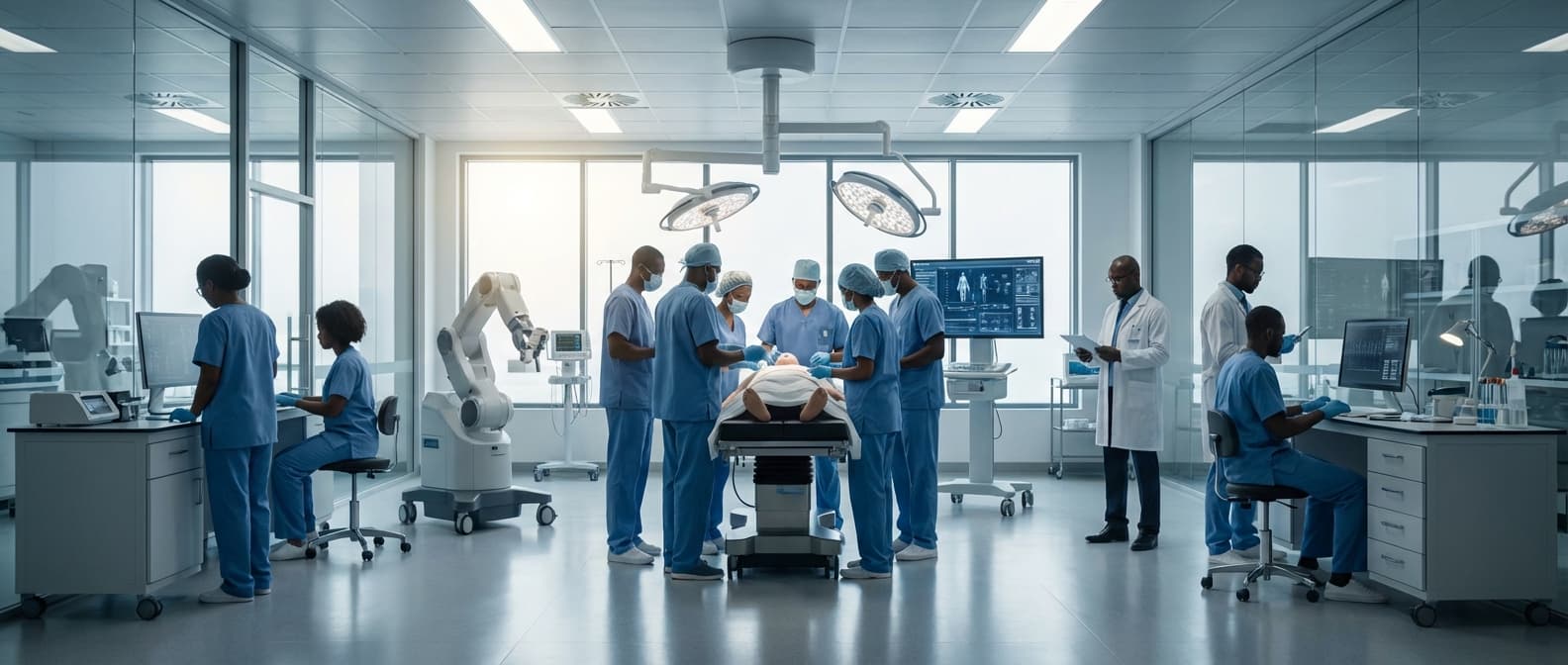
Biomedical Engineering Consulting in Comoros
Engineering Excellence & Technical Support
Equipment selection, procurement and implementation consulting High-standard technical execution following OEM protocols and local regulatory frameworks.
Advanced Medical Device Design & Prototyping
Leveraging cutting-edge simulation tools and rapid prototyping technologies, we engineer bespoke medical devices tailored to Comoros' unique healthcare needs, from low-cost diagnostic tools to robust rehabilitation equipment.
Biomedical Informatics & Data Analytics Solutions
We implement and optimize robust biomedical informatics systems, enabling efficient patient data management, trend analysis, and predictive modeling to enhance public health initiatives and personalized treatment strategies in Comoros.
Biocompatibility & Regulatory Pathway Navigation
Our expertise guides the development and approval of medical products by ensuring rigorous biocompatibility testing and navigating complex international regulatory frameworks, facilitating access to safe and effective medical technologies in Comoros.
What Is Biomedical Engineering Consulting In Comoros?
Biomedical Engineering Consulting in Comoros refers to the provision of expert technical advice and solutions related to medical devices, healthcare technology, and biological systems. This service leverages the principles of engineering and biological science to address challenges within the healthcare sector. Consultants in this field assist organizations with aspects such as the selection, procurement, installation, validation, maintenance, and optimization of medical equipment. They also advise on regulatory compliance, quality management systems, hospital infrastructure design for medical technology, and the implementation of new healthcare innovations. The objective is to enhance patient care, improve operational efficiency, and ensure the safe and effective use of biomedical technologies within the Comorian healthcare landscape.
| Who Needs Biomedical Engineering Consulting? | Typical Use Cases | ||||||||
|---|---|---|---|---|---|---|---|---|---|
| Hospitals and Clinics (Public and Private): Requiring assistance with medical equipment lifecycle management, from acquisition to decommissioning. | Ministry of Health/National Health Agencies: Seeking guidance on national medical equipment policies, procurement strategies, and regulatory frameworks. | Medical Device Manufacturers/Distributors: Needing support with market entry, regulatory submissions, and after-sales service strategies in Comoros. | Research Institutions and Universities: Looking for expertise in setting up and maintaining research-grade biomedical equipment. | Non-Governmental Organizations (NGOs) and International Aid Organizations: Involved in healthcare projects, requiring support for equipment deployment and sustainability. | Healthcare Facility Developers/Architects: Needing to design or renovate facilities with appropriate infrastructure for medical technology. | ||||
| Procurement of advanced diagnostic imaging equipment (e.g., MRI, CT scanners) for a new hospital wing. | Developing a comprehensive preventive maintenance program for a national fleet of essential medical devices. | Ensuring compliance with international safety and performance standards for imported medical devices. | Designing the technical specifications and layout for an operating theatre or intensive care unit. | Troubleshooting and repairing complex medical equipment that has failed unexpectedly. | Implementing a system for tracking and managing the lifecycle of all medical equipment within a healthcare network. | Conducting a needs assessment for new biomedical technologies to address specific public health challenges. | Training biomedical technicians on the servicing of newly acquired laboratory equipment. | Advising on the safe disposal or refurbishment of obsolete medical equipment. | Establishing a quality management system for a biomedical engineering department. |
Key Aspects of Biomedical Engineering Consulting in Comoros
- Technical Expertise: Providing in-depth knowledge of medical device functionality, safety standards, and technological advancements.
- Regulatory Navigation: Assisting clients in understanding and complying with national and international regulations pertaining to medical devices and healthcare facilities.
- Procurement and Selection: Guiding the acquisition process of medical equipment, ensuring suitability, cost-effectiveness, and long-term viability.
- Installation and Commissioning: Overseeing the proper setup and initial verification of new medical equipment to ensure it meets specified performance requirements.
- Maintenance and Calibration: Developing and implementing robust strategies for the preventive maintenance, corrective repair, and regular calibration of biomedical devices.
- Risk Management: Identifying and mitigating potential hazards associated with medical technology, including patient safety and equipment failure.
- Training and Capacity Building: Educating healthcare professionals and technical staff on the operation, maintenance, and safe use of biomedical equipment.
- Infrastructure Planning: Advising on the design and equipping of healthcare facilities to optimally integrate and support biomedical technologies.
- Technology Assessment and Adoption: Evaluating emerging biomedical technologies and recommending their adoption based on local needs and resources.
- Quality Management Systems: Implementing and managing quality assurance processes for biomedical equipment and related services.
Who Needs Biomedical Engineering Consulting In Comoros?
Biomedical engineering consulting services are essential for advancing healthcare infrastructure and capabilities in Comoros. These services can significantly benefit various entities within the nation, from public health organizations to private healthcare providers, and research institutions. The demand for such expertise stems from the need to ensure the safe, effective, and efficient use of medical technologies, improve patient care, and foster local capacity in healthcare innovation.
| Target Customer | Key Departments/Areas of Need |
|---|---|
| Government Ministries and Agencies (e.g., Ministry of Health) | Procurement and Tendering for Medical Equipment, Medical Device Regulation and Policy Development, National Health Infrastructure Planning, Public Health Program Support, Training and Capacity Building for Healthcare Professionals |
| Public Hospitals and Healthcare Centers (e.g., El-Maarouf Hospital) | Equipment Selection, Installation, and Commissioning, Preventive Maintenance and Repair Programs, Biomedical Equipment Management (BEM), Clinical Engineering Support, Technology Assessment and Upgrade Planning, Patient Safety and Risk Management |
| Private Healthcare Facilities (e.g., clinics, diagnostic centers) | Equipment Sourcing and Cost-Benefit Analysis, Facility Design and Renovation for Medical Equipment Integration, Quality Assurance in Medical Imaging and Diagnostics, IT Infrastructure for Healthcare, Specialized Equipment Consultation |
| Medical Device Manufacturers and Distributors | Market Access and Regulatory Compliance, Product Training and Support for End-Users, Service Network Development, Local Adaptation and Customization of Devices, Post-Market Surveillance Support |
| Research and Educational Institutions (e.g., University of Comoros, medical training centers) | Laboratory Equipment Setup and Maintenance, Development of Biomedical Engineering Curriculum, Research Project Support (equipment selection and application), Training for future biomedical engineers and technicians, Simulation and Training Center Development |
| Non-Governmental Organizations (NGOs) | Needs Assessment for Medical Equipment in Underserved Areas, Procurement and Distribution of Donated Medical Supplies and Equipment, Training of local healthcare workers on equipment use and maintenance, Project Management for Health Initiatives |
Target Customers and Departments for Biomedical Engineering Consulting in Comoros:
- Government Ministries and Agencies
- Public Hospitals and Healthcare Centers
- Private Healthcare Facilities
- Medical Device Manufacturers and Distributors
- Research and Educational Institutions
- Non-Governmental Organizations (NGOs)
Biomedical Engineering Consulting Process In Comoros
The biomedical engineering consulting process in Comoros, like in many regions, follows a structured workflow designed to address the unique needs and challenges within the healthcare sector. This process typically begins with an initial inquiry and culminates in the successful execution and implementation of solutions. Navigating this process requires understanding local regulations, resource availability, and the specific healthcare infrastructure present in the Comoros. The goal is to provide expert advice and practical solutions that improve healthcare delivery, medical device management, and overall patient care.
| Phase | Key Activities | Objective | Comoros-Specific Considerations |
|---|---|---|---|
| Inquiry & Initial Consultation | Client contacts consultant, initial discussion of needs. | Understand client's general requirement. | Awareness of local healthcare challenges (e.g., limited infrastructure, specific disease prevalence). |
| Needs Assessment & Scoping | Detailed interviews, site visits, review of existing documentation. | Define specific problems, existing resources, and desired outcomes. | Inventory of existing medical equipment, availability of trained personnel, import regulations for medical devices. |
| Proposal Development | Outline methodology, deliverables, timeline, cost, and expected impact. | Provide a clear roadmap for the project. | Feasibility of proposed solutions given local economic conditions and available technology. |
| Contract Negotiation & Agreement | Review and finalize terms, responsibilities, and payment schedule. | Establish a formal working relationship. | Understanding of local legal frameworks for consulting services. |
| Information Gathering & Site Visit | Collect data on equipment, infrastructure, personnel, and workflows. | Gain a deep understanding of the current state. | Logistical challenges of travel to remote islands, understanding of local customs and working hours. |
| Analysis & Solution Design | Evaluate data, identify root causes, brainstorm and design solutions. | Develop practical and effective interventions. | Appropriateness of technology considering maintenance capacity and spare parts availability. |
| Report Generation & Recommendations | Document findings, analysis, and proposed solutions with justifications. | Provide a clear and comprehensive blueprint for action. | Recommendations for sustainable and locally manageable solutions. |
| Presentation & Feedback | Present findings and recommendations to client stakeholders. | Ensure client understanding and buy-in. | Effective communication strategies that are culturally appropriate. |
| Implementation Planning | Detailed plan for executing solutions, including resource allocation and risk mitigation. | Map out the steps for successful implementation. | Coordination with local ministries of health and other stakeholders. |
| Execution & Oversight | Oversee and manage the implementation of the designed solutions. | Ensure solutions are implemented correctly and on time. | Local partnerships for procurement and installation, managing supply chains. |
| Training & Capacity Building | Develop and deliver training programs for healthcare professionals. | Empower local staff with necessary skills. | Language of training materials, adaptation to local literacy levels. |
| Monitoring & Evaluation | Track progress, measure outcomes, and make necessary adjustments. | Ensure the long-term effectiveness and sustainability of the solutions. | Establishing clear metrics that are relevant to the Comorian healthcare context. |
| Project Closure & Handover | Finalize documentation, report on project outcomes, and transfer knowledge. | Formally conclude the consulting engagement. | Ensuring all documentation is accessible and understandable to the client. |
Biomedical Engineering Consulting Workflow in Comoros
- Inquiry & Initial Consultation: The process starts when a healthcare facility, government agency, or other relevant entity in Comoros reaches out with a specific need or problem.
- Needs Assessment & Scoping: A thorough understanding of the client's requirements, existing infrastructure, and desired outcomes is established.
- Proposal Development: Based on the needs assessment, a detailed proposal outlining the scope of work, methodologies, timelines, deliverables, and estimated costs is prepared.
- Contract Negotiation & Agreement: The proposal is reviewed, and if accepted, a formal contract is drafted and agreed upon by both parties.
- Information Gathering & Site Visit (if applicable): Consultants gather all necessary data, which may involve site visits to healthcare facilities in Comoros to observe current practices and equipment.
- Analysis & Solution Design: The collected information is analyzed to identify root causes and develop tailored biomedical engineering solutions.
- Report Generation & Recommendations: A comprehensive report detailing findings, analysis, and specific, actionable recommendations is created.
- Presentation & Feedback: The report and recommendations are presented to the client for review and discussion, allowing for feedback and adjustments.
- Implementation Planning: Once recommendations are approved, a detailed plan for implementation is developed, considering local resources and constraints.
- Execution & Oversight: The agreed-upon solutions are implemented, with the consultant providing oversight and guidance throughout the process.
- Training & Capacity Building: Where necessary, training programs are delivered to local healthcare staff on new equipment, protocols, or maintenance procedures.
- Monitoring & Evaluation: Post-implementation, the effectiveness of the solutions is monitored, and evaluations are conducted to ensure long-term success and identify any areas for further improvement.
- Project Closure & Handover: The project is formally closed, with all deliverables handed over to the client and final documentation provided.
Biomedical Engineering Consulting Cost In Comoros
Biomedical engineering consulting costs in Comoros can vary significantly based on several factors, leading to a broad pricing range. These costs are typically negotiated on a per-project basis or through retainer agreements, with local currency (Comorian Franc, KMF) being the standard for transactions. Factors influencing these costs include the complexity and scope of the project, the specific expertise required, the duration of the engagement, the consultant's experience and reputation, and the overhead associated with the consulting firm or individual. Smaller, more straightforward projects might involve basic advice and system assessments, while larger initiatives could encompass detailed design, implementation, and regulatory compliance support. The geographical location within Comoros and any travel or accommodation expenses can also add to the overall cost. Given the developing nature of some healthcare infrastructure in Comoros, specialized consulting services might command higher rates due to limited local availability of such expertise, potentially requiring the engagement of international consultants.
| Service Type/Complexity | Estimated Cost Range (KMF) | Notes |
|---|---|---|
| Initial Consultation & Needs Assessment (Short-term, general advice) | 150,000 - 300,000 KMF | Covers brief site visits, initial problem identification, and preliminary recommendations. |
| Equipment Feasibility Study & Planning | 300,000 - 750,000 KMF | Involves market research, technology assessment, budget planning for equipment procurement. |
| System Design & Specification (e.g., laboratory setup, imaging suite) | 750,000 - 2,000,000 KMF+ | Detailed technical specifications, layout design, and vendor evaluation for specific medical systems. |
| Project Management (Mid-level complexity, several months) | 1,500,000 - 4,000,000 KMF+ | Overseeing procurement, installation, and commissioning of medical equipment or infrastructure projects. |
| Regulatory Compliance & Validation | 500,000 - 1,500,000 KMF+ | Assisting with local health authority approvals, quality assurance, and equipment validation processes. |
| Comprehensive Hospital/Clinic Development Consulting | 5,000,000 KMF+ | Large-scale projects involving strategic planning, infrastructure development, and operational efficiency across multiple departments. Can involve international expertise, significantly increasing costs. |
Key Factors Influencing Biomedical Engineering Consulting Costs in Comoros:
- Project Scope and Complexity: The sheer volume of work, the intricacy of the technical challenges, and the number of deliverables directly impact the cost.
- Required Expertise: Specialized knowledge in areas like medical imaging, laboratory equipment, hospital infrastructure, or regulatory affairs will generally be more expensive.
- Consultant Experience and Reputation: Highly experienced and well-regarded consultants or firms typically charge higher fees.
- Project Duration: Longer-term engagements will naturally incur higher cumulative costs, although daily or hourly rates might decrease with extended commitments.
- Travel and Accommodation: If the consultant needs to travel to different islands or remote locations within Comoros, these expenses will be factored in.
- Regulatory and Compliance Needs: Projects involving navigating local health regulations, certifications, or standards can add to the consulting time and cost.
- Technology and Equipment Involved: The type and sophistication of medical devices or systems the project pertains to can influence the required expertise and thus the cost.
- Deliverables: The nature of what needs to be produced (e.g., reports, designs, training programs, validation documents) affects the effort involved.
- Urgency of the Project: Rush projects may command premium pricing.
Affordable Biomedical Engineering Consulting Options
Biomedical engineering consulting is crucial for innovation, product development, regulatory compliance, and market access in the healthcare industry. However, the perceived high cost can be a barrier for startups and smaller organizations. This guide explores affordable biomedical engineering consulting options, focusing on value bundles and cost-saving strategies. By understanding these approaches, companies can leverage expert knowledge without breaking the bank.
| Strategy/Service | Description | Potential Cost Savings | Considerations |
|---|---|---|---|
| Value Bundles | Pre-packaged service combinations at a fixed price. | Predictable budgeting, potential discount compared to individual services, comprehensive solutions. | Ensure the bundle aligns with specific project needs; review included services carefully. |
| Phased Engagement | Breaking projects into distinct phases with defined deliverables. | Controlled spending, risk mitigation, allows for course correction. | Requires clear milestones and evaluation criteria for each phase. |
| Remote Consulting | Utilizing video conferencing, collaborative software for expertise. | Eliminates travel, accommodation, and related expenses. | Requires reliable internet access and effective communication protocols. |
| Freelance/Boutique Firms | Engaging independent consultants or smaller specialized firms. | Lower overhead often translates to lower hourly rates. | Thorough vetting of experience, references, and track record is crucial. |
| Defining Scope Meticulously | Precisely outlining project objectives, deliverables, and boundaries. | Prevents scope creep and unnecessary additional charges. | Requires detailed initial planning and strong project management. |
| Internal Skill Development | Investing in training existing staff to handle certain engineering tasks. | Reduces reliance on external consultants for recurring needs. | Requires time investment for training and potential upfront cost of education. |
Affordable Biomedical Engineering Consulting Strategies
- {"title":"Understanding Value Bundles","description":"Value bundles are pre-packaged service offerings that combine multiple consulting services at a set price. This approach provides clarity on costs and often delivers a more comprehensive solution than purchasing individual services. Bundles are designed to address common project phases or needs, such as early-stage feasibility studies, regulatory submission preparation, or product lifecycle management."}
- {"title":"Types of Value Bundles","description":"Bundles can be tailored to specific project needs. Common examples include 'Concept to Prototype' bundles, 'Regulatory Pathway Planning' packages, 'Usability Engineering & Testing' sets, and 'Manufacturing Scale-up Strategy' components. These pre-defined packages streamline the engagement process and offer predictable budgeting."}
- {"title":"Cost-Saving Strategies","description":"Beyond value bundles, several strategies can reduce consulting expenses. This includes defining project scope meticulously to avoid scope creep, leveraging remote consulting to save on travel and accommodation, and negotiating phased payment schedules. Furthermore, utilizing a mix of senior and junior consultants, depending on the task complexity, can optimize cost-effectiveness."}
- {"title":"Phased Engagement","description":"Breaking down a large project into smaller, manageable phases with distinct deliverables allows for regular review and adjustment. This approach not only controls costs but also mitigates risk, ensuring that you only invest in the next phase if the current one is successful and aligned with your goals."}
- {"title":"Leveraging Freelance and Boutique Firms","description":"Freelance biomedical engineers and smaller boutique consulting firms often have lower overheads than large corporations, allowing them to offer competitive rates. Careful vetting is essential, but these providers can deliver high-quality expertise."}
- {"title":"Partnerships and Collaborations","description":"Exploring collaborations with academic institutions or other companies can provide access to specialized expertise and resources at a reduced cost. Shared projects or joint ventures can distribute expenses and risks."}
Verified Providers In Comoros
Navigating the healthcare landscape in Comoros requires a commitment to quality and trust. Franance Health stands out as a leading provider, distinguished by its rigorous credentialing process and unwavering dedication to patient care. This verification ensures that all practitioners associated with Franance Health meet the highest standards of medical expertise, ethical conduct, and professional integrity, offering patients peace of mind and access to superior healthcare services.
| Provider Type | Franance Health Verification Criteria | Benefits for Patients |
|---|---|---|
| Doctors (General & Specialists) | Medical Degree Verification (Accredited Institutions), Licensing Board Confirmation, Peer Reviews, Criminal Background Checks, Proof of Continuing Medical Education (CME) | Access to highly qualified and continuously updated medical knowledge, assurance of legitimate practice, reduced risk of malpractice. |
| Nurses | Nursing Diploma/Degree Verification, Professional Nursing Council Registration, Background Checks, Clinical Competency Assessments | Reliable and skilled nursing care, adherence to best practices in patient support and monitoring, safety and trust. |
| Pharmacists | Pharmacy Degree Verification, Pharmacy Council License, Source Verification of Pharmaceutical Products, Compliance Training | Safe and accurate dispensing of medications, guidance on drug interactions and usage, assurance of genuine pharmaceuticals. |
| Allied Health Professionals (e.g., Radiologists, Lab Technicians) | Relevant Degree/Certification Verification, Professional Body Membership, Practical Skills Assessment, Adherence to Safety Protocols | Accurate diagnostic results, reliable technical services, safe and efficient patient procedures. |
| Healthcare Facilities (Clinics, Hospitals) | Operational Licensing, Compliance with Health & Safety Regulations, Quality Management System Assessment, Cleanliness and Equipment Standards | Safe and well-equipped medical environments, adherence to international standards of care, improved patient outcomes. |
Why Franance Health is the Best Choice in Comoros:
- Rigorous Verification: Franance Health employs a multi-faceted credentialing process that scrutinizes every healthcare professional.
- Experienced Practitioners: We partner with highly qualified and experienced doctors, specialists, and allied health professionals.
- Commitment to Patient Safety: Our verification protocols prioritize patient safety and well-being above all else.
- Ethical Standards: All Franance Health providers adhere to the strictest ethical guidelines and professional codes of conduct.
- Accessibility and Convenience: We strive to make quality healthcare accessible across Comoros, with a network of trusted facilities and professionals.
- Continuous Quality Improvement: Franance Health is committed to ongoing assessment and improvement of our provider network.
Scope Of Work For Biomedical Engineering Consulting
This Scope of Work (SOW) outlines the services to be provided by [Consulting Firm Name] (hereinafter referred to as "Consultant") to [Client Organization Name] (hereinafter referred to as "Client") for Biomedical Engineering Consulting. The project aims to [briefly describe project goal]. This SOW details the technical deliverables, standard specifications, and project phases.
| Deliverable | Description | Standard Specification/Format | Timeline (Weeks) |
|---|---|---|---|
| Needs Assessment Report | Comprehensive analysis of client's current state, identification of gaps, and detailed user/technical requirements. | Document (PDF/Word). Includes executive summary, current state analysis, stakeholder interviews, user needs, technical requirements, and recommendations. | 1-3 |
| Conceptual Design Document | Outlines potential design concepts, including functional block diagrams, preliminary schematics, and risk assessments. | Document (PDF/Word). Includes design alternatives, chosen concept rationale, high-level architecture, and initial risk analysis. | 3-5 |
| Detailed Design Specifications | Comprehensive documentation of the chosen design, including detailed schematics, bill of materials (BOM), component selection, and manufacturing instructions. | Document (PDF/Word) and CAD files (e.g., SolidWorks, AutoCAD). Includes electrical schematics, PCB layouts, mechanical drawings, software architecture, and integration plans. | 5-10 |
| Prototype Development Plan | Detailed plan for the construction and testing of prototypes, including testing protocols and expected outcomes. | Document (PDF/Word). Outlines prototype build strategy, material sourcing, assembly procedures, and validation test cases. | 2-4 |
| Testing and Validation Reports | Results of all testing phases, including functional, performance, safety, and usability testing. | Document (PDF/Word). Includes test protocols, raw data, analysis of results, identification of defects, and recommendations for improvement. | 4-8 |
| Regulatory Compliance Documentation | Preparation of documentation required for regulatory submissions (e.g., FDA, CE marking). | Document (PDF/Word) and specific regulatory templates. Includes design history file (DHF), risk management file (RMF), validation master plan (VMP), and specific submission documents. | 6-12 |
| User Manuals and Training Materials | Documentation for end-users and maintenance personnel, and materials for training sessions. | Document (PDF/Word), interactive presentations, or video tutorials. | 2-4 |
| Final Project Report | Summary of the project, including key achievements, lessons learned, and recommendations for future development. | Document (PDF/Word). Includes project overview, met objectives, challenges encountered, and future outlook. | 1-2 |
Project Phases and Activities
- Phase 1: Needs Assessment and Requirements Gathering
- Phase 2: Design and Development
- Phase 3: Prototyping and Testing
- Phase 4: Regulatory Compliance and Documentation
- Phase 5: Implementation Support and Training
Service Level Agreement For Biomedical Engineering Consulting
This Service Level Agreement (SLA) outlines the response times and uptime guarantees for Biomedical Engineering Consulting services provided by [Your Company Name] to [Client Name]. This SLA is a supplement to the Master Service Agreement (MSA) between the parties.
| Service Component | Severity Level | Response Time Target | Uptime Guarantee | Resolution Time Target |
|---|---|---|---|---|
| Consulting Support & Advice | Critical (System Failure/Safety Issue) | 1 Hour | 99.5% | 4 Business Hours |
| Consulting Support & Advice | High (Significant operational impact) | 2 Business Hours | 99.5% | 8 Business Hours |
| Consulting Support & Advice | Medium (Minor operational impact) | 4 Business Hours | 99.5% | 2 Business Days |
| Consulting Support & Advice | Low (Information request/minor clarification) | 8 Business Hours | 99.5% | 5 Business Days |
| Project Management & Oversight | N/A (Continuous) | N/A | 99.5% | As per Project Plan |
| Technical Documentation Review | N/A (As per schedule) | N/A | N/A | As per agreed turnaround time |
Key Performance Indicators (KPIs)
- Response Time: The maximum time allowed for [Your Company Name] to acknowledge and begin addressing a reported issue.
- Uptime Guarantee: The minimum percentage of time that the consulting services are expected to be available and operational.
- Resolution Time: The target time for resolving identified issues, categorized by severity.
- Availability of Experts: The guarantee of access to qualified biomedical engineering consultants as per the agreed scope of work.
Frequently Asked Questions

Ready when you are
Let's scope your Biomedical Engineering Consulting in Comoros project in Comoros.

Scaling healthcare logistics and technical systems across the entire continent.