
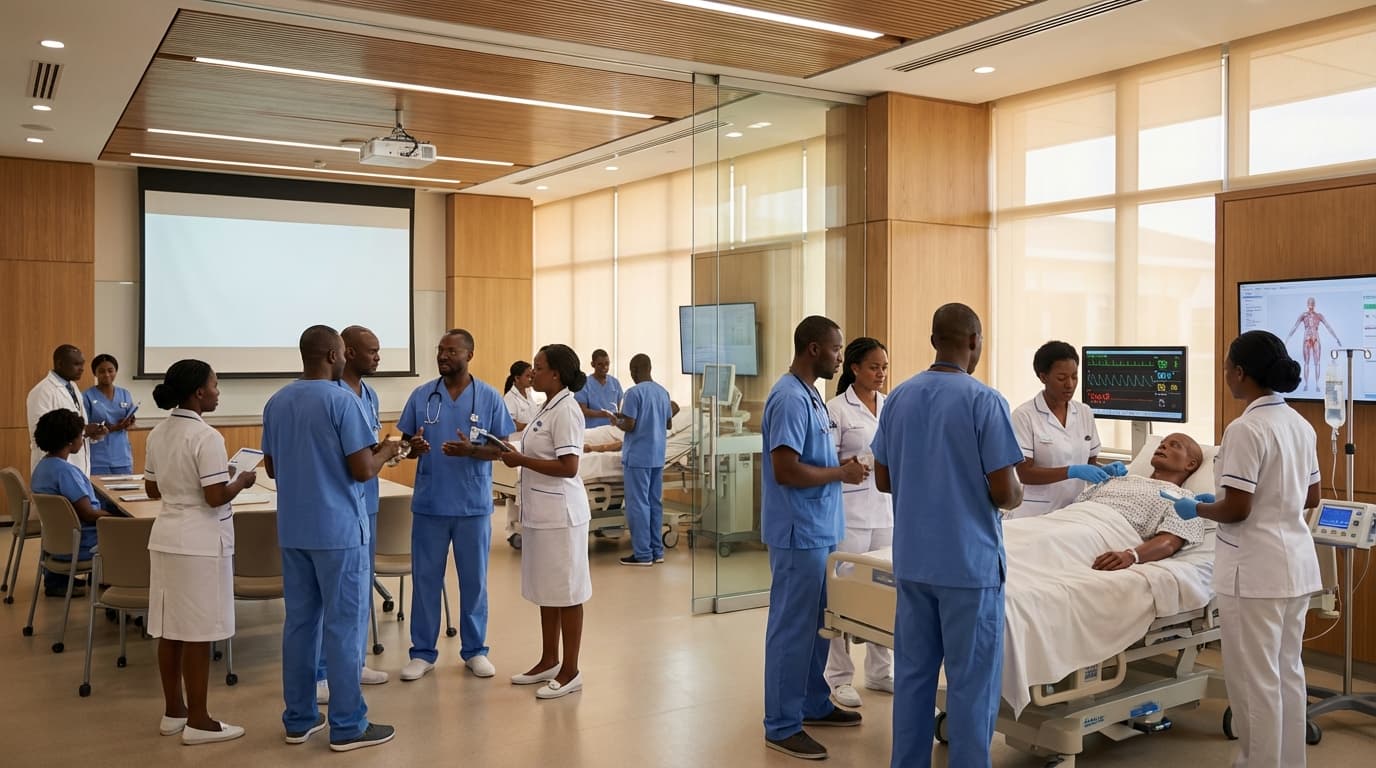
Equipment Training & Education in Chad
Engineering Excellence & Technical Support
Comprehensive equipment training and certification programs High-standard technical execution following OEM protocols and local regulatory frameworks.
Hands-on Heavy Machinery Operation
Comprehensive training programs focusing on safe and efficient operation of critical heavy machinery (e.g., bulldozers, excavators, loaders) essential for infrastructure development and resource extraction projects in Chad. Includes simulated and real-world operational exercises.
Preventive Maintenance & Troubleshooting
Empowering local technicians with advanced skills in preventive maintenance, fault diagnosis, and basic repair of agricultural and construction equipment. Training emphasizes the use of diagnostic tools and adherence to manufacturer specifications to minimize downtime and extend equipment lifespan.
Safety Protocols & Risk Management
Mandatory safety training modules designed for all personnel operating or working near heavy equipment. Covers hazard identification, personal protective equipment (PPE) usage, emergency procedures, and regulatory compliance specific to Chad's operational environments.
What Is Equipment Training & Education In Chad?
Equipment training and education in Chad refers to the structured process of imparting knowledge, skills, and practical understanding necessary for the safe, efficient, and effective operation, maintenance, and troubleshooting of various types of equipment. This encompasses a broad spectrum of machinery and tools utilized across diverse sectors, from agriculture and construction to healthcare and energy. The objective is to enhance user competency, minimize operational risks, optimize equipment lifespan, and ensure compliance with industry standards and regulations.
| Who Needs It? | Typical Use Cases | Sectors in Chad |
|---|---|---|
| Equipment Operators (e.g., tractor drivers, excavator operators, generator technicians) | Operation of agricultural machinery for planting, harvesting, and irrigation. Deployment and management of construction equipment for infrastructure development. Installation, operation, and routine maintenance of power generation units. Usage of medical equipment in healthcare facilities. Operation of specialized industrial machinery. | Agriculture, Construction, Energy (Oil & Gas, Power Generation), Healthcare, Mining, Logistics & Transportation, Water & Sanitation |
| Maintenance Technicians & Engineers | Performing scheduled preventive maintenance to identify and address potential issues before they lead to failure. Diagnosing and rectifying faults and breakdowns in complex machinery. Implementing repair strategies for mechanical, electrical, and hydraulic systems. Ensuring equipment availability and minimizing downtime. | Agriculture, Construction, Energy (Oil & Gas, Power Generation), Healthcare, Mining, Logistics & Transportation, Water & Sanitation |
| Supervisors & Project Managers | Overseeing the safe and efficient deployment of equipment on project sites. Ensuring operators and technicians are adequately trained and adhere to safety protocols. Managing equipment resources and optimizing their utilization. Assessing training needs and coordinating educational programs. | Agriculture, Construction, Energy (Oil & Gas, Power Generation), Healthcare, Mining, Logistics & Transportation, Water & Sanitation |
| Procurement & Logistics Personnel | Understanding the operational requirements and maintenance needs of equipment before acquisition. Ensuring proper handling, storage, and transportation of equipment. Facilitating the availability of spare parts and consumables. | Agriculture, Construction, Energy (Oil & Gas, Power Generation), Healthcare, Mining, Logistics & Transportation, Water & Sanitation |
| Regulatory & Safety Officers | Ensuring all equipment operations comply with national safety regulations and environmental standards. Developing and implementing site-specific safety training programs. Conducting audits and inspections to verify adherence to training protocols. | Agriculture, Construction, Energy (Oil & Gas, Power Generation), Healthcare, Mining, Logistics & Transportation, Water & Sanitation |
Key Components of Equipment Training & Education
- Theoretical Instruction: Covers principles of operation, technical specifications, safety protocols, and troubleshooting methodologies.
- Practical/Hands-on Training: Involves direct engagement with the equipment, simulating real-world operational scenarios under supervision.
- Maintenance & Repair Fundamentals: Focuses on routine checks, preventive maintenance procedures, and basic repair techniques.
- Safety Procedures & Risk Management: Emphasizes hazard identification, risk assessment, emergency response, and the use of Personal Protective Equipment (PPE).
- Performance Optimization: Strategies to maximize output, minimize resource consumption, and maintain peak operational efficiency.
- Regulatory Compliance: Education on relevant national and international standards, licensing, and certification requirements.
Who Needs Equipment Training & Education In Chad?
Effective equipment training and education are crucial across various sectors in Chad to ensure operational efficiency, safety, and productivity. This goes beyond basic operation, encompassing maintenance, troubleshooting, and adherence to safety protocols. Targeting the right individuals and departments ensures that investments in training yield maximum benefits, leading to reduced downtime, improved quality of work, and a more skilled workforce capable of adapting to technological advancements.
| Sector/Industry | Key Departments/Functions | Types of Equipment Requiring Training |
|---|---|---|
| Agriculture | Farm Operations, Mechanization Units, Cooperatives | Tractors, harvesters, irrigation systems, processing machinery, generators |
| Construction | Project Management, Site Operations, Equipment Maintenance | Cranes, excavators, bulldozers, concrete mixers, scaffolding, power tools, welding equipment |
| Oil and Gas | Drilling Operations, Production, Maintenance, Logistics | Drilling rigs, pumps, valves, pipelines, safety equipment (PPE), heavy-duty vehicles, specialized tools |
| Mining | Extraction, Processing, Maintenance, Safety | Heavy haul trucks, excavators, crushers, conveyors, drilling equipment, safety gear, analytical instruments |
| Manufacturing and Industry | Production Lines, Quality Control, Maintenance, Warehousing | Assembly line machinery, CNC machines, packaging equipment, forklifts, welding machines, power generators |
| Transportation and Logistics | Fleet Management, Warehouse Operations, Mechanics | Trucks, buses, forklifts, cranes, loading/unloading equipment, diagnostic tools |
| Healthcare | Biomedical Engineering, Technical Support, Specialized Units | Medical imaging equipment (X-ray, MRI), laboratory equipment, surgical instruments, patient monitoring systems, sterilization equipment |
| Telecommunications | Installation and Maintenance, Network Operations | Tower climbing equipment, diagnostic tools, fiber optic splicing machines, testing equipment |
| Energy Sector (Power Generation) | Operations, Maintenance, Safety | Turbines, generators, transformers, control systems, heavy-duty electrical equipment |
Key Target Customers and Departments for Equipment Training & Education in Chad
- Individuals/Roles:
- Machine Operators (various types)
- Maintenance Technicians (mechanical, electrical, hydraulic)
- Supervisors and Foremen
- Safety Officers/Managers
- Engineers (project, mechanical, civil)
- Logistics and Warehouse Staff
- Quality Control Inspectors
- Field Service Technicians
- New Hires/Apprentices
- Key Departments/Sectors:
Equipment Training & Education Process In Chad
This document outlines the workflow for the Equipment Training & Education Process in Chad, from initial inquiry to successful execution. The process is designed to ensure that all stakeholders receive the necessary information and support to effectively utilize and maintain equipment. It emphasizes clear communication, needs assessment, tailored training delivery, and ongoing support.
| Stage | Description | Key Activities | Responsible Parties | Deliverables/Outcomes |
|---|---|---|---|---|
| Inquiry & Initial Contact | The process begins with an external or internal request for equipment training. | Receive and acknowledge the inquiry, gather initial details about the equipment and desired training outcomes. | Requester (e.g., Government Ministry, NGO, private company), Training Provider Representative | Acknowledgement of inquiry, preliminary understanding of training needs. |
| Needs Assessment & Planning | A thorough understanding of the specific training requirements is established. | Conduct site visits, interviews with end-users and stakeholders, assess current skill levels, identify specific equipment models and functionalities, define learning objectives, establish budget and timeline. | Training Needs Analyst, Technical Experts, Project Manager, Requester Representatives | Detailed Training Needs Assessment Report, Training Plan (scope, objectives, methodology, schedule, resources). |
| Curriculum Development & Customization | Training materials are developed or adapted to meet the identified needs. | Design training modules, create presentations, manuals, practical exercises, assessments, translate materials if necessary, select appropriate training methods (e.g., classroom, hands-on, e-learning). | Curriculum Developers, Subject Matter Experts (SMEs), Technical Writers, Translators | Comprehensive Training Curriculum, Training Materials (manuals, presentations, handouts), Assessment Tools. |
| Training Delivery & Execution | The actual training sessions are conducted. | Schedule and organize training sessions, deliver training content, facilitate practical exercises, provide demonstrations, ensure participant engagement, manage logistics (venue, equipment, refreshments). | Lead Trainer, Assistant Trainers, Logistics Coordinator, Participants | Successful completion of training sessions, active participation from attendees. |
| Evaluation & Feedback | The effectiveness of the training is assessed, and feedback is collected. | Administer post-training assessments, collect feedback from participants and trainers through surveys and discussions, analyze evaluation results to identify areas for improvement. | Training Coordinator, Trainers, Participants | Training Evaluation Report, Participant Feedback Summary, Identified areas for improvement. |
| Post-Training Support & Follow-up | Ongoing support is provided to reinforce learning and address any emerging issues. | Offer technical support and troubleshooting, conduct refresher courses or follow-up sessions as needed, provide access to resources and documentation, gather feedback on long-term impact of training. | Technical Support Team, Training Department, Project Manager | Sustained equipment operational efficiency, reduced support requests, documentation of long-term impact. |
Key Stages of the Equipment Training & Education Process
- Inquiry & Initial Contact
- Needs Assessment & Planning
- Curriculum Development & Customization
- Training Delivery & Execution
- Evaluation & Feedback
- Post-Training Support & Follow-up
Equipment Training & Education Cost In Chad
In Chad, the cost of equipment training and education can vary significantly based on several factors. These include the type and complexity of the equipment, the duration and depth of the training program, the qualifications and experience of the instructors, the location of the training (whether on-site at a company's facility or at a training center), and the specific training provider. Demand for specialized skills also plays a role in pricing. Training for heavy machinery, advanced technical equipment, or specialized software will generally command higher prices than basic operational training. Furthermore, the inclusion of practical exercises, certifications, and training materials can all influence the final cost. Pricing is typically quoted in the local currency, the Chadian Franc (XAF). While precise, universally published price lists are rare, especially for bespoke training, general ranges can be estimated.
| Training Category | Estimated Cost Range (XAF per person/day) | Notes |
|---|---|---|
| Basic Equipment Operation (e.g., standard tools, simple machinery) | 15,000 - 40,000 | Short duration (1-2 days), generalist instructors. |
| Intermediate Equipment Operation (e.g., forklifts, agricultural machinery) | 30,000 - 75,000 | More hands-on, potentially 2-3 days, may include basic certification. |
| Advanced Technical Equipment (e.g., construction machinery, industrial pumps) | 60,000 - 150,000+ | Complex machinery, specialized skills, 3-5 days or more, experienced instructors, may require site-specific training. |
| Specialized Software/IT Equipment Training | 40,000 - 120,000+ | Can vary widely based on software complexity, 1-4 days, often requires certified trainers. |
| On-site Customized Training (per group) | Negotiable (often higher than per-person rates) | Depends on number of participants, duration, and specific content. May include travel and accommodation for instructors. |
| Certification Fees (if applicable) | 10,000 - 50,000+ | Separate cost added to training, depends on the certifying body. |
Key Pricing Factors for Equipment Training in Chad
- Equipment Type and Complexity: Simple tools vs. advanced machinery or specialized software.
- Training Duration and Depth: Short introductory sessions vs. comprehensive, multi-day courses.
- Instructor Qualifications and Experience: Local vs. international experts, specialized certifications.
- Training Location: On-site at the client's premises vs. dedicated training facilities.
- Training Provider: Reputation, infrastructure, and perceived value.
- Inclusions: Practical exercises, simulations, certification fees, training materials.
- Demand and Specialization: High demand for niche skills can increase costs.
Affordable Equipment Training & Education Options
Investing in quality equipment training and education is crucial for maximizing productivity, ensuring safety, and extending the lifespan of your machinery. Fortunately, there are numerous affordable options available that can deliver significant value without breaking the bank. This guide explores cost-saving strategies and highlights the benefits of "value bundles" to help you make informed decisions about your training investments.
| Cost-Saving Strategy | Description | Example Application |
|---|---|---|
| Leverage Value Bundles | Purchase combined training packages for a discounted overall price. | A company buys a bundle that includes basic operation, preventative maintenance, and safety training for a new fleet of forklifts at 20% less than buying each separately. |
| Online & E-Learning Options | Utilize digital platforms for self-paced learning, reducing travel and instructor costs. | An individual enrolls in an online course for heavy machinery operation, allowing them to learn at their own pace from home. |
| Group Discounts | Inquire about reduced rates for multiple employees from the same organization undergoing training. | A construction company registers 10 employees for an excavator training program and negotiates a group discount. |
| Manufacturer-Provided Training | Many equipment manufacturers offer free or subsidized training programs for their products. | A dealership offers a free introductory training session on their new agricultural machinery to all purchasers. |
| Community College & Vocational Schools | These institutions often provide affordable, accredited courses in equipment operation and maintenance. | A student enrolls in a welding technology program at a local community college that includes training on various welding equipment. |
| Apprenticeship Programs | Hands-on learning combined with theoretical instruction under experienced professionals, often with wages paid. | An aspiring electrician joins an apprenticeship program that covers the safe and efficient use of specialized electrical testing equipment. |
| Train-the-Trainer Programs | Equip internal personnel to deliver training, creating a sustainable and cost-effective internal knowledge base. | A manufacturing plant trains experienced operators to become certified trainers for new hires on assembly line machinery. |
| Government & Industry Grants | Explore funding opportunities or grants available for workforce development and specialized training. | A small business applies for a government grant to subsidize the cost of safety training for their warehouse staff on new racking systems. |
| Refurbished or Used Equipment Training | If training on older or less complex equipment, consider less intensive or older training materials if still relevant. | A maintenance team uses existing manuals and online tutorials to train new staff on the operation of an older model generator. |
Understanding Value Bundles
- {"title":"What are Value Bundles?","description":"Value bundles, often referred to as package deals or tiered offerings, combine multiple training modules, services, or resources at a discounted price compared to purchasing them individually. These bundles are designed to provide comprehensive learning experiences and address a broader range of needs."}
- {"title":"Benefits of Value Bundles","description":"By opting for a bundle, you can achieve significant cost savings, gain access to a wider scope of knowledge, and benefit from a structured learning path. Bundles often include a mix of foundational knowledge, advanced techniques, and practical application, leading to more well-rounded and competent operators or technicians."}
- {"title":"Common Bundle Components","subList":["Core equipment operation courses","Maintenance and troubleshooting workshops","Safety certification programs","Advanced feature utilization modules","Online learning resources (videos, manuals, quizzes)","On-site instructor-led sessions","Certification exams","Post-training support or consultation"],"description":"Value bundles can include a variety of components such as:"}
Verified Providers In Chad
In Chad's burgeoning healthcare landscape, identifying trustworthy and competent medical providers is paramount for individuals seeking quality care. Franance Health stands out as a beacon of reliability, meticulously vetting its network of healthcare professionals. This commitment to rigorous credentialing ensures that patients have access to providers who not only possess the necessary qualifications but also adhere to the highest ethical standards. When choosing a healthcare provider, understanding the credentials and the assurance they represent is crucial for peace of mind and effective treatment.
| Credential Type | Verification Standard by Franance Health | Benefit to Patient |
|---|---|---|
| Medical Degree and Licensing | Confirmed with national and international accreditation bodies. | Ensures foundational medical knowledge and legal authorization to practice. |
| Specialized Training and Certifications | Verified with recognized institutions and certifying boards. | Guarantees expertise in specific medical fields for targeted treatments. |
| Clinical Experience | Validated through verifiable work history and, where possible, employer references. | Indicates practical application of knowledge and hands-on patient care. |
| Continuing Professional Development (CPD) | Evidence of ongoing learning and skill enhancement required. | Confirms providers stay updated with the latest medical advancements and techniques. |
| Reputation and Ethical Standing | Checked through background screenings and, where applicable, professional conduct reviews. | Assures patient safety and promotes a trustworthy doctor-patient relationship. |
Why Franance Health Credentials Matter in Chad
- Rigorous Verification Process: Franance Health employs a multi-stage vetting system that goes beyond basic licensing. This includes verification of educational background, specialized training, professional experience, and ongoing professional development.
- Focus on Competence and Skill: Credentials from Franance Health indicate that providers have demonstrated a high level of clinical competence, proven through assessments and peer reviews where applicable.
- Commitment to Ethical Practice: Beyond technical skills, Franance Health evaluates providers for their adherence to ethical guidelines and patient-centered care principles.
- Access to Specialized Care: The network includes specialists across various fields, all verified to ensure you receive expert treatment for your specific health needs.
- Enhanced Patient Safety: By ensuring providers meet stringent criteria, Franance Health significantly contributes to a safer healthcare experience for its users.
- Building Trust in the Healthcare System: Franance Health's transparent and robust credentialing process helps to build trust and confidence in the healthcare providers available in Chad.
Scope Of Work For Equipment Training & Education
This Scope of Work (SOW) outlines the requirements for providing comprehensive training and educational services for the specified equipment. The objective is to ensure that end-users are proficient in operating, maintaining, and troubleshooting the equipment, thereby maximizing its utility and longevity. This SOW details the technical deliverables, standard specifications for training materials, and the expected outcomes of the training program.
| Deliverable | Description | Standard Specifications/Requirements | Acceptance Criteria |
|---|---|---|---|
| Training Curriculum Development | Creation of a structured training program tailored to the specific equipment model(s) and intended user roles. | Modular design with clear learning objectives, assessment methods, and a defined syllabus. Should include theoretical and practical components. Content to be reviewed and approved by the client's technical representative. | Curriculum submitted in editable digital format (e.g., Word, PDF). Approved by client within 10 business days of submission. Covers all specified operational and maintenance aspects. |
| Training Materials (Participant) | Development of comprehensive manuals, handouts, and visual aids for trainees. | Materials to be clear, concise, and easy to understand. High-quality images, diagrams, and flowcharts where applicable. Content aligned with the approved curriculum. Available in both digital (PDF) and printable formats. | Participant materials submitted in editable digital format and final approved PDF. Legible, accurate, and comprehensive. Covers all topics outlined in the curriculum. |
| Training Materials (Instructor) | Development of facilitator guides, lesson plans, and presentation slides for trainers. | Instructor guides to include detailed instructions, talking points, time allocations, and suggested activities. Presentation slides to be visually engaging and to reinforce key learning points. Content aligned with the approved curriculum. | Instructor materials submitted in editable digital format and final approved PDF. Facilitates effective knowledge transfer and engagement. |
| Hands-on Training Sessions | Delivery of practical, interactive training sessions using actual equipment or simulators. | Sessions to be conducted by qualified and experienced instructors. Appropriate safety protocols to be observed. Sufficient training equipment or access to operational units must be available. Duration and frequency to be agreed upon. | Trainees demonstrate proficiency in key operational tasks. Instructor provides feedback and assessments. Post-training evaluation forms completed by participants. |
| Assessment Tools | Development of methods to evaluate trainee comprehension and skill acquisition. | Includes pre- and post-training quizzes, practical skill demonstrations, and performance-based assessments. Passing scores to be defined. | Assessment tools submitted for review and approval. Results of assessments documented and provided to the client. |
| Training Report | A summary report detailing the training conducted, trainee performance, and any recommendations. | Includes list of attendees, topics covered, assessment results, identified areas for improvement, and overall feedback. Submitted within 5 business days of training completion. | Report is accurate, comprehensive, and delivered on time. Provides actionable insights into training effectiveness. |
Key Objectives
- To equip trainees with the knowledge and skills necessary for safe and effective operation of the equipment.
- To enable trainees to perform routine maintenance and basic troubleshooting tasks.
- To ensure compliance with all relevant safety regulations and operational procedures.
- To enhance the overall efficiency and productivity of personnel utilizing the equipment.
- To provide a clear understanding of the equipment's capabilities and limitations.
Service Level Agreement For Equipment Training & Education
This Service Level Agreement (SLA) outlines the guaranteed response times and uptime for the Equipment Training & Education services provided by [Your Company Name] to [Client Company Name]. This SLA aims to ensure the timely availability and support of training resources for the specified equipment.
| Service Component | Target Response Time | Target Resolution Time (Critical) | Target Resolution Time (High) | Target Resolution Time (Medium) | Uptime Guarantee |
|---|---|---|---|---|---|
| Online Training Platform Access | 1 Hour | 4 Hours | 8 Business Hours | 24 Business Hours | 99.5% |
| Live Virtual Training Session Delivery | 2 Business Hours (for scheduling confirmation) | N/A (for session execution, reschedule as per agreement) | N/A | N/A | N/A (session dependent) |
| Access to Training Materials (e.g., PDFs, videos) | 1 Business Hour | 4 Business Hours | 8 Business Hours | 24 Business Hours | 99.5% |
| Technical Support for Platform Issues | 1 Business Hour | 4 Business Hours | 8 Business Hours | 24 Business Hours | 99.5% |
| Instructor Availability for Q&A (scheduled) | Scheduled Time | N/A (covered by scheduled session) | N/A | N/A | N/A |
Key Definitions
- Training Services: Refers to the delivery of educational content, materials, and practical sessions related to the operation, maintenance, and troubleshooting of [Specify Equipment Type/Models].
- Support Request: A formal communication initiated by [Client Company Name] to [Your Company Name] seeking assistance with training content, platform access, or scheduling issues.
- Incident: Any event that disrupts or degrades the availability or performance of the Training Services, preventing [Client Company Name] users from accessing or utilizing them effectively.
- Downtime: The cumulative period during which the Training Services are unavailable for use due to an Incident.
- Response Time: The maximum time allowed for [Your Company Name] to acknowledge a Support Request or Incident report and begin actively working on a resolution.
- Resolution Time: The maximum time allowed for [Your Company Name] to fully resolve an Incident and restore Training Services to normal operation.
- Uptime Guarantee: The percentage of time the Training Services are expected to be available and functional over a given period.
Frequently Asked Questions

Ready when you are
Let's scope your Equipment Training & Education in Chad project in Chad.

Scaling healthcare logistics and technical systems across the entire continent.