
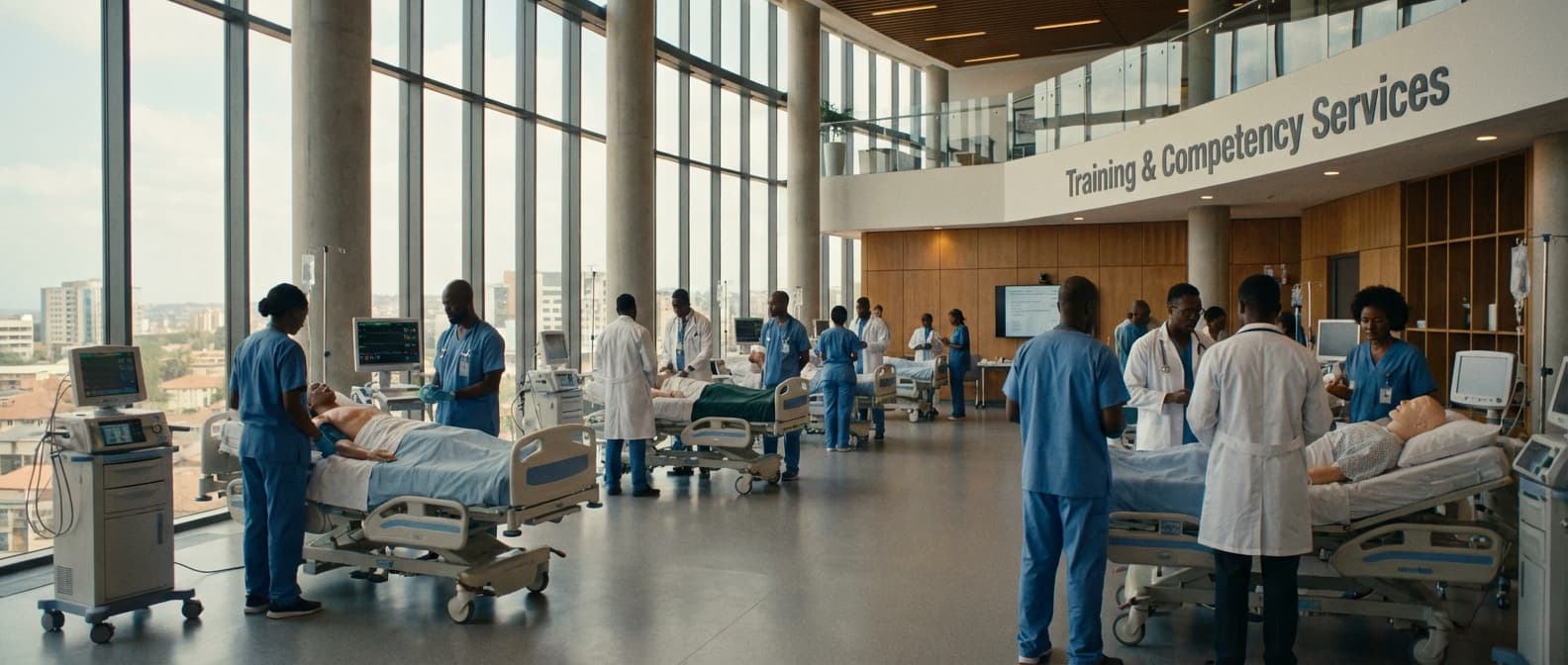
Ventilator User Training Service (Nurses) in Chad
Engineering Excellence & Technical Support
Ventilator User Training Service (Nurses) High-standard technical execution following OEM protocols and local regulatory frameworks.
Mastering Ventilator Settings for Optimized Patient Care
Learn to accurately select and adjust key ventilator parameters (e.g., tidal volume, respiratory rate, PEEP, FiO2) based on patient's clinical condition and Chad's specific guidelines, ensuring effective ventilation and minimizing lung injury.
Effective Patient Monitoring and Alarm Management
Gain proficiency in interpreting ventilator waveforms and real-time patient data. Understand how to identify and respond promptly and appropriately to critical ventilator alarms, ensuring patient safety and timely intervention.
Maintaining Infection Control and Sterility Protocols
Understand and implement rigorous infection control measures during ventilator setup, circuit changes, and patient care. Learn proper disinfection and sterilization techniques to prevent ventilator-associated pneumonia (VAP) and cross-contamination.
What Is Ventilator User Training Service (Nurses) In Chad?
Ventilator User Training Service (Nurses) in Chad refers to a specialized educational program designed to equip registered nurses with the theoretical knowledge and practical skills necessary for the safe and effective operation of mechanical ventilators within the Chadian healthcare context. This service addresses the critical need for skilled personnel to manage patients requiring ventilatory support, a common requirement in intensive care units (ICUs), emergency departments, and critical care settings.
| Target Audience | Indications for Training | Typical Use Cases | ||||||||
|---|---|---|---|---|---|---|---|---|---|---|
| Registered Nurses (RNs) working in critical care settings (ICUs, Emergency Departments, Surgical Recovery Units). | Newly graduated nurses requiring initial ventilator competency. | Experienced nurses transitioning to critical care roles. | Nurses requiring recertification or updates on new ventilator technology or protocols. | Nurses working in resource-limited settings with a high prevalence of respiratory illness. | Management of acute respiratory failure (e.g., ARDS, pneumonia, COPD exacerbations). | Post-operative care for patients undergoing major surgery with respiratory compromise. | Management of severe sepsis or septic shock with respiratory involvement. | Neurological emergencies leading to impaired respiratory drive (e.g., stroke, head trauma). | Management of drug overdose or poisoning affecting respiratory function. | Patients with neuromuscular disorders causing respiratory muscle weakness. |
Components of Ventilator User Training Service (Nurses):
- Theoretical Foundation: Comprehensive instruction on the principles of mechanical ventilation, including respiratory physiology, pathophysiology of respiratory failure, ventilator modes (e.g., volume-controlled, pressure-controlled, SIMV, CPAP, BiPAP), alarm management, and patient-ventilator synchrony.
- Ventilator Mechanics and Operation: Hands-on training with specific ventilator models commonly utilized in Chadian healthcare facilities, covering setup, calibration, parameter adjustment, circuit management, and troubleshooting common equipment malfunctions.
- Patient Assessment and Monitoring: Training on the clinical assessment of patients requiring mechanical ventilation, including interpretation of vital signs, arterial blood gas (ABG) analysis, waveform monitoring (pressure, flow, volume), and recognition of signs of respiratory distress or deterioration.
- Ventilator Weaning and Discontinuation: Protocols and techniques for the gradual reduction of ventilatory support, assessment of readiness for extubation, and post-extubation monitoring.
- Infection Control and Hygiene: Emphasis on aseptic techniques for ventilator circuit changes, humidifier management, and prevention of ventilator-associated pneumonia (VAP).
- Emergency Procedures: Training on responding to critical events such as accidental extubation, airway obstruction, or equipment failure during ventilation.
- Ethical and Legal Considerations: Brief overview of relevant ethical principles and legal responsibilities pertaining to the use of mechanical ventilation in patient care.
Who Needs Ventilator User Training Service (Nurses) In Chad?
This document outlines the target customers and departments for Ventilator User Training Services specifically for nurses in Chad. Effective training is crucial for ensuring patient safety and optimal ventilator management, particularly in resource-limited settings.
| Customer Segment | Specific Departments/Units | Rationale for Training |
|---|---|---|
| Registered Nurses (RNs) | Intensive Care Units (ICUs) | Direct management of ventilated patients, requiring in-depth knowledge of ventilator modes, settings, troubleshooting, and alarm management. |
| Registered Nurses (RNs) | High Dependency Units (HDUs) / Step-down ICUs | Management of patients requiring closer monitoring and potentially intermittent ventilatory support. |
| Registered Nurses (RNs) | Emergency Departments (EDs) / Accident & Emergency (A&E) | Initial stabilization and management of critically ill patients requiring mechanical ventilation before transfer to ICU. |
| Registered Nurses (RNs) | Surgical Wards (Post-operative care) | Management of patients requiring short-term ventilation post-surgery. |
| Specialized Nurses (e.g., Respiratory Nurses, Critical Care Nurses) | All relevant critical care units | Advanced training to become super-users, trainers, or troubleshooters for ventilator technology. |
| Nurse Educators / Clinical Nurse Specialists | Hospital Education Departments / Nursing Schools | To develop and deliver in-house training programs and ensure ongoing competency of nursing staff. |
Target Customers and Departments for Ventilator User Training (Nurses) in Chad
- Nurses are the primary end-users of ventilators and require comprehensive training.
- Training will focus on nurses working in critical care environments where ventilators are most frequently utilized.
Ventilator User Training Service (Nurses) Process In Chad
This document outlines the workflow for the Ventilator User Training Service specifically for nurses in Chad, detailing the process from the initial inquiry to the successful execution of the training. The service aims to equip nurses with the necessary skills and knowledge to safely and effectively operate ventilators, contributing to improved patient care in the region.
| Stage | Activity | Responsible Party | Key Outputs | Timeline (Indicative) |
|---|---|---|---|---|
| Initial contact from healthcare facilities or nursing associations in Chad expressing interest in ventilator training. Discussion to understand specific needs, current skill levels, types of ventilators in use, and desired training outcomes. | Potential Client (Healthcare Facility/Nursing Association), Training Provider | Understanding of training requirements, target audience profile, number of trainees, preferred training dates, and identified knowledge gaps. | 1-2 Weeks |
| Based on the needs assessment, the Training Provider develops a detailed training proposal including curriculum, duration, methodology, trainers' profiles, equipment requirements, cost breakdown, and proposed schedule. Negotiation and finalization of the training agreement. | Training Provider, Potential Client | Formalized training proposal, signed service agreement, confirmation of training scope and deliverables. | 2-3 Weeks |
| Coordination of all practical aspects: booking training venue (if not at client site), ensuring availability of ventilators (training units or actual units if permitted), procuring training materials (manuals, presentations, assessment tools), visa/travel arrangements for trainers (if international), and communication with trainees regarding schedules and prerequisites. | Training Provider, Client (for site access/coordination) | Confirmed training schedule, secured venue and equipment, distributed training materials, pre-training communication to trainees. | 3-6 Weeks (depending on complexity and international travel) |
| The actual training session. This typically includes theoretical modules covering ventilator principles, modes, alarms, and patient assessment, followed by hands-on practical sessions with simulators or actual ventilators, scenario-based exercises, and competency assessments. | Training Provider (Lead Trainer, Support Trainers) | Trained nurses with practical skills in ventilator operation, understanding of safety protocols, and ability to respond to common scenarios. Completed attendance records and initial competency evaluations. | Duration varies based on curriculum (e.g., 3-5 days per cohort) |
| Follow-up support to address any immediate questions or challenges encountered by nurses post-training. Collection of feedback from trainees and their supervisors on the effectiveness of the training. Performance observation in practice (if feasible and agreed upon). | Training Provider, Client | Trainee feedback reports, supervisor feedback, identification of areas for improvement in future training sessions. | 1-4 Weeks post-training |
| Preparation of a comprehensive final report for the client detailing the training conducted, number of participants, assessment results, feedback summary, and recommendations. Issuance of certificates of completion to successful trainees. | Training Provider | Final training report, certified lists of trained nurses, certificates of completion. | 1-2 Weeks post-evaluation |
Ventilator User Training Service (Nurses) Workflow in Chad
- Inquiry and Needs Assessment
- Proposal and Agreement
- Logistics and Planning
- Training Delivery
- Post-Training Support and Evaluation
- Reporting and Documentation
Ventilator User Training Service (Nurses) Cost In Chad
Providing ventilator user training services for nurses in Chad involves a range of costs influenced by several key factors. These factors determine the overall price and can lead to significant variations in the final investment. Understanding these elements is crucial for healthcare institutions and organizations seeking to equip their nursing staff with essential ventilator management skills in the Chad context. The training typically encompasses theoretical knowledge, practical hands-on sessions with equipment, and scenario-based simulations, all aimed at ensuring safe and effective patient care. The pricing will reflect the depth and breadth of the curriculum, the qualifications and experience of the trainers, the duration of the program, and the logistical considerations within Chad's specific environment.
| Training Component/Scenario | Estimated Cost Range (XAF - CFA Franc BCEAO) |
|---|---|
| Basic Ventilator Operation (1-2 Days, On-site, Local Trainer) | 100,000 - 250,000 |
| Intermediate Ventilator Management (3-4 Days, On-site, Experienced Trainer) | 200,000 - 500,000 |
| Advanced Ventilation & Troubleshooting (5 Days, Off-site, International Trainer with Travel) | 750,000 - 2,000,000+ |
| Customized Program (Variable Duration, Specific Equipment Focus) | Negotiable, often higher than standard packages |
| Per Participant Fee (for bulk bookings, excluding trainer travel) | 20,000 - 75,000 |
| On-site Setup & Equipment Use Fee (if applicable) | 50,000 - 150,000 |
Factors Influencing Ventilator User Training Cost for Nurses in Chad
- Trainer Expertise and Qualifications: Highly experienced and specialized medical professionals or respiratory therapists with proven training capabilities will command higher fees.
- Training Duration and Intensity: The number of days or hours dedicated to the training directly impacts the cost. More intensive, multi-day programs are generally more expensive.
- Curriculum Depth and Customization: A comprehensive curriculum covering advanced ventilation modes, troubleshooting, and specific patient populations will be priced higher than a basic introductory course. Customization to meet specific hospital protocols also adds to the cost.
- Training Location and Logistics: Whether the training is conducted at the healthcare facility, a dedicated training center, or requires travel to remote areas within Chad significantly affects expenses. This includes accommodation, transportation, and per diems for trainers.
- Equipment Availability and Maintenance: If the training requires the use of specialized or simulation equipment, the cost of accessing, maintaining, and setting up this equipment will be factored in.
- Number of Participants: While per-participant costs might decrease with larger groups, the overall expense for the institution will increase. Some trainers may have a maximum group size for optimal learning.
- Certification and Assessment: If formal certification or assessment is part of the training, this will add to the cost, covering examination fees and administrative overhead.
- Materials and Resources: The provision of training manuals, handouts, digital resources, and other learning materials contributes to the overall price.
- Language of Instruction: While French is an official language, ensuring trainers can effectively communicate in local languages or provide translation services can influence costs.
- Provider Type: Costs can vary depending on whether the training is provided by a local healthcare institution, an international NGO, a private training company, or directly by equipment manufacturers.
Affordable Ventilator User Training Service (Nurses) Options
This document outlines affordable ventilator user training service options specifically designed for nurses. We understand the critical need for skilled nursing staff to operate ventilators effectively and efficiently, especially in resource-constrained environments. Our goal is to provide high-quality training that is both accessible and cost-effective.
| Training Option | Description | Value Bundle Components | Estimated Cost-Saving Strategies |
|---|---|---|---|
| Basic Skills Workshop | Focuses on fundamental ventilator operation and common scenarios. | Includes 1-day in-person workshop, basic manual, and online assessment. Ideal for new graduates or staff with limited experience. | Group discounts for multiple nurses from the same facility. Shorter duration reduces instructor time and facility rental costs. Leverages existing facility equipment for practice where feasible. |
| Comprehensive Certification Program | In-depth training covering advanced ventilator management and complex patient cases. | Includes 2-day intensive workshop, advanced simulation, detailed manual, competency evaluation, and 3 months of online resource access. Suitable for experienced nurses or those requiring advanced skills. | Package deals for larger cohorts. Online pre-course modules reduce in-person workshop time. Partnerships with equipment manufacturers for subsidized simulator access. 'Train the Trainer' option for facilities to build internal expertise. |
| Blended Learning Model | Combines online self-paced learning with shorter, focused in-person practical sessions. | Includes comprehensive online modules (videos, readings, quizzes) followed by a 1-day hands-on skills lab and simulation. Offers flexibility and reduces travel/lodging costs. | Significantly reduces on-site training days, leading to lower facility and instructor costs. Nurses can learn at their own pace, improving retention and reducing the need for repeat training. Scalable for large numbers of nurses with minimal disruption. |
| On-Site Facility Training | Training delivered directly at your healthcare facility, tailored to your specific equipment and protocols. | Customizable curriculum, on-site instructors, and use of your facility's ventilators. Minimizes disruption to patient care. | Eliminates travel and accommodation costs for nurses. Reduces facility rental expenses for the training provider. Potentially integrates with existing staff development budgets. Focuses training on the exact equipment nurses will use daily. |
Key Components of Affordable Ventilator User Training:
- Core Curriculum: Comprehensive training covering ventilator modes, settings, patient monitoring, troubleshooting, and emergency procedures.
- Hands-on Practice: Simulated patient scenarios using a variety of ventilator models.
- Post-Training Support: Access to resources, Q&A sessions, and potentially online modules for ongoing learning.
- Certification: Recognition of competency upon successful completion of the training program.
Verified Providers In Chad
In Chad's evolving healthcare landscape, identifying reliable and trustworthy medical service providers is paramount for individuals and families seeking quality care. This document aims to highlight the significance of verified providers, with a particular focus on "Franance Health" and the compelling reasons why they stand out as the optimal choice for healthcare services in Chad.
| Factor | Franance Health Credentials | Why This Makes Them the Best Choice |
|---|---|---|
| Accreditation & Licensing | Franance Health holds all necessary national and international accreditations and licenses required to operate medical facilities in Chad. | This demonstrates their commitment to regulatory compliance and operating within established healthcare frameworks, ensuring legitimacy and trustworthiness. |
| Qualified Medical Professionals | All medical practitioners at Franance Health are rigorously vetted, holding recognized degrees, specialized training, and extensive experience in their respective fields. | Patients can be assured of receiving care from competent and experienced doctors, nurses, and specialists, leading to better health outcomes. |
| Advanced Technology & Equipment | Franance Health invests in state-of-the-art medical technology and equipment, ensuring accurate diagnostics and effective treatments. | Access to modern facilities means a higher level of diagnostic precision and a broader range of treatment options, comparable to international standards. |
| Patient-Centric Approach | The organization is dedicated to providing compassionate, personalized, and culturally sensitive care to all patients. | This focus on the patient experience fosters trust, improves communication, and ensures that individual needs are met with empathy and understanding. |
| Commitment to Public Health | Franance Health actively participates in public health initiatives and disease prevention programs within Chad. | Their dedication extends beyond individual patient care, contributing to the overall health and well-being of the Chadian population and demonstrating a long-term commitment to the nation's health infrastructure. |
| Transparent Fee Structures | Franance Health maintains clear and transparent billing policies, ensuring patients understand the costs associated with their treatment. | This transparency builds trust and allows patients to make informed financial decisions regarding their healthcare, avoiding unexpected costs. |
Why Verified Providers Matter in Chad
- Ensures adherence to quality standards and best practices in healthcare.
- Guarantees that professionals possess the necessary qualifications and certifications.
- Provides a level of patient safety and confidence in the services received.
- Facilitates access to accurate and up-to-date medical information and treatments.
- Reduces the risk of encountering fraudulent or substandard medical facilities.
Scope Of Work For Ventilator User Training Service (Nurses)
This Scope of Work (SOW) outlines the requirements for providing comprehensive ventilator user training services specifically tailored for nurses. The training aims to equip nurses with the necessary knowledge and practical skills to safely and effectively operate, monitor, and troubleshoot ventilators in a clinical setting. The training will cover theoretical concepts, hands-on practice with various ventilator modes, alarm management, and emergency procedures. The objective is to ensure patient safety, optimize ventilator settings, and enhance the overall quality of respiratory care provided by nursing staff.
| Technical Deliverable | Description | Standard Specifications / Requirements |
|---|---|---|
| Training Curriculum Development | A comprehensive, evidence-based curriculum covering all aspects of ventilator use for nurses. | Must be developed by qualified respiratory therapists and/or critical care nurses with extensive ventilator experience. Curriculum should include theoretical modules, practical exercises, and assessment tools. Content must align with current clinical guidelines and best practices. |
| Training Materials | High-quality, user-friendly training materials for participants. | Includes participant manuals, presentation slides, visual aids (diagrams, images), and case studies. Materials should be accessible in digital and/or print formats. Language to be clear, concise, and medically accurate. |
| Hands-on Simulation Training | Practical training sessions utilizing advanced respiratory manikins and functional ventilators. | Minimum of X hours (to be specified) of hands-on simulation per nurse. Training should cover setup, parameter adjustment, mode switching, alarm troubleshooting, and emergency scenarios. Access to a range of ventilators representing commonly used models in the clinical setting is required. |
| Competency Assessment | Methods to evaluate nurses' understanding and practical skills post-training. | Includes written examinations, practical skills checklists, and simulation-based scenario assessments. A passing score (to be specified, e.g., 80%) is required for certification or completion. |
| Trainer Qualification | Qualified and experienced instructors to deliver the training. | Instructors must be certified respiratory therapists, critical care nurses, or physicians with demonstrable expertise in mechanical ventilation and adult education. Proof of qualifications and experience to be provided. |
| Training Venue and Equipment | Adequate facilities and equipment for delivering the training. | A suitable training room with audio-visual capabilities. Access to functional ventilators (minimum of X units, to be specified), respiratory manikins, and necessary accessories (e.g., circuits, humidifiers, intubation heads). |
| Post-Training Support (Optional) | Provision of ongoing support or resources for nurses after the initial training. | May include access to a subject matter expert for questions, refresher course offerings, or online resource portals. Details and duration to be agreed upon. |
| Training Report and Certification | Documentation of training completion and competency for each participant. | A comprehensive report detailing training dates, participant lists, assessment results, and a certificate of completion/competency for each nurse who successfully meets the requirements. Reports to be provided within X days (to be specified) of training completion. |
Key Objectives of Ventilator User Training for Nurses
- To provide nurses with a thorough understanding of ventilator principles of operation and mechanics.
- To train nurses on setting up, connecting, and initiating mechanical ventilation for patients.
- To develop nurses' proficiency in selecting and adjusting appropriate ventilator modes and parameters based on patient condition.
- To ensure nurses can effectively monitor patient response to ventilation and interpret ventilator waveforms and data.
- To train nurses in recognizing, responding to, and troubleshooting common ventilator alarms.
- To educate nurses on basic ventilator maintenance and troubleshooting procedures.
- To instill best practices for infection control and patient safety during mechanical ventilation.
- To empower nurses to identify potential complications related to mechanical ventilation and report them promptly.
Service Level Agreement For Ventilator User Training Service (Nurses)
This Service Level Agreement (SLA) outlines the guaranteed response times and uptime for the Ventilator User Training Service specifically for nurses. This agreement ensures that our nursing staff receives timely support and access to training resources, crucial for effective patient care. It covers the availability of our online training platform, promptness of technical support, and the delivery of scheduled training sessions.
| Service Component | Availability/Response Time Guarantee | Service Credits (if applicable) |
|---|---|---|
| Ventilator User Training Platform Uptime | 99.5% monthly uptime (excluding scheduled maintenance) | 5% of monthly training fee for every 0.5% downtime below 99.5% |
| Critical Technical Support Response | Within 1 hour | N/A (Focus on immediate resolution) |
| Standard Technical Support Response | Within 4 business hours | 1% of monthly training fee per instance of exceeding the guaranteed response time |
| Training Schedule Inquiries Response | Within 1 business day | N/A (Focus on timely information) |
| Scheduled Training Session Availability | 100% of scheduled sessions will occur as planned | 5% of the session fee for each rescheduled session with less than 48 hours notice |
Key Service Level Objectives
- Uptime Guarantee: The Ventilator User Training Platform will be available 99.5% of the time, excluding scheduled maintenance windows.
- Response Time for Critical Issues: Technical support requests flagged as 'Critical' (e.g., platform inaccessibility impacting live training) will receive an initial response within 1 hour.
- Response Time for Standard Issues: Technical support requests flagged as 'Standard' (e.g., login problems, content access issues) will receive an initial response within 4 business hours.
- Response Time for Training Schedule Inquiries: Inquiries regarding existing or upcoming training schedules will receive a response within 1 business day.
- Resolution Time for Critical Issues: Aim to resolve critical issues within 4 business hours of initial response. If resolution exceeds this, a workaround or temporary solution will be provided, and the user will be kept informed of progress.
- Resolution Time for Standard Issues: Aim to resolve standard issues within 2 business days of initial response.
- Rescheduling of Training: In the unlikely event of a trainer unavailability for a scheduled session, a replacement trainer will be provided or the session will be rescheduled with a minimum of 48 hours notice.
- Access to Training Materials: All approved training materials will be accessible on the platform 24/7, subject to scheduled maintenance.
Frequently Asked Questions

Ready when you are
Let's scope your Ventilator User Training Service (Nurses) in Chad project in Chad.

Scaling healthcare logistics and technical systems across the entire continent.