
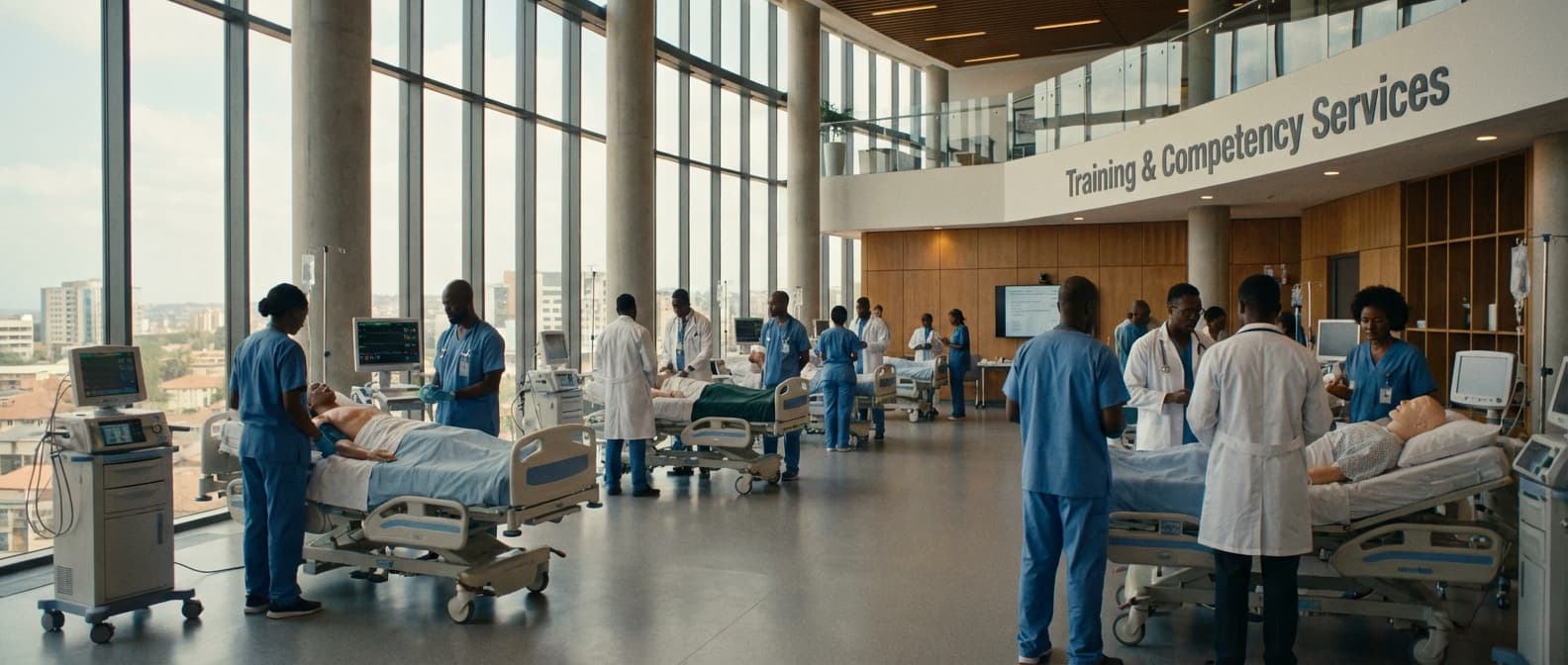
Ultrasound Application Training Service (Protocol-Based) in Chad
Engineering Excellence & Technical Support
Ultrasound Application Training Service (Protocol-Based) High-standard technical execution following OEM protocols and local regulatory frameworks.
Standardized Protocol Training
Our service provides hands-on training based on globally recognized ultrasound protocols, ensuring trainees in Chad acquire consistent and high-quality image acquisition skills for accurate diagnosis across various specialties.
Expert-Led Practical Sessions
Benefit from intensive, practical training sessions led by experienced sonographers. We focus on developing critical thinking and hands-on proficiency in interpreting ultrasound findings, tailored to the specific needs and common pathologies encountered in Chad.
Competency-Based Assessment
We offer rigorous competency assessments post-training, verifying that each participant has mastered the required protocols and can independently perform and interpret ultrasound examinations, thereby enhancing the diagnostic capacity within Chad's healthcare system.
What Is Ultrasound Application Training Service (Protocol-based) In Chad?
Ultrasound Application Training Service (Protocol-Based) in Chad refers to structured, standardized educational programs designed to equip healthcare professionals with the knowledge and practical skills necessary to perform and interpret diagnostic ultrasound examinations according to established clinical protocols. This service is critical for enhancing diagnostic accuracy, improving patient care, and ensuring consistent ultrasound practices across healthcare facilities in Chad. The 'protocol-based' aspect signifies that training is guided by pre-defined, evidence-based protocols for specific ultrasound examinations, ensuring a systematic and comprehensive approach to image acquisition and interpretation.
| Typical Use Cases | Description of Application | Benefits of Protocol-Based Training |
|---|---|---|
| Obstetric Ultrasound | Assessment of fetal well-being, growth, anatomy, and maternal pelvic structures. Protocols guide dating scans, anomaly scans, and follow-up examinations. | Ensures standardized assessment of fetal development, early detection of congenital abnormalities, and accurate gestational age determination. |
| Abdominal Ultrasound | Evaluation of solid organs (liver, spleen, kidneys, pancreas), gallbladder, and urinary tract for masses, inflammation, or structural abnormalities. Protocols dictate systematic scanning of each organ. | Facilitates accurate diagnosis of conditions like cholecystitis, hydronephrosis, and hepatic lesions, reducing misdiagnosis. |
| Vascular Ultrasound | Assessment of blood flow in arteries and veins to detect stenosis, thrombosis, aneurysms, and other vascular pathologies. Protocols define Doppler interrogation techniques and spectral analysis. | Enables precise evaluation of peripheral arterial and venous disease, carotid artery stenosis, and deep vein thrombosis. |
| Echocardiography | Evaluation of cardiac structure and function, including chamber size, wall motion, valvular integrity, and blood flow. Protocols standardize views and measurements. | Aids in the diagnosis of valvular heart disease, cardiomyopathies, and congenital heart defects. |
| Point-of-Care Ultrasound (POCUS) | Rapid bedside assessment in emergency, critical care, and primary care settings. Protocols guide focused examinations for specific clinical questions (e.g., FAST exam, lung ultrasound). | Improves diagnostic speed and decision-making in acute settings, guiding immediate management and reducing the need for more invasive procedures. |
| Gynecological Ultrasound | Assessment of the uterus, ovaries, and fallopian tubes for conditions such as fibroids, ovarian cysts, ectopic pregnancy, and infertility workup. Protocols specify transabdominal and transvaginal techniques. | Enhances the diagnosis of pelvic inflammatory disease, endometriosis, and early detection of gynecological malignancies. |
Who Needs Ultrasound Application Training Service (Protocol-Based) in Chad?
- Radiologists (especially those new to ultrasound or seeking to specialize)
- Obstetricians and Gynecologists
- General Practitioners and Family Physicians
- Sonographers and Ultrasound Technicians
- Emergency Medicine Physicians
- Pediatricians
- Nurses with expanded scope of practice in diagnostic imaging
- Medical Students and Residents (during their clinical rotations)
- Healthcare professionals in rural or underserved areas where access to specialized diagnostic services is limited
Who Needs Ultrasound Application Training Service (Protocol-based) In Chad?
This document outlines the essential need for protocol-based Ultrasound Application Training Services in Chad. Such training is critical for enhancing diagnostic capabilities, improving patient care, and empowering healthcare professionals in various clinical settings. The focus on standardized protocols ensures consistency, accuracy, and comparability of ultrasound examinations across the country.
| Department/Specialty | Specific Ultrasound Applications | Training Needs |
|---|---|---|
| Radiology | General abdominal, pelvic, breast, thyroid, musculoskeletal, vascular imaging, interventional ultrasound guidance. | Advanced protocol adherence, new application introduction, quality assurance. |
| Obstetrics & Gynecology (OB/GYN) | Antenatal screening (first trimester, anomaly scans), gynecological assessments (pelvic masses, infertility), fetal well-being monitoring. | Standardized obstetric protocols (FIGO, AIUM), advanced fetal anomaly detection, 3D/4D ultrasound applications. |
| Pediatrics | Neonatal brain, abdominal imaging (pyloric stenosis, intussusception), hip screening, urinary tract assessment. | Pediatric-specific protocols, interpretation of common pediatric pathologies. |
| Emergency Medicine | FAST (Focused Assessment with Sonography for Trauma), e-FAST, cardiac assessment (basic), pleural effusion detection, procedural guidance (e.g., IV access). | Rapid protocol execution, emergency specific scanning techniques. |
| Internal Medicine/General Practice | Basic abdominal screening, renal assessment, thyroid nodules, detection of ascites and pleural effusions. | Foundational ultrasound skills, protocol-driven screening examinations. |
| Surgery | Pre-operative assessment, intra-operative guidance, post-operative monitoring, vascular access. | Application of ultrasound in surgical contexts, specific procedural guidance. |
| Anesthesiology | Nerve blocks, vascular access. | Ultrasound-guided regional anesthesia protocols, vascular access techniques. |
Target Customers and Departments for Ultrasound Application Training in Chad
- {"title":"Healthcare Facilities","description":"Hospitals (public and private), health centers, and clinics across Chad will benefit from this training."}
- {"title":"Medical Professionals","description":"Radiologists, sonographers, general practitioners with ultrasound skills, obstetricians/gynecologists, pediatricians, surgeons, and emergency room physicians."}
- {"title":"Educational Institutions","description":"Medical schools, nursing schools, and paramedical training centers looking to integrate or enhance their ultrasound curriculum."}
- {"title":"Government Health Ministries and Agencies","description":"National health authorities responsible for setting standards, ensuring quality of care, and developing healthcare workforce capacity."}
- {"title":"Non-Governmental Organizations (NGOs) and International Aid Organizations","description":"Organizations involved in health programs, maternal and child health initiatives, and emergency medical response in Chad."}
Ultrasound Application Training Service (Protocol-based) Process In Chad
This document outlines the workflow for our Ultrasound Application Training Service (Protocol-Based) in Chad. The process is designed to be efficient, comprehensive, and tailored to the specific needs of healthcare professionals in the region. It begins with an initial inquiry and progresses through needs assessment, protocol development, training delivery, and post-training support.
| Phase | Key Activities | Responsible Party | Deliverables/Outcomes | Timeline (Typical) |
|---|---|---|---|---|
| Client expresses interest. We conduct a detailed needs assessment to understand existing ultrasound knowledge, required applications, available equipment, and specific clinical challenges. | Training Provider (Sales/Consultation Team), Client (Healthcare Facility/Individual) | Needs Assessment Report, Defined Training Objectives | 1-2 Weeks |
| Based on the needs assessment, we develop or adapt existing ultrasound protocols relevant to the specified applications (e.g., obstetrics, general radiology, emergency medicine). This includes defining scan planes, image optimization, and reporting standards. | Training Provider (Clinical Experts/Sonographers) | Customized Ultrasound Protocols Document | 2-3 Weeks |
| We design a comprehensive training program incorporating theoretical lectures, hands-on practical sessions, and case studies. We coordinate with the client to schedule training dates, duration, and venue. | Training Provider (Training Coordinators/Instructors), Client (Facility Management) | Training Curriculum, Training Schedule, Logistics Plan | 1-2 Weeks |
| Certified instructors deliver the training program at the client's facility. This involves theoretical sessions, demonstrations, and extensive supervised hands-on practice using the client's equipment and relevant phantom models. | Training Provider (Certified Instructors) | Trained Healthcare Professionals, Practical Skill Demonstration | Duration varies based on scope (e.g., 3-5 days per module) |
| We provide ongoing support, answer queries, and conduct follow-up evaluations to assess skill retention and address any further challenges. This may include remote consultations or refresher sessions. | Training Provider (Instructors/Support Team), Client | Post-Training Evaluation Report, Certificate of Completion, Ongoing Support Mechanism | Ongoing (e.g., 1-3 months post-training) |
Ultrasound Application Training Service (Protocol-Based) Workflow in Chad
- Initial Inquiry & Needs Assessment
- Protocol Development & Customization
- Training Program Design & Scheduling
- On-Site Training Delivery
- Post-Training Support & Evaluation
Ultrasound Application Training Service (Protocol-based) Cost In Chad
Providing ultrasound application training services in Chad, especially when following specific protocols, is a specialized offering. The cost of such training is influenced by a variety of factors, making it difficult to provide a single, fixed price. These factors often include the duration and intensity of the training, the specific ultrasound applications being covered (e.g., general radiology, obstetrics, cardiology), the qualifications and experience of the trainers, the location of the training (on-site at a healthcare facility versus off-site at a dedicated training center), and the number of participants. Furthermore, the cost of travel and accommodation for trainers if they are not local, as well as any necessary equipment or simulation materials, will contribute to the overall expense. Demand for such specialized medical training can also play a role in pricing. While specific published price lists are scarce, it's possible to infer a general cost range based on the complexity and resource requirements of such a service in Chad.
| Training Component/Service | Estimated Cost Range (XAF - Central African CFA franc) |
|---|---|
| Basic Ultrasound Application Workshop (1-3 Days) | 50,000 - 200,000 per participant |
| Advanced/Specialized Ultrasound Protocol Training (3-5 Days) | 150,000 - 400,000 per participant |
| Customized On-site Training (Variable Duration, Group Rate) | Negotiable, often calculated per day or per module, potentially starting from 500,000 - 2,000,000+ XAF per day for the facility/group |
| Trainer Fees (Daily Rate) | 50,000 - 150,000+ XAF per day |
| Training Materials (Manuals, Handouts) | 5,000 - 20,000 per participant |
| Simulation/Equipment Usage Fees (if applicable) | Included in overall package or separate, highly variable |
| Travel & Accommodation for Trainers (if not local) | Variable, depending on origin and duration |
Key Pricing Factors for Ultrasound Application Training in Chad:
- Training Duration and Intensity
- Specific Ultrasound Applications Covered
- Trainer Qualifications and Experience
- Training Location (On-site vs. Off-site)
- Number of Participants
- Travel and Accommodation Costs for Trainers
- Equipment and Simulation Material Needs
- Demand and Market Competitiveness
Affordable Ultrasound Application Training Service (Protocol-based) Options
Our Affordable Ultrasound Application Training Service offers comprehensive, protocol-based learning designed to equip sonographers with the skills needed to excel in various ultrasound modalities. We understand the importance of cost-effectiveness in professional development. Therefore, we offer flexible value bundles and strategic cost-saving options to make high-quality training accessible. Our protocol-driven approach ensures standardization and efficiency, directly impacting diagnostic accuracy and patient care. This training is ideal for new graduates, experienced sonographers seeking to upskill, and institutions looking to standardize their sonographic practices.
| Training Bundle | Included Modules | Key Benefits | Price Point |
|---|---|---|---|
| Foundational Essentials Bundle | Abdominal, Pelvic, OB/GYN (Basic) | Covers core ultrasound principles and common applications. Ideal for entry-level sonographers. | Basic |
| Advanced Applications Bundle | Vascular (Carotid, Venous, Arterial), Breast, Small Parts | Expands expertise into specialized areas, enhancing diagnostic capabilities. | Intermediate |
| Comprehensive Sonography Mastery Bundle | All modules from Foundational and Advanced, plus Echocardiography (Basic) | Our most complete offering, providing a broad and deep understanding of multiple ultrasound specialties. | Premium |
| Module-Specific Training | Individual ultrasound applications (e.g., Thyroid, MSK) | Targeted training for specific skill enhancement or specialization. | Modular |
Key Features and Benefits
- Protocol-Based Curriculum: Ensures standardized, reproducible scanning techniques.
- Experienced Instructors: Learn from certified and practicing sonographers.
- Flexible Learning Formats: Options to suit different learning styles and schedules.
- Cost-Effective Training: Designed to maximize value and minimize expense.
- Focus on Practical Application: Emphasis on hands-on skills and real-world scenarios.
- Certification Prep (Optional): Prepare for relevant professional certifications.
- Institution-Specific Customization: Tailor training to your facility's needs.
Verified Providers In Chad
In Chad, navigating the healthcare landscape and identifying truly reliable and credentialed providers can be a daunting task. When seeking medical assistance, particularly for specialized needs or when ensuring the highest standards of care, it's crucial to understand which institutions and individuals possess verifiable credentials. Franance Health stands out as a premier organization in Chad, dedicated to upholding and promoting rigorous standards within the healthcare sector. Their commitment to ensuring providers meet stringent criteria not only builds trust but also directly contributes to better patient outcomes and a more robust healthcare system in the region.
| Provider Type | Franance Health Credentialing Focus | Benefits to Patients |
|---|---|---|
| Hospitals and Clinics | Infrastructure, equipment, hygiene standards, staff qualifications, emergency preparedness, patient rights policies. | Access to well-equipped facilities, safe treatment environments, assurance of qualified medical staff, reliable emergency services. |
| Physicians (General & Specialists) | Medical degrees, residency completion, board certifications, licensure, peer reviews, continuing medical education. | Consultation with highly trained and experienced doctors, confidence in diagnosis and treatment accuracy, access to specialized medical expertise. |
| Nurses and Allied Health Professionals | Nursing diplomas/degrees, specialized training certifications, licensure, practical experience, competency assessments. | Receiving compassionate and competent care from skilled nurses and support staff, improved recovery rates, effective patient education. |
| Diagnostic Laboratories | Equipment calibration, quality control procedures, staff expertise, turnaround times, adherence to international standards. | Accurate and timely diagnostic results, reliable information for medical decisions, reduced risk of misdiagnosis. |
| Pharmaceutical Services | Drug licensing, inventory management, pharmacist qualifications, dispensing accuracy, storage conditions. | Access to genuine and safe medications, correct dosage information, professional pharmaceutical advice. |
Why Franance Health Credentials Matter:
- Unparalleled Quality Assurance: Franance Health's credentialing process involves a thorough evaluation of a provider's educational background, training, experience, and ethical standing. This meticulous vetting ensures that only highly qualified and competent professionals are recognized.
- Patient Safety and Trust: By identifying and promoting credentialed providers, Franance Health offers patients a reliable benchmark for selecting safe and effective medical care. This transparency empowers individuals to make informed decisions about their health.
- Upholding Ethical Standards: The credentialing process includes an assessment of adherence to professional ethics and best practices, safeguarding patients from malpractice and misconduct.
- Promoting Continuous Improvement: Franance Health's commitment encourages healthcare providers to maintain and enhance their skills, fostering a culture of lifelong learning and professional development within Chad's medical community.
- Facilitating Access to Expertise: For complex medical needs, Franance Health's credentialed providers represent a pool of specialists and highly skilled practitioners, ensuring access to the best possible care within the country.
Scope Of Work For Ultrasound Application Training Service (Protocol-based)
This Scope of Work (SOW) outlines the services to be provided for a protocol-based Ultrasound Application Training Service. The objective is to equip personnel with the necessary knowledge and skills to effectively operate ultrasound equipment and perform examinations according to established protocols. The training will focus on theoretical understanding, practical application, and adherence to safety standards. Key technical deliverables include training materials, hands-on simulation, and competency assessments. Standard specifications will ensure consistency and quality across all training modules.
| Training Module | Description | Key Concepts Covered | Standard Specification |
|---|---|---|---|
| Introduction to Ultrasound Physics and Instrumentation | Fundamentals of ultrasound wave generation, propagation, interaction with tissues, and basic machine controls. | Acoustic impedance, reflection, refraction, attenuation, Doppler effect, artifact generation, gain, depth, focus, TGC. | Modules shall align with industry-recognized ultrasound physics principles and safety standards (e.g., AIUM, ACR). |
| Ultrasound Safety and Bioeffects | Understanding potential biological effects of ultrasound and adhering to safe scanning practices. | Thermal and mechanical indices, ALARA principle, patient and operator safety protocols. | Training content shall adhere to current FDA and other relevant regulatory guidelines. |
| Protocol-Based Examination Techniques (e.g., Abdomen, OB/GYN, Vascular) | Detailed instruction on performing specific ultrasound examinations according to established protocols. | Patient positioning, transducer selection and manipulation, image optimization, systematic scanning patterns, specific anatomical landmarks and measurements. | Protocols shall be based on widely accepted clinical guidelines from professional organizations (e.g., AIUM, SDMS, ACR). |
| Image Interpretation and Documentation | Developing skills in interpreting ultrasound images and documenting findings accurately. | Recognizing normal and abnormal anatomy, identifying common pathologies, appropriate annotation and measurement techniques, report generation. | Training shall emphasize systematic approach to image review and accurate reporting. |
| Hands-on Simulation and Practical Application | Supervised practice sessions utilizing ultrasound simulators and phantom models. | Developing psychomotor skills, practicing protocol execution, troubleshooting common issues, improving scanning efficiency. | Simulators shall offer realistic haptic feedback and image generation, with a minimum of 80% uptime. |
| Competency Assessment and Feedback | Evaluation of trainee understanding and practical skills through written exams and simulated scanning scenarios. | Pre-assessment to gauge baseline knowledge, post-assessment to measure learning gains, constructive feedback for improvement. | Assessments shall be standardized and validated, with clear pass/fail criteria. |
Key Objectives and Deliverables
- Objective: To provide comprehensive, protocol-driven ultrasound application training.
- Deliverable: Development and delivery of standardized training modules.
- Deliverable: Provision of access to high-fidelity ultrasound simulators.
- Deliverable: Conduct of practical scanning sessions with expert supervision.
- Deliverable: Implementation of pre- and post-training competency assessments.
- Deliverable: Issuance of training completion certificates.
- Deliverable: Post-training support and consultation.
Service Level Agreement For Ultrasound Application Training Service (Protocol-based)
This Service Level Agreement (SLA) outlines the agreed-upon service levels for the Protocol-Based Ultrasound Application Training Service. It defines response times for support requests and uptime guarantees for the training platform. This SLA is an addendum to the Master Services Agreement (MSA) between [Your Company Name] (Provider) and [Client Company Name] (Client).
| Service Level | Definition | Target | Measurement Period | Remedy (if not met) |
|---|---|---|---|---|
| Critical Issue Response Time | Time to acknowledge and initiate work on an issue preventing core training functionalities or access to the platform. | 1 Business Hour | Continuous | A service credit of [X]% of the monthly service fee will be applied to the next invoice for each instance of failure to meet this target. |
| High Issue Response Time | Time to acknowledge and initiate work on an issue impacting non-core functionalities but still hindering significant training progress. | 4 Business Hours | Continuous | A service credit of [Y]% of the monthly service fee will be applied to the next invoice for each instance of failure to meet this target. |
| Medium Issue Response Time | Time to acknowledge and initiate work on an issue causing minor disruptions or requesting information that does not impede immediate training. | 8 Business Hours | Continuous | No direct credit, but issue will be prioritized based on severity and resources. |
| Platform Uptime Guarantee | Percentage of time the Ultrasound Application Training Platform is accessible and operational, excluding scheduled maintenance. | 99.5% | Monthly | If uptime falls below 99.5% in a given month, a service credit of [Z]% of the monthly service fee will be applied to the next invoice. |
| Scheduled Maintenance Window | Pre-announced periods for system updates, upgrades, and maintenance. Not counted towards uptime calculations. | Maximum of 4 hours per month, with at least 48 hours advance notice. | Monthly | N/A |
Key Service Level Objectives
- Response Times: The time taken by the Provider to acknowledge and begin addressing a reported issue.
- Uptime Guarantee: The percentage of time the Ultrasound Application Training Platform is available for use by the Client.
- Support Channels: The designated methods for the Client to report issues and request support.
Frequently Asked Questions

Ready when you are
Let's scope your Ultrasound Application Training Service (Protocol-Based) in Chad project in Chad.

Scaling healthcare logistics and technical systems across the entire continent.