
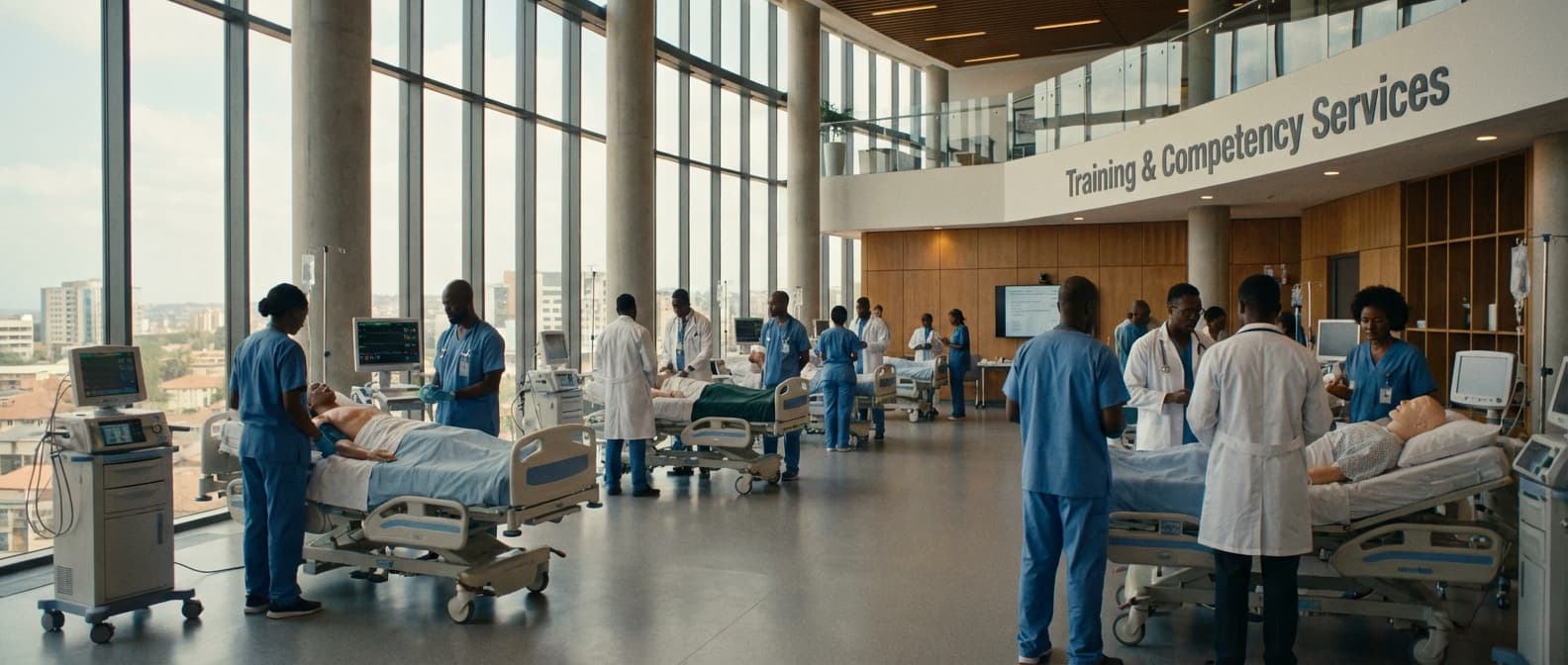
MRI Operator Training Service (Radiographers) in Chad
Engineering Excellence & Technical Support
MRI Operator Training Service (Radiographers) High-standard technical execution following OEM protocols and local regulatory frameworks.
Advanced Anatomical Imaging Techniques
Master the nuances of visualizing specific anatomical regions with optimized MRI sequences, pulse techniques, and contrast agent protocols tailored for diverse pathologies encountered in Chad's population. This module focuses on practical application and image interpretation for common and challenging cases.
MRI Safety Protocols & Patient Care
Gain comprehensive expertise in MRI safety zones, equipment maintenance, and emergency procedures. Emphasis is placed on culturally sensitive patient communication and management, ensuring the well-being and comfort of all patients undergoing MRI examinations in a Chadian healthcare setting.
Streamlined Workflow & Quality Assurance
Optimize MRI operational efficiency through best practices in patient scheduling, image acquisition, and post-processing. Learn to implement rigorous quality control measures to ensure diagnostic image integrity and maximize throughput, adapting to the specific resource landscape of Chad.
What Is Mri Operator Training Service (Radiographers) In Chad?
MRI Operator Training Service (Radiographers) in Chad refers to specialized educational programs designed to equip radiographers with the requisite knowledge and practical skills for operating Magnetic Resonance Imaging (MRI) scanners. This service is crucial for ensuring the safe, effective, and accurate acquisition of MRI data in a clinical setting within Chad's healthcare infrastructure. The training encompasses theoretical understanding of MRI physics, image acquisition protocols, patient safety, contrast agent administration, and post-processing techniques, as well as hands-on proficiency with specific MRI hardware and software platforms.
| Category | Description | Implication for Chad |
|---|---|---|
| Target Audience | Certified radiographers, radiology technologists, and medical imaging professionals seeking specialization in MRI. | Enhances the skill set of existing radiology workforce, reducing reliance on foreign expertise and improving local diagnostic capabilities. |
| Essential Need | To operate MRI scanners safely and effectively, ensuring accurate diagnoses and optimal patient care. | Addresses the growing demand for advanced diagnostic imaging services in Chad, contributing to improved healthcare outcomes and reduced medical tourism for specialized imaging. |
| Typical Use Cases | Acquisition of diagnostic MR images for neurological, musculoskeletal, abdominal, pelvic, and cardiovascular pathologies. | Enables comprehensive imaging of complex conditions, supporting evidence-based treatment planning and monitoring of therapeutic responses in areas such as stroke, cancer staging, and degenerative diseases. |
| Accreditation & Standardization | Training often adheres to international standards set by professional bodies, ensuring a globally recognized level of competency. | Facilitates the integration of Chadian healthcare professionals into international medical communities and ensures that imaging practices align with global best practices. |
| Technology Adaptation | Training programs are tailored to specific MRI scanner models and software versions employed in Chadian healthcare facilities. | Ensures seamless adoption and efficient utilization of newly acquired or existing MRI technology within the local healthcare context. |
Key Components of MRI Operator Training Service:
- Theoretical foundation in MRI physics, including signal generation, pulse sequences, image reconstruction, and artifact reduction.
- Comprehensive understanding of MRI safety protocols, encompassing screening procedures, contraindications, and management of incidental findings.
- Proficiency in various MRI pulse sequences and their clinical applications for different anatomical regions and pathologies.
- Training on patient positioning, coil selection, and optimization of imaging parameters to achieve diagnostic image quality.
- Education on the administration and management of MRI contrast agents, including risk assessment and emergency procedures.
- Introduction to MRI workstation operation, including image manipulation, post-processing, and data management.
- Hands-on practical sessions utilizing actual MRI scanners and simulation software.
- Emphasis on quality assurance and quality control measures for MRI equipment and imaging procedures.
Who Needs Mri Operator Training Service (Radiographers) In Chad?
MRI Operator Training Service (Radiographers) in Chad addresses a critical need to enhance the skills and knowledge of radiographers operating Magnetic Resonance Imaging (MRI) machines. This training is essential for ensuring accurate diagnoses, patient safety, and the efficient utilization of advanced medical imaging technology within healthcare facilities across Chad. The demand for such services is driven by the increasing adoption of MRI technology in the country, coupled with the need to maintain high standards of medical imaging practice.
| Department/Unit | Key Training Needs | Impact of Training |
|---|---|---|
| Radiology Department | Advanced MRI pulse sequences, image acquisition protocols, patient preparation and safety, artifact reduction, troubleshooting. | Improved diagnostic accuracy, reduced scan times, enhanced patient comfort and safety, increased throughput of examinations. |
| Imaging Technology Services | Equipment maintenance and calibration related to MRI, quality assurance procedures, radiation safety (where applicable to MRI environment). | Ensured optimal performance of MRI scanners, minimized downtime, compliance with safety standards, prolonged equipment lifespan. |
| Medical Education and Professional Development | Curriculum development for MRI imaging, instructor training, continuous professional development programs for radiographers. | Standardized and high-quality radiography education, a skilled workforce equipped with current MRI techniques, a sustainable model for ongoing skill enhancement. |
| Clinical Departments (e.g., Neurology, Orthopedics, Oncology) | Understanding of MRI findings relevant to their specialty, appropriate protocol selection for specific pathologies, communication of imaging results. | Better interpretation of MRI scans for clinical decision-making, more targeted investigations, improved patient management pathways. |
Target Customers and Departments for MRI Operator Training Service in Chad
- {"item":"Public Hospitals and Healthcare Centers","description":"These institutions often serve a large patient population and are increasingly investing in advanced diagnostic equipment like MRI scanners. Training is crucial for their existing radiography staff and new hires."}
- {"item":"Private Hospitals and Clinics","description":"As the private healthcare sector in Chad expands, these facilities are acquiring sophisticated medical imaging technology. They require specialized training for their radiographers to offer competitive and high-quality diagnostic services."}
- {"item":"Ministry of Health and National Health Institutes","description":"Government bodies responsible for healthcare policy and development may procure this training service to upskill radiography professionals across the national healthcare system, ensuring standardized practices and quality control."}
- {"item":"Medical Schools and Training Institutions","description":"Institutions that train future radiographers can benefit from integrating advanced MRI operator training into their curriculum, equipping graduates with the necessary skills from the outset."}
- {"item":"International Non-Governmental Organizations (NGOs) and Humanitarian Aid Organizations","description":"Organizations involved in improving healthcare infrastructure and services in Chad may sponsor or provide training for MRI operators in the facilities they support."}
Mri Operator Training Service (Radiographers) Process In Chad
This document outlines the workflow for an MRI Operator Training Service specifically tailored for radiographers in Chad, from initial inquiry to the successful execution of the training program. The process is designed to be comprehensive, ensuring that all logistical, administrative, and educational aspects are addressed efficiently and effectively.
| Phase | Step | Description | Key Stakeholders | Deliverables/Outcomes |
|---|---|---|---|---|
| Initial Contact | Prospective client (healthcare institution/government agency) expresses interest in MRI operator training for their radiographers. | Client (Hospital Admin, HR, Radiology Dept. Head), Training Provider (Business Development) | Acknowledgement of inquiry, preliminary understanding of training needs. |
| Needs Analysis Meeting | Detailed discussion to understand current skill levels, specific equipment used, number of participants, desired learning outcomes, and budget constraints. | Client (Radiographers, Training Managers), Training Provider (Subject Matter Experts, Project Manager) | Detailed training needs assessment report, identification of knowledge gaps. |
| Proposal Creation | Development of a comprehensive training proposal including curriculum outline, training methodology, duration, trainers' profiles, cost breakdown, and schedule. | Training Provider (Subject Matter Experts, Project Manager, Finance) | Formal training proposal document. |
| Proposal Review and Negotiation | Client reviews the proposal, provides feedback, and negotiates terms and conditions. | Client (Procurement, Finance, Technical Leads), Training Provider (Business Development, Project Manager) | Agreed-upon training proposal. |
| Contract Signing | Formal agreement is signed by both parties, outlining all terms, responsibilities, and payment schedules. | Client (Legal, Senior Management), Training Provider (Legal, Senior Management) | Signed Training Service Agreement. |
| Participant Identification | Client identifies potential radiographers who meet the prerequisites for the training. | Client (Radiology Department, HR) | List of potential participants. |
| Application/Nomination Process | Participants formally apply or are nominated for the training. This may involve a pre-assessment or interview. | Client (HR, Department Heads), Participants | Completed applications/nominations, pre-assessment results (if applicable). |
| Final Selection | Training provider and client collaboratively finalize the list of selected participants based on agreed-upon criteria. | Client, Training Provider (Project Manager) | Final list of trained participants. |
| Curriculum Refinement | Based on the needs assessment and equipment specifics, the training curriculum is finalized and potentially customized. | Training Provider (Subject Matter Experts) | Finalized training curriculum. |
| Training Schedule Development | A detailed training schedule, including dates, times, modules, and practical sessions, is created. | Training Provider (Project Manager), Client (for participant availability) | Approved training schedule. |
| Training Venue Confirmation | Securing and preparing a suitable training venue (e.g., lecture halls, simulation labs) with necessary AV equipment. | Training Provider (Logistics Coordinator), Client (if using their facilities) | Confirmed and equipped training venue. |
| Equipment and Material Preparation | Ensuring availability of MRI simulators, phantoms, textbooks, handouts, and other training materials. | Training Provider (Technical Support, Content Developers) | All necessary training equipment and materials. |
| Trainer Assignment | Assigning qualified and experienced MRI trainers to the program. | Training Provider (Training Manager) | Assigned training team. |
| Participant Communication | Informing participants about the schedule, venue, required materials, and any pre-training assignments. | Training Provider (Project Manager), Client (HR) | Participant notification sent. |
| Theoretical Sessions | Conducting lectures, presentations, and discussions covering MRI physics, safety, protocols, and image interpretation. | Training Provider (Trainers), Participants | Understanding of theoretical concepts. |
| Practical/Hands-on Sessions | Supervised practical training on MRI simulators and/or actual equipment, focusing on patient positioning, scan acquisition, and quality control. | Training Provider (Trainers), Participants | Development of practical scanning skills. |
| Case Studies and Scenarios | Working through real-world case studies and problem-solving scenarios to enhance diagnostic reasoning. | Training Provider (Trainers), Participants | Improved analytical and problem-solving abilities. |
| Q&A and Feedback Sessions | Regular opportunities for participants to ask questions and receive immediate feedback from trainers. | Training Provider (Trainers), Participants | Clarification of doubts, continuous learning. |
| Formative Assessments | Ongoing assessments throughout the training (e.g., quizzes, practical demonstrations) to monitor progress. | Training Provider (Trainers), Participants | Identification of learning gaps during training. |
| Summative Assessments | Final theoretical and practical examinations to evaluate overall competency. | Training Provider (Trainers, Assessors), Participants | Demonstrated mastery of training objectives. |
| Participant Feedback | Collecting feedback from participants on the training program, trainers, and materials. | Participants, Training Provider (Project Manager) | Training program feedback report. |
| Trainer Evaluation | Internal evaluation of trainers' performance and effectiveness. | Training Provider (Training Manager) | Trainer performance review. |
| Certification Issuance | Issuing certificates of completion to participants who successfully pass the assessments. | Training Provider, Participants | Certificates of Competency. |
| Post-Training Support | Providing limited post-training support, such as answering follow-up questions or offering resources. | Training Provider (Project Manager, Technical Support), Participants | Continued learning support. |
| Program Review and Reporting | Final report summarizing the training outcomes, participant performance, and feedback for the client. | Training Provider (Project Manager), Client | Final training report. |
| Future Training Planning | Discussing potential for advanced training or refresher courses. | Client, Training Provider (Business Development) | Identified opportunities for ongoing professional development. |
MRI Operator Training Service Process in Chad (Radiographers)
- Inquiry and Needs Assessment
- Proposal Development and Agreement
- Participant Recruitment and Selection
- Curriculum Customization and Scheduling
- Logistics and Resource Arrangement
- Training Delivery
- Assessment and Evaluation
- Certification and Follow-up
Mri Operator Training Service (Radiographers) Cost In Chad
The cost of MRI Operator Training services for radiographers in Chad can vary significantly due to several key factors. These include the training provider's reputation and experience, the depth and breadth of the curriculum offered, the duration of the training program (which can range from a few days to several weeks), the level of practical hands-on experience provided with MRI equipment, and the inclusion of certifications or accreditations. The location within Chad (major cities like N'Djamena may have slightly different pricing due to operational costs) and the mode of delivery (in-person, online, or blended learning) also play a role. Furthermore, the cost can be influenced by whether the training is for basic MRI operation or specialized advanced techniques. Prices are typically quoted in local currency, the Chadian Franc (XAF).
| Training Type/Level | Estimated Cost Range (XAF) | Notes |
|---|---|---|
| Basic MRI Operator Training (Introductory) | 150,000 - 300,000 | Typically a few days to one week, covering fundamental principles and basic operation. |
| Comprehensive MRI Operator Training (Standard) | 300,000 - 750,000 | Includes more in-depth theory, diverse imaging protocols, and more hands-on practice, spanning one to two weeks. |
| Advanced/Specialized MRI Training (e.g., Neuro, Cardiac) | 750,000 - 1,500,000+ | Focuses on specific modalities, requiring specialized equipment and expert instructors. Duration can vary significantly. |
| On-site/Customized Corporate Training | Varies (Quote-based) | Pricing depends on the number of participants, duration, and specific customization requirements. |
Key Pricing Factors for MRI Operator Training in Chad:
- Training Provider's Reputation and Experience
- Curriculum Depth and Breadth
- Training Program Duration
- Level of Practical/Hands-on Experience
- Inclusion of Certifications/Accreditations
- Location within Chad
- Mode of Delivery (In-person, Online, Blended)
- Specialization (Basic vs. Advanced MRI Techniques)
Affordable Mri Operator Training Service (Radiographers) Options
This service offers comprehensive and affordable MRI operator training for radiographers. We understand the financial considerations for individuals and institutions, and therefore provide flexible options and cost-saving strategies to make high-quality MRI education accessible. Our training programs are designed to equip radiographers with the essential knowledge and practical skills needed to safely and effectively operate MRI scanners, interpret images, and ensure patient well-being. We focus on delivering exceptional value through structured learning, expert instruction, and hands-on experience.
| Training Package | Description | Value Bundle Features | Cost-Saving Strategies | |
|---|---|---|---|---|
| Basic MRI Operator Fundamentals | An introductory course for radiographers new to MRI. | Online modules, foundational theory, basic safety principles. | Early bird discounts, group registration discounts. | Includes foundational online modules and live Q&A sessions. |
| Advanced MRI Techniques & Protocols | Expands on fundamental knowledge with specialized imaging techniques. | Advanced online modules, case studies, protocol optimization, introduction to specific sequences. | Bundle with Basic Fundamentals for a comprehensive package, referral bonuses. | Focuses on practical application and protocol development. |
| Comprehensive MRI Certification Program | Full training leading to certification, ideal for career advancement. | All modules from Basic and Advanced, plus supervised practical scanning sessions (on-site or simulated), comprehensive assessment. | Institution-wide licenses, multi-year training agreements, government/professional body subsidies. | Includes in-person workshops and personalized feedback on scanning techniques. |
| Customized Institutional Training | Tailored programs to meet the specific needs of hospitals and clinics. | Needs assessment, bespoke curriculum development, on-site training options, equipment-specific training. | Volume-based pricing, long-term partnership discounts, train-the-trainer programs. | Designed to integrate seamlessly with existing workflows and equipment. |
Key Features and Value Proposition
- Comprehensive curriculum covering MRI physics, safety protocols, image acquisition, and quality control.
- Experienced and certified MRI professionals as instructors.
- Flexible learning formats including online modules, in-person workshops, and blended learning.
- Hands-on scanning experience with state-of-the-art MRI equipment (where applicable).
- Certification upon successful completion of the program.
- Ongoing support and access to learning resources.
Verified Providers In Chad
Finding trusted healthcare providers is paramount, especially in regions where access to quality care can be challenging. In Chad, a growing number of verified providers are emerging, offering essential medical services to the population. This document outlines the credentials and advantages of choosing verified providers, with a particular focus on Franance Health, a prominent organization committed to delivering exceptional healthcare solutions.
| Provider Name/Organization | Key Credentials/Focus Areas | Why They Represent the Best Choice |
|---|---|---|
| Franance Health | Comprehensive medical services, preventative care, maternal and child health, infectious disease management, partnerships with international health organizations, emphasis on community outreach and education. | Franance Health stands out due to its holistic approach to healthcare, integrating primary care with specialized services. Their strong commitment to community engagement and health education empowers individuals to take proactive steps towards better health. Their verified status ensures adherence to international best practices and a dedication to sustainable healthcare solutions for Chad. By fostering partnerships and leveraging modern medical technologies, Franance Health consistently delivers reliable and high-quality care, making them a cornerstone of healthcare advancement in Chad. |
| Ministry of Public Health, Chad (MoPH) | National health policy implementation, public health programs, oversight of public health facilities, disease surveillance and control. | As the governmental body, the MoPH is crucial for setting national health standards and coordinating efforts. Their verified status is intrinsic to their role in public service. While they focus on policy and large-scale programs, their collaboration with verified private entities like Franance Health ensures wider reach and specialized service delivery. |
| International Medical Corps (IMC) | Emergency medical response, primary healthcare, nutrition, WASH (Water, Sanitation, and Hygiene), mental health and psychosocial support. | IMC is a globally recognized organization with a strong track record in humanitarian health. Their verified operations in Chad bring vital emergency and primary healthcare services to vulnerable populations. Their expertise in integrated health programs and rapid response makes them an indispensable verified provider. |
| Médecins Sans Frontières (MSF) / Doctors Without Borders | Emergency medical care, surgical interventions, treatment of malnutrition, outbreaks response, vaccination campaigns. | MSF is renowned for providing medical aid in conflict zones and areas of crisis. Their verified presence in Chad signifies a commitment to offering essential, often life-saving, medical interventions where they are most needed. Their impartiality and dedication to patient care are hallmarks of their trusted status. |
Why Choose Verified Providers in Chad?
- Enhanced Quality of Care: Verified providers adhere to stringent standards, ensuring that medical professionals are properly trained and licensed, and that facilities meet necessary safety and operational requirements.
- Increased Accessibility: These providers often work to expand access to healthcare services in underserved areas, making it easier for more people to receive timely medical attention.
- Patient Safety and Trust: Verification processes build confidence by assuring patients that they are receiving care from legitimate and competent healthcare professionals, minimizing the risk of unqualified practitioners.
- Specialized Services: Verified providers often offer a wider range of specialized medical services, addressing diverse health needs within the community.
- Accountability and Transparency: A structured verification system promotes accountability, with clear channels for feedback and recourse should any issues arise.
Scope Of Work For Mri Operator Training Service (Radiographers)
This Scope of Work (SOW) outlines the requirements for a comprehensive MRI Operator Training Service specifically designed for Radiographers. The training will equip certified radiographers with the necessary theoretical knowledge and practical skills to safely and effectively operate MRI scanners, interpret basic MRI principles, and ensure optimal image quality. The service will include both theoretical instruction and hands-on practical training with an MRI scanner.
| Deliverable | Description | Standard Specification | Quantity/Frequency |
|---|---|---|---|
| Training Curriculum Document | A detailed outline of all training modules, learning objectives, and assessment methods. | Clearly defined learning outcomes for each module, aligned with industry best practices. | 1 |
| Training Manuals/Handouts | Comprehensive written materials for each training module. | High-quality print or digital format, accessible and easy to understand. | Per participant |
| Presentation Slides | Visual aids used during theoretical training sessions. | Clear, concise, and visually engaging with relevant diagrams and images. | Per module |
| Practical Training Sessions | Hands-on experience operating an MRI scanner under expert supervision. | Minimum of X hours per participant, covering patient setup, scanning, and basic troubleshooting. | Scheduled sessions |
| Case Studies | Realistic clinical scenarios for application of learned knowledge. | Diverse range of pathologies and anatomical regions. | Minimum of Y case studies |
| Quizzes/Assessments | Evaluations to gauge understanding of theoretical concepts. | Multiple-choice, short answer, or scenario-based questions. | At the end of each module or section |
| Practical Competency Assessment | Evaluation of hands-on skills in operating the MRI scanner. | Direct observation and performance checklist. | At the conclusion of practical training |
| Certificate of Completion | Formal recognition of successful completion of the training program. | Issued upon passing all assessments, including participant's name, training dates, and scope of training. | Per participant |
| Post-Training Support (Optional) | Limited duration of remote or on-site support for initial operational challenges. | Defined hours/duration of support post-training. | As per agreement |
Key Training Modules
- Introduction to MRI Physics: Principles of Nuclear Magnetic Resonance (NMR), RF pulse excitation, relaxation processes (T1, T2, T2*), signal generation, and image formation.
- MRI Hardware and Components: Understanding the magnet, gradient coils, RF coils, patient table, console, and associated systems.
- Pulse Sequences and Image Weighting: Detailed exploration of common pulse sequences (e.g., spin echo, gradient echo, FLAIR, DWI) and their impact on image contrast and weighting.
- Image Artifacts and Correction: Identification, causes, and mitigation strategies for common MRI artifacts (e.g., motion, susceptibility, aliasing).
- Patient Safety and Screening: Comprehensive understanding of MRI safety protocols, contraindications, screening procedures, and management of patients with implants or foreign bodies.
- Contrast Agents: Properties, administration, indications, contraindications, and potential adverse reactions to MRI contrast agents.
- Image Acquisition Protocols: Development and optimization of standard and advanced imaging protocols for various anatomical regions (e.g., neuro, musculoskeletal, abdominal, cardiac).
- Image Quality Optimization: Techniques for achieving optimal signal-to-noise ratio (SNR), spatial resolution, and contrast.
- Basic MRI Interpretation: Fundamentals of anatomical recognition and identification of common pathological findings on MRI scans.
- Quality Assurance and Quality Control (QA/QC): Routine checks and calibration procedures for MRI equipment.
- Hands-on Practical Training: Supervised operation of an MRI scanner, including patient positioning, protocol selection, image acquisition, and data management.
Service Level Agreement For Mri Operator Training Service (Radiographers)
This Service Level Agreement (SLA) outlines the performance standards and guarantees for the MRI Operator Training Service specifically for Radiographers. It defines the expected response times for technical support and the minimum uptime for the online training platform.
| Service Component | Service Level Objective (SLO) | Measurement Method | Remedy for Failure |
|---|---|---|---|
| Technical Support - Critical Issue (e.g., platform inaccessible, cannot start training) | Response within 2 business hours | Timestamp of ticket submission and acknowledgement of receipt/initial response | 10% discount on the next training module subscription for each occurrence exceeding the SLO. |
| Technical Support - High Issue (e.g., specific module functionality broken, significant performance degradation) | Response within 4 business hours | Timestamp of ticket submission and acknowledgement of receipt/initial response | 5% discount on the next training module subscription for each occurrence exceeding the SLO. |
| Technical Support - Medium Issue (e.g., minor bug, question regarding content) | Response within 1 business day | Timestamp of ticket submission and acknowledgement of receipt/initial response | N/A (addressed within standard support hours) |
| Online Training Platform Uptime | 99.5% uptime during scheduled training hours (defined as Monday-Friday, 8:00 AM - 6:00 PM local time) | System monitoring tools, excluding scheduled maintenance windows | For every 0.5% decrease in uptime below 99.5% per calendar month, a credit equivalent to 5% of the monthly training subscription fee will be issued. |
| Scheduled Maintenance | Maximum of 4 hours per month, with advance notice of 48 hours | Internal scheduling and communication logs | N/A (maintenance is excluded from uptime calculations when properly notified). |
Key Performance Indicators
- Response Times for Technical Support
- Uptime Guarantees for Online Training Platform
Frequently Asked Questions

Ready when you are
Let's scope your MRI Operator Training Service (Radiographers) in Chad project in Chad.

Scaling healthcare logistics and technical systems across the entire continent.