
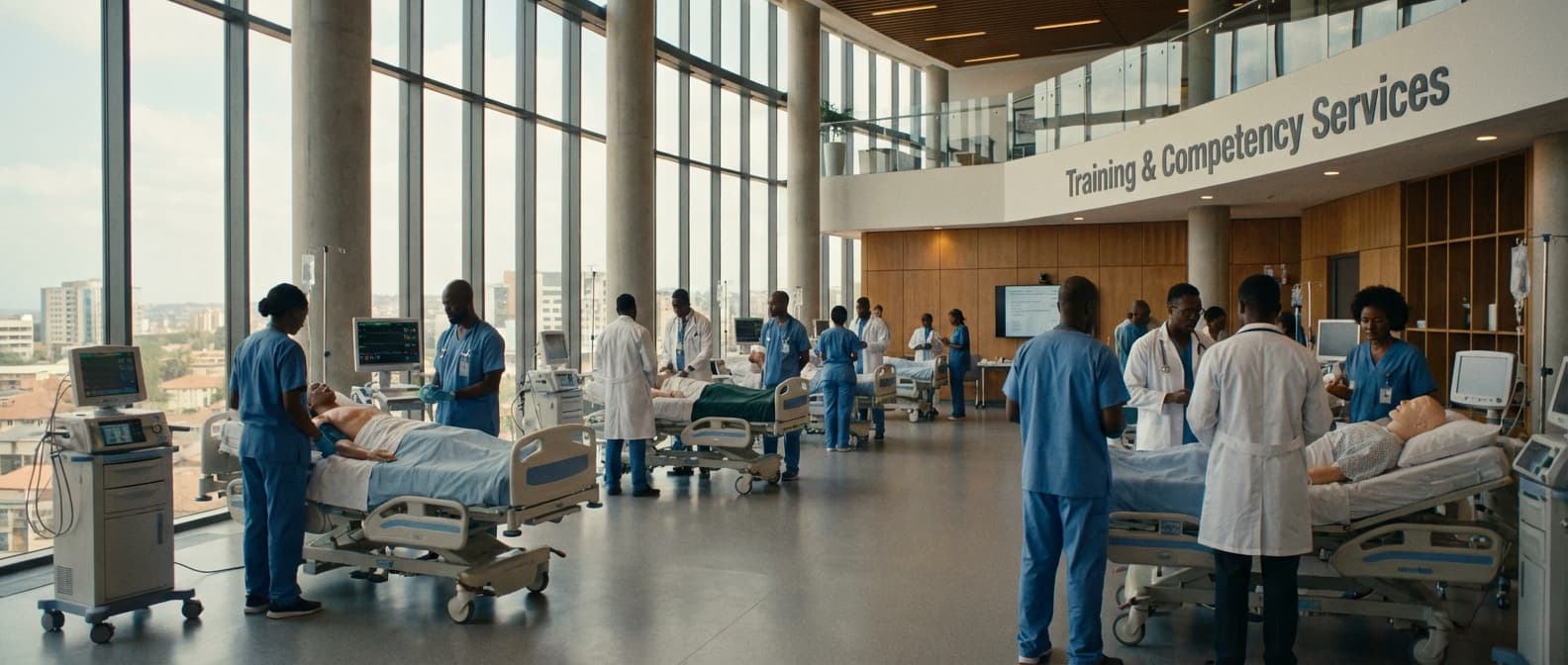
CT Operator Training Service (Radiographers) in Chad
Engineering Excellence & Technical Support
CT Operator Training Service (Radiographers) High-standard technical execution following OEM protocols and local regulatory frameworks.
Advanced CT Protocol Mastery
Empower radiographers with hands-on training on the latest CT scanner protocols, ensuring optimal image acquisition for accurate diagnostic interpretation and improved patient outcomes in Chad's healthcare settings.
Radiation Safety & Dosimetry Excellence
Comprehensive training modules covering radiation protection principles, ALARA implementation, and accurate dosimetry, safeguarding both patients and staff in Chad's radiology departments.
Image Post-Processing & Interpretation Fundamentals
Develop radiographers' skills in advanced image manipulation, artifact reduction, and fundamental interpretation techniques for CT scans, enhancing diagnostic confidence and reducing diagnostic errors.
What Is Ct Operator Training Service (Radiographers) In Chad?
CT Operator Training Service (Radiographers) in Chad refers to specialized educational programs designed to equip radiographers with the knowledge and practical skills necessary to safely and effectively operate Computed Tomography (CT) scanners. This service encompasses theoretical instruction on CT physics, image acquisition protocols, radiation safety principles, and anatomical cross-sectional anatomy. Practical training focuses on patient positioning, scanner operation, contrast media administration (where applicable and within the scope of practice), image reconstruction, quality assurance, and troubleshooting common operational issues. The overarching goal is to ensure radiographers can produce high-quality diagnostic images while minimizing radiation exposure to patients and staff, adhering to international best practices and local regulatory requirements.
| Who Needs CT Operator Training? | Typical Use Cases | ||||||||||
|---|---|---|---|---|---|---|---|---|---|---|---|
| Newly qualified radiographers entering CT practice. | Diagnosis and staging of oncological conditions (e.g., lung nodules, liver metastases). | Emergency department imaging for trauma assessment (e.g., head injuries, abdominal bleeding). | Evaluation of cardiovascular diseases (e.g., coronary artery disease, aortic aneurysms). | Assessment of neurological conditions (e.g., stroke, brain tumors, epilepsy). | Imaging of the gastrointestinal and genitourinary systems for pathology detection. | Pre-operative surgical planning and post-operative follow-up. | Radiographers seeking recertification or to upgrade their skills to advanced CT techniques. | Interventional radiology procedures requiring precise CT guidance. | Research and development in medical imaging. | Healthcare facilities in Chad establishing or expanding their CT imaging capabilities. | Technicians and engineers responsible for the operation and basic maintenance of CT scanners. |
Key Components of CT Operator Training Service:
- CT Physics and Principles of Imaging
- CT Scanner Anatomy and Operation
- Patient Preparation and Positioning Techniques
- Contrast Media Administration Protocols (if applicable)
- Image Acquisition Protocols (e.g., head, chest, abdomen, pelvis)
- Radiation Safety and Dose Management
- Image Reconstruction and Processing
- Quality Assurance and Quality Control (QA/QC)
- Artifact Identification and Correction
- Basic Troubleshooting and Maintenance
- Ethical Considerations and Patient Care in CT
- Legal and Regulatory Compliance
Who Needs Ct Operator Training Service (Radiographers) In Chad?
CT Operator Training Services for Radiographers in Chad are crucial for enhancing diagnostic imaging capabilities, improving patient care, and ensuring the safe and effective operation of CT scanners across the country. This training addresses the growing need for skilled professionals to manage and interpret complex CT scans, particularly in light of increasing access to this technology.
| Department/Institution Type | Primary Need for CT Operator Training | Impact on Patient Care |
|---|---|---|
| Radiology Departments (General) | Operating CT scanners, image acquisition, protocol optimization, patient positioning, basic troubleshooting. | Accurate and timely diagnosis of a wide range of conditions, leading to appropriate treatment planning. |
| Emergency Departments (ED) | Rapid image acquisition for trauma, stroke, acute abdominal conditions, and other life-threatening emergencies. | Faster diagnosis and intervention in critical situations, improving survival rates and reducing long-term disability. |
| Surgical Departments (e.g., Neurosurgery, Orthopedics, General Surgery) | Pre-operative planning, post-operative assessment, and diagnosis of surgical complications. | Improved surgical outcomes, reduced complications, and more precise surgical interventions. |
| Oncology Departments | Staging of cancers, monitoring treatment response, and detecting recurrence. | Personalized cancer treatment plans and better management of disease progression. |
| Internal Medicine/Cardiology Departments | Diagnosis of cardiovascular diseases, pulmonary conditions, and abdominal pathologies. | Early detection and management of chronic diseases, improving patient prognosis. |
| Pediatric Departments | Safe and effective CT imaging for children, including appropriate dosage and sedation protocols. | Accurate diagnosis in pediatric patients while minimizing radiation exposure. |
Target Customers and Departments for CT Operator Training in Chad
- Government Hospitals and Health Centers: Public healthcare facilities are primary beneficiaries, needing to equip their radiographers with the skills to operate and maintain CT equipment, often serving a large patient population.
- Private Hospitals and Clinics: As private healthcare expands, these institutions require trained radiographers to offer advanced diagnostic services and remain competitive.
- Non-Governmental Organizations (NGOs) and International Health Organizations: Organizations involved in health initiatives, particularly those with mobile or field hospitals, will benefit from training local staff to operate CT equipment in diverse settings.
- Tertiary and Referral Hospitals: These facilities often have the most advanced imaging equipment and handle complex cases, necessitating highly skilled CT operators.
- Diagnostic Imaging Centers: Standalone imaging centers, both public and private, that specialize in radiology services are key targets for this training.
- Teaching Hospitals and Medical Schools: Training future radiographers and providing ongoing professional development for existing staff is essential for academic institutions.
- Ministry of Health and Public Health Agencies: These bodies can utilize such training to upskill their workforce, standardize practices, and ensure compliance with national healthcare standards.
Ct Operator Training Service (Radiographers) Process In Chad
This document outlines the workflow for providing CT Operator Training Services for Radiographers in Chad, from the initial inquiry to the successful execution of the training program. The process is designed to be comprehensive, ensuring all necessary steps are followed to deliver a high-quality and effective training experience.
| Phase | Key Activities | Responsible Party | Key Deliverables/Outcomes |
|---|---|---|---|
| Receive inquiry, acknowledge, provide preliminary information. | Client, Service Provider | Initial contact established, basic program overview provided. |
| Conduct in-depth discussion to understand client requirements, skill levels, and objectives. | Service Provider, Client | Detailed understanding of training needs, identification of specific requirements. |
| Create a customized training proposal and detailed cost breakdown. | Service Provider | Formal training proposal and quotation. |
| Client reviews, discusses, and negotiates proposal terms. | Client, Service Provider | Agreed-upon training plan and commercial terms. |
| Finalize and sign service agreement outlining all terms and conditions. | Client, Service Provider | Signed contract, formal engagement. |
| Client secures trainees & facilities; Service Provider prepares curriculum, trainers, and materials. | Client, Service Provider | Trainees registered, training venue and materials ready, trainers confirmed. |
| Deliver theoretical and practical training sessions as per the curriculum. | Service Provider (Trainers) | Trainees actively participating and learning. |
| Conduct theoretical and practical assessments; collect feedback. | Service Provider, Client | Trainee performance evaluated, feedback collected. |
| Issue certificates to successful trainees and provide a comprehensive training report. | Service Provider | Certificates of completion, training report. |
| Address post-training queries, offer optional support. | Service Provider | Client satisfaction, continued support. |
| Issue invoices and receive payments as per the contract. | Service Provider, Client | Financial settlement completed. |
| Internal review of training effectiveness and client feedback for future enhancements. | Service Provider | Improved training processes and programs. |
CT Operator Training Service (Radiographers) Process in Chad
- 1. Inquiry & Initial Contact:
- Potential client (hospital, clinic, government health ministry, etc.) expresses interest in CT operator training.
- Initial contact can be via email, phone, or through a designated contact form on the service provider's website.
- Service provider acknowledges the inquiry and provides preliminary information about available training programs and their general offerings.
- 2. Needs Assessment & Consultation:
- Service provider schedules a consultation (in-person or virtual) with the client.
- Key personnel from the client organization (e.g., radiology department heads, HR, procurement) participate.
- Detailed discussion of the client's specific needs, including:
- Current CT equipment and technology available.- Skill level and experience of existing radiographers.- Specific learning objectives and desired outcomes.- Number of trainees.- Preferred training dates and duration.- Budgetary considerations.- Any specific challenges or unique requirements.- 3. Proposal Development & Quotation:
- Based on the needs assessment, the service provider develops a tailored training proposal.
- The proposal includes:
- Detailed curriculum and modules to be covered (e.g., CT physics, patient positioning, protocol selection, image acquisition, image processing, safety protocols, quality assurance).- Training methodology (e.g., theoretical lectures, practical hands-on sessions, simulator use, case studies, simulations).- Duration of the training program.- Trainer qualifications and experience.- Training materials and resources provided.- Assessment methods (e.g., written exams, practical assessments, case study evaluations).- Certification process upon successful completion.- Logistics and on-site requirements (if applicable).- A detailed quotation outlining all costs is provided.
- 4. Proposal Review & Negotiation:
- Client reviews the proposal and quotation.
- Opportunities for clarification and negotiation on curriculum, dates, cost, and other terms.
- Amendments to the proposal are made as needed.
- 5. Contract Agreement & Confirmation:
- Once terms are agreed upon, a formal contract or service agreement is drafted.
- The contract outlines the scope of work, deliverables, payment schedule, responsibilities of both parties, confidentiality, and dispute resolution.
- Both parties sign the contract, officially confirming the engagement.
- 6. Pre-Training Preparations:
- Client Responsibilities:
- Identify and register trainees.- Ensure availability of CT scanner for practical sessions.- Arrange suitable training venue (if not provided by the service provider).- Provide access to necessary equipment and software.- Confirm logistical arrangements (accommodation, transport for trainers if applicable).- Service Provider Responsibilities:
- Finalize training curriculum and materials.- Schedule trainers and confirm their availability.- Prepare training equipment and any simulators.- Communicate pre-training instructions to trainees and client.- 7. Training Execution:
- On-site/Remote Delivery: The training is delivered as per the agreed methodology (lectures, practicals, simulations).
- Module Delivery: Each module is presented with clear objectives and learning outcomes.
- Practical Sessions: Trainees actively engage with CT equipment under the guidance of trainers.
- Interactive Learning: Q&A sessions, group discussions, and problem-solving exercises are incorporated.
- Progress Monitoring: Trainers continuously assess trainee understanding and provide feedback.
- 8. Assessment & Evaluation:
- Formative Assessment: Ongoing assessment throughout the training to gauge learning progress.
- Summative Assessment: Formal evaluation at the end of the training to measure attainment of learning objectives. This may include:
- Written examinations.- Practical skill assessments (e.g., performing specific CT scans).- Case study analysis.- Trainee Feedback: Trainees provide feedback on the training program, trainers, and materials.
- Client Feedback: Client provides feedback on the overall service delivery.
- 9. Certification & Reporting:
- Upon successful completion of assessments, trainees receive certificates of completion.
- A comprehensive training report is provided to the client, detailing:
- Trainee attendance and performance.- Assessment results.- Key learning points and areas for further development.- Recommendations for ongoing practice and skill enhancement.- 10. Post-Training Support & Follow-up:
- Enquiry/Clarification: Service provider remains available to answer any post-training queries.
- Optional Follow-up: Depending on the contract, optional follow-up sessions or advanced training might be offered.
- Relationship Management: Maintaining a positive relationship for future training needs.
- 11. Payment & Invoicing:
- Invoices are issued as per the agreed payment schedule in the contract.
- Final payment is processed upon successful completion and delivery of all agreed services.
- 12. Service Review & Improvement:
- Service provider reviews client feedback and internal training effectiveness to identify areas for continuous improvement of their training programs and processes.
Ct Operator Training Service (Radiographers) Cost In Chad
Providing accurate and up-to-date cost information for CT Operator Training Services for Radiographers in Chad is challenging due to several factors. The market for specialized technical training in Chad is not as well-developed or transparent as in many Western countries. Costs can vary significantly based on the provider, the curriculum's depth and duration, the level of hands-on practical experience offered, and whether the training is conducted locally or requires travel and accommodation for trainers or trainees. Furthermore, the specific type of CT scanner being trained on (e.g., multi-detector CT vs. older models) can influence training complexity and cost.
| Training Type | Estimated Cost Range (XAF per Trainee) | Notes | |
|---|---|---|---|
| Basic CT Principles & Operation (Introductory) | 150,000 - 300,000 XAF | Focuses on fundamental concepts and basic machine operation. Shorter duration (e.g., 1-2 weeks). | |
| Intermediate CT Operator Training | 300,000 - 750,000 XAF | Covers more advanced scanning protocols, image optimization, and basic quality control. Moderate duration (e.g., 2-4 weeks). | |
| Advanced CT Imaging & Protocols (Specialized) | 750,000 - 1,500,000+ XAF | Includes specialized applications (e.g., cardiac CT, interventional CT), advanced reconstruction techniques, and troubleshooting. Longer duration, potentially with hands-on scanner time. | This range can extend significantly for highly specialized, custom-designed courses or those requiring international trainers. |
| On-site Training (Per Day/Week - for multiple trainees) | 200,000 - 500,000+ XAF (plus travel/accommodation) | Cost for trainers to come to the facility. May be more economical for larger groups, but travel and accommodation for trainers are additional. |
Key Pricing Factors for CT Operator Training in Chad:
- Provider Reputation and Expertise: Established training institutions or experienced independent trainers will likely command higher fees.
- Training Duration and Curriculum Intensity: Shorter, introductory courses will be less expensive than comprehensive programs covering advanced techniques and troubleshooting.
- Practical vs. Theoretical Focus: Training with significant hands-on scanner time and simulation will be more costly than purely theoretical classroom sessions.
- Location of Training: On-site training at a facility in Chad might incur travel and accommodation costs for trainers, potentially increasing the overall price. Conversely, if trainees need to travel to a training center, their personal expenses will add to the total cost.
- Equipment Specificity: Training tailored to specific CT scanner models or brands may require specialized trainers and materials, influencing the price.
- Certification and Accreditation: Training leading to recognized certifications or accreditations may have higher associated fees.
- Group Size: Larger groups may benefit from economies of scale, potentially reducing the per-person cost.
- Inclusion of Materials and Assessments: The cost of training manuals, software, and formal assessments can vary.
Affordable Ct Operator Training Service (Radiographers) Options
This document outlines affordable CT operator training service options specifically for radiographers, focusing on value bundles and cost-saving strategies. Acquiring specialized CT skills is crucial for radiographers to advance their careers and meet the growing demand for CT services. We explore various training modalities and packaging options to make this essential education accessible.
| Training Modality | Typical Format | Cost-Saving Strategies | Value Bundle Example | Estimated Cost Range (USD) |
|---|---|---|---|---|
| Online/E-Learning Courses | Self-paced modules, pre-recorded lectures, online assessments. | Group discounts, early bird registration, bundled course packages (e.g., Basic CT + Advanced Protocols). | Basic CT Principles + Contrast Administration + Image Optimization modules. | $300 - $1,200 per course/bundle |
| Blended Learning Programs | Combination of online modules with in-person workshops or simulation labs. | Leveraging employer-sponsored training, regional training hubs, or university partnerships. | Online CT Fundamentals + 2-day intensive hands-on workshop in CT scanning. | $800 - $2,500 per program |
| Manufacturer-Specific Training | Often provided by CT scanner manufacturers, focusing on their equipment. | Negotiating training as part of equipment purchase, shared training sessions with other facilities. | Training on a specific vendor's CT scanner, covering its unique features and protocols. | Variable (often bundled with equipment, or $1,000 - $5,000 for standalone) |
| Hospital-Based/In-House Training | Internal training programs developed by healthcare institutions. | Utilizing existing staff expertise, government grants for workforce development, cross-training initiatives. | Comprehensive in-house program covering all aspects of CT operation for new hires. | Lower direct cost to employee, but institutional investment in resources |
| Simulation-Based Training | Utilizing high-fidelity CT simulators for practical skill development. | Shared simulator access between institutions, bundled simulation hours with didactic courses. | Access to simulator for 40 hours of practice plus online didactic modules. | $1,000 - $3,000 (depending on simulator access duration) |
Key CT Operator Training Service Components for Radiographers
- Foundational CT Physics & Principles
- Image Acquisition Techniques & Protocols
- Patient Safety & Radiation Protection in CT
- Contrast Media Administration & Safety
- Artifact Recognition & Reduction
- Introduction to CT Anatomy & Pathology
- CT Workflow & Image Post-Processing
- Hands-on Simulation/Clinical Rotations (where applicable)
Verified Providers In Chad
In Chad's evolving healthcare landscape, discerning trustworthy and qualified medical providers is paramount. Franance Health has emerged as a leading name, distinguished by its rigorous credentialing process and unwavering commitment to patient care. This document outlines why Franance Health's verified providers stand out as the optimal choice for individuals seeking reliable and high-quality healthcare services in Chad. Franance Health's verification process goes beyond basic licensing, encompassing a comprehensive evaluation of medical professionals' expertise, experience, ethical standing, and adherence to international best practices. This meticulous approach ensures that all affiliated providers are not only legally qualified but also demonstrably capable of delivering exceptional medical outcomes. Choosing a Franance Health verified provider means entrusting your well-being to individuals and facilities that have met the highest standards of excellence, offering peace of mind and confidence in the care you receive.
| Franance Health Verification Aspect | What it Entails | Why it Matters for Patients |
|---|---|---|
| Professional Licensing & Certification Review | Thorough examination of all relevant medical licenses and board certifications to ensure validity and active status. | Guarantees that providers possess the fundamental legal and educational qualifications required to practice medicine. |
| Clinical Experience & Specialization Validation | Verification of years of practice, surgical volumes (where applicable), and specific areas of expertise. | Ensures that providers have the practical knowledge and experience to effectively diagnose and treat a wide range of conditions. |
| Reputation & Disciplinary History Check | Inquiry into professional reputation and a comprehensive check for any past disciplinary actions or malpractice claims. | Mitigates the risk of engaging with providers who have a history of substandard care or unethical conduct. |
| Continuing Medical Education (CME) Compliance | Confirmation that providers are actively participating in ongoing education to stay abreast of the latest medical advancements. | Ensures that patients receive care informed by the most current and effective medical knowledge and techniques. |
| Facility Accreditation & Standards (for Clinics/Hospitals) | Assessment of healthcare facilities to ensure they meet recognized standards for hygiene, equipment, and operational efficiency. | Provides assurance of a safe, well-equipped, and efficiently managed environment for medical procedures and patient care. |
Key Benefits of Choosing Franance Health Verified Providers:
- Uncompromising Quality of Care: Verified providers have demonstrated a consistent record of clinical excellence and patient satisfaction.
- Enhanced Patient Safety: Rigorous background checks and ongoing performance reviews minimize risks and ensure adherence to safety protocols.
- Access to Specialized Expertise: Franance Health connects patients with a network of specialists across various medical disciplines.
- Commitment to Ethical Practices: Verified providers uphold the highest ethical standards, prioritizing patient confidentiality and informed consent.
- Streamlined Healthcare Experience: Franance Health aims to simplify the process of finding and accessing quality medical care.
- International Best Practice Alignment: Providers are assessed against globally recognized standards for healthcare delivery.
Scope Of Work For Ct Operator Training Service (Radiographers)
This Scope of Work (SOW) outlines the requirements for a CT Operator Training Service specifically for Radiographers. The objective is to ensure that participating radiographers possess the necessary theoretical knowledge and practical skills to safely and effectively operate CT scanners, acquire high-quality diagnostic images, and adhere to established protocols and radiation safety standards. This SOW details the technical deliverables and standard specifications expected from the training provider.
| Technical Deliverable | Description | Standard Specifications / Requirements | Deliverable Format | Acceptance Criteria |
|---|---|---|---|---|
| Training Curriculum Development | Creation of a comprehensive training curriculum covering theoretical and practical aspects of CT operation for radiographers. | Curriculum must include modules on CT physics, anatomy & physiology, CT protocols (head, chest, abdomen, pelvis, etc.), contrast media, patient safety, radiation protection, artifacts, and quality assurance. Must align with current professional standards (e.g., ARRT, UNSCEAR). | Digital document (e.g., PDF) | Curriculum approved by the client's lead radiologist/CT supervisor prior to commencement of training. |
| Theoretical Training Sessions | Delivery of classroom-based or online theoretical instruction. | Sessions to cover all topics outlined in the curriculum. Interactive elements, case studies, and Q&A sessions are required. Target duration: Minimum of 16 hours. | Live virtual sessions (Zoom, Teams), recorded video lectures, or in-person lectures. | Attendance records, participant feedback forms, and successful completion of knowledge-based assessments (quizzes/exams) with a minimum score of 80%. |
| Practical/Hands-on Training | Supervised practical sessions on a functional CT scanner. | Training must cover patient positioning, protocol selection, scan initiation, contrast administration (if applicable and within scope of practice), image acquisition, and basic troubleshooting. Trainees must perform a minimum of X (e.g., 10) full CT examinations under supervision for each major body region. | In-person, supervised sessions on a client-provided or provider-provided CT scanner. | Demonstrated proficiency in performing all core CT procedures, successful scan acquisition for a variety of patient types and protocols, and positive assessment from the supervising instructor. |
| Training Materials | Provision of all necessary training materials for participants. | Materials to include lecture notes, presentation slides, protocol manuals, reference guides, and any required software for simulation (if applicable). Materials should be current and relevant. | Digital copies (e.g., PDF, PowerPoint) and/or printed copies. | Materials are comprehensive, accurate, and readily accessible to all participants. |
| Competency Assessment | Evaluation of each radiographer's competency in CT operation. | Includes both theoretical knowledge assessment (final exam) and practical skills assessment (observed performance during hands-on training). | Written/online examinations, practical skills checklist, and direct observation reports. | Successful completion of both theoretical and practical assessments, demonstrating satisfactory understanding and ability to operate CT safely and effectively. |
| Training Report | A comprehensive report detailing the training provided and participant outcomes. | Report should include: training dates, topics covered, number of participants, attendance records, assessment results for each participant, and overall program feedback summary. | Digital document (e.g., PDF) | Report submitted within 5 business days of training completion and accepted by the client. |
| Instructor Qualifications | Provision of qualified and experienced CT instructors. | Instructors must be certified radiographers with a minimum of 5 years of experience in CT imaging and a proven track record in teaching/training. | Curriculum Vitae (CV) and relevant certifications for all instructors. | CVs and certifications reviewed and approved by the client. |
| Radiation Safety Training Module | Dedicated module focusing on radiation safety principles in CT. | Covers ALARA principle, dose monitoring, shielding, patient dose reduction techniques, and regulatory requirements. | Integrated into theoretical sessions and reinforced during practical training. | Demonstrated understanding of radiation safety principles through assessment and adherence during practical scans. |
Training Program Objectives
- To provide radiographers with a comprehensive understanding of CT physics, instrumentation, and image acquisition principles.
- To equip radiographers with the skills to perform various CT protocols accurately and efficiently.
- To ensure radiographers are proficient in patient preparation, positioning, and contrast media administration (where applicable).
- To emphasize and train on radiation protection principles for patients and staff.
- To develop radiographers' ability to identify and troubleshoot common imaging artifacts and equipment issues.
- To foster adherence to departmental and regulatory standards for CT imaging.
- To enhance radiographers' understanding of image post-processing and basic analysis.
Service Level Agreement For Ct Operator Training Service (Radiographers)
This Service Level Agreement (SLA) outlines the response times and uptime guarantees for the CT Operator Training Service provided to Radiographers. It defines the expected performance standards and the remedies for any failures to meet these standards.
| Service Component | Performance Metric | Target | Measurement Method |
|---|---|---|---|
| CT Operator Training Service Support | Response Time (Critical Issue) | Within 2 business hours | Time from initial support request submission to acknowledgement by the support team via email or ticketing system. |
| CT Operator Training Service Support | Response Time (Non-Critical Issue) | Within 8 business hours | Time from initial support request submission to acknowledgement by the support team via email or ticketing system. |
| CT Operator Training Platform | Service Uptime | 99.5% per month | Calculated as (Total minutes in a month - Downtime minutes) / Total minutes in a month. Downtime excludes scheduled maintenance. |
| CT Operator Training Modules | Training Session Availability | 99.0% per month | Percentage of scheduled training sessions that are successfully launched and available to participants without significant technical interruption. Excludes issues caused by participant's local network or hardware. |
Key Performance Indicators (KPIs)
- Response Time for Critical Issues
- Response Time for Non-Critical Issues
- Service Uptime Guarantee
- Training Session Availability
Frequently Asked Questions

Ready when you are
Let's scope your CT Operator Training Service (Radiographers) in Chad project in Chad.

Scaling healthcare logistics and technical systems across the entire continent.