
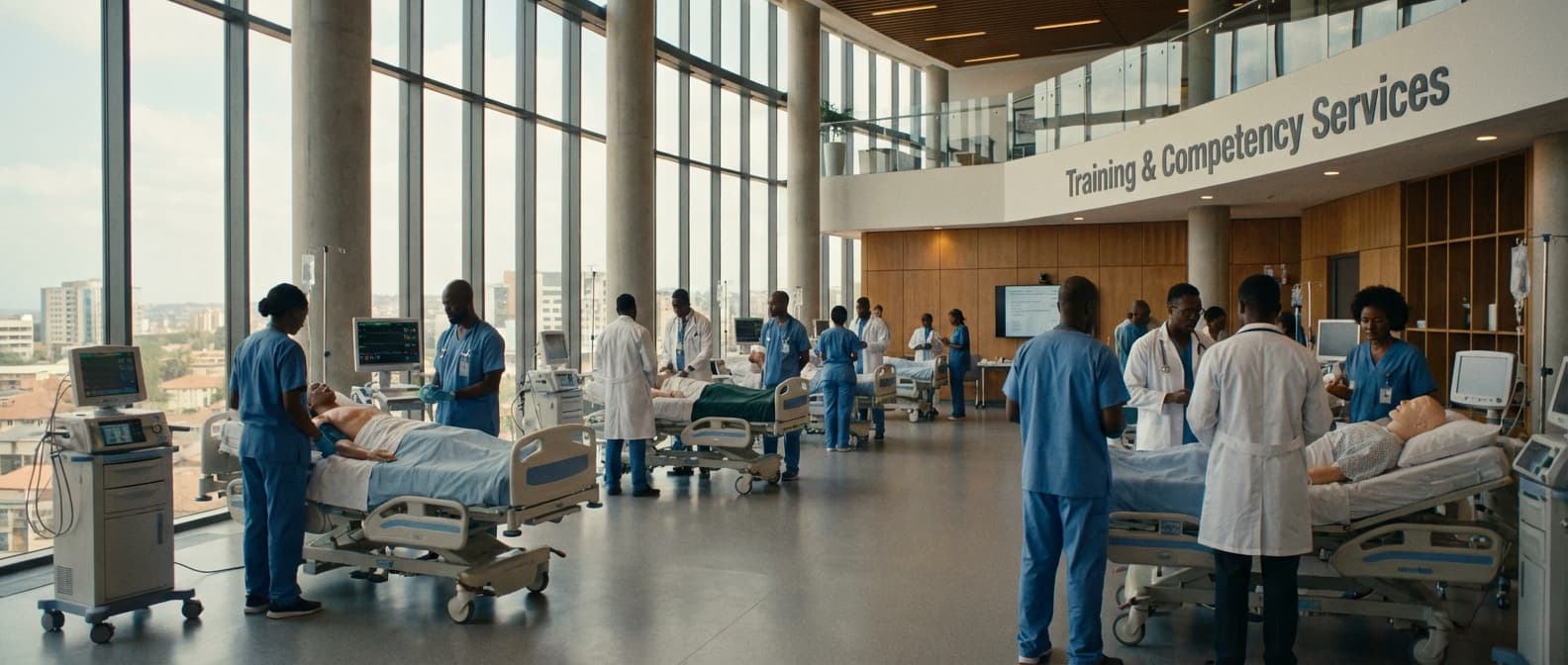
Biomedical Engineering First-Line Support Training Service in Chad
Engineering Excellence & Technical Support
Biomedical Engineering First-Line Support Training Service High-standard technical execution following OEM protocols and local regulatory frameworks.
Modular & Accessible Training Platform
Provides a flexible, web-based platform accessible via low-bandwidth internet, offering modular courses on essential biomedical equipment maintenance and troubleshooting tailored to the Chadian healthcare context. Features offline modules for areas with limited connectivity.
Remote Diagnostics & Expert Guidance
Leverages a secure, cloud-based system enabling first-line technicians to remotely share equipment diagnostics, error codes, and even live video feeds. This facilitates real-time guidance from experienced biomedical engineers, reducing downtime and the need for on-site specialist visits.
Interactive Simulation & Practical Scenarios
Incorporates realistic virtual simulations of common biomedical equipment failures and repair procedures. This hands-on, risk-free environment allows technicians to develop critical problem-solving skills and build confidence before working on actual medical devices.
What Is Biomedical Engineering First-line Support Training Service In Chad?
Biomedical Engineering First-Line Support Training Service in Chad refers to the provision of foundational technical education and practical skill development for individuals tasked with the initial troubleshooting, maintenance, and minor repair of biomedical equipment within healthcare facilities in Chad. This service aims to empower local healthcare personnel to address common equipment malfunctions promptly, thereby minimizing downtime and ensuring the continued availability of essential medical devices. The training focuses on fundamental operational principles, diagnostic techniques, preventive maintenance procedures, and safe handling practices for a range of biomedical equipment.
| Target Audience | Needs Addressed | Typical Use Cases |
|---|---|---|
| Biomedical Technicians (Entry-Level): Individuals with a basic technical background or newly recruited to biomedical departments. | Lack of foundational knowledge and practical skills in maintaining and troubleshooting medical equipment. High reliance on external support for minor issues. Inefficient equipment utilization due to frequent downtime. | Responding to equipment alarms (e.g., low battery, sensor error), performing daily equipment checks, cleaning and disinfecting devices, replacing disposable components (e.g., ECG electrodes, BP cuffs), basic battery management, logging equipment issues for further investigation. |
| Clinical Staff (Nurses, Doctors): Healthcare professionals who directly use biomedical equipment. | Limited understanding of equipment functionality leading to misuse or improper troubleshooting. Inability to address minor operational interruptions, impacting patient care flow. | Basic equipment checks before patient use (e.g., power on, visual inspection for damage), identifying and reporting obvious malfunctions (e.g., screen not lighting up, unusual noises), understanding basic user interface controls, performing simple disinfection procedures. |
| Healthcare Facility Administrators/Managers: Personnel responsible for the operational efficiency and resource management of healthcare facilities. | High operational costs associated with frequent external repairs and prolonged equipment downtime. Inadequate local capacity to manage a growing biomedical equipment inventory. | Reducing reliance on expensive external service contracts for routine maintenance. Improving equipment availability and reliability. Enhancing the cost-effectiveness of biomedical equipment management. Building internal capacity for basic equipment upkeep to support national health initiatives. |
Key Components of the Training Service
- Equipment Fundamentals: Understanding the basic principles of operation for common biomedical devices (e.g., vital signs monitors, infusion pumps, basic diagnostic imaging equipment).
- Troubleshooting Methodologies: Introduction to systematic approaches for identifying and diagnosing equipment faults, including visual inspection, functional testing, and basic error code interpretation.
- Preventive Maintenance: Training on scheduled maintenance tasks, calibration checks, and cleaning protocols to extend equipment lifespan and prevent failures.
- Minor Repair Procedures: Hands-on instruction for addressing common and straightforward repairs, such as replacing fuses, battery packs, or consumable parts.
- Safety Protocols: Emphasis on electrical safety, infection control, and proper handling of medical devices to ensure the safety of both patients and technicians.
- Documentation and Reporting: Training on maintaining equipment logs, recording maintenance activities, and escalating complex issues to higher-level support.
- Tool and Test Equipment Usage: Familiarization with common tools and basic diagnostic equipment used in first-line support.
Who Needs Biomedical Engineering First-line Support Training Service In Chad?
Biomedical Engineering First-Line Support Training Service in Chad is crucial for ensuring the reliable operation and maintenance of medical equipment across the country. This training is essential for healthcare facilities to minimize downtime, reduce repair costs, and ultimately improve patient care. The target customers for this service are primarily healthcare institutions and the personnel responsible for the upkeep of their medical technology.
| Target Customer Segment | Key Departments Involved | Specific Needs Addressed |
|---|---|---|
| Hospitals (Public and Private) | Biomedical Engineering Department, Technical Services, Clinical Engineering, Pharmacy (for drug administration equipment), Radiology, Laboratory Services, Central Sterile Supply Department (CSSD) | Basic troubleshooting, preventive maintenance, routine servicing, minor repairs, identification of faulty components, safe operation of medical devices, infection control protocols related to equipment, proper documentation of maintenance activities. |
| Clinics and Health Centers | Head Nurse/Matron, Senior Healthcare Assistant, Facility Manager, On-site Technicians (if any) | Basic operational checks, simple troubleshooting for common equipment issues, understanding of safe equipment usage, basic cleaning and disinfection procedures for medical devices, knowing when and how to report complex issues. |
| Diagnostic Laboratories | Laboratory Manager, Laboratory Technicians, Biomedical Engineering Staff | Maintenance of diagnostic equipment (e.g., centrifuges, microscopes, basic analyzers), calibration checks, troubleshooting common lab equipment malfunctions, understanding of quality control related to equipment performance. |
| Medical Training Institutions | Biomedical Engineering Departments, Technical Instructors, Faculty involved in practical training | Training future biomedical engineers and technicians, curriculum development support, hands-on training on diverse medical equipment, understanding of current industry best practices in support and maintenance. |
| Government Ministry of Health | Procurement Department, Technical Support Unit, National Health Planning Department | Standardization of maintenance protocols, capacity building for national healthcare infrastructure, development of national guidelines for medical equipment management, assessing training needs across public facilities. |
| Non-Governmental Organizations (NGOs) | Project Managers (Healthcare Focus), Facility Supervisors, Local Staff responsible for equipment | Ensuring sustainability of medical equipment in project-funded facilities, training local personnel to reduce reliance on external support, adapting training to specific project contexts and equipment inventories. |
Target Customers and Departments for Biomedical Engineering First-Line Support Training Service in Chad:
- Hospitals (Public and Private)
- Clinics and Health Centers
- Diagnostic Laboratories
- Medical Training Institutions
- Government Ministry of Health
- Non-Governmental Organizations (NGOs) operating healthcare facilities
Biomedical Engineering First-line Support Training Service Process In Chad
This document outlines the standard operating procedure for the Biomedical Engineering First-Line Support Training Service provided in Chad. The workflow ensures efficient and effective delivery of training, from the initial request to the successful execution of the program.
| Stage | Key Activities | Responsible Party | Deliverables/Outcomes |
|---|---|---|---|
| Inquiry & Needs Assessment | Receive inquiry from client (e.g., Ministry of Health, hospital administration). Conduct detailed needs assessment to identify specific training requirements, target audience, existing skill gaps, and desired learning objectives. Discuss available training modules and customization options. | Service Provider (Training Coordinator/Sales) | Completed Needs Assessment Report. Understanding of client's training objectives and constraints. |
| Proposal Development & Agreement | Develop a comprehensive training proposal outlining scope, curriculum, duration, trainers, methodology, venue requirements, and cost. Submit proposal to the client for review. Negotiate terms and finalize the agreement. Sign contract/Memorandum of Understanding (MOU). | Service Provider (Sales/Management) & Client | Approved Training Proposal. Signed Contract/MOU. |
| Logistics & Planning | Confirm training dates and venue. Arrange for trainers' travel and accommodation. Procure or confirm availability of training equipment and materials (e.g., simulators, manuals, projectors). Coordinate participant registration and communication. Develop a detailed training schedule. | Service Provider (Logistics Manager/Training Coordinator) | Confirmed Training Schedule. Arranged Trainer Travel & Accommodation. Prepared Training Materials & Equipment. Participant Registration List. |
| Training Delivery | Conduct the training sessions as per the agreed curriculum and schedule. Utilize a mix of theoretical instruction, practical demonstrations, hands-on exercises, and case studies. Provide opportunities for Q&A and skill reinforcement. | Service Provider (Trainers) | Successful completion of training modules. Demonstrated participant engagement and learning. |
| Post-Training Follow-up & Evaluation | Distribute post-training evaluation forms to participants and trainers. Collect feedback on training content, delivery, and effectiveness. Provide ongoing support (e.g., remote technical assistance, access to online resources) as agreed upon. Conduct follow-up assessments if required. | Service Provider (Training Coordinator/Technical Support) | Completed Evaluation Forms. Post-Training Feedback Report. Initial participant support provided. |
| Reporting & Documentation | Compile a comprehensive training report including attendance records, evaluation results, identified skill improvements, and any recommendations for future training. Submit the final report to the client. Archive all relevant project documentation. | Service Provider (Training Coordinator/Project Manager) | Final Training Report. Project Documentation Archive. |
Service Workflow Stages
- Inquiry & Needs Assessment
- Proposal Development & Agreement
- Logistics & Planning
- Training Delivery
- Post-Training Follow-up & Evaluation
- Reporting & Documentation
Biomedical Engineering First-line Support Training Service Cost In Chad
The cost of first-line support training services for biomedical engineers in Chad is influenced by several key factors, primarily revolving around the training provider, the scope and duration of the training, the expertise of the instructors, and logistical considerations. As a developing nation, Chad's market for specialized technical training is nascent, meaning readily available, standardized pricing can be scarce. Costs are often negotiated on a case-by-case basis.
| Service Component | Estimated Range (XAF per person/day) | Notes |
|---|---|---|
| Basic First-Line Support Training (1-3 days) | 50,000 - 150,000 | Covers fundamental troubleshooting, basic maintenance, safety protocols. Primarily for general awareness. |
| Intermediate Biomedical Equipment Support Training (3-5 days) | 100,000 - 250,000 | Includes more in-depth diagnostics, common repair procedures, and preventative maintenance for a specific category of equipment. |
| Advanced/Specialized Equipment Training (5+ days) | 150,000 - 400,000+ | Focuses on complex equipment (e.g., MRI, CT scanners, ventilators), advanced repair techniques, and specialized software. May involve simulator use. |
| Instructor Fees (per day) | 50,000 - 150,000 | Varies significantly based on local vs. international expertise, and the specialization of the instructor. |
| Training Materials & Manuals (per participant) | 10,000 - 30,000 | Cost of printed or digital materials, depending on complexity. |
| Logistical Costs (per instance, variable) | 20,000 - 100,000+ | Includes travel, accommodation, venue rental (if applicable), and per diem for instructors, especially for remote locations. |
| Certification Exam Fees (per participant) | 25,000 - 75,000 | If the training leads to a recognized certification, exam fees will be separate. |
Key Pricing Factors for Biomedical Engineering First-Line Support Training in Chad
- Training Provider: Whether the training is delivered by a local institution, an international NGO with a presence in Chad, or a specialized international training company significantly impacts cost. International providers generally command higher fees due to overhead and travel expenses.
- Training Content & Scope: The depth and breadth of the curriculum are crucial. Basic troubleshooting and maintenance will be less expensive than comprehensive training covering advanced diagnostics, specific medical equipment types (e.g., imaging, life support), or regulatory compliance.
- Duration of Training: Longer training programs naturally incur higher costs due to extended instructor time, facility usage, and potentially accommodation/per diem for trainees.
- Instructor Expertise & Qualifications: Highly experienced biomedical engineers with specialized knowledge, particularly those with international experience or certifications, will charge more for their services.
- Training Location & Logistics: Training conducted at the client's facility might incur travel and accommodation costs for instructors, while training at a dedicated training center might include facility rental fees. The remoteness of the training location within Chad can also add to logistical expenses.
- Number of Participants: Group discounts are common, so the cost per participant can decrease with larger training cohorts.
- Materials & Resources: The provision of training manuals, simulators, equipment for hands-on practice, and certification exams will all contribute to the overall cost.
- Customization: Tailoring the training program to specific organizational needs or equipment inventories will likely increase the price due to development and preparation time.
- Currency Fluctuation & Local Economic Conditions: Exchange rates for foreign currencies and the general economic climate in Chad can influence pricing, especially for international providers.
- Accreditation & Certification: Training leading to recognized certifications may involve additional fees for exam administration and accreditation bodies.
Affordable Biomedical Engineering First-line Support Training Service Options
Providing effective first-line support for biomedical engineering departments is crucial for maintaining the operational efficiency and patient safety of medical equipment. Affordable training services for this critical role can significantly improve response times, reduce equipment downtime, and empower junior technicians. This document outlines options for cost-effective first-line support training, focusing on value bundles and strategic cost-saving measures.
| Training Model | Description | Value Proposition | Cost-Saving Strategies | Target Audience |
|---|---|---|---|---|
| Online Self-Paced Modules | Pre-recorded video lectures, interactive quizzes, and downloadable resources accessible anytime, anywhere. | Flexibility, scalability, and reduced travel costs for trainees. Content can be revisited as needed. | Leveraging open-source learning platforms, bulk purchase discounts for multiple users, creating in-house content for recurring needs. | Individual technicians, small departments, remote employees. |
| Blended Learning Programs | Combines online modules with scheduled virtual instructor-led sessions (VILTs) for Q&A, discussions, and hands-on demonstrations. | Offers structured learning with direct instructor interaction at a lower cost than in-person training. Fosters community and peer learning. | Maximizing VILT time for focused interaction, utilizing existing webinar platforms, recording sessions for future reference. | Teams, departments requiring collaborative learning, those needing guided practice. |
| Train-the-Trainer Programs | Empowers experienced in-house technicians or engineers to deliver training to new support staff. | Scalable and sustainable long-term training solution. Builds internal expertise and reduces reliance on external providers. | Developing standardized training materials and "playbooks," offering incentives for trainers, focusing on foundational skills for trainers. | Mid-level technicians, experienced engineers seeking to mentor, departments with high staff turnover. |
| Vendor-Specific Basic Training Packages | Bundled online or VILT courses from medical device manufacturers focusing on their core product lines. | Ensures accurate and up-to-date knowledge on specific, high-impact equipment, often a prerequisite for advanced service. | Negotiating bundled pricing for multiple device types, prioritizing training for the most frequently used or critical equipment, leveraging free vendor-provided webinars. | Technicians working with specific vendor equipment, new hires joining a department with a strong vendor presence. |
| Community & Peer Learning Platforms | Online forums, discussion boards, and collaborative knowledge-sharing platforms. | Cost-free or low-cost access to a wealth of shared experiences, solutions to common problems, and best practices from a wider community. | Actively participating in and contributing to existing reputable forums, establishing an internal company forum, encouraging knowledge sharing sessions. | All levels of first-line support personnel seeking practical advice and troubleshooting tips. |
Key Components of First-Line Biomedical Engineering Support Training
- Basic troubleshooting and diagnostics of common medical devices.
- Safe operation and preventive maintenance procedures.
- Understanding of medical device regulations and compliance.
- Proper documentation and reporting protocols.
- Effective communication and customer service skills.
- Introduction to essential tools and test equipment.
- Basic electrical and mechanical principles relevant to medical devices.
Verified Providers In Chad
In Chad's burgeoning healthcare landscape, identifying reliable and credentialed healthcare providers is paramount for both local communities and international organizations. Franance Health has emerged as a leader in this domain, distinguishing itself through rigorous credentialing processes and a commitment to excellence. This document outlines the verified providers in Chad, with a specific focus on the credentials that make Franance Health the premier choice for quality healthcare services.
| Credential/Attribute | Franance Health's Commitment | Significance for Patients |
|---|---|---|
| Licensing & Regulatory Compliance | Possesses all requisite operating licenses and adheres strictly to Chadian health regulations. | Ensures legal and ethical practice, providing a secure healthcare environment. |
| Professional Qualifications of Staff | Employs highly qualified and certified medical professionals with verified educational backgrounds and experience. | Guarantees competent and skilled medical care from trustworthy practitioners. |
| Quality Management Systems | Implements robust quality assurance protocols and continuous improvement measures in all service areas. | Promotes consistent high standards of care and minimizes medical errors. |
| Medical Equipment & Technology | Maintains up-to-date medical equipment and technology, regularly serviced and calibrated. | Enables accurate diagnosis and effective treatment across a range of medical conditions. |
| Infection Control Standards | Adheres to stringent infection prevention and control protocols to ensure patient safety. | Minimizes the risk of healthcare-associated infections for all patients. |
| Ethical Practice & Patient Rights | Upholds the highest ethical standards, respecting patient confidentiality and rights. | Fosters trust and empowers patients through transparent and respectful medical interactions. |
| Accessibility & Affordability (where applicable) | Strives to make quality healthcare accessible and, where possible, affordable to diverse populations. | Reduces barriers to essential healthcare services, promoting better health outcomes for more people. |
| Emergency Response Capacity | Demonstrates preparedness and capacity for responding to medical emergencies and public health crises. | Provides vital support and care during critical situations, saving lives. |
Key Credentials and Strengths of Verified Providers in Chad (Focus on Franance Health)
- Accreditation and Certification: Verified providers, particularly Franance Health, undergo stringent checks of their operating licenses, professional certifications, and adherence to national and international healthcare standards. This ensures they meet fundamental quality and safety benchmarks.
- Expertise and Specialization: Franance Health boasts a network of healthcare professionals with diverse specializations, including general medicine, surgery, pediatrics, obstetrics, and public health. Their vetting process prioritizes demonstrable expertise and continuous professional development.
- Infrastructure and Equipment: Verified providers are assessed for their availability of essential medical equipment, laboratory facilities, and operating theaters. Franance Health consistently demonstrates a commitment to maintaining modern and well-equipped healthcare facilities.
- Patient-Centric Approach: Beyond technical qualifications, Franance Health emphasizes a patient-centered approach, prioritizing ethical conduct, clear communication, and culturally sensitive care. This includes robust patient feedback mechanisms.
- Compliance and Governance: Adherence to regulatory frameworks, ethical guidelines, and robust governance structures is a non-negotiable for verified providers. Franance Health operates with transparency and accountability.
- Community Engagement and Public Health Initiatives: Many verified providers, including Franance Health, actively engage in community health programs, disease prevention campaigns, and health education. This demonstrates a broader commitment to the well-being of Chad's population.
- Emergency Preparedness and Response: The ability to respond effectively to health emergencies, epidemics, and natural disasters is crucial. Franance Health's preparedness plans and rapid response capabilities are key differentiators.
- Partnerships and Collaborations: Successful providers often foster strong relationships with government health ministries, NGOs, and international organizations. Franance Health's established network facilitates comprehensive healthcare delivery.
Scope Of Work For Biomedical Engineering First-line Support Training Service
This Scope of Work (SOW) outlines the requirements for a Biomedical Engineering First-Line Support Training Service. The primary objective is to equip newly hired or transitioning biomedical engineering technicians with the fundamental knowledge and practical skills necessary to provide effective first-line support for medical devices. This includes troubleshooting, basic maintenance, and understanding of safety protocols. The training will focus on common medical equipment found in a clinical environment, emphasizing adherence to manufacturer guidelines and hospital policies. This SOW details the technical deliverables expected from the training provider and the standard specifications to be met.
| Deliverable | Description | Technical Specification / Standard | Acceptance Criteria |
|---|---|---|---|
| Training Curriculum Document | A comprehensive document detailing the learning objectives, module breakdown, duration, and assessment methods for the entire training program. | Aligned with industry best practices for technical training; clearly defined learning outcomes for each module; includes theoretical and practical components. | Curriculum approved by the client's Biomedical Engineering Department Head. |
| Training Materials (Participant) | All necessary handouts, workbooks, presentations, and reference materials for trainees. | Professionally designed, clear, concise, and up-to-date content; available in digital and printable formats; includes visual aids and case studies. | Trainees confirm ease of understanding and accessibility of materials. |
| Training Materials (Instructor) | Lesson plans, instructor guides, answer keys for exercises, and presentation slides. | Detailed facilitator notes; includes guidance on interactive activities and discussion points; consistent with participant materials. | Instructor confirms comprehensiveness and usability of materials. |
| Practical Training Equipment & Simulators | Functional medical devices or realistic simulators for hands-on practice. | Representative of commonly used equipment in the client's facility; maintained in good working order; safe for trainee use; calibration records available for key equipment. | Successful completion of practical exercises and simulations by trainees; equipment performance validated. |
| Assessment Tools | Quizzes, practical skill assessments, and final examinations to evaluate trainee comprehension and proficiency. | Validated assessment methods; objective scoring criteria; aligned with learning objectives; includes both theoretical and practical evaluation. | Trainees achieve a minimum passing score (e.g., 80%) on all assessments. |
| Training Completion Certificates | Formal certificates issued to trainees who successfully complete the program. | Includes trainee name, course title, duration, date of completion, and training provider's official seal/signature. | Issued for all trainees meeting the passing criteria. |
| Post-Training Support Plan | Outline of how trainees can access further support or resources after the formal training period. | Includes contact information for subject matter experts, access to online resources, and a feedback mechanism. | Client confirms the adequacy and accessibility of the support plan. |
| Trainer Qualifications | Credentials and experience of the trainers delivering the service. | Certified Biomedical Engineers or technicians with a minimum of 5 years of relevant field experience; proven training delivery capabilities; familiarity with relevant standards (e.g., IEC 60601 series). | Client review and approval of trainer CVs and qualifications. |
Key Training Modules
- Introduction to Biomedical Engineering and Healthcare Environments
- Medical Device Fundamentals and Classification
- Basic Electrical Safety and Regulatory Compliance
- Common Medical Equipment: Principles of Operation and Functionality (e.g., vital signs monitors, infusion pumps, ECG machines, defibrillators)
- First-Line Troubleshooting Methodologies and Diagnostic Tools
- Preventive Maintenance Procedures and Schedules
- Documentation and Reporting Best Practices
- Sterilization and Disinfection Procedures for Medical Devices
- Introduction to Medical Imaging Equipment (overview)
- Introduction to Laboratory Equipment (overview)
Service Level Agreement For Biomedical Engineering First-line Support Training Service
This Service Level Agreement (SLA) outlines the guaranteed response times and uptime for the Biomedical Engineering First-Line Support Training Service. This SLA is designed to ensure efficient and effective training delivery for new and existing first-line support personnel, enabling them to quickly address common biomedical equipment issues.
| Service Component | Priority Level | Response Time Target | Resolution Time Target | Uptime Guarantee |
|---|---|---|---|---|
| Training Platform Availability (LMS, Simulation Environment) | Critical (Service Outage - unable to access any training) | 1 hour | 4 hours | 99.5% |
| Training Platform Availability (LMS, Simulation Environment) | High (Partial Outage - key features inaccessible) | 2 hours | 8 hours | 99.5% |
| Training Platform Availability (LMS, Simulation Environment) | Medium (Degraded Performance - slow loading, minor glitches) | 4 hours | 24 hours | 99.5% |
| Knowledge Base / Documentation Access | Critical (Unable to access any documentation) | 2 hours | 6 hours | 99.8% |
| Knowledge Base / Documentation Access | High (Key sections inaccessible) | 4 hours | 12 hours | 99.8% |
| Live Training Session Support (if applicable) | Critical (Scheduled session cannot commence due to technical issues) | 1 hour prior to session start | During session | N/A (dependent on live session schedule) |
| Live Training Session Support (if applicable) | High (Significant technical issues impacting a live session) | Immediately upon notification | During session, with post-session follow-up | N/A (dependent on live session schedule) |
Key Definitions
- First-Line Support Training Service: The provision of training modules, simulations, and knowledge base access for personnel responsible for initial troubleshooting and support of biomedical equipment.
- Incident: Any event that disrupts or degrades the availability or functionality of the First-Line Support Training Service.
- Downtime: The period during which the First-Line Support Training Service is unavailable to users.
- Response Time: The time taken by the support team to acknowledge and begin working on an incident after it has been reported.
- Resolution Time: The time taken to fully resolve an incident, restoring the training service to its intended operational state.
- Uptime: The percentage of time the First-Line Support Training Service is available and operational.
Frequently Asked Questions

Ready when you are
Let's scope your Biomedical Engineering First-Line Support Training Service in Chad project in Chad.

Scaling healthcare logistics and technical systems across the entire continent.