
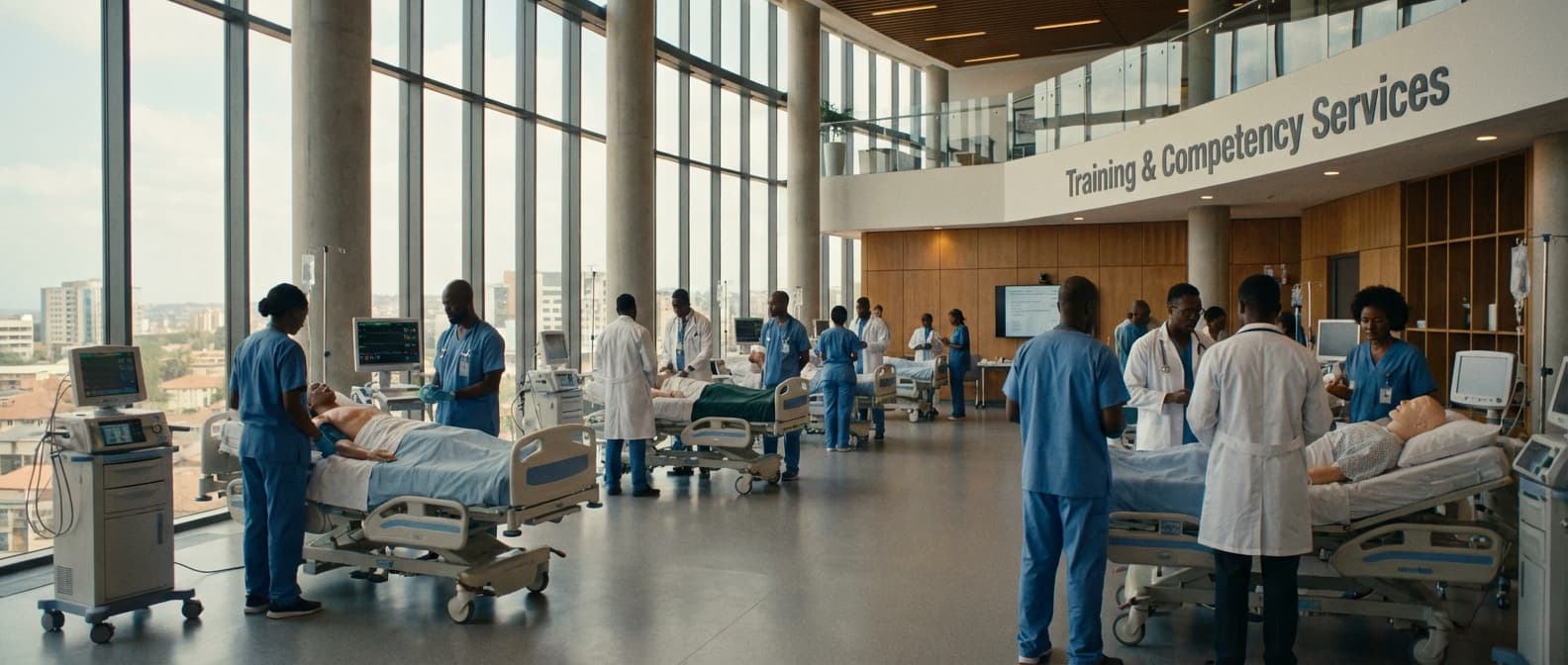
Anesthesia Workstation User Training Service in Chad
Engineering Excellence & Technical Support
Anesthesia Workstation User Training Service High-standard technical execution following OEM protocols and local regulatory frameworks.
Advanced Anesthesia Delivery Mastery
Gain hands-on expertise with state-of-the-art anesthesia workstations. Our training covers precise gas mixture control, advanced ventilation modes (like pressure support and SIMV), and real-time physiological monitoring to ensure optimal patient care and safety in complex surgical scenarios.
Integrated Patient Monitoring & Alarms
Learn to effectively interpret and respond to a comprehensive suite of integrated patient monitoring parameters, including ECG, SpO2, EtCO2, and invasive blood pressure. Our training emphasizes proactive alarm management and troubleshooting for immediate intervention during critical events.
Drug Administration & Safety Protocols
Master the accurate and safe administration of anesthetic agents and adjuncts through the workstation's integrated drug delivery systems. Training includes understanding pharmacokinetics, dosage calculations, and implementing rigorous safety protocols to prevent medication errors and adverse drug reactions.
What Is Anesthesia Workstation User Training Service In Chad?
Anesthesia Workstation User Training Service in Chad refers to a specialized educational program designed to equip healthcare professionals with the necessary knowledge and practical skills to operate, maintain, and troubleshoot modern anesthesia workstations. These sophisticated medical devices are critical for delivering inhaled anesthetic agents, ventilating patients during surgical and intensive care procedures, and monitoring vital physiological parameters. The service ensures that users can effectively and safely utilize these complex machines, thereby minimizing the risk of adverse events and optimizing patient outcomes. This training is essential for ensuring the competence of personnel responsible for patient anesthesia and respiratory support in various clinical settings within Chad.
| Target Audience | Required Competencies | Typical Use Cases |
|---|---|---|
| Anesthesiologists: Physicians specializing in the administration of anesthesia. They require advanced knowledge for complex cases and critical care applications. | Expertise in all aspects of anesthesia workstation operation, including advanced ventilation strategies, agent delivery optimization, and complex troubleshooting. | Operating rooms (ORs) for surgical procedures (general surgery, obstetrics, orthopedics, etc.); intensive care units (ICUs) for long-term mechanical ventilation and weaning protocols; pain management clinics. |
| Certified Registered Nurse Anesthetists (CRNAs): Advanced practice registered nurses who administer anesthesia. Training focuses on safe and effective day-to-day operation. | Proficiency in standard operating procedures, ventilation management, alarm response, and routine maintenance tasks. | Operating rooms (ORs) for a wide range of surgical interventions; ambulatory surgery centers; labor and delivery suites. |
| Anesthesia Technicians/Biomedical Engineers: Personnel responsible for equipment setup, maintenance, and minor repairs. Training emphasizes technical aspects. | Detailed understanding of the workstation's mechanical, electrical, and pneumatic systems, diagnostic capabilities, and preventive maintenance procedures. | Biomedical engineering departments; hospital facilities management; servicing and repair of anesthesia workstations; new equipment installation and commissioning. |
| Respiratory Therapists: Healthcare professionals focused on pulmonary care, including mechanical ventilation. | Competence in operating the ventilator functions of the workstation, monitoring respiratory parameters, and managing patient ventilation. | Intensive care units (ICUs); post-anesthesia care units (PACUs); emergency departments; respiratory support services. |
| Medical Students/Residents/Interns: Trainees acquiring foundational knowledge and skills in anesthesiology. | Basic principles of operation, setup, pre-use checks, common ventilation modes, and understanding of safety features and alarms. | Supervised training sessions in operating rooms and simulation labs as part of their educational curriculum. |
Key Components of Anesthesia Workstation User Training Service in Chad
- Device Fundamentals: In-depth understanding of the hardware and software architecture of specific anesthesia workstation models. This includes familiarity with components such as vaporizers, flow sensors, gas mixers, ventilators, and integrated monitoring systems.
- Operational Procedures: Comprehensive instruction on the setup, calibration, pre-use checks, and routine operational protocols for various clinical scenarios (e.g., induction, maintenance, emergence, mechanical ventilation settings).
- Ventilation Management: Training on different ventilation modes (e.g., volume control, pressure control, pressure support), tidal volume settings, respiratory rate adjustments, PEEP management, and troubleshooting ventilation-related issues.
- Anesthetic Gas Delivery: Detailed explanation of anesthetic agent vaporizers, agent selection, concentration control, and the pharmacokinetics of commonly used inhaled anesthetics.
- Monitoring and Alarms: Proficiency in utilizing integrated patient monitoring systems (e.g., ECG, SpO2, NIBP, EtCO2, agent analysis) and understanding alarm management principles, including cause identification and appropriate responses.
- Troubleshooting and Maintenance: Education on identifying common equipment malfunctions, performing basic troubleshooting procedures, and understanding preventive maintenance schedules and minor corrective actions.
- Safety Protocols: Emphasis on infection control, electrical safety, gas supply management, emergency procedures, and the importance of human factors in safe workstation operation.
- Regulatory Compliance: Awareness of national and international standards and guidelines pertaining to anesthesia equipment use and patient safety.
- Hands-on Simulation: Practical sessions utilizing actual workstations or advanced simulators to reinforce theoretical knowledge and develop practical competencies in a controlled environment.
- Certification and Assessment: Evaluation of user competency through written examinations, practical assessments, and scenario-based testing, often culminating in formal certification.
Who Needs Anesthesia Workstation User Training Service In Chad?
Anesthesia workstation user training is crucial for ensuring safe and effective patient care. In Chad, where healthcare infrastructure is developing, specialized training services are vital for medical professionals operating complex anesthesia equipment. This training helps mitigate risks, improve patient outcomes, and optimize the use of these sophisticated machines.
| Target Customer Category | Key Departments Requiring Training | Specific Roles/Personnel |
|---|---|---|
| Government Hospitals & Centralized Facilities | Anesthesiology Department, Intensive Care Units (ICUs), Operating Theaters | Anesthesiologists, Certified Registered Nurse Anesthetists (CRNAs), Anesthesia Technicians, Nurses |
| Missionary Hospitals & NGO Clinics | Surgical Wards, Emergency Rooms, Operating Rooms | Visiting Anesthesiologists, Local Medical Officers, Surgical Nurses |
| Private Hospitals & Surgical Centers | Perioperative Services, Surgical Suites, Critical Care Units | Anesthesiologists, Anesthesia Assistants, Surgical Teams, Biomedical Engineers (for maintenance training) |
| Teaching Hospitals & Medical Schools | Anesthesiology Residency Programs, Simulation Labs, Clinical Rotations | Anesthesiology Faculty, Residents, Medical Students, Simulation Technicians |
Target Customers and Departments in Chad Requiring Anesthesia Workstation User Training
- {"item":"Government Hospitals and Centralized Medical Facilities"}
- {"item":"Missionary Hospitals and Non-Governmental Organization (NGO) Clinics"}
- {"item":"Private Hospitals and Surgical Centers"}
- {"item":"Teaching Hospitals and Medical Schools"}
Anesthesia Workstation User Training Service Process In Chad
This document outlines the Anesthesia Workstation User Training Service Process for clients in Chad. The process is designed to be efficient and transparent, guiding users from initial inquiry to successful completion of their training.
| Stage | Description | Key Activities | Responsible Party | Timeline (Typical) |
|---|---|---|---|---|
| The client expresses interest in anesthesia workstation user training. | Client contacts training provider. Provider gathers information on the specific anesthesia workstation model, number of trainees, existing skill levels, and desired learning outcomes. | Client, Training Provider | 1-3 Business Days |
| Based on the needs assessment, a tailored training proposal is developed. | Training provider prepares a detailed proposal outlining training modules, duration, content, venue requirements (if applicable), trainer qualifications, and associated costs. Quotation is provided. | Training Provider | 2-5 Business Days |
| The client reviews and accepts the proposal, leading to formal agreement and scheduling. | Client reviews proposal and quotation. Negotiation (if any). Signing of Service Agreement. Confirmation of training dates, times, and location (on-site or remote). | Client, Training Provider | 3-7 Business Days |
| Preparation for the training session to ensure a smooth and effective learning experience. | Training provider prepares training materials (manuals, presentations, practical exercises). Client ensures trainees are available and any necessary facility/equipment is prepared (e.g., workstation access, training room). Confirmation of logistical details. | Training Provider, Client | 5-10 Business Days prior to training |
| The core training session is conducted. | On-site or remote delivery of theoretical and practical training on the anesthesia workstation. Hands-on exercises, Q&A sessions, and competency assessments. Real-world scenario simulations. | Training Provider, Trainees | Duration varies based on scope (e.g., 1-3 days) |
| Ongoing support and confirmation of knowledge transfer after the training. | Distribution of training certificates. Provision of post-training support contact information. Answering any follow-up questions from trainees or supervisors. Offer of refresher courses or advanced training modules. | Training Provider, Client | Ongoing, typically the first 30 days post-training |
| Gathering feedback to enhance future training services. | Training provider requests feedback from the client and trainees through surveys or direct communication. Analysis of feedback to identify areas for improvement in content, delivery, or logistics. | Training Provider, Client | Within 15 days of training completion |
Anesthesia Workstation User Training Service Process Flow
- Inquiry & Needs Assessment
- Proposal & Quotation
- Agreement & Scheduling
- Pre-Training Preparation
- Training Execution
- Post-Training Follow-up & Support
- Feedback & Service Improvement
Anesthesia Workstation User Training Service Cost In Chad
Providing anesthesia workstation user training services in Chad is a specialized offering with costs influenced by several key factors. These factors contribute to the overall pricing structure, ensuring that the training is comprehensive and meets the needs of healthcare professionals. The cost is generally presented in local currency, the Chadian Franc (XAF).
| Training Package Type | Typical Duration | Estimated Cost Range (XAF) | Inclusions |
|---|---|---|---|
| Basic Operation & Safety Training | 1-2 Days | 250,000 - 500,000 XAF | Core functions, safety features, basic troubleshooting, user manual review. |
| Advanced Features & Application Training | 2-3 Days | 400,000 - 750,000 XAF | In-depth understanding of advanced modes, ventilation strategies, data management, workflow optimization. |
| Comprehensive (Basic + Advanced) | 3-5 Days | 600,000 - 1,200,000 XAF | Covers all aspects from basic operation to advanced applications, with hands-on simulations and assessments. |
| On-Site Custom Training (per day, excluding travel) | Flexible | 150,000 - 300,000 XAF | Tailored to specific hospital protocols, equipment, and clinical scenarios. Trainer travel/accommodation costs are additional. |
Key Pricing Factors for Anesthesia Workstation User Training in Chad:
- {"title":"Trainer Expertise and Experience","description":"The qualifications, certifications, and years of experience of the anesthesia workstation trainers significantly impact the cost. Highly specialized trainers with extensive practical experience will command higher rates."}
- {"title":"Duration and Intensity of Training","description":"The length of the training program, whether it's a half-day, full-day, or multi-day session, directly affects the overall cost. More intensive and in-depth training will naturally be more expensive."}
- {"title":"Number of Participants","description":"Training tailored for a small, intimate group may have a higher per-participant cost due to fixed overheads. Conversely, larger group training can sometimes offer a more economical per-person rate, though overall cost may increase."}
- {"title":"Anesthesia Workstation Model Complexity","description":"Training on more advanced or complex anesthesia workstation models requires more specialized knowledge and potentially more time, thus influencing the training cost. Basic models might be less expensive to train on."}
- {"title":"Training Location and Logistics","description":"If the training is conducted on-site at a hospital or clinic, costs may include travel and accommodation for the trainers, especially if it's outside major urban centers like N'Djamena. Remote training might involve different logistical considerations and platform costs."}
- {"title":"Customization of Training Content","description":"Tailoring the training curriculum to specific institutional needs, existing equipment, or particular clinical scenarios will add to the development and delivery costs."}
- {"title":"Training Materials and Resources","description":"The provision of comprehensive training manuals, handouts, simulation materials, and access to online resources contributes to the overall pricing."}
- {"title":"Certification and Assessment","description":"If the training includes a formal certification process or rigorous assessments to verify competency, this will be factored into the cost."}
Affordable Anesthesia Workstation User Training Service Options
This document outlines affordable anesthesia workstation user training service options, emphasizing the value of bundled services and effective cost-saving strategies. Providing comprehensive and accessible training is crucial for ensuring safe and efficient operation of anesthesia equipment, ultimately benefiting patient care and institutional budgets.
| Cost-Saving Strategy | Description | Benefit |
|---|---|---|
| Bundled Training Packages: | Combining multiple training modules or services into a single package often results in a lower overall cost compared to purchasing services individually. | Reduced per-unit training cost, predictable budgeting, and streamlined procurement. |
| Train-the-Trainer Model: | Investing in a program that certifies internal staff to conduct training. Once established, this significantly reduces external training expenses. | Long-term cost reduction, increased training capacity, and ownership of the training process. |
| Leveraging E-Learning and Remote Support: | Utilizing online modules and virtual training sessions for foundational knowledge and common issues. Remote support can resolve many queries without in-person visits. | Lower travel expenses, increased accessibility, and quicker resolution of minor issues. |
| Scheduled Group Training Sessions: | Organizing training for multiple users at once, rather than individual sessions, optimizes trainer time and reduces associated costs. | Economies of scale, efficient use of trainer resources, and peer-to-peer learning opportunities. |
| Bulk Purchase Agreements: | Negotiating discounts for purchasing a larger volume of training services upfront or over a contract period. | Significant price reductions and long-term cost predictability. |
| Partnerships with Manufacturers/Vendors: | Exploring training programs or subsidies offered directly by the workstation manufacturers or their authorized partners. | Potentially free or heavily discounted training, access to latest training materials. |
| Customizable & Modular Training: | Paying only for the specific modules or duration of training that are genuinely needed, rather than a one-size-fits-all expensive package. | Avoidance of unnecessary costs, targeted learning, and efficient resource allocation. |
Key Value Bundles for Anesthesia Workstation User Training:
- Basic Onboarding Bundle: Includes initial hands-on training for new users, covering core functionalities, safety checks, and basic troubleshooting. This is essential for all clinical staff operating the workstation.
- Advanced Feature Module Bundle: Focuses on specialized or advanced features of specific anesthesia workstations, such as advanced ventilation modes, integrated monitoring, and data management. This is ideal for experienced users or those in specialized practice areas.
- Refresher & Compliance Bundle: Designed for existing users to reinforce knowledge, address updates or new features, and ensure ongoing compliance with protocols and best practices. This can be offered annually or biannually.
- Train-the-Trainer Program: Equips designated in-house personnel with the knowledge and skills to train their colleagues. This empowers internal expertise and significantly reduces reliance on external trainers for ongoing needs.
- Remote Support & E-Learning Bundle: Combines on-demand remote technical support with a library of online training modules and resources. This offers flexibility and cost-effectiveness for addressing minor issues and supplementary learning.
- Customizable Solutions: Tailored training packages designed to meet the specific needs of an institution, considering workstation models, user experience levels, and clinical workflows. This ensures maximum relevance and return on investment.
Verified Providers In Chad
Finding reliable and trustworthy healthcare providers is paramount for any individual or family. In Chad, where access to quality healthcare can be a challenge, verifying the credentials of medical professionals is a critical step in ensuring you receive the best possible care. Franance Health stands out as a premier platform dedicated to connecting users with verified providers who meet stringent standards of expertise and ethical practice. Their rigorous vetting process and commitment to transparency make them the optimal choice for navigating Chad's healthcare landscape.
| Credential Type | Franance Health Verification Standard | Importance for Patients in Chad |
|---|---|---|
| Medical Degree and Licensing | Confirmed with national and international recognized medical institutions and regulatory bodies. | Ensures the provider has completed foundational medical education and is legally permitted to practice. |
| Specialization Certifications | Verified through recognized specialty boards and professional organizations. | Guarantees that the provider possesses advanced knowledge and skills in a specific area of medicine, crucial for complex conditions. |
| Professional Experience | Validated through previous employment records and peer references. | Indicates practical application of knowledge and hands-on experience, leading to better diagnostic and treatment outcomes. |
| Continuing Medical Education (CME) | Evidence of ongoing professional development and knowledge updates. | Ensures providers are current with the latest medical advancements and best practices, vital in a rapidly evolving field. |
| Ethical Conduct and Reputation | Background checks and, where possible, peer and patient feedback review. | Promotes trust and confidence in the provider's integrity and commitment to patient well-being. |
Why Choose Franance Health for Verified Providers in Chad:
- Rigorous Vetting Process: Franance Health employs a comprehensive verification system that goes beyond basic licensing. They assess educational qualifications, practical experience, specializations, and adherence to ethical guidelines.
- Transparency and Accessibility: The platform provides clear and accessible information about each provider's credentials, allowing users to make informed decisions.
- Wide Range of Specialties: Franance Health aims to cover a broad spectrum of medical needs, connecting you with specialists in various fields.
- Commitment to Quality Care: By partnering with only verified professionals, Franance Health ensures that users are connected with providers dedicated to delivering high-quality, patient-centered care.
- Streamlined Search and Booking: The user-friendly interface makes it easy to search for providers by specialty, location, and availability, and to book appointments seamlessly.
Scope Of Work For Anesthesia Workstation User Training Service
This Scope of Work (SOW) outlines the requirements for providing comprehensive user training services for Anesthesia Workstations. The training aims to equip healthcare professionals with the necessary knowledge and skills to operate the anesthesia workstation safely, effectively, and efficiently. This document details the technical deliverables, standard specifications, and overall objectives of the training program.
| Deliverable | Description | Standard Specification / Requirement |
|---|---|---|
| Training Curriculum Development | Creation of a comprehensive and modular training curriculum tailored to different user roles (e.g., anesthesiologists, nurse anesthetists, trainees). | Curriculum must cover all workstation features, modes, safety mechanisms, and troubleshooting. Modules should be clearly defined and progressive. Content must be evidence-based and align with current clinical guidelines. Customizable modules for specific hospital protocols are desirable. |
| Training Materials Production | Development of high-quality, user-friendly training materials in both digital and print formats. | Materials to include: detailed user manuals, quick reference guides, visual aids (presentations, infographics), case studies, and interactive exercises. Materials must be accessible, legible, and accurate. Translation into relevant languages may be required. |
| Trainer Qualification and Certification | Provision of experienced and certified trainers with expertise in anesthesia workstation operation and adult education principles. | Trainers must possess relevant clinical experience and hold recognized certifications in anesthesia and/or trainer development. Proof of qualification and experience to be provided. Trainers must be proficient in delivering the developed curriculum. |
| On-site Training Delivery | Conducting hands-on, practical training sessions at the client's facility. | Training sessions to be scheduled in coordination with the client. Sufficient workstation units (live or simulation) must be available for practical exercises. Training groups should be of a manageable size to ensure individual attention. Training duration to be defined per module and user role. |
| Simulation-Based Training (Optional) | Incorporation of simulation scenarios to replicate real-life clinical situations and test decision-making. | If simulation equipment is available or provided, training should include realistic patient scenarios, alarm management exercises, and emergency response practice. Scenarios should be varied and challenging. |
| Competency Assessment and Evaluation | Development and administration of assessment tools to evaluate user competency and training effectiveness. | Assessment methods to include written examinations, practical skill demonstrations, and scenario-based evaluations. A standardized scoring system and feedback mechanism must be in place. Completion certificates to be issued upon successful assessment. |
| Post-Training Support and Refresher Courses | Provision of ongoing support and opportunities for refresher training. | Support channels (e.g., dedicated helpline, email) to be established for user queries. Schedule for periodic refresher courses to address software updates, new features, or identified knowledge gaps. Access to updated training materials. |
| Training Report and Documentation | Submission of detailed reports documenting training activities, participant progress, and overall outcomes. | Reports to include: attendance records, assessment results, trainer feedback, and recommendations for further training or improvements. All training documentation to be securely stored and accessible to the client. |
| Compliance with Safety and Regulatory Standards | Ensuring all training content and delivery methods adhere to relevant healthcare safety and regulatory standards. | Training to comply with applicable medical device regulations (e.g., FDA, CE) and institutional policies. Emphasis on patient safety and risk mitigation throughout the curriculum. |
Training Objectives
- Provide a thorough understanding of the anesthesia workstation's hardware components and their functions.
- Train users on the safe and correct operation of all anesthesia delivery and ventilation modes.
- Educate users on alarm management, troubleshooting, and emergency procedures.
- Familiarize users with patient monitoring capabilities and data interpretation.
- Ensure competency in performing pre-use checks, calibration, and routine maintenance.
- Empower users to utilize advanced features and customizable settings effectively.
- Promote adherence to best practices and regulatory guidelines for anesthesia delivery.
Service Level Agreement For Anesthesia Workstation User Training Service
This Service Level Agreement (SLA) outlines the guaranteed response times and uptime for the Anesthesia Workstation User Training Service. This SLA applies to all users who have subscribed to the training service.
| Service Component | Response Time Guarantee (Business Hours) | Uptime Guarantee |
|---|---|---|
| Online Training Modules (On-Demand Access) | 4 hours for technical issues affecting access or functionality | 99.5% |
| Instructor-Led Training Sessions (Live) | 1 business day for rescheduling or issue resolution prior to session | N/A (Availability dependent on scheduling) |
| Training Platform Availability | 2 hours for critical system outages affecting the entire platform | 99.8% |
| Support Ticketing System | 2 hours for initial acknowledgement of support tickets | N/A |
Service Definitions
- Anesthesia Workstation User Training Service: Refers to the online, on-demand, and instructor-led training modules designed to educate users on the proper operation, maintenance, and troubleshooting of the Anesthesia Workstation.
- Response Time: The maximum time allowed for the service provider to acknowledge and begin addressing a reported issue.
- Uptime: The percentage of time the Anesthesia Workstation User Training Service is available and operational, excluding scheduled maintenance.
- Scheduled Maintenance: Pre-announced periods during which the service may be temporarily unavailable for updates, upgrades, or essential system maintenance.
Frequently Asked Questions

Ready when you are
Let's scope your Anesthesia Workstation User Training Service in Chad project in Chad.

Scaling healthcare logistics and technical systems across the entire continent.