
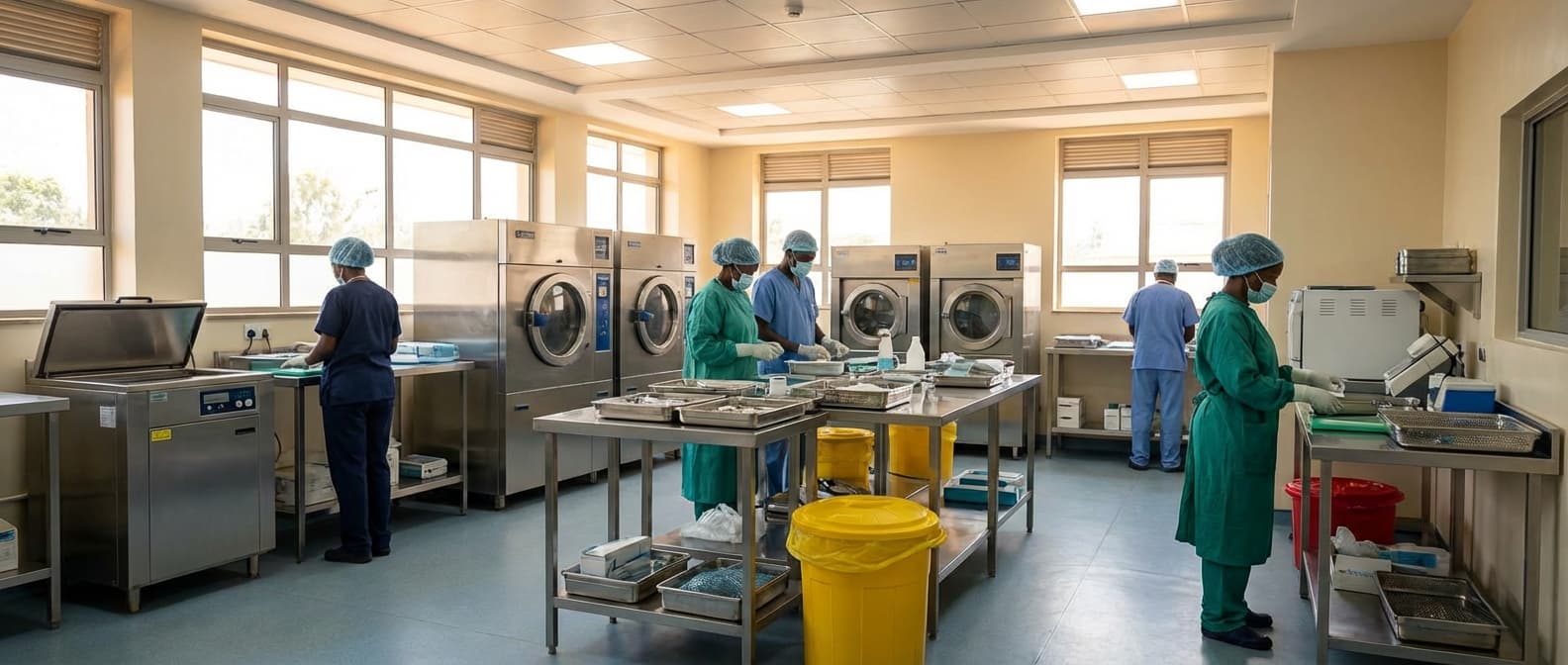
Medical Equipment Decontamination Service (Pre-Repair/Pre-Relocation) in Chad
Engineering Excellence & Technical Support
Medical Equipment Decontamination Service (Pre-Repair/Pre-Relocation) High-standard technical execution following OEM protocols and local regulatory frameworks.
Advanced Sterilization Protocols
Implementing WHO-recommended, multi-stage sterilization processes including high-level disinfection and autoclaving where applicable, ensuring complete inactivation of bioburden prior to repair or relocation of critical medical equipment in Chad.
Biosafety Level Compliance
Adhering to stringent biosafety level protocols (BSL-1 to BSL-3 as required) during decontamination, protecting both our technicians and the surrounding environment from potential pathogen transmission associated with medical devices.
Certified Chain of Custody
Providing comprehensive documentation and a certified chain of custody for all decontaminated equipment, assuring clients of rigorous process adherence and regulatory compliance for medical equipment readiness.
What Is Medical Equipment Decontamination Service (Pre-repair/pre-relocation) In Chad?
Medical Equipment Decontamination Service (Pre-Repair/Pre-Relocation) in Chad refers to the specialized process of rendering medical devices free from viable biological contaminants (pathogens, prions, toxins) prior to their submission for repair or relocation. This service is crucial for preventing the horizontal transmission of infectious agents between patients, healthcare workers, and repair/logistics personnel, thereby upholding biosafety and infection control protocols within healthcare facilities and across geographical boundaries. The decontamination process targets surfaces, internal components (where accessible and appropriate), and associated accessories of medical equipment. It involves a multi-step approach, typically encompassing cleaning, disinfection, and potentially sterilization, utilizing validated chemical agents, physical methods (e.g., UV irradiation, steam), and adherence to strict procedural guidelines to ensure efficacy and material compatibility. The objective is to reduce bioburden to a level that poses no significant risk to subsequent handling or use.
| Who Needs This Service? | Typical Use Cases | ||||||
|---|---|---|---|---|---|---|---|
| Hospitals and Clinics in Chad (public and private) | Pre-shipment of diagnostic imaging equipment (X-ray, CT scanners, ultrasound) to a central repair depot. | Sending laboratory equipment (analyzers, microscopes) for calibration or repair. | Relocation of surgical instruments and endoscopy equipment to a new wing or facility. | Return of loaned medical devices to manufacturers for maintenance. | Decontamination of patient monitoring systems before transfer between departments or facilities. | Preparing anaesthesia machines and ventilators for servicing or relocation. | Decontaminating sterilizers and autoclaves themselves prior to internal maintenance or relocation. |
| Medical Device Manufacturers and Suppliers Operating in Chad | Healthcare facilities that purchase or lease equipment from these entities. | Third-party medical equipment maintenance and repair companies servicing Chad's healthcare sector. | |||||
| International Aid Organizations and NGOs Operating in Chad | Healthcare providers in remote or conflict-affected areas requiring equipment maintenance or upgrades. | Logistics and supply chain management for medical equipment. |
Key Aspects of Medical Equipment Decontamination Service (Pre-Repair/Pre-Relocation) in Chad
- Cleaning: Initial removal of gross soil, organic debris, and particulate matter using detergents and water. This step is essential for subsequent disinfection/sterilization efficacy.
- Disinfection: Application of chemical agents or physical methods to inactivate or destroy most pathogenic microorganisms on surfaces. The level of disinfection (low, intermediate, high) depends on the equipment and its intended use.
- Sterilization (where applicable): A process that eliminates all forms of microbial life, including bacterial spores. This is typically reserved for critical or semi-critical items, and might be performed by the decontamination service or the equipment manufacturer/repair facility.
- Validation: The decontamination process must be validated to ensure its effectiveness against a defined spectrum of microorganisms and to confirm compatibility with the medical device materials, preventing damage or degradation.
- Documentation: Comprehensive records of the decontamination process, including agents used, exposure times, personnel involved, and validation results, are maintained for traceability and compliance.
- Packaging: Decontaminated equipment is typically packaged in a manner that maintains its sterile or disinfected state during transport to repair facilities or during relocation.
- Regulatory Compliance: Adherence to national and international guidelines and standards for infection control and medical device reprocessing (e.g., WHO, national health ministries).
Who Needs Medical Equipment Decontamination Service (Pre-repair/pre-relocation) In Chad?
Ensuring the safety and functionality of medical equipment is paramount, especially when it's undergoing repair or relocation. In Chad, where healthcare infrastructure may face unique challenges, a specialized medical equipment decontamination service (pre-repair/pre-relocation) plays a crucial role in preventing the spread of infections, protecting maintenance personnel, and ensuring equipment integrity. This service is essential for a wide range of healthcare facilities and departments that handle potentially biohazardous or contaminated medical devices.
| Target Customer Type | Relevant Departments | Rationale for Decontamination Service |
|---|---|---|
| Hospitals (Public & Private) | Infection Control, Biomedical Engineering, Operating Rooms, Intensive Care Units (ICUs), Emergency Departments, Maternity Wards, Laboratories, Sterilization Units | Prevent cross-contamination during repair, protect biomedical technicians from biohazards, ensure patient safety upon return of repaired equipment. |
| Clinics and Health Centers | General Practice, Nursing Stations, Diagnostic Units, Small Treatment Rooms | Maintain a safe environment for staff and patients, particularly in facilities with limited specialized cleaning resources. |
| Diagnostic Laboratories | Microbiology, Pathology, Hematology, Biochemistry, Molecular Diagnostics | Prevent contamination of sensitive diagnostic equipment, protect lab personnel from infectious agents present on samples or specimens. |
| Surgical Centers | Operating Theaters, Post-Anesthesia Care Units (PACUs), Instrument Processing | Crucial for instruments and equipment used in invasive procedures to prevent post-operative infections. |
| Specialty Medical Practices (e.g., Dental, Ophthalmology) | Dental Clinics (Operatories, Sterilization Areas), Ophthalmology Clinics (Examination Rooms, Surgical Suites) | Specific instruments and equipment require rigorous decontamination to prevent transmission of blood-borne pathogens and other microorganisms. |
| Emergency Medical Services (EMS) | Ambulance Bays, Equipment Maintenance Units | Ambulance equipment, such as ventilators and defibrillators, are frequently exposed to bodily fluids and require decontamination before servicing. |
| NGOs & Humanitarian Organizations | Mobile Clinics, Field Hospitals, Refugee Camp Health Facilities | Often operate in challenging environments with limited access to standard decontamination facilities. Essential for maintaining hygiene and preventing outbreaks. |
| Government Ministries of Health | Procurement, Asset Management, Technical Support Departments | Overseeing the maintenance and safety of national medical equipment inventories, ensuring compliance with health standards. |
| Medical Equipment Suppliers & Repair Shops | Service Technicians, Workshop Staff, Logistics | Protecting their own staff from potential biohazards, preventing contamination of their repair environment, and ensuring they return safe equipment to clients. |
Who Needs Medical Equipment Decontamination Service (Pre-Repair/Pre-Relocation) in Chad?
- Hospitals (Public and Private)
- Clinics and Health Centers
- Diagnostic Laboratories
- Surgical Centers
- Specialty Medical Practices (e.g., dental, ophthalmology)
- Emergency Medical Services (EMS) providers
- NGOs and Humanitarian Organizations operating healthcare facilities
- Government Ministries of Health (for equipment management)
- Medical Equipment Suppliers and Repair Shops
Medical Equipment Decontamination Service (Pre-repair/pre-relocation) Process In Chad
This document outlines the workflow for the Medical Equipment Decontamination Service (Pre-Repair/Pre-Relocation) in Chad. This process is crucial for ensuring the safety of technicians, healthcare personnel, and the environment by eliminating biohazards, chemical contaminants, and radioactive materials from medical equipment before it undergoes repair or relocation. The service adheres to strict safety protocols and relevant Chadian regulations.
| Stage | Description | Key Activities | Responsible Party | Documentation/Output |
|---|---|---|---|---|
| Inquiry and Initial Assessment | The process begins when a healthcare facility or individual expresses interest in the decontamination service for equipment needing repair or relocation. | Receive inquiry (phone, email, in-person). Identify equipment type, intended use, potential contaminants, and urgency. Conduct preliminary risk assessment. Confirm service availability. | Client (Facility/Individual), Decontamination Service Provider (DSP) | Inquiry record, Initial equipment assessment form |
| Quotation and Service Agreement | Based on the initial assessment, a detailed quotation and formal service agreement are prepared. | Assess decontamination complexity and resource requirements (personnel, chemicals, time, specialized equipment). Prepare a detailed quotation including scope of work, pricing, timeline, and terms. Draft a Service Level Agreement (SLA) outlining responsibilities, safety protocols, and liability. | DSP | Quotation, Draft SLA |
| Scheduling and Logistics | Once the agreement is signed, the decontamination service is scheduled, and all necessary logistical arrangements are made. | Finalize service date and time. Coordinate with the client for access to the equipment and facility. Arrange for transportation of specialized decontamination equipment and materials to the client's site. Ensure necessary permits or authorizations are obtained (if applicable). | DSP, Client | Service schedule, Logistics plan |
| On-site Decontamination Execution | This is the core stage where the actual decontamination of the medical equipment takes place. | Site preparation and safety briefing for all personnel involved. Isolation of the work area. Application of appropriate decontamination agents and methods (e.g., chemical disinfection, autoclaving, UV irradiation, specialized cleaning). Monitoring of decontamination effectiveness. Safe disposal of contaminated waste according to Chadian environmental regulations. | DSP (Certified Technicians) | On-site work log, Decontamination protocol adherence record, Waste disposal manifests |
| Documentation and Certification | Upon successful decontamination, comprehensive documentation is generated. | Record details of decontamination process, agents used, and outcomes. Issue a Decontamination Certificate confirming that the equipment has been decontaminated to a specified standard. Include any relevant test results or quality assurance checks. | DSP | Decontamination Certificate, Detailed service report |
| Equipment Handover and Follow-up | The decontaminated equipment is handed over to the client, and the service engagement is concluded. | Present the Decontamination Certificate and service report to the client. Ensure the client acknowledges receipt of decontaminated equipment. Address any immediate client queries. Maintain records for future reference and potential follow-up. | DSP, Client | Signed handover document, Client feedback (optional) |
Key Stages of the Medical Equipment Decontamination Service (Pre-Repair/Pre-Relocation) Process in Chad
- Inquiry and Initial Assessment
- Quotation and Service Agreement
- Scheduling and Logistics
- On-site Decontamination Execution
- Documentation and Certification
- Equipment Handover and Follow-up
Medical Equipment Decontamination Service (Pre-repair/pre-relocation) Cost In Chad
The cost of medical equipment decontamination services in Chad, particularly for pre-repair or pre-relocation purposes, is influenced by several key factors. These include the type and size of the equipment, the level of contamination (e.g., routine cleaning vs. biohazard mitigation), the specific decontamination methods employed, the expertise and reputation of the service provider, and logistical considerations such as travel to remote locations. Given the economic landscape and the availability of specialized services, pricing can vary significantly. It's important to note that official, widely published price lists for such niche services are uncommon in Chad. Therefore, obtaining direct quotes from local providers is the most accurate way to determine costs.
| Service Type (Pre-Repair/Relocation Decontamination) | Estimated Cost Range (XAF) | Notes |
|---|---|---|
| Basic Cleaning and Disinfection (Small Equipment) | 20,000 - 75,000 | Suitable for routine cleaning of non-critical devices. Prices can be per item. |
| Standard Decontamination (Medium Equipment) | 75,000 - 200,000 | For equipment with moderate contamination risk, requiring more thorough methods. May be for larger diagnostic equipment. |
| Advanced Decontamination (Large/High-Risk Equipment) | 200,000 - 500,000+ | Applies to complex machinery (e.g., imaging equipment) or where biohazard mitigation is critical. Costs can escalate based on specific protocols and required certifications. |
| On-Site Service Fee (Remote Locations) | 30,000 - 150,000 (per visit) | Additional charges for travel and setup in areas outside major cities like N'Djamena. This is often a daily or per-trip fee. |
| Specialized Biohazard Decontamination | Quote-Based | For situations involving known infectious agents or hazardous materials, requiring specialized training, equipment, and disposal procedures. Always requires a bespoke quote. |
Factors Influencing Medical Equipment Decontamination Costs in Chad
- Type and size of medical equipment (e.g., small diagnostic tools vs. large imaging machines).
- Level and nature of contamination (e.g., general dust and grime vs. bloodborne pathogens or chemical agents).
- Decontamination methodology (e.g., manual cleaning, steam sterilization, chemical disinfection, UV-C irradiation).
- Expertise and licensing of the decontamination service provider.
- Urgency of the service required.
- Location of the equipment (accessibility and travel costs for the service team).
- Required documentation and certification of the decontamination process.
Affordable Medical Equipment Decontamination Service (Pre-repair/pre-relocation) Options
Maintaining the cleanliness and safety of medical equipment is paramount, especially before it undergoes repair or relocation. Our affordable decontamination service ensures that your valuable assets are free from biological contaminants, protecting both your staff and future users. We offer flexible options designed to fit various budgets and needs, focusing on cost-effective solutions without compromising on quality or regulatory compliance. Our pre-repair and pre-relocation decontamination services provide peace of mind and contribute to the longevity and reliable performance of your medical devices.
| Service Package | Description | Typical Use Case | Estimated Cost Savings |
|---|---|---|---|
| Standard Decontamination | Basic surface disinfection and wipe-down. | General clinic equipment, non-critical devices. | N/A (Base Price) |
| Enhanced Decontamination | Advanced disinfection for higher contamination risks. | Surgical instruments, diagnostic equipment with internal components. | 5-10% savings compared to ad-hoc enhanced service. |
| Bioburden Reduction | Significant microbial load reduction. | Equipment prior to sensitive repairs or inter-facility transfer. | 10-15% savings compared to ad-hoc bioburden reduction. |
| Multi-Unit Discount (5-10 units) | Per-unit price reduction for multiple items. | Clinic or department-wide equipment turnover. | 10-20% per-unit savings. |
| Multi-Unit Discount (10+ units) | Further per-unit price reduction for larger batches. | Hospital-wide equipment management. | 20-30% per-unit savings. |
| Pre-Scheduled Service Agreement | Discounted rates for recurring scheduled services. | Regular equipment maintenance and turnover. | Up to 15% off standard rates. |
| Combined Service (Decon + Minor Repair) | Bundled pricing for decontamination and basic repair. | Equipment needing both cleaning and minor adjustments. | 10-25% savings on combined services. |
Value Bundles and Cost-Saving Strategies
- Standard Decontamination Package: Ideal for routine cleaning of non-critical equipment. Includes surface disinfection and wipe-down using hospital-grade, EPA-approved disinfectants.
- Enhanced Decontamination Package: For equipment with a higher risk of contamination or specific material sensitivities. Includes advanced disinfection techniques and potentially specialized cleaning agents.
- Bioburden Reduction Package: Focused on significantly reducing microbial load, often a prerequisite for certain repair processes or before shipping to sensitive environments.
- Multi-Unit Discount: Significant savings when decontaminating a batch of equipment. The more units you send, the lower the per-unit cost.
- Pre-Scheduled Service Agreement: Lock in discounted rates by scheduling regular decontamination services for your recurring needs.
- Combined Service Discounts: If you require both decontamination and minor repair or packaging services, inquire about bundled pricing.
- Off-Peak Scheduling: Consider scheduling services during slower periods for potential additional discounts.
- Client-Supplied Consumables Option: Inquire if you can provide specific EPA-approved disinfectants or cleaning supplies you already have, leading to a reduction in service cost.
- Tiered Service Levels: Choose a decontamination level that matches the equipment's prior use and future destination, avoiding unnecessary costs.
- Long-Term Contracts: For healthcare facilities with continuous needs, long-term contracts offer the most predictable and cost-effective pricing.
Verified Providers In Chad
In Chad's burgeoning healthcare landscape, identifying reliable and qualified medical professionals is paramount. Franance Health stands out as a leading platform for verifying healthcare providers, ensuring that patients have access to the best possible care. This document outlines the credentials and advantages that make Franance Health verified providers the optimal choice for your health needs in Chad.
| Credential Type | Verification Scope | Franance Health Assurance |
|---|---|---|
| Medical Degrees & Diplomas | Authenticity and recognized institutions | Verified against official records and equivalency where applicable. |
| Professional Licenses | Current and valid operating licenses from Chadian health authorities | Confirmed with regulatory bodies for ongoing validity and disciplinary actions. |
| Specialization Certifications | Proof of advanced training and certification in specific medical fields | Reviewed for recognized international and national accreditation. |
| Work Experience | Demonstrated practical experience in relevant healthcare settings | Evaluated through references and past professional history. |
| Ethical Conduct & Reputation | Adherence to medical ethics and positive patient feedback | Considered through professional references and patient testimonial analysis. |
Why Choose Franance Health Verified Providers?
- Rigorous Verification Process: Franance Health employs a multi-stage verification system that scrutinizes educational qualifications, professional licenses, and practical experience of every provider on its platform. This ensures that only legitimate and competent healthcare professionals are listed.
- Commitment to Quality: Beyond basic credentials, Franance Health often assesses providers based on patient reviews, professional affiliations, and adherence to ethical standards, fostering a commitment to high-quality patient care.
- Access to Diverse Specializations: The platform aims to include a wide range of medical specialists, from general practitioners to highly specialized surgeons, making it easier for individuals to find the exact expertise they require.
- Enhanced Patient Trust and Safety: By providing verified credentials, Franance Health significantly reduces the risk of encountering unqualified or fraudulent practitioners, empowering patients with confidence in their healthcare decisions.
- Streamlined Healthcare Navigation: Franance Health simplifies the process of finding and connecting with healthcare providers, saving valuable time and reducing the stress associated with searching for medical assistance.
Scope Of Work For Medical Equipment Decontamination Service (Pre-repair/pre-relocation)
This Scope of Work (SOW) outlines the requirements for the decontamination of medical equipment prior to repair or relocation. The primary objective is to ensure the safety of personnel, prevent cross-contamination, and maintain the integrity of the equipment and its components during the service process. This SOW defines the technical deliverables, standard specifications, and procedural requirements for the decontamination service.
| Section | Description | Technical Deliverables | Standard Specifications / Requirements |
|---|---|---|---|
| 1.0 General Requirements | Overview of the service, including purpose, scope, and applicable standards. | Acknowledgement of SOW, adherence to facility policies. | Compliance with all relevant local, national, and international health and safety regulations (e.g., OSHA, EPA, CDC guidelines). Adherence to the healthcare facility's specific infection control policies and procedures. Confidentiality of patient information (if applicable). |
| 2.0 Pre-Decontamination Assessment | Initial inspection of equipment to identify potential hazards and determine appropriate decontamination methods. | Decontamination Risk Assessment Report. | Visual inspection of equipment for visible contamination (blood, bodily fluids, powders, etc.). Identification of known or suspected hazards (e.g., chemotherapy drugs, radioactive isotopes, specific infectious agents). Determination of equipment material composition to ensure compatibility with cleaning agents. |
| 3.0 Cleaning and Decontamination Procedures | Detailed procedures for cleaning and decontaminating various types of medical equipment. | Cleaning & Decontamination Procedure Logs (per equipment item). | Physical removal of gross soil and debris using approved cleaning agents (e.g., hospital-grade detergents, enzymatic cleaners). Disinfection/Sterilization of equipment surfaces using EPA-registered, healthcare-grade disinfectants or sterilants appropriate for the identified hazards and equipment materials. Use of validated decontamination protocols. Consideration for both external and accessible internal components. For specialized equipment (e.g., imaging, laboratory), specific protocols based on manufacturer recommendations and known contaminants. |
| 4.0 Decontamination Agents and Materials | Specifications for the cleaning and decontamination agents to be used. | List of Approved Decontamination Agents & Materials. | Use of EPA-registered, FDA-approved, or equivalent disinfectants and sterilants with proven efficacy against relevant pathogens. Agents must be compatible with equipment materials to prevent damage or degradation. MSDS (Material Safety Data Sheets) for all chemicals used must be available. Use of appropriate PPE (Personal Protective Equipment) for personnel, including gloves, gowns, masks, eye protection, and respirators as needed. |
| 5.0 Validation and Verification | Methods to ensure the decontamination process has been effective. | Decontamination Efficacy Report (if applicable). | Visual confirmation of cleanliness. For critical or high-risk equipment, may include microbial sampling or ATP (Adenosine Triphosphate) testing to verify reduction in bioburden, in accordance with facility policy or industry best practices. Compliance with manufacturer's reprocessing instructions where applicable. |
| 6.0 Packaging and Handling | Procedures for preparing decontaminated equipment for transport. | Decontaminated Equipment Packaging & Labeling Record. | Secure packaging of equipment to prevent re-contamination during transport. Clear labeling of equipment as 'Decontaminated' or 'Cleaned and Decontaminated' with date of service. Appropriate handling to maintain sterility/cleanliness. Use of specialized containment if required for specific hazardous materials. |
| 7.0 Documentation and Reporting | Requirements for record-keeping and reporting on the decontamination service. | Final Decontamination Service Report. | Detailed record for each decontaminated equipment item, including: equipment identification (model, serial number), date of service, personnel performing service, decontamination methods used, agents and materials employed, validation results (if any), and confirmation of packaging. A comprehensive report summarizing all decontamination activities performed during the contract period. |
| 8.0 Personnel Qualifications and Training | Requirements for the personnel performing the decontamination service. | Training Records of Decontamination Personnel. | Personnel must be trained and competent in medical equipment cleaning and decontamination procedures, infection control principles, hazard identification, and the safe use of decontamination chemicals and equipment. Proof of relevant certifications or training programs may be required. Understanding of specific equipment types and their decontamination needs. |
| 9.0 Safety and Environmental Considerations | Procedures to ensure the safety of personnel and minimize environmental impact. | Waste Disposal Records. | Strict adherence to safe work practices to prevent personnel exposure. Proper disposal of contaminated cleaning materials and waste according to local regulations. Spill containment and cleanup procedures. Ventilation requirements for areas where decontamination is performed. |
Objectives of Decontamination Service
- To eliminate or significantly reduce the presence of infectious agents (biological, chemical, radiological) on medical equipment.
- To protect service technicians and relocation personnel from potential exposure to biohazards, chemical contaminants, or radioactive materials.
- To prevent the spread of infectious diseases within the healthcare facility and during transportation.
- To ensure that equipment sent for repair or relocation meets regulatory and facility safety standards.
- To maintain the functional integrity of the medical equipment by using appropriate cleaning and decontamination agents and methods.
- To provide clear documentation of the decontamination process and its effectiveness.
Service Level Agreement For Medical Equipment Decontamination Service (Pre-repair/pre-relocation)
This Service Level Agreement (SLA) outlines the guaranteed response times and uptime for the medical equipment decontamination service, provided in preparation for equipment repair or relocation. This service is critical to ensuring patient safety and operational efficiency by removing biohazardous materials from equipment prior to it being handled by external technicians or moved to a new location.
| Service Component | Service Level Objective (SLO) | Measurement Method | Reporting Frequency |
|---|---|---|---|
| Response Time (Emergency Decontamination - Critical Equipment) | On-site technician arrival within 2 hours of service request. | Time of service request logged in the service portal/phone log vs. time of technician arrival. | Monthly |
| Response Time (Standard Decontamination - Scheduled Repair/Relocation) | On-site technician arrival within 4 business hours of confirmed service request. | Time of confirmed service request vs. time of technician arrival. | Monthly |
| Service Completion Time (Standard) | Decontamination process completed within 2 hours of technician arrival for standard decontamination. | Time of technician arrival vs. time of service completion sign-off. | Monthly |
| Uptime Guarantee (Decontamination Service Availability) | 99.8% availability of decontamination service during scheduled support hours (Monday-Friday, 8 AM - 6 PM excluding holidays). Emergency decontamination available 24/7. | Calculated as (Total Scheduled Support Hours - Downtime Hours) / Total Scheduled Support Hours, where Downtime is defined as time the service is unavailable due to provider failure. | Quarterly |
| Quality of Decontamination | 100% compliance with all relevant local, state, and federal regulations for medical equipment decontamination, and adherence to manufacturer-recommended decontamination protocols where applicable. | Post-decontamination visual inspection, adherence to documented procedure checklists, and random sample testing (if applicable). | Upon completion of each service, and reviewed quarterly. |
Key Service Components
- Service Scope: Pre-repair and pre-relocation decontamination of specified medical equipment.
- Objective: To render equipment safe for handling by repair technicians or during relocation, mitigating biohazard risks.
- Service Availability: 24 hours a day, 7 days a week, 365 days a year, with specific support hours for immediate dispatch.
Frequently Asked Questions

Ready when you are
Let's scope your Medical Equipment Decontamination Service (Pre-Repair/Pre-Relocation) in Chad project in Chad.

Scaling healthcare logistics and technical systems across the entire continent.