
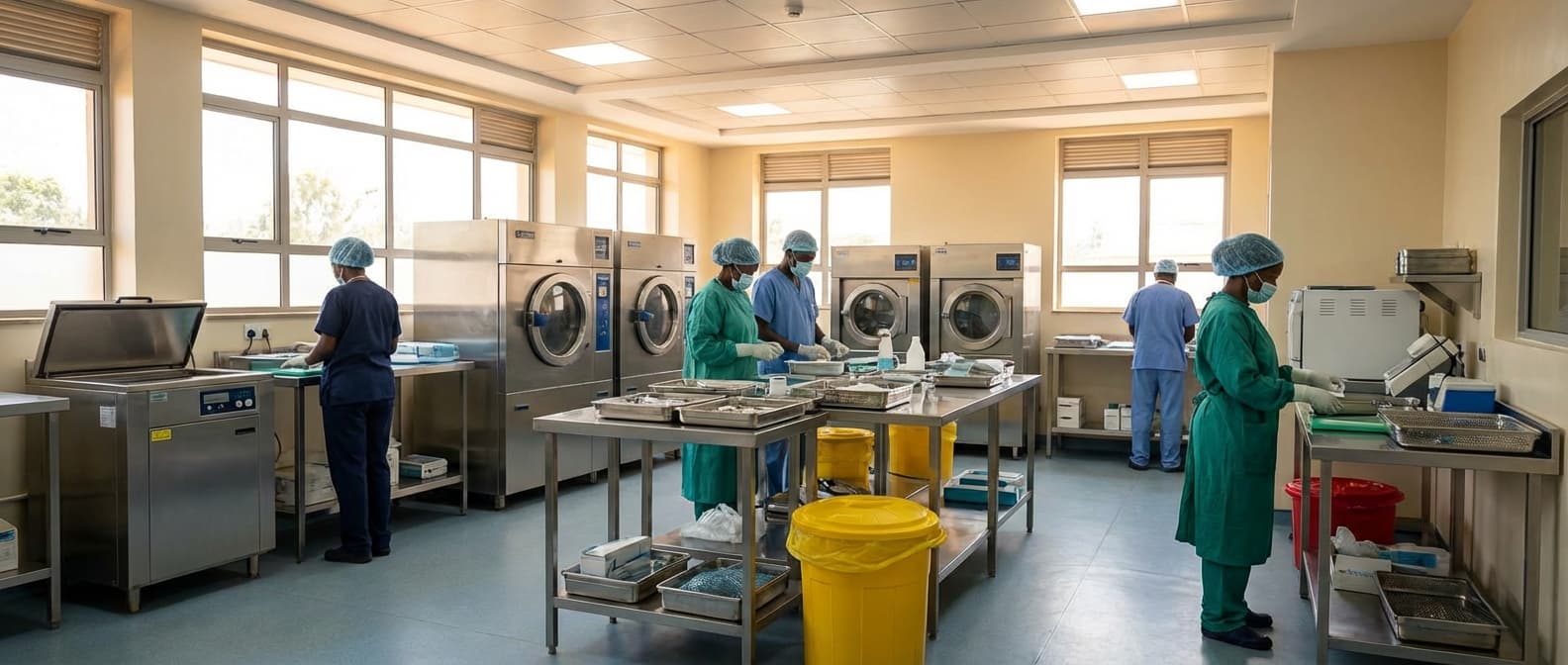
Infection-Control Readiness Support Service for Reusable Equipment in Chad
Engineering Excellence & Technical Support
Infection-Control Readiness Support Service for Reusable Equipment High-standard technical execution following OEM protocols and local regulatory frameworks.
Advanced Decontamination Protocols
Implementing evidence-based, multi-stage decontamination processes utilizing appropriate disinfectants and sterilants for critical and semi-critical reusable medical equipment. This ensures the inactivation of a broad spectrum of pathogens, significantly reducing the risk of healthcare-associated infections.
Real-time Sterilization Monitoring
Deploying automated, continuous monitoring systems for sterilization cycles (e.g., autoclaves, chemical sterilizers) coupled with rigorous biological and chemical indicator testing. This provides immediate assurance of sterilization effectiveness and supports proactive intervention if parameters fall outside optimal ranges.
Capacity Building & Technical Training
Providing comprehensive, hands-on training programs for healthcare personnel in Chad on proper sterilization, disinfection, equipment handling, and infection control best practices. This empowers local teams with the knowledge and skills to maintain high standards of reusable equipment safety.
What Is Infection-control Readiness Support Service For Reusable Equipment In Chad?
Infection-Control Readiness Support Service for Reusable Equipment in Chad is a programmatic initiative designed to bolster the capacity of healthcare facilities in Chad to safely process and sterilize reusable medical devices. This service aims to mitigate the risk of healthcare-associated infections (HAIs) by ensuring that reusable equipment is consistently decontaminated and sterilized to established public health standards, thereby safeguarding patient and healthcare worker well-being. The service encompasses a multifaceted approach, integrating technical expertise, logistical support, and capacity-building interventions.
| Target Beneficiary | Needs/Rationale | Typical Use Cases |
|---|---|---|
| Public Healthcare Facilities (Hospitals, Health Centers): | High volume of reusable medical equipment requiring sterilization; often face resource constraints, limited technical expertise, and inadequate infrastructure for IPC. | Sterilization of surgical instruments (scalpels, forceps, retractors) for operating theaters; reprocessing of dental instruments; decontamination of diagnostic equipment probes (e.g., ultrasound transducers); preparation of sterile consumables for delivery rooms and outpatient clinics. |
| Private Healthcare Facilities: | May have varying levels of IPC readiness; require standardized protocols and quality assurance mechanisms to meet regulatory requirements and patient safety standards. | Ensuring the sterility of surgical kits in private surgical clinics; reprocessing of endoscopes in specialized diagnostic centers; maintaining quality control in private dental practices. |
| Non-Governmental Organization (NGO)-Supported Clinics and Mobile Health Units: | Often operate in remote or underserved areas with limited access to reliable power and water; require robust and adaptable reprocessing solutions. | Sterilization of basic medical tools for primary healthcare services in rural settings; decontamination of instruments used in mobile outreach programs; ensuring safe reprocessing of equipment in conflict-affected regions. |
| National and Regional Health Authorities: | Responsible for overseeing public health, setting standards, and ensuring the quality of healthcare delivery; require support in implementing national IPC strategies. | Developing national IPC guidelines for reusable equipment; monitoring facility compliance; facilitating training programs; identifying and addressing systemic gaps in IPC infrastructure and capacity. |
Components of the Service
- Needs Assessment and Gap Analysis: Comprehensive evaluation of existing infrastructure, equipment, human resources, and established protocols for reusable equipment reprocessing within healthcare facilities.
- Equipment Procurement and Installation Support: Guidance on selecting, procuring, and installing appropriate sterilization and disinfection equipment (e.g., autoclaves, washer-disinfectors, chemical sterilants) that aligns with facility needs and national guidelines.
- Protocol Development and Standardization: Assistance in developing, implementing, and enforcing standard operating procedures (SOPs) for the entire reprocessing cycle, from collection and cleaning to disinfection, sterilization, storage, and distribution.
- Training and Capacity Building: Providing hands-on training and ongoing mentorship to biomedical technicians, nurses, and other relevant staff on best practices in infection prevention and control (IPC) related to reusable equipment, including proper handling, cleaning techniques, sterilization parameters, and monitoring.
- Quality Assurance and Monitoring: Establishing and supporting systems for routine monitoring and validation of sterilization processes, including the use of biological and chemical indicators, to ensure efficacy and compliance.
- Logistical Support and Supply Chain Management: Advising on the establishment and maintenance of robust supply chains for consumables (e.g., detergents, disinfectants, packaging materials) and spare parts for reprocessing equipment.
- Maintenance and Repair Support: Facilitating access to qualified technical personnel for the routine maintenance and timely repair of reprocessing equipment to minimize downtime.
- Policy and Guideline Dissemination: Ensuring that facilities are aware of and adhere to national and international IPC guidelines pertaining to reusable medical devices.
Who Needs Infection-control Readiness Support Service For Reusable Equipment In Chad?
This service addresses the critical need for robust infection prevention and control (IPC) practices for reusable medical equipment in Chad. Healthcare facilities, particularly those in resource-limited settings, often face challenges in maintaining adequate sterilization, disinfection, and maintenance protocols for instruments and devices that are used repeatedly on patients. This can lead to a significant risk of healthcare-associated infections (HAIs), impacting patient safety and health outcomes. The Infection-Control Readiness Support Service aims to strengthen the capacity of healthcare providers to safely and effectively manage reusable equipment, thereby reducing the transmission of infections and improving overall healthcare quality.
| Customer Type | Key Departments Involved | Specific Needs/Challenges Addressed |
|---|---|---|
| Public Healthcare Facilities (Hospitals, Health Centers, Clinics) | Central Sterilization Supply Department (CSSD), Operating Rooms, Maternity Wards, Outpatient Departments, Laboratory, Dental Clinics | Lack of standardized IPC protocols, insufficient training for staff on reusable equipment reprocessing, limited access to appropriate cleaning and sterilization equipment, inadequate infrastructure for safe storage, challenges with equipment maintenance and repair, financial constraints for procuring consumables. |
| Private Healthcare Facilities (Clinics, Doctor's Offices) | Clinical Examination Rooms, Minor Procedure Areas, Dental Practices | Variable adherence to IPC guidelines, potential lack of dedicated IPC personnel, reliance on basic disinfection methods, need for updated knowledge on best practices for reusable device reprocessing, ensuring compliance with national IPC standards. |
| Non-Governmental Organization (NGO) Healthcare Providers | Mobile Clinics, Field Hospitals, Primary Healthcare Facilities | Operating in challenging environments with limited resources, often serving vulnerable populations, need for simplified and effective IPC solutions, training for local healthcare workers, ensuring sustainability of IPC practices, adapting protocols to specific program needs. |
| Medical Training Institutions | Nursing Schools, Medical Schools, Paramedic Training Programs | Incorporating comprehensive IPC training into curricula, providing practical hands-on experience with reusable equipment reprocessing, educating future healthcare professionals on the importance of IPC, establishing demonstration and training facilities for best practices. |
Target Customers & Departments
- Public Healthcare Facilities (Hospitals, Health Centers, Clinics)
- Private Healthcare Facilities (Clinics, Doctor's Offices)
- Non-Governmental Organization (NGO) Healthcare Providers
- Medical Training Institutions
Infection-control Readiness Support Service For Reusable Equipment Process In Chad
This document outlines the workflow for the Infection-Control Readiness Support Service for Reusable Equipment (ICRS-RE) in Chad, detailing the process from initial inquiry to the successful execution of support.
| Stage | Key Activities | Responsible Parties | Deliverables/Outcomes | Timeline (Indicative) |
|---|---|---|---|---|
| Healthcare facility (or Ministry of Health) expresses interest in ICRS-RE. Initial contact with the support service provider. Discussion of specific challenges, types of reusable equipment, current practices, and desired outcomes. Site visit or remote assessment to gauge the current state of infection control for reusable equipment. | Inquiring Facility/MoH, Support Service Provider (SSP) | Understanding of facility needs, identification of gaps, preliminary scope of work. | 1-2 Weeks |
| SSP develops a tailored proposal outlining services, methodologies, timelines, resources required, and estimated costs. Proposal review and discussion with the inquiring entity. Negotiation and finalization of the service agreement (contract). | Support Service Provider (SSP), Inquiring Facility/MoH | Formal proposal, signed service agreement/contract. | 2-4 Weeks |
| SSP team formation and briefing. Procurement of necessary materials, equipment, and training aids. Logistics planning for travel and accommodation. Scheduling of on-site activities and coordination with the facility. Development of detailed training modules and assessment tools. | Support Service Provider (SSP) | Assembled support team, prepared materials and logistics, finalized schedule. | 2-3 Weeks |
| Phase 1: Assessment & Baseline Data Collection: Conduct detailed assessments of current reusable equipment processing workflows, infrastructure, human resources, and adherence to infection control protocols. Collect baseline data on key indicators (e.g., adherence rates, incidence of infections linked to equipment). Phase 2: Training & Capacity Building: Deliver targeted training sessions for healthcare workers on best practices for cleaning, disinfection, sterilization, storage, and handling of reusable equipment. Phase 3: Mentorship & Practical Support: Provide on-the-job mentorship, practical demonstrations, and hands-on assistance to staff. Assist in the implementation of improved protocols and standard operating procedures (SOPs). Phase 4: Equipment & Infrastructure Review: Evaluate the condition and functionality of existing cleaning, disinfection, and sterilization equipment. Provide recommendations for improvements or necessary upgrades. | Support Service Provider (SSP), Healthcare Facility Staff | Trained staff, updated knowledge and skills, implemented SOPs, documented assessment findings, baseline data. | 4-8 Weeks (depending on scope) |
| Develop a comprehensive report detailing findings, interventions, training outcomes, and recommendations. Follow-up calls or virtual meetings to address any immediate challenges. Potentially conduct a shorter follow-up visit to assess sustained improvements. | Support Service Provider (SSP) | Final report with recommendations, documented impact, follow-up action plan. | 2-4 Weeks |
| The facility integrates learned practices into their routine operations. The SSP may offer ongoing advisory services or periodic refresher training based on needs and agreements. Data collected by the facility to monitor ongoing adherence and outcomes. | Healthcare Facility Staff, Support Service Provider (SSP) (as needed) | Sustained improved infection control practices, reduced risk of healthcare-associated infections (HAIs) related to reusable equipment. | Ongoing |
Workflow Stages
- Inquiry & Needs Assessment
- Proposal Development & Agreement
- Pre-Deployment Preparations
- On-Site Execution
- Post-Execution Follow-up & Reporting
- Continuous Improvement
Infection-control Readiness Support Service For Reusable Equipment Cost In Chad
This document outlines the pricing factors and estimated cost ranges for an Infection-Control Readiness Support Service for Reusable Equipment in Chad, expressed in local currency (Central African CFA Franc - XAF). The service aims to ensure that healthcare facilities have the necessary protocols, training, and consumables to safely reprocess reusable medical equipment, thereby preventing healthcare-associated infections (HAIs).
| Service Component/Level | Estimated Cost Range (XAF) | Notes |
|---|---|---|
| Basic Readiness Assessment & Training (Small Clinic/Primary Health Center) | 150,000 - 400,000 | Includes initial site visit, basic training for a small team on standard reprocessing procedures, and a report with recommendations. Excludes consumables and equipment. |
| Intermediate Readiness Support (Medium Hospital - Multiple Departments) | 500,000 - 1,500,000 | Covers assessment, comprehensive training for multiple staff across key departments, development of SOPs, and initial supply recommendations. May include a small starter pack of critical consumables. |
| Comprehensive Readiness & Ongoing Support (Large Hospital/Regional Center) | 2,000,000 - 7,000,000+ | Includes in-depth assessment, advanced training, development of robust infection control programs, ongoing monitoring and mentorship, and potentially the provision or facilitated procurement of essential consumables for a defined period (e.g., 6-12 months). Excludes major equipment purchase. |
| Specialized Equipment Training (e.g., Autoclaves, Washer-Disinfectors) | 200,000 - 600,000 per module | Cost per training module for specific reprocessing equipment, often provided by manufacturers or specialized trainers. |
| Consumable Supply Chain Facilitation (Annual Contract - Medium Facility) | 300,000 - 1,000,000+ | Fee for establishing reliable supply chains for disinfectants, sterilization indicators, etc. Actual consumable costs are separate and depend on usage. |
| On-site Technical Support/Troubleshooting (Per Visit) | 75,000 - 200,000 | Cost for expert intervention for equipment malfunctions or process issues. Subject to travel and accommodation costs in remote areas. |
Key Pricing Factors for Infection-Control Readiness Support Service
- Scope of Services: The breadth of the support offered is a primary driver. This can range from initial assessment and training to ongoing monitoring, supply chain management, and technical support for reprocessing equipment.
- Facility Size and Type: The number of healthcare facilities, their bed capacity, and the complexity of services offered (e.g., surgical wards, intensive care units) directly impact the resources and time required.
- Existing Infrastructure and Equipment: The current state of sterilization and disinfection equipment, availability of clean water, and existing waste management systems influence the level of intervention needed. Facilities requiring significant upgrades or replacements will incur higher costs.
- Training Needs: The number of staff requiring training, their existing knowledge base, and the complexity of the training modules (e.g., basic disinfection vs. advanced sterilization techniques) will affect training duration and material costs.
- Consumables and Supplies: The service may include the provision or facilitated procurement of essential consumables such as detergents, disinfectants, sterilization wraps, and indicator tapes. The volume and type of these supplies are critical cost components.
- Frequency and Duration of Support: Whether the service is a one-time intervention, a recurring annual contract, or a phased implementation will influence the overall investment.
- Geographic Accessibility: The remoteness of healthcare facilities within Chad can impact travel and logistical costs for personnel and supplies.
- Regulatory Compliance and Quality Assurance: The level of documentation, auditing, and reporting required to meet national and international standards will add to the service cost.
- Technical Support and Maintenance: If the service includes ongoing technical support for reprocessing equipment, this will be factored into the pricing.
- Contingency and Overhead: As with any service, a percentage for unforeseen circumstances and administrative overhead is typically included.
Affordable Infection-control Readiness Support Service For Reusable Equipment Options
This service provides comprehensive and cost-effective support for ensuring reusable medical equipment is maintained at the highest standards of infection control. We offer flexible "value bundles" that allow healthcare facilities to tailor services to their specific needs and budgets, ensuring preparedness without unnecessary expenditure. Our approach prioritizes proactive measures and optimized resource utilization to deliver significant cost savings while enhancing patient safety.
| Cost-Saving Strategy | Description | Impact on Readiness |
|---|---|---|
| Preventative Maintenance Program | Scheduled, proactive maintenance reduces the likelihood of costly emergency repairs and unexpected equipment failures. | Significantly reduces downtime, ensuring equipment is consistently available for patient care and reducing the need for expensive short-term rentals. |
| Optimized Staff Training | Regular, targeted training ensures staff are proficient in current infection control procedures, minimizing errors and re-processing failures. | Reduces the incidence of reprocessing errors which can lead to equipment damage, patient safety risks, and the need for repeat procedures. |
| Extended Equipment Lifespan | Proper maintenance and handling directly contribute to the longevity of reusable equipment. | Delays the need for capital expenditure on new equipment, leading to substantial long-term savings. |
| Bulk Purchasing & Vendor Negotiations | Leveraging our network for consumables and service parts allows for better pricing than individual facilities can achieve. | Reduces the cost of necessary supplies and maintenance materials, directly impacting operational expenses. |
| Lean Workflow Analysis | Identifying and eliminating inefficiencies in reprocessing workflows. | Increases throughput and reduces the time equipment is out of service, improving resource utilization and reducing staffing bottlenecks. |
Key Value Bundles and Their Benefits
- {"title":"Basic Readiness Bundle","description":"Ideal for facilities with established infection control protocols, this bundle focuses on essential preventative maintenance and periodic re-validation of reprocessing workflows. It includes routine equipment checks, adherence to manufacturer guidelines, and basic staff competency refreshers. \nValue: Minimizes the risk of equipment-related infections and ensures compliance with fundamental standards at a low entry cost."}
- {"title":"Standard Preparedness Bundle","description":"Builds upon the Basic Bundle by incorporating more frequent comprehensive equipment inspections, advanced staff training on emerging infection control best practices, and limited on-demand support for minor equipment issues. \nValue: Enhances proactive identification and resolution of potential issues, improving operational efficiency and reducing unexpected downtime. Offers a balance of comprehensive support and cost-effectiveness."}
- {"title":"Premium Readiness Bundle","description":"Our most comprehensive offering, designed for facilities requiring the highest level of assurance. This bundle includes all features of the Standard Bundle plus dedicated on-call support for urgent equipment failures, proactive monitoring of equipment performance data, and customized training programs for specialized equipment. \nValue: Guarantees immediate response to critical situations, minimizes patient care disruption, and provides strategic insights for long-term equipment management and cost optimization. Offers ultimate peace of mind and risk mitigation."}
- {"title":"Customizable Module Add-ons","description":"Facilities can select specific modules to augment any bundle, such as advanced sterilization validation, specific equipment deep cleaning protocols, or outbreak response planning support. \nValue: Allows for hyper-personalized solutions, ensuring that only the necessary services are procured, maximizing return on investment and avoiding overspending."}
Verified Providers In Chad
In Chad's evolving healthcare landscape, identifying reliable and credentialed providers is paramount for ensuring quality medical care. Franance Health stands out as a leading organization, meticulously vetting and verifying healthcare professionals and facilities. Their rigorous credentialing process not only confirms the qualifications and experience of providers but also upholds the highest standards of ethical practice and patient safety. This dedication to verification provides a crucial layer of trust for individuals seeking medical services in Chad, assuring them that they are engaging with legitimate and competent healthcare professionals.
| Credentialing Aspect | Franance Health's Standard | Benefit to Patients |
|---|---|---|
| Medical Education & Training | Verification of accredited institutions and specialized training programs. | Ensures providers possess foundational knowledge and advanced skills. |
| Professional Experience | Thorough review of work history, including practice areas and duration. | Confirms practical application of knowledge and clinical judgment. |
| Licensure & Certification | Confirmation of valid and current professional licenses and board certifications. | Guarantees legal and ethical practice within their specialties. |
| Background Checks | Comprehensive checks for any disciplinary actions or malpractice claims. | Upholds ethical conduct and protects against compromised providers. |
| Continuing Professional Development | Requirement for ongoing education and skill enhancement. | Ensures providers remain up-to-date with the latest medical advancements and practices. |
Why Franance Health Credentials Represent the Best Choice:
- Unwavering Commitment to Quality: Franance Health's verification process goes beyond basic licensing, encompassing a comprehensive review of medical education, professional experience, specialized training, and ongoing professional development.
- Enhanced Patient Safety: By ensuring providers meet stringent standards, Franance Health significantly reduces the risk of medical errors and promotes a safer healthcare environment for all patients.
- Increased Trust and Transparency: The Franance Health credential serves as a clear indicator of a provider's legitimacy and commitment to excellence, fostering greater trust between patients and healthcare practitioners.
- Access to Competent Professionals: Franance Health's network comprises highly skilled and dedicated healthcare professionals who are continuously evaluated to maintain their status, guaranteeing access to top-tier medical expertise.
- Streamlined Healthcare Navigation: For individuals seeking care, Franance Health's verified provider directory simplifies the process of finding trustworthy medical services, saving valuable time and reducing anxiety.
Scope Of Work For Infection-control Readiness Support Service For Reusable Equipment
This Scope of Work (SOW) outlines the services to be provided for Infection-Control Readiness Support for Reusable Equipment. The objective is to ensure that healthcare facilities have robust systems and processes in place to safely and effectively clean, disinfect, and sterilize reusable medical equipment, thereby minimizing the risk of healthcare-associated infections (HAIs). This SOW details the technical deliverables and the standard specifications against which these deliverables will be evaluated.
| Technical Deliverable | Description | Standard Specification / Metric |
|---|---|---|
| Current State Assessment Report | A comprehensive report detailing the existing processes, infrastructure, and personnel capabilities related to reusable equipment processing. | Report includes: Workflow mapping, identification of gaps against best practices and regulatory requirements (e.g., CDC, AAMI, local health authorities), risk assessment of current practices, and preliminary recommendations. |
| SOPs for Cleaning, Disinfection, and Sterilization | Development of detailed, evidence-based Standard Operating Procedures for all categories of reusable equipment requiring reprocessing. | SOPs align with manufacturer's instructions for use (IFU), current guidelines (CDC, AAMI, etc.), and include specific steps for: pre-cleaning, cleaning (manual and automated), rinsing, disinfection (high-level, intermediate-level, low-level), sterilization (steam, low-temperature), packaging, storage, and handling. Each SOP will have version control and approval sign-offs. |
| Training Materials and Competency Assessment Tools | Development of training modules, presentations, and assessment tools to ensure personnel competence in reusable equipment processing. | Materials cover: principles of infection control, specific SOPs, proper use of cleaning and sterilization equipment, handling of hazardous materials, documentation, and recognition of improperly processed items. Competency assessments include written tests and practical demonstrations, with a passing score defined. |
| Equipment Audit and Validation Report | An audit of all reusable equipment processing equipment (e.g., washer-disinfectors, sterilizers, ultrasonic cleaners) and validation of their performance. | Report includes: Inventory of equipment, calibration status, maintenance records, and validation documentation (e.g., IQ, OQ, PQ for sterilizers). Performance metrics include: documented cycle parameters (temperature, time, pressure, drying), water quality testing, and biological/chemical indicator results. |
| Monitoring and Quality Assurance Program Framework | A framework for establishing a continuous monitoring and quality assurance program for reusable equipment reprocessing. | Framework includes: recommended monitoring points (e.g., water quality, detergent concentration, cycle parameters), quality indicators (e.g., incidence of processing errors, re-processing rates), sampling plans, documentation requirements, and a feedback loop for process improvement. Defined KPIs and targets will be proposed. |
| Incident Management Protocol and Root Cause Analysis Template | A protocol for reporting and investigating incidents related to reusable equipment processing, along with a template for conducting root cause analysis. | Protocol outlines: steps for immediate response, documentation of incidents (e.g., patient safety events, equipment malfunctions), and communication pathways. RCA template includes: problem definition, data collection, identification of contributing factors, and development of corrective and preventive actions. |
Key Service Areas
- Assessment of Current Reusable Equipment Management Practices
- Development of Standard Operating Procedures (SOPs) for Cleaning, Disinfection, and Sterilization
- Training and Competency Assessment of Personnel
- Equipment Audits and Validation
- Development of Monitoring and Quality Assurance Programs
- Incident Management and Root Cause Analysis Support
Service Level Agreement For Infection-control Readiness Support Service For Reusable Equipment
This Service Level Agreement (SLA) outlines the response times and uptime guarantees for the Infection-Control Readiness Support Service for Reusable Equipment. This service is designed to ensure that critical reusable medical equipment is maintained at the highest standards of infection control, minimizing risk to patients and staff. This SLA applies to the provision of support in the event of an incident or issue impacting the readiness of designated reusable equipment for infection control purposes.
| Service Category | Response Time | Uptime Guarantee | Notes |
|---|---|---|---|
| Critical Equipment Failure (e.g., sterilizer malfunction impacting patient safety) | Within 1 hour of notification | 99.9% (measured monthly) | Defined as a failure that directly compromises the sterility or effective disinfection of equipment essential for immediate patient care. Availability of replacement equipment is subject to inventory. |
| High Priority Issue (e.g., error code on disinfection unit requiring immediate attention) | Within 4 business hours of notification | 99.5% (measured monthly) | Defined as an issue that significantly impedes the workflow or raises concerns about the effectiveness of infection control processes, but does not pose an immediate critical risk to patient safety. |
| Routine Inquiry/Consultation (e.g., question about validation protocols) | Within 1 business day of notification | N/A | Availability of support staff for non-urgent matters. Uptime for this category is not applicable as it pertains to consultation, not system availability. |
Scope of Service
- Proactive monitoring and reporting of equipment status relevant to infection control.
- Rapid response to reported issues impacting infection control readiness.
- On-site or remote support for troubleshooting and resolution of infection control related equipment failures or anomalies.
- Guidance and consultation on best practices for infection control related to reusable equipment.
- Escalation procedures for critical issues requiring immediate attention.
Frequently Asked Questions

Ready when you are
Let's scope your Infection-Control Readiness Support Service for Reusable Equipment in Chad project in Chad.

Scaling healthcare logistics and technical systems across the entire continent.