
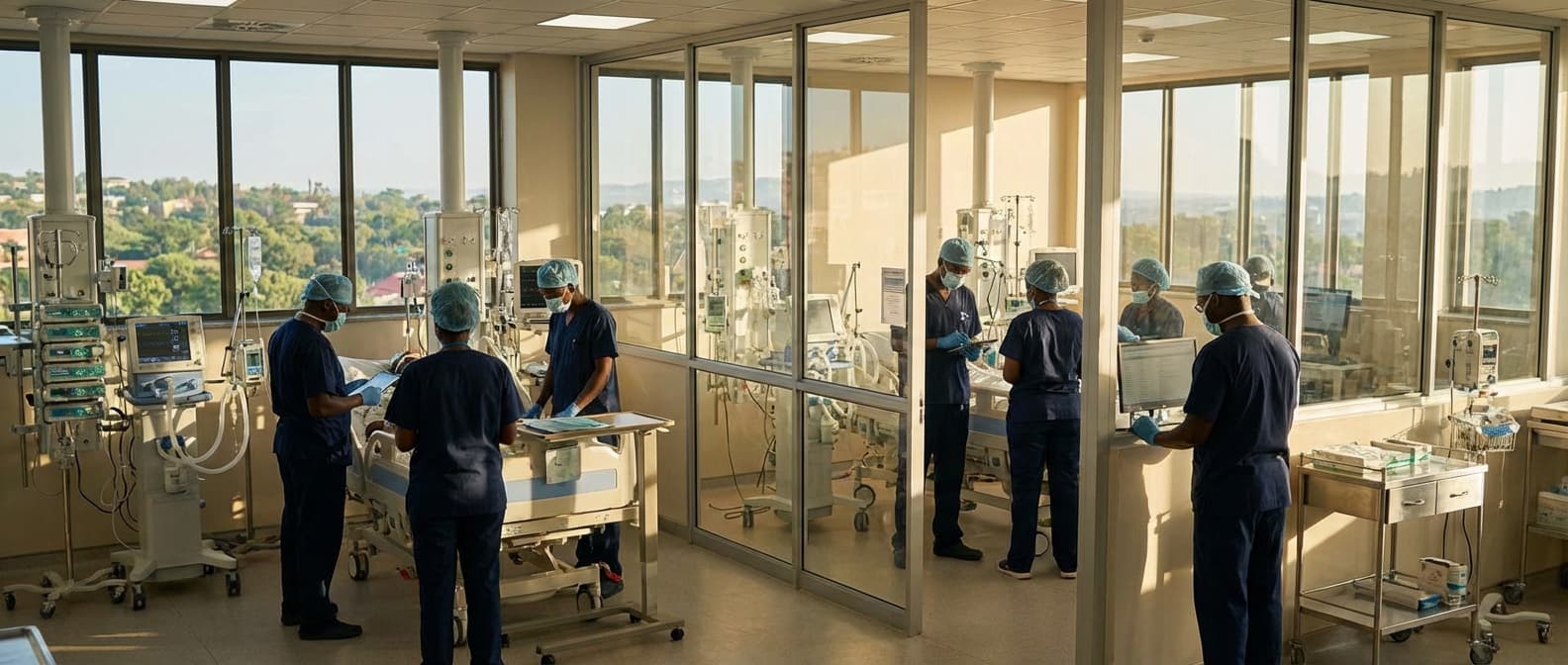
Ventilator Fleet Management & PM in Chad
Engineering Excellence & Technical Support
Preventive maintenance and fleet management for ICU ventilators High-standard technical execution following OEM protocols and local regulatory frameworks.
Real-Time Ventilator Fleet Monitoring
Implement a cloud-based platform providing live, real-time data on ventilator operational status, location, and key performance indicators across all healthcare facilities in Chad. This enables proactive identification of underutilized or malfunctioning equipment, optimizing deployment and ensuring immediate response to critical needs.
Predictive Maintenance & Early Failure Detection
Leverage advanced analytics on historical usage and performance data to predict potential ventilator failures before they occur. This includes sensor data analysis for component wear, error code trending, and environmental factor correlation, allowing for scheduled preventative maintenance and minimizing unexpected downtime in remote or hard-to-reach areas.
Remote Diagnostics & Tiered Support
Establish a tiered technical support system integrating remote diagnostic capabilities for ventilators. Field technicians can receive real-time data feeds, enabling remote troubleshooting and guided repair procedures. This reduces the need for immediate on-site specialist intervention, significantly lowering travel costs and response times, especially for critical patient care in dispersed regions of Chad.
What Is Ventilator Fleet Management & Pm In Chad?
Ventilator Fleet Management & Preventative Maintenance (PM) in Chad refers to the comprehensive programmatic and operational oversight of mechanical ventilation devices within healthcare facilities. This service encompasses the entire lifecycle of ventilator assets, from acquisition and deployment to ongoing maintenance, repair, and eventual decommissioning. The objective is to ensure the consistent availability, optimal performance, and extended lifespan of these critical life-support technologies, thereby bolstering the capacity of healthcare systems to manage acute respiratory illnesses and emergencies. The scope includes, but is not limited to, asset tracking, calibration, scheduled servicing, unscheduled repairs, spare parts management, staff training on equipment operation and basic maintenance, and adherence to regulatory standards and manufacturer guidelines. Given the often resource-constrained environments in many healthcare settings in Chad, effective ventilator fleet management and PM are paramount for maximizing the utility of limited capital investments and ensuring patient safety.
| Service Component | Description | Importance in Chad | Typical Users |
|---|---|---|---|
| Fleet Inventory | Cataloging all ventilators, their specifications, and current status. | Essential for understanding available resources and identifying gaps in coverage. | Ministry of Health, Hospital Administration, Biomedical Engineering Departments |
| Scheduled PM | Routine checks, cleaning, and calibration to prevent failures. | Crucial for maximizing equipment lifespan and ensuring reliability in a challenging environment. | Biomedical Technicians, Clinical Engineering Teams |
| Unscheduled Repairs | Rapid response to equipment breakdowns. | Minimizes patient risk and operational disruption; requires trained personnel and parts access. | Biomedical Technicians, On-call Repair Services |
| Staff Training | Educating healthcare professionals on safe and effective ventilator use. | Addresses potential user error and ensures appropriate application of technology. | Nurses, Respiratory Therapists, Physicians |
| Spare Parts Logistics | Procurement and management of critical replacement parts. | Directly impacts repair turnaround time and overall fleet availability. | Biomedical Engineering Departments, Procurement Officers |
Key Components of Ventilator Fleet Management & PM in Chad
- Asset Inventory and Tracking: Maintaining a detailed and up-to-date registry of all ventilator units, including model, serial number, location, acquisition date, and maintenance history.
- Preventative Maintenance (PM) Scheduling and Execution: Implementing a rigorous schedule of routine inspections, cleaning, calibration, and functional testing as per manufacturer specifications and clinical protocols.
- Corrective Maintenance and Repair: Prompt diagnosis and repair of equipment malfunctions or failures, involving skilled biomedical technicians and access to genuine spare parts.
- Performance Verification and Calibration: Ensuring ventilators meet performance standards and are accurately calibrated to deliver prescribed ventilatory support parameters.
- Spare Parts and Consumables Management: Establishing an efficient system for stocking, inventorying, and replenishing essential spare parts and consumables to minimize downtime.
- Training and Competency Assurance: Providing comprehensive training to clinical staff on ventilator operation, basic troubleshooting, and infection control protocols, as well as training for biomedical technicians on advanced maintenance and repair.
- Regulatory Compliance and Documentation: Adhering to national and international standards for medical device management, maintenance, and safety, and maintaining thorough maintenance logs and records.
- Decommissioning and Disposal: Implementing proper procedures for the safe and environmentally responsible retirement and disposal of obsolete or non-repairable ventilator units.
Who Needs Ventilator Fleet Management & Pm In Chad?
In Chad, effective ventilator fleet management and Preventive Maintenance (PM) are critical for ensuring reliable access to life-saving respiratory support. This service is essential for organizations that operate or rely on mechanical ventilators to treat patients with respiratory failure. The primary objective is to maximize ventilator uptime, extend their lifespan, ensure patient safety, and optimize resource allocation.
| Target Customer/Department | Key Departments Involved | Primary Needs & Benefits |
|---|---|---|
| Public Hospitals (e.g., Hôpital de la Renaissance, General Hospitals) | Intensive Care Unit (ICU), Emergency Department (ED), Anesthesiology, Biomedical Engineering Department, Respiratory Therapy Department | Ensure continuous patient care, reduce equipment downtime, maintain patient safety, optimize budget allocation for repairs and replacements. |
| Ministry of Public Health | Planning & Investment Department, Infrastructure & Equipment Unit, Public Health Programs | National health security, equitable distribution of resources, data-driven decision-making for procurement and maintenance strategies, emergency preparedness. |
| NGOs (e.g., Doctors Without Borders, World Vision Health Programs) | Medical Programs, Logistics & Procurement, Field Operations | Reliable equipment for remote operations, cost-effective maintenance, extended equipment lifespan, ability to respond to health crises. |
| Military Medical Services | Medical Corps, Logistics Command | Operational readiness, equipment reliability for deployed forces, specialized medical support. |
| Specialized Treatment Centers (e.g., NICU at national hospitals) | Neonatal Intensive Care Unit (NICU), Pediatric Intensive Care Unit (PICU) | Critical for infant and pediatric respiratory support, high-risk patient management, specialized equipment requirements. |
| Medical Training Institutions | Clinical Skills Labs, Teaching Hospitals, Biomedical Engineering Programs | Hands-on training for medical students and technicians, ensuring access to functional equipment for simulations and practical learning. |
Target Customers and Departments for Ventilator Fleet Management & PM in Chad:
- {"title":"Public Hospitals and Healthcare Facilities","description":"These are the cornerstone of healthcare delivery in Chad. Ensuring their ventilators are operational is paramount for treating a wide range of critical illnesses."}
- {"title":"Ministry of Public Health","description":"The central governing body responsible for national health policy and infrastructure. They would benefit from oversight and management of the national ventilator supply."}
- {"title":"Non-Governmental Organizations (NGOs) and International Aid Organizations","description":"Many NGOs operate clinics and hospitals in Chad, often in remote areas. They rely on well-maintained equipment to provide essential medical services."}
- {"title":"Military and National Defense Medical Services","description":"Military units may have their own medical facilities and require robust equipment for deployed personnel."}
- {"title":"Specialized Treatment Centers","description":"Facilities focusing on specific conditions like intensive care units (ICUs), emergency rooms, and neonatal intensive care units (NICUs) have a high dependency on ventilators."}
- {"title":"Medical Training Institutions","description":"Teaching hospitals and universities need functional ventilators for both patient care and training future healthcare professionals."}
Ventilator Fleet Management & Pm Process In Chad
This document outlines the workflow for ventilator fleet management and preventive maintenance (PM) processes in Chad, from initial inquiry to the execution of services. The process is designed to ensure the operational readiness and longevity of the ventilator fleet through systematic tracking, scheduling, and execution of maintenance activities.
| Stage | Description | Key Actions | Responsible Party | System/Tool |
|---|---|---|---|---|
| Identification of a need for ventilator service. | Report malfunction, request PM, inquire about status. | Clinical Staff, Biomedical Engineers | Communication channels (phone, email, direct report) |
| Formalizing the service request and assigning urgency. | Enter request into system, assign priority level. | Fleet Manager, Service Coordinator | Fleet Management System (FMS) |
| Determining the specific maintenance or repair needs. | Diagnose issue, review manufacturer guidelines, define service scope. | Biomedical Technician, Lead Engineer | FMS, Diagnostic tools, Manufacturer manuals |
| Assigning personnel, parts, and scheduling the service. | Identify technicians, check parts availability, book slot, confirm access. | Service Coordinator, Fleet Manager | FMS, Scheduling software, Inventory system |
| Ensuring availability of necessary components. | Procure parts, pick from inventory, verify quality. | Inventory Manager, Biomedical Technician | Inventory Management System (IMS), Procurement system |
| Performing the physical maintenance or repair. | Conduct PM, replace parts, fix components, clean ventilator. | Biomedical Technician | Service toolkit, Calibration equipment, FMS (for checklists) |
| Verifying proper function and accuracy. | Run performance tests, calibrate settings, check alarms. | Biomedical Technician | Calibration equipment, Test lung, FMS (for results) |
| Recording all service details. | Log parts used, time spent, test results, technician notes. | Biomedical Technician | FMS (Service module) |
| Ensuring work meets standards and authorizing completion. | Review service report, verify against checklist, sign off. | Quality Assurance Officer, Service Supervisor | FMS (Approval workflow) |
| Communicating service outcomes and gathering insights. | Generate service report, share with stakeholders, collect feedback. | Fleet Manager, Service Coordinator | FMS (Reporting module), Feedback forms |
| Processing financial transactions (if applicable). | Prepare invoice, submit for payment, track payments. | Finance Department, Service Coordinator | Accounting software, FMS (cost tracking) |
| Using data to improve future processes. | Analyze trends, identify recurring issues, adjust PM schedules. | Fleet Manager, Data Analyst | FMS (Analytics and reporting features) |
Ventilator Fleet Management & PM Process Workflow in Chad
- 1. Inquiry & Request Initiation: The process begins when a need for ventilator service is identified. This could be an inquiry about a specific ventilator's status, a request for a routine PM, or a report of a malfunction requiring immediate attention.
- 2. Request Logging & Prioritization: All inquiries and requests are logged into the central fleet management system. Each request is then prioritized based on urgency (e.g., critical malfunction vs. routine PM) and the operational impact on patient care.
- 3. Assessment & Scope Definition: For malfunction requests, an initial assessment is conducted by qualified technicians or engineers to determine the nature and extent of the problem. For PM requests, the scope is defined based on the manufacturer's recommendations and the ventilator's usage history.
- 4. Resource Allocation & Scheduling: Based on the assessment and prioritization, necessary resources (technicians, spare parts, tools, transportation) are identified and allocated. A service schedule is then created, taking into account technician availability, facility access, and equipment downtime considerations.
- 5. Spare Parts & Consumables Management: If spare parts or consumables are required, they are procured or retrieved from existing inventory. A robust inventory management system is crucial here to ensure availability and prevent delays.
- 6. On-site Intervention (PM or Repair): Trained and certified biomedical technicians travel to the location of the ventilator. They perform the scheduled PM tasks or carry out the necessary repairs as per the defined scope.
- 7. Testing & Calibration: Following maintenance or repair, the ventilator undergoes rigorous testing and calibration to ensure it meets all performance specifications and safety standards. This often involves simulated breathing tests.
- 8. Documentation & Record Keeping: All activities performed, including parts used, time spent, test results, and calibration data, are meticulously documented in the fleet management system. This creates a comprehensive service history for each ventilator.
- 9. Quality Assurance & Approval: A quality assurance check is performed to verify that all maintenance and repair procedures have been completed correctly and to the required standards. The service is then formally approved.
- 10. Reporting & Feedback: Reports are generated detailing the maintenance performed, equipment status, and any recurring issues. Feedback from the clinical staff and technicians is collected to identify areas for improvement in the PM process or fleet management strategy.
- 11. Billing & Invoicing (if applicable): For external service providers or when specific costs are incurred, billing and invoicing procedures are followed.
- 12. Continuous Monitoring & Optimization: The data collected throughout the process is used for continuous monitoring of fleet performance, identification of trends, and optimization of PM schedules and resource allocation to enhance overall fleet efficiency and reliability.
Ventilator Fleet Management & Pm Cost In Chad
Effective ventilator fleet management and preventative maintenance (PM) are crucial for ensuring optimal performance, longevity, and cost-efficiency of medical equipment in Chad. This involves a systematic approach to tracking, maintaining, and replacing ventilators. The cost of these services is influenced by several factors, including the type and age of ventilators, availability of spare parts, technical expertise of maintenance personnel, service provider's overhead, and the overall economic climate in Chad. Local currency, the Chadian Franc (XAF), is used for all pricing. Due to varying market dynamics and specific service contracts, exact figures can fluctuate significantly. However, we can establish general pricing factors and estimated ranges.
| Service Component | Estimated Annual Cost Range (XAF) | Notes |
|---|---|---|
| Basic Preventative Maintenance (Annual/Semi-annual) | 150,000 - 400,000 XAF per ventilator | Covers routine checks, calibration, filter replacement, and minor cleaning. Assumes readily available parts and standard technicians. |
| Comprehensive Preventative Maintenance (including minor part replacements) | 250,000 - 750,000 XAF per ventilator | Includes PM plus replacement of common wear-and-tear parts like batteries, sensors, and tubing. Cost varies with ventilator model. |
| Emergency Repairs (per incident) | 50,000 - 500,000 XAF (variable) | Highly dependent on the nature of the repair, part availability, and urgency. May include call-out fees. |
| Software Updates and Calibration | 75,000 - 200,000 XAF per event | Often bundled with comprehensive PM or as a separate service. Crucial for optimal performance. |
| Fleet Management Software/Tracking System | 100,000 - 300,000 XAF annually (per site/institution) | Cost for software licensing, implementation, and basic training for tracking asset status, maintenance history, and expiry dates. |
| Replacement Parts (average cost per critical component) | 25,000 - 250,000+ XAF | Examples: Battery pack (50,000-150,000 XAF), circuit board (150,000-500,000+ XAF), sensor (25,000-75,000 XAF). Prices vary significantly by brand and model. |
| Technician Training (per technician) | 200,000 - 600,000 XAF (one-time or ongoing) | For specialized ventilator models or new technologies. Can be a significant upfront investment. |
Key Pricing Factors for Ventilator Fleet Management & PM in Chad
- Ventilator Type and Complexity: More sophisticated ventilators with advanced features (e.g., high-frequency oscillatory ventilation) require specialized maintenance and thus incur higher PM costs.
- Age and Condition of Ventilators: Older ventilators may require more frequent and extensive repairs, increasing overall maintenance expenditure.
- Availability and Cost of Spare Parts: Genuine or compatible spare parts can be expensive, especially if imported. Local availability significantly impacts cost.
- Service Provider Expertise and Certification: Highly skilled and certified technicians command higher rates. The choice between in-house maintenance and external service providers also affects pricing.
- Frequency and Scope of PM: The agreed-upon schedule (e.g., semi-annual, annual) and the specific tasks included in the PM checklist influence the overall cost.
- Geographic Location within Chad: Access to remote areas for maintenance can incur additional travel and logistics costs for service providers.
- Contractual Agreements: Long-term service contracts may offer discounted rates compared to ad-hoc maintenance.
- Import Duties and Taxes: If spare parts or specialized maintenance equipment need to be imported, applicable duties and taxes will add to the cost.
Affordable Ventilator Fleet Management & Pm Options
Managing a ventilator fleet efficiently and cost-effectively is crucial for healthcare providers. This involves not only proactive maintenance to ensure optimal performance and patient safety but also strategic procurement and utilization. Affordable ventilator fleet management and preventative maintenance (PM) options can significantly reduce operational costs while maximizing equipment lifespan and availability. Key to achieving this is understanding value bundles, which offer integrated services at a more attractive price point, and implementing various cost-saving strategies.
| Value Bundle Concept | Cost-Saving Strategies | Benefits | |||||
|---|---|---|---|---|---|---|---|
| Integrated Service Contracts: Bundling PM, corrective maintenance, parts, and sometimes loaner units into a single contract with a third-party service provider or the OEM. | Long-Term Agreements: Negotiating multi-year contracts for predictable pricing and potential volume discounts. | Reduced Downtime: Proactive maintenance minimizes unexpected failures and ensures ventilators are available when needed. | Predictable Budgeting: Fixed costs allow for better financial planning and resource allocation. | Extended Equipment Lifespan: Regular maintenance prevents premature wear and tear. | Improved Patient Safety: Reliably functioning ventilators are critical for patient care. | ||
| Tiered Service Packages: Offering different levels of service (e.g., basic PM vs. comprehensive support) to match budget and needs. | Preventative Maintenance Optimization: Focusing PM efforts on high-usage or critical equipment, and adjusting schedules based on actual usage data. | In-House vs. Third-Party Analysis: Evaluating the cost-effectiveness of performing PM in-house versus outsourcing to specialized third-party providers. | Shared Service Models: Collaborating with other healthcare facilities to share resources and expertise for maintenance. | Refurbished Equipment Procurement: Considering purchasing certified refurbished ventilators as a more affordable alternative to new. | Strategic Parts Sourcing: Identifying reliable and cost-effective suppliers for critical spare parts, including after-market options where appropriate. | Fleet Optimization: Analyzing usage patterns to identify underutilized equipment that could be reallocated or potentially retired, freeing up capital. | Standardization: Limiting the variety of ventilator models in the fleet to simplify training, parts stocking, and maintenance procedures. |
| OEM vs. Independent Service Organizations (ISOs): Comparing pricing and service quality between original equipment manufacturers and independent repair specialists. | Consignment Parts Agreements: Arranging for parts to be held on-site by a vendor, only paying for what is used. | Data-Driven Maintenance: Utilizing equipment logs and performance data to tailor PM schedules and identify recurring issues. | Lease vs. Purchase Analysis: Evaluating the financial implications of leasing ventilators over purchasing them outright, especially for rapidly evolving technology. | Return on Investment (ROI) Calculation: Quantifying the long-term savings and benefits of investing in comprehensive fleet management and PM programs. | Negotiation Power: Leveraging fleet size and contract duration for better pricing on both equipment and services. |
Key Components of Affordable Ventilator Fleet Management & PM
- Preventative Maintenance (PM): Regular scheduled servicing to identify and address potential issues before they lead to failure, extending equipment life and ensuring reliability.
- Corrective Maintenance: Addressing equipment malfunctions and breakdowns promptly to minimize downtime.
- Calibration & Performance Testing: Ensuring ventilators meet manufacturer specifications for accurate and safe operation.
- Software Updates & Upgrades: Maintaining software to improve functionality, security, and compatibility.
- Parts Inventory Management: Optimizing stock levels of critical spare parts to reduce lead times and associated costs.
- Training & Skill Development: Equipping biomedical technicians with the necessary skills for efficient and effective ventilator maintenance.
- Asset Tracking & Utilization Monitoring: Understanding where equipment is, how it's being used, and identifying underutilized assets.
- Decommissioning & Disposal: Cost-effective and compliant methods for retiring old or obsolete equipment.
Verified Providers In Chad
In Chad, identifying reliable and credentialed healthcare providers is paramount for individuals seeking quality medical care. Franance Health stands out as a trusted source, meticulously verifying its network of medical professionals to ensure they meet the highest standards of expertise and ethical practice. This rigorous vetting process is what makes Franance Health's listed providers the best choice for your health needs.
| Credential Type | Verification Scope | Benefit to Patient |
|---|---|---|
| Medical License | Active status, validation of issued license | Ensures legal authorization to practice medicine |
| Board Certification | Confirmation of specialty training and examination completion | Guarantees expertise in a specific medical field |
| Educational Background | Verification of degrees and institutions attended | Confirms foundational medical knowledge and training |
| Professional References | Confidential feedback from peers and supervisors | Provides insight into clinical skills and ethical conduct |
| Disciplinary Actions/Malpractice | Thorough checks with relevant regulatory bodies | Protects patients from providers with a history of misconduct |
Why Franance Health Credentials Matter in Chad:
- Rigorous Verification Process: Franance Health employs a multi-stage credentialing process that goes beyond basic qualifications. This includes verifying medical licenses, board certifications, educational backgrounds, and professional references.
- Commitment to Quality Care: By partnering exclusively with verified providers, Franance Health guarantees that patients will receive care from highly skilled and competent medical professionals dedicated to patient well-being.
- Enhanced Patient Safety: The verification process includes checks for any disciplinary actions or malpractice claims, ensuring that patients are connected with providers who have a clean professional record and prioritize patient safety.
- Access to Specialists: Franance Health's network encompasses a wide range of medical specialties, and their credentialing ensures that each specialist possesses the specific expertise required for their field.
- Trust and Transparency: Franance Health provides a transparent platform where patients can be confident in the qualifications and ethical standing of the healthcare providers they choose. This builds essential trust in the Chadian healthcare system.
- Upholding International Standards: Franance Health aligns its verification protocols with internationally recognized best practices in healthcare credentialing, bringing a global standard of quality to Chad.
Scope Of Work For Ventilator Fleet Management & Pm
This document outlines the Scope of Work (SOW) for comprehensive Ventilator Fleet Management and Preventative Maintenance (PM) services. The objective is to ensure the optimal performance, reliability, and longevity of the hospital's ventilator fleet, thereby supporting patient care and minimizing operational disruptions. The SOW covers all aspects of fleet management, including inventory, deployment, maintenance scheduling, repair, calibration, and end-of-life management. Technical deliverables will be detailed, alongside standard specifications for all components and services to ensure quality and compliance.
| Technical Deliverable | Standard Specification | Description | Frequency/Timing |
|---|---|---|---|
| Preventative Maintenance Report | Manufacturer's Recommended PM Schedule (e.g., semi-annually, annually) | Comprehensive report detailing all PM tasks performed, including cleaning, inspection, functional testing, part replacement, and calibration. Includes a summary of findings and any recommended actions. | As per manufacturer's recommendations |
| Calibration Certificate | ISO 17025 Accredited or Traceable Calibration Standards | Document certifying that the ventilator has been calibrated against traceable standards, confirming accuracy of pressure, flow, volume, and oxygen concentration measurements. Includes pre- and post-calibration data. | Annually or as per manufacturer's recommendations |
| Repair Report | Root Cause Analysis (RCA) for recurring issues | Detailed report of all corrective maintenance activities, including identified fault, parts replaced, labor performed, and confirmation of successful repair. Includes RCA for significant or recurring failures. | Upon completion of each repair |
| Fleet Inventory Update | Centralized Asset Management System (e.g., CMMS) with standardized data fields | Updated database of all ventilators, including status (in service, under repair, retired), location, maintenance history, and utilization data. Includes regular audits of physical inventory against records. | Quarterly and upon any significant change (e.g., new acquisition, retirement) |
| Consumables & Parts Inventory Report | Min/Max Stock Levels based on usage and lead times | Report detailing current stock levels of critical spare parts and consumables, projected needs, and recommendations for procurement to ensure adequate supply. | Monthly |
| Equipment Performance Audit Report | Adherence to manufacturer's performance specifications | Periodic review of ventilator performance data and maintenance records to identify potential systemic issues, trends, or areas for improvement in the PM program. | Semi-annually |
| End-of-Life Assessment Report | Manufacturer's recommended service life, total cost of ownership | Report assessing the operational status, repair costs, and remaining useful life of ventilators nearing their end-of-service life. Includes recommendations for replacement or retirement. | Annually for ventilators > 5 years old |
| Training Completion Records | Certification of competency for specific models | Documentation verifying that relevant personnel have received and successfully completed training on specific ventilator models and associated maintenance procedures. | As training is conducted |
| Regulatory Compliance Checklist | Compliance with local, national, and international healthcare regulations (e.g., FDA, ISO 13485, Joint Commission) | Checklist and supporting documentation confirming that all fleet management and PM activities meet or exceed current regulatory and accreditation standards. | Annually and upon request |
Key Components of Ventilator Fleet Management & PM
- Fleet Inventory Management: Maintaining an accurate and up-to-date inventory of all ventilators, including model, serial number, acquisition date, location, and service history.
- Preventative Maintenance (PM) Program: Implementing a scheduled PM program based on manufacturer recommendations and best practices to ensure optimal equipment function and prevent failures.
- Corrective Maintenance and Repair: Providing timely and effective repair services for malfunctioning ventilators, minimizing downtime and impact on patient care.
- Calibration and Performance Verification: Regularly calibrating ventilators to ensure accurate delivery of therapeutic gases and adherence to prescribed settings.
- Asset Tracking and Utilization Monitoring: Implementing systems for tracking ventilator location and utilization patterns to optimize deployment and identify underutilized or overutilized assets.
- Parts and Consumables Management: Managing the inventory, procurement, and stocking of necessary parts and consumables for maintenance and repair.
- Documentation and Record Keeping: Maintaining detailed records of all maintenance activities, repairs, calibrations, and inventory changes, including electronic service reports.
- Training and Competency Assessment: Providing or facilitating training for biomedical engineering staff on specific ventilator models and maintenance procedures.
- Compliance and Regulatory Adherence: Ensuring all maintenance and management activities comply with relevant healthcare regulations, safety standards, and accreditation requirements.
- Reporting and Analytics: Generating regular reports on fleet status, maintenance activities, repair trends, and key performance indicators (KPIs) to inform decision-making.
- End-of-Life Management: Developing and implementing strategies for the decommissioning, disposal, or replacement of ventilators at the end of their operational life.
Service Level Agreement For Ventilator Fleet Management & Pm
This Service Level Agreement (SLA) outlines the terms and conditions for the comprehensive management and preventive maintenance (PM) of the designated ventilator fleet. It defines response times for service requests and establishes uptime guarantees to ensure optimal availability and functionality of critical medical equipment.
| Service Category | Response Time Target | Uptime Guarantee | Service Level Objective (SLO) |
|---|---|---|---|
| Emergency Service Request (Critical Failure) | 2 Hours (from notification) | 98% | All critical failures to be diagnosed and repair initiated within 2 hours. Priority for parts and technician dispatch. |
| Urgent Service Request (Significant Malfunction) | 8 Business Hours (from notification) | 99% | Significant malfunctions requiring immediate attention to be diagnosed and repair initiated within 8 business hours. |
| Standard Service Request (Minor Issue/Troubleshooting) | 24 Business Hours (from notification) | 99.5% | Minor issues or requests for remote troubleshooting to be addressed within 24 business hours. |
| Scheduled Preventive Maintenance (PM) | As per agreed schedule (see Appendix B) | N/A (PM is scheduled and planned downtime) | PM to be conducted per manufacturer guidelines and client schedule to minimize operational disruption. |
Key Definitions
- Ventilator Fleet: Refers to the total number of ventilators owned or managed by [Client Name] as detailed in Appendix A.
- Service Request: Any notification from [Client Name] regarding a malfunction, performance issue, or request for scheduled maintenance of a ventilator.
- Preventive Maintenance (PM): Scheduled inspections, cleaning, calibration, and replacement of parts as recommended by the manufacturer to ensure optimal performance and longevity.
- Response Time: The maximum time allowed from the initiation of a Service Request to the commencement of diagnostic assessment or on-site intervention by the Service Provider.
- Uptime Guarantee: The percentage of time the ventilators are expected to be fully operational and available for use, excluding scheduled PM and agreed-upon downtime for repairs.
- Critical Failure: A malfunction that renders a ventilator completely inoperable or unsafe for patient use.
Frequently Asked Questions

Ready when you are
Let's scope your Ventilator Fleet Management & PM in Chad project in Chad.

Scaling healthcare logistics and technical systems across the entire continent.