
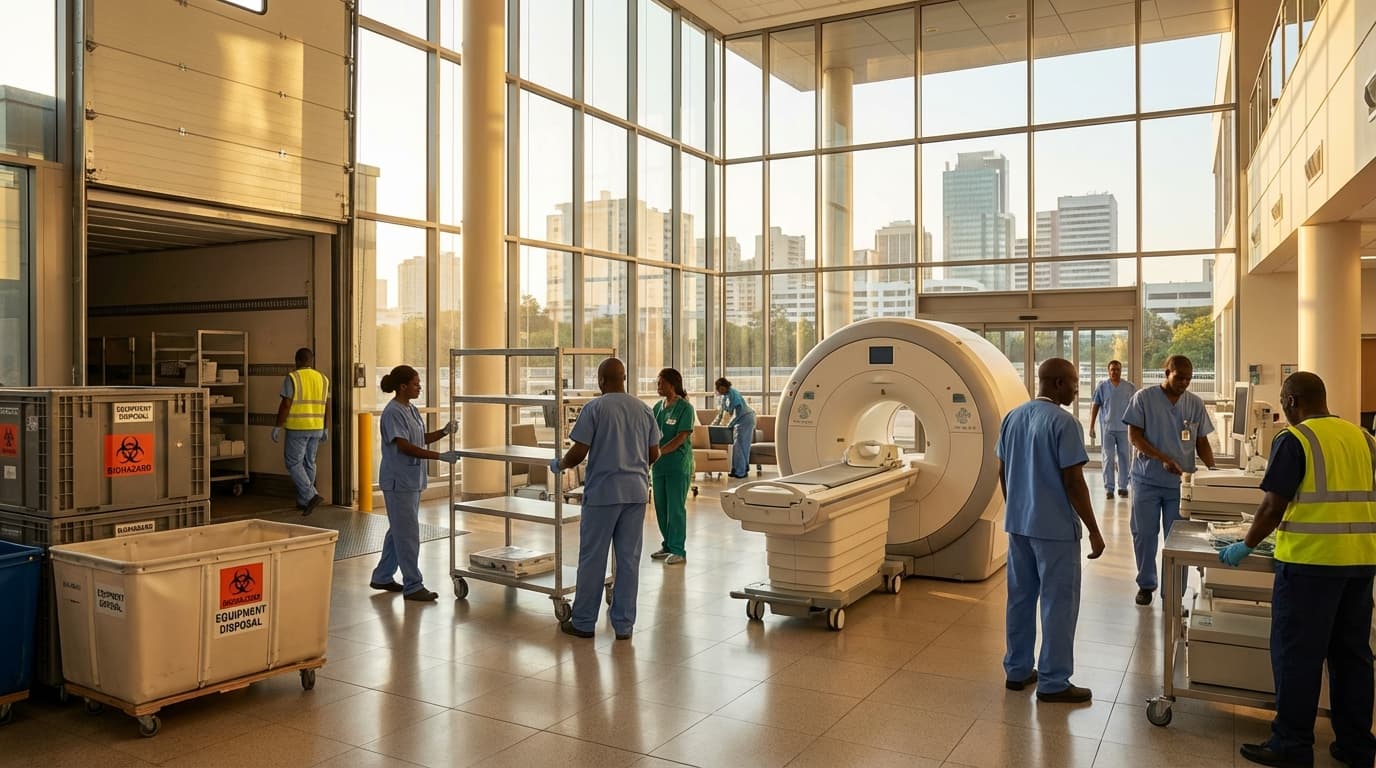
Medical E-Waste Handling & Recycling Coordination Service in Chad
Engineering Excellence & Technical Support
Medical E-Waste Handling & Recycling Coordination Service High-standard technical execution following OEM protocols and local regulatory frameworks.
Secure Chain of Custody & Data Eradication
Our service establishes a verifiable chain of custody for all medical e-waste, ensuring complete traceability from collection point to final recycling. We implement certified data destruction protocols for all devices containing sensitive patient information, adhering to international standards for privacy and security.
Integrated Logistics & Compliance Management
We offer a streamlined, end-to-end solution for medical e-waste management, encompassing optimized collection routes, compliant transportation, and partnerships with certified recycling facilities. Our platform automates compliance tracking, providing real-time reporting and documentation to meet national and international regulations.
Sustainable Resource Recovery & Environmental Protection
Our focus is on maximizing the recovery of valuable materials from medical e-waste through advanced recycling techniques. This not only reduces the volume of hazardous materials entering landfills but also contributes to a circular economy, minimizing environmental impact and conserving natural resources in Chad.
What Is Medical E-waste Handling & Recycling Coordination Service In Chad?
Medical e-waste handling and recycling coordination services in Chad refer to the specialized logistical, administrative, and technical management required to ensure the safe and environmentally sound disposal, treatment, and recycling of obsolete, damaged, or expired electronic and electrical equipment originating from healthcare facilities. This encompasses a comprehensive approach to managing the lifecycle of medical e-waste, from collection and transportation to dismantling, hazardous material segregation, and the recovery of valuable components or materials, while adhering to national and international regulations. The service is critical for mitigating the significant environmental and health risks associated with improper disposal, such as the release of heavy metals and persistent organic pollutants.
| Stakeholder Group | Need for Service | Typical Use Cases |
|---|---|---|
| Healthcare Facilities (Hospitals, Clinics, Laboratories) | Mandatory compliance with environmental regulations, prevention of health hazards from obsolete equipment (e.g., CRT monitors, diagnostic imaging equipment, powered surgical instruments), mitigation of reputational risk. | Disposal of broken X-ray machines, end-of-life MRI scanners, expired medical monitors, decommissioned laboratory analyzers, obsolete diagnostic tools. |
| Government Ministries (Environment, Health, Industry) | Enforcement of environmental legislation, public health protection, development of sustainable waste management infrastructure, promotion of circular economy principles, data collection for policy formulation. | Development and enforcement of national e-waste management policies, oversight of licensed e-waste handlers, tracking of hazardous waste flows, reporting on environmental impact. |
| Medical Equipment Manufacturers & Suppliers | End-of-life management of their products, compliance with Extended Producer Responsibility (EPR) schemes (if implemented), corporate social responsibility, data on product lifecycle. | Facilitating take-back programs for obsolete medical devices, collaborating with recyclers for material recovery from their products, demonstrating product stewardship. |
| E-Waste Recycling & Treatment Companies | Access to specialized feedstocks, development of specialized processing capabilities, adherence to stringent environmental and safety standards for handling medical e-waste, obtaining a reliable supply of sorted e-waste. | Receiving and processing decontaminated medical electronic components, recovering precious metals from circuit boards, safely disposing of hazardous materials like mercury switches or leaded glass. |
| International Development Organizations & NGOs | Supporting the development of sustainable environmental practices, improving public health outcomes, providing technical assistance and funding for waste management infrastructure, capacity building. | Funding pilot projects for medical e-waste recycling, providing training to Chadian professionals, developing national e-waste management strategies. |
Key Components of Medical E-Waste Handling & Recycling Coordination Service in Chad
- Waste Stream Identification & Characterization: Differentiating medical e-waste from other medical waste streams and identifying specific electronic components and associated hazardous substances.
- Regulatory Compliance & Permitting: Navigating and ensuring adherence to Chadian environmental regulations, import/export controls for waste, and obtaining necessary permits for handling and treatment.
- Collection & Transportation Logistics: Establishing secure and compliant collection points within healthcare facilities and coordinating specialized transportation methods to approved processing centers, often requiring specialized containment and routing to minimize public exposure.
- Hazardous Material Segregation & Management: Implementing protocols for the safe segregation and management of hazardous components (e.g., mercury, lead, cadmium, brominated flame retardants) present in medical electronic devices.
- Dismantling & Component Recovery: Overseeing the controlled dismantling of e-waste to separate recoverable materials (metals, plastics) from non-recoverable or hazardous fractions.
- Treatment & Disposal: Coordinating the appropriate treatment (e.g., neutralization, encapsulation) of hazardous components and the final disposal of residual waste in accordance with environmental standards.
- Recycling Partnerships & Material Reintegration: Establishing relationships with certified e-waste recycling facilities capable of processing specific medical e-waste fractions and facilitating the reintegration of recovered materials into the manufacturing supply chain.
- Data Management & Reporting: Maintaining detailed records of waste volumes, types, origins, treatment methods, and disposal sites, providing comprehensive reporting to regulatory bodies and stakeholders.
- Training & Capacity Building: Providing training to healthcare personnel on proper e-waste identification, segregation, and interim storage procedures.
- Risk Assessment & Mitigation: Conducting thorough risk assessments for all stages of the e-waste lifecycle and implementing appropriate mitigation strategies.
- Auditing & Quality Assurance: Regularly auditing service providers and processes to ensure compliance and operational excellence.
Who Needs Medical E-waste Handling & Recycling Coordination Service In Chad?
Medical e-waste in Chad presents a significant environmental and health hazard. Proper handling and recycling are crucial to mitigate these risks and ensure the safe disposal of hazardous materials found in electronic medical equipment. A coordinated service for medical e-waste handling and recycling is essential for various stakeholders across Chad to address this growing concern.
| Customer Segment | Primary Departments Involved | Specific Needs/Concerns | Reason for Requiring Coordination |
|---|---|---|---|
| Hospitals (Public & Private) | Biomedical Engineering/Technical Department, Procurement, Waste Management, Environmental Health & Safety, Administration | Management of expired or obsolete medical equipment (imaging machines, monitors, lab equipment), safe de-installation, data security from old devices, compliance with regulations. | Centralized coordination ensures consistent adherence to disposal protocols, economies of scale for recycling, and a unified approach to environmental responsibility. |
| Clinics & Health Centers | Administration, Nursing Staff, Maintenance Personnel | Smaller volumes but still contain hazardous components, lack of dedicated waste management staff, need for accessible and affordable disposal options. | Coordination provides access to specialized handling services that may be cost-prohibitive for individual small facilities, ensuring safe disposal regardless of size. |
| Diagnostic Laboratories | Laboratory Technicians, Lab Management, Procurement, Waste Management | Disposal of specialized electronic diagnostic equipment (analyzers, microscopes with electronic components), calibration equipment, management of sensitive data. | Coordination ensures that specialized laboratory e-waste is handled by trained professionals, preventing contamination and safeguarding data integrity. |
| Pharmaceutical Companies | Logistics, Quality Control, Procurement, Environmental Health & Safety | Disposal of electronic components in manufacturing equipment, lab instruments used in R&D, and potentially end-of-life electronic promotional materials. | Coordination supports corporate environmental responsibility goals and ensures compliance with broader industrial waste management regulations. |
| Ministry of Public Health | Department of Health Services, Department of Environmental Health, Planning and Policy Department | Oversight of healthcare sector waste, development of national guidelines, public health risk mitigation, resource allocation for waste management infrastructure. | Coordination facilitates the implementation of national policies, provides data for informed decision-making, and ensures standardized practices across the country. |
| Ministry of Environment, Water and Fisheries | Department of Environmental Protection, Pollution Control Unit, Waste Management Division | Environmental impact assessment, regulation enforcement, promotion of sustainable waste management practices, monitoring of hazardous waste. | Coordination helps in establishing and enforcing regulations, tracking e-waste flows, and promoting a circular economy for electronic waste. |
| International Organizations & NGOs | Program Management, Logistics, Operations, Health Program Staff | Managing e-waste from projects funded or implemented in Chad, ensuring partner facilities comply with international environmental standards, capacity building. | Coordination allows these organizations to integrate responsible e-waste management into their projects, ensuring sustainable development and avoiding the creation of new environmental liabilities. |
| Medical Equipment Suppliers & Distributors | Sales, Technical Support, Logistics, After-Sales Service | Take-back programs for old equipment upon sale of new, responsible disposal of returned or end-of-life stock, compliance with Extended Producer Responsibility (EPR) principles. | Coordination provides a reliable channel for them to manage their product lifecycle responsibly, enhancing their brand reputation and meeting potential regulatory obligations. |
| Research Institutions | Research Staff, IT Department, Facilities Management | Disposal of specialized research equipment with electronic components, managing data security from retired research instruments, compliance with research ethics and environmental standards. | Coordination ensures that sensitive research equipment and data are handled securely and environmentally responsibly, aligning with scientific integrity. |
Target Customers and Departments Requiring Medical E-Waste Handling & Recycling Coordination Service in Chad
- Healthcare Facilities (Hospitals, Clinics, Health Centers)
- Diagnostic Laboratories
- Pharmaceutical Companies
- Government Ministries and Agencies
- International Organizations and NGOs
- Medical Equipment Suppliers and Distributors
- Research Institutions
Medical E-waste Handling & Recycling Coordination Service Process In Chad
This document outlines the workflow for the Medical E-Waste Handling & Recycling Coordination Service in Chad, detailing the process from initial inquiry to the successful execution of medical e-waste management and recycling. The service aims to ensure safe, environmentally sound, and compliant handling of electronic medical equipment waste, preventing hazardous materials from entering the environment and facilitating the recovery of valuable resources.
| Phase | Step | Description | Key Activities | Responsible Parties | Output/Outcome |
|---|---|---|---|---|---|
| 1.1 Initial Contact | Medical facility expresses interest in the service or requires assistance with medical e-waste. | Contact initiation (phone, email, online form), service overview provided, initial information gathering. | Medical Facility, Service Coordinator | Acknowledgement of inquiry, understanding of basic needs. |
| 1.2 Detailed Needs Assessment | On-site or remote assessment of the type, quantity, and condition of medical e-waste generated. | Site visit (if applicable), inventory of e-waste, discussion of specific equipment, identification of potential hazards. | Service Coordinator, Medical Facility Representatives, (Potentially) E-waste Specialist | Detailed report on e-waste profile, estimated volumes, potential risks. | |
| 2.1 Solution Proposal | Development of a tailored plan for handling, collection, and recycling/disposal. | Based on needs assessment, propose collection frequency, logistics, chosen processing methods, cost estimates. | Service Coordinator, E-waste Processor (for technical input) | Formal proposal outlining scope of work, timeline, and costs. |
| 2.2 Contractual Agreement | Formalizing the service agreement between the medical facility and the coordination service. | Review and signing of service contract, defining responsibilities, service level agreements (SLAs), payment terms. | Medical Facility, Service Coordinator | Signed service contract, commencement of service authorization. | |
| 3.1 Data Security & Decontamination | Ensuring sensitive data is erased and equipment is safely prepared for transport. | Implementing data destruction protocols for devices with data storage, initial cleaning/disinfection of equipment as per guidelines. | Medical Facility (with guidance from Service Coordinator) | Securely wiped devices, decontaminated equipment. |
| 3.2 E-Waste Segregation & Packaging | Properly sorting and packaging medical e-waste for safe transportation. | Segregating different types of e-waste (e.g., imaging equipment, lab instruments), using appropriate containment and labeling according to hazardous waste regulations. | Medical Facility (with guidance from Service Coordinator) | Clearly labeled and safely packaged e-waste ready for collection. | |
| 4.1 Scheduling Collection | Coordinating the pickup of packaged medical e-waste. | Confirming pickup dates and times with the medical facility and logistics provider, ensuring all necessary documentation is in order. | Service Coordinator, Logistics Provider, Medical Facility | Scheduled collection confirmed. |
| 4.2 On-Site Collection | Physical retrieval of the medical e-waste from the facility. | Secure loading of e-waste onto specialized transport vehicles, verification of manifest documents, ensuring safe handling practices during loading. | Logistics Provider, Medical Facility Staff | E-waste collected from the facility, documented on a waste transfer note. | |
| 4.3 Transportation to Processor | Safe and compliant transport of e-waste to the designated recycling or disposal facility. | Adherence to transportation regulations for hazardous materials, route optimization, real-time tracking (if available). | Logistics Provider | E-waste safely delivered to the e-waste processor. | |
| 5.1 Receipt & Weighing | Formal acceptance and recording of the received e-waste at the processing facility. | Verification of documentation, weighing of incoming materials, initial sorting and categorization. | E-waste Processor | E-waste recorded and inventoried. |
| 5.2 Dismantling & Resource Recovery | Breaking down e-waste to separate valuable components and hazardous materials. | Manual and automated dismantling, removal of hazardous components (e.g., mercury, lead), recovery of precious metals and other recyclables. | E-waste Processor | Separated components: recoverable materials, hazardous waste, non-recyclable residual waste. | |
| 5.3 Recycling & Disposal | Processing of recovered materials and appropriate disposal of residual waste. | Sending recyclable materials to specialized recyclers, secure and compliant disposal of hazardous waste at licensed facilities. | E-waste Processor, Specialized Recyclers, Licensed Disposal Facilities | Recycled materials reintroduced into the economy, hazardous waste safely managed. | |
| 6.1 Certificate of Destruction/Recycling | Issuance of documentation confirming the responsible handling of the e-waste. | Providing a certificate of destruction or recycling to the medical facility, detailing the types and quantities of e-waste processed and the disposal/recycling methods used. | E-waste Processor (verified by Service Coordinator) | Official documentation for the medical facility's records and regulatory compliance. |
| 6.2 Final Reporting | Summarizing the entire process and its outcomes. | Compiling a comprehensive report for the medical facility and relevant authorities, including data on environmental impact, resource recovery rates, and adherence to regulations. | Service Coordinator | Final service report, client satisfaction feedback. | |
| 6.3 Payment & Invoicing | Settlement of all service fees. | Issuing final invoices to the medical facility, processing payments according to the service agreement. | Service Coordinator, Medical Facility | Financial closure of the service engagement. |
Medical E-Waste Handling & Recycling Coordination Service Workflow in Chad
- The service acts as a central point of contact and coordination for medical facilities in Chad generating electronic medical waste (e-waste).
- It involves collaboration with licensed e-waste processors, logistics providers, and relevant government agencies to ensure compliance with environmental regulations.
- The primary goal is to facilitate the responsible collection, transportation, dismantling, and recycling or safe disposal of medical e-waste.
Medical E-waste Handling & Recycling Coordination Service Cost In Chad
Managing and recycling medical e-waste in Chad presents unique challenges due to the country's developing infrastructure and specific regulatory landscape. The cost of such a service is influenced by a variety of factors, leading to a broad pricing range. These factors include the volume and type of medical e-waste generated, the distance from collection points to authorized recycling facilities, the complexity of the waste (e.g., presence of hazardous materials requiring specialized treatment), and the fees associated with secure transportation and proper disposal. Furthermore, the availability and capacity of local recycling partners, adherence to international safety and environmental standards, and any potential government levies or incentives will impact the overall cost. Emergency or urgent collection services will naturally incur higher charges.
| Service Component | Typical Cost Range (XAF - Central African CFA franc) | Notes |
|---|---|---|
| Collection & Segregation (Per kg/unit) | 1,000 - 5,000 XAF | Varies based on waste type (e.g., batteries vs. larger equipment) and accessibility. |
| Secure Transportation (Per km/trip) | 500 - 2,000 XAF/km | Dependent on fuel prices, vehicle type, and road conditions. |
| Specialized Treatment/Disposal (Per kg/unit) | 2,500 - 10,000+ XAF | Applies to hazardous materials like CRT monitors or equipment with biological contaminants. Requires certified facilities. |
| Coordination & Management Fee (Percentage of total) | 10% - 25% | Covers planning, vendor selection, oversight, and reporting. |
| Small-Scale Collection Fee (Flat Rate) | 20,000 - 100,000 XAF | For smaller clinics or infrequent collections. |
| Large-Scale Contract (Annual/Project-Based) | Negotiable (Significant cost savings per unit) | Tailored to large hospitals or national programs. |
Key Pricing Factors for Medical E-Waste Handling & Recycling Coordination in Chad:
- Volume and Type of E-Waste: Larger quantities and more complex/hazardous waste increase costs.
- Geographical Location: Remote collection points and longer transportation distances elevate expenses.
- Waste Composition & Hazard Level: Medical equipment containing mercury, lead, or biohazards requires specialized handling and disposal, increasing costs.
- Transportation Logistics: Fuel costs, vehicle maintenance, and driver fees are significant components.
- Recycling Facility Fees: Charges levied by authorized and certified recycling or disposal centers.
- Certification & Compliance: Adherence to national and international environmental and safety standards can add to service costs.
- Labor Costs: Skilled personnel for collection, segregation, and handling.
- Permitting & Regulatory Fees: Any required licenses or permits for waste management.
- Urgency of Service: Emergency or expedited collection services will be priced higher.
- Market Availability of Recycling Partners: Limited options can lead to higher prices.
Affordable Medical E-waste Handling & Recycling Coordination Service Options
Navigating the complexities of medical e-waste handling and recycling can be a significant challenge for healthcare facilities. Our coordination service offers a streamlined, compliant, and cost-effective solution. We understand the unique regulatory landscape and the need for secure, environmentally responsible disposal of sensitive medical electronics. Our service focuses on providing affordable options through expertly designed value bundles and proactive cost-saving strategies, ensuring your facility meets all obligations without breaking the budget.
| Cost-Saving Strategy | Description | Impact on Healthcare Facility |
|---|---|---|
| Consolidated Collection & Logistics | Optimizing pickup schedules and consolidating waste streams from multiple locations to reduce transportation costs. | Lower transportation fees, reduced staff time for managing individual pickups. |
| Bulk Recycling Rates & Partnerships | Leveraging our extensive network to secure preferential pricing with certified e-waste recyclers for larger volumes. | Reduced overall recycling costs due to economies of scale. |
| Data Security & Compliance Assurance | Proactive identification of compliance requirements and implementation of secure data destruction protocols, preventing costly fines and breaches. | Mitigation of legal penalties, reputational damage, and potential data breach remediation expenses. |
| Asset Recovery & Value Maximization | Identifying and facilitating the responsible resale or refurbishment of functional medical electronics, generating potential revenue. | Offsetting disposal costs, creating a revenue stream from previously discarded assets. |
| Education & Best Practice Training | Providing staff with training on proper e-waste segregation and handling to minimize contamination and contamination-related disposal costs. | Reduced sorting errors, lower disposal fees for mixed waste, improved operational efficiency. |
| Predictable Budgeting & Reporting | Offering transparent pricing models and detailed reporting for accurate budget forecasting and financial planning. | Enhanced financial control, easier budget allocation, and demonstrable ROI for e-waste management. |
Value Bundles for Medical E-Waste Handling & Recycling Coordination
- {"title":"Basic Compliance Bundle","description":"Ideal for smaller facilities or those with minimal e-waste volume. Focuses on essential regulatory compliance and secure disposal of common medical electronics."}
- {"title":"Standard Operational Bundle","description":"A comprehensive package for mid-sized facilities. Includes regular collection, detailed tracking, and reporting, plus a broader range of e-waste categories."}
- {"title":"Premium Integrated Bundle","description":"Designed for large healthcare networks or specialized institutions. Offers end-to-end management, including data destruction, asset recovery potential, and customized reporting for sustainability initiatives."}
- {"title":"Customizable Solutions","description":"For unique needs, we offer bespoke bundles tailored to specific e-waste profiles, collection frequencies, and reporting requirements."}
Verified Providers In Chad
When seeking healthcare in Chad, particularly for sensitive medical needs, identifying 'Verified Providers' is paramount. This designation signifies that a healthcare professional or facility has undergone a rigorous vetting process, ensuring they meet specific standards of quality, ethics, and professionalism. Franance Health, a leading healthcare facilitator in the region, plays a crucial role in this verification process. Their credentials represent the highest standards, making them the most reliable choice for patients requiring specialized care and peace of mind.
| Credential Aspect | Franance Health Verification Standard | Benefit to Patients |
|---|---|---|
| Medical Licensure & Qualifications | Confirms legitimate medical degrees and valid professional licenses issued by recognized authorities. | Ensures providers are formally trained and legally permitted to practice medicine. |
| Clinical Experience & Specialization | Evaluates years of practical experience and documented expertise in specific medical fields. | Guarantees access to doctors with the appropriate skills for your specific health needs. |
| Ethical Conduct & Professionalism | Assesses history of ethical practice, patient feedback, and adherence to professional codes of conduct. | Provides confidence in receiving compassionate, respectful, and trustworthy care. |
| Facility Standards & Equipment | Verifies that healthcare facilities meet safety regulations and are equipped with necessary modern medical technology (where applicable). | Ensures a safe and effective treatment environment with appropriate diagnostic and therapeutic tools. |
| Compliance with Best Practices | Ensures adherence to contemporary medical guidelines, treatment protocols, and infection control measures. | Confirms that you are receiving evidence-based and up-to-date medical care. |
Why Franance Health Credentials Matter for Verified Providers in Chad:
- Rigorous Vetting Process: Franance Health employs a comprehensive evaluation system that scrutinizes medical qualifications, professional experience, ethical conduct, and compliance with international healthcare best practices.
- Commitment to Quality and Safety: Their verification ensures providers adhere to stringent safety protocols and deliver high-quality medical services, minimizing risks and maximizing patient well-being.
- Ethical Standards and Patient Rights: Franance Health vets providers on their adherence to ethical principles, including patient confidentiality, informed consent, and respect for patient rights.
- Specialized Expertise: They focus on identifying and credentialing providers with specialized knowledge and skills in various medical disciplines, crucial for complex health issues.
- Facilitating Access to Trusted Care: By establishing a network of verified providers, Franance Health empowers patients to access reliable and competent medical care without fear of exploitation or substandard treatment.
- International Recognition: The standards upheld by Franance Health are often aligned with international benchmarks, providing an extra layer of assurance for both local and international patients.
- Ongoing Monitoring and Re-evaluation: Verification is not a one-time event. Franance Health is committed to ongoing monitoring and periodic re-evaluation of their accredited providers to ensure continued adherence to their high standards.
Scope Of Work For Medical E-waste Handling & Recycling Coordination Service
This Scope of Work (SOW) outlines the requirements for a Medical E-Waste Handling & Recycling Coordination Service. The service provider will be responsible for managing the collection, transportation, and certified recycling of medical electronic waste generated by [Client Name/Facility]. The objective is to ensure compliance with all relevant environmental regulations, maintain data security, and promote sustainable waste management practices.
| Deliverable | Description | Standard Specification/Reference | Frequency/Timeline |
|---|---|---|---|
| Medical E-Waste Inventory Report | Detailed list of all medical electronic waste items collected, including type, quantity, and source location. | Customizable based on client needs; typically includes unique ID for each batch. | Monthly |
| Chain-of-Custody Forms | Signed documentation tracking the movement of waste from pick-up to final destination, including timestamps and responsible parties. | Standardized forms, compliant with DOT and EPA regulations. | Per pick-up |
| Waste Manifests/Receipts | Official documentation from the recycling facility confirming receipt and processing of waste. | EPA-compliant hazardous waste manifests (if applicable), or recycling facility receipts. | Per shipment |
| Recycling Certificates | Certificates of destruction/recycling from the certified recycling facility for sensitive electronic components. | R2 or e-Stewards certification for the recycling facility. | Per shipment/as requested |
| Compliance Audit Reports | Reports detailing the results of audits conducted on recycling partners, verifying their adherence to environmental and security standards. | Based on industry best practices and client-specific requirements. | Annually (minimum) |
| Staff Training Materials & Records | Comprehensive training materials on medical e-waste handling and segregation, along with records of staff completion. | Content aligned with HIPAA, OSHA, and EPA guidelines. | Annually/As needed |
| Monthly/Quarterly Performance Report | Summary of waste volumes, recycling rates, cost analysis, and environmental impact metrics. | Includes key performance indicators (KPIs) as agreed upon with the client. | Monthly or Quarterly |
| Emergency Response Plan Integration | Procedures for handling unexpected waste generation or disposal emergencies. | Aligned with client's existing emergency protocols. | As part of initial setup and reviewed annually |
Key Responsibilities and Deliverables
- Establish and maintain a comprehensive inventory of all medical e-waste generated.
- Develop and implement a secure chain-of-custody protocol for all waste movement.
- Coordinate and schedule regular pick-ups of medical e-waste from [Client Name/Facility] locations.
- Ensure transportation of waste is conducted by licensed and certified hazardous waste haulers.
- Oversee the dismantling and recycling process at an R2 or e-Stewards certified facility.
- Provide detailed documentation of the entire waste lifecycle, from pick-up to final disposal/recycling.
- Maintain compliance with all federal, state, and local regulations regarding medical and hazardous waste.
- Conduct regular audits of recycling partners to ensure adherence to standards.
- Provide training to [Client Name/Facility] staff on proper medical e-waste segregation and handling procedures.
- Offer reporting on waste volumes, recycling rates, and environmental impact.
Service Level Agreement For Medical E-waste Handling & Recycling Coordination Service
This Service Level Agreement (SLA) outlines the performance standards and responsibilities for the Medical E-Waste Handling & Recycling Coordination Service. It defines the expected response times for critical events and the minimum uptime guarantees for the service platform.
| Service Element | Response Time Guarantee | Definition / Escalation | Uptime Guarantee | Definition / Monitoring |
|---|---|---|---|---|
| Critical Incident Reporting (e.g., unexpected leakage, fire hazard, major spill) | 15 minutes acknowledgement, 1 hour initial assessment | Acknowledgement of receipt of critical incident report. Initial assessment by a qualified technician within the specified timeframe. Further action based on assessment. | N/A (Focus is on rapid incident response) | N/A |
| Scheduled Pick-up Request Confirmation | 4 business hours | Confirmation of scheduled pick-up request (date, time, location, volume) via email or portal. | N/A (Focus is on operational responsiveness) | N/A |
| Service Platform Availability (Web Portal, Tracking System) | 99.5% Monthly Uptime | The online platform for requesting services, tracking shipments, and accessing documentation will be available for 99.5% of the time over a calendar month, excluding scheduled maintenance. | 99.5% Monthly Uptime | Measured by continuous monitoring of platform accessibility and functionality. Downtime due to planned maintenance is excluded if communicated 48 hours in advance. |
| Urgent Pick-up Request (non-critical incident, but time-sensitive) | 2 business hours for confirmation, within 24 business hours for pick-up | Confirmation of availability for an urgent pick-up request within 2 business hours. Actual pick-up to be performed within 24 business hours, subject to driver availability and routing. | N/A (Focus is on operational responsiveness) | N/A |
| Information Request (e.g., documentation, reporting) | 8 business hours for acknowledgement, 24 business hours for standard requests | Acknowledgement of information request. Provision of standard documentation (e.g., manifests, certificates of recycling) within 24 business hours. Complex requests may have longer timelines communicated. | N/A (Focus is on operational responsiveness) | N/A |
| Emergency Support Line Availability | 24/7 Availability | The designated emergency support line is available 24 hours a day, 7 days a week for critical operational issues. | N/A (Focus is on rapid incident response) | N/A |
Key Service Metrics
- This SLA applies to all services provided by [Your Company Name/Service Provider] for the handling, transportation, and recycling coordination of medical e-waste as per the agreed-upon contract.
- The service aims to ensure efficient, compliant, and environmentally responsible management of medical e-waste.
- All times are in [Specify Time Zone, e.g., UTC, EST].
Frequently Asked Questions

Ready when you are
Let's scope your Medical E-Waste Handling & Recycling Coordination Service in Chad project in Chad.

Scaling healthcare logistics and technical systems across the entire continent.