
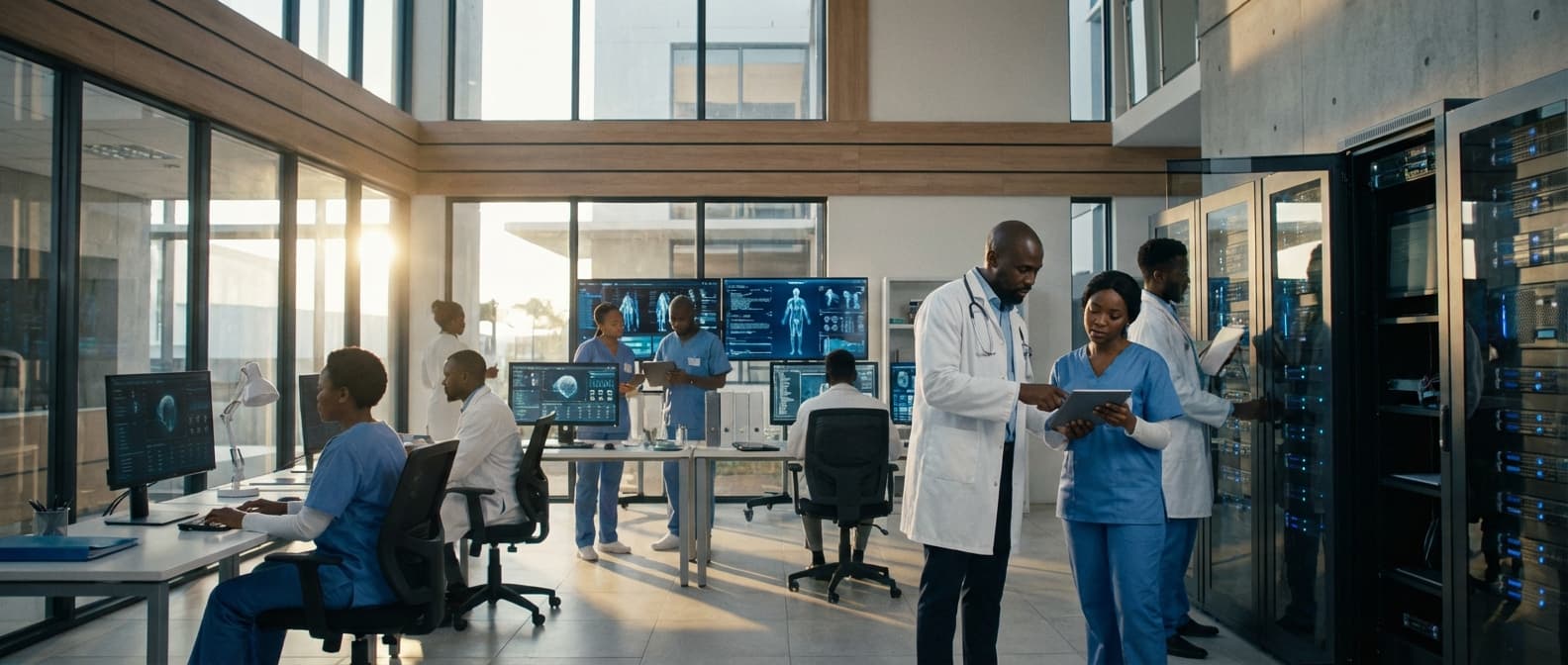
Tele-Radiology in Chad
Engineering Excellence & Technical Support
24/7 access to certified radiologists providing rapid, accurate remote interpretation of diagnostic imaging studies. High-standard technical execution following OEM protocols and local regulatory frameworks.
Bridging Geographical Divides
Tele-radiology platforms enable remote diagnostic imaging interpretation, connecting expert radiologists with remote clinics and hospitals across Chad. This significantly reduces the need for patients to travel long distances for specialist consultations, especially in rural and underserved areas, improving access to critical diagnostic services.
Enhanced Diagnostic Accuracy & Speed
By leveraging advanced imaging software and AI-assisted tools, tele-radiology services can provide faster and more accurate diagnoses. This leads to quicker treatment decisions, improved patient outcomes, and a more efficient use of limited medical resources within Chad's healthcare system.
Capacity Building & Skill Development
Tele-radiology facilitates knowledge transfer and continuous professional development for local medical professionals in Chad. Remote consultations and case reviews with experienced international radiologists help train and upskill on-site technicians and physicians, strengthening the local healthcare infrastructure for long-term sustainability.
What Is Tele-radiology In Chad?
Tele-radiology in Chad refers to the practice of transmitting radiological images (such as X-rays, CT scans, and MRIs) electronically from one location to another for interpretation by a radiologist. This service bridges geographical gaps, particularly in regions with a scarcity of specialized medical personnel, by enabling remote diagnostic capabilities. It involves the secure transmission of digital image data, patient information, and the radiologist's report, facilitated by Picture Archiving and Communication Systems (PACS) and teleradiology platforms.
| Who Needs Tele-radiology? | Typical Use Cases in Chad | ||||||
|---|---|---|---|---|---|---|---|
| Healthcare facilities in remote or underserved areas of Chad lacking on-site radiologists. | Emergency departments requiring urgent interpretation of trauma scans (e.g., head CTs, X-rays for fractures). | Hospitals with limited diagnostic imaging capabilities, especially those performing complex procedures. | Specialty clinics (e.g., neurology, oncology) needing expert interpretation of advanced imaging modalities. | Referral centers processing a high volume of imaging studies. | Public health initiatives and diagnostic campaigns in areas with limited access to healthcare. | Situations requiring second opinions on complex or unusual radiological findings. | Training and educational purposes for local medical staff. |
Key Components of Tele-radiology in Chad
- Digital Image Acquisition: Utilizing modern imaging equipment capable of generating digital files (DICOM format).
- Secure Data Transmission: Employing robust encryption and secure network protocols (e.g., VPNs) to transmit images and patient data to remote sites.
- Teleradiology Platform: A software solution that manages image workflow, communication between referring physicians and radiologists, and report generation.
- Remote Radiologist Interpretation: Board-certified radiologists located elsewhere (potentially internationally) who analyze the transmitted images and provide diagnostic reports.
- Report Delivery: Secure electronic transmission of the final radiology report back to the originating facility.
Who Needs Tele-radiology In Chad?
Tele-radiology offers a vital solution for improving diagnostic imaging access and quality in Chad, a country facing significant challenges in healthcare infrastructure. The lack of trained radiologists and advanced imaging equipment in many remote and under-resourced areas creates critical gaps in patient care. Tele-radiology bridges these gaps by connecting local healthcare facilities with expert radiologists remotely, enabling timely and accurate diagnoses, even in areas with limited local expertise. This technology can revolutionize how medical imaging is accessed and interpreted, leading to better patient outcomes and more equitable healthcare distribution.
| Customer Type | Key Departments/Services Benefited | Primary Needs Addressed |
|---|---|---|
| Hospitals/Clinics (Remote) | Radiology Department (virtual), Emergency Room, Internal Medicine, Surgery, Pediatrics, Obstetrics/Gynecology | Access to expert interpretation, reducing diagnostic delays, improving accuracy, overcoming radiologist shortages. |
| District Hospitals | Radiology, Emergency, General Practice, Specialist Clinics | Augmenting local capabilities, ensuring consistent interpretation, supporting a wider range of diagnostic needs. |
| Health Centers | General Practice, Basic X-ray Interpretation | Access to interpretation for basic imaging, enabling more comprehensive initial assessments. |
| Mobile Health Units | Field Diagnostic Interpretation | Real-time or near real-time diagnosis for images captured in remote or mobile settings. |
| Emergency/Trauma Centers | Emergency Medicine, Trauma Surgery, Critical Care | Rapid diagnostic support for critical conditions, enabling faster treatment decisions. |
| Maternal/Child Health | Obstetrics, Pediatrics, Neonatology | Diagnostic support for pregnancy-related complications and pediatric illnesses. |
| TB/HIV Clinics | Pulmonology, Infectious Diseases | Efficient interpretation of chest X-rays for TB screening and diagnosis. |
| Tertiary Hospitals | All departments requiring imaging, subspecialty radiology | Managing caseloads, accessing subspecialty expertise, quality assurance. |
| Government Health Ministries | Planning, Public Health Programs, Quality Assurance | National-level oversight of imaging services, strategic deployment of resources, data analysis. |
| NGO Healthcare Providers | All clinical services managed by the NGO | Enhancing diagnostic capacity in project areas, improving patient care in challenging contexts. |
Target Customers and Departments for Tele-Radiology in Chad
- Hospitals and Clinics in Remote/Underserved Areas: These facilities often lack in-house radiologists and advanced imaging capabilities. They are the primary beneficiaries, as tele-radiology provides access to expert interpretation without the need for physical presence.
- District Hospitals: While some district hospitals may have basic imaging equipment, they often struggle with a consistent supply of qualified radiologists. Tele-radiology can augment their existing services.
- Health Centers: Smaller health centers, even those with limited imaging equipment (e.g., basic X-ray), can benefit from remote interpretation for conditions requiring specialized analysis.
- Mobile Health Units: For outreach programs and mobile diagnostic services, tele-radiology allows for real-time or near real-time interpretation of images captured in the field.
- Emergency and Trauma Centers: In critical situations, rapid and accurate diagnosis is paramount. Tele-radiology can provide immediate expert opinions, especially when local radiologists are unavailable.
- Maternal and Child Health Centers: Imaging plays a role in diagnosing obstetric complications and pediatric conditions. Tele-radiology can support these specialized centers.
- Tuberculosis (TB) and HIV/AIDS Clinics: Chest X-rays are crucial for diagnosing TB. Tele-radiology can facilitate the efficient interpretation of these images, supporting public health initiatives.
- Tertiary Care Hospitals (for overflow/specialized needs): Even larger hospitals may face backlogs or require subspecialty interpretations that are not locally available. Tele-radiology can serve as a supplementary service.
- Government Health Ministries and Public Health Agencies: These entities can leverage tele-radiology to monitor and improve the overall quality and accessibility of diagnostic imaging services across the nation, and to support national health programs.
- Non-Governmental Organizations (NGOs) involved in healthcare delivery: NGOs operating in Chad often manage clinics and hospitals in challenging environments. Tele-radiology can significantly enhance their diagnostic capabilities.
Tele-radiology Process In Chad
Tele-radiology in Chad presents a promising solution to bridge the gap in radiological expertise, particularly in remote or underserved areas. The process generally involves a series of interconnected steps, from the initial patient inquiry and referral to the final report and subsequent clinical decision-making. This workflow is designed to facilitate remote access to expert radiological interpretation, improving diagnostic accuracy and patient care.
| Stage | Description | Key Actors | Technology/Tools | Challenges in Chad |
|---|---|---|---|---|
| Patient Presentation and Initial Assessment | A patient presents with symptoms requiring imaging. A local healthcare provider (doctor, nurse, or clinical officer) performs a physical examination and determines the need for radiological imaging. | Patient, Local Healthcare Provider (Doctor, Nurse, Clinical Officer) | Stethoscope, basic diagnostic equipment, referral forms | Limited availability of qualified local healthcare providers, potentially long travel distances for patients. |
| Image Acquisition at Local Facility | Radiological images (X-ray, CT, ultrasound, etc.) are acquired at a local health facility equipped with imaging modalities. Quality control is crucial at this stage. | Radiographer/Technician, Local Healthcare Provider | X-ray machine, CT scanner, Ultrasound machine, PACS (Picture Archiving and Communication System) or equivalent | Outdated equipment, lack of maintenance, insufficient trained radiographers, unreliable power supply. |
| Data Transmission to Tele-Radiology Hub | Acquired images are anonymized and securely transmitted from the local facility to a central tele-radiology hub. This can be a national center or an international service. | Radiographer/Technician, IT Support Staff | Internet connectivity (satellite, fiber optic), VPN (Virtual Private Network), secure file transfer protocols (e.g., DICOM over secure channels) | Poor or non-existent internet infrastructure, high cost of internet access, cybersecurity concerns, lack of standardized IT protocols. |
| Teleradiologist Assignment and Interpretation | At the hub, studies are assigned to available teleradiologists based on expertise and workload. The teleradiologist reviews the images remotely and makes a diagnosis. | Teleradiologist, Teleradiology Platform Administrator | High-resolution viewing monitors, teleradiology software, PACS workstation | Shortage of trained teleradiologists (both local and international), language barriers, cultural understanding of local health issues. |
| Report Generation and Communication | The teleradiologist generates a comprehensive diagnostic report. This report is then securely transmitted back to the referring physician at the local facility. | Teleradiologist, Dictation/Transcription Services (if applicable), Teleradiology Platform | Reporting software, secure communication channels (email, integrated platform messaging) | Delays in report turnaround time due to transmission or workload, potential for misinterpretation of reports without direct communication. |
| Clinical Action and Follow-up | The referring physician receives the report and integrates the findings into the patient's overall management plan. This may involve further treatment, investigation, or referral. | Local Healthcare Provider, Patient | Electronic Health Records (EHR), referral systems | Lack of consistent follow-up mechanisms, limited availability of specialized treatment centers, patient compliance issues due to distance and cost. |
Tele-Radiology Workflow in Chad
- Patient Presentation and Initial Assessment
- Image Acquisition at Local Facility
- Data Transmission to Tele-Radiology Hub
- Teleradiologist Assignment and Interpretation
- Report Generation and Communication
- Clinical Action and Follow-up
Tele-radiology Cost In Chad
Tele-radiology services in Chad, while still an emerging field, are influenced by a unique set of pricing factors. The cost is not standardized and can vary significantly based on the provider, the specific type of radiological examination required, and the accessibility of technology within Chad. Local currency, the Chadian Franc (XAF), is used for these transactions. The availability of trained radiologists, particularly those with sub-specialty expertise, is a major determinant. Infrastructure, including internet connectivity and the reliability of power supply, directly impacts the operational costs for tele-radiology providers and thus influences their pricing. Furthermore, the volume of cases a clinic or hospital handles can lead to volume-based discounts. The complexity of the case and the time required for interpretation by the remote radiologist are also key considerations. Finally, partnerships with international tele-radiology companies or local healthcare institutions can also shape the pricing models.
| Service Type (Example) | Estimated Cost Range (XAF) | Notes |
|---|---|---|
| Plain X-ray Interpretation | 10,000 - 30,000 | Basic interpretation, quicker turnaround. |
| CT Scan Interpretation | 25,000 - 75,000 | Requires more specialized interpretation, potentially longer turnaround. |
| MRI Scan Interpretation | 40,000 - 120,000 | Often involves complex anatomical structures, higher cost. |
| Emergency/STAT Interpretation (within 1-2 hours) |
| Premium for expedited services. |
| Comprehensive Report with Clinical Correlation | Varies significantly | Includes detailed analysis and integration with patient history. |
Key Pricing Factors for Tele-Radiology in Chad
- Radiologist Expertise and Availability (Local and International)
- Type and Complexity of Radiological Examination (e.g., X-ray, CT scan, MRI)
- Infrastructure Reliability (Internet Connectivity, Power Supply)
- Volume of Cases/Service Agreements
- Urgency of Report Turnaround Time
- Technology Costs (Software, Hardware, Maintenance)
- Provider Business Model (Local Startup vs. International Partnership)
Affordable Tele-radiology Options
Tele-radiology, the practice of interpreting medical images remotely, is increasingly vital for healthcare providers seeking efficient and cost-effective diagnostic solutions. Affordable tele-radiology options leverage technology to extend the reach of expert radiologists, improving turnaround times and reducing the burden on in-house departments. Key to achieving affordability are value bundles and smart cost-saving strategies.
| Value Bundle Type | Description | Typical Inclusions | Cost-Saving Benefit |
|---|---|---|---|
| Per-Study/Per-Report Bundles | A straightforward model where a fixed price is charged for each interpreted study or report generated. | Image interpretation, preliminary or final report, subspecialty reads (optional). | Predictable per-case costs, easy budgeting, pay-as-you-go flexibility. |
| Volume-Based/Tiered Pricing | Costs decrease as the volume of studies increases. Providers offer discounted rates for higher utilization. | All services included in per-study bundles, with tiered discounts applied based on monthly/annual study volume. | Significant cost reduction for high-volume practices, encourages long-term partnerships. |
| Comprehensive Service Packages | Bundles that encompass not just interpretation but also IT integration, PACS management, and potentially radiologist staffing support. | Image acquisition support, secure data transfer, PACS viewer access, reporting software, subspecialty coverage, 24/7 availability. | Reduces the need for in-house IT and infrastructure investment, streamlines operations, provides holistic support. |
| Subspecialty-Specific Bundles | Packages focused on specific areas of radiology, such as neuroimaging, musculoskeletal, or cardiac imaging. | Dedicated subspecialist radiologists for interpretation, tailored reporting templates, quality assurance specific to the subspecialty. | Ensures access to highly specialized expertise without the cost of hiring in-house subspecialists. |
Key Concepts in Affordable Tele-Radiology
- {"title":"Value Bundles","description":"These are packaged services offered by tele-radiology providers that combine multiple offerings into a single, often discounted, price. They aim to provide comprehensive solutions that meet specific client needs, promoting predictability in costs and simplifying procurement."}
- {"title":"Cost-Saving Strategies","description":"These are a range of approaches implemented by both tele-radiology providers and their clients to reduce overall expenditure without compromising quality or access to care."}
Verified Providers In Chad
Finding verified healthcare providers in Chad is paramount for ensuring access to safe and effective medical services. Franance Health stands out as a leading organization in this space, dedicated to upholding rigorous standards and connecting individuals with trusted medical professionals. Their comprehensive credentialing process is designed to instill confidence in patients by thoroughly vetting each provider's qualifications, experience, and adherence to ethical practices. This commitment to transparency and quality makes Franance Health the best choice for anyone seeking reliable healthcare in Chad.
| Credential Type | Franance Health Verification Standard |
|---|---|
| Medical License | Valid and current license from the relevant Chadian Ministry of Health or equivalent regulatory body. |
| Specialty Board Certification | Verification of certification from recognized national or international specialty boards where applicable. |
| Educational Qualifications | Confirmation of degrees and diplomas from accredited medical institutions. |
| Professional Experience | Review of work history and clinical experience to ensure adequate practical application of skills. |
| Criminal Background Check | Screening to ensure no history of malpractice or criminal activity that would compromise patient care. |
| References | Collection and verification of professional references from peers or supervisors. |
Why Franance Health Represents the Best Choice for Verified Providers in Chad:
- Rigorous Vetting Process: Franance Health employs a multi-faceted approach to verify provider credentials, including academic qualifications, professional licenses, and a history of good standing.
- Commitment to Patient Safety: By ensuring all listed providers meet stringent criteria, Franance Health prioritizes patient well-being and minimizes risks associated with unqualified practitioners.
- Extensive Network: Access a wide array of medical specialists and general practitioners across various regions in Chad, all pre-verified for your convenience.
- Transparency and Accessibility: Franance Health provides clear information about each provider's expertise, allowing patients to make informed decisions about their care.
- Continuous Monitoring: The organization actively monitors its network to ensure ongoing adherence to quality standards and ethical conduct.
Scope Of Work For Tele-radiology
This Scope of Work (SOW) outlines the technical deliverables and standard specifications for the implementation and operation of a Tele-Radiology service. It aims to ensure high-quality, secure, and efficient remote interpretation of medical imaging studies.
| Deliverable | Description | Standard Specification/Requirement |
|---|---|---|
| Tele-Radiology Platform | The core software system facilitating remote image viewing, interpretation, and reporting. | Web-based or dedicated client application, user-friendly interface, concurrent user support, HL7/DICOM integration capabilities, audit trails. |
| Image Transmission Protocol | The method and standard for transferring medical images from the acquisition site to the interpretation site. | DICOM (Digital Imaging and Communications in Medicine) compliant, secure transmission protocols (e.g., SFTP, VPN, HTTPS), bandwidth management. |
| Picture Archiving and Communication System (PACS) | System for storing, retrieving, and managing medical images. | Scalable storage capacity, DICOM compliance, robust search functionality, integration with RIS/HIS, data redundancy, long-term archiving capabilities. |
| Radiology Information System (RIS) Integration | Integration of the tele-radiology platform with the existing RIS for seamless workflow management. | HL7 (Health Level Seven) compliant messaging for patient demographics, study orders, and results. Bi-directional communication. |
| Reporting Software | Tool for radiologists to generate and sign off on interpretation reports. | Structured reporting templates, voice recognition integration (optional), secure report distribution, e-signature capabilities. |
| Workstation Hardware (Interpretation Site) | High-resolution monitors and computing hardware for radiologists. | Medical-grade grayscale/color displays (e.g., 3MP, 5MP, 8MP), powerful workstations with sufficient RAM and processing power, ergonomic setup. |
| Network Connectivity | Reliable and secure network infrastructure for image transmission. | Sufficient bandwidth to support real-time image viewing and transmission, dedicated leased lines or reliable VPN, network monitoring tools. |
| Security Measures | Protocols and technologies to protect patient data and system integrity. | HIPAA/GDPR compliance, data encryption (in transit and at rest), access control (role-based), audit logging, regular vulnerability assessments, secure authentication (e.g., multi-factor authentication). |
| Quality Assurance (QA) Tools | Mechanisms for monitoring and ensuring the quality of interpretations and system performance. | Image quality checks, report turnaround time tracking, peer review functionality, system uptime monitoring, performance metrics dashboards. |
| Disaster Recovery and Business Continuity Plan | Strategies to ensure service availability in case of system failure or disaster. | Data backup and recovery procedures, redundant systems, documented recovery time objectives (RTO) and recovery point objectives (RPO). |
Key Areas of Focus
- System Architecture and Infrastructure
- Image Acquisition and Transmission
- Image Archiving and Retrieval (PACS)
- Reporting and Communication
- Security and Compliance
- Quality Assurance and Performance Monitoring
- Training and Support
Service Level Agreement For Tele-radiology
This Service Level Agreement (SLA) outlines the performance standards and guarantees for the tele-radiology services provided by [Your Company Name] (hereinafter referred to as 'Provider') to [Client Name] (hereinafter referred to as 'Client'). This SLA is an integral part of the Master Service Agreement (MSA) between the parties and defines the expected response times for report generation and uptime guarantees for the tele-radiology platform.
| Service Component | Metric | Service Level Objective (SLO) | Measurement Method | Remedy for Failure |
|---|---|---|---|---|
| Report Turnaround Times (TAT) | Critical Studies (e.g., Stroke, Trauma, Acute MI) | 90% of reports completed within 30 minutes of image upload. | Timestamp of image upload vs. timestamp of final report availability in the platform. | 5% service credit for each 1% shortfall in the SLO for Critical Studies, capped at 15% of monthly fees. |
| Report Turnaround Times (TAT) | Urgent Studies (e.g., suspected fracture, acute abdomen) | 95% of reports completed within 2 hours of image upload. | Timestamp of image upload vs. timestamp of final report availability in the platform. | 3% service credit for each 1% shortfall in the SLO for Urgent Studies, capped at 10% of monthly fees. |
| Report Turnaround Times (TAT) | Routine Studies (e.g., follow-up exams, non-acute findings) | 98% of reports completed within 24 hours of image upload. | Timestamp of image upload vs. timestamp of final report availability in the platform. | 1% service credit for each 1% shortfall in the SLO for Routine Studies, capped at 5% of monthly fees. |
| Platform Uptime | Availability of the tele-radiology platform (PACS, RIS integration, reporting interface). | 99.9% Monthly Uptime. | Calculated based on the total minutes in a month minus the total minutes of unscheduled downtime. | For every hour of unscheduled downtime exceeding the guaranteed uptime, the Client will receive a service credit equivalent to 0.5% of the monthly service fee for the affected services. |
| Scheduled Maintenance | Notification and window for planned system updates and maintenance. | 48 hours advance written notification for any scheduled maintenance. Maintenance windows will be scheduled during off-peak hours (e.g., weekends, overnight) with Client agreement. | Provider's internal change management logs and email notifications to the Client. | N/A (Scheduled maintenance is not considered downtime). |
| Technical Support | Availability of technical support for platform-related issues. | 24x7x365 for critical issues (platform outage, reporting errors). Business hours (9 AM - 5 PM Client's local time, Mon-Fri) for non-critical issues. | Helpdesk ticketing system and phone logs. | For critical issues, response time will be within 15 minutes for initial acknowledgment and diagnosis. For non-critical issues, response time will be within 4 business hours. |
Key Service Components
- Report Turnaround Times (TAT)
- Platform Uptime
- Data Security and Confidentiality
- Technical Support Availability
- Disaster Recovery and Business Continuity
Frequently Asked Questions

Ready when you are
Let's scope your Tele-Radiology in Chad project in Chad.

Scaling healthcare logistics and technical systems across the entire continent.