
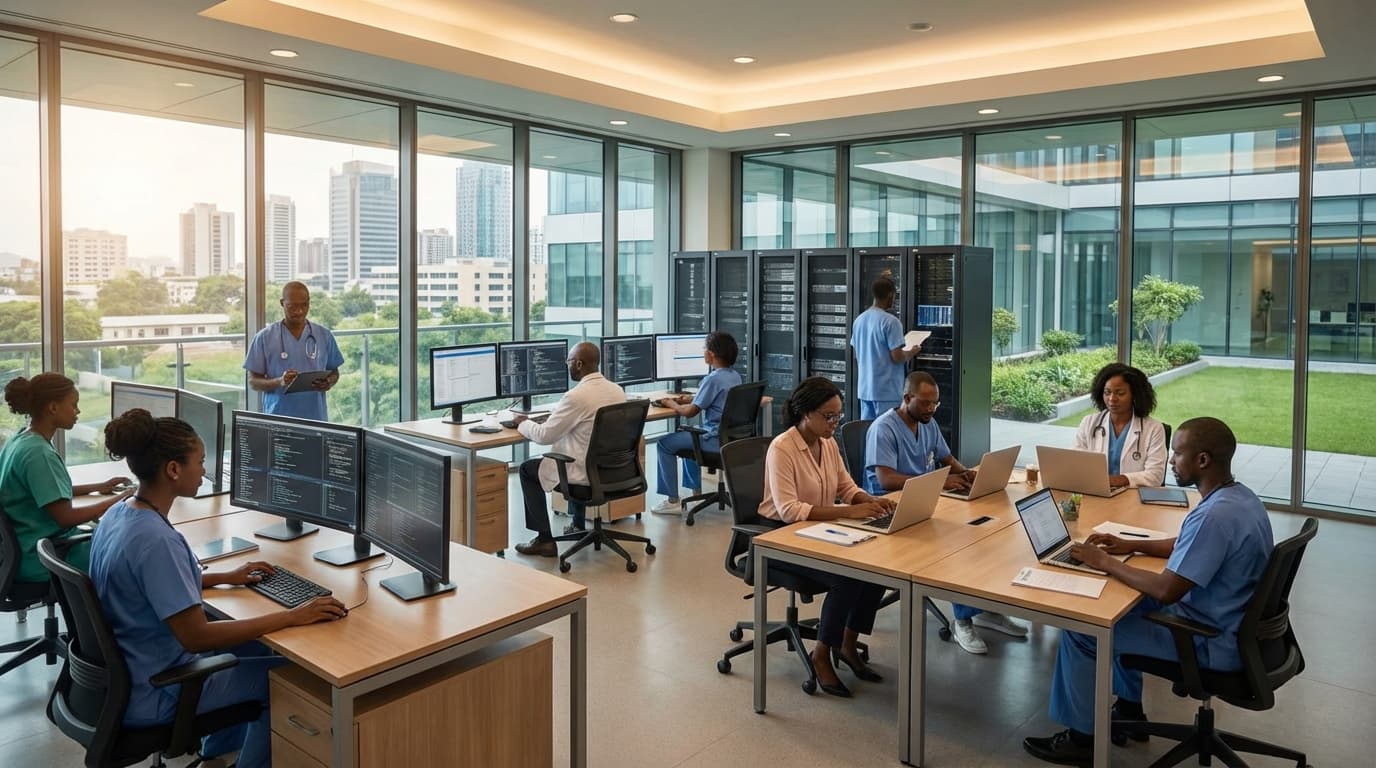
Radiology Reader & Reporting Support in Chad
Engineering Excellence & Technical Support
Remote radiology reading and reporting services High-standard technical execution following OEM protocols and local regulatory frameworks.
AI-Powered Diagnostic Assistance
Our advanced AI algorithms analyze medical images (X-rays, CT scans, MRIs) to detect subtle anomalies, assist radiologists in identifying potential pathologies, and expedite the diagnostic process, even in resource-limited settings.
Secure Cloud-Based Reporting Platform
We provide a secure, cloud-based platform for radiologists to upload, view, and report on imaging studies. This enables remote access and collaboration, facilitating expert interpretation and timely report generation for healthcare facilities across Chad.
Mobile Accessibility for Rural Healthcare
Empowering healthcare professionals in remote areas of Chad, our solution offers mobile-device compatibility for image viewing and basic report access. This bridges geographical gaps, ensuring critical radiological insights reach patients regardless of location.
What Is Radiology Reader & Reporting Support In Chad?
Radiology Reader & Reporting Support in Chad refers to the provision of expert medical imaging interpretation and diagnostic report generation services to healthcare facilities within the Republic of Chad. This service is designed to augment local radiological capabilities by offering remote access to qualified radiologists, thereby enhancing diagnostic accuracy, turnaround times, and the overall quality of patient care. The service leverages advanced teleradiology platforms and secure data transmission protocols to facilitate the transfer of medical images from Chad to radiologists located elsewhere, who then provide their interpretations and create comprehensive reports. This model addresses potential challenges such as a shortage of specialized radiologists, limited access to advanced imaging modalities, and the geographical dispersion of healthcare providers within Chad.
| Who Needs This Service? | Typical Use Cases | |||||
|---|---|---|---|---|---|---|
| Hospitals and Clinics in Chad: Particularly those in underserved regions or with limited in-house radiological expertise. | Emergency Departments: For rapid interpretation of critical imaging studies (e.g., head CT for stroke, chest X-ray for trauma) to expedite treatment decisions. | Diagnostic Imaging Centers: To supplement their existing services, especially for specialized imaging modalities where local expertise may be scarce. | Remote and Rural Healthcare Facilities: Where access to on-site radiologists is often unavailable or infrequent. | Specialized Medical Practices: (e.g., neurology, oncology, cardiology) requiring expert interpretation of complex imaging related to their field. | Public Health Initiatives and Screening Programs: Requiring large-scale image interpretation for population health assessments (e.g., tuberculosis screening). | Disaster Relief and Humanitarian Medical Missions: Providing immediate diagnostic support in crisis situations with limited medical resources. |
| Complex Case Review: Seeking second opinions or expert interpretation for challenging or rare conditions. | Subspecialty Consultations: Accessing expertise in areas like neuro-radiology, musculoskeletal radiology, or pediatric radiology. | Workload Management: Offloading routine or high-volume reading to maintain efficient turnaround times within local departments. | Round-the-Clock Coverage: Ensuring 24/7 access to radiological interpretation, particularly crucial for emergency care. | Training and Education: Opportunities for local healthcare professionals to learn from remote expert interpretations. | Cost-Effective Solution: A more economical alternative to recruiting and retaining a full complement of specialized radiologists. | Bridging the Gap in Healthcare Access: Enabling access to high-quality diagnostic services in areas facing radiologist shortages. |
Key Components of Radiology Reader & Reporting Support:
- Image Acquisition and Transmission: Local healthcare facilities in Chad capture medical images (X-ray, CT, MRI, Ultrasound) using their existing equipment. These images are then securely transmitted via a PACS (Picture Archiving and Communication System) or a dedicated teleradiology portal to the remote reading center.
- Expert Interpretation (Reading): Board-certified radiologists, with expertise in various subspecialties, remotely access and interpret the transmitted medical images.
- Diagnostic Report Generation: Radiologists generate detailed, structured, and evidence-based diagnostic reports, which include findings, impressions, and recommendations. These reports are then securely transmitted back to the referring physician in Chad.
- Quality Assurance and Peer Review: Robust quality assurance protocols are implemented, often including peer review of reports to ensure accuracy and consistency.
- Technology Infrastructure: The service necessitates a reliable IT infrastructure, including secure internet connectivity, PACS/teleradiology software, and cybersecurity measures.
- Communication and Collaboration: Mechanisms for communication between referring physicians and remote radiologists are essential for clarification and consultation.
Who Needs Radiology Reader & Reporting Support In Chad?
Radiology reader and reporting support services are crucial in Chad to bridge the gap in specialized medical expertise, improve diagnostic accuracy, and enhance patient care. These services are particularly vital for facilities facing shortages of trained radiologists and reporting specialists.
| Department/Area | Specific Needs | How Support Helps |
|---|---|---|
| Emergency Departments (ED) | Rapid interpretation of critical scans (e.g., trauma, stroke, acute abdomen) | Faster diagnoses, reduced turnaround times, improved patient outcomes. |
| General Surgery | Pre-operative assessment, post-operative monitoring, diagnosis of complications | Enhanced surgical planning, better patient management, identification of post-surgical issues. |
| Internal Medicine | Diagnosis and management of a wide range of conditions affecting various organs | Accurate identification of diseases, aiding in treatment strategies and follow-up. |
| Pediatrics | Diagnosis of congenital abnormalities, infections, and injuries in children | Specialized pediatric interpretation, ensuring appropriate care for young patients. |
| Oncology | Staging of cancer, monitoring treatment response, detecting recurrence | Accurate cancer assessment, guiding treatment decisions and evaluating effectiveness. |
| Neurology | Diagnosis of stroke, tumors, infections, and degenerative diseases of the brain and spine | Expert interpretation of complex neurological imaging, leading to precise diagnoses. |
| Orthopedics | Diagnosis of fractures, dislocations, arthritis, and other musculoskeletal conditions | Accurate assessment of bone and joint injuries, informing treatment and rehabilitation. |
| Maternal and Child Health | Prenatal ultrasounds, diagnosis of gynecological conditions | Essential imaging for women's health and pregnancy monitoring. |
Target Customers and Departments in Chad
- Public Hospitals: Government-funded hospitals, especially in rural and underserved areas, often have limited access to specialized radiologists. Support can help them manage increasing patient loads and provide essential diagnostic imaging services.
- Private Clinics and Diagnostic Centers: Private healthcare providers seeking to offer comprehensive radiology services or expand their existing capabilities can leverage external support to ensure high-quality interpretations and timely reports.
- Referral Centers and Larger Medical Institutions: While these facilities may have some in-house radiologists, they can benefit from overflow support, subspecialty expertise (e.g., neuro-radiology, pediatric radiology), and peer review to enhance diagnostic confidence and efficiency.
- Remote and Geographically Isolated Facilities: Institutions located far from major urban centers with advanced medical infrastructure can significantly improve their radiology services through remote reading and reporting solutions.
- Disaster Relief and Humanitarian Organizations: During health crises or in areas affected by natural disasters, where local medical resources are overwhelmed or destroyed, remote radiology support can be critical for rapid diagnosis and treatment planning.
Radiology Reader & Reporting Support Process In Chad
The Radiology Reader & Reporting Support Process in Chad outlines the standardized workflow for managing radiology requests and ensuring accurate, timely reporting. This process is designed to facilitate efficient communication between referring physicians and radiologists, thereby improving patient care. The workflow encompasses several key stages, starting from the initial inquiry or request for a radiology examination and concluding with the final delivery of the interpreted report.
| Stage | Description | Key Actors | Key Outputs/Deliverables | Potential Challenges/Considerations |
|---|---|---|---|---|
| Inquiry & Request Initiation | A referring physician identifies the need for a radiology examination and initiates a request. This typically involves filling out a requisition form with patient details, clinical history, and the specific imaging modality required. | Referring Physician, Clinic/Hospital Staff | Completed Radiology Requisition Form | Incomplete or unclear clinical information, lack of standardized requisition forms. |
| Image Acquisition | The patient undergoes the specified radiology examination (e.g., X-ray, CT, MRI, Ultrasound) by a trained technologist. Images are captured according to established protocols. | Radiology Technologist, Patient | Raw Digital Images | Equipment malfunction, technologist training gaps, patient cooperation issues. |
| Image Pre-processing & Quality Assurance | Images are transferred to the Picture Archiving and Communication System (PACS). A preliminary quality check is performed to ensure image clarity, absence of artifacts, and completeness of the study. | Radiology Technologist, PACS Administrator | Quality-Assured Digital Images | PACS connectivity issues, insufficient image quality, data integrity concerns. |
| Radiologist Assignment & Case Review | The system or a designated coordinator assigns the case to an available and appropriately qualified radiologist. The radiologist reviews the images, correlating them with the clinical history provided. | Radiology Coordinator, Radiologist | Preliminary Interpretation/Identification of Key Findings | Workload imbalances, radiologist availability, access to complete clinical information. |
| Report Dictation & Drafting | The radiologist dictates their findings and interpretation. This can be done using voice recognition software or by a medical transcriptionist. A draft report is generated. | Radiologist, Speech Recognition Software/Medical Transcriptionist | Draft Radiology Report | Dictation errors, transcription inaccuracies, limited medical vocabulary in speech recognition. |
| Report Review & Verification | The drafted report is reviewed by the dictating radiologist or another senior radiologist for accuracy, completeness, and clarity. Any necessary edits or additions are made. | Radiologist (Dictating and/or Reviewing) | Edited/Verified Draft Report | Subjectivity in interpretation, potential for missed findings, time constraints for review. |
| Report Finalization & Distribution | Once verified, the report is finalized and transmitted to the referring physician and/or electronic health record (EHR) system. This can be via secure electronic means or printout. | Radiologist, PACS/EHR Administrator, Clinic/Hospital Staff | Finalized Radiology Report | Insecure transmission methods, EHR integration challenges, delays in communication. |
| Archiving & Retrieval | Both the images and the final report are securely archived in the PACS and/or EHR system for future reference, audits, and legal purposes. Mechanisms for efficient retrieval are essential. | PACS Administrator, EHR Administrator | Archived Images and Reports | Storage limitations, data corruption, difficulties in long-term data preservation, compliance with retention policies. |
Workflow Stages
- Inquiry & Request Initiation
- Image Acquisition
- Image Pre-processing & Quality Assurance
- Radiologist Assignment & Case Review
- Report Dictation & Drafting
- Report Review & Verification
- Report Finalization & Distribution
- Archiving & Retrieval
Radiology Reader & Reporting Support Cost In Chad
Providing radiology reading and reporting support in Chad involves several cost factors that influence pricing. These include the expertise and specialization of the radiologists, the volume and complexity of the imaging studies, the technology used (e.g., AI-powered tools, PACS systems), and the logistical considerations of operating in a developing country like Chad, which can include infrastructure reliability and accessibility. Reporting turnaround times can also be a significant factor, with urgent reports commanding higher fees. Due to the nascent stage of advanced medical services and the economic context of Chad, pricing information can be difficult to ascertain publicly. However, based on general trends in sub-Saharan Africa for similar outsourced medical services, and considering local economic conditions, we can estimate potential cost ranges.
| Service Type | Estimated Cost Range (XAF per study) | Notes |
|---|---|---|
| Basic X-ray Reading | 5,000 - 15,000 | Covers routine radiographic interpretations. |
| CT Scan Reading | 15,000 - 40,000 | Includes more complex interpretations of CT scans. |
| MRI Scan Reading | 20,000 - 60,000 | For advanced imaging like MRIs, potentially with contrast. |
| Ultrasound Reading | 10,000 - 30,000 | Covers diagnostic ultrasound examinations. |
| Specialized Modality (e.g., PET-CT) | 30,000 - 100,000+ | Higher costs for highly specialized or rare imaging types. Price is highly variable. |
| Interventional Radiology Reporting | 25,000 - 75,000 | Reporting for image-guided interventions, often bundled with procedure. |
| AI-Assisted Reporting (Add-on) | 2,000 - 5,000 (per study) | Additional fee for AI tools augmenting human radiologist review. |
| Remote Teleradiology Service (Subscription) | Variable (e.g., monthly retainer based on volume) | Often structured as a retainer for a set number of studies or a full service. Can be more cost-effective for higher volumes. |
Key Pricing Factors for Radiology Reading & Reporting Support in Chad
- Radiologist Expertise & Specialization (e.g., neuroradiology, musculoskeletal, interventional)
- Volume and Complexity of Imaging Studies (e.g., routine X-rays vs. complex MRIs/CTs)
- Technology Adoption (e.g., AI assistance, advanced PACS)
- Turnaround Time Requirements (e.g., routine vs. STAT reports)
- Logistical Costs (e.g., infrastructure, connectivity, local partnerships)
- Contractual Agreements (e.g., per-study fees, subscription models, risk-sharing)
Affordable Radiology Reader & Reporting Support Options
Radiology practices and healthcare facilities are constantly seeking ways to optimize their operations and reduce costs without compromising the quality of patient care. This includes finding efficient and affordable solutions for radiology reading and reporting support. Value bundles and strategic cost-saving measures can significantly contribute to achieving these goals. Understanding these options allows for informed decision-making and improved financial performance in radiology departments.
| Cost-Saving Strategy | Description | Potential Benefits | Considerations |
|---|---|---|---|
| Value Bundles | Combining multiple services (e.g., preliminary reads, final reads, subspecialty reads, AI integration) into a single package with a negotiated price. This can lead to discounts and simplified vendor management. | Reduced overall cost, streamlined procurement, predictable expenses, access to a wider range of services. | Carefully review the scope of services included, ensure service level agreements (SLAs) are met, compare against individual service costs. |
| Volume-Based Pricing | Negotiating rates based on the expected volume of reads or reports. Higher volumes typically result in lower per-unit costs. | Significant cost reduction for high-volume practices, predictable budgeting. | Requires accurate volume forecasting, potential penalties for underutilization or overage charges. |
| Off-Peak Hour Coverage | Utilizing teleradiology or remote reading services for overnight, weekend, and holiday coverage, which are often billed at lower rates than daytime services. | Reduced staffing costs for off-hours, improved turnaround times for urgent studies. | Ensure clear communication protocols and timely delivery of critical findings. |
| Technology Integration & Automation | Investing in integrated solutions where PACS, RIS, and reporting software work seamlessly together, or leveraging AI for automated tasks. | Increased efficiency, reduced manual data entry errors, faster report generation, improved radiologist productivity. | Requires upfront investment in technology and training, ongoing maintenance and upgrade costs. |
| Shared Services & Partnerships | Collaborating with other radiology groups or hospitals to share resources, such as subspecialty radiologists or IT infrastructure. | Access to specialized expertise without the full cost of in-house provision, economies of scale. | Requires strong partnerships, clear agreements on data sharing and responsibilities, potential for conflicting priorities. |
| Subscription or Per-Study Models | Choosing service providers that offer flexible payment models, such as a monthly subscription fee for a set number of reads or a per-study fee. | Avoids large upfront capital expenditure, allows for scalability based on demand, easier budgeting. | Understand the terms and conditions, potential for higher costs if volume fluctuates significantly, limits on service scope. |
Affordable Radiology Reader & Reporting Support Options
- Teleradiology Services: Leveraging remote radiologists for preliminary or final reads, especially for off-hours, subspecialty needs, or to supplement existing staff. This can be significantly more cost-effective than hiring full-time, in-house specialists for all needs.
- AI-Powered Diagnostic Tools: Integrating artificial intelligence (AI) tools can assist radiologists by flagging abnormalities, prioritizing urgent cases, and automating certain aspects of image analysis. While there's an upfront investment, AI can improve efficiency and accuracy, leading to long-term cost savings.
- Managed Services for PACS/RIS: Outsourcing the management and maintenance of Picture Archiving and Communication Systems (PACS) and Radiology Information Systems (RIS) can reduce IT overhead and ensure system uptime, freeing up internal resources.
- Freelance or Locum Radiologists: Engaging freelance or locum radiologists for temporary coverage during peak times, vacations, or staff shortages offers flexibility and avoids the long-term commitment and benefits associated with permanent hires.
- Reporting Software with Enhanced Features: Utilizing advanced reporting software that offers customizable templates, voice recognition integration, and structured reporting capabilities can streamline the reporting process and reduce transcription costs.
- Subspecialty Reads via Partnerships: Collaborating with other facilities or teleradiology groups for specific subspecialty reads can be more economical than maintaining in-house expertise for rare or low-volume subspecialties.
Verified Providers In Chad
Ensuring access to reliable and high-quality healthcare is paramount in Chad. This involves identifying and trusting healthcare providers who demonstrate a commitment to ethical practices, professional competence, and patient well-being. Franance Health has emerged as a significant entity in this landscape, dedicated to credentialing and verifying healthcare professionals and facilities across Chad. Their rigorous process aims to provide assurance to individuals seeking medical care, establishing a benchmark for excellence. This document outlines the verification process employed by Franance Health and elucidates why their credentialed providers represent the optimal choice for healthcare in Chad.
| Why Franance Health Credentials Represent the Best Choice | Benefit for Patients |
|---|---|
| Assurance of Quality and Competence: Franance Health's rigorous verification process ensures that credentialed providers possess the necessary qualifications, skills, and knowledge to deliver effective medical care. | Patients can be confident that they are receiving treatment from skilled and knowledgeable professionals, minimizing the risk of misdiagnosis or inadequate care. |
| Commitment to Ethical Practices: The emphasis on ethical conduct review guarantees that providers operate with integrity, respecting patient rights and maintaining confidentiality. | Individuals can trust that their healthcare interactions will be conducted professionally and ethically, fostering a sense of security and trust. |
| Enhanced Patient Safety: Verification of facility standards and provider competencies directly contributes to a safer healthcare environment. | Patients are less likely to encounter issues related to unsafe practices, poor hygiene, or lack of essential medical equipment. |
| Access to Reliable Information: Franance Health acts as a trusted intermediary, providing a clear and reliable way for individuals to identify reputable healthcare options. | This simplifies the decision-making process for patients, reducing the burden of independently vetting providers. |
| Promotion of Healthcare Excellence: By setting high standards and continuously monitoring providers, Franance Health incentivizes the pursuit of excellence within the healthcare sector in Chad. | This ultimately leads to an overall improvement in the quality and accessibility of healthcare services for the entire population. |
Franance Health Verification Process
- Comprehensive Background Checks: Franance Health conducts thorough investigations into the educational qualifications, professional licenses, and employment history of all applicants. This includes verifying the authenticity of degrees and certifications from recognized institutions.
- Competency Assessments: Where applicable, Franance Health may implement or require competency-based assessments to evaluate the practical skills and clinical knowledge of healthcare professionals. This ensures they are up-to-date with current medical practices and standards.
- Ethical Conduct Review: Applicants undergo scrutiny regarding their adherence to professional ethical codes. This involves checking for any disciplinary actions, malpractice claims, or documented instances of misconduct.
- Facility Standards Evaluation: For healthcare facilities, Franance Health assesses infrastructure, equipment, hygiene protocols, patient safety measures, and the availability of essential resources. This ensures a safe and conducive environment for treatment.
- Continuous Monitoring and Re-validation: The verification process is not a one-time event. Franance Health maintains a system of ongoing monitoring and periodic re-validation to ensure that credentialed providers and facilities continue to meet their stringent standards.
- Patient Feedback Integration: Franance Health may incorporate feedback mechanisms from patients to gauge satisfaction and identify areas for improvement, further contributing to the quality assurance of their accredited providers.
Scope Of Work For Radiology Reader & Reporting Support
This Scope of Work (SOW) outlines the requirements for Radiology Reader & Reporting Support services. The service provider will be responsible for providing qualified radiologists to read and interpret medical imaging studies and generate comprehensive reports. This includes adhering to established technical deliverables and standard specifications to ensure accuracy, timeliness, and consistency.
| Specification Area | Standard Specification | Description |
|---|---|---|
| Turnaround Time (TAT) | Routine Studies: < 24 hours; STAT Studies: < 2 hours | Maximum allowable time from image upload to report dictation/finalization. Specific TATs may vary by modality and urgency. |
| Reporting Format | Structured Reporting (e.g., ACR BI-RADS, PI-RADS) where applicable; Standardized template adherence | Reports should be clear, concise, and follow established reporting guidelines and client-provided templates for consistency and ease of review. |
| Image Quality Review | Adherence to DICOM standards; Identification of suboptimal images | Radiologists will assess image quality and flag any studies that are technically inadequate for interpretation, noting potential reasons. |
| Data Security & Privacy | HIPAA/GDPR Compliance; Encrypted data transmission (e.g., TLS 1.2+); Secure user authentication | All patient data and reports must be handled with the highest level of security to protect patient privacy. |
| Report Archiving | Secure, long-term storage of reports as per client and regulatory requirements | Reports will be archived and retrievable for the duration specified by the client and legal mandates. |
| Quality Assurance | Regular peer review; Monthly QA reports; Identification of discrepancies | A systematic process for reviewing report accuracy and consistency, with feedback mechanisms for continuous improvement. |
| Integration Standards | HL7 messaging for RIS integration; DICOM for PACS communication | Seamless integration with existing hospital IT systems to facilitate efficient workflow. |
| Radiologist Qualifications | Board Certified/Eligible in Radiology; Fellowship training in subspecialties where required; Valid medical license | Ensures that all interpreting physicians possess the necessary credentials and expertise. |
Key Technical Deliverables
- Timely interpretation of radiology images (e.g., X-ray, CT, MRI, Ultrasound).
- Generation of accurate and comprehensive radiology reports.
- Adherence to client-specific reporting templates and protocols.
- Integration with client's PACS (Picture Archiving and Communication System) and RIS (Radiology Information System) for image access and report submission.
- Secure and encrypted transmission of all data and reports.
- Regular quality assurance reviews of reports.
- Provision of statistical reports on turnaround times and accuracy metrics.
- Availability for consultations with referring physicians regarding findings.
- Compliance with all relevant healthcare regulations (e.g., HIPAA, GDPR).
- Maintenance of an audit trail for all interpretations and reports.
Service Level Agreement For Radiology Reader & Reporting Support
This Service Level Agreement (SLA) outlines the performance standards and guarantees for Radiology Reader & Reporting Support services. It defines the expected response times for various incident severities and the guaranteed uptime for the reporting platform.
| Incident Severity | Definition | Target Response Time | Target Resolution Time |
|---|---|---|---|
| Critical (Severity 1) | Complete system outage, impacting all users and preventing reporting. No workaround available. | 15 minutes | 2 hours |
| High (Severity 2) | Major functionality is impaired, significantly impacting reporting capabilities for a large number of users. Potential workaround exists but is difficult. | 30 minutes | 4 hours |
| Medium (Severity 3) | Minor functionality is impaired, impacting a subset of users or specific features. Workaround is available and reasonably easy to implement. | 1 hour | 8 business hours |
| Low (Severity 4) | Non-critical issue, cosmetic defect, or question regarding system usage. Does not impede core reporting functions. | 4 business hours | Next business day |
Key Service Components
- Incident Triage and Categorization
- Response Times for Incident Resolution
- Reporting Platform Uptime Guarantee
- Reporting and Communication Standards
Frequently Asked Questions

Ready when you are
Let's scope your Radiology Reader & Reporting Support in Chad project in Chad.

Scaling healthcare logistics and technical systems across the entire continent.