
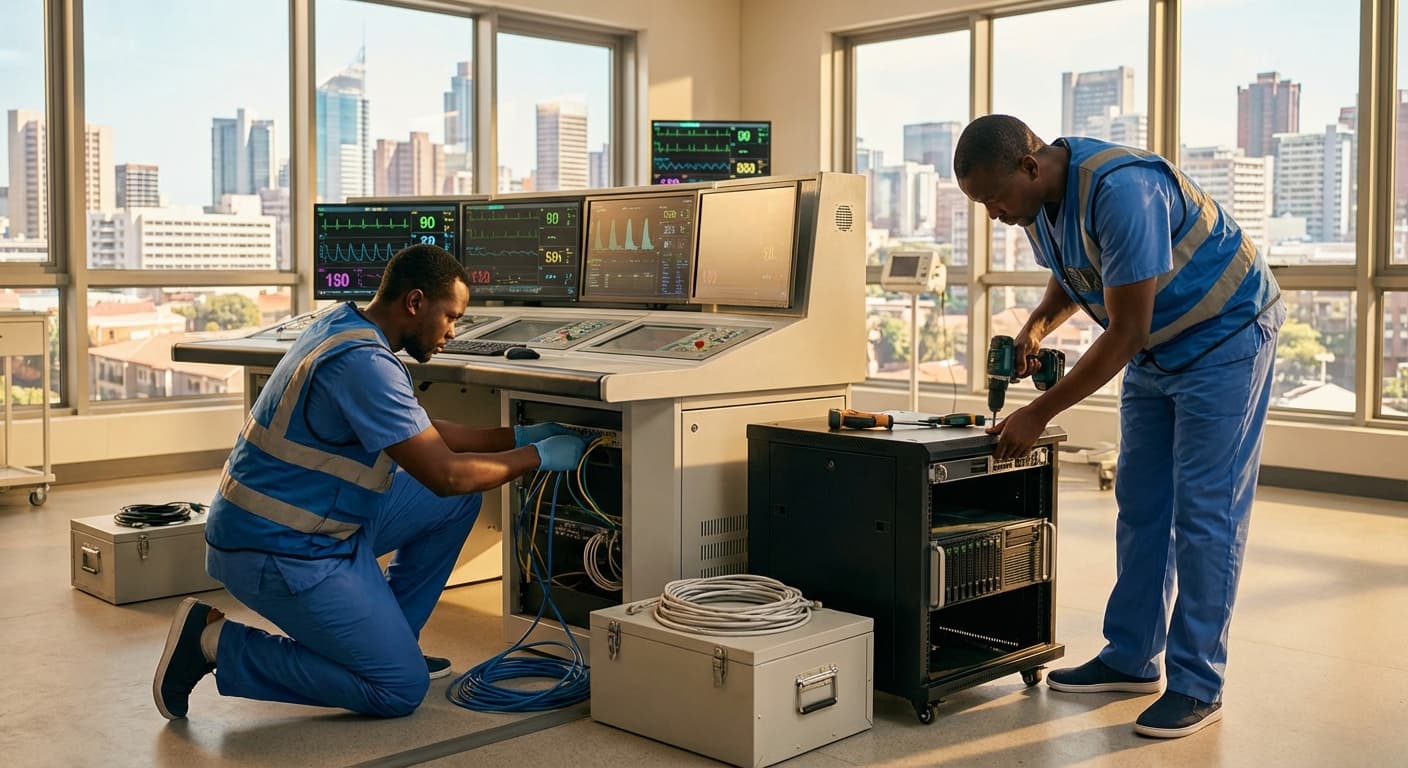
ICU Central Monitoring Station Installation Service in Chad
Engineering Excellence & Technical Support
ICU Central Monitoring Station Installation Service High-standard technical execution following OEM protocols and local regulatory frameworks.
Robust Central Monitoring Hub
Our expert technicians in Chad will install and configure a high-availability central monitoring hub, ensuring continuous data flow from all ICU bedside monitors to a centralized workstation. This includes meticulous network cabling, server setup, and integration with existing hospital infrastructure, guaranteeing seamless real-time patient data aggregation and accessibility for critical decision-making.
Secure & Redundant Network Infrastructure
We prioritize data integrity and security by deploying a secure, encrypted, and redundant network infrastructure specifically designed for the sensitive data of ICU patients in Chad. This involves strategic placement of network switches, firewalls, and redundant data pathways to prevent single points of failure and ensure uninterrupted communication between bedside monitors and the central station, even during unforeseen network disruptions.
Remote Access & Telemedicine Ready
Our installation service incorporates the capability for secure remote access and telemedicine integration, empowering healthcare professionals in Chad with the ability to monitor critical patients remotely or consult with specialists from off-site. This includes the setup of secure VPN connections and compatibility testing with telemedicine platforms, extending expert care reach across challenging geographic locations.
What Is Icu Central Monitoring Station Installation Service In Chad?
ICU Central Monitoring Station Installation Service in Chad refers to the comprehensive process of setting up and configuring a centralized system designed to monitor critically ill patients in an Intensive Care Unit (ICU). This service encompasses the physical installation of specialized hardware, integration of medical devices, deployment of network infrastructure, and configuration of software for real-time data acquisition, display, and alerting. The primary objective is to provide clinicians with a unified, real-time overview of multiple patient vital signs and physiological parameters, facilitating rapid response to critical events, optimized patient management, and improved clinical outcomes within healthcare facilities in Chad.
| Who Needs It | Typical Use Cases | |||||
|---|---|---|---|---|---|---|
| Hospitals and Tertiary Care Centers: Facilities with dedicated Intensive Care Units requiring continuous, multi-patient physiological monitoring. | Facilitating real-time tracking of vital signs (heart rate, blood pressure, oxygen saturation, respiratory rate, temperature, etc.) for multiple critically ill patients simultaneously. | Enabling early detection of patient deterioration and prompt clinical intervention through customizable alarm systems. | Improving workflow efficiency for nursing and medical staff by consolidating patient data in a single location. | Supporting data logging and retrieval for clinical review, research, and quality improvement initiatives. | Enhancing communication and coordination among the ICU care team by providing a shared view of patient status. | Facilitating remote monitoring and consultation capabilities, where applicable, by transmitting data to off-site specialists. |
Service Components
- Site Assessment and Design: Evaluation of existing ICU infrastructure, network capabilities, and power requirements to design an optimal monitoring station layout.
- Hardware Installation: Physical mounting and connection of central monitoring displays, workstations, servers, and associated networking equipment.
- Medical Device Integration: Establishing secure and reliable data links between bedside monitoring devices (e.g., ventilators, ECG monitors, invasive blood pressure transducers) and the central station.
- Network Configuration: Setting up a robust and secure network infrastructure (wired or wireless) to ensure seamless data transmission from bedside to central station.
- Software Deployment and Configuration: Installation and customization of the central monitoring software, including user profiles, alarm parameters, and data storage protocols.
- System Testing and Validation: Thorough testing of all components to ensure accurate data acquisition, reliable display, functional alarms, and data integrity.
- User Training: Comprehensive training for ICU staff on operating the central monitoring system, interpreting data, and responding to alerts.
- Documentation and Handover: Provision of detailed system documentation, operational manuals, and warranty information.
- Post-Installation Support: Ongoing technical support, maintenance, and potential upgrades to the installed system.
Who Needs Icu Central Monitoring Station Installation Service In Chad?
The installation of an ICU Central Monitoring Station (CMS) is a critical infrastructure upgrade for healthcare facilities in Chad. This technology allows for the continuous, remote observation of critically ill patients in intensive care units, significantly improving patient safety and response times. It requires specialized expertise and equipment, making professional installation services essential.
| Target Customer Type | Specific Departments/Units Involved | Rationale for CMS Installation |
|---|---|---|
| Government Hospitals | Intensive Care Unit (ICU), Cardiology, Neurology, Emergency Department | To enhance patient care standards, improve resource allocation, and ensure better outcomes for a larger patient population. |
| Private Hospitals | Intensive Care Unit (ICU), Coronary Care Unit (CCU), Neonatal Intensive Care Unit (NICU) | To offer advanced medical services, attract patients seeking high-quality critical care, and maintain a competitive edge. |
| Tertiary Care Centers | All Critical Care Units (ICU, CCU, SICU, MICU, NICU, PICU) | To facilitate comprehensive monitoring of complex cases, support specialized medical teams, and enable efficient management of multiple critical care beds. |
| Teaching Hospitals | Intensive Care Unit (ICU), Anesthesiology, Critical Care Training Programs | To provide a platform for training medical professionals in critical care monitoring, research, and development of best practices. |
| Large-Scale Medical Complexes | Multiple ICUs across different wings or specialties | To centralize monitoring for better oversight, ensure consistent patient care protocols, and streamline communication between different critical care areas. |
| NGO Healthcare Facilities | Intensive Care Unit (ICU), Emergency Response Units | To improve the capacity and effectiveness of critical care delivery in areas with limited resources, often serving vulnerable populations. |
Target Customers for ICU Central Monitoring Station Installation Services in Chad
- Government Hospitals
- Private Hospitals
- Tertiary Care Centers
- Teaching Hospitals
- Large-Scale Medical Complexes
- Non-Governmental Organization (NGO) Healthcare Facilities
Icu Central Monitoring Station Installation Service Process In Chad
This document outlines the workflow for the ICU Central Monitoring Station Installation Service in Chad, covering the entire process from initial customer inquiry to successful execution and handover. The service aims to provide healthcare facilities in Chad with robust and reliable central monitoring systems for their Intensive Care Units (ICUs), enhancing patient care and operational efficiency.
| Phase | Stage/Activity | Description | Key Stakeholders | Deliverables |
|---|---|---|---|---|
| 1 | Initial Inquiry | Customer (hospital/clinic in Chad) expresses interest in ICU central monitoring station installation. | Customer (Facility Management, IT Department, Clinical Staff), Service Provider (Sales Team) | Request for Information (RFI) or Request for Proposal (RFP) |
| 1 | Needs Assessment & Site Survey | Service provider conducts a detailed assessment of the existing infrastructure, ICU requirements, patient bed count, and power/network availability at the client's site in Chad. This includes understanding specific clinical needs and desired functionalities. | Service Provider (Technical Consultants, Project Managers), Customer (Clinical Heads, Biomedical Engineers, IT Personnel) | Site Survey Report, Needs Assessment Document |
| 2 | System Design & Proposal | Based on the needs assessment, a customized system design is developed, including hardware selection, software configuration, network architecture, and integration plan. A formal proposal with scope of work, timeline, and cost is presented. | Service Provider (System Architects, Engineers, Project Managers), Customer (Procurement, Technical Committee) | System Design Document, Detailed Proposal, Bill of Materials (BOM) |
| 2 | Contract Negotiation & Agreement | Terms and conditions are negotiated, and a service agreement is finalized, outlining responsibilities, payment schedules, and service level agreements (SLAs). | Service Provider (Legal & Commercial Teams), Customer (Legal & Procurement Departments) | Signed Service Agreement/Contract |
| 3 | Procurement of Equipment | All necessary hardware (monitoring stations, bedside monitors, network devices, cables, etc.) and software licenses are procured. This may involve international sourcing given the location in Chad. | Service Provider (Procurement Department), Suppliers | Procured Equipment & Software Licenses |
| 3 | Logistics & Shipping | Arrangements are made for the safe and timely shipment of all procured items to the designated site in Chad. This includes customs clearance and local transportation. | Service Provider (Logistics Team), Freight Forwarders, Customs Agents | Shipped Equipment, Customs Documentation |
| 4 | On-site Installation | A qualified technical team from the service provider travels to Chad to install the central monitoring station hardware, network infrastructure, and connect bedside monitors to the central system. | Service Provider (Field Engineers, Technicians), Customer (Biomedical Engineers, IT Support) | Installed Hardware, Network Cabling & Connectivity |
| 4 | Software Configuration & Integration | The central monitoring software is installed, configured, and integrated with existing hospital IT systems (e.g., Electronic Health Records - EHR) if applicable. This includes setting up user accounts and access levels. | Service Provider (Software Engineers, System Administrators), Customer (IT Department) | Configured Software, Integrated Systems |
| 5 | System Testing | Comprehensive functional and performance testing of the entire system is conducted to ensure all components are working as expected and meeting specifications. | Service Provider (Testing Engineers), Customer (Clinical Staff, Biomedical Engineers) | Test Reports |
| 5 | Calibration & Commissioning | Bedside monitors and the central station are calibrated to ensure accurate data acquisition. The system is formally commissioned, signifying its readiness for clinical use. | Service Provider (Biomedical Engineers, Field Engineers), Customer (Biomedical Engineers, Clinical Staff) | Calibration Certificates, Commissioning Report |
| 6 | User Training | Training sessions are provided to clinical staff (doctors, nurses) and technical personnel (biomedical engineers, IT) on how to operate, monitor, and perform basic troubleshooting of the central monitoring system. | Service Provider (Trainers), Customer (Clinical Staff, Biomedical Engineers, IT Staff) | Trained Personnel, Training Materials |
| 6 | Handover & Acceptance | The completed installation and commissioned system is formally handed over to the client. The client reviews and formally accepts the installation, signifying project completion. | Service Provider (Project Manager), Customer (Facility Management, Clinical Leadership) | Handover Document, Customer Acceptance Form |
| 7 | Post-Installation Support | Provision of technical support, troubleshooting assistance, and warranty services as per the service agreement. This may include remote support and scheduled site visits. | Service Provider (Support Team), Customer (Clinical & Technical Staff) | Ongoing Technical Support |
| 7 | Preventive Maintenance | Scheduled preventive maintenance activities are performed to ensure the long-term reliability and optimal performance of the installed system. | Service Provider (Maintenance Technicians), Customer (Biomedical Engineers) | Maintenance Reports |
ICU Central Monitoring Station Installation Service Workflow in Chad
- Phase 1: Inquiry and Initial Assessment
- Phase 2: Planning and Design
- Phase 3: Procurement and Logistics
- Phase 4: On-site Installation and Configuration
- Phase 5: Testing, Calibration, and Commissioning
- Phase 6: Training and Handover
- Phase 7: Post-Installation Support and Maintenance
Icu Central Monitoring Station Installation Service Cost In Chad
The cost of installing an ICU Central Monitoring Station (CMS) in Chad is influenced by a variety of factors, making a precise universal price difficult to establish. These factors can significantly impact the overall budget, from the initial purchase of equipment to the ongoing support and training. Understanding these elements is crucial for healthcare facilities and government bodies in Chad planning such an installation.
Key Pricing Factors:
- Type and Complexity of CMS: The number of patient beds the system needs to monitor, the advanced features required (e.g., advanced waveform analysis, integrated EMR connectivity, remote access), and the specific functionalities (e.g., cardiac monitoring, respiratory monitoring, vital signs integration) all play a significant role. Basic systems will naturally be less expensive than highly sophisticated ones.
- Brand and Manufacturer: Reputable international brands known for their reliability and advanced technology often come with a higher price tag compared to lesser-known or regional manufacturers. The warranty, after-sales support, and availability of spare parts from a particular brand also influence cost.
- Equipment Scope and Quantity: This includes the central display units, bedside patient monitors (each with their own sensors and modules), networking hardware (cables, switches, servers), power backup systems (UPS, generators), and potentially dedicated IT infrastructure.
- Installation and Commissioning Services: The complexity of the installation, the number of technicians required, the duration of the on-site work, and any specialized calibration or testing needed will contribute to the service cost. This also includes the setup of network infrastructure and integration with existing hospital systems.
- Training and Skill Development: Comprehensive training for medical staff (nurses, doctors) and IT personnel on operating and maintaining the CMS is a vital component. The extent and duration of this training, and whether it involves international trainers, will affect the price.
- Geographic Location within Chad: While Chad is a large country, installation in more remote areas might incur higher transportation and logistics costs for equipment and personnel. Proximity to major urban centers like N'Djamena can sometimes reduce these additional expenses.
- Import Duties, Taxes, and Regulations: As with any imported medical equipment, Chad's import duties, taxes, and any specific regulatory compliance requirements for medical devices will add to the total cost.
- After-Sales Support and Maintenance Contracts: Long-term service agreements, including preventative maintenance, emergency repairs, and software updates, are often priced separately or bundled into a higher initial cost. The level of support required (e.g., 24/7 response, guaranteed uptime) will impact the ongoing fees.
- Customization and Integration: If the CMS needs to be heavily customized to fit specific hospital workflows or integrated with existing legacy systems (e.g., old HIS or EMR systems), this will involve additional engineering and development costs.
- Infrastructure Readiness: The existing electrical infrastructure, network cabling, and server room readiness of the healthcare facility can influence the installation cost. Upgrades or new installations may be required, adding to the overall expense.
| Factor | Impact on Cost (Low to High) | Estimated Range in CFA Francs |
|---|---|---|
| CMS Complexity & Features | Low - High | 10,000,000 - 100,000,000+ |
| Number of Beds Monitored | Low - High | 5,000,000 - 80,000,000+ |
| Brand Reputation & Quality | Moderate - High | 15,000,000 - 100,000,000+ |
| Installation & Commissioning | Moderate - High | 5,000,000 - 25,000,000+ |
| Training & Skill Development | Moderate - High | 2,000,000 - 10,000,000+ |
| Import Duties & Taxes | Moderate - High | Variable (based on equipment value and regulations) |
| After-Sales Support & Maintenance | Variable (often annual) | 750,000 - 18,000,000+ (annual) |
| Location-Specific Logistics | Low - Moderate | 1,000,000 - 5,000,000+ |
Estimated Pricing Ranges for ICU Central Monitoring Station Installation Services in Chad (in CFA Francs)
- Basic ICU CMS (e.g., for 4-8 beds, essential vital signs monitoring, limited features): 15,000,000 - 30,000,000 CFA Francs
- Intermediate ICU CMS (e.g., for 8-16 beds, advanced waveform analysis, basic EMR integration): 30,000,000 - 60,000,000 CFA Francs
- Advanced/Comprehensive ICU CMS (e.g., for 16+ beds, full EMR integration, remote access, advanced diagnostics): 60,000,000 - 120,000,000+ CFA Francs
- Annual Maintenance & Support Contracts (typically 5-15% of initial equipment cost): 750,000 - 18,000,000+ CFA Francs annually
Affordable Icu Central Monitoring Station Installation Service Options
Investing in a robust ICU Central Monitoring Station (CMS) is crucial for optimal patient care and efficient clinical workflows. While the initial outlay can seem significant, understanding value bundles and implementing cost-saving strategies can make this essential technology more accessible. This guide outlines options for affordable CMS installation, focusing on how to maximize value and minimize expenses without compromising on critical functionality and reliability.
| Value Bundle Type | Description | Cost-Saving Strategies | Typical Inclusions |
|---|---|---|---|
| Starter Bundle | Designed for smaller ICUs or those with basic monitoring requirements. Focuses on core functionalities. | Opt for essential features only; avoid premium add-ons initially. Consider refurbished equipment for non-critical components. | Central display unit, basic waveform display, alarm management for a limited number of beds, essential data logging. |
| Standard Bundle | A balanced offering suitable for most mid-sized ICUs, including enhanced features for improved workflow. | Negotiate bundled pricing for hardware and software. Explore phased implementation to spread costs. | Expanded bed capacity, advanced alarm configurations, trend data visualization, basic EMR integration, remote viewing capabilities. |
| Advanced Bundle | Comprehensive solution for larger or specialized ICUs, offering advanced analytics, integration, and scalability. | Leverage vendor financing options. Prioritize interoperability with existing systems to minimize custom integration costs. | High bed capacity, advanced data analytics, full EMR integration, sophisticated alarm reporting, mobile access, support for specialized monitoring devices. |
| Customizable Bundle | Allows facilities to cherry-pick specific modules and features to precisely match their unique needs and budget. | Carefully prioritize features based on clinical impact and ROI. Negotiate per-module pricing. | Tailored selection of display options, alarm types, data management features, and integration modules. |
Key Considerations for Affordable CMS Installation
- Needs Assessment: Accurately defining your current and future monitoring needs is paramount to avoid overspending on unnecessary features.
- Scalability: Choosing a system that can grow with your facility prevents costly upgrades down the line.
- Integration Capabilities: Ensuring compatibility with existing hospital IT infrastructure and other medical devices can reduce implementation time and associated costs.
- Vendor Reputation & Support: Partnering with a reputable vendor ensures system reliability, reduces downtime, and offers valuable technical support.
- Training: Factor in the cost and importance of comprehensive staff training for optimal system utilization and reduced errors.
- Long-Term Maintenance: Understand the ongoing costs of software updates, hardware maintenance, and service contracts.
Verified Providers In Chad
Finding trustworthy healthcare providers is paramount, especially in regions where access to reliable medical services can be challenging. In Chad, verifying the credentials and expertise of healthcare professionals is crucial for ensuring quality patient care. Franance Health has established itself as a leading organization dedicated to connecting individuals with verified and highly qualified medical practitioners. Their rigorous vetting process and commitment to transparency make them an indispensable resource for anyone seeking dependable healthcare in Chad. This document outlines the credentials Franance Health looks for in its providers and explains why this commitment to verification makes them the best choice for your health needs.
| Provider Type | Key Credentials Verified by Franance Health | Why this matters to patients |
|---|---|---|
| General Practitioners | Valid Medical License, Primary Medical Degree, Proof of Practice Experience, Good Standing with Medical Council | Ensures a foundational understanding of common health issues and the ability to provide essential primary care. |
| Specialist Physicians (e.g., Cardiologists, Pediatricians, Surgeons) | Valid Medical License, Primary Medical Degree, Specialized Residency/Fellowship Completion, Board Certification in Specialty, Peer Reviews | Guarantees advanced expertise and specialized knowledge for complex medical conditions, leading to more accurate diagnoses and effective treatments. |
| Nurses | Registered Nurse (RN) or equivalent license, Nursing Diploma/Degree, Relevant Clinical Experience, Certifications in specific areas (e.g., critical care, midwifery) | Confirms competence in patient care, monitoring, administering treatments, and supporting physicians, contributing to overall patient well-being. |
| Pharmacists | Pharmacy License, Pharmacy Degree, Knowledge of drug interactions and dispensing protocols, Experience in dispensing medication | Ensures safe and accurate dispensing of medications, crucial for preventing adverse drug events and optimizing treatment outcomes. |
| Medical Technologists/Laboratory Staff | Relevant Certification/Degree in Medical Technology, Proficiency in laboratory procedures, Quality control adherence | Ensures accurate and reliable diagnostic testing, which is fundamental for correct diagnosis and effective treatment planning. |
Franance Health Credentialing Process Highlights
- Medical Licensure and Registration: All providers must possess current and valid medical licenses and registrations with the relevant Chadian authorities. This confirms their legal right to practice medicine.
- Educational Background Verification: Franance Health meticulously verifies the academic credentials of each healthcare professional, including their medical degrees from accredited institutions and specialized training.
- Professional Experience Assessment: A thorough review of a provider's work history, including previous roles, responsibilities, and tenure at reputable healthcare facilities, is conducted.
- Peer Recommendations and References: Positive feedback and endorsements from established and respected medical professionals within Chad are sought and evaluated.
- Specialty Board Certifications: For specialists, Franance Health confirms that they hold recognized board certifications, indicating advanced knowledge and proficiency in their chosen field.
- Criminal Background Checks: To ensure patient safety and trust, comprehensive background checks are performed on all prospective providers.
- Continuing Medical Education (CME) Compliance: Providers are required to demonstrate ongoing engagement in CME activities to stay abreast of the latest medical advancements and best practices.
- Ethical Conduct Review: Franance Health assesses a provider's commitment to ethical medical practice and patient-centered care through various assessment methods.
Scope Of Work For Icu Central Monitoring Station Installation Service
This Scope of Work (SOW) outlines the requirements for the installation of an Intensive Care Unit (ICU) Central Monitoring Station (CMS) service. The project encompasses all necessary activities from site preparation and equipment installation to system configuration, testing, commissioning, and handover. The goal is to establish a robust and reliable CMS that facilitates real-time patient monitoring, alarm management, and data acquisition within the ICU.
| Category | Task Description | Deliverables | Standard Specifications/Considerations |
|---|---|---|---|
| Site Preparation | Assess existing infrastructure (power, network, space) within the ICU and designated CMS room. | Site survey report, including recommendations for necessary upgrades. | Compliance with hospital IT and security policies, electrical codes (e.g., NEC), and HVAC requirements. |
| Equipment Procurement & Delivery | Procure all required hardware and software for the CMS (servers, workstations, displays, network components, software licenses). | Delivery confirmation, inventory list. | As per approved Bill of Materials (BOM) and vendor specifications. Secure handling and transport to the site. |
| CMS Hardware Installation | Install servers, workstations, large display screens, and associated peripherals in the CMS room. | Installed and cabled CMS hardware. | Ergonomic placement, proper ventilation, secure mounting, and adherence to manufacturer guidelines. Consider future scalability. |
| Network Infrastructure | Configure and connect CMS workstations and servers to the hospital network. | Configured network devices, IP addressing scheme documented. | Adherence to hospital's network security protocols, VLAN segmentation, DHCP reservations, and recommended bandwidth. |
| Software Installation & Configuration | Install CMS software, patient monitoring interface software, and relevant databases. | Installed and configured CMS software. | Latest stable version of the software, proper licensing, user role configuration, and access control. Integration with existing hospital information systems (HIS/EMR) if applicable. |
| Bedside Device Integration | Connect and configure bedside patient monitors (e.g., ECG, NIBP, SpO2, invasive BP, EtCO2) to the CMS. | Connected and communicating bedside monitors. | Compatibility with existing bedside monitor models. Use of approved network protocols (e.g., HL7, proprietary vendor protocols). Secure data transmission. |
| Alarm Management Configuration | Configure alarm parameters, priorities, audible/visual alerts, and escalation policies. | Configured alarm profiles and settings. | Clinical input for alarm thresholds, silent alarm policies, and tiered notification systems. Compliance with patient safety guidelines. |
| Data Storage & Archiving | Configure data storage and archiving mechanisms for patient monitoring data. | Configured data storage parameters and backup schedules. | Adequate storage capacity, data retention policies, regular backups (on-site/off-site), and disaster recovery plan. |
| System Testing & Validation | Perform comprehensive testing of all CMS functionalities, including data acquisition, display, alarm generation, and network connectivity. | Test cases and results documentation, performance validation report. | Simulated patient scenarios, stress testing, and user acceptance testing (UAT) with clinical staff. |
| Commissioning & Handover | Formally commission the CMS and handover the system and associated documentation to the hospital. | Commissioning certificate, final as-built drawings, user manuals, maintenance guides. | Formal sign-off by hospital representatives. Comprehensive training sessions for clinical and IT staff. |
| Training | Provide training on CMS operation, alarm management, troubleshooting, and basic maintenance. | Training materials, attendance records, and post-training assessment. | Tailored to different user groups (nurses, physicians, IT support). Hands-on practical sessions. |
| Post-Installation Support | Provide a defined period of post-installation support to address any immediate issues. | Support contact information, incident logging. | As per contractually agreed service level agreement (SLA), typically 30-90 days. |
Key Objectives
- To successfully install and integrate a fully functional ICU Central Monitoring Station.
- To ensure seamless connectivity and data flow between bedside patient monitoring devices and the CMS.
- To configure the CMS for optimal alarm management and efficient clinical workflow.
- To provide comprehensive training to end-users and technical personnel.
- To deliver all required technical documentation and as-built drawings.
Service Level Agreement For Icu Central Monitoring Station Installation Service
This Service Level Agreement (SLA) outlines the response times and uptime guarantees for the installation services provided by [Your Company Name] for the ICU Central Monitoring Station.
| Service Component | Response Time (for critical issues) | Uptime Guarantee (post-installation) | Definition of Critical Issue |
|---|---|---|---|
| Central Monitoring Station Installation | 4 business hours | N/A (Focus on successful installation) | Complete system failure preventing any monitoring. Loss of critical patient data transmission. Significant disruption to ICU operations directly attributable to the installed system. |
| Post-Installation System Health Check | 8 business hours | 99.5% (for the first 30 days post-go-live) | Partial system failure impacting more than 25% of monitored beds. Intermittent data loss impacting critical patient parameters. Alarms not functioning correctly for a significant number of patients. |
| User Training Session Support | Next business day | N/A | Inability to conduct scheduled training due to technical system issues directly caused by the installation. |
Scope of Service
- Installation of ICU Central Monitoring Station hardware and software.
- Configuration and testing of the monitoring system.
- Integration with existing hospital network infrastructure (as specified in the project scope).
- Basic user training for hospital staff.
- On-site support during the installation phase.
Frequently Asked Questions

Ready when you are
Let's scope your ICU Central Monitoring Station Installation Service in Chad project in Chad.

Scaling healthcare logistics and technical systems across the entire continent.