
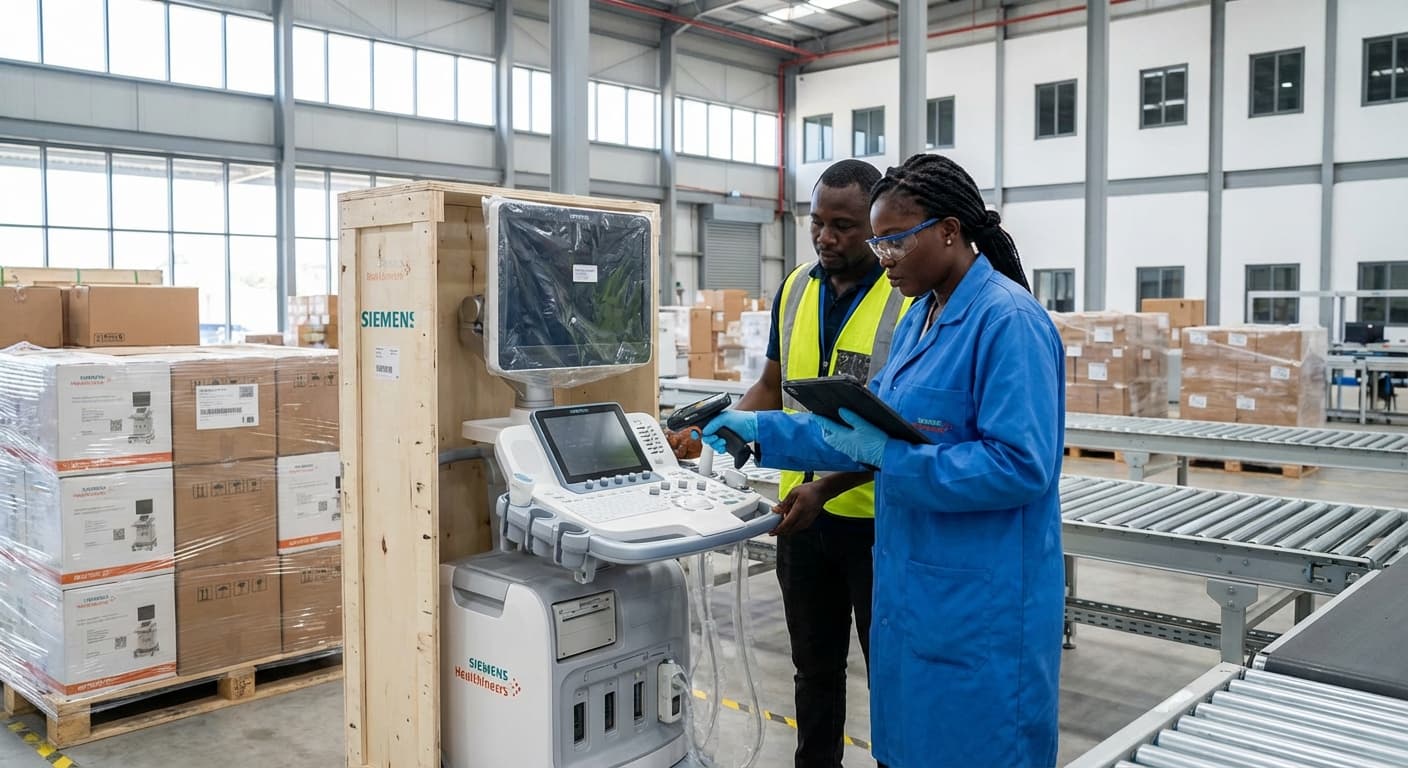
Warehouse Receiving Inspection Service (Medical Equipment) in Chad
Engineering Excellence & Technical Support
Warehouse Receiving Inspection Service (Medical Equipment) High-standard technical execution following OEM protocols and local regulatory frameworks.
Adherence to International Standards
Our receiving inspection service for medical equipment in Chad rigorously verifies compliance with international quality and safety standards (e.g., ISO 13485, WHO guidelines), ensuring all imported medical devices meet global best practices before entering the local supply chain.
Environmental Control & Monitoring
We implement advanced environmental monitoring protocols during receiving and initial warehousing in Chad, specifically for sensitive medical equipment. This includes precise measurement and logging of temperature, humidity, and other critical factors to prevent degradation and maintain product integrity.
Serial Number & Lot Tracking
Our technicians meticulously document and verify serial numbers, lot numbers, and expiry dates for all incoming medical equipment in Chad. This granular tracking provides full traceability from the point of receipt, crucial for recall management and inventory control in the healthcare sector.
What Is Warehouse Receiving Inspection Service (Medical Equipment) In Chad?
Warehouse Receiving Inspection Service (Medical Equipment) in Chad refers to a specialized quality control process undertaken upon the arrival of medical equipment at a designated warehouse or storage facility within Chad. This service is critical for ensuring that received medical devices and supplies meet specified standards, are free from damage or defects, and comply with regulatory requirements before being accepted into inventory and subsequently distributed. The inspection encompasses verification of the equipment's physical integrity, documentation, conformity to purchase orders, and adherence to relevant national and international standards for medical devices.
| Who Needs the Service? | Typical Use Cases | ||||
|---|---|---|---|---|---|
| Healthcare Providers and Facilities: Hospitals, clinics, diagnostic centers, and private medical practices that procure and receive medical equipment within Chad. | Government Health Ministries and Agencies: National health bodies responsible for the procurement, management, and distribution of medical equipment to public health facilities. | Non-Governmental Organizations (NGOs) and International Aid Organizations: Entities involved in the import and distribution of medical equipment for humanitarian or development projects in Chad. | Medical Equipment Distributors and Importers: Companies that import medical equipment into Chad for resale or distribution to end-users. | Warehousing and Logistics Providers: Third-party logistics (3PL) companies managing medical equipment storage and distribution on behalf of clients in Chad. | |
| Procurement of New Medical Devices: Ensuring newly acquired equipment meets quality and safety standards before integration into healthcare services. | Donated Medical Supplies: Verifying the condition and usability of medical equipment received as donations, especially from international sources. | Bulk Shipments: Inspecting large quantities of medical equipment to identify any systemic issues or widespread damage. | Equipment for Public Health Programs: Confirming the suitability of equipment designated for national health initiatives, such as vaccination campaigns or disease control programs. | Post-Repair/Maintenance Returns: Inspecting equipment that has undergone repairs or maintenance to ensure the work was performed correctly before reintroduction into service. | Inventory Management and Traceability: Establishing a reliable starting point for inventory records and ensuring the traceability of medical equipment. |
Key Components of Warehouse Receiving Inspection Service (Medical Equipment):
- Documentation Verification: Cross-referencing received shipments against purchase orders, invoices, packing lists, certificates of origin, quality certificates, and any other required import or regulatory documentation.
- Visual Inspection: Assessing the physical condition of the equipment for any signs of damage, tampering, corrosion, or manufacturing defects. This includes checking packaging integrity, labels, and overall aesthetic condition.
- Quantity Verification: Counting and confirming that the quantity of each item received matches the documentation.
- Identification and Labeling Verification: Ensuring that equipment is correctly identified with serial numbers, model numbers, batch numbers, and expiration dates (where applicable), and that these match the accompanying documentation.
- Basic Functionality Testing (if applicable and feasible): For certain types of equipment, a preliminary check of basic functions may be performed to ensure it is not obviously non-operational upon receipt. This is typically a visual or simple power-on test, not a comprehensive performance validation.
- Compliance Checks: Verifying that the equipment meets applicable national (e.g., Chad's Ministry of Health regulations) and international standards (e.g., ISO, WHO guidelines) for medical devices.
- Environmental Condition Assessment: Noting and documenting the environmental conditions (e.g., temperature, humidity) during the receiving process, which can impact equipment integrity.
- Reporting and Defect Documentation: Thoroughly documenting any discrepancies, damages, or non-conformities identified during the inspection, including photographic evidence, and generating detailed inspection reports.
- Quarantine and Release Procedures: Implementing established protocols for quarantining non-conforming items and facilitating the formal release of acceptable items into inventory.
Who Needs Warehouse Receiving Inspection Service (Medical Equipment) In Chad?
Warehouse Receiving Inspection Service for Medical Equipment in Chad is crucial for ensuring the quality, safety, and efficacy of imported medical devices and supplies. This service acts as a vital gatekeeper, preventing substandard, damaged, or counterfeit products from entering the healthcare supply chain. It is particularly important in contexts like Chad where regulatory oversight and existing infrastructure may be less robust, making the need for independent verification paramount. This service benefits a wide range of organizations involved in the procurement and distribution of medical equipment.
| Target Customer Type | Key Departments/Units Involved | Primary Need for Inspection Service | Potential Benefits |
|---|---|---|---|
| Government Ministries and Agencies (e.g., Ministry of Health) | Procurement Department, Quality Assurance Unit, Regulatory Affairs | Ensuring compliance with national standards and regulations, preventing fraud, safeguarding public health, efficient use of public funds. | Improved patient safety, reduced risk of medical errors due to faulty equipment, enhanced reputation of public health system, cost savings through rejection of defective goods. |
| Hospitals and Healthcare Facilities (Public and Private) | Procurement Department, Biomedical Engineering Department, Pharmacy, Clinical Departments (e.g., Surgery, Radiology) | Verifying received equipment matches specifications, is in good working order, and is safe for patient use. Avoiding costly returns or replacements. | Improved patient care outcomes, reduced downtime of critical equipment, enhanced staff confidence in medical devices, compliance with internal quality standards. |
| Non-Governmental Organizations (NGOs) and International Aid Agencies | Logistics and Procurement Department, Program Management, Quality Control | Ensuring donated or procured medical supplies meet the needs of the target population and are of acceptable quality. Meeting donor requirements for accountability. | Effective delivery of humanitarian aid, maximizing the impact of resources, maintaining donor trust, ensuring beneficiaries receive safe and effective medical interventions. |
| Medical Equipment Importers and Distributors | Import/Export Department, Quality Control/Assurance, Warehouse Management | Confirming shipment integrity upon arrival, verifying quantities and specifications, identifying any transit damage before accepting delivery. Facilitating smooth customs clearance. | Reduced financial losses from damaged goods, streamlined supply chain operations, improved customer satisfaction, adherence to manufacturer specifications. |
| Pharmaceutical Wholesalers | Warehouse Management, Quality Assurance, Inventory Control | Inspecting received medical devices and supplies that may be part of a pharmaceutical shipment, ensuring their integrity and suitability for distribution. | Maintaining the quality and safety of the broader pharmaceutical supply chain, preventing cross-contamination or damage to sensitive medical products. |
| Clinical Laboratories | Procurement Officer, Laboratory Manager, Quality Manager | Verifying the accuracy and functionality of laboratory equipment and reagents before integration into diagnostic workflows. | Ensuring reliable diagnostic results, preventing misdiagnosis due to faulty equipment, maintaining laboratory accreditation standards. |
| Research Institutions | Procurement Officer, Research Coordinator, Laboratory Manager | Ensuring specialized research equipment and consumables meet stringent specifications and are free from defects that could compromise research integrity. | Protecting research validity, maximizing the return on investment in research equipment, facilitating successful scientific outcomes. |
Target Customers for Warehouse Receiving Inspection Service (Medical Equipment) in Chad
- Government Ministries and Agencies
- Hospitals and Healthcare Facilities (Public and Private)
- Non-Governmental Organizations (NGOs) and International Aid Agencies
- Medical Equipment Importers and Distributors
- Pharmaceutical Wholesalers
- Clinical Laboratories
- Research Institutions
Warehouse Receiving Inspection Service (Medical Equipment) Process In Chad
This document outlines the workflow for the Warehouse Receiving Inspection Service for Medical Equipment in Chad, from initial inquiry to final execution. The service ensures that all incoming medical equipment meets specified quality, safety, and regulatory standards before being accepted into the warehouse. This process is crucial for maintaining the integrity of medical supplies and ensuring their efficacy for healthcare delivery in Chad.
| Stage | Description | Key Activities | Responsible Parties | Deliverables |
|---|---|---|---|---|
| Client expresses interest in the Warehouse Receiving Inspection Service for medical equipment. | Client contacts inspection service provider. Discussion of general requirements, equipment types, and volume. Understanding of client's needs and expectations. | Client, Inspection Service Provider (ISP) | Understanding of client's needs, preliminary assessment of service feasibility. |
| Detailed understanding of the specific inspection requirements and development of a tailored service proposal. | ISP gathers detailed information on equipment types, quantities, origin, applicable standards (e.g., WHO, national regulations), and desired inspection points. ISP develops a detailed scope of work, methodology, and pricing. Proposal submission to the client. | ISP, Client | Detailed Scope of Work, Inspection Plan, Service Proposal, Quotation. |
| Formalization of the service agreement between the client and the inspection service provider. | Client reviews and accepts the proposal. Negotiation of terms and conditions. Signing of a formal contract/service agreement. Payment of any upfront fees/deposits as per contract. | Client, ISP | Signed Contract/Service Agreement, Payment Confirmation. |
| Advance notification to all relevant parties regarding the scheduled inspection. | Client provides ISP with shipment details (e.g., Bill of Lading, packing list, expected arrival date/time). ISP schedules inspection with warehouse staff and client representatives. Confirmation of inspection date and time. | Client, ISP, Warehouse Staff | Inspection Schedule, Confirmation of Inspection Date/Time. |
| Physical inspection of the medical equipment upon arrival at the warehouse. | ISP inspectors arrive at the designated warehouse. Verification of identity and quantity of received equipment against documentation. Visual inspection for damage, defects, and conformity to specifications. Checking of packaging integrity and labeling. Verification of serial numbers and batch numbers. Sampling for laboratory testing if required. Recording of observations and any non-conformities. | ISP Inspectors, Warehouse Staff, Client Representative (optional) | Completed Inspection Checklist, Photographic Evidence (if applicable), Samples (if taken). |
| Compilation and submission of a comprehensive inspection report to the client. | ISP analyzes inspection findings. Preparation of a detailed inspection report outlining conformity, non-conformities, observations, and recommendations. Report includes details of equipment inspected, findings, and visual aids. Report submission to the client. | ISP | Comprehensive Inspection Report, Non-Conformance Report (if applicable). |
| Addressing any identified non-conformities and ensuring corrective actions are taken. | Client reviews the inspection report. ISP provides clarification on findings. Client initiates corrective actions for non-conformities (e.g., return of damaged goods, repair, replacement). ISP may conduct follow-up inspections to verify corrective actions. | Client, ISP | Evidence of Corrective Actions, Confirmation of Resolution. |
| Finalization of the inspection service and project closure. | Upon successful resolution of any non-conformities and client satisfaction, the service is officially closed. Final invoicing and payment processing. Archiving of all project documentation. | Client, ISP | Final Invoice, Payment Confirmation, Project Closure Confirmation, Archived Records. |
Warehouse Receiving Inspection Service (Medical Equipment) Process - Chad
- Inquiry & Initial Consultation
- Scope Definition & Proposal
- Agreement & Contract
- Pre-Inspection Notification
- On-Site Inspection Execution
- Reporting & Documentation
- Resolution & Follow-up
- Service Closure
Warehouse Receiving Inspection Service (Medical Equipment) Cost In Chad
The cost of warehouse receiving inspection services for medical equipment in Chad is influenced by several key factors. These include the volume and complexity of the equipment being inspected, the required turnaround time, the level of detail in the inspection (e.g., basic visual check versus full functional testing), the geographical location of the warehouse within Chad, and the reputation and expertise of the inspection service provider. For specialized or high-value medical equipment, more rigorous testing protocols will naturally increase the cost. Logistical challenges within Chad, such as transportation and accessibility to remote areas, can also contribute to higher service fees. Service providers may offer tiered pricing based on the number of items inspected or a daily rate for comprehensive on-site services.
| Service Level/Scope | Estimated Cost Range (XAF - Central African CFA franc) |
|---|---|
| Basic Visual Inspection (per item/pallet) | 5,000 - 15,000 XAF |
| Detailed Functional Check (basic medical devices) | 15,000 - 40,000 XAF per item |
| Comprehensive Inspection & Basic Testing (laboratory/diagnostic equipment) | 40,000 - 100,000 XAF per item |
| Full Calibration & Performance Verification (complex/high-value medical equipment) | 100,000 - 500,000+ XAF per item (depending on complexity and specialized skills required) |
| Daily Rate for On-site Inspection Team | 150,000 - 600,000 XAF per day (can vary significantly based on team size and expertise) |
Key Pricing Factors for Warehouse Receiving Inspection Services (Medical Equipment) in Chad:
- Volume and complexity of medical equipment
- Required inspection turnaround time
- Depth and scope of inspection (visual, functional, calibration)
- Geographical location of the warehouse
- Provider's reputation and specialization
- Nature of the medical equipment (specialized, high-value)
- Logistical challenges and accessibility
- On-site vs. off-site inspection
- Reporting requirements and documentation detail
Affordable Warehouse Receiving Inspection Service (Medical Equipment) Options
Securing a reliable and cost-effective warehouse receiving inspection service for medical equipment is crucial for maintaining compliance, patient safety, and operational efficiency. This service ensures that incoming medical devices meet specifications, are free from damage, and are properly documented before entering your inventory. We explore affordable options, focusing on value bundles and effective cost-saving strategies.
| Value Bundle Option | Included Services | Ideal For | Estimated Cost Range (Per Inspection/Item) | Cost-Saving Strategies |
|---|---|---|---|---|
| Basic Compliance Check | Visual Inspection, Documentation Review, Lot/Batch Verification, Basic Reporting | Low-risk, high-volume equipment; initial entry into inventory | $15 - $40 | Standardize inspection checklists, train internal staff for basic checks, batch processing of similar items. |
| Standard Operational Readiness | Basic Compliance Check + Basic Functional Testing, Detailed Reporting | Mid-range risk equipment, general medical supplies | $35 - $85 | Negotiate volume discounts with service providers, consolidate inspections for multiple shipments, leverage technology for faster reporting. |
| Comprehensive Quality Assurance | Standard Operational Readiness + Pre-defined Quality Control Checks (e.g., specific parameter verification for high-value items) | High-risk, critical medical equipment, specialized devices | $70 - $200+ | Partner with specialized providers for niche equipment, conduct risk assessments to focus on critical inspection points, build long-term contracts for predictable pricing. |
| On-Demand / As-Needed Service | Customizable based on immediate need (can be any of the above) | Fluctuating inventory levels, small to medium-sized operations | $50 - $150+ (often with minimums) | Clearly define scope of work for each request to avoid scope creep, provide accurate volume forecasts to service provider for better resource allocation. |
Key Components of a Medical Equipment Receiving Inspection Service
- {"title":"Visual Inspection","description":"Checking for external damage, correct labeling, and completeness of accessories."}
- {"title":"Documentation Review","description":"Verifying purchase orders, packing lists, certificates of conformance, and serial numbers."}
- {"title":"Functional Testing (Basic)","description":"Performing essential operational checks to ensure the equipment powers on and basic functions are operational. More in-depth testing may be a separate service."}
- {"title":"Lot/Batch Number Verification","description":"Ensuring correct lot or batch numbers are recorded for traceability."}
- {"title":"Environmental Condition Check","description":"Assessing if the equipment has been exposed to adverse conditions during transit."}
- {"title":"Reporting","description":"Providing detailed reports of findings, including any discrepancies or damage."}
Verified Providers In Chad
Navigating healthcare in Chad requires access to reliable and verified providers. Franance Health stands out as a premier organization committed to ensuring the highest standards of care. Their rigorous credentialing process, combined with a dedication to patient well-being, makes them the optimal choice for individuals and families seeking quality medical services in Chad. Franance Health's commitment extends beyond mere certification; it encompasses a holistic approach to healthcare accessibility, affordability, and quality assurance. By partnering with them, you gain access to a network of professionals who are not only skilled but also adhere to ethical practices and patient-centered care principles. This meticulous vetting process is crucial in a region where identifying trustworthy healthcare options can be challenging, offering peace of mind and confidence in the medical services received.
| Provider Type | Franance Health Credentialing Focus | Benefits for Patients |
|---|---|---|
| General Practitioners | Medical degree, licensing, clinical experience, patient feedback integration, adherence to diagnostic protocols. | Accurate diagnosis, effective primary care, referrals to specialists when needed, holistic health management. |
| Specialist Physicians (e.g., Cardiologists, Pediatricians) | Board certification in specialty, extensive specialized training, successful case management, up-to-date knowledge in their field. | Expert diagnosis and treatment for specific conditions, access to advanced medical knowledge, improved treatment outcomes for complex health issues. |
| Surgeons | Surgical training and certification, proven surgical outcomes, adherence to sterile procedures, post-operative care protocols. | Safe and effective surgical interventions, reduced risk of complications, comprehensive pre- and post-operative care. |
| Nurses | Nursing licensure, specialized training (e.g., critical care, pediatric nursing), patient care skills, communication abilities. | Compassionate and skilled bedside care, assistance with treatment plans, patient education and support. |
| Diagnostic Technicians (e.g., Radiologists, Lab Technicians) | Certification in their respective fields, proficiency with diagnostic equipment, accuracy in reporting results, adherence to safety standards. | Reliable and accurate diagnostic information, timely test results, supporting accurate medical decision-making. |
Why Franance Health Credentials Matter:
- Rigorous Verification Process: Franance Health employs a multi-faceted verification system for all its associated healthcare providers, ensuring they meet established standards of expertise, education, and professional conduct.
- Commitment to Quality: Beyond basic licensing, Franance Health assesses providers on their commitment to delivering high-quality patient care, including patient outcomes, satisfaction, and adherence to best practices.
- Ethical Standards: All credentialed providers are expected to uphold the highest ethical standards, promoting transparency, respect, and patient autonomy.
- Continuous Monitoring: Franance Health's commitment doesn't end with initial credentialing; they engage in ongoing monitoring to ensure providers maintain their standards and adapt to evolving medical knowledge.
- Patient-Centric Approach: The credentialing process emphasizes providers who demonstrate a genuine focus on patient needs, communication, and personalized treatment plans.
- Access to Trusted Networks: By choosing Franance Health, you are assured access to a network of healthcare professionals who have been thoroughly vetted and are dedicated to your well-being.
Scope Of Work For Warehouse Receiving Inspection Service (Medical Equipment)
This Scope of Work (SOW) outlines the services to be provided for the inspection of incoming medical equipment at the designated warehouse facility. The primary objective is to ensure that all received medical equipment meets predefined quality, safety, and regulatory standards before being accepted into inventory. This service is critical for maintaining product integrity, patient safety, and compliance with relevant medical device regulations.
| Service Component | Description | Technical Deliverables | Standard Specifications / Acceptance Criteria |
|---|---|---|---|
| Receipt Verification | Confirming the accuracy of incoming shipments against documentation. | Signed and dated packing slips/receipts, discrepancy reports for any overages, shortages, or incorrect items. | Match between received items and purchase order quantities, item descriptions, and part numbers. No visible damage to shipping containers that would impact contents. |
| Physical Inspection | Visual examination of medical equipment for defects and damage. | Detailed inspection reports with photographic evidence of any findings, condition reports for each item. | No visible cracks, dents, scratches, or missing components. Functionality should be visually assessable (e.g., no loose parts, proper assembly). Equipment must be clean and free from debris. |
| Documentation Review | Verification of accompanying documentation for compliance and completeness. | Checklists confirming the presence and accuracy of user manuals, certificates of conformity, sterilization records (if applicable), and warranty information. Copies of key documents to be retained by the client. | All required documentation as per manufacturer's specifications and client's purchase order must be present. Documentation must be current and legible. Regulatory markings (e.g., CE, FDA cleared) must be clearly visible and valid. |
| Labeling and Identification Verification | Ensuring proper labeling and identification of medical equipment. | Verification that serial numbers, model numbers, manufacturing dates, and expiration dates (if applicable) match documentation and are clearly visible on the equipment and its packaging. | Labels must be securely affixed, legible, and contain all required information as per regulatory standards and manufacturer specifications. No signs of tampering or alteration. |
| Compliance Check (Basic) | Initial verification of regulatory compliance markers. | Confirmation of presence of relevant compliance marks (e.g., CE, UL) and basic checks against provided regulatory documentation. | Visible and clear compliance marks. Basic alignment with provided manufacturer's declarations of conformity or regulatory approval documents. |
| Non-Conformance Reporting | Documentation and reporting of any deviations from standards. | Formal Non-Conformance Reports (NCRs) detailing the issue, affected item(s), date of discovery, and supporting evidence (photos, descriptions). Escalation of critical issues to designated client contact. | NCRs must be submitted within 24 hours of discovery for significant issues, or as otherwise agreed. NCRs must be clear, concise, and actionable. |
| Data Logging and Reporting | Maintaining a record of all inspection activities and findings. | Daily/Weekly inspection summary reports, final acceptance/rejection reports for each shipment, and a cumulative database of all inspection data. | Reports to be submitted electronically within agreed-upon timeframes. Data accuracy and completeness are paramount. |
Key Objectives
- Verify the accurate receipt of ordered medical equipment against purchase orders and shipping manifests.
- Inspect medical equipment for any physical damage, defects, or inconsistencies.
- Confirm that the received equipment matches the specified model, serial number, and configuration.
- Ensure compliance with all relevant regulatory requirements (e.g., FDA, CE marking) and manufacturer specifications.
- Document all inspection findings, including any discrepancies or non-conformities.
- Facilitate the prompt reporting and resolution of issues with suppliers and relevant internal departments.
Service Level Agreement For Warehouse Receiving Inspection Service (Medical Equipment)
This Service Level Agreement (SLA) outlines the agreed-upon service levels for the Warehouse Receiving Inspection Service for Medical Equipment provided by [Your Company Name] (hereinafter referred to as "Provider") to [Client Company Name] (hereinafter referred to as "Client"). This SLA defines the response times and uptime guarantees to ensure efficient and compliant receipt of medical equipment.
| Service Element | Metric | Target | SLA Commitment |
|---|---|---|---|
| Receipt Notification | Time from notification of incoming shipment to acknowledgment by Provider | 2 Business Hours | Provider will acknowledge receipt of shipment notification within 2 business hours. |
| Inspection Commencement | Time from acknowledgment to commencement of physical inspection | 4 Business Hours (for standard shipments) | Provider will commence inspection of standard shipments within 4 business hours of acknowledgment. Expedited inspections can be arranged at an additional cost. |
| Inspection Documentation & Reporting | Time from completion of inspection to submission of inspection report | 8 Business Hours | Provider will submit the inspection report within 8 business hours of completing the physical inspection. |
| Critical Discrepancy Notification | Time from identification of critical discrepancy (e.g., significant damage, wrong product) to notification to Client | 1 Business Hour | Provider will immediately notify the Client upon identification of any critical discrepancies. |
| Service Availability | Uptime of the inspection service during agreed operational hours | 99.5% | The Warehouse Receiving Inspection Service will be available 99.5% of the time during the Client's agreed operational hours (Monday-Friday, 8:00 AM - 5:00 PM Local Time, excluding public holidays). |
| Reporting System Availability | Uptime of the system used for reporting inspection results | 99.9% | The reporting system will be available 99.9% of the time, excluding scheduled maintenance. |
Scope of Service
- Inspection of incoming medical equipment at the Client's designated warehouse facility.
- Verification of shipment contents against purchase orders and packing lists.
- Visual inspection for damage, defects, and proper packaging.
- Confirmation of serial numbers, lot numbers, and expiration dates (where applicable).
- Documentation of inspection findings, including discrepancies and damages.
- Reporting of inspection results to the Client within the defined timeframes.
Frequently Asked Questions

Ready when you are
Let's scope your Warehouse Receiving Inspection Service (Medical Equipment) in Chad project in Chad.

Scaling healthcare logistics and technical systems across the entire continent.