
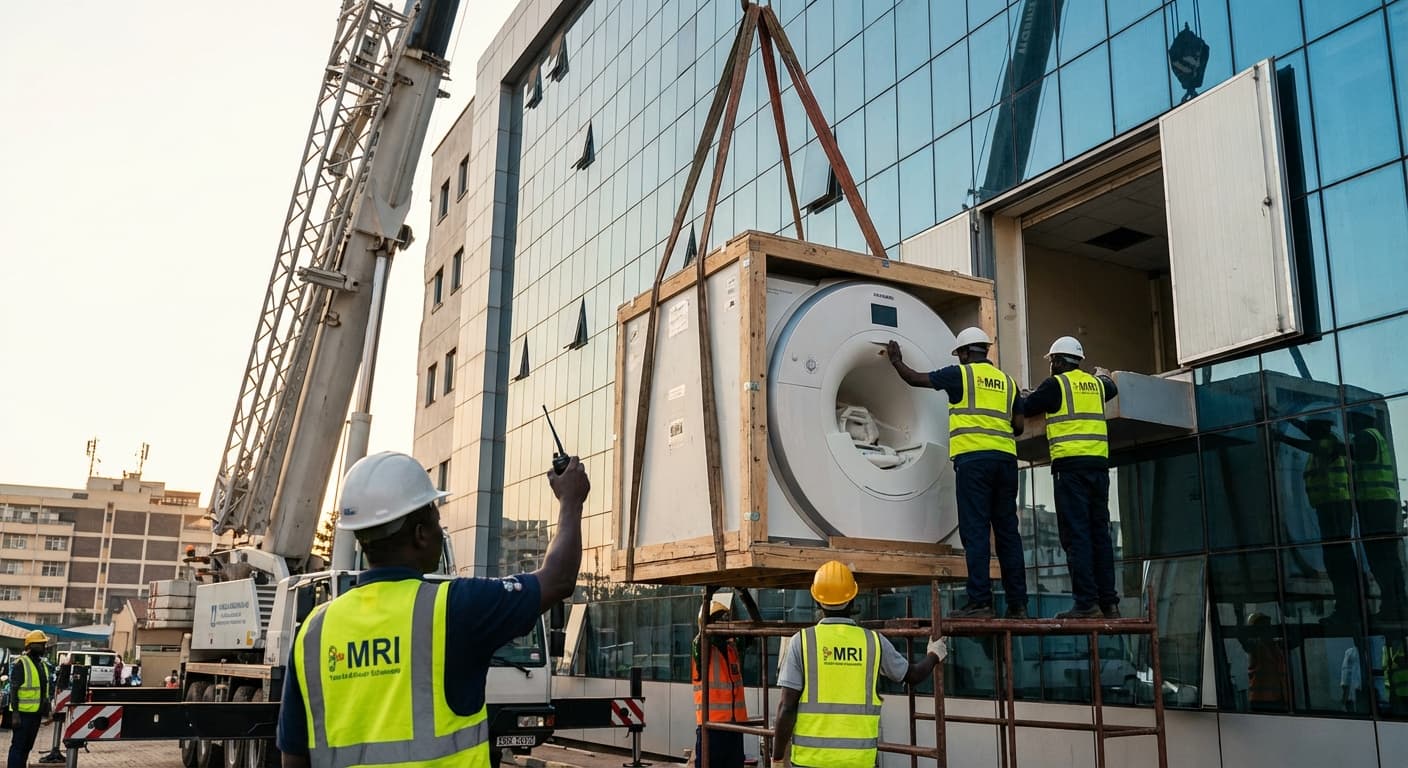
Cranage & Rigging Supervision Service in Chad
Engineering Excellence & Technical Support
Cranage & Rigging Supervision Service High-standard technical execution following OEM protocols and local regulatory frameworks.
Heavy Lift Expertise in Remote Locations
Successfully supervised the safe and efficient lifting and positioning of oversized and overweight modules for a critical oil & gas infrastructure project in the remote southern regions of Chad, overcoming logistical challenges and extreme environmental conditions.
Wind Turbine Installation & Maintenance
Managed complex rigging operations for the installation of wind turbines in fluctuating wind conditions, ensuring adherence to strict safety protocols and manufacturer specifications, thereby contributing to Chad's renewable energy development.
Advanced Inspection & Risk Assessment
Conducted thorough pre-lift inspections and comprehensive risk assessments for all lifting operations, utilizing advanced survey techniques and adhering to international standards to mitigate potential hazards and ensure zero incident rates.
What Is Cranage & Rigging Supervision Service In Chad?
Cranage & Rigging Supervision Service in Chad refers to the professional oversight and management of lifting operations involving cranes and rigging equipment. This service ensures that all lifting activities are conducted safely, efficiently, and in compliance with relevant international and local safety standards. It encompasses planning, execution, monitoring, and post-operation review of all lifting processes, from the assessment of loads and the selection of appropriate equipment to the coordination of personnel and the final placement of the lifted item. The primary objective is to mitigate risks, prevent accidents, and optimize the overall lifting process within the operational context of Chad.
| Who Needs Cranage & Rigging Supervision? | Typical Use Cases |
|---|---|
| Industries: Oil & Gas (exploration, production, refining), Construction (heavy civil, industrial, infrastructure), Mining, Power Generation (construction & maintenance), Manufacturing (heavy machinery installation & relocation), Logistics & Port Operations, Renewable Energy (wind turbine installation). | Use Cases:
|
| Project Types: Greenfield and brownfield construction projects, plant turnarounds and shutdowns, major infrastructure developments, remote site operations. | Specific Scenarios:
|
| Companies: EPC contractors, project owners, operational facilities management, specialized lifting service providers. | General Requirements: Any situation involving the lifting of significant loads that could pose a safety risk or require specialized expertise for efficient execution. |
Key Components of Cranage & Rigging Supervision Service
- Pre-lift Planning & Assessment: Detailed analysis of the lift, including load weight and dimensions, center of gravity, lifting points, environmental conditions (wind, visibility), and the surrounding work area.
- Equipment Selection & Inspection: Ensuring the crane and all rigging gear (slings, shackles, spreader beams, etc.) are of the correct capacity, in good condition, and certified for use.
- Personnel Qualification Verification: Confirming that all personnel involved (crane operators, riggers, signalmen, supervisors) are adequately trained, certified, and experienced.
- Method Statement Development & Review: Creating or scrutinizing detailed procedures for the specific lift, outlining step-by-step instructions, safety precautions, and communication protocols.
- On-Site Supervision & Execution: Direct oversight of the lifting operation, including positioning of equipment, guiding the lift, communicating with the operator, and ensuring adherence to the method statement.
- Risk Management & Hazard Mitigation: Proactive identification and control of potential hazards, including establishing exclusion zones, managing ground conditions, and implementing emergency procedures.
- Communication & Coordination: Facilitating clear and concise communication between all parties involved in the lifting operation.
- Post-Lift Analysis & Reporting: Documenting the lifting operation, identifying any lessons learned, and providing reports on performance and safety compliance.
- Compliance Assurance: Ensuring adherence to Chad's national safety regulations, as well as international standards such as those set by ISO, ASME, and LEEA.
Who Needs Cranage & Rigging Supervision Service In Chad?
Cranage & Rigging Supervision Services in Chad are essential for a wide range of industrial and construction projects that involve the lifting, moving, and installation of heavy or oversized equipment. These services are crucial for ensuring safety, efficiency, and the successful execution of complex operations. The primary need arises when standard lifting equipment or in-house expertise is insufficient, or when specialized knowledge is required to manage high-risk lifting scenarios.
| Target Customer/Industry | Key Departments/Roles Requiring Supervision |
|---|---|
| Oil & Gas Exploration and Production | Project Management, Operations, Maintenance, Drilling Departments, Engineering |
| Petrochemical Refineries | Project Engineering, Turnaround Management, Maintenance, Operations |
| Power Generation Plants (Thermal, Hydro, Renewable) | Project Engineering, Construction Management, Maintenance, Turbine Installation Teams |
| Mining Operations (Surface & Underground) | Mine Operations Management, Plant Engineering, Maintenance, Equipment Installation Teams |
| General Construction Companies (Large Projects) | Site Management, Construction Managers, Project Managers, Structural Engineering, Pre-commissioning Teams |
| Infrastructure Developers (Bridges, Dams, Airports) | Project Directors, Civil Engineering, Construction Management, Site Supervisors |
| Heavy Manufacturing & Industrial Plants | Production Managers, Engineering Departments, Maintenance Teams, Installation Supervisors |
| Logistics Hubs & Port Authorities | Operations Management, Terminal Managers, Cargo Handling Supervisors |
| Government & Public Works Departments | Infrastructure Project Managers, Public Works Engineers |
| Large-Scale Equipment Installers/Suppliers | Installation Project Managers, Technical Supervisors |
Target Customers and Departments for Cranage & Rigging Supervision Services in Chad:
- Energy Sector (Oil & Gas, Power Generation)
- Mining and Extractive Industries
- Large-Scale Construction Projects
- Infrastructure Development
- Manufacturing and Industrial Plants
- Logistics and Port Operations
- Emergency Response and Disaster Relief
Cranage & Rigging Supervision Service Process In Chad
This document outlines the comprehensive Cranage & Rigging Supervision Service Process in Chad, detailing the workflow from initial client inquiry to the successful execution and completion of services. Our process is designed to ensure safety, efficiency, and compliance with all relevant regulations and standards.
| Phase | Key Activities | Deliverables/Outcomes | Responsible Parties |
|---|---|---|---|
| Phase 1: Inquiry and Initial Consultation |
| Understanding of client requirements, preliminary scope definition, initial risk assessment outline. | Client, Service Provider (Sales/Business Development) |
| Phase 2: Site Assessment and Planning |
| Comprehensive site survey report, detailed lift plan, equipment list, personnel plan, risk assessment and mitigation strategy, emergency response plan. | Service Provider (Supervisors, Engineers, Safety Officers), Client (for site access and information) |
| Phase 3: Proposal and Agreement |
| Formal service proposal, signed service agreement/contract. | Service Provider (Sales/Contracts), Client (Procurement/Project Management) |
| Phase 4: Pre-Mobilization and Resource Allocation |
| Mobilized equipment and personnel, verified certifications, confirmed logistics, pre-job safety briefings conducted. | Service Provider (Operations, Logistics, HR, Safety) |
| Phase 5: On-Site Execution and Supervision |
| Safe and efficient execution of lifts, adherence to lift plans, minimized downtime, real-time problem-solving, daily progress updates. | Service Provider (On-site Supervisors, Riggers, Signalers, Crane Operators), Client (Project Manager, Site Representatives) |
| Phase 6: Post-Execution and Reporting |
| Post-job report, equipment and site cleared, final client acceptance documentation. | Service Provider (Supervisors, Project Management), Client (Project Management) |
| Phase 7: Invoicing and Payment |
| Final invoice, payment received. | Service Provider (Finance/Accounts), Client (Finance/Accounts) |
Cranage & Rigging Supervision Service Process in Chad
- Phase 1: Inquiry and Initial Consultation
- Phase 2: Site Assessment and Planning
- Phase 3: Proposal and Agreement
- Phase 4: Pre-Mobilization and Resource Allocation
- Phase 5: On-Site Execution and Supervision
- Phase 6: Post-Execution and Reporting
- Phase 7: Invoicing and Payment
Cranage & Rigging Supervision Service Cost In Chad
Cranage and rigging supervision services in Chad are essential for ensuring the safe and efficient execution of heavy lifting operations. The cost of these services is influenced by a variety of factors, making it difficult to provide a single fixed price. Understanding these pricing elements is crucial for budgeting and selecting the right service provider. The general pricing is typically quoted in the local currency, the Chadian Franc (XAF).
| Service Component | Estimated Cost Range (XAF) | Notes |
|---|---|---|
| Experienced Rigging Supervisor (per day) | 75,000 - 200,000 | This is a broad range; highly specialized supervisors for critical lifts will be at the higher end. |
| Basic Cranage Supervision (per day) | 50,000 - 120,000 | For less complex lifts with standard crane operations. |
| Project Management/Coordination Fee (percentage of total lift cost) | 5% - 15% | May be applied for comprehensive project oversight rather than hourly supervision. |
| Mobilization/Demobilization (one-time fee) | Varies significantly based on distance and logistics | Can range from a few hundred thousand to over a million XAF for remote sites. |
| Safety Officer (specialized, per day) | 60,000 - 150,000 | Often required for complex or high-risk operations. |
Factors Influencing Cranage & Rigging Supervision Cost in Chad
- Complexity of the lift: Simple lifts requiring basic equipment and minimal supervision will be less expensive than complex, multi-crane, or hazardous lifts.
- Duration of the project: Supervision costs are usually calculated on an hourly, daily, or project basis. Longer projects will naturally incur higher overall costs.
- Type and capacity of cranes and rigging equipment: The involvement of specialized or high-capacity equipment often necessitates more experienced and higher-paid supervisors.
- Skill and experience level of the supervisor(s): Highly qualified and experienced rigging supervisors with certifications and a proven track record will command higher rates.
- Geographical location within Chad: Costs can vary slightly depending on the remoteness of the project site. Mobilization and demobilization costs for supervisors and equipment to less accessible areas will be higher.
- Number of supervisors required: For very large or critical operations, multiple supervisors may be needed, increasing the overall cost.
- Specific industry requirements and safety regulations: Certain industries (e.g., oil and gas, mining) have stringent safety protocols that may require more intensive supervision and specialized knowledge.
- Time of day/week: Overtime or work during weekends and public holidays may incur additional charges.
- Additional services: Some providers might include basic planning or consultation within their supervision fees, while others might charge separately for these.
- Insurance and liability: The level of insurance coverage provided by the supervision service can also be a cost factor.
Affordable Cranage & Rigging Supervision Service Options
Our Affordable Cranage & Rigging Supervision Service provides expert guidance and operational oversight for your lifting projects without breaking the bank. We understand that efficiency and safety are paramount, and our services are designed to deliver both. We offer flexible value bundles tailored to your project's specific needs and implement strategic cost-saving measures to ensure you receive the best possible return on your investment.
| Cost-Saving Strategy | Description | Benefit to Client |
|---|---|---|
| Efficient Lift Planning Integration | Our supervisors work collaboratively with your team from the initial planning stages, identifying potential issues and optimizing lift sequences to prevent costly delays and rework. | Reduces downtime, minimizes rework, and ensures a smoother execution. |
| Proactive Risk Mitigation | Thorough pre-lift inspections and ongoing monitoring by our experienced supervisors identify and address potential hazards before they escalate into costly accidents or incidents. | Prevents expensive damage to equipment and personnel, avoiding insurance claims and legal liabilities. |
| Optimized Resource Allocation | By providing expert supervision, we help ensure that cranes and rigging equipment are utilized efficiently, preventing over-servicing or under-utilization that can lead to increased costs. | Maximizes the lifespan of equipment and reduces unnecessary operational expenses. |
| Knowledge Transfer & Training | Our supervisors can offer on-the-job guidance and best practice recommendations to your internal teams, enhancing their skills and reducing reliance on external support for future projects. | Empowers your team, builds internal capacity, and reduces long-term service costs. |
| Volume Discounts & Package Deals | Bundling services or committing to multiple projects often unlocks significant discounts, making our comprehensive offerings even more economical. | Provides substantial savings on overall project expenditure. |
Understanding Our Value Bundles
- {"title":"Essential Supervision Package","description":"Ideal for straightforward lifts requiring focused oversight. Includes on-site supervision, pre-lift safety checks, and basic lift planning review."}
- {"title":"Comprehensive Project Support Bundle","description":"For more complex operations. Encompasses detailed lift plan development, risk assessment, on-site supervision throughout the lift, and post-lift review."}
- {"title":"Customizable On-Demand Service","description":"Flexibility at its finest. Book our expert supervisors for specific hours or days based on your project's evolving requirements, ensuring you only pay for what you need."}
- {"title":"Long-Term Contract Benefits","description":"Commit to multiple projects or extended durations and enjoy preferential rates, dedicated supervisor allocation, and streamlined booking processes."}
Verified Providers In Chad
In the challenging healthcare landscape of Chad, identifying reliable and credentialed healthcare providers is paramount for individuals and organizations seeking quality medical services. Franance Health stands out as a premier choice, offering a robust network of verified providers who meet stringent qualification criteria. This commitment to verification ensures that patients receive safe, effective, and ethical medical care. Understanding the Franance Health credentialing process highlights why their network represents the best option for healthcare access in Chad.
| Credentialing Area | Franance Health Verification Standard | Benefit to Patients |
|---|---|---|
| Medical Education and Training | Verification of degrees, diplomas, and certifications from accredited institutions. | Ensures providers possess foundational medical knowledge and skills. |
| Professional Licensure | Confirmation of current and valid medical licenses issued by Chadian authorities. | Guarantees legal authorization to practice medicine. |
| Clinical Experience | Detailed review of prior employment, practice history, and references. | Confirms practical application of knowledge and experience in real-world settings. |
| Professional References | Contacting former employers and colleagues to assess professional conduct and competence. | Provides an external perspective on the provider's capabilities and reliability. |
| Background Checks | Screening for criminal records and any history of malpractice or ethical violations. | Protects patients from potential harm and ensures a safe care environment. |
| Specialty Competency | Verification of specific training, certifications, and experience relevant to their specialty. | Ensures patients are treated by appropriately qualified specialists. |
Why Franance Health Credentials Matter
- Rigorous Verification Process: Franance Health employs a multi-faceted verification system that goes beyond basic licensing. This includes extensive background checks, verification of educational qualifications, professional experience, and a review of any disciplinary actions.
- Commitment to Ethical Practice: All Franance Health providers are screened for adherence to ethical medical conduct and patient care standards. This ensures a commitment to patient well-being and trust.
- Continuous Monitoring: Provider credentials are not a one-time check. Franance Health engages in ongoing monitoring to ensure that their network members consistently uphold the required standards of practice and maintain their qualifications.
- Access to Specialized Expertise: The verification process allows Franance Health to identify and onboard providers with diverse specializations, ensuring access to a wide range of medical expertise across Chad.
- Patient Safety and Quality Assurance: The core of Franance Health's mission is to guarantee patient safety and deliver high-quality healthcare. Their credentialing is the bedrock of this commitment, minimizing risks and maximizing positive health outcomes.
Scope Of Work For Cranage & Rigging Supervision Service
This Scope of Work (SOW) outlines the services required for Cranage & Rigging Supervision to ensure safe, efficient, and compliant execution of lifting operations on project sites. This document details the technical deliverables and references standard specifications to be adhered to.
| Technical Deliverable | Description | Standard Specification/Reference |
|---|---|---|
| Lift Plan Review & Approval | Thorough review of all proposed lift plans, ensuring they meet safety, engineering, and operational requirements. Approval signifies compliance. | Project Lifting Procedures, ASME B30.9 (Slings), ASME B30.10 (Hooks, Rings, and Shackles), Manufacturer's Load Charts |
| Rigging Gear Inspection & Certification Verification | Visual and documented inspection of all rigging gear (slings, shackles, spreader beams, etc.) prior to use. Verification of current certifications. | ASME B30.9 (Slings), ASME B30.20 (Below-the-Hook Lifting Devices), Manufacturer's Specifications |
| Crane Pre-Use Inspection & Certification Verification | Verification of daily pre-use inspections by certified operators. Confirmation of valid crane certifications and operator qualifications. | ASME B30.5 (Mobile and Locomotive Cranes), Manufacturer's Operation Manuals, National/Local Regulations |
| On-Site Supervision of Lifting Operations | Direct oversight of all lifting activities, ensuring adherence to the approved lift plan, safe working practices, and clear communication. | Project Safety Plan, Site Specific Safety Rules, Manufacturer's Operation Manuals |
| Risk Assessment & Hazard Mitigation | Proactive identification of potential hazards during lifting operations and implementation of corrective actions. | Project HSE Plan, JSA (Job Safety Analysis) Templates |
| Daily Lifting Activity Reports | Daily summary of all lifting operations conducted, including equipment used, loads lifted, personnel involved, any deviations, and safety observations. | Project Reporting Format, Incident Report Forms |
| Post-Lift Review & Close-out | Review of the lifting operation upon completion, including any lessons learned, and formal close-out of the lift. | Project Close-out Procedures, Lessons Learned Register |
| Load Chart Interpretation & Application | Ensuring accurate interpretation and application of crane load charts for all lifts, considering environmental factors and deductions. | Crane Manufacturer's Load Charts, ASME B30.5 (Mobile and Locomotive Cranes) |
| Communication Protocols | Establishing and maintaining clear communication channels between the crane operator, signal person, riggers, and site management. | Project Communication Plan, Standard Hand Signals (ASME B30.5) |
Key Responsibilities of Cranage & Rigging Supervision:
- Pre-lift planning and risk assessment.
- Verification of lifting equipment suitability and certification.
- Supervision of rigging crew and crane operators.
- Ensuring adherence to lift plans and safety procedures.
- Monitoring of lifting operations for safe execution.
- Communication with all relevant site personnel during lifting operations.
- Identification and mitigation of potential hazards.
- Daily reporting on lifting activities and any incidents.
- Post-lift debrief and review.
Service Level Agreement For Cranage & Rigging Supervision Service
This Service Level Agreement (SLA) outlines the performance standards and commitments for Cranage & Rigging Supervision Services. It defines the expected response times for critical incidents and sets uptime guarantees for supervisory availability.
| Service Component | Service Level Objective (SLO) | Measurement Method |
|---|---|---|
Key Definitions
- {"item":"Critical Incident: Any event that poses an immediate safety risk or significantly disrupts ongoing lifting operations, requiring immediate attention from the supervisor."}
- {"item":"Non-Critical Incident: Any event that does not pose an immediate safety risk or significantly disrupt operations, but requires attention within a defined timeframe."}
- {"item":"Downtime: The period during which the Cranage & Rigging Supervisor is unavailable to provide services due to reasons within the service provider's control."}
- {"item":"Scheduled Downtime: Planned periods for maintenance or upgrades, communicated in advance to the client."}
Frequently Asked Questions

Ready when you are
Let's scope your Cranage & Rigging Supervision Service in Chad project in Chad.

Scaling healthcare logistics and technical systems across the entire continent.