
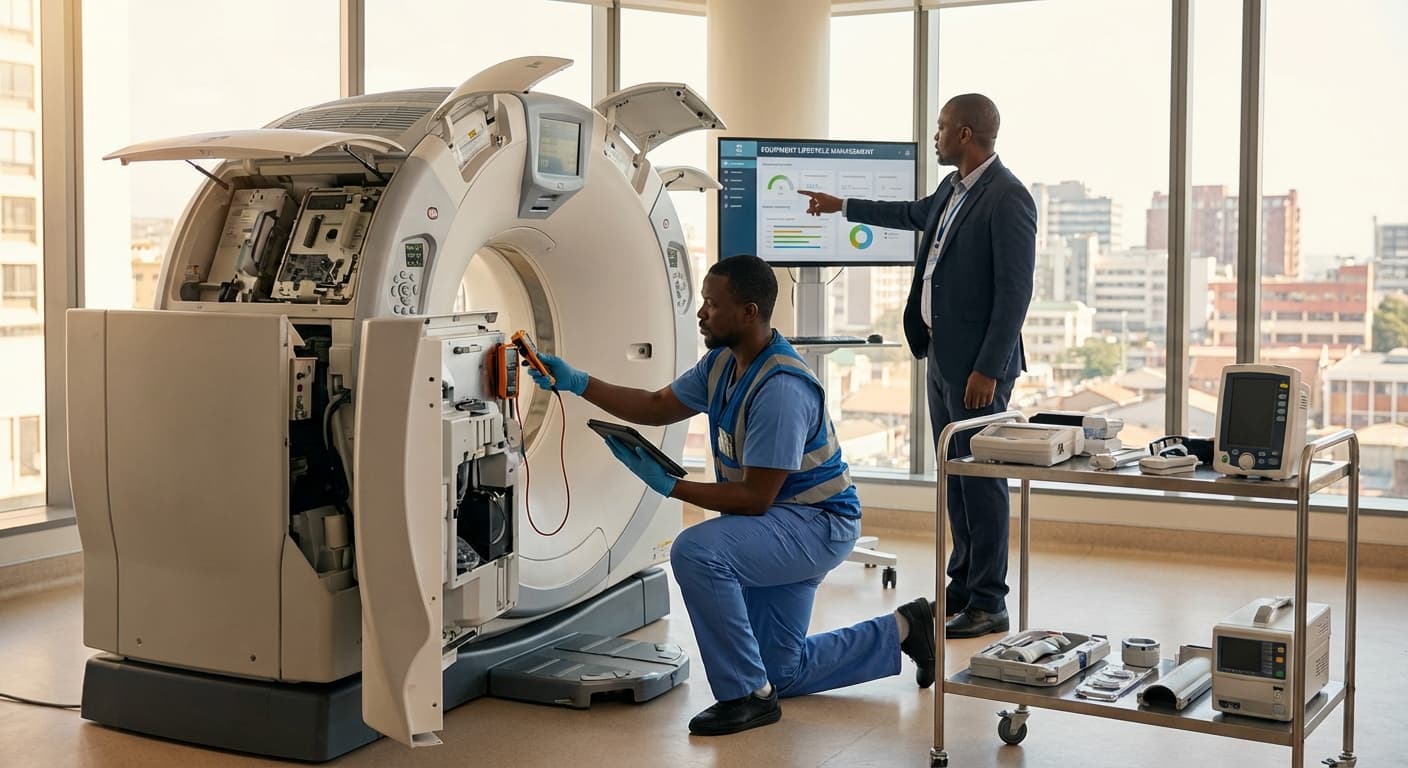
Equipment Replacement Planning & Obsolescence Strategy Service in Chad
Engineering Excellence & Technical Support
Equipment Replacement Planning & Obsolescence Strategy Service High-standard technical execution following OEM protocols and local regulatory frameworks.
Proactive Obsolescence Mitigation
Leveraging advanced analytics and predictive modeling, we identify critical equipment nearing end-of-life and obsolescence well in advance. This allows for strategic sourcing of replacement parts or units, securing long-term operational continuity and avoiding costly emergency procurements in Chad's unique logistical environment.
Optimized Lifecycle Costing
Our service provides comprehensive lifecycle cost analysis for all your critical assets in Chad. We evaluate not just initial purchase price, but also maintenance, energy consumption, and potential disposal costs, empowering informed decisions for replacements that maximize return on investment and minimize total cost of ownership.
Enhanced Supply Chain Resilience
We develop robust equipment replacement plans tailored to Chad's specific supply chain challenges, including import regulations, transportation infrastructure, and local availability. This ensures a secure and reliable flow of necessary equipment and parts, safeguarding against operational disruptions and downtime.
What Is Equipment Replacement Planning & Obsolescence Strategy Service In Chad?
Equipment Replacement Planning (ERP) and Obsolescence Strategy Service in Chad refers to a specialized consultancy or internal organizational function focused on proactively managing the lifecycle of critical assets and equipment. This service aims to mitigate the risks associated with equipment failure, performance degradation, and technological obsolescence, thereby optimizing operational efficiency, safety, and financial performance within the Chadian industrial and commercial landscape. It encompasses the systematic analysis, forecasting, and strategic decision-making processes required to determine the optimal time for equipment replacement or upgrade, as well as the development of strategies to address the end-of-life implications of existing assets. The service integrates technical assessments, market intelligence, financial modeling, and risk management principles.
| Who Needs This Service? | Typical Use Cases in Chad | ||||||||
|---|---|---|---|---|---|---|---|---|---|
| Industrial Operations: Manufacturing plants, oil and gas exploration and production companies, mining operations, and agricultural processing facilities that rely on heavy machinery and complex systems. | Infrastructure Development and Management: Companies involved in the construction, maintenance, and operation of critical infrastructure such as power generation and distribution networks, water treatment facilities, telecommunications systems, and transportation assets (roads, railways, airports). | Energy Sector: Companies involved in exploration, extraction, refining, and distribution of oil and gas, as well as renewable energy projects (solar, wind). | Public Sector and Utilities: Government agencies responsible for managing public assets and utilities, including national power companies, water authorities, and transportation ministries. | Large-Scale Commercial Enterprises: Businesses with significant capital investments in specialized equipment, such as large logistics companies, construction firms, and data centers. | Companies Operating in Remote or Challenging Environments: Organizations in Chad facing logistical complexities, limited access to spare parts, and extended lead times for equipment acquisition and maintenance. | Organizations Undergoing Digital Transformation: Businesses looking to upgrade legacy systems to more modern, data-driven, and automated solutions. | Organizations Subject to Stringent Safety and Environmental Regulations: Industries where equipment failure poses significant safety or environmental risks. | Companies Seeking to Optimize Capital Expenditure: Businesses aiming to reduce lifecycle costs and maximize the return on their asset investments. | |
| Predicting and mitigating failures in critical oil extraction pumps: To ensure continuous production and prevent costly downtime in remote exploration sites. | Strategizing the replacement of aging power generation turbines: To maintain grid stability and meet growing energy demand across Chad. | Managing the obsolescence of agricultural machinery: To improve efficiency in the agricultural sector and adapt to new farming technologies and practices. | Planning the upgrade of telecommunications infrastructure: To enhance network coverage, speed, and reliability in urban and rural areas. | Assessing the remaining useful life of heavy construction equipment: For road and infrastructure projects, ensuring project timelines are met and safety standards are upheld. | Developing a strategy for phased replacement of water treatment plant components: To ensure consistent provision of safe drinking water and prevent system failures. | Forecasting the need for new mining equipment: To optimize extraction processes and adapt to evolving mineral markets. | Establishing a lifecycle management plan for a fleet of transport vehicles: To ensure operational readiness and reduce maintenance costs. | Addressing the unavailability of spare parts for legacy industrial control systems: By identifying alternative solutions or planning for system modernization. | Evaluating the economic feasibility of upgrading or replacing outdated manufacturing lines: To improve product quality and production capacity. |
Key Components of Equipment Replacement Planning & Obsolescence Strategy Service
- Asset Inventory and Condition Assessment: Comprehensive cataloging of all relevant equipment, including age, specifications, maintenance history, and current operational status. This often involves on-site inspections and diagnostic testing.
- Performance Monitoring and Degradation Analysis: Establishing metrics and methods to track equipment performance over time, identifying trends of degradation and predicting potential failures.
- Obsolescence Risk Assessment: Evaluating the likelihood of equipment becoming obsolete due to technological advancements, unavailability of spare parts, or regulatory changes. This includes assessing the availability of replacement parts and the viability of continued support.
- Total Cost of Ownership (TCO) Analysis: Calculating the cumulative costs associated with owning and operating equipment throughout its lifecycle, including acquisition, maintenance, energy consumption, and disposal costs.
- Predictive Maintenance Integration: Leveraging data analytics and machine learning to forecast equipment failures, allowing for proactive maintenance and preventing unplanned downtime.
- Replacement Strategy Development: Defining criteria for replacement, including economic viability, technological advancement, safety improvements, and regulatory compliance. This may involve 'like-for-like' replacements, upgrades, or entirely new technology integration.
- Obsolescence Mitigation Strategies: Developing plans to manage obsolete equipment, including refurbishment, cannibalization of parts, environmentally sound disposal, or sale of surplus assets.
- Financial Planning and Budgeting: Forecasting capital expenditure requirements for planned replacements and establishing funding mechanisms.
- Risk Management Framework: Identifying and quantifying risks associated with equipment failure, obsolescence, and the replacement process, and developing mitigation plans.
- Technology Scouting and Forecasting: Continuously monitoring technological trends relevant to the organization's operational needs to anticipate future requirements and potential obsolescence drivers.
- Supply Chain Resilience Assessment: Evaluating the reliability and availability of spare parts and new equipment from domestic and international suppliers, particularly relevant in the Chadian context.
Who Needs Equipment Replacement Planning & Obsolescence Strategy Service In Chad?
In Chad, proactive equipment replacement planning and obsolescence strategy services are crucial for organizations facing rapid technological advancements, limited access to specialized spare parts, and the need to optimize operational efficiency and cost-effectiveness. These services help businesses anticipate and manage the lifecycle of their critical assets, ensuring continuity, security, and competitiveness in a dynamic environment.
| Industry/Sector | Key Departments Benefiting | Specific Needs Addressed |
|---|---|---|
| Oil & Gas / Mining | Operations, Maintenance, Procurement, Engineering, IT | Managing wear and tear on heavy machinery, ensuring availability of specialized drilling/extraction equipment, planning for replacement of aging control systems and sensors, mitigating risks associated with obsolete safety equipment. |
| Telecommunications | Network Operations, IT Infrastructure, Procurement, Engineering, Technical Support | Planning for the lifecycle of network hardware (routers, switches, base stations), managing the obsolescence of legacy systems, ensuring seamless upgrades to new technologies (e.g., 5G), securing supply chains for critical components. |
| Financial Institutions | IT Operations, Infrastructure Management, Risk Management, Compliance, Procurement | Replacing aging servers, ATMs, and other critical IT infrastructure, ensuring compliance with data security regulations, planning for end-of-life for software and hardware, mitigating risks of system failures due to obsolete components. |
| Government Agencies & Public Utilities | Infrastructure Management, Operations, Procurement, IT, Public Works | Planning for replacement of power generation equipment, water treatment facilities, and transmission infrastructure. Managing the lifecycle of IT systems for public services. Ensuring continuity of essential services by replacing aging equipment before failure. |
| Healthcare | Biomedical Engineering, IT, Procurement, Operations, Patient Services | Managing the lifecycle of critical medical imaging equipment, laboratory instruments, and patient monitoring systems. Ensuring availability of spare parts and software updates for life-saving devices. Planning for upgrades to maintain patient safety and treatment efficacy. |
| Manufacturing | Production, Maintenance, Engineering, Supply Chain, Quality Control | Replacing aging production machinery and automation systems, optimizing production flow, ensuring the availability of spare parts for specialized equipment, managing the obsolescence of manufacturing execution systems (MES). |
| Transportation & Logistics | Fleet Management, Operations, IT, Maintenance, Procurement | Planning for the replacement of vehicles, cargo handling equipment, and IT systems for tracking and management. Ensuring compliance with safety and environmental regulations related to equipment. |
Target Customers in Chad
- Large-scale industrial enterprises (e.g., oil and gas, mining, manufacturing)
- Telecommunications companies
- Financial institutions with significant IT infrastructure
- Government agencies and public utilities (e.g., power generation, water management)
- Healthcare providers with advanced medical equipment
- Transportation and logistics companies
- Agribusinesses utilizing sophisticated machinery
- Educational institutions with specialized research and teaching equipment
Equipment Replacement Planning & Obsolescence Strategy Service Process In Chad
This document outlines the typical workflow for an Equipment Replacement Planning & Obsolescence Strategy Service, specifically tailored for operations in Chad. The process is designed to be comprehensive, guiding clients from initial interest to the successful implementation of their replacement and obsolescence management plans.
| Stage | Description | Key Activities | Deliverables |
|---|---|---|---|
| Inquiry & Initial Consultation | Client expresses interest and initial needs are discussed. | Needs identification, scope definition, initial information exchange. | Understanding of client requirements, preliminary project scope. |
| Needs Assessment & Scoping | Detailed evaluation of existing assets and operational context in Chad. | Asset inventory, operational data collection, stakeholder interviews. | Comprehensive asset register, defined project scope, identified critical equipment. |
| Data Collection & Analysis | Gathering and processing all relevant information on equipment. | Site visits (if applicable), document review, data cleaning and organization. | Analyzed equipment data, identification of trends and patterns. |
| Obsolescence Risk Assessment | Evaluating the risk of equipment becoming obsolete. | Risk scoring, obsolescence factor analysis (support, parts, technology). | Prioritized list of obsolete/at-risk equipment, risk assessment report. |
| Replacement Strategy Development | Formulating recommendations for equipment upgrades and replacements. | Option evaluation, technology scouting, cost-benefit assessment. | Proposed replacement options, strategic recommendations document. |
| Life Cycle Costing & ROI Analysis | Financial justification for proposed replacements. | Cost modeling, ROI calculation, payback period analysis. | Life cycle cost reports, ROI justifications. |
| Implementation Roadmap & Budgeting | Creating a plan for execution and financial allocation. | Phased planning, budget formulation, risk mitigation strategies. | Implementation roadmap, detailed budget, project timeline. |
| Procurement Support (Optional) | Assisting clients in the acquisition of new equipment. | Vendor selection, tender management, contract negotiation. | Procurement documentation, vendor recommendations. |
| Training & Change Management | Ensuring effective adoption of new equipment and processes. | Training needs analysis, curriculum development, change communication. | Training plans, change management strategy. |
| Monitoring & Ongoing Support | Post-implementation performance tracking and continuous improvement. | Performance monitoring, feedback collection, strategy updates. | Performance reports, updated obsolescence strategies. |
| Project Closure & Reporting | Finalizing the service and documenting outcomes. | Final report compilation, knowledge transfer, project debrief. | Comprehensive project report, lessons learned. |
Equipment Replacement Planning & Obsolescence Strategy Service Workflow in Chad
- Inquiry & Initial Consultation: The process begins with a client in Chad expressing interest in the service. This leads to an initial meeting (virtual or in-person, depending on feasibility) to understand their current equipment landscape, operational needs, existing maintenance practices, and primary concerns regarding obsolescence and replacement.
- Needs Assessment & Scoping: A detailed assessment is conducted to identify specific equipment requiring analysis, the scope of the obsolescence study, and the desired outcomes of the replacement planning. This involves gathering data on asset inventory, usage history, maintenance records, and manufacturer support information.
- Data Collection & Analysis: Our team collects all relevant data, which may involve on-site visits (if practical and safe in Chad), client interviews, and review of existing documentation. This data is then meticulously analyzed to identify equipment at high risk of obsolescence, those nearing the end of their useful life, and potential bottlenecks in current operations due to aging assets.
- Obsolescence Risk Assessment: A comprehensive risk assessment is performed for each identified piece of equipment. This evaluates factors such as diminishing manufacturer support, availability of spare parts, technological advancements, safety implications, and potential for critical failures. A scoring system is often employed to prioritize risks.
- Replacement Strategy Development: Based on the obsolescence risk assessment and operational needs, a tailored replacement strategy is developed. This includes recommendations for phasing out obsolete equipment, identifying suitable replacement options (considering local availability, cost, and technological suitability for Chad's context), and outlining the rationale for each recommendation.
- Life Cycle Costing & ROI Analysis: For proposed replacements, detailed life cycle costings are performed. This includes initial purchase price, installation, training, operational costs, maintenance, and eventual disposal. Return on Investment (ROI) analysis is conducted to justify the proposed expenditures and demonstrate the long-term financial benefits of replacement.
- Implementation Roadmap & Budgeting: A phased implementation roadmap is created, outlining the timeline for procurement, installation, and decommissioning of equipment. This includes realistic budgeting considerations, factoring in potential logistical challenges and import duties specific to Chad. Recommendations for funding mechanisms may also be provided.
- Procurement Support (Optional): If required, our service can extend to supporting the client throughout the procurement process, including vendor evaluation, tender preparation, and negotiation, ensuring the best value for money is achieved within the Chad market.
- Training & Change Management: As new equipment is introduced, a crucial step is providing or recommending training for operational and maintenance staff. Change management strategies are also developed to ensure smooth adoption of new technologies and workflows, addressing potential resistance to change within the workforce.
- Monitoring & Ongoing Support: Following implementation, we offer ongoing monitoring of the replaced equipment's performance and continue to provide support for obsolescence management. This may involve periodic reviews, updates to the strategy based on evolving technologies and operational demands, and proactive identification of future replacement needs.
- Project Closure & Reporting: The service concludes with a comprehensive project report detailing all findings, recommendations, implemented strategies, and the achieved outcomes. This report serves as a reference for future planning and performance evaluation.
Equipment Replacement Planning & Obsolescence Strategy Service Cost In Chad
Planning for equipment replacement and managing obsolescence are crucial for businesses in Chad to ensure operational efficiency, minimize downtime, and control costs. The cost of "Equipment Replacement Planning & Obsolescence Strategy Services" in Chad can vary significantly based on several factors. These services aim to provide businesses with a structured approach to identify when equipment is nearing the end of its useful life, assess the risks associated with obsolescence (including technological, functional, and economic obsolescence), and develop strategies for replacement, upgrade, or disposal. The goal is to optimize capital expenditure, avoid costly breakdowns, and maintain competitiveness. Factors influencing the cost include the complexity and size of the business, the volume and type of equipment to be assessed, the level of detail required in the strategy, the experience and reputation of the service provider, and the duration of the engagement. Local economic conditions, prevailing labor rates, and the availability of specialized expertise also play a role in pricing.
| Service Scope/Complexity | Estimated Cost Range (XAF) |
|---|---|
| Basic Equipment Inventory & Lifecycle Assessment (Small Business/Limited Assets) | 500,000 - 1,500,000 |
| Intermediate Obsolescence Risk Assessment & Basic Strategy (Medium Business/Moderate Assets) | 1,500,000 - 4,000,000 |
| Comprehensive Asset Replacement Planning & Advanced Obsolescence Strategy (Large Enterprise/Extensive & Complex Assets) | 4,000,000 - 15,000,000+ |
| Specialized Equipment (e.g., Industrial Machinery, IT Infrastructure) - Per Asset/Category Consultation | 100,000 - 500,000 per asset/category (can be bundled) |
| Ongoing Monitoring & Strategy Updates (Annual Retainer) | 1,000,000 - 5,000,000+ (dependent on scope) |
Key Pricing Factors for Equipment Replacement Planning & Obsolescence Strategy Services in Chad
- {"title":"Scope of Services","description":"This includes the breadth of the assessment (e.g., all assets across a company or specific departments) and the depth of analysis (e.g., basic lifecycle assessment vs. in-depth technological forecasting)."}
- {"title":"Number and Type of Assets","description":"A larger inventory of diverse equipment, from simple tools to complex machinery, will naturally increase the effort and cost of assessment and strategy development."}
- {"title":"Data Availability and Quality","description":"The ease of accessing reliable data on equipment history, maintenance records, performance metrics, and market trends will impact the time and resources required."}
- {"title":"Complexity of Equipment","description":"Specialized, high-value, or technologically complex equipment may require more expert analysis and a more detailed obsolescence strategy."}
- {"title":"Level of Strategy Detail","description":"Developing a comprehensive strategy with detailed replacement schedules, cost projections, risk mitigation plans, and vendor analysis will be more expensive than a high-level overview."}
- {"title":"Consultant's Experience and Reputation","description":"Established consulting firms or highly experienced individual consultants with a proven track record in asset management and obsolescence planning will command higher fees."}
- {"title":"Project Duration and Phases","description":"Longer-term engagements, including implementation support, will naturally incur higher costs than a one-off assessment."}
- {"title":"Geographic Location and Travel","description":"While services might be provided remotely, on-site assessments or client meetings within Chad may incur additional travel and accommodation expenses."}
- {"title":"Customization Requirements","description":"Tailoring the strategy to unique business processes, regulatory environments, or specific industry challenges will influence the cost."}
- {"title":"Reporting and Deliverables","description":"The format and comprehensiveness of reports, presentations, and analytical tools provided will affect the final price."}
Affordable Equipment Replacement Planning & Obsolescence Strategy Service Options
Our Affordable Equipment Replacement Planning & Obsolescence Strategy service helps organizations proactively manage their asset lifecycle, minimizing costly unplanned downtime and preventing disruptive obsolescence. By aligning equipment replacement with strategic business objectives and budget cycles, we empower you to make informed decisions, extend asset life where feasible, and secure the best value for your investments. This service focuses on developing robust, cost-effective strategies tailored to your specific operational needs and financial constraints.
| Value Bundle Options | Description | Key Features | Target Audience | Cost-Saving Strategies Incorporated |
|---|---|---|---|---|
| Essential Planning | Foundation for proactive equipment management. | Asset inventory & condition assessment, basic lifecycle modeling, initial obsolescence identification, prioritized replacement recommendations. | Small to medium-sized businesses, organizations with limited IT/operations budgets. | Prioritized replacement based on criticality, identification of 'run-to-failure' vs. 'preventive replacement' candidates. |
| Strategic Integration | Integrates replacement planning with broader business and financial strategies. | Includes Essential Planning features plus: detailed TCO analysis, scenario planning (e.g., economic downturn, technology shifts), integration with financial forecasting, vendor negotiation strategy development. | Medium to large enterprises, organizations with complex asset portfolios, those seeking to optimize capital expenditure. | Leveraging bulk purchasing discounts, negotiating favorable support contracts, identifying opportunities for standardization, exploring leasing vs. purchasing options. |
| Advanced Obsolescence & Lifecycle Management | Comprehensive approach to managing end-of-life assets and emerging technologies. | Includes Strategic Integration features plus: predictive analytics for failure, deep dive into supply chain risks, development of alternative sourcing strategies, lifecycle extension recommendations (upgrades, refurbishment), cybersecurity implications of aging hardware. | Large enterprises, highly regulated industries, organizations with critical infrastructure, those facing rapid technological change. | Phased refresh cycles to smooth capital outlay, cross-functional buy-in for investment, strategic partnerships with vendors for long-term support and guaranteed buy-back options, maximizing residual value of retired assets. |
Key Benefits and Service Components
- Reduced Total Cost of Ownership (TCO): Avoidance of premium pricing for rush replacements and emergency repairs.
- Mitigation of Operational Disruptions: Proactive planning prevents unexpected breakdowns and workflow interruptions.
- Optimized Capital Allocation: Informed investment decisions based on lifecycle costs and strategic priorities.
- Enhanced Cybersecurity Posture: Timely replacement of outdated equipment with modern, secure solutions.
- Extended Asset Lifespan: Identification of opportunities for refurbishment and extended support.
- Improved Budget Predictability: Clear visibility into future capital expenditure requirements.
- Streamlined Procurement: Negotiated advantages through planned, bulk purchasing opportunities.
- Risk Management: Proactive identification and mitigation of obsolescence risks.
Verified Providers In Chad
In Chad's evolving healthcare landscape, discerning the most reliable and skilled medical professionals is paramount for individuals seeking quality care. Franance Health stands out as a leading organization dedicated to verifying and promoting credentialed healthcare providers, ensuring that patients have access to competent and trustworthy practitioners. Their rigorous vetting process goes beyond simple certification, delving into the practical experience, ethical standing, and ongoing professional development of each provider. This commitment to comprehensive verification makes Franance Health-affiliated providers the optimal choice for residents and visitors in Chad, offering peace of mind and a guarantee of high-standard medical services.
| Provider Type | Key Verification Criteria | Benefits of Franance Health Affiliation |
|---|---|---|
| Doctors (General & Specialists] | Medical Degree & License, Board Certification, Clinical Experience, Continuing Education, Peer Reviews | Accurate diagnosis, effective treatment plans, access to specialized care. |
| Nurses (RN, LPN) | Nursing Degree & License, Practical Experience, Specialized Training (e.g., critical care, pediatrics) | Compassionate care, accurate administration of medications and treatments, patient education. |
| Dentists | Dental Degree & License, Specialization (e.g., orthodontics, oral surgery), Clinical Experience | Oral health expertise, preventative care, restorative and cosmetic procedures. |
| Pharmacists | Pharmacy Degree & License, Dispensing & Counseling Skills, Knowledge of Drug Interactions | Safe and accurate medication dispensing, patient counseling on drug usage and side effects. |
| Therapists (Physical, Occupational, Mental Health) | Relevant Degree & License, Specialization, Therapeutic Skills, Ethical Practice | Rehabilitation, pain management, mental well-being support, improved quality of life. |
Why Franance Health Credentials Matter in Chad
- Rigorous verification process ensures provider competence and ethical practice.
- Access to a network of qualified and experienced medical professionals.
- Enhanced patient safety and trust in healthcare services.
- Commitment to ongoing professional development and adherence to best practices.
- Facilitates access to specialized medical expertise within Chad.
Scope Of Work For Equipment Replacement Planning & Obsolescence Strategy Service
This Scope of Work (SOW) outlines the services to be provided for Equipment Replacement Planning and Obsolescence Strategy. The objective is to develop a comprehensive and proactive strategy for managing the lifecycle of critical equipment, minimizing operational disruptions due to obsolescence, and optimizing capital expenditure for replacements. This includes identifying at-risk equipment, forecasting future needs, and establishing a framework for strategic decision-making.
| Deliverable | Description | Format | Standard Specification |
|---|---|---|---|
| Equipment Inventory Database | A centralized database containing detailed information on all managed equipment. | Digital Database (e.g., SQL, Excel) | Includes fields for: Asset ID, Manufacturer, Model, Serial Number, Purchase Date, Installation Date, Expected Lifespan, Current Condition (Rated), Maintenance History Summary, Criticality Rating, Support Status (Active/End-of-Life). |
| Obsolescence Risk Assessment Report | Analysis of identified equipment and their associated obsolescence risks. | PDF Report | Identifies equipment at high, medium, or low risk. Includes rationale for risk rating, potential impacts of obsolescence (e.g., performance degradation, safety concerns, increased maintenance costs), and recommended mitigation actions. |
| Equipment Replacement Plan (Multi-Year) | A strategic roadmap for replacing equipment over a defined period (e.g., 3-5 years). | PDF Report and Presentation Slides | Includes phased replacement schedule, prioritized list of equipment for replacement, estimated costs, business case justifications, and recommended replacement technologies/options. Aligns with financial planning cycles. |
| Obsolescence Management Policy & Procedures | Documented guidelines for ongoing obsolescence monitoring and management. | PDF Document | Outlines roles and responsibilities, reporting requirements, processes for identifying new obsolescence threats, decision-making authority for replacement, and escalation procedures. |
| Lifecycle Cost Analysis Model | A framework and associated tools for evaluating the total cost of ownership of equipment. | Excel Spreadsheet or Custom Tool | Includes components for: initial purchase cost, installation, maintenance, repair, energy consumption, disposal costs, and potential costs of downtime due to failure or obsolescence. Allows for comparison of different replacement scenarios. |
| Executive Summary and Recommendations | A high-level overview of findings and actionable recommendations for senior leadership. | PDF Presentation | Concise presentation of key risks, strategic priorities, financial implications, and proposed next steps. Designed for a non-technical audience. |
Key Activities and Deliverables
- Equipment Inventory and Assessment: Comprehensive cataloging of existing equipment, including age, condition, operational history, and criticality.
- Obsolescence Risk Analysis: Identification of equipment facing obsolescence due to end-of-life support, technology advancements, or supply chain issues.
- Lifecycle Cost Analysis: Evaluation of total cost of ownership for existing equipment and projected costs for replacement options.
- Replacement Strategy Development: Formulation of a multi-year plan for equipment replacement, prioritizing based on risk and business impact.
- Obsolescence Management Framework: Establishment of policies, procedures, and governance for ongoing obsolescence tracking and mitigation.
- Technology Roadmap Integration: Alignment of equipment replacement plans with broader technology and business strategy.
- Financial Planning and Budgeting: Development of capital expenditure forecasts and budget recommendations for equipment replacement.
- Stakeholder Consultation: Engagement with relevant departments (Operations, IT, Procurement, Finance) to gather input and ensure alignment.
- Risk Mitigation Planning: Identification and development of strategies to mitigate risks associated with equipment failure and obsolescence.
- Knowledge Transfer and Training: Provision of documentation and training to internal teams for sustained management of the obsolescence strategy.
Service Level Agreement For Equipment Replacement Planning & Obsolescence Strategy Service
This Service Level Agreement (SLA) outlines the guaranteed response times and uptime commitments for the Equipment Replacement Planning & Obsolescence Strategy Service (the 'Service'). This Service aims to proactively manage the lifecycle of your equipment, ensuring optimal performance, minimizing downtime due to obsolescence, and facilitating timely and cost-effective replacements.
| Service Component | Response Time Guarantee | Uptime Guarantee |
|---|---|---|
| Initial Equipment Assessment & Risk Report | Within 5 business days of request submission | N/A (Project-based delivery) |
| Replacement Plan Development & Review Meeting | Within 10 business days of data submission by Client | N/A (Project-based delivery) |
| Obsolescence Risk Mitigation Recommendations | Within 7 business days of identified critical risk | N/A (Advisory) |
| Routine Status Update & Trend Analysis Report | Monthly (delivered by the 5th business day of the following month) | N/A (Reporting) |
| Urgent Consultation (Critical Obsolescence Alert) | Within 4 business hours | N/A (Advisory) |
| Service Availability (for access to planning tools/portals, if applicable) | N/A | 99.5% during standard business hours (Monday-Friday, 9 AM - 5 PM Client's local time) |
Service Description & Scope
- Proactive identification of equipment nearing end-of-life or end-of-support.
- Development of strategic replacement plans, considering technical, operational, and financial factors.
- Analysis of obsolescence risks and mitigation strategies.
- Recommendations for alternative solutions and technology upgrades.
- Regular reporting on equipment status and replacement roadmap.
- Consultation and guidance on procurement processes for replacement equipment.
Frequently Asked Questions

Ready when you are
Let's scope your Equipment Replacement Planning & Obsolescence Strategy Service in Chad project in Chad.

Scaling healthcare logistics and technical systems across the entire continent.