
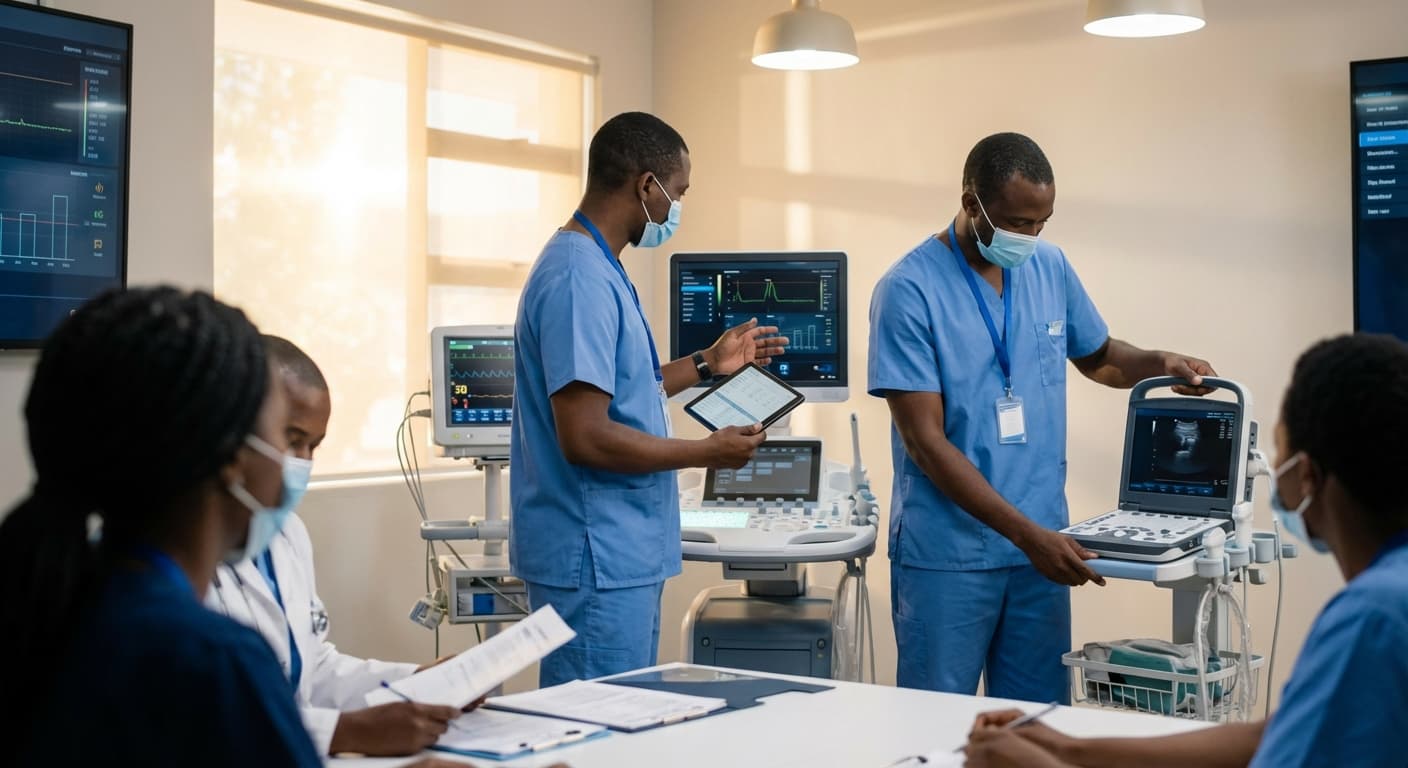
Clinical Needs Assessment for Medical Equipment in Chad
Engineering Excellence & Technical Support
Clinical Needs Assessment for Medical Equipment High-standard technical execution following OEM protocols and local regulatory frameworks.
Comprehensive Data Collection & Analysis Platform
Leveraging a robust digital platform to systematically collect granular data on existing medical equipment, usage patterns, maintenance records, and patient demographic trends across all regions of Chad. This includes identifying critical equipment shortages, performance bottlenecks, and areas of high unmet need through advanced statistical analysis and predictive modeling.
Multi-Stakeholder Collaboration Framework
Establishing a collaborative framework that actively engages Ministry of Health officials, healthcare facility managers, medical professionals, local community representatives, and international partners. This ensures a holistic understanding of clinical priorities, user feedback on equipment suitability, and the identification of culturally appropriate and sustainable medical technology solutions for diverse healthcare settings in Chad.
Geospatial Resource & Accessibility Mapping
Utilizing geospatial technologies to map the current distribution of medical equipment, healthcare facilities, and accessibility challenges (e.g., transportation infrastructure, remote populations) across Chad. This allows for the precise identification of underserved areas and the prioritization of equipment deployment strategies to optimize reach and impact, ensuring equitable access to essential medical technologies.
What Is Clinical Needs Assessment For Medical Equipment In Chad?
A Clinical Needs Assessment for Medical Equipment in Chad is a systematic, evidence-based process designed to identify, quantify, and prioritize the medical equipment requirements of healthcare facilities and the broader health system within Chad. This involves a comprehensive evaluation of existing infrastructure, current healthcare delivery models, epidemiological data, and projected future health needs to ensure appropriate, functional, and sustainable medical technology is procured and maintained. The assessment aims to bridge the gap between available resources and the actual clinical demands to improve patient care outcomes, enhance service delivery efficiency, and optimize the utilization of financial and human resources.
| Who Needs This Service? | Typical Use Cases in Chad | ||||
|---|---|---|---|---|---|
| Ministry of Public Health and Population (MOHP) of Chad: To inform national health policies, strategic planning, and resource allocation for medical equipment procurement and infrastructure development. | District and Regional Hospitals: To assess and upgrade their diagnostic, therapeutic, and surgical equipment to meet the growing demand for specialized healthcare services. | Primary Healthcare Centers (PHCs) and Health Posts: To identify essential medical equipment for basic health services, maternal and child health, and infectious disease management in underserved areas. | International Development Partners and NGOs: To guide their investments in healthcare infrastructure and medical equipment donations, ensuring alignment with national priorities and local capacity. | Healthcare Facility Management and Procurement Departments: To develop evidence-based procurement plans, avoid redundancies, and ensure the acquisition of appropriate and functional equipment. | Tertiary Care Hospitals and Specialized Centers: To identify needs for advanced medical technology to support complex procedures, research, and training. |
| Establishing new healthcare facilities or expanding existing ones: To ensure the facility is equipped to provide the intended range of services from inception. | Responding to outbreaks or public health emergencies: To rapidly assess and procure essential equipment for diagnosis, treatment, and containment (e.g., during malaria epidemics, cholera outbreaks, or pandemics). | Renovating or upgrading existing healthcare infrastructure: To determine which existing equipment can be retained, replaced, or supplemented based on new facility designs and service offerings. | Implementing new health programs or initiatives: For example, establishing new maternal and neonatal care units or expanding HIV/AIDS treatment centers requires specific equipment assessments. | Evaluating the effectiveness and sustainability of past procurements: To learn from previous investments and refine future procurement strategies. | Developing national or regional medical equipment inventories and databases: To track assets, monitor usage, and plan for lifecycle management. |
Key Components of a Clinical Needs Assessment for Medical Equipment:
- Data Collection & Analysis: Gathering data on current equipment inventory, condition, functionality, utilization rates, maintenance records, and geographical distribution. Analyzing epidemiological data (disease prevalence, incidence, mortality) and demographic trends to forecast future healthcare demands.
- Stakeholder Consultation: Engaging with healthcare professionals (doctors, nurses, technicians), hospital administrators, Ministry of Health officials, international aid organizations, and local communities to understand their specific needs and challenges.
- Gap Analysis: Comparing existing equipment stocks against identified clinical needs and international standards. Identifying deficiencies in terms of quantity, quality, technological appropriateness, and maintenance capacity.
- Prioritization: Ranking identified equipment needs based on impact on patient outcomes, cost-effectiveness, feasibility of implementation and maintenance, and alignment with national health priorities.
- Technical Specifications Development: Defining precise technical requirements, including performance standards, compatibility, power requirements, and consumables for each prioritized piece of equipment.
- Budgetary Planning: Estimating the total cost of acquisition, installation, training, and ongoing maintenance for the recommended equipment.
- Implementation & Sustainability Strategy: Developing a plan for procurement, deployment, user training, and establishing robust maintenance and repair systems, including spare parts management and capacity building for local technicians.
Who Needs Clinical Needs Assessment For Medical Equipment In Chad?
Clinical needs assessment for medical equipment in Chad is crucial for a wide range of stakeholders. This process ensures that the right equipment is procured, deployed, and maintained effectively to address the specific health challenges and service gaps within the country. It is particularly vital for organizations and departments responsible for direct patient care, public health initiatives, and healthcare system development. By understanding the precise requirements, resource constraints, and prevailing diseases, healthcare providers can optimize their investments, improve patient outcomes, and enhance the overall efficiency of the healthcare system in Chad.
| Customer/Department | Key Responsibilities Related to Medical Equipment Needs | Specific Needs Assessment Focus Areas |
|---|---|---|
| Ministry of Health (National Level) | Policy development, national health strategy, budget allocation, procurement oversight | Prioritizing national health priorities, identifying equipment gaps across regions, establishing standards for equipment maintenance and training |
| Regional/District Health Offices | Implementing national health policies, managing regional health facilities, coordinating service delivery | Assessing equipment needs based on local disease prevalence, population demographics, and available infrastructure; ensuring equitable distribution of resources |
| Public Hospitals (e.g., Hôpital Général de Référence) | Providing tertiary and secondary level care, specialized medical services, training of healthcare professionals | Identifying needs for advanced diagnostic and therapeutic equipment, specialized surgical tools, intensive care units (ICUs), and laboratory facilities |
| Public Health Centers/Clinics (e.g., Health posts) | Providing primary healthcare services, preventative care, maternal and child health services | Assessing needs for basic diagnostic tools (e.g., thermometers, stethoscopes, blood pressure monitors), essential medicines, basic surgical kits, and equipment for vaccinations and antenatal care |
| NGOs (e.g., Médecins Sans Frontières, UNICEF, WHO) | Implementing specific health programs, providing humanitarian aid, focusing on underserved populations | Assessing needs for equipment for emergency response, specialized disease programs (e.g., malaria, HIV/AIDS, TB), mobile clinics, and community health initiatives |
| International Health Organizations/Donors | Funding health projects, providing technical assistance, supporting national health systems | Evaluating the feasibility and sustainability of equipment requests, ensuring alignment with national health priorities, assessing infrastructure and maintenance capacity |
| Research Institutions/Universities | Medical education, clinical research, capacity building | Identifying needs for research-grade equipment, diagnostic tools for clinical trials, and equipment for training future healthcare professionals |
| Specialized Treatment Centers (e.g., National TB Control Program) | Focusing on the diagnosis, treatment, and prevention of specific diseases | Assessing needs for specialized diagnostic equipment (e.g., X-ray machines with digital capabilities, GeneXpert machines), treatment delivery systems, and monitoring devices |
Target Customers and Departments for Clinical Needs Assessment in Chad
- Government Ministries of Health and their sub-departments
- Public Hospitals and Clinics (national, regional, and district levels)
- Non-Governmental Organizations (NGOs) operating in the health sector
- International Health Organizations and Donors
- Research Institutions and Universities with medical programs
- Private Healthcare Providers (where applicable)
- Specialized Treatment Centers (e.g., for infectious diseases, maternal health)
Clinical Needs Assessment For Medical Equipment Process In Chad
This document outlines a comprehensive workflow for conducting a Clinical Needs Assessment for Medical Equipment in Chad. The process begins with an initial inquiry and progresses through detailed assessment, procurement planning, and ultimately, equipment execution and deployment. Each stage is designed to ensure that procured medical equipment aligns precisely with the identified healthcare needs of Chad's population and healthcare facilities.
| Stage | Description | Key Activities | Responsible Parties | Deliverables/Outcomes |
|---|---|---|---|---|
| The initial phase where the need for a clinical needs assessment is recognized and the scope of the project is defined. | Formal request for assessment, stakeholder identification, initial goal setting, defining geographical and clinical focus. | Ministry of Health (MoH), Healthcare Facilities, International/Local NGOs, Funding Agencies. | Project mandate, stakeholder list, preliminary scope document, confirmed objectives. |
| Collecting comprehensive data on existing health infrastructure, disease burden, service delivery gaps, and current equipment inventory. | Surveys, interviews with healthcare professionals, facility assessments, review of health statistics and reports, mapping of existing services. | Assessment Team (Clinical Experts, Engineers, Data Analysts), MoH Departments, Facility Managers. | Detailed report on health needs, service gaps, existing infrastructure capacity, and current equipment status (including condition and availability). |
| Analyzing gathered information to identify critical equipment needs and developing detailed technical specifications. | Prioritizing needs based on impact (life-saving, essential services), feasibility, and cost-effectiveness. Defining technical requirements, performance standards, and user needs for each prioritized item. | Clinical Working Groups, Biomedical Engineers, Procurement Specialists, MoH Technical Committees. | Prioritized list of medical equipment, detailed technical specifications for each item, justification for selection. |
| Formulating a plan for how the identified equipment will be acquired, considering budget, timelines, and procurement methods. | Budget allocation and refinement, defining procurement channels (tenders, framework agreements, direct purchase), risk assessment and mitigation, developing procurement timelines. | MoH Procurement Unit, Finance Department, Project Management Team, Legal Counsel. | Procurement plan, budget breakdown, proposed procurement methods, risk management strategy. |
| The process of inviting bids from suppliers and evaluating them to select the most suitable equipment and vendors. | Developing tender documents, advertising tenders, receiving and opening bids, technical and financial evaluation of proposals, site visits to manufacturers (if applicable). | MoH Procurement Committee, Technical Evaluation Team, Legal Advisors. | Shortlisted vendors, evaluation reports, recommended supplier(s) for each equipment category. |
| Finalizing the purchase, signing contracts, and managing the relationship with the selected suppliers. | Negotiation of terms and conditions, contract signing, order placement, payment processing, contract monitoring, dispute resolution. | MoH Procurement Unit, Legal Department, Finance Department, Selected Suppliers. | Signed contracts, purchase orders, executed payments, supplier performance records. |
| Ensuring the safe and efficient delivery, installation, and commissioning of the procured equipment. | Shipping and customs clearance, warehousing and distribution, site preparation, installation and setup, initial testing and calibration. | Logistics Partners, MoH Logistics Department, Biomedical Engineering Technicians, Suppliers' Installation Teams. | Equipment delivered to facilities, installed and commissioned, site acceptance certificates. |
| Training healthcare professionals and technical staff on the proper use, operation, and basic maintenance of the new equipment. | Developing training curricula, conducting training sessions (on-site and off-site), providing user manuals and reference materials, assessing training effectiveness. | Training Institutions, Biomedical Engineers, Clinical Experts, Healthcare Staff. | Trained personnel, training reports, user competency assessments. |
| Tracking the performance, utilization, and impact of the procured equipment. | Regular equipment utilization checks, performance monitoring against benchmarks, user feedback collection, impact assessment on health service delivery, data collection for reporting. | MoH M&E Department, Facility Managers, Project Management Team, End-Users. | Monitoring reports, utilization data, impact assessment findings, lessons learned. |
| Developing strategies to ensure the long-term functionality and availability of the medical equipment. | Establishing maintenance schedules (preventive and corrective), securing spare parts supply chains, planning for end-of-life equipment replacement, budget allocation for ongoing maintenance and repair. | MoH Biomedical Engineering Department, Facility Management, Finance Department, Local Technicians. | Maintenance plans, spare parts inventory, long-term maintenance budget, decommissioning plans. |
Workflow Stages for Clinical Needs Assessment for Medical Equipment in Chad
- Inquiry & Scoping
- Information Gathering & Analysis
- Needs Prioritization & Specification
- Procurement Strategy Development
- Tendering & Selection
- Procurement & Contract Management
- Logistics & Installation
- Training & Capacity Building
- Monitoring & Evaluation
- Sustainability & Maintenance Planning
Clinical Needs Assessment For Medical Equipment Cost In Chad
This clinical needs assessment for medical equipment in Chad aims to provide an overview of the cost factors and approximate price ranges for essential medical devices, acknowledging the unique challenges and market dynamics within the country. The pricing of medical equipment in Chad is influenced by a confluence of factors, including import duties, transportation costs (often exacerbated by infrastructure limitations), supplier markups, currency fluctuations, and the specific technical specifications and brand reputation of the equipment. Availability of spare parts and after-sales service also plays a significant role, potentially increasing the long-term cost of ownership. Due to the nascent state of local manufacturing for advanced medical technology, the vast majority of equipment is imported, making it highly susceptible to international market price volatility and logistical hurdles. Therefore, the price ranges provided are estimates and can vary significantly based on the supplier, negotiation, and the exact configuration of the equipment. Local currency, the West African CFA franc (XOF), is used for all estimations, with the understanding that exchange rates with major international currencies can fluctuate.
| Equipment Category | Estimated Price Range (XOF) | Notes |
|---|---|---|
| Basic Diagnostic Tools (e.g., Stethoscope, Blood Pressure Monitor, Thermometer) | 15,000 - 75,000 | Prices vary based on brand quality (e.g., Riester, Welch Allyn vs. generic). |
| Basic Laboratory Equipment (e.g., Microscope, Centrifuge, Hematology Analyzer - basic) | 500,000 - 5,000,000 | Manual microscopes are significantly cheaper than automated analyzers. Refurbished options are common. |
| Imaging Equipment (e.g., Portable X-ray Machine, Ultrasound Machine - basic) | 3,000,000 - 25,000,000 | New, advanced ultrasound machines can easily exceed 50,000,000 XOF. Installation and training are additional costs. |
| Surgical Instruments (Basic Sets) | 100,000 - 1,000,000 | Depends on the number and type of instruments in the set. Specialized instruments are much more expensive. |
| Anesthesia Machine (Basic) | 4,000,000 - 15,000,000 | Includes essential features; more advanced models with monitors are considerably higher. |
| Hospital Beds (Manual) | 75,000 - 300,000 | Electric hospital beds can range from 500,000 to 2,000,000 XOF. |
| Oxygen Concentrator (5L/min) | 250,000 - 800,000 | Higher flow rate concentrators and medical-grade oxygen cylinders will be more expensive. |
| Defibrillator (AED - Automated External Defibrillator) | 700,000 - 2,500,000 | Includes pads and batteries. Manual defibrillators are typically more expensive. |
| Ventilator (Basic ICU - Invasive) | 5,000,000 - 30,000,000 | Prices can escalate significantly for advanced critical care ventilators with integrated monitors and complex ventilation modes. |
| Wheelchairs | 50,000 - 250,000 | Manual, basic wheelchairs are most common. Motorized wheelchairs are significantly more costly. |
Key Pricing Factors for Medical Equipment in Chad
- Import Duties and Taxes: Levied on imported goods, significantly impacting the final cost.
- Transportation and Logistics: High costs due to poor infrastructure and long distances from ports.
- Supplier Markups: Local distributors and retailers add their profit margins.
- Currency Exchange Rates: Fluctuations of XOF against USD, EUR, and other major currencies directly affect import costs.
- Equipment Specifications and Brand: Higher-end, technologically advanced, or reputable international brands command higher prices.
- After-Sales Service and Maintenance: Costs associated with warranty, service contracts, and availability of qualified technicians.
- Availability of Spare Parts: Scarcity can lead to higher prices or extended downtime, increasing indirect costs.
- Volume Discounts: Larger orders may secure more favorable pricing.
- Condition of Equipment (New vs. Refurbished): Refurbished equipment can offer cost savings but may have a shorter lifespan or higher maintenance needs.
Affordable Clinical Needs Assessment For Medical Equipment Options
Navigating medical equipment acquisition can be a daunting and expensive process for healthcare facilities, especially those with budget constraints. An affordable clinical needs assessment is the crucial first step to ensure that investments are aligned with actual patient care requirements and operational efficiency. This process helps avoid overspending on unnecessary features or under-equipped solutions. By understanding the core clinical demands, healthcare providers can make informed decisions about equipment that is not only effective but also cost-efficient in the long run. Focusing on value bundles and implementing smart cost-saving strategies are paramount to maximizing the impact of limited resources and ensuring optimal patient outcomes.
| Value Bundle Strategy | Description | Cost-Saving Potential |
|---|---|---|
| Integrated System Bundles | Purchasing multiple related equipment pieces from a single vendor, often with pre-configured software and interoperability. | Reduced integration costs, simplified procurement, potential volume discounts, streamlined training. |
| Service & Training Packages | Bundling equipment purchases with extended warranties, preventative maintenance plans, and comprehensive user training. | Predictable maintenance costs, reduced downtime, improved staff proficiency, avoidance of costly emergency repairs. |
| Consumables & Accessories Included | Negotiating the inclusion of essential consumables and accessories (e.g., disposables, calibration tools) with the primary equipment purchase. | Bulk purchasing power, simplified ordering, potential discounts on recurring supplies. |
| Software & Analytics Integration | Bundling equipment with relevant software for data management, analysis, and reporting. | Enhanced clinical insights, improved workflow efficiency, potential for remote monitoring and diagnostics, reduced manual data entry. |
Key Components of an Affordable Clinical Needs Assessment
- Define specific clinical requirements and patient demographics.
- Analyze current equipment inventory and identify gaps or redundancies.
- Prioritize essential functionalities over non-critical features.
- Involve clinical end-users in the assessment process.
- Research available technologies and their maintenance costs.
- Consider integration capabilities with existing IT infrastructure.
- Evaluate vendor support and training packages.
- Explore leasing, refurbished, or modular equipment options.
Verified Providers In Chad
In Chad's evolving healthcare landscape, identifying reliable and accredited medical services is paramount for individuals and organizations. Franance Health stands out as a leading provider, distinguished by its rigorous credentialing process and unwavering commitment to quality patient care. This document outlines the credentials that position Franance Health as the optimal choice for healthcare services in Chad.
| Credential Type | Verification Standard | Impact on Patient Care |
|---|---|---|
| International Accreditation | ISO 9001, Joint Commission International (JCI) alignment | Ensures consistent high-quality care, reduced medical errors, and enhanced patient safety. |
| Professional Licensure and Certification | National medical boards, specialist certifications | Guarantees that practitioners have met rigorous educational and competency requirements. |
| Technology and Infrastructure | Compliance with medical equipment safety standards, digital health integration | Facilitates accurate diagnoses, minimally invasive procedures, and efficient record management. |
| Quality Management Systems | Internal audit processes, patient feedback mechanisms | Drives continuous improvement in service delivery and patient satisfaction. |
| Staff Training and Development | Regular in-service training, participation in medical conferences | Keeps medical staff updated on the latest advancements and techniques in healthcare. |
Franance Health's Verifying Credentials
- Accreditation by International Health Standards Bodies: Franance Health undergoes regular audits and certifications from recognized international health organizations, ensuring adherence to global best practices in patient safety, quality of care, and operational efficiency.
- Highly Qualified Medical Professionals: All healthcare providers at Franance Health are licensed, board-certified, and possess extensive experience in their respective specialties. Continuous professional development is a cornerstone of their practice.
- State-of-the-Art Facilities and Equipment: Franance Health invests in modern medical technology and maintains well-equipped facilities that meet international standards, enabling accurate diagnostics and effective treatment.
- Robust Patient Safety Protocols: The organization implements comprehensive protocols for infection control, medication management, and patient identification, prioritizing the well-being and security of every individual.
- Commitment to Ethical Practices and Transparency: Franance Health operates with the highest ethical standards, ensuring transparent communication with patients regarding treatment options, costs, and outcomes.
- Community Engagement and Outreach: Beyond direct patient care, Franance Health actively participates in community health initiatives, promoting preventative care and health education, demonstrating a holistic approach to well-being.
- Positive Patient Testimonials and Outcomes: A strong track record of positive patient feedback and successful treatment results further validates Franance Health's dedication to excellence.
Scope Of Work For Clinical Needs Assessment For Medical Equipment
This Scope of Work (SOW) outlines the requirements for conducting a comprehensive clinical needs assessment for medical equipment. The assessment will identify current and future equipment needs across various clinical departments, ensuring alignment with strategic goals, patient care standards, and technological advancements. The technical deliverables will include detailed equipment specifications, cost analyses, and implementation plans. Standard specifications will be followed to ensure compatibility, interoperability, and compliance with relevant regulatory requirements.
| Deliverable | Description | Standard Specifications/Requirements |
|---|---|---|
| Clinical Departmental Needs Report | Detailed analysis of equipment needs for each clinical department, including current usage, performance metrics, and user feedback. | Department-specific inventory, utilization rates, maintenance history, user satisfaction surveys. |
| Equipment Gap Analysis & Prioritization Matrix | Identification of equipment gaps and a prioritized list of needs based on clinical impact, urgency, and strategic alignment. | Impact assessment (patient safety, clinical outcomes), urgency rating, cost-benefit analysis, strategic fit indicators. |
| Technical Equipment Specifications Document | Comprehensive technical specifications for each identified equipment need, including performance requirements, functionality, and compatibility. | ISO 13485 compliance, FDA clearance/CE marking, IEC 60601 series for medical electrical equipment, interoperability standards (HL7, DICOM), cybersecurity requirements. |
| Cost-Benefit Analysis & Budgetary Proposal | Detailed cost breakdown for acquisition, installation, training, maintenance, and disposal, along with a projected return on investment (ROI). | Total Cost of Ownership (TCO) analysis, ROI calculation, vendor quotes, funding source identification, lifecycle cost estimation. |
| Implementation & Integration Plan | Phased plan for procurement, installation, testing, training, and go-live of new medical equipment, including integration with existing systems. | Project timelines, resource allocation, risk management, change management strategy, IT infrastructure requirements, clinical workflow integration. |
| Training & Competency Assessment Plan | Outline for training clinical staff on new equipment operation, maintenance, and safety procedures. | Curriculum development, training delivery methods, competency validation tools, ongoing training requirements. |
| Regulatory Compliance Report | Confirmation that all proposed equipment meets relevant national and international regulatory standards. | Review of manufacturer documentation, certification audits, adherence to local health authority regulations. |
Key Objectives of the Clinical Needs Assessment
- Identify and prioritize current medical equipment deficiencies and gaps in service.
- Forecast future medical equipment requirements based on projected patient volume, technological advancements, and evolving clinical practices.
- Evaluate the suitability and performance of existing medical equipment.
- Determine the optimal configuration and integration of new medical equipment with existing infrastructure.
- Assess budgetary implications and funding options for equipment acquisition, maintenance, and upgrades.
- Ensure compliance with all relevant regulatory standards, accreditations, and safety protocols.
Service Level Agreement For Clinical Needs Assessment For Medical Equipment
This Service Level Agreement (SLA) outlines the guaranteed response times and uptime for the Clinical Needs Assessment service for medical equipment provided by [Your Company Name] to [Client Name]. This SLA is an integral part of the Master Service Agreement (MSA) dated [MSA Date].
| Service Component | Response Time Guarantee | Uptime Guarantee | Definition/Scope |
|---|---|---|---|
| Initial Consultation Scheduling | Within 4 business hours | N/A (Human-dependent) | Time taken from request to schedule the initial consultation with a clinical specialist. |
| Needs Assessment Report Delivery | Within 5 business days of final consultation | N/A (Human-dependent) | Time taken from the completion of the final consultation to the delivery of the comprehensive needs assessment report. |
| Needs Assessment Platform Availability | N/A | 99.5% (Monthly Average) | The operational status of the digital platform used for collaborative assessment and document sharing. Excludes scheduled maintenance. |
| Technical Support for Platform Access | Within 2 business hours (during business hours) | N/A | Time taken to acknowledge and begin troubleshooting issues preventing access to the needs assessment platform during standard business hours ([Your Business Hours]). |
| Urgent Inquiry/Escalation Response | Within 1 business hour | N/A | Time taken to acknowledge and begin addressing critical issues impacting the assessment timeline or critical client operations, as defined by mutual agreement. |
Service Objectives
- To ensure timely and efficient clinical needs assessments for medical equipment.
- To maintain high availability of the assessment platform and supporting resources.
- To provide clear escalation paths for issues impacting service delivery.
Frequently Asked Questions

Ready when you are
Let's scope your Clinical Needs Assessment for Medical Equipment in Chad project in Chad.

Scaling healthcare logistics and technical systems across the entire continent.