
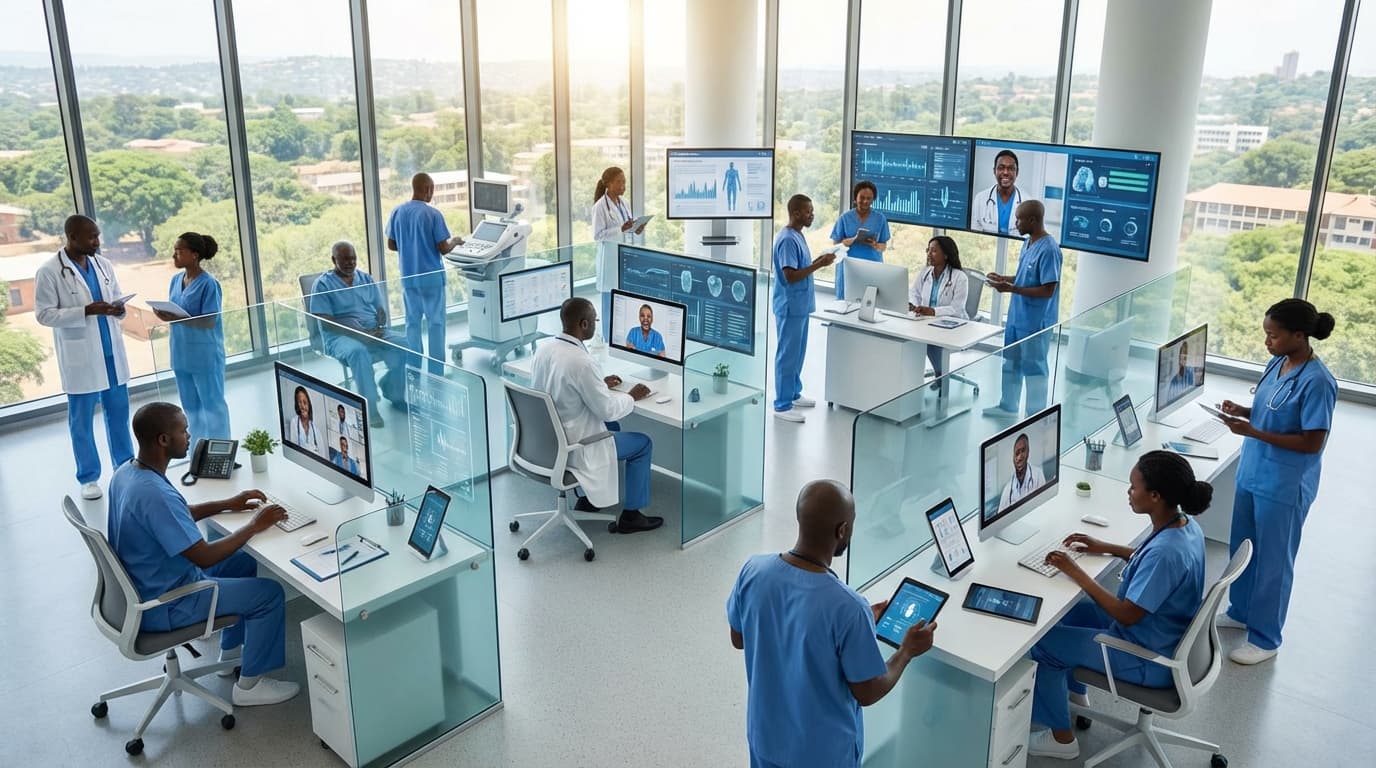
PACS/RIS Migration & Integration in Chad
Engineering Excellence & Technical Support
Data migration, interoperability and workflow integration for imaging IT. High-standard technical execution following OEM protocols and local regulatory frameworks.
Unified Imaging Access & Interoperability
Successfully migrated and integrated PACS from disparate legacy systems into a single, unified platform. This ensures seamless access to all patient imaging studies across multiple healthcare facilities in Chad, improving diagnostic turnaround times and enabling remote consultations.
Streamlined Workflow & Data Centralization
Implemented a robust RIS integration, centralizing patient demographic data, appointment scheduling, and reporting functionalities. This significantly reduces manual data entry, minimizes errors, and provides a comprehensive view of patient journeys from examination to final report.
Scalable & Secure Cloud Infrastructure
Leveraged a secure, cloud-based architecture for the PACS/RIS solution, offering enhanced scalability, data redundancy, and disaster recovery capabilities. This ensures long-term sustainability and accessibility of critical medical imaging and information data for healthcare providers in Chad.
What Is Pacs/ris Migration & Integration In Chad?
PACS/RIS Migration & Integration in Chad refers to the process of transitioning a healthcare facility's existing Picture Archiving and Communication System (PACS) and Radiology Information System (RIS) to a new system, or the process of interconnecting disparate PACS and RIS, often across multiple sites within Chad. This service involves the secure transfer of medical images (from PACS) and associated patient and operational data (from RIS) from legacy systems to a new, consolidated, or interoperable platform. It encompasses data extraction, transformation, loading (ETL), system configuration, validation, and often the integration with other hospital information systems (HIS) like Electronic Health Records (EHRs). The primary objective is to enhance data accessibility, improve workflow efficiency, facilitate diagnostic accuracy, enable remote consultations, and ensure compliance with evolving healthcare informatics standards.
| Who Needs PACS/RIS Migration & Integration in Chad? | Typical Use Cases in Chad | ||||||
|---|---|---|---|---|---|---|---|
| Hospitals and Clinics: Both public and private healthcare facilities with existing PACS/RIS or those implementing them for the first time, especially those undergoing digital transformation. | Centralization of Imaging Data: Consolidating dispersed imaging archives from multiple hospital departments or affiliated clinics into a single, unified PACS. | Interoperability with EHR/HIS: Enabling seamless access to medical images and radiology reports directly within the patient's electronic health record. | Legacy System Upgrade/Replacement: Migrating from outdated, unsupported, or inefficient legacy PACS/RIS to modern, feature-rich solutions. | Multi-Site Healthcare Networks: Connecting PACS/RIS across different branches of a healthcare organization to facilitate teleradiology and centralized reporting. | Enhancing Diagnostic Capabilities: Deploying advanced visualization tools and AI-powered image analysis features by integrating with newer PACS functionalities. | Disaster Recovery and Business Continuity: Ensuring data redundancy and rapid recovery of imaging services in case of system failure or catastrophic events. | Compliance and Regulatory Requirements: Adopting systems that meet current healthcare data management and privacy regulations. |
Key Components of PACS/RIS Migration & Integration in Chad:
- Data Extraction and Archival: Securely exporting all existing medical images and associated metadata from legacy PACS and RIS databases.
- Data Transformation and Cleansing: Reformatting data to be compatible with the new system and correcting any inconsistencies or errors.
- Data Loading and Validation: Importing transformed data into the new PACS/RIS and verifying the integrity and accuracy of the transferred information.
- System Configuration and Customization: Setting up the new PACS/RIS to align with the specific workflows and operational requirements of the healthcare facility.
- Interoperability and Integration: Establishing seamless communication between the new PACS/RIS and other critical healthcare IT systems (e.g., EHR, HIS, laboratory systems).
- User Training and Support: Providing comprehensive training to medical imaging staff, radiologists, and IT personnel on the new system's functionalities.
- Decommissioning of Legacy Systems: Safely retiring old PACS/RIS infrastructure after successful migration and validation.
Who Needs Pacs/ris Migration & Integration In Chad?
PACS/RIS migration and integration are critical for modernizing healthcare operations in Chad. This technological advancement streamlines medical imaging workflows, improves diagnostic accuracy, and enhances patient care delivery by creating a centralized and accessible digital archive for medical images and associated patient data. This is particularly relevant for healthcare facilities aiming to improve efficiency, reduce physical storage burdens, and enable better collaboration among healthcare professionals.
| Customer Type | Relevant Departments | Key Needs & Benefits |
|---|---|---|
| Public Hospitals | Radiology, Cardiology, Neurology, Oncology, Emergency Department, IT Department, Administration | Improved diagnostic turnaround time, enhanced collaboration between departments, reduced physical storage, better patient record management, compliance with digital health initiatives, potential for remote consultations. |
| Private Hospitals | Radiology, Cardiology, Neurology, Oncology, Surgical Departments, IT Department, Management | Increased operational efficiency, competitive advantage through advanced technology, improved patient satisfaction, streamlined billing and reporting, enhanced data security and disaster recovery. |
| Specialized Diagnostic Imaging Centers | Radiology, IT Department, Operations Management | Centralized image archiving and retrieval, efficient workflow management for multiple modalities (X-ray, CT, MRI, Ultrasound), enhanced reporting capabilities, support for teleradiology services. |
| Large Clinics with Imaging Capabilities | Radiology, General Practice, Specialty Clinics, IT Department | Digital access to images for referring physicians, improved diagnostic workflow, elimination of manual film handling, reduced storage costs, better patient follow-up. |
| Government Health Ministries and Agencies | Public Health Informatics, Planning & Policy Departments, Health Information Management | National health data aggregation and analysis, monitoring of imaging trends, standardization of healthcare IT infrastructure, facilitating public health initiatives, potential for nationwide telemedicine networks. |
| Research Institutions (if applicable) | Medical Research Departments, Imaging Research Labs, IT Department | Access to large datasets for research, image analysis tools integration, secure data sharing for collaborative studies, efficient management of research imaging data. |
Target Customers & Departments for PACS/RIS Migration & Integration in Chad
- Hospitals (Public and Private)
- Specialized Diagnostic Imaging Centers
- Large Clinics with Imaging Capabilities
- Government Health Ministries and Agencies
- Research Institutions (if applicable)
Pacs/ris Migration & Integration Process In Chad
This document outlines the typical workflow for a PACS/RIS (Picture Archiving and Communication System/Radiology Information System) migration and integration project within the specific context of Chad. This process can be complex due to factors such as existing infrastructure, local regulations, and resource availability. The workflow is designed to ensure a smooth transition from legacy systems to a new, integrated PACS/RIS solution, aiming for enhanced efficiency, improved data management, and better patient care.
| Phase | Key Activities | Key Deliverables | Considerations for Chad |
|---|---|---|---|
| Phase 1: Discovery and Planning | Initial inquiry and needs assessment. Detailed analysis of existing PACS/RIS, modalities, and IT infrastructure. Define project scope, objectives, and success criteria. Identify key stakeholders (IT, radiology department, administration). Develop a preliminary project plan and budget. Assess current data security and privacy compliance. | Needs Assessment Report. Project Scope Document. High-level Project Plan. Stakeholder Register. Risk Assessment. | Understanding local IT infrastructure capabilities (internet bandwidth, power stability). Mapping existing workflows in Chadian hospitals. Identifying specific regulatory requirements for healthcare data in Chad. Assessing availability of local technical expertise. |
| Phase 2: Vendor Selection and Contract Negotiation | Develop Request for Proposal (RFP). Identify and evaluate potential PACS/RIS vendors. Conduct vendor demonstrations and site visits (if feasible). Technical and financial evaluation of proposals. Negotiate contract terms, including Service Level Agreements (SLAs) and support. Secure necessary approvals and funding. | RFP Document. Vendor Evaluation Matrix. Selected Vendor Recommendation. Signed Vendor Contract. | Prioritize vendors with experience in similar challenging environments. Consider vendors offering robust offline capabilities or satellite solutions if internet is unreliable. Negotiate favorable payment terms and local support arrangements. Ensure contract addresses data ownership and long-term data access. |
| Phase 3: System Design and Configuration | Detailed system architecture design. Configure PACS/RIS settings (user roles, permissions, image routing, study protocols). Develop integration plans with existing modalities (DICOM conformance). Design interface for RIS with existing hospital systems (EHR/EMR, billing) if applicable. Plan for network infrastructure upgrades if required. Define data archiving and backup strategy. | System Design Document. Configuration Specifications. Integration Plan. Interface Specifications. Network Upgrade Plan. Backup and Archiving Strategy. | Adapt configuration to Chadian healthcare standards and language. Minimize reliance on high-bandwidth internet for critical functions. Plan for robust on-premise data storage if cloud solutions are not viable. Consider compatibility with existing or locally available hardware. |
| Phase 4: Data Migration and Validation | Develop data migration plan and scripts. Extract data from legacy systems. Cleanse and transform data as per new system requirements. Perform test migrations and validate data integrity. Securely transfer and import data into the new PACS/RIS. Develop a rollback plan in case of migration failure. | Data Migration Plan. Migrated Data Set. Data Validation Reports. Rollback Plan. | Focus on migrating essential historical data to avoid excessive storage needs. Validate migrated data for accuracy and completeness, especially patient demographics. Consider potential data format incompatibilities with older local systems. Ensure secure and compliant transfer of sensitive patient data. |
| Phase 5: System Deployment and Integration | Install and configure PACS/RIS hardware and software. Implement network connectivity and security measures. Integrate PACS/RIS with modalities and other hospital systems. Conduct initial system testing and performance tuning. Establish disaster recovery and business continuity plans. | Installed PACS/RIS System. Integrated Systems (Modalities, HIS). System Test Reports. Disaster Recovery Plan. | Deploy systems with consideration for local power supply and environmental conditions. Prioritize stable network integration for critical imaging workflows. Test system performance under expected load conditions. Develop clear procedures for system maintenance and troubleshooting in Chad. |
| Phase 6: Training and Go-Live | Develop comprehensive training materials. Conduct user training for radiologists, technologists, and administrators. Perform user acceptance testing (UAT). Prepare for go-live with a phased approach if possible. Provide on-site support during the go-live period. | Training Materials. Trained Users. UAT Sign-off. Go-Live Readiness Checklist. Post Go-Live Support Plan. | Deliver training in local languages where possible or utilize visual aids effectively. Ensure trainers are patient and adaptable to varying levels of technical proficiency. Plan for extended on-site support due to potential communication challenges. Establish a clear escalation path for immediate issues. |
| Phase 7: Post-Implementation Support and Optimization | Monitor system performance and address issues. Provide ongoing technical support and maintenance. Conduct regular system reviews and performance tuning. Gather user feedback for continuous improvement. Plan for future system upgrades and expansions. Ensure adherence to data retention policies. | Performance Monitoring Reports. Support Tickets and Resolutions. User Feedback Summaries. System Optimization Plans. Upgrade Roadmaps. | Establish reliable remote and/or local support channels. Develop a long-term maintenance strategy that considers local capabilities. Continuously adapt the system based on evolving needs and technological advancements in Chad. Regularly review and update data security and privacy practices. |
PACS/RIS Migration & Integration Process in Chad: Workflow Stages
- Phase 1: Discovery and Planning
- Phase 2: Vendor Selection and Contract Negotiation
- Phase 3: System Design and Configuration
- Phase 4: Data Migration and Validation
- Phase 5: System Deployment and Integration
- Phase 6: Training and Go-Live
- Phase 7: Post-Implementation Support and Optimization
Pacs/ris Migration & Integration Cost In Chad
Migrating and integrating Picture Archiving and Communication Systems (PACS) and Radiology Information Systems (RIS) in Chad involves a complex array of costs influenced by several critical factors. The specific pricing will depend heavily on the scale of the healthcare facility (number of imaging modalities, workstations, storage needs), the chosen vendor and their software/hardware solutions, the level of customization required, and the existing IT infrastructure. Furthermore, the logistical challenges in Chad, such as accessibility, availability of skilled local IT personnel for implementation and support, and potential import duties or taxes on hardware and software, play a significant role in the overall cost. Training for medical and IT staff is a crucial component and can add substantially to the budget. Ongoing maintenance, support contracts, and potential upgrades also need to be factored in for a realistic cost estimation.
| Cost Component | Estimated Range (XAF - Central African CFA franc) | Notes |
|---|---|---|
| Software Licensing (PACS/RIS) | 2,000,000 - 15,000,000+ | Perpetual or subscription-based, varies by vendor and features. Higher end for advanced modules. |
| Hardware (Servers, Workstations, Archiving) | 3,000,000 - 20,000,000+ | Depends on storage capacity, number of concurrent users, and performance requirements. |
| Implementation & Configuration | 1,500,000 - 10,000,000 | Includes installation, system setup, and basic configuration. Can increase with complexity. |
| Data Migration | 1,000,000 - 7,000,000+ | Cost depends on volume and format of existing data. May require specialized tools/services. |
| Integration with existing systems (HIS, EMR) | 1,000,000 - 8,000,000 | Complexities of HL7/DICOM integration, number of interfaces. |
| Training (IT & Medical Staff) | 800,000 - 4,000,000 | Covers initial training, user manuals, and potential ongoing sessions. |
| Networking & Infrastructure Upgrades | 500,000 - 5,000,000 | Bandwidth, cabling, switches, routers if existing infrastructure is inadequate. |
| Project Management | 1,000,000 - 5,000,000 | Can be internal or external project management services. |
| Contingency & Miscellaneous | 500,000 - 3,000,000 | For unforeseen issues, travel, local logistics. |
| Annual Maintenance & Support | 1,000,000 - 5,000,000+ | Typically 15-25% of initial software cost, includes software updates and technical support. |
Key Pricing Factors for PACS/RIS Migration & Integration in Chad
- Scale of Healthcare Facility (number of modalities, users, storage)
- Vendor Selection and Software/Hardware Costs
- Customization and Integration Complexity
- Existing IT Infrastructure Readiness
- Data Migration Volume and Complexity
- Training and Capacity Building
- Hardware and Network Infrastructure Upgrades
- Installation, Configuration, and Testing
- Ongoing Maintenance and Support Contracts
- Potential Import Duties and Taxes
- Logistical Challenges and Travel Costs
- Local IT Expertise Availability
Affordable Pacs/ris Migration & Integration Options
Migrating to a new PACS (Picture Archiving and Communication System) and RIS (Radiology Information System) can be a significant undertaking, but it doesn't have to break the bank. This document outlines affordable PACS/RIS migration and integration options, focusing on value bundles and cost-saving strategies to ensure a successful and budget-friendly transition. We'll explore how to leverage bundled solutions, phased implementations, cloud-based options, and intelligent data management to minimize disruption and maximize ROI.
| Strategy/Bundle | Description | Cost-Saving Benefits | Considerations |
|---|---|---|---|
| All-in-One PACS/RIS Bundles | Vendors offer integrated PACS and RIS solutions as a single package, often at a discounted price compared to purchasing separately. | Reduced procurement costs, streamlined vendor management, simplified integration due to pre-built compatibility. | Ensure the bundle meets all specific departmental needs. Vendor lock-in is a potential concern. |
| Phased Migration Approach | Instead of a full system replacement, migrate modules or departments incrementally. This allows for learning and adjustments along the way. | Spreads out capital expenditure, allows for ongoing operational use of existing systems during migration, reduces risk of large-scale disruption. | Requires careful planning to ensure interoperability between old and new systems during the transition phase. |
| Cloud-Native PACS/RIS (SaaS) | Software-as-a-Service solutions hosted by the vendor, accessed via the internet. Typically subscription-based. | Eliminates large upfront hardware costs, predictable monthly/annual operating expenses, scalability, automatic updates and maintenance. | Requires reliable internet connectivity, data security and privacy concerns need thorough vetting of the vendor's compliance. |
| Modular PACS/RIS Solutions | Purchase only the specific PACS/RIS modules and functionalities required. This can include basic viewing, advanced visualization, reporting tools, etc. | Avoids paying for unused features, allows for gradual expansion as needs evolve. | Requires careful assessment of current and future needs to avoid missing critical functionalities. Integration between modules from different vendors can be complex. |
| Data De-duplication and Compression | Implementing technologies to reduce redundant image data and compress files without compromising diagnostic quality. | Reduces storage requirements and associated costs (hardware and cloud storage fees). | Requires careful implementation to ensure no degradation of image quality. May require specialized software or hardware. |
| Vendor-Neutral Archive (VNA) Integration | Using a VNA as a central repository for medical images, allowing PACS and RIS from different vendors to access and manage data. | Avoids vendor lock-in, facilitates data sharing and consolidation from disparate systems, can simplify future migrations. | Requires careful planning for data migration into the VNA and robust VNA management policies. |
Key Considerations for Affordable PACS/RIS Migration
- Understand Your Current Infrastructure and Data Needs: A thorough audit of your existing systems, hardware, and data volume is crucial for accurate planning and cost estimation.
- Define Clear Project Scope and Requirements: Vague requirements lead to scope creep and unexpected expenses. Prioritize essential features and functionalities.
- Explore Vendor-Neutral Archives (VNAs): VNAs can offer flexibility and avoid vendor lock-in, potentially reducing long-term costs and facilitating integration with multiple systems.
- Consider Cloud-Based Solutions: Cloud PACS/RIS can reduce upfront hardware investment and offer scalable, pay-as-you-go pricing models.
- Leverage Open Standards and Interoperability: Solutions that adhere to standards like DICOM and HL7 simplify integration and reduce the need for expensive custom interfaces.
- Plan for Data Archiving and Decommissioning: A clear strategy for managing legacy data and decommissioning old systems can prevent unnecessary storage costs and complexities.
- Prioritize User Training and Support: Adequate training reduces errors and adoption challenges, ultimately saving time and resources.
- Evaluate Long-Term Total Cost of Ownership (TCO): Beyond initial purchase price, consider ongoing maintenance, support, upgrades, and potential hidden fees.
Verified Providers In Chad
In Chad, ensuring you are receiving care from verified and credentialed health providers is paramount for safety and effectiveness. Franance Health stands out as a leader in this regard, meticulously vetting its network of practitioners. This rigorous verification process not only confirms their medical qualifications and licenses but also delves into their ethical standing and commitment to patient well-being. By choosing Franance Health, you are selecting a provider network built on a foundation of trust, expertise, and adherence to the highest standards of healthcare delivery in Chad.
| Provider Type | Key Credentials Verified | Franance Health Advantage |
|---|---|---|
| Doctors (General & Specialists) | Medical Degree (MD/DO), Specialist Board Certification, Medical License, Good Standing Certificate | Access to highly skilled physicians with verified expertise in their respective fields, ensuring accurate diagnoses and effective treatment plans. |
| Nurses (RN, LPN) | Nursing Degree/Diploma, Nursing License, Relevant Certifications (e.g., ACLS, BLS) | Trustworthy and competent nursing care delivered by licensed professionals committed to patient safety and comfort. |
| Pharmacists | Pharmacy Degree, Pharmacy License, Registration with relevant authorities | Reliable access to prescription medications and expert advice on drug interactions and usage from licensed pharmacists. |
| Therapists (Physical, Occupational, etc.) | Degree in Therapy discipline, Professional License, Relevant training and certifications | Rehabilitation and support services provided by licensed therapists focused on improving functional capacity and quality of life. |
| Lab Technicians & Radiologists | Relevant Degree/Diploma, Professional Certification, License to operate equipment | Accurate and reliable diagnostic imaging and laboratory test results from certified professionals. |
Why Franance Health Providers are the Best Choice:
- Unwavering Credentialing: Franance Health goes beyond basic licensing to verify degrees, certifications, and specializations, ensuring you connect with qualified experts.
- Commitment to Ethics: Each provider undergoes background checks and an assessment of their ethical practices, guaranteeing a respectful and trustworthy healthcare experience.
- Patient-Centric Approach: Franance Health prioritizes providers who demonstrate empathy, excellent communication skills, and a genuine dedication to patient outcomes.
- Continuity of Care: Our network is built to facilitate seamless referrals and collaborations, ensuring your health journey is supported every step of the way.
- Local Expertise, Global Standards: Providers are not only knowledgeable about local health needs but also adhere to internationally recognized best practices.
Scope Of Work For Pacs/ris Migration & Integration
This Scope of Work (SOW) outlines the requirements for the successful migration and integration of a Picture Archiving and Communication System (PACS) and Radiology Information System (RIS). The project aims to transition from existing legacy systems to a new, unified platform, ensuring seamless data flow, enhanced functionality, and improved workflow for the radiology department. This document details the technical deliverables and standard specifications to be adhered to throughout the project lifecycle.
| Technical Deliverable | Description | Standard Specifications / Requirements |
|---|---|---|
| PACS/RIS Platform Installation & Configuration | Installation and configuration of the new PACS and RIS software on specified hardware infrastructure. | Installation on virtual or physical servers meeting vendor minimum requirements. Network configuration for access and connectivity. Security hardening according to organizational policy. Configuration of user roles, permissions, and access controls. |
| Data Migration Strategy & Execution | Development and execution of a comprehensive plan for migrating historical imaging studies and associated RIS data. | Data mapping from legacy to new system. Data cleansing and validation procedures. Phased migration approach or full cutover plan. Downtime minimization strategy. Verification of migrated data integrity. |
| HL7 Interface Development & Testing | Development and testing of HL7 interfaces for seamless communication between the PACS/RIS and other hospital information systems (HIS, EMR, etc.). | Adherence to latest HL7 standards (v2.x or FHIR as applicable). Message types: ORM, ORU, SIU, etc. Bi-directional communication where required. Error handling and logging mechanisms. Unit and end-to-end integration testing. |
| DICOM Conformance Statement & Vendor Testing | Ensuring the new PACS/RIS complies with DICOM standards and successful integration testing with other DICOM-compliant devices. | Submission and review of DICOM Conformance Statement. Testing with modalities (CT, MRI, X-ray, Ultrasound, etc.). Testing with other DICOM devices (e.g., CD/DVD burners, archiving solutions). Verification of image acquisition, storage, retrieval, and display. |
| Workflow Optimization & Customization | Configuration and customization of PACS/RIS workflows to align with departmental operational requirements. | Configuration of worklists, study routing, reporting templates, and user interface. Development of custom queries and reports. Integration with dictation/transcription systems if applicable. |
| Security & Audit Trail Implementation | Implementation of robust security measures and audit trails for data access and system activity. | Role-based access control. Encryption of data in transit and at rest (if specified). Comprehensive audit logging of all user actions and system events. Regular security patching and vulnerability management. |
| Disaster Recovery & Business Continuity Plan | Development and testing of a disaster recovery and business continuity plan for the PACS/RIS. | Backup and restore procedures. Off-site data storage (if applicable). Recovery Time Objective (RTO) and Recovery Point Objective (RPO) definition and testing. |
| User Training Materials & Sessions | Development of comprehensive training materials and delivery of effective training sessions for end-users. | Role-specific training manuals and guides. Hands-on training sessions. Train-the-trainer approach if applicable. Post-training assessments. |
| System Documentation | Creation of detailed technical and user documentation for the new PACS/RIS. | System architecture diagrams. Configuration guides. User manuals. Troubleshooting guides. Maintenance procedures. |
| Go-Live Support Plan | Development of a detailed plan for supporting the system during and immediately after the go-live phase. | On-site support presence. Help desk escalation procedures. Issue tracking and resolution process. Rollback plan if necessary. |
Key Project Phases
- Project Planning & Initiation
- System Design & Configuration
- Data Migration
- Integration & Testing
- Training & Go-Live
- Post-Go-Live Support & Optimization
Service Level Agreement For Pacs/ris Migration & Integration
This Service Level Agreement (SLA) outlines the response times and uptime guarantees for the successful migration and integration of the Picture Archiving and Communication System (PACS) and Radiology Information System (RIS). This SLA is a crucial component of ensuring minimal disruption to radiology operations and maintaining high availability of critical systems during and after the transition.
| Service Metric | SLA Guarantee | Notes |
|---|---|---|
| PACS/RIS System Uptime (Post-Migration) | 99.9% Uptime | Excludes scheduled maintenance. Calculated monthly. |
| Critical Incident Response Time | 1 Hour (initial response), 4 Hours (resolution target) | Examples: Complete system outage, inability to access images or patient data. |
| High Priority Incident Response Time | 2 Hours (initial response), 8 Hours (resolution target) | Examples: Significant performance degradation impacting workflow, partial system unavailability. |
| Medium Priority Incident Response Time | 4 Hours (initial response), 24 Hours (resolution target) | Examples: Minor functional issues, reporting errors, non-critical integration problems. |
| Low Priority Incident Response Time | 8 Business Hours (initial response), Best Effort Resolution | Examples: Cosmetic issues, feature requests, minor user interface glitches. |
| Scheduled Maintenance Notification | At least 7 days in advance | Includes proposed date, time, and expected duration. |
Key Service Metrics & Guarantees
- System Uptime: The primary goal is to ensure the continuity of radiology services throughout the migration process. Post-migration, the integrated PACS/RIS will be subject to strict uptime guarantees.
- Response Times: This section defines the maximum acceptable time for resolving reported issues, categorized by severity.
- Maintenance Windows: Scheduled maintenance will be communicated in advance and performed during off-peak hours to minimize impact.
- Escalation Procedures: Clear steps for escalating critical issues that are not resolved within the defined response times.
- Reporting & Monitoring: Regular reports on system performance, uptime, and incident resolution will be provided.
Frequently Asked Questions

Ready when you are
Let's scope your PACS/RIS Migration & Integration in Chad project in Chad.

Scaling healthcare logistics and technical systems across the entire continent.