
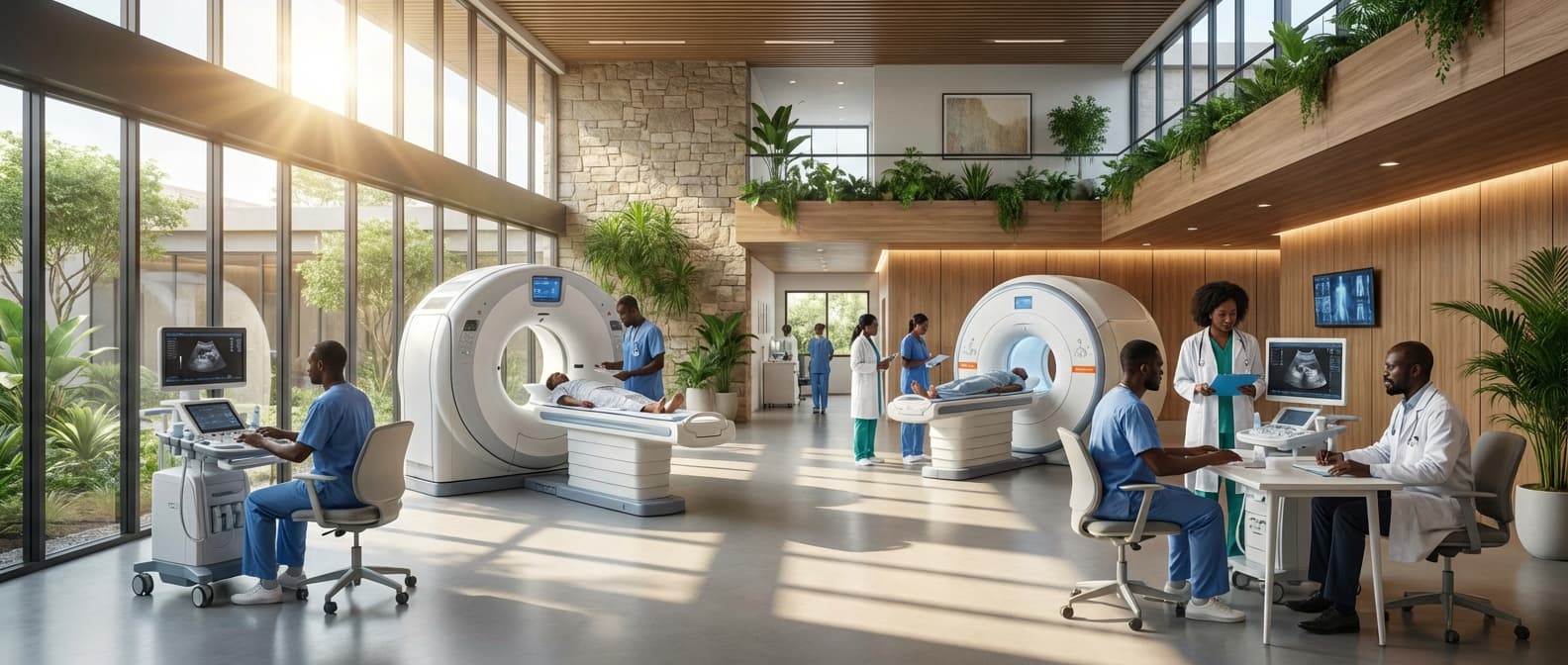
Diagnostic Imaging in Chad
Engineering Excellence & Technical Support
High-resolution imaging systems including CT scanners, MRI, X-ray, and ultrasound technology for accurate clinical diagnosis. High-standard technical execution following OEM protocols and local regulatory frameworks.
Mobile X-ray Units for Remote Outreaches
Deployment of battery-powered, portable X-ray machines in nomadic and hard-to-reach communities, enabling early detection of tuberculosis and other respiratory illnesses. Supports integrated health campaigns and reduces patient travel burden.
AI-Powered Ultrasound Interpretation Support
Implementation of an AI algorithm to assist healthcare workers in interpreting ultrasound scans, particularly for obstetric and gynecological care in areas with limited specialist radiologists. Aims to improve diagnostic accuracy and reduce missed diagnoses in high-priority maternal health cases.
Centralized Digital Pathology System
Establishment of a digital slide scanning and archiving system linked to a central interpretation hub. This allows remote expert review of pathology slides for cancer diagnosis and treatment planning, overcoming the scarcity of local pathologists and improving access to critical oncology services.
What Is Diagnostic Imaging In Chad?
Diagnostic imaging in Chad refers to the use of specialized medical equipment and techniques to visualize the internal structures of the human body for the purpose of diagnosis, monitoring, and treatment planning. This service plays a crucial role in modern healthcare by providing non-invasive or minimally invasive methods to identify pathologies, assess disease progression, and guide therapeutic interventions. The scope of diagnostic imaging in Chad, as globally, encompasses a range of modalities, each with unique applications.
| Who Needs Diagnostic Imaging in Chad? | Typical Use Cases | ||||||
|---|---|---|---|---|---|---|---|
| Patients presenting with symptoms indicative of internal injury or disease (e.g., pain, swelling, neurological deficits, respiratory distress). | Diagnosis of bone fractures and dislocations. | Detection and staging of various cancers (e.g., lung, liver, brain, bone). | Evaluation of trauma and acute injuries (e.g., head injuries, internal bleeding). | Monitoring of chronic diseases (e.g., cardiovascular disease, kidney disease). | Pre-operative assessment and surgical planning. | Guidance for interventional procedures (e.g., biopsies, drain placements). | Obstetric and gynecological assessments (e.g., fetal well-being, pelvic masses). |
| Individuals undergoing routine medical check-ups or screening programs where internal abnormalities are suspected. | Patients with suspected infections (e.g., pneumonia, appendicitis). | Diagnosis of neurological disorders (e.g., stroke, tumors, multiple sclerosis). | Assessment of gastrointestinal conditions (e.g., obstructions, inflammation). | Evaluation of cardiovascular health (e.g., blood clots, arterial blockages). | Monitoring treatment efficacy for various conditions. | Identification of congenital anomalies. |
Components of Diagnostic Imaging Services in Chad
- Radiography (X-ray): Utilizes electromagnetic radiation to create images of bones, organs, and tissues. It is a fundamental imaging modality for evaluating fractures, pneumonia, and certain abdominal conditions.
- Computed Tomography (CT) Scan: Employs X-rays from multiple angles to generate cross-sectional images (slices) of the body. CT is instrumental in visualizing soft tissues, detecting tumors, assessing trauma, and identifying vascular abnormalities.
- Magnetic Resonance Imaging (MRI): Uses strong magnetic fields and radio waves to produce highly detailed images of soft tissues, organs, and bones. MRI is particularly valuable for neurological conditions, musculoskeletal injuries, and detailed organ imaging without ionizing radiation.
- Ultrasound (Sonography): Employs high-frequency sound waves to create real-time images of internal organs and structures. It is widely used for obstetric imaging, evaluating abdominal organs, assessing blood flow (Doppler ultrasound), and guiding interventional procedures.
- Fluoroscopy: A type of X-ray imaging that produces real-time moving images, often used to visualize dynamic processes such as swallowing or to guide procedures like angiography.
- Mammography: A specialized X-ray technique for imaging breast tissue, primarily used for breast cancer screening and diagnosis.
Who Needs Diagnostic Imaging In Chad?
Diagnostic imaging plays a crucial role in the healthcare landscape of Chad, a nation facing significant health challenges due to limited resources and infrastructure. Identifying the key beneficiaries and departments that require and would benefit most from these services is essential for strategic planning and resource allocation. This information guides the development of accessible, effective, and sustainable diagnostic imaging services across the country.
| Customer Group | Primary Needs/Indications | Relevant Departments |
|---|---|---|
| Rural populations with limited access to specialized care | Fracture diagnosis, detection of infectious diseases (e.g., tuberculosis), basic abdominal assessments | District Hospitals, Health Centers with portable units, Mobile clinics |
| Urban populations with higher prevalence of chronic diseases | Cardiac imaging, cancer staging, advanced neurological evaluations, detailed abdominal diagnostics | Referral Hospitals, Specialized Medical Centers, University Hospitals |
| Mothers and Children | Antenatal ultrasound, fetal well-being monitoring, pediatric fracture assessment, diagnosis of congenital abnormalities | Obstetrics & Gynecology, Pediatrics, Maternity Wards |
| Trauma victims | CT scans for head injuries, X-rays for fractures, imaging for internal bleeding | Emergency Departments, Orthopedics, Neurosurgery |
| Patients with infectious diseases | Chest X-rays for pneumonia and tuberculosis, ultrasound for abscesses | Internal Medicine, Infectious Disease Units, Chest Clinics |
| Surgical candidates | Pre-operative imaging for planning, post-operative monitoring | All Surgical Departments, Pre-operative Assessment Units |
Target Customers and Departments for Diagnostic Imaging in Chad
- {"items":["Patients presenting with a wide range of acute and chronic illnesses","Individuals requiring pre-operative and post-operative assessment","Pregnant women for antenatal care and monitoring","Individuals with suspected fractures, trauma, or musculoskeletal injuries","Patients with neurological symptoms or suspected central nervous system disorders","Individuals with suspected abdominal or pelvic pathologies","Patients with respiratory symptoms or suspected lung conditions","Individuals undergoing routine health check-ups in specialized settings"],"title":"Primary Target Customers"}
- {"items":["Emergency Departments (EDs) / Accident & Emergency (A&E)","Surgical Departments (General Surgery, Orthopedics, Neurosurgery, Obstetrics & Gynecology)","Internal Medicine Departments","Pediatric Departments","Obstetrics and Gynecology Departments","Radiology Departments (central hubs for imaging interpretation and procedures)","Outpatient Clinics (for follow-up and initial investigations)","Public Health Initiatives (e.g., screening programs, disease surveillance)"],"title":"Key Departments Benefiting from Diagnostic Imaging"}
Diagnostic Imaging Process In Chad
The diagnostic imaging process in Chad, like in many developing nations, is often characterized by resource limitations and logistical challenges. The workflow, while aiming for efficiency, can be significantly impacted by these factors. It typically begins with a patient's medical need identified by a clinician, leading to an inquiry for imaging services.
| Stage | Key Activities | Challenges in Chad |
|---|---|---|
| Referral & Inquiry | Clinician identifies need for imaging. | Lack of awareness of available services, communication barriers. |
| Scheduling | Booking appointment for imaging. | Limited equipment availability, long waiting lists, reliance on manual systems, geographical distance. |
| Preparation | Patient instructions for procedure. | Limited patient education resources, language barriers. |
| Transportation | Patient travels to facility. | Poor infrastructure, high transportation costs, long distances. |
| Registration | Patient details recorded. | Manual record-keeping, potential for errors, time-consuming. |
| Image Acquisition | Performing imaging procedure. | Equipment malfunction, lack of spare parts, inconsistent power supply, limited trained technicians. |
| Interpretation | Radiologist analyzes images. | Severe shortage of radiologists, reliance on external interpretation which can be costly and slow. |
| Reporting | Radiologist writes findings. | Delays in report generation due to interpretation backlog, manual report writing. |
| Report Delivery | Report sent to referring clinician. | Inefficient physical delivery systems, potential for loss or damage of reports. |
Diagnostic Imaging Workflow in Chad
- 1. Clinician Referral & Inquiry: A physician or healthcare provider determines the necessity of diagnostic imaging for a patient's diagnosis or treatment monitoring.
- 2. Patient Information & Scheduling: The patient (or their guardian) is informed about the required imaging procedure. Scheduling can be a complex step, often involving direct contact with the imaging center due to limited online or automated systems. Availability of specific equipment and personnel dictates scheduling.
- 3. Patient Preparation: Depending on the imaging modality, patients may receive specific instructions regarding dietary restrictions, hydration, or the removal of metallic objects.
- 4. Transportation & Arrival: Patients need to arrange their own transportation to the imaging facility. This can be a barrier, especially for those in remote areas or with limited financial resources.
- 5. Registration & Administration: Upon arrival, patients undergo registration, where their details are recorded. This often involves manual record-keeping.
- 6. Imaging Procedure Execution: The patient is guided to the imaging room. A radiographer or technician operates the equipment (e.g., X-ray, ultrasound, CT scanner). The quality of equipment and its maintenance are critical factors.
- 7. Image Acquisition & Quality Control: Images are captured. Technicians perform initial quality checks to ensure diagnostic adequacy.
- 8. Radiologist Interpretation: The acquired images are reviewed by a radiologist. In many areas, there is a significant shortage of radiologists, leading to potential delays or reliance on remote interpretation services if available.
- 9. Report Generation: The radiologist generates a diagnostic report detailing their findings and conclusions.
- 10. Report Delivery: The report is typically delivered back to the referring clinician, often through a physical courier or direct hand-off, which can introduce further delays.
- 11. Clinical Decision Making & Follow-up: The referring clinician uses the imaging report to make a diagnosis and plan further patient management, which may include further imaging or treatment.
Diagnostic Imaging Cost In Chad
Diagnostic imaging plays a crucial role in healthcare, but its accessibility and cost can be significant barriers, especially in developing nations like Chad. The pricing of these services is influenced by a complex interplay of factors, making it challenging to provide exact figures. These factors include the type of imaging modality used (e.g., X-ray, ultrasound, CT scan), the specific body part being examined, the complexity of the procedure, the technology and equipment available at the facility, the expertise of the radiologist or technician, and the overhead costs of the healthcare provider (rent, utilities, maintenance, staff salaries). Furthermore, supply chain issues for consumables like contrast agents, and the availability of spare parts for equipment, can also impact pricing. Due to the often limited availability of advanced imaging technologies outside of major urban centers and specialized clinics, prices can vary considerably. While a comprehensive and up-to-date price list is difficult to ascertain, anecdotal evidence and general observations suggest a range for common diagnostic imaging procedures in local currency (CFA Franc BCEAO - XAF).
| Imaging Procedure (Estimated Range in XAF) | Notes |
|---|---|
| Simple X-ray (e.g., limb, chest): 5,000 - 15,000 | Prices can be higher for more complex X-rays or multiple views. |
| Ultrasound (e.g., abdominal, pelvic): 10,000 - 30,000 | Specialized ultrasounds like Doppler or echocardiography will be more expensive. |
| CT Scan (e.g., head, abdomen): 50,000 - 150,000+ | This is a significant cost, and availability is limited, often requiring travel to larger cities. |
| MRI (if available): 150,000 - 300,000+ | Extremely limited availability, making it prohibitively expensive for most. |
| Contrast Agent (additional cost): 10,000 - 30,000+ | Often added to CT or MRI scans for better visualization. |
Key Factors Influencing Diagnostic Imaging Costs in Chad
- Imaging Modality (X-ray, Ultrasound, CT Scan, MRI)
- Body Part and Complexity of Examination
- Technology and Equipment Sophistication
- Radiologist and Technician Expertise
- Facility Overhead Costs (Rent, Utilities, Maintenance, Salaries)
- Availability and Cost of Consumables (e.g., contrast agents)
- Geographic Location (Urban vs. Rural, Access to Specialized Centers)
- Supply Chain and Equipment Maintenance
Affordable Diagnostic Imaging Options
Navigating the healthcare system for diagnostic imaging can be a significant financial concern. Fortunately, various affordable options and cost-saving strategies exist. Understanding these can empower patients to make informed decisions and reduce out-of-pocket expenses. This guide explores value bundles and other effective cost-saving measures for diagnostic imaging services.
| Strategy | Description | Potential Savings | Considerations |
|---|---|---|---|
| Value Bundles | Pre-packaged services combining multiple imaging tests or imaging with other medical procedures at a discounted rate. | Can offer significant savings compared to individual test costs. | Ensure the bundle includes all necessary tests; may not be suitable for all conditions. |
| Cash Prices/Self-Pay Discounts | Reduced rates offered by imaging centers for patients paying directly, bypassing insurance. | Can be substantially lower than insured rates, especially with high deductibles. | Requires upfront payment; verify eligibility and ask explicitly for the cash price. |
| Independent Imaging Centers | Freestanding facilities often specializing in specific imaging modalities, separate from hospitals. | Typically offer lower overhead and therefore lower prices than hospital-based imaging. | Verify accreditation and physician affiliations; ensure they accept your insurance if applicable. |
| HSA/FSA Utilization | Using pre-tax funds designated for healthcare expenses. | Reduces your taxable income, effectively lowering the out-of-pocket cost. | Funds must be used for eligible medical expenses; plan contributions annually. |
| Price Comparison | Contacting multiple imaging providers to get quotes for the same procedure. | Savings can range from tens to hundreds of dollars depending on the procedure and location. | Requires proactive research; keep track of prices and what they include. |
Key Cost-Saving Strategies for Diagnostic Imaging
- Understand Your Insurance Coverage: Before any imaging is scheduled, thoroughly review your insurance plan's benefits. Pay close attention to deductibles, co-pays, co-insurance, and out-of-network provider limitations. Knowing your coverage helps predict your financial responsibility.
- Shop Around for Imaging Centers: Prices for the same imaging procedure can vary significantly between different facilities. Don't hesitate to call multiple imaging centers, hospitals, and independent radiology groups to compare costs. Online tools and patient advocacy groups can assist with this research.
- Inquire About Cash Prices/Self-Pay Discounts: Many imaging centers offer discounted rates for patients paying out-of-pocket, even if you have insurance. This can sometimes be cheaper than using insurance, especially for those with high deductibles. Always ask for the cash price.
- Explore Value Bundles: Some healthcare providers and insurance companies offer 'value bundles' or 'package deals' for diagnostic imaging. These can combine multiple related imaging tests or bundle imaging with other medical services at a reduced overall cost.
- Ask About Generic or Less Expensive Alternatives: In some cases, a slightly less advanced or different type of imaging may be sufficient for your diagnosis. Discuss with your doctor if there are alternative, more cost-effective options that would still provide the necessary diagnostic information.
- Consider Independent Imaging Centers: Independent radiology groups or freestanding imaging centers are often more affordable than hospital-based facilities for the same services.
- Utilize Health Savings Accounts (HSAs) or Flexible Spending Accounts (FSAs): If you have an HSA or FSA, use these pre-tax funds to pay for eligible diagnostic imaging expenses, reducing your overall tax burden.
- Negotiate Billing and Payment Plans: If you receive an unexpectedly high bill, don't be afraid to contact the imaging provider to discuss potential payment plans or ask for a further discount, especially if you are facing financial hardship.
- Seek Physician Referrals Strategically: While your doctor recommends the imaging, they may have insights into more cost-effective providers or be able to justify a specific, less expensive imaging modality if appropriate.
- Understand Medical Necessity: Ensure the imaging ordered is truly medically necessary. Unnecessary tests add to costs for both patients and the healthcare system.
Verified Providers In Chad
When seeking healthcare services in Chad, particularly those requiring specialized or high-quality care, identifying verified providers is paramount. Franance Health stands out as a leading entity committed to ensuring the highest standards of medical practice and patient safety. Their rigorous credentialing process and dedication to excellence make them the definitive choice for reliable healthcare solutions in Chad. This document outlines the credentials Franance Health upholds and articulates why these signify the best choice for individuals and organizations requiring verified medical expertise.
| Credential Category | Franance Health's Commitment | Why This Represents the Best Choice |
|---|---|---|
| International Accreditation | Actively seeks and maintains accreditation from recognized international health bodies. | Guarantees adherence to globally benchmarked standards for quality, safety, and operational excellence. |
| Provider Vetting | Conducts thorough verification of academic credentials, licenses, training, and background checks. | Ensures access to highly qualified, ethical, and experienced medical professionals. |
| Medical Practice Standards | Mandates the application of evidence-based medicine and current clinical guidelines. | Provides patients with the most effective, scientifically supported, and up-to-date treatments. |
| Professional Development | Promotes and supports ongoing education and training for all affiliated medical staff. | Ensures providers are proficient in the latest medical advancements, technologies, and techniques. |
| Patient Experience | Fosters a culture of empathy, clear communication, and patient involvement in care. | Delivers a compassionate and respectful healthcare experience, promoting patient well-being and satisfaction. |
| Quality Control | Implements systematic quality assurance and performance monitoring processes. | Maintains consistently high standards of care and actively addresses any potential deficiencies. |
Franance Health Credentials and Their Significance
- {"title":"Accreditation by International Health Organizations","description":"Franance Health actively pursues and maintains accreditations from reputable international health organizations. These accreditations are not easily obtained and require adherence to stringent global standards for quality of care, patient safety, and operational efficiency. Holding such certifications demonstrates a commitment to best practices that transcend local regulations and align with world-class healthcare delivery."}
- {"title":"Rigorous Vetting of Medical Professionals","description":"Every medical professional associated with Franance Health undergoes an exhaustive vetting process. This includes verification of academic qualifications, professional licenses, specialized training, and a thorough background check. This meticulous approach ensures that only highly competent and ethical practitioners are part of their network."}
- {"title":"Adherence to Evidence-Based Medicine","description":"Franance Health mandates that all their providers practice evidence-based medicine. This means that treatment protocols and diagnostic approaches are grounded in the latest scientific research and proven clinical outcomes. This commitment guarantees patients receive care that is not only safe but also the most effective available."}
- {"title":"Continuous Professional Development","description":"The healthcare landscape is constantly evolving. Franance Health places a strong emphasis on continuous professional development for its affiliated medical staff. This involves ongoing training, participation in medical conferences, and staying abreast of new technologies and treatment modalities. This ensures providers are always at the forefront of medical advancements."}
- {"title":"Patient-Centric Care Philosophy","description":"Beyond technical skills, Franance Health prioritizes a patient-centric care philosophy. Providers are trained to communicate effectively, show empathy, and involve patients in their treatment decisions. This holistic approach ensures a positive and empowering patient experience."}
- {"title":"Robust Quality Assurance and Monitoring","description":"Franance Health implements continuous quality assurance and monitoring systems. This involves regular audits, patient feedback mechanisms, and performance reviews. This proactive approach identifies areas for improvement and ensures consistent delivery of high-quality care across their network."}
Scope Of Work For Diagnostic Imaging
This document outlines the Scope of Work (SOW) for Diagnostic Imaging services, detailing the technical deliverables and standard specifications required. This SOW aims to ensure high-quality, accurate, and timely diagnostic imaging services are provided to meet patient care needs and regulatory compliance. It covers various aspects from equipment calibration and maintenance to image acquisition, interpretation, reporting, and data management.
| Section | Technical Deliverable | Standard Specification |
|---|---|---|
| Equipment Management | Regular calibration and preventative maintenance reports for all imaging modalities (e.g., MRI, CT, X-ray, Ultrasound, Mammography). | All equipment must be calibrated according to manufacturer guidelines and relevant national/international standards (e.g., ACR, AAPM). Maintenance records documented and readily available. Service providers must be certified. |
| Image Acquisition | Standardized imaging protocols for common procedures and anatomies. | Protocols must be optimized for image quality, diagnostic accuracy, and dose reduction where applicable. Protocols should be reviewed and updated periodically. |
| Image Quality | Achieving diagnostic image quality for all acquired studies. | Images must be free from significant artifacts, with appropriate signal-to-noise ratio and spatial resolution, allowing for definitive diagnosis. Acceptance criteria defined for each modality. |
| Interpretation | Timely and accurate interpretation of all diagnostic imaging studies. | Interpretation performed by board-certified radiologists or qualified specialists. Turnaround times for reports defined based on urgency (e.g., STAT, routine). |
| Reporting | Comprehensive and concise radiology reports. | Reports must include patient demographics, clinical indication, imaging technique, findings, impressions/diagnosis, and recommendations. Standardized reporting templates to be used where appropriate. |
| PACS/DICOM Compliance | Images and reports compatible with the Picture Archiving and Communication System (PACS) in DICOM format. | All images must be archived and transmitted in DICOM 3.0 format. Metadata must be complete and accurate. |
| Data Archiving | Secure and accessible archiving of all imaging studies and reports. | Archiving solution must comply with HIPAA/GDPR and other relevant data privacy regulations. Retention periods defined as per institutional and regulatory requirements. |
| Quality Assurance | Regular quality assurance (QA) and quality control (QC) assessments. | Routine checks of image quality, equipment performance, and reporting consistency. QA reports to be generated and reviewed by a designated committee. |
| Radiation Safety | Adherence to radiation safety principles and ALARA (As Low As Reasonably Achievable) for all X-ray-based procedures. | Dosimetry records maintained. Staff trained in radiation protection. Equipment monitored for radiation output. Compliance with national radiation safety regulations. |
| Staff Competency | Demonstrated competency of all imaging technologists and interpreting physicians. | Technologists certified in their respective modalities. Physicians board-certified and credentialed. Ongoing professional development and training required. |
Key Areas Covered in the Scope of Work
- Equipment Management and Calibration
- Image Acquisition Protocols
- Image Interpretation and Reporting
- Data Management and Archiving
- Quality Assurance and Control
- Staffing and Training
- Patient Safety and Radiation Protection
- Compliance and Regulatory Adherence
Service Level Agreement For Diagnostic Imaging
This Service Level Agreement (SLA) outlines the performance standards for the provision of Diagnostic Imaging services, focusing on response times for urgent and routine requests, and uptime guarantees for critical imaging equipment and PACS (Picture Archiving and Communication System).
| Service Component | Urgent Response Time Target | Routine Response Time Target | Uptime Guarantee | Reporting Standard |
|---|---|---|---|---|
| MRI Scanner | Within 1 hour of confirmation | Within 24 hours of confirmation | 99.5% | Radiologist report available within 4 hours of scan completion |
| CT Scanner | Within 30 minutes of confirmation | Within 12 hours of confirmation | 99.5% | Radiologist report available within 3 hours of scan completion |
| X-Ray Unit (General) | Immediately upon request (patient on table) | Within 4 hours of confirmation | 99.0% | Radiologist report available within 2 hours of scan completion |
| Ultrasound (Diagnostic) | Within 2 hours of confirmation | Within 8 hours of confirmation | 99.0% | Radiologist report available within 4 hours of scan completion |
| PACS System | N/A (Continuous Availability) | N/A (Continuous Availability) | 99.9% | Image availability for retrieval: 99.9% |
| Contrast Media Administration | As per clinical protocol for urgent scans | As per clinical protocol for routine scans | N/A | N/A |
Key Performance Indicators (KPIs)
- Response Time: The time elapsed from when a request is logged and confirmed by the service provider to the commencement of the imaging procedure or availability of images for interpretation.
- Uptime Guarantee: The percentage of time that essential diagnostic imaging equipment and the PACS are operational and accessible for use.
- Image Availability: The percentage of time that archived images on the PACS are retrievable for interpretation and review.
- Report Turnaround Time: The time elapsed from the completion of an imaging procedure to the delivery of a finalized diagnostic report.
Frequently Asked Questions

Ready when you are
Let's scope your Diagnostic Imaging in Chad project in Chad.

Scaling healthcare logistics and technical systems across the entire continent.