
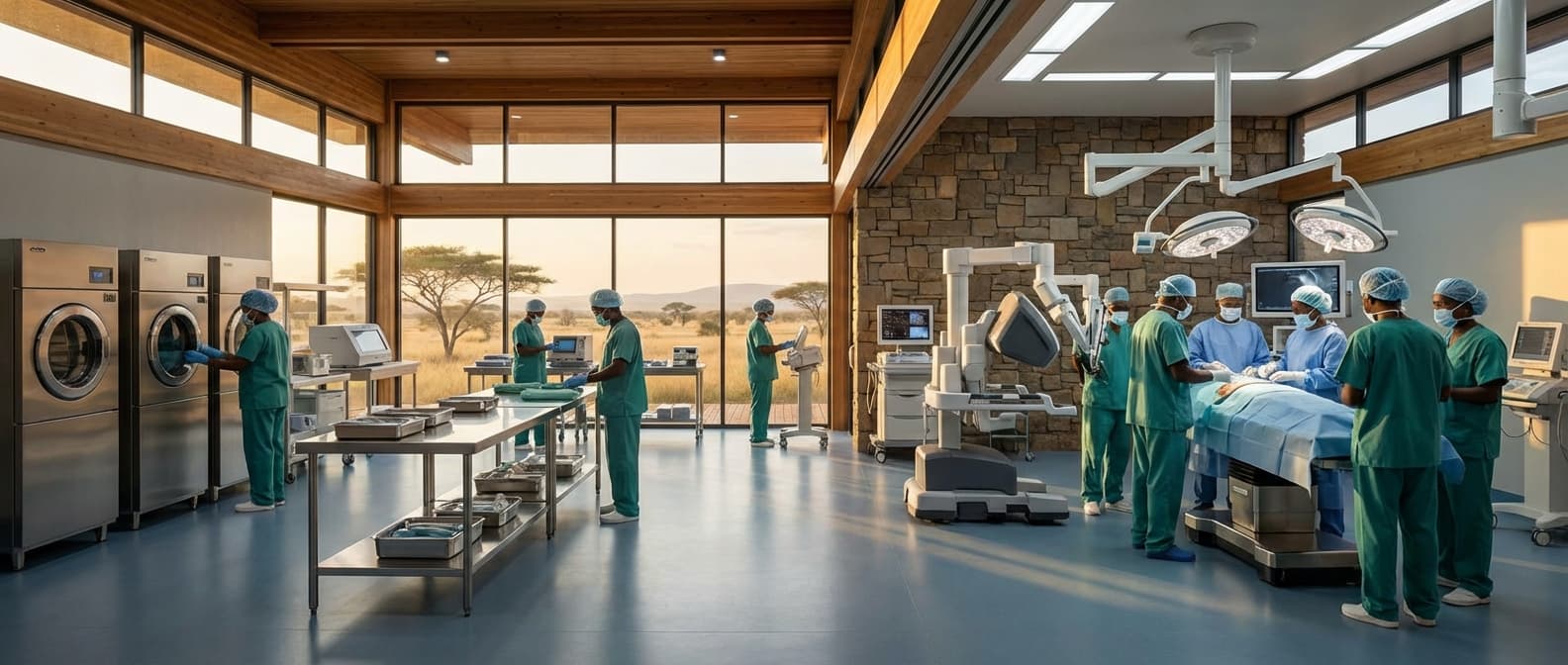
Endoscopy Reprocessing Validation in Chad
Engineering Excellence & Technical Support
AER validation, SOP development and compliance High-standard technical execution following OEM protocols and local regulatory frameworks.
Validation of Automated Washer Disinfectors (AWDs)
Comprehensive validation protocols for Automated Washer Disinfectors (AWDs) ensuring optimal cleaning and disinfection efficacy for flexible endoscopes. This includes evaluating detergent efficacy, water temperature, cycle times, and rinsing processes according to international standards like AAMI ST79.
Biological and Chemical Indicator Testing
Rigorous testing using biological indicators (e.g., *Geobacillus stearothermophilus*) and chemical indicators to verify the effectiveness of high-level disinfection (HLD) processes for endoscopes, confirming the elimination of microbial contamination and the integrity of chemical sterilants.
Validation of Manual Cleaning Procedures
Detailed validation of manual pre-cleaning and cleaning procedures, including the assessment of brush sizes, cleaning solution concentrations, contact times, and the removal of visible soil and debris. This is critical for ensuring that manual steps effectively prepare endoscopes for subsequent automated or HLD processes.
What Is Endoscopy Reprocessing Validation In Chad?
Endoscopy reprocessing validation in Chad refers to the systematic process of verifying and documenting that reusable medical devices, specifically endoscopes, have undergone cleaning and high-level disinfection (HLD) or sterilization procedures that meet established safety and efficacy standards. This validation is critical to prevent the transmission of infectious agents between patients and healthcare professionals. It ensures that the reprocessing methods employed are consistently effective in removing or inactivating all viable microorganisms, including bacteria, viruses, fungi, and spores, from the complex internal channels and external surfaces of endoscopes. The objective is to achieve a state where the endoscope is safe for subsequent patient use, thereby upholding patient safety and complying with national and international guidelines for infection prevention and control.
| Service | Description | Who Needs It | Typical Use Cases |
|---|---|---|---|
| Endoscopy Reprocessing Validation | The process of verifying and documenting the effectiveness of cleaning, disinfection, and sterilization of reusable endoscopes according to established protocols and regulatory standards. | Healthcare facilities in Chad that utilize reusable endoscopes for diagnostic and therapeutic procedures. This includes public hospitals, private clinics, and specialized endoscopy centers. | Before a new endoscope reprocessing protocol is implemented. After installation or major maintenance of an Automated Endoscope Reprocessor (AER). Following a change in cleaning detergents, high-level disinfectants, or sterilization agents. For routine quality assurance to ensure ongoing compliance with infection control standards. In response to an outbreak of endoscopy-associated infections. To meet accreditation or regulatory requirements. |
Key Components of Endoscopy Reprocessing Validation
- Validation of cleaning efficacy: Verifying that the cleaning process effectively removes gross soil and organic debris. This often involves simulated use or residue testing.
- Validation of HLD/Sterilization efficacy: Confirming that the disinfection or sterilization process achieves the required log reduction of microorganisms according to established standards (e.g., spaulding classification).
- Validation of automated endoscope reprocessors (AERs): Ensuring that the AERs are functioning correctly and delivering the validated reprocessing cycles as intended.
- Validation of manual reprocessing procedures: If manual cleaning and disinfection are performed, validating the competency of personnel and the effectiveness of the manual protocols.
- Water quality testing: Regular analysis of the water used for rinsing and in AERs to ensure it meets microbiological specifications.
- Environmental monitoring: Assessing the reprocessing environment for potential microbial contamination.
- Documentation and record-keeping: Maintaining comprehensive records of all validation activities, including test results, calibration logs, maintenance records, and personnel training.
- Periodic revalidation: Establishing a schedule for re-validating reprocessing processes to account for equipment wear, changes in detergents/disinfectants, or updated guidelines.
Who Needs Endoscopy Reprocessing Validation In Chad?
Endoscopy reprocessing validation is a critical quality control measure to ensure that reusable endoscopic instruments are cleaned and disinfected to a level that prevents the transmission of infections. In Chad, as in any country with a healthcare system, this process is essential for patient safety. The need for validation is directly linked to the presence and use of flexible and rigid endoscopes in medical facilities.
| Target Customer/Department | Primary Need for Validation | Specific Endoscopic Procedures Involved | Potential Benefits of Validation |
|---|---|---|---|
| Hospital Endoscopy Units/Departments | Ensuring patient safety by preventing Healthcare-Associated Infections (HAIs) from improperly reprocessed endoscopes. | Gastroscopy, Colonoscopy, Bronchoscopy, Cystoscopy, Laparoscopy, Hysteroscopy. | Reduced infection rates, improved patient outcomes, enhanced hospital reputation, compliance with national and international standards. |
| Surgical Departments (using rigid endoscopes) | Maintaining sterility and preventing cross-contamination during surgical procedures. | Laparoscopic surgery, Arthroscopic surgery, Otolaryngology (ENT) procedures. | Lower surgical site infection rates, safer surgical environments, increased trust in surgical instrumentation. |
| Infection Control Committees | Monitoring and evaluating the effectiveness of current reprocessing protocols and identifying areas for improvement. | All procedures involving reusable endoscopic equipment. | Data-driven decision-making for infection prevention strategies, evidence-based protocol development, staff training reinforcement. |
| Quality Assurance Departments | Verifying that reprocessing processes meet established quality standards and regulatory requirements. | All reprocessing activities for endoscopic instruments. | Consistent quality of reprocessing, reduced risk of regulatory non-compliance, improved operational efficiency. |
| Healthcare Administrators/Management | Mitigating financial risks associated with HAIs (e.g., extended patient stays, legal liabilities) and ensuring efficient resource allocation. | Overall hospital operations and patient care. | Cost savings, improved patient satisfaction, enhanced operational efficiency, robust risk management. |
Target Customers and Departments for Endoscopy Reprocessing Validation in Chad
- Hospitals (Public and Private): These are the primary facilities where endoscopic procedures are performed and where reprocessing of instruments takes place.
- Specialty Clinics (e.g., Gastroenterology, Pulmonology, Urology, Gynecology): Clinics focusing on procedures that heavily rely on endoscopy will have dedicated reprocessing areas.
- Diagnostic Centers: Facilities offering diagnostic endoscopic services will also require validated reprocessing.
- Ministry of Health/Public Health Agencies: Responsible for setting and enforcing healthcare standards, including infection control guidelines. They would be interested in ensuring compliance across the nation.
- Medical Device Manufacturers/Suppliers (for training and support): While not direct users of the validation service, they have a vested interest in their equipment being reprocessed correctly and may partner with validation providers.
- Academic and Training Institutions: Medical schools and nursing colleges that train healthcare professionals in endoscopy and infection control.
Endoscopy Reprocessing Validation Process In Chad
The Endoscopy Reprocessing Validation Process in Chad is a critical multi-step workflow designed to ensure that reprocessed endoscopic equipment meets stringent safety and efficacy standards, minimizing the risk of healthcare-associated infections. This process begins with an initial inquiry and concludes with the execution of validation protocols, involving various stakeholders from healthcare facilities to regulatory bodies.
| Stage | Description | Key Activities | Responsible Parties | Expected Outcome |
|---|---|---|---|---|
| Inquiry and Initial Assessment | The process is triggered by a request from a healthcare facility or a regulatory directive for validation of their endoscopy reprocessing procedures. | Facility identifies the need for validation. Initial contact with validation authority/expert. Preliminary discussion of scope and objectives. | Healthcare Facility (e.g., Head of Endoscopy Unit, Infection Control Department), Validation Authority/Expert. | Confirmation of validation requirement and initial understanding of the scope. |
| Documentation Review and Protocol Development | Review of the facility's existing reprocessing Standard Operating Procedures (SOPs), manufacturer's instructions for use (IFUs) for equipment and disinfectants, and relevant national/international guidelines. | Gathering and scrutinizing all relevant documents. Identifying any gaps or inconsistencies. Developing or adapting a validation protocol tailored to the facility's specific equipment and procedures. | Validation Authority/Expert, Healthcare Facility (Infection Control, Biomedical Engineering). | A comprehensive and approved validation protocol specific to the facility's reprocessing workflow. |
| Equipment and Facility Readiness Assessment | Ensuring that all reprocessing equipment (e.g., automated endoscope reprocessors (AERs), drying cabinets, cleaning brushes) is functional, calibrated, and maintained according to manufacturer specifications. Assessing the reprocessing environment. | Visual inspection of equipment. Checking maintenance logs and calibration certificates. Verifying availability of necessary consumables (detergents, disinfectants). Assessing water quality. Reviewing staff training records. | Biomedical Engineering Department, Infection Control Department, Validation Authority/Expert. | Confirmation that equipment and facility meet the necessary prerequisites for validation. |
| Validation Protocol Execution | Implementing the predefined validation protocol, which typically involves several key tests. | Conducting manual cleaning efficacy tests (e.g., using fluorescent markers). Performing automated cleaning and high-level disinfection (HLD) efficacy tests (e.g., using biological indicators). Verifying rinse water quality. Performing leak testing. Documenting all steps and observations meticulously. | Healthcare Facility Staff (trained technicians), Validation Authority/Expert (supervision and verification). | Collection of raw data and evidence of reprocessing efficacy and safety. |
| Data Analysis and Reporting | Analyzing the data collected during protocol execution to determine compliance with predefined acceptance criteria. | Compiling all test results. Comparing results against acceptance criteria. Identifying any deviations or failures. Preparing a detailed validation report summarizing findings, including any non-conformities and recommendations. | Validation Authority/Expert, Healthcare Facility (for review and response). | A comprehensive validation report with a clear conclusion on the efficacy and safety of the reprocessing process. |
| Validation Certificate Issuance and Ongoing Monitoring | Upon successful validation, a certificate is issued, signifying compliance. A plan for ongoing monitoring is established to maintain standards. | Issuance of a formal validation certificate. Development and implementation of a routine monitoring schedule (e.g., periodic verification of AER cycles, ongoing staff competency checks). Establishing a process for re-validation upon significant changes (e.g., new equipment, new disinfectants). | Validation Authority/Expert, Healthcare Facility. | Certified reprocessing process, ensuring continuous compliance and patient safety. Minimizing the risk of outbreaks and complications. |
Workflow Stages: Endoscopy Reprocessing Validation in Chad
- Inquiry and Initial Assessment
- Documentation Review and Protocol Development
- Equipment and Facility Readiness Assessment
- Validation Protocol Execution
- Data Analysis and Reporting
- Validation Certificate Issuance and Ongoing Monitoring
Endoscopy Reprocessing Validation Cost In Chad
Validating the reprocessing of endoscopic equipment in Chad is a critical step to ensure patient safety and prevent healthcare-associated infections. This process typically involves verifying that cleaning and disinfection/sterilization protocols effectively eliminate pathogens from reusable endoscopes. The cost associated with this validation can vary significantly due to several factors, including the complexity of the validation study, the number of endoscopes and reprocessing cycles to be tested, the specific laboratory and personnel involved, and the availability of specialized equipment and reagents within Chad. Pricing is generally discussed and settled in local currency, the Chadian Franc (XAF).
| Service Component | Estimated Cost Range (XAF) |
|---|---|
| Microbiological Assay per Cycle (e.g., RODAC plates, swab cultures) | 50,000 - 150,000 |
| Chemical Indicator Testing (e.g., Bowie-Dick, specific HLD indicators) | 20,000 - 70,000 |
| Personnel Time (Technician/Scientist hours for sample processing and analysis) | 30,000 - 100,000 per day |
| Validation Protocol Development & Review | 100,000 - 300,000 (one-time fee) |
| Comprehensive Validation Report Generation | 150,000 - 400,000 |
| Potential External Consultancy/Expert Fees | 200,000 - 1,000,000+ (highly variable) |
| Consumables & Reagents (per study) | 50,000 - 200,000 |
| Total Estimated Cost for a Basic Validation Study (e.g., 5-10 cycles, limited endoscopes) | 500,000 - 2,000,000 |
| Total Estimated Cost for a Comprehensive Validation Study (e.g., multiple endoscopes, extensive cycles, external expertise) | 2,000,000 - 10,000,000+ |
Key Pricing Factors for Endoscopy Reprocessing Validation in Chad:
- Scope of Validation: Whether the validation is for initial implementation, periodic re-validation, or troubleshooting specific issues will influence the time and resources required.
- Number of Endoscopes/Cycles: The more endoscopes and reprocessing cycles tested, the higher the overall cost due to increased laboratory work and sample analysis.
- Type of Validation: Testing for high-level disinfection (HLD) versus sterilization will involve different assays and reagents, impacting cost.
- Laboratory Capabilities & Personnel: The expertise of laboratory technicians, availability of qualified microbiologists, and the sophistication of the laboratory infrastructure (e.g., incubators, microscopes, culture media) play a significant role.
- Reagents and Consumables: The cost of culture media, reagents for chemical indicators, and other laboratory supplies specific to the validation methods used.
- Transportation & Logistics: If samples need to be transported to a central laboratory, or if external experts are involved, travel and logistics costs will be added.
- External Expertise/Consultancy: Engaging international or national experts for validation design, oversight, or interpretation can increase costs.
- Regulatory Requirements: The specific standards and guidelines mandated by the Chadian Ministry of Health or other relevant authorities may dictate the rigor and thus the cost of the validation.
- Reporting and Documentation: The time and effort required to generate comprehensive validation reports.
Affordable Endoscopy Reprocessing Validation Options
Ensuring the effective and safe reprocessing of endoscopes is paramount to patient safety and infection control. Validation is a critical step in this process, confirming that the chosen cleaning and disinfection methods reliably eliminate pathogens. However, validation can be expensive. This document explores affordable endoscopy reprocessing validation options, focusing on value bundles and cost-saving strategies.
| Cost-Saving Strategy | Description | Potential Benefits |
|---|---|---|
| Leveraging Manufacturer's Validation Data | Utilizing validation studies provided by the endoscope and reprocessing equipment manufacturers. These studies are often conducted according to established standards. | Significantly reduces the need for independent laboratory testing. Often included as part of the equipment purchase or service agreement. Ensures compliance with manufacturer's recommended procedures. |
| Batch Testing and Monitoring | Implementing a robust system of routine batch testing for critical parameters (e.g., disinfectant concentration, temperature, contact time) rather than full validation for every cycle. Focus on proving consistency and adherence to validated parameters. | Lower ongoing costs compared to repeated full validation. Provides continuous assurance of reprocessing effectiveness. Can be integrated into existing quality control processes. |
| Standardized Protocols and Internal Expertise | Developing and strictly adhering to standardized, evidence-based reprocessing protocols. Training internal staff to manage and interpret validation data and troubleshoot minor issues, reducing reliance on external consultants. | Minimizes the need for expensive external consultants. Empowers internal staff for greater efficiency. Promotes a culture of continuous improvement in reprocessing. |
| Collaborative Purchasing and Shared Resources | Exploring opportunities to collaborate with other healthcare facilities to share costs for validation services or specialized equipment. Jointly negotiating with validation service providers. | Reduces individual facility costs through economies of scale. Facilitates access to a wider range of validation services and expertise. Encourages best practice sharing. |
| Focusing on Critical Parameters | Instead of validating every single aspect of the reprocessing cycle, focus validation efforts on the most critical parameters known to impact microbial kill, as defined by regulatory guidelines and manufacturer recommendations. | More targeted and cost-effective approach. Ensures that the most crucial elements of reprocessing are robustly validated. Reduces the scope and expense of testing. |
Understanding Validation and Its Importance
- Endoscope reprocessing involves cleaning, high-level disinfection (HLD), or sterilization.
- Validation confirms that the chosen reprocessing method achieves the required level of microbial reduction.
- Regulatory bodies (e.g., FDA, CDC, AAMI) mandate validation to ensure patient safety and prevent healthcare-associated infections (HAIs).
- Failure to validate can lead to non-compliance, increased risk of infection, and potential legal ramifications.
- Traditional validation methods can involve extensive laboratory testing and consultant fees.
Verified Providers In Chad
In Chad, ensuring access to reliable and skilled healthcare is paramount. This is where verified providers, such as those holding Franance Health credentials, stand out. Franance Health's rigorous vetting process and commitment to upholding high standards of medical practice make their credentialed providers the best choice for your healthcare needs. These professionals have demonstrated a commitment to continuous learning, ethical conduct, and patient-centered care, offering a level of trust and expertise that is invaluable.
| Credential Type | Benefits for Patients in Chad | Franance Health Assurance |
|---|---|---|
| Certified Medical Practitioners | Access to doctors with validated expertise and up-to-date knowledge in their specialties. Improved diagnostic accuracy and treatment effectiveness. | Franance Health verifies medical licenses, educational background, and practical experience. |
| Accredited Healthcare Facilities | Assurance of facilities meeting international standards for safety, hygiene, and equipment. Reduced risk of complications and improved patient outcomes. | Franance Health assesses operational procedures, infrastructure, and quality management systems. |
| Licensed Allied Health Professionals (Nurses, Technicians) | Confidence in the skills and training of support staff crucial for comprehensive care. Reliable assistance and accurate diagnostic services. | Franance Health confirms professional certifications and practical skills assessments. |
Why Franance Health Credentials Matter in Chad:
- Demonstrated Competence: Successful completion of Franance Health's stringent qualification and examination processes.
- Commitment to Ethics: Adherence to a strict code of professional conduct and ethical practice.
- Patient-Centered Approach: Focus on providing compassionate and effective care tailored to individual patient needs.
- Continuous Professional Development: Requirement for ongoing training and skill enhancement.
- Enhanced Trust and Reliability: A credential recognized for its commitment to quality healthcare.
Scope Of Work For Endoscopy Reprocessing Validation
This Scope of Work (SOW) outlines the requirements and deliverables for validating the reprocessing procedures of flexible endoscopes to ensure patient safety and regulatory compliance. The validation will cover all critical steps in the endoscope cleaning and high-level disinfection (HLD) or sterilization process.
| Deliverable | Description | Standard Specification/Requirement |
|---|---|---|
| Reprocessing Protocol Review and Validation Plan | A comprehensive review of the existing endoscope reprocessing manual and the development of a detailed validation plan outlining the methodology, scope, acceptance criteria, and timeline for the validation study. | Protocol must adhere to relevant guidelines (e.g., AAMI ST91, CDC, APIC, local regulatory requirements). The plan should specify the types of endoscopes, reprocessing agents, equipment, and microbial challenges to be used. |
| Microbial Challenge Study | Simulated contamination of endoscope channels and exterior surfaces with a standardized mix of microorganisms (e.g., high-risk bacteria, yeasts, spores) to mimic clinical soil. Subsequent reprocessing and microbial enumeration to determine log reduction values (LRVs). | LRV of ≥5 for vegetative bacteria and yeasts. For spores, a reduction of ≥3 logs for HLD, and sterility assurance level (SAL) of 10⁻⁶ for sterilization. Testing must be performed on representative samples of critical endoscope components. |
| Cleaning Efficacy Study | Evaluation of the manual and/or automated cleaning process to remove protein, hemoglobin, and carbohydrate soil. This can involve using surrogate soil and testing for residual contaminants. | Residual protein < 5 µg/cm², residual hemoglobin < 20 µg/cm², residual carbohydrate < 1 mg/cm² on tested surfaces. Adenosine triphosphate (ATP) testing can be used as a surrogate for overall cleanliness. |
| High-Level Disinfection (HLD) or Sterilization Efficacy Study | Verification of the HLD or sterilization process's ability to achieve the required level of microbial inactivation on the endoscope following the cleaning step. | For HLD: Reduction of all challenge microorganisms by ≥5 logs, with no recovery of specific indicator organisms (e.g., Mycobacterium terrae). For sterilization: Achievement of a SAL of 10⁻⁶ for relevant microbial challenges. |
| Disinfection/Sterilization Agent Concentration Monitoring | Validation of the methods and frequency for monitoring the concentration of HLD or sterilization agents to ensure they remain within effective parameters. | Methods must be validated and traceable. Monitoring frequency as per manufacturer's instructions and regulatory guidelines. |
| Environmental Monitoring (Optional, but Recommended) | Assessment of the reprocessing environment for microbial contamination, especially if environmental factors could impact reprocessing efficacy. | Adherence to established guidelines for cleanroom or work area environmental monitoring, with defined acceptable microbial limits. |
| Validation Report | A comprehensive report documenting the entire validation process, including the validation plan, raw data, statistical analysis, results, and conclusions. The report will confirm whether the reprocessing procedures meet the defined acceptance criteria. | The report should clearly state the validated protocol, the acceptance criteria met, and any recommendations for continuous monitoring or process improvement. Must be signed and dated by qualified personnel. |
| Standard Operating Procedures (SOPs) for Reprocessing | Development or revision of SOPs for endoscope cleaning, HLD, sterilization, storage, and handling, incorporating the validated parameters and procedures. | SOPs must be clear, concise, and readily accessible to all reprocessing staff. They should reflect the validated protocol and include details on equipment, reagents, cycles, and quality control measures. |
Key Objectives
- To confirm the effectiveness of the defined endoscope reprocessing procedures in eliminating microbial contamination.
- To validate the efficacy of manual and automated cleaning processes.
- To verify the effectiveness of the chosen HLD or sterilization method.
- To ensure consistent and reproducible results across multiple reprocessing cycles.
- To establish documented evidence supporting the safety and efficacy of the reprocessing protocol.
Service Level Agreement For Endoscopy Reprocessing Validation
This Service Level Agreement (SLA) outlines the response times and uptime guarantees for the Endoscopy Reprocessing Validation service provided by [Your Company Name] to [Client Name]. This SLA is intended to ensure the reliability and availability of the validation process, which is critical for patient safety and regulatory compliance.
| Service Component/Metric | Target Uptime Guarantee | Response Time (Business Hours) | Response Time (Outside Business Hours) | Target Resolution Time (Critical Incident) | Target Resolution Time (Major Incident) |
|---|---|---|---|---|---|
| Endoscopy Reprocessing Validation Platform Availability | 99.5% | 2 Business Hours | 4 Business Hours | 8 Business Hours | 24 Business Hours |
| Data Submission & Retrieval Service | 99.0% | 3 Business Hours | 6 Business Hours | 12 Business Hours | 48 Business Hours |
| Automated Report Generation | 99.0% | 4 Business Hours | 8 Business Hours | 24 Business Hours | 72 Business Hours |
Key Definitions
- Uptime: The percentage of time the Endoscopy Reprocessing Validation service is operational and accessible to the client.
- Downtime: The percentage of time the Endoscopy Reprocessing Validation service is unavailable or inaccessible.
- Response Time: The maximum time allowed for [Your Company Name] to acknowledge and begin addressing a reported incident or request.
- Resolution Time: The maximum time allowed to fully resolve a reported incident and restore service to normal operation.
- Business Hours: [Specify your standard business hours, e.g., Monday to Friday, 9:00 AM to 5:00 PM, excluding public holidays in [Specify Region]].
- Critical Incident: An event that renders the Endoscopy Reprocessing Validation service completely inoperable or significantly impairs its core functionality, preventing clients from performing essential validation tasks.
- Major Incident: An event that degrades the performance of the Endoscopy Reprocessing Validation service or impacts a significant subset of users, but does not render the service entirely inoperable.
Frequently Asked Questions

Ready when you are
Let's scope your Endoscopy Reprocessing Validation in Chad project in Chad.

Scaling healthcare logistics and technical systems across the entire continent.