
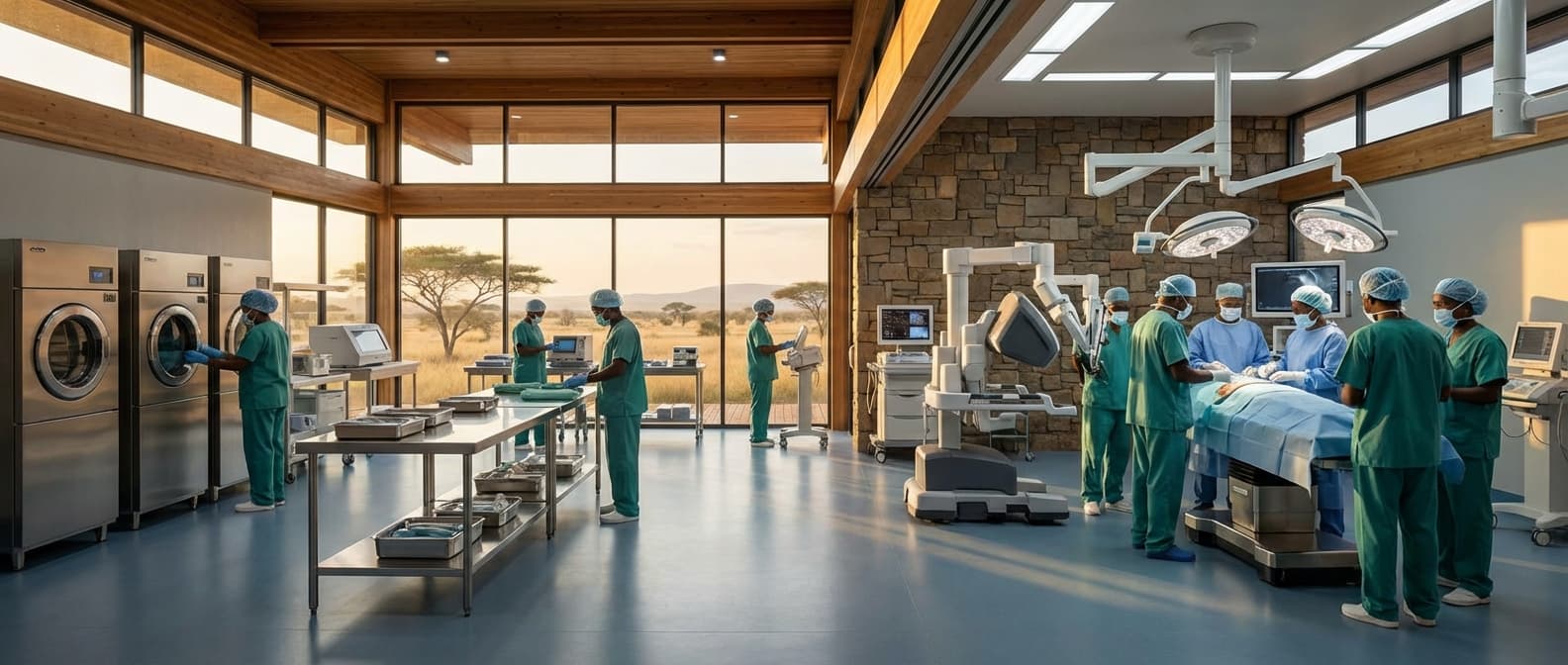
CSSD Design & Validation in Chad
Engineering Excellence & Technical Support
CSSD workflow design, validation and process development High-standard technical execution following OEM protocols and local regulatory frameworks.
Advanced Sterilization Process Design
We leverage advanced modeling and simulation techniques to design and optimize sterilization cycles (e.g., steam, EtO, H2O2 plasma) for CSSDs in Chad, ensuring efficacy against a wide range of pathogens while minimizing cycle times and resource consumption.
Real-time Performance Monitoring & Validation
Our validation protocols integrate real-time data acquisition and analysis for all critical parameters (temperature, pressure, humidity, concentration). This ensures consistent and validated sterilization performance, crucial for patient safety in remote or resource-limited settings.
Robust Decontamination Pathway Design
We design comprehensive decontamination pathways that account for the unique environmental and logistical challenges in Chad, including protocols for manual cleaning, enzymatic pre-treatment, and automated washer-disinfectors, ensuring effective removal of bioburden prior to sterilization.
What Is Cssd Design & Validation In Chad?
CSSD (Central Sterile Services Department) Design & Validation in Chad refers to the comprehensive process of planning, architecting, and subsequently verifying the operational integrity and compliance of sterile processing facilities within healthcare institutions in Chad. This service encompasses both the initial conceptualization and detailed design phases, ensuring that the facility layout, workflow, equipment selection, and environmental controls meet stringent international standards (e.g., ISO 13485, AAMI ST guidelines) and local regulatory requirements. Validation is a critical component, involving a systematic and documented process to establish that the designed CSSD consistently performs as intended, ensuring the safety and efficacy of sterilized medical devices. This includes qualification of facilities (IQ), operation (OQ), and performance (PQ) of all systems and equipment.
| Who Needs CSSD Design & Validation? | Typical Use Cases |
|---|---|
| Hospitals (Public and Private) | Establishment of new CSSD facilities or upgrades to existing ones. |
| Surgical Centers and Clinics | Ensuring compliance with infection control standards for reusable medical devices. |
| Specialized Healthcare Facilities (e.g., Dental Clinics, Ophthalmic Centers) | Designing or validating specific sterilization processes for unique instruments. |
| Medical Device Manufacturers (for reprocessing services) | Validating their reprocessing capabilities to meet regulatory requirements. |
| Government Health Ministries and Regulatory Bodies | Setting standards and overseeing compliance in healthcare facilities. |
| International Aid Organizations and NGOs | Supporting the development of safe and effective healthcare infrastructure in underserved regions. |
| Healthcare Consulting Firms and Project Managers | Engaging specialists for comprehensive CSSD planning and execution. |
| Any facility with a significant volume of reusable medical instruments requiring sterilization | Optimizing efficiency, reducing risk of healthcare-associated infections (HAIs), and ensuring the integrity of sterilized instruments. |
Key Components of CSSD Design & Validation
- Facility Layout and Workflow Optimization: Designing for efficient material flow, segregation of clean and dirty areas, and minimizing cross-contamination risks.
- Equipment Selection and Specification: Identifying and specifying appropriate sterilization technologies (e.g., autoclaves, low-temperature sterilizers), washing and disinfection machines, drying cabinets, and material handling equipment based on service volume, device types, and infection control requirements.
- Environmental Controls: Designing for appropriate air filtration (HEPA), temperature, humidity, and pressure differentials within different CSSD zones.
- Utilities and Infrastructure: Ensuring adequate provision of water (purified/distilled), steam, electricity, and ventilation systems.
- Documentation and Standard Operating Procedures (SOPs): Developing comprehensive SOPs for all CSSD processes, from receiving to distribution of sterile items.
- Validation Protocols: Establishing detailed protocols for Installation Qualification (IQ), Operational Qualification (OQ), and Performance Qualification (PQ).
- Sterilization Cycle Development and Validation: Defining, testing, and validating specific sterilization cycles for various medical devices.
- Staff Training and Competency Assessment: Ensuring personnel are adequately trained in sterile processing techniques and adherence to protocols.
- Regulatory Compliance Review: Ensuring alignment with relevant international and national standards and guidelines for sterile processing.
- Post-Validation Monitoring and Re-validation Strategies: Implementing ongoing monitoring and planning for periodic re-validation to maintain compliance.
Who Needs Cssd Design & Validation In Chad?
Central Sterile Services Department (CSSD) design and validation are critical for ensuring patient safety and operational efficiency in healthcare facilities. In Chad, where the healthcare infrastructure is developing and facing unique challenges, these services are not only beneficial but often essential for raising standards and preventing healthcare-associated infections (HAIs). A well-designed CSSD minimizes the risk of contamination, optimizes workflow, and ensures that surgical instruments are safely sterilized and ready for reuse. Validation confirms that the sterilization processes are consistently effective, providing a crucial layer of assurance for both healthcare providers and patients. Therefore, robust CSSD design and validation are vital for any healthcare institution in Chad aiming to deliver high-quality, safe patient care.
| Customer Type | Key Departments Involved | Specific Needs/Benefits |
|---|---|---|
| Public Hospitals | Surgical Department, Operating Rooms, Infection Control, Administration, CSSD | Improving sterilization reliability, reducing HAIs, optimizing resource utilization, meeting national health standards. |
| Private Hospitals & Clinics | Surgical Theaters, Outpatient Surgery, CSSD, Quality Assurance | Enhancing patient trust and safety, maintaining high standards for competitive advantage, efficient instrument turnaround, compliance with international best practices. |
| Surgical Centers | Operating Rooms, Pre-op/Post-op, CSSD | Ensuring rapid and safe sterilization of instruments for high-volume procedures, preventing delays, maintaining patient safety. |
| Maternal and Child Health Centers | Maternity Ward, Minor Procedure Rooms, CSSD (if applicable) | Safe sterilization for childbirth-related procedures and minor interventions, reducing infection risk for mothers and infants. |
| Specialty Clinics (Dental, Ophthalmology, etc.) | Treatment Rooms, CSSD (if applicable) | Ensuring proper sterilization of specialized instruments to prevent cross-contamination and infections. |
| Government Health Ministries/Agencies | Public Health Directorate, Planning Department, Quality Assurance Unit | Developing and enforcing national sterilization guidelines, capacity building for healthcare facilities, improving overall public health outcomes. |
| International NGOs & Aid Organizations | Healthcare Program Management, Procurement, Technical Support | Ensuring that supported facilities meet international safety standards, providing technical expertise for infrastructure development and training, long-term sustainability of services. |
Target Customers and Departments for CSSD Design & Validation in Chad:
- Hospitals (Public and Private)
- Surgical Centers
- Clinics with Surgical Capabilities
- Maternal and Child Health Centers (performing minor procedures)
- Specialty Clinics (e.g., dental, ophthalmology requiring instrument sterilization)
- Government Health Ministries/Agencies (for policy setting and oversight)
- International NGOs and Aid Organizations (involved in healthcare development)
Cssd Design & Validation Process In Chad
The design and validation process for a Central Sterile Supply Department (CSSD) in Chad follows a structured workflow, ensuring that the facility meets international standards for infection control and operational efficiency. This process is crucial for providing safe and sterile medical equipment to healthcare facilities. The workflow typically begins with an initial inquiry and culminates in the full operational execution and validation of the CSSD.
| Phase | Key Activities | Purpose | Key Stakeholders | Deliverables/Outcomes |
|---|---|---|---|---|
| Healthcare facility or government entity identifies the need for a new or upgraded CSSD. Initial consultations to understand requirements, scope, and budget. | To define the project's objectives and preliminary scope. | Healthcare Provider/Ministry of Health, Potential CSSD Project Manager/Consultant. | Project brief, initial requirements document. |
| Assessing the viability of the project, including technical, economic, and operational aspects. Identifying and evaluating potential sites for the CSSD. | To determine project feasibility and secure an appropriate location. | Project Manager, Engineers, Architects, Site Surveyors, Local Authorities. | Feasibility report, site evaluation report, preliminary budget estimate. |
| Developing the overall layout, flow, and functionality of the CSSD. Defining the different zones (decontamination, sterile storage, etc.) and their relationships. Planning for utilities and infrastructure. | To establish the foundational design and operational concept. | CSSD Consultants, Architects, Biomedical Engineers, Infection Control Specialists. | Conceptual layout drawings, functional program, preliminary equipment list. |
| Producing detailed architectural, mechanical, electrical, and plumbing (MEP) drawings. Specifying materials, finishes, and technical requirements for all components. Developing safety and ventilation systems. | To provide comprehensive blueprints for construction and equipment specification. | Architects, MEP Engineers, Structural Engineers, CSSD Design Specialists. | Detailed architectural drawings, MEP schematics, Bill of Quantities (BoQ), technical specifications. |
| Tendering for construction services. Identifying, selecting, and procuring all necessary CSSD equipment (washers, disinfectors, sterilizers, packaging machines, etc.) based on detailed specifications and international standards. | To acquire the necessary construction resources and specialized equipment. | Procurement Department, Project Manager, Technical Committee, Equipment Suppliers. | Awarded construction contracts, purchase orders for CSSD equipment. |
| Executing the construction of the CSSD facility according to the detailed drawings. Installing all utilities, finishes, and specialized infrastructure. Installing and integrating CSSD equipment. | To build and equip the CSSD facility. | Construction Company, Subcontractors, Equipment Installers, Project Manager. | Completed facility, installed equipment, initial utility connections. |
| Testing all installed systems (HVAC, plumbing, electrical) and individual pieces of equipment to ensure they function according to manufacturer specifications and design parameters. | To verify that all systems and equipment are operational and safe. | Engineers, Technicians, Equipment Manufacturers' Representatives, Project Manager. | Commissioning reports, equipment test results. |
| Conducting formal validation processes (Installation Qualification - IQ, Operational Qualification - OQ, Performance Qualification - PQ) to demonstrate that the CSSD operates as intended and meets all relevant standards (e.g., ISO 13485, AAMI). Compiling all design, construction, and validation documentation. | To formally prove the CSSD's compliance with standards and its ability to produce sterile goods. | Validation Engineers, Quality Assurance Personnel, CSSD Manager, Regulatory Bodies (if applicable). | IQ, OQ, PQ reports, validation master plan, Standard Operating Procedures (SOPs), validation certificates. |
| Training CSSD staff on operational procedures, equipment use, safety protocols, infection control practices, and quality management systems. | To ensure competent and well-trained personnel to operate the CSSD. | CSSD Consultants, Equipment Trainers, Infection Control Specialists, CSSD Staff. | Trained staff, training records, competency assessments. |
| Officially opening the CSSD for service. Implementing quality control measures, monitoring performance, and establishing a system for ongoing maintenance, calibration, and continuous improvement based on feedback and performance data. | To commence CSSD operations and ensure sustained performance and safety. | CSSD Management and Staff, Hospital Administration, Biomedical Engineering Department. | Operational CSSD, performance monitoring reports, maintenance schedules, audit reports. |
CSSD Design & Validation Workflow in Chad
- Initial Inquiry and Needs Assessment
- Feasibility Study and Site Selection
- Conceptual Design and Planning
- Detailed Design and Engineering
- Procurement and Equipment Selection
- Construction and Installation
- Commissioning and Testing
- Validation and Documentation
- Staff Training and Capacity Building
- Operationalization and Continuous Improvement
Cssd Design & Validation Cost In Chad
Designing and validating a Central Sterile Services Department (CSSD) in Chad involves a complex interplay of factors influencing cost. These costs are typically quoted in the local currency, the Chadian Franc (XAF). The pricing can vary significantly based on the scale of the facility, the required level of sophistication, the chosen vendors, and the specific regulatory requirements. Key pricing factors include the architectural and engineering design fees, the cost of specialized CSSD equipment (sterilizers, washer-disinfectors, packaging machines, etc.), installation and commissioning services, validation protocols and third-party testing, training for staff, and ongoing maintenance contracts. The geographical location within Chad and the accessibility of the site can also impact transportation and logistics costs for equipment and personnel. Furthermore, the availability of local expertise versus the need for international consultants will significantly affect design and validation expenses.
| Cost Category | Estimated Range (XAF) | Notes |
|---|---|---|
| Preliminary Design & Planning | 5,000,000 - 25,000,000 | Includes conceptual design, site assessment, and initial feasibility studies. |
| Detailed Architectural & Engineering Design | 15,000,000 - 75,000,000 | Covers detailed blueprints, MEP (Mechanical, Electrical, Plumbing) designs, and workflow planning. |
| Small to Medium-Sized CSSD Equipment Package (e.g., 1-2 autoclaves, washer-disinfector) | 75,000,000 - 300,000,000 | Varies significantly by brand, capacity, and technological features. |
| Large/Advanced CSSD Equipment Package (e.g., multiple large autoclaves, automated systems) | 300,000,000 - 1,000,000,000+ | For larger hospitals or specialized medical centers requiring high throughput and advanced technology. |
| Installation & Commissioning | 10,000,000 - 50,000,000 | Dependent on the number and complexity of installed equipment. |
| Validation Services (IQ/OQ/PQ & Third-Party Testing) | 10,000,000 - 40,000,000 | Essential for regulatory compliance and patient safety. Costs may be per equipment piece or for the entire system. |
| Staff Training | 5,000,000 - 20,000,000 | Includes both theoretical and practical training sessions. |
| Infrastructure Upgrades (if required) | Varies greatly | Can range from minor adjustments to significant structural and utility overhauls. |
| Project Management & Consultancy (if external) | 15,000,000 - 75,000,000 | For specialized project oversight and expert guidance. |
| Total Estimated Project Cost (excluding major infrastructure) | 130,000,000 - 1,500,000,000+ | This is a broad estimate, and a detailed quotation is necessary for specific projects. |
Key Pricing Factors for CSSD Design & Validation in Chad (XAF)
- Architectural & Engineering Design Fees: Dependent on the complexity of the facility layout, specialized ventilation requirements, and workflow optimization.
- Specialized CSSD Equipment Costs: Includes autoclaves (various sizes and types), washer-disinfectors, ultrasonic cleaners, drying cabinets, packaging machines, and tracking systems.
- Installation & Commissioning: Professional installation and initial setup of all equipment.
- Validation Services: Crucial for ensuring equipment performance meets international standards (e.g., IQ, OQ, PQ). This involves third-party testing and documentation.
- Staff Training: Comprehensive training for CSSD personnel on equipment operation, sterilization processes, and infection control protocols.
- Infrastructure & Utilities: Costs associated with necessary electrical, plumbing, and ventilation upgrades to support CSSD operations.
- Consumables & Supplies: Initial stock of detergents, packaging materials, indicators, etc.
- Project Management & Consultancy: Fees for experienced project managers or specialized CSSD consultants, especially if international expertise is required.
- Geographical Location & Logistics: Transportation of equipment and personnel to the site, particularly in remote areas.
- Permits & Approvals: Costs associated with obtaining necessary building and operational permits from Chadian authorities.
- Contingency: A buffer for unforeseen expenses during the design and validation phases.
Affordable Cssd Design & Validation Options
Designing and validating a Central Sterile Services Department (CSSD) is a critical investment for any healthcare facility, ensuring patient safety and operational efficiency. While comprehensive solutions can be costly, there are various affordable design and validation options, including value bundles and strategic cost-saving measures, that can significantly reduce the overall expenditure without compromising quality or compliance.
| Cost-Saving Strategy | Description | Potential Benefit |
|---|---|---|
| Prioritize Essential Equipment & Workflow | Focus on acquiring high-quality, reliable equipment that meets immediate needs and streamlines core sterile processing workflows. Avoid unnecessary bells and whistles initially. | Reduces upfront capital investment and operational complexity. |
| Leverage Existing Infrastructure | Assess opportunities to adapt and utilize existing spaces and utilities within the facility before committing to new construction. This can include minor renovations instead of major builds. | Significantly lowers construction and material costs. |
| Negotiate Bulk Purchasing & Long-Term Contracts | When purchasing equipment or services, inquire about discounts for bulk orders or explore long-term service and maintenance contracts that may offer preferential pricing. | Achieves economies of scale and predictable operational costs. |
| Consider Refurbished or Certified Pre-Owned Equipment | For non-critical or lower-volume areas, carefully vetted and certified pre-owned equipment can offer substantial savings without compromising performance. Ensure it comes with a warranty. | Dramatically reduces equipment acquisition costs. |
| Optimize Workflow Efficiency through Lean Principles | Implement Lean methodologies to eliminate waste, reduce bottlenecks, and improve process flow. This can involve ergonomic design and smart layout planning. | Increases throughput, reduces labor costs, and minimizes errors. |
| Outsource Non-Core Functions (Initially) | For certain specialized tasks or during periods of high demand, consider outsourcing aspects like specialized equipment calibration or overflow sterilization, if cost-effective. | Avoids large capital outlays for infrequently used services. |
| Standardize Equipment & Consumables | Choosing a limited range of equipment from a few trusted vendors can simplify maintenance, training, and inventory management, often leading to better pricing on consumables. | Reduces operational and maintenance overhead. |
| Invest in Energy-Efficient Equipment | While the initial cost might be slightly higher, energy-efficient equipment can lead to significant long-term savings on utility bills. Look for ENERGY STAR certifications. | Lowers ongoing operational expenses. |
| Utilize Virtual Design & Simulation Tools | Before physical construction, employ virtual design and simulation software to optimize layout, identify potential conflicts, and refine workflow. This minimizes costly on-site changes. | Prevents expensive rework and design errors. |
Value Bundles for Affordable CSSD Design & Validation
- {"title":"Modular Design & Prefabricated Solutions","description":"Opting for modular CSSD units or prefabricated sterile processing areas can drastically cut down on on-site construction time and labor costs. These systems are often designed for rapid assembly and can be customized to fit specific space constraints."}
- {"title":"Integrated Equipment Packages","description":"Many suppliers offer bundled packages that include essential CSSD equipment (e.g., washers, sterilizers, instrument tracking systems) at a reduced price compared to purchasing them individually. These bundles often come with streamlined installation and training."}
- {"title":"Phased Implementation & Scalability","description":"Instead of a complete overhaul, consider a phased approach. Start with essential services and gradually expand as budget allows. This allows for more manageable capital expenditure and ensures core functionalities are met first."}
- {"title":"Technology Integration Bundles","description":"Packages that combine essential IT infrastructure, instrument tracking software, and workflow management tools can streamline operations and reduce the need for multiple vendor contracts and separate implementations."}
- {"title":"Training & Validation Packages","description":"Bundled services that include staff training on new equipment and processes, along with initial validation and qualification of equipment and workflows, can be more cost-effective than procuring these separately."}
Verified Providers In Chad
Finding reliable healthcare in Chad can be a significant challenge. This is where the importance of verified providers, particularly those with credentials like Franance Health, becomes paramount. Franance Health represents a commitment to quality, ethical practices, and patient-centered care, making them a leading choice for healthcare services in Chad. Their rigorous vetting process ensures that all affiliated healthcare professionals and facilities meet high standards of medical expertise, patient safety, and service delivery. When you choose a Franance Health-verified provider, you are choosing peace of mind, knowing you are receiving care from individuals and institutions dedicated to your well-being.
| Provider Type | Franance Health Verification Criteria | Benefits for Patients |
|---|---|---|
| Hospitals & Clinics | Accreditation, Infection Control Protocols, Equipment Standards, Staff Qualifications | Access to modern facilities, safe treatment environments, and competent medical teams. |
| Specialist Doctors | Medical Board Certification, Post-Graduate Training, Continuing Medical Education, Patient Reviews | Expert diagnosis and treatment from highly skilled and experienced specialists. |
| Diagnostic Laboratories | Quality Assurance Programs, Certified Technicians, Equipment Calibration, Turnaround Times | Accurate and timely laboratory results crucial for effective diagnosis and treatment planning. |
| Pharmaceutical Services | Drug Quality Control, Licensed Pharmacists, Medication Management Protocols, Patient Counseling | Access to safe, authentic medications and professional pharmaceutical advice. |
Why Franance Health Credentials Matter:
- Ensures adherence to international medical standards and best practices.
- Guarantees that healthcare professionals are licensed, qualified, and continuously trained.
- Promotes ethical conduct and patient rights.
- Reduces the risk of misdiagnosis or substandard treatment.
- Facilitates access to a network of trusted and reliable healthcare services.
- Enhances patient safety through stringent facility inspections and protocols.
- Provides transparency and accountability in healthcare delivery.
Scope Of Work For Cssd Design & Validation
This Scope of Work (SOW) outlines the requirements for the design, validation, and technical deliverables associated with a Central Sterile Supply Department (CSSD) project. It also specifies the standard specifications that must be adhered to throughout the project lifecycle. The objective is to ensure a functional, compliant, and efficient CSSD that meets all relevant healthcare standards and operational requirements.
| Phase | Key Activities | Technical Deliverables | Applicable Standard Specifications |
|---|---|---|---|
| Design Phase | Needs Assessment & Functional Programming, Conceptual Design Development, Detailed Design Engineering (Architectural, Mechanical, Electrical, Plumbing), Equipment Specification & Selection, Workflow Analysis & Optimization, Infection Control Risk Assessment (ICRA), Environmental Control System Design (HVAC, Airflow, Pressure Differentials) | Functional Program Document, Conceptual Design Drawings (Floor Plans, Elevations), Detailed Design Drawings (CAD, BIM), Equipment Schedules & Specifications, Workflow Diagrams, ICRA Report, HVAC Design Reports & Schematics | HTM 01-01 (UK), AAMI ST79 (USA), ISO 13485 (Medical Device Quality Management), Local Building Codes & Healthcare Regulations, ASHRAE Standards (HVAC), NFPA Standards (Electrical Safety), WHO Guidelines on Infection Prevention and Control |
| Validation Phase | Design Review & Approval, Equipment Installation & Commissioning, Performance Qualification (PQ) of all systems (including HVAC, sterilization processes), Operational Qualification (OQ) of workflows and procedures, Training of CSSD Personnel, Documentation Review & Finalization | Design Approval Sign-offs, Commissioning Reports, PQ Protocols & Reports, OQ Protocols & Reports, Training Records, Final As-Built Drawings, Operations & Maintenance Manuals, Validation Master Plan (VMP) | AAMI TIR12 (Validation of Cleaning Processes), AAMI TIR30 (Sterilization Validation), ISO 11135 (Ethylene Oxide Sterilization), ISO 17665 (Steam Sterilization), Manufacturer's Validation Protocols, Regulatory Authority Guidelines |
| Project Management & Documentation | Regular progress reporting, Risk management, Change control, Quality assurance, Stakeholder communication | Project Management Plan, Progress Reports, Risk Register, Change Request Forms, Quality Assurance Plan, Meeting Minutes, Final Project Report | ISO 9001 (Quality Management Systems), Project Management Body of Knowledge (PMBOK) Guidelines, Client-Specific Project Procedures |
Key Objectives
- To develop a comprehensive design for the CSSD, encompassing workflow, equipment layout, environmental controls, and material flow.
- To validate all aspects of the CSSD design and functionality to ensure it meets intended operational performance and regulatory compliance.
- To produce detailed technical documentation and deliverables that accurately represent the final CSSD.
- To establish and enforce adherence to relevant industry standards and best practices for CSSD operations and design.
Service Level Agreement For Cssd Design & Validation
This Service Level Agreement (SLA) outlines the terms and conditions for the design and validation of Central Sterile Supply Department (CSSD) facilities, focusing on response times for support requests and guaranteed uptime for critical CSSD operational components during the design and validation phases.
| Service Category | Response Time (Business Hours) | Response Time (24/7 - Critical Issues) | Uptime Guarantee (Validation Phase) |
|---|---|---|---|
| CSSD Design Consultation & Clarification | 4 Business Hours | N/A | N/A |
| Support Request - Design Document Defect | 8 Business Hours | N/A | N/A |
| Support Request - Validation Procedure Clarification | 4 Business Hours | N/A | N/A |
| Critical Operational Component Issue (During Validation) | 2 Business Hours | 1 Hour | 98% (for each individual Critical Operational Component) |
| Non-Critical Component Issue (During Validation) | 8 Business Hours | N/A | N/A |
Key Definitions
- CSSD: Central Sterile Supply Department.
- Design Phase: The period encompassing initial planning, conceptual design, detailed design, and final design documentation for a CSSD facility.
- Validation Phase: The period dedicated to testing, verifying, and documenting that the designed CSSD facility meets all specified requirements and will perform as intended.
- Critical Operational Components: Refers to systems and equipment essential for maintaining sterile processing workflows during the validation phase, including but not limited to HVAC systems, purified water systems, sterilization equipment (autoclaves, low-temperature sterilizers), and air handling units specific to sterile storage areas.
- Support Request: Any documented request for assistance or resolution of an issue related to the CSSD design or validation process, submitted via the agreed-upon communication channel.
- Business Hours: Standard working hours as defined by the agreement, typically Monday to Friday, 9:00 AM to 5:00 PM, excluding public holidays.
- Downtime: Any period during the Validation Phase where a Critical Operational Component is non-functional or not performing within its specified parameters, impacting the ability to conduct validation activities.
- Response Time: The maximum allowed time from the submission of a Support Request to the initiation of active troubleshooting or acknowledgment of the issue by the service provider.
- Uptime Guarantee: The minimum percentage of time that Critical Operational Components must be functional and available for use during the Validation Phase.
Frequently Asked Questions

Ready when you are
Let's scope your CSSD Design & Validation in Chad project in Chad.

Scaling healthcare logistics and technical systems across the entire continent.