
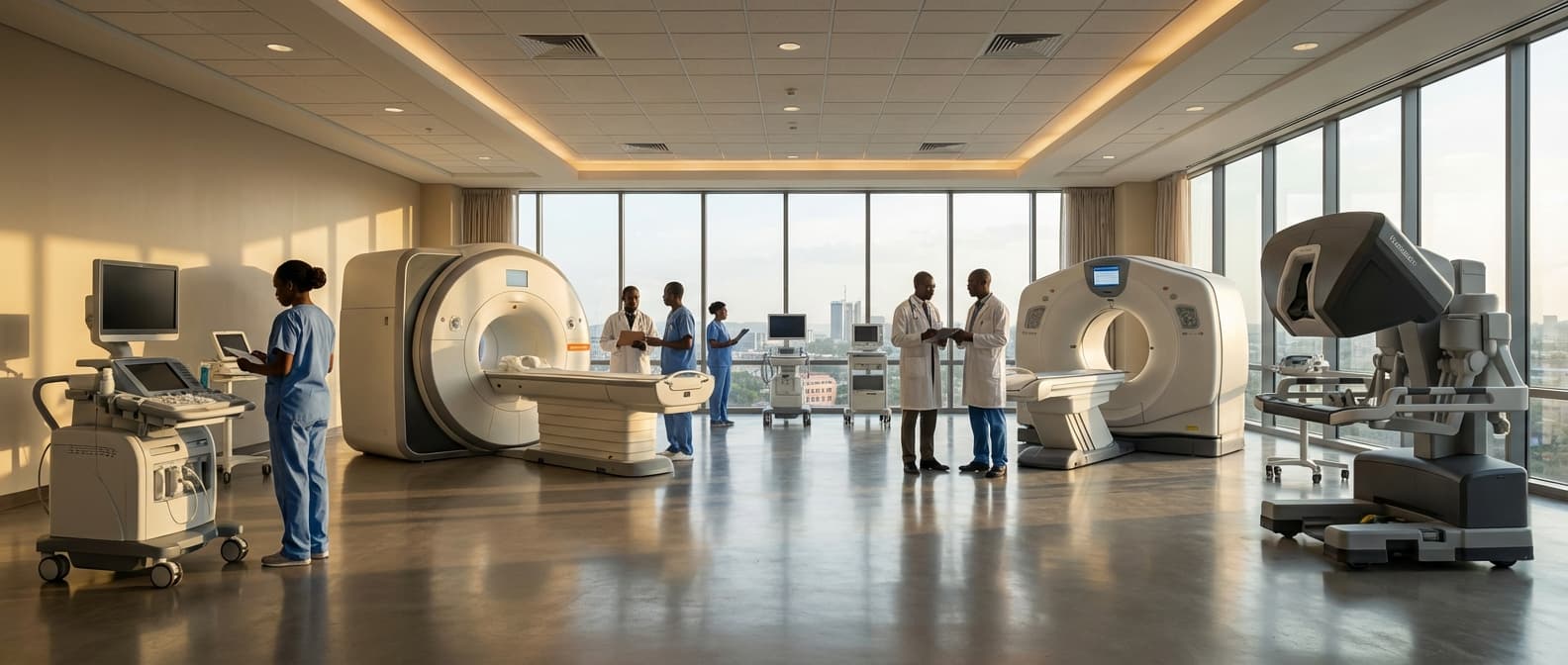
Renal Solutions in Chad
Engineering Excellence & Technical Support
Complete dialysis systems and renal care equipment designed to deliver safe, effective, and patient-centered kidney treatment. High-standard technical execution following OEM protocols and local regulatory frameworks.
First Dialysis Center in N'Djamena
Renal Solutions established the first dedicated dialysis center in N'Djamena, Chad, providing life-saving treatment and significantly reducing the need for patients to travel abroad for essential care.
Training and Capacity Building for Local Healthcare Professionals
We are committed to empowering local talent through comprehensive training programs for Chadian nephrologists, nurses, and technicians, ensuring sustainable, high-quality renal care delivery.
Advanced Water Treatment Systems
Implementing state-of-the-art water purification and filtration technology to ensure the highest standard of water quality for dialysis, crucial for patient safety and treatment efficacy in a challenging environment.
What Is Renal Solutions In Chad?
Renal Solutions in Chad refers to the provision of medical services and interventions aimed at managing and treating kidney-related diseases and conditions within the Republic of Chad. This encompasses a spectrum of care, from diagnostic assessments to long-term management strategies and, where applicable, renal replacement therapies. The primary objective is to alleviate the burden of renal pathology, improve patient outcomes, and enhance the quality of life for individuals suffering from kidney dysfunction.
| Who Needs Renal Solutions? | Typical Use Cases | |||||
|---|---|---|---|---|---|---|
| Individuals with diagnosed kidney diseases, including but not limited to: Glomerulonephritis, Polycystic Kidney Disease, Diabetic Nephropathy, Hypertensive Nephropathy, Chronic Interstitial Nephritis, Acute Kidney Injury. | Management of hypertension and diabetes mellitus to prevent or delay kidney damage. | Treatment of anemia associated with chronic kidney disease. | Correction of electrolyte and acid-base disturbances. | Dialysis for end-stage renal disease. | Supportive care for patients with advanced kidney disease. | Prevention of kidney damage in individuals with risk factors (e.g., family history, obesity, certain medications). |
| Patients experiencing symptoms suggestive of kidney dysfunction, such as: Edema (swelling), Changes in urination (frequency, volume, color), Fatigue, Nausea/Vomiting, Shortness of breath. | Monitoring of kidney function in patients with chronic conditions like diabetes and hypertension. | Management of complications arising from kidney disease, such as cardiovascular disease and bone disease. | Guidance on medication management, especially for drugs that are renally excreted or nephrotoxic. | Post-operative care for kidney-related surgeries or procedures. | ||
| Individuals with a family history of kidney disease. | Persons exposed to nephrotoxic agents (e.g., certain antibiotics, NSAIDs, contrast dyes). | Elderly populations who are at increased risk for age-related decline in kidney function. | Patients with recurrent urinary tract infections or kidney stones. |
Key Components of Renal Solutions in Chad
- Diagnostic Services: Including laboratory tests (e.g., serum creatinine, BUN, urinalysis, estimated glomerular filtration rate - eGFR), imaging studies (e.g., renal ultrasound, CT scans), and potentially renal biopsy for definitive diagnosis.
- Medical Management: Pharmacological interventions for hypertension, diabetes mellitus, anemia of chronic kidney disease, electrolyte imbalances, and bone mineral disorders. Lifestyle modifications and dietary counseling are also integral.
- Acute Kidney Injury (AKI) Management: Hospital-based interventions for reversible causes of kidney dysfunction, including fluid management, management of underlying etiologies, and supportive care.
- Chronic Kidney Disease (CKD) Management: Long-term strategies to slow disease progression, manage comorbidities, and prepare patients for renal replacement therapy if indicated.
- Renal Replacement Therapies (RRT): Including hemodialysis and peritoneal dialysis, for end-stage renal disease (ESRD). The availability and accessibility of these services can vary significantly.
- Transplantation Services: While potentially limited, renal transplantation represents the definitive treatment for ESRD, aiming to restore kidney function.
- Patient Education and Support: Empowering patients with knowledge about their condition, treatment options, and self-management techniques.
- Public Health Initiatives: Efforts focused on prevention, early detection, and awareness campaigns regarding risk factors for kidney disease.
Who Needs Renal Solutions In Chad?
Renal solutions in Chad are critically needed to address the growing burden of kidney diseases. These solutions cater to a diverse range of individuals and institutions facing the challenges of diagnosis, treatment, and management of acute and chronic kidney conditions. The target customer base spans from individual patients in dire need of life-saving dialysis to healthcare facilities striving to provide comprehensive renal care.
| Target Customer Group | Key Departments/Units Involved | Specific Needs/Services |
|---|---|---|
| Patients with Kidney Disease | Nephrology Department, Dialysis Unit, Intensive Care Unit (ICU), Transplant Unit (if applicable) | Dialysis (hemodialysis, peritoneal dialysis), AKI management, CKD management, post-transplant care, diagnostic tests (e.g., blood, urine, imaging), medication, patient education |
| Healthcare Facilities (Hospitals, Clinics) | Nephrology Department, Pharmacy, Laboratory Services, Procurement Department, Administration | Dialysis machines and consumables, medications, diagnostic equipment, training for staff, infrastructure development, efficient supply chain management |
| Government & Public Health Agencies | Ministry of Health, Public Health Department, National Health Insurance (if existent) | Policy development, public awareness campaigns, resource allocation, disease surveillance, infrastructure support, access to affordable treatments |
| Medical Education & Research | Medical Schools, University Hospitals, Research Institutions | Training curriculum, teaching materials, research facilities, opportunities for medical professionals to specialize in nephrology |
Target Customers and Departments for Renal Solutions in Chad
- Individual patients suffering from kidney failure requiring dialysis (hemodialysis or peritoneal dialysis).
- Patients experiencing acute kidney injury (AKI) requiring immediate intervention and support.
- Individuals with chronic kidney disease (CKD) requiring long-term management, including medication and lifestyle adjustments.
- Patients who have undergone kidney transplantation and require ongoing monitoring and immunosuppressive therapy.
- Families and caregivers of individuals with kidney disease, who are involved in their care and decision-making.
- Government health ministries and public health organizations responsible for national kidney disease prevention and treatment strategies.
- Hospitals and larger healthcare complexes seeking to establish or upgrade their nephrology departments.
- Specialized dialysis centers and clinics focused on providing renal replacement therapy.
- Local health clinics and dispensaries that may require basic diagnostic tools and referral pathways for suspected kidney issues.
- Medical schools and training institutions aiming to educate healthcare professionals in nephrology and renal care.
Renal Solutions Process In Chad
This document outlines the typical workflow for Renal Solutions' engagement in Chad, from initial inquiry to the successful execution of projects and services. The process is designed to be comprehensive, collaborative, and tailored to the specific needs of healthcare facilities and patients within the Chadian context.
| Stage | Key Activities | Involved Parties | Deliverables | Estimated Timeline (Variable) |
|---|---|---|---|---|
| Initial contact by healthcare facility/government. Understanding of existing renal care infrastructure, patient demographics, unmet needs, and specific challenges. Site visits and stakeholder consultations. Data collection on disease prevalence and treatment gaps. | Renal Solutions Business Development, Client Facility Management, Ministry of Health Representatives | Needs Assessment Report, Preliminary Scope of Work | 1-4 Weeks |
| Tailoring solutions based on the needs assessment. Developing detailed proposals outlining services, equipment, training, operational plans, and cost estimations. Incorporating local regulatory requirements and best practices. | Renal Solutions Technical Team, Project Management, Legal/Finance Department, Client Facility | Comprehensive Project Proposal, Budgetary Breakdown | 2-6 Weeks |
| Review of proposal, clarification of terms and conditions, price negotiation. Signing of formal contracts and service level agreements (SLAs). Securing necessary approvals. | Renal Solutions Legal/Finance, Client Facility Management, Ministry of Health | Signed Contract/Service Agreement, Payment Milestones | 2-8 Weeks |
| Detailed project planning, including timelines, resource allocation, logistics, and risk management. Procurement of equipment and supplies. Recruitment and training of local personnel. Site preparation and infrastructure development (if required). | Renal Solutions Project Management, Technical Specialists, Logistics, Local Partners, Client Facility Staff | Detailed Project Plan, Procurement Orders, Trained Personnel, Prepared Site | 4-12 Weeks |
| Installation and commissioning of equipment. Commencement of clinical services (dialysis, diagnostics, etc.). Training of local healthcare professionals. Establishing operational workflows and quality control measures. Continuous patient care delivery. | Renal Solutions Clinical Staff, Technical Engineers, Trainers, Local Healthcare Team, Patients | Operational Dialysis Units, Delivered Medical Supplies, Trained Staff, Patient Treatment Records | Ongoing (dependent on project scope) |
| Regular monitoring of service quality, patient outcomes, and equipment performance. Data analysis and reporting. Identification of areas for improvement. Implementing corrective actions and service enhancements. Regular feedback sessions with stakeholders. | Renal Solutions Quality Assurance, Project Management, Client Facility Management, Ministry of Health | Performance Reports, Outcome Data, Improvement Plans | Ongoing (monthly/quarterly) |
| Provision of continuous technical support, maintenance, and spare parts. Regular supply chain management. Long-term strategic planning for expansion and sustainability. Fostering a lasting partnership for improved renal care in Chad. | Renal Solutions Technical Support, Customer Service, Management Team, Client Facility, Ministry of Health | Continued Service Delivery, Supply Chain Stability, Strategic Growth Initiatives | Long-term |
Renal Solutions Process in Chad: Workflow Stages
- Inquiry and Needs Assessment
- Proposal Development and Submission
- Contract Negotiation and Agreement
- Project Planning and Mobilization
- Implementation and Service Delivery
- Monitoring, Evaluation, and Optimization
- Ongoing Support and Partnership
Renal Solutions Cost In Chad
The cost of renal solutions in Chad is influenced by a variety of factors, leading to a range of prices for essential dialysis treatments. These factors include the type of renal replacement therapy, the brand and quality of the solutions, import costs, local distribution networks, and government subsidies or pricing regulations. Hemodialysis solutions, often more complex and requiring specialized equipment, generally incur higher costs than peritoneal dialysis solutions. The availability of specific brands, import duties, transportation expenses within Chad's infrastructure, and the profit margins of local suppliers all contribute to the final price. Furthermore, government initiatives or international aid can play a significant role in either lowering or stabilizing these costs for patients. Prices are typically quoted in the local currency, the Chadian Franc (XAF).
| Service/Solution Type | Estimated Price Range (XAF per session/unit) | Notes |
|---|---|---|
| Hemodialysis Solution (per session) | 80,000 - 150,000 | Includes dialysis fluid, dialyzer, and associated consumables. Prices vary by clinic and equipment used. |
| Peritoneal Dialysis Solution (per exchange/bag) | 25,000 - 50,000 | Refers to the cost of a single bag of PD fluid. Patients requiring multiple exchanges per day will have cumulative costs. |
| Dialysis Machine Rental/Usage Fee (per session) | 50,000 - 100,000 | May be bundled with solution costs in some facilities. |
| Electrolyte Additives/Specialty Solutions | 10,000 - 30,000 | Additional costs for specific patient needs. |
Key Pricing Factors for Renal Solutions in Chad
- Type of Renal Replacement Therapy (Hemodialysis vs. Peritoneal Dialysis)
- Brand and Quality of Dialysis Solutions
- Import Duties and Taxes
- Transportation and Logistics Costs within Chad
- Local Supplier Profit Margins
- Availability and Competition
- Government Subsidies and Pricing Regulations
- Cost of Consumables (e.g., dialyzers, tubing)
Affordable Renal Solutions Options
Navigating kidney disease treatments can be financially daunting. Fortunately, there are affordable renal solution options available that focus on providing comprehensive care without exorbitant costs. These solutions often leverage "value bundles" and implement smart cost-saving strategies to make treatment more accessible and manageable for patients. Value bundles package multiple services and resources into a single, often discounted, price, streamlining care and reducing the likelihood of unexpected expenses. Cost-saving strategies aim to optimize treatment efficiency, minimize complications, and promote patient well-being through preventative measures and informed choices.
| Value Bundle Component | Description | Cost-Saving Benefit |
|---|---|---|
| Comprehensive Treatment Plan | Includes doctor's visits, lab work, medication management, and specialist referrals as a package. | Predictable costs, avoids separate billing for each service, potential for volume discounts. |
| Home Dialysis Support Program | Covers training, supplies, and remote monitoring for peritoneal dialysis or home hemodialysis. | Lower cost per treatment compared to in-center dialysis, increased patient convenience and independence. |
| Nutritional & Wellness Package | Bundles registered dietitian consultations, meal planning resources, and access to support groups. | Improved dietary adherence leads to better health outcomes, potentially reducing complications and associated treatment costs. |
| Medication Management Service | Includes medication review, adherence support, and access to discounted generic medications. | Reduces medication waste and errors, lowers out-of-pocket prescription costs. |
| Transplant Preparation Program | Covers pre-transplant evaluations, education, and post-transplant support. | Streamlines the transplant process, potentially reducing the need for long-term dialysis and its associated costs. |
Key Components of Affordable Renal Solutions
- Integrated care coordination: Seamlessly connecting patients with nephrologists, dietitians, social workers, and other specialists.
- Proactive health management: Emphasizing lifestyle modifications, medication adherence, and regular monitoring to prevent disease progression.
- Patient education and empowerment: Equipping patients with the knowledge and tools to actively participate in their treatment decisions.
- Telehealth and remote monitoring: Utilizing technology to provide consultations and track patient health from home, reducing travel and in-person visit costs.
- Generic medication utilization: Prioritizing the use of cost-effective generic alternatives where clinically appropriate.
- Preventative care and early intervention: Focusing on managing underlying conditions like diabetes and hypertension to protect kidney function.
- Nutritional counseling and meal planning support: Providing guidance to optimize diet for kidney health, which can impact treatment effectiveness and overall costs.
Verified Providers In Chad
When seeking healthcare services in Chad, especially those that require a high degree of trust and quality, identifying verified providers is paramount. Franance Health stands out as a leading organization in this regard, offering a network of credentialed and reputable healthcare professionals and facilities. This verification process ensures that patients receive care that meets stringent standards of safety, competence, and ethical practice. Choosing Franance Health means opting for reliability and peace of mind in your healthcare journey.
| Credentialing Aspect | Franance Health Verification Standard | Benefit to Patients |
|---|---|---|
| Medical Licenses & Certifications | Up-to-date and valid across all relevant medical boards. | Guarantees practitioners are legally qualified and certified in their specialties. |
| Educational Background | Verification of degrees from accredited institutions. | Ensures a strong foundation of medical knowledge and training. |
| Professional Experience | Thorough review of past clinical practice and employment history. | Confirms practical skills and proven track record in healthcare delivery. |
| Background Checks | Comprehensive checks for any disciplinary actions or malpractice claims. | Prioritizes patient safety and ethical practice by screening out potentially problematic providers. |
| Continuing Medical Education (CME) | Requirement for ongoing professional development and skill enhancement. | Ensures providers stay current with the latest medical advancements and techniques. |
Why Franance Health Credentials Matter
- Rigorous Vetting: Franance Health employs a comprehensive verification process for all its providers, examining their educational background, professional licenses, and clinical experience.
- Commitment to Quality: Their credentials signify adherence to established quality benchmarks, ensuring that patients receive evidence-based and effective treatments.
- Patient Safety Focus: Verified providers have demonstrated a commitment to patient safety protocols and ethical conduct, minimizing risks associated with healthcare.
- Enhanced Trust and Transparency: Franance Health provides a transparent platform where patients can access information about provider credentials, fostering trust and informed decision-making.
- Access to Specialized Care: The network often includes specialists across various disciplines, ensuring access to high-quality care for diverse medical needs.
Scope Of Work For Renal Solutions
This Scope of Work (SOW) outlines the technical deliverables and standard specifications for the Renal Solutions project. The primary objective is to develop and implement a comprehensive software solution that streamlines patient management, treatment scheduling, and data analytics for renal care facilities.
| Component | Standard Specification | Description |
|---|---|---|
| User Authentication & Authorization | OAuth 2.0 / JWT | Secure user login and role-based access control. |
| Database | PostgreSQL 14+ | Relational database for storing patient, treatment, and administrative data. Adherence to ACID properties. |
| Backend Framework | Python/Django or Java/Spring Boot | Robust and scalable framework for business logic and API development. |
| Frontend Framework | React or Angular | Modern JavaScript framework for building responsive and interactive user interfaces. |
| API Design | RESTful APIs (JSON) | Well-documented and versioned APIs for communication between frontend, backend, and potential third-party integrations. |
| Error Handling & Logging | Centralized Logging (e.g., ELK Stack) with standardized error codes | Comprehensive logging for debugging and monitoring. Graceful handling of application errors. |
| Security | OWASP Top 10 Compliance, HTTPS | Implementation of security best practices to protect sensitive patient data. Encryption of data at rest and in transit. |
| Performance | Response times < 2 seconds for critical operations | Optimized code and database queries for efficient performance. |
| Scalability | Microservices architecture (if applicable) or horizontally scalable monolithic design | Ability to handle increasing user load and data volume. |
| Testing | Unit, Integration, and End-to-End Testing (e.g., Jest, Pytest, Selenium) | Comprehensive test coverage to ensure software quality and stability. |
| Deployment | Dockerized application deployed on AWS/Azure/GCP | Containerization for consistent deployment. Cloud-native deployment for scalability and manageability. |
| Data Standards | HL7 FHIR (for interoperability, if required) | Adherence to relevant healthcare data standards for potential future integrations. |
Technical Deliverables
- Functional Specification Document
- Technical Design Document
- Database Schema Design
- User Interface (UI) Wireframes and Mockups
- Application Source Code Repository
- Unit Test Cases and Results
- Integration Test Cases and Results
- Deployment Scripts
- User Manual
- Administrator Guide
- API Documentation (if applicable)
- Data Migration Plan and Scripts
Service Level Agreement For Renal Solutions
This Service Level Agreement (SLA) outlines the guaranteed response times and uptime for the services provided by Renal Solutions. It is designed to ensure the reliable and consistent operation of our platform and support.
| Service Component | Uptime Guarantee | Response Time (Target) | Severity Level |
|---|---|---|---|
| Core Platform (EHR, Patient Portal) | 99.9% | 1 business hour | Critical (System Outage) |
| Core Platform (EHR, Patient Portal) | 99.9% | 4 business hours | High (Major Feature Malfunction) |
| Core Platform (EHR, Patient Portal) | 99.9% | 8 business hours | Medium (Minor Issue affecting workflow) |
| Core Platform (EHR, Patient Portal) | 99.9% | 24 business hours | Low (General Inquiry, Cosmetic Issue) |
| Reporting & Analytics Module | 99.5% | 4 business hours | High (Inaccurate reports, unavailable module) |
| Reporting & Analytics Module | 99.5% | 8 business hours | Medium (Slow performance, minor data discrepancies) |
| API Integrations | 99.8% | 2 business hours | Critical (Integration completely failed) |
| API Integrations | 99.8% | 6 business hours | High (Partial integration failure, intermittent issues) |
Key Service Level Objectives
- Uptime Guarantee: Renal Solutions commits to a minimum of 99.9% uptime for its core services.
- Response Times: Support requests will be acknowledged and addressed within specified timeframes based on severity.
- Maintenance Windows: Scheduled maintenance will be conducted during off-peak hours to minimize disruption.
Frequently Asked Questions

Ready when you are
Let's scope your Renal Solutions in Chad project in Chad.

Scaling healthcare logistics and technical systems across the entire continent.