
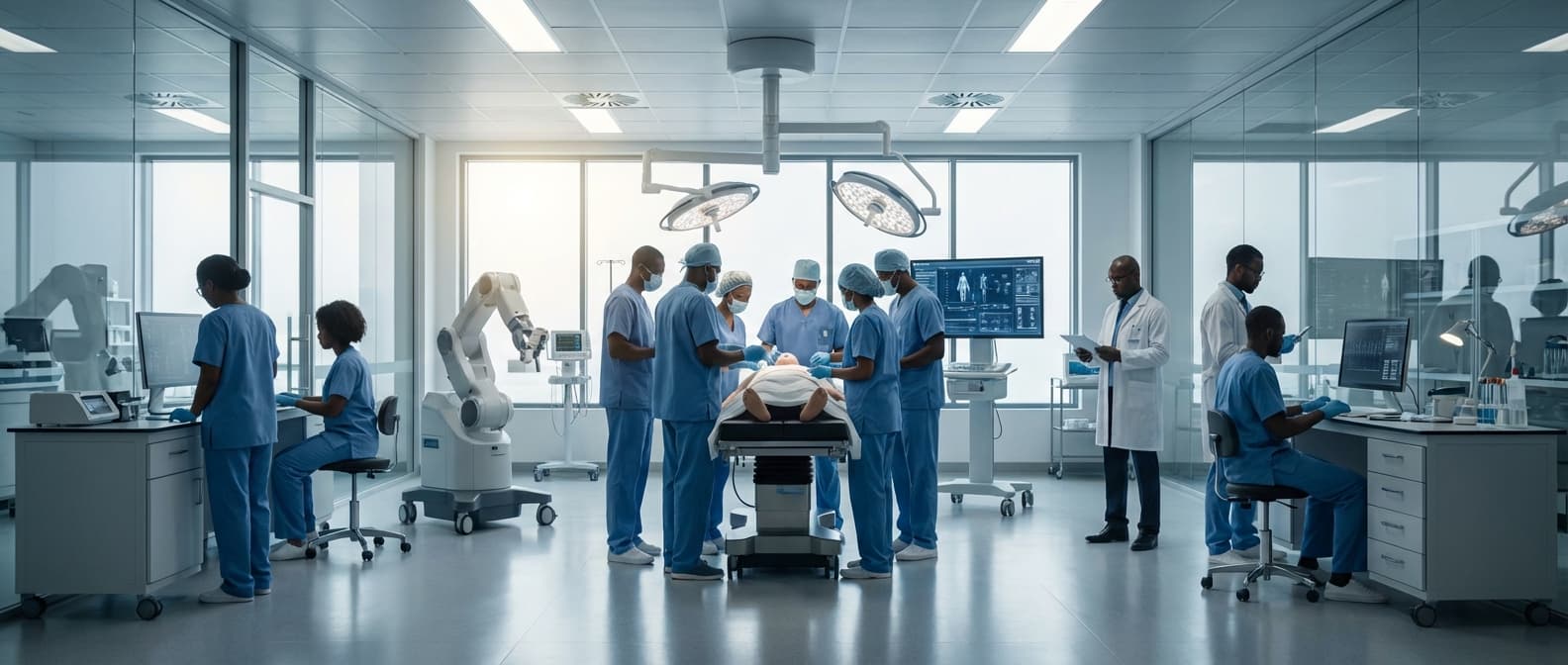
Managed Equipment Service (MES) in Chad
Engineering Excellence & Technical Support
Long‑term equipment provision with uptime SLAs and lifecycle management. High-standard technical execution following OEM protocols and local regulatory frameworks.
Proactive Maintenance & Uptime Assurance
Our MES solution in Chad implements a robust, data-driven predictive maintenance program. By leveraging real-time monitoring and advanced analytics, we anticipate potential equipment failures, schedule preemptive servicing, and minimize unplanned downtime. This ensures your critical operations in Chad remain continuously available, maximizing productivity and reducing costly disruptions.
Optimized Equipment Lifecycle & Cost Control
We provide comprehensive lifecycle management for your equipment in Chad, from procurement and installation to ongoing operation, maintenance, and eventual decommissioning. Our MES approach focuses on extending equipment lifespan, optimizing energy consumption, and strategically managing spare parts inventory. This translates into predictable operating expenses, significant cost savings, and a clear return on investment for your assets in Chad.
Access to Specialized Technical Expertise
Gain access to a highly skilled and certified team of technicians dedicated to your MES operations in Chad. Our experts possess deep knowledge of diverse industrial equipment, ensuring that maintenance and repairs are performed to the highest standards. This alleviates the burden of in-house training and recruitment, allowing your core team in Chad to focus on strategic business objectives while we manage the technical intricacies.
What Is Managed Equipment Service (Mes) In Chad?
Managed Equipment Service (MES) in Chad refers to a comprehensive, outsourced model for acquiring, maintaining, and managing a defined set of essential equipment for organizations. It encompasses the entire lifecycle of the equipment, from procurement and installation to ongoing operation, maintenance, repair, and eventual replacement or disposal. MES shifts the burden of equipment ownership, management, and associated risks from the client organization to a specialized service provider.
| Who Needs MES in Chad? | Typical Use Cases | |||
|---|---|---|---|---|
| Healthcare Facilities (Hospitals, Clinics, Laboratories): Requiring specialized medical equipment for diagnostics, treatment, and patient care. | Medical imaging equipment (MRI, CT scanners, X-ray machines) | Laboratory diagnostic equipment | Surgical instruments and operating room equipment | Hospital beds and patient monitoring systems |
| Government Agencies & Public Services: Needing reliable equipment for infrastructure, public health, and administrative functions. | Water purification and sanitation systems | Telecommunications infrastructure | Fleet management (vehicles, specialized transport) | Office automation equipment (printers, copiers) |
| Non-Governmental Organizations (NGOs) & Humanitarian Aid Organizations: Operating in challenging environments and requiring robust, well-maintained equipment for project delivery. | Mobile clinics and field hospitals | Power generation equipment (generators) | Water and sanitation solutions | Communication devices |
| Educational Institutions: Requiring specialized equipment for teaching and research purposes. | Laboratory equipment for science departments | Computer labs and audiovisual equipment | Specialized vocational training equipment | |
| Mining & Resource Extraction Companies: Needing heavy-duty equipment for exploration, extraction, and processing operations. | Drilling rigs and exploration tools | Crushing and screening equipment | Vehicular fleets |
Key Components of Managed Equipment Service (MES) in Chad:
- Equipment Acquisition & Procurement: Sourcing, selection, and purchase of specified equipment based on client requirements and performance standards.
- Installation & Commissioning: Professional setup, integration, and testing of equipment to ensure optimal operational readiness.
- Maintenance & Repair: Proactive preventative maintenance schedules and reactive repair services to minimize downtime and ensure equipment longevity.
- Technical Support & Troubleshooting: Access to expert technical assistance for operational issues and fault diagnosis.
- Consumables Management: Oversight and replenishment of necessary consumables (e.g., reagents, filters, spare parts) to ensure continuous operation.
- Performance Monitoring & Optimization: Continuous tracking of equipment performance against agreed-upon key performance indicators (KPIs) and implementation of strategies for efficiency improvement.
- Training & Capacity Building: Providing training to client personnel on the proper operation and basic maintenance of the equipment.
- Reporting & Analytics: Regular reporting on equipment status, usage, maintenance activities, and cost analysis.
- End-of-Life Management: Planning and execution of equipment decommissioning, disposal, or recycling in compliance with regulations.
Who Needs Managed Equipment Service (Mes) In Chad?
Managed Equipment Service (MES) is a vital solution for organizations in Chad seeking to optimize the lifecycle management of their critical equipment. MES providers offer comprehensive services that go beyond simple maintenance, encompassing procurement, installation, operation, maintenance, and eventual decommissioning of equipment. This approach allows businesses and institutions to focus on their core operations while ensuring their technological assets are reliable, efficient, and cost-effective. In Chad's developing economic landscape, where capital investment can be a significant hurdle and specialized technical expertise may be scarce, MES presents a compelling value proposition.
| Customer Type | Key Departments/Functions Benefiting from MES |
|---|---|
| Hospitals & Clinics | Radiology (MRI, CT Scans), Laboratory (Diagnostic equipment), Surgical Suites (Operating tables, anesthetic machines), Sterilization departments, IT Infrastructure |
| Universities & Colleges | Science & Engineering Labs (specialized equipment), IT Departments (servers, network infrastructure), Research facilities, Administrative offices |
| Factories & Production Plants | Production Lines (assembly machines, robotics), Quality Control Labs (testing equipment), Maintenance & Engineering departments, Logistics & Warehousing (material handling equipment) |
| Mobile Network Operators & ISPs | Base Stations & Network Infrastructure (BTS, core network equipment), Data Centers, Field Maintenance Teams, IT Operations |
| Government Agencies (e.g., Ministry of Health, Education, Infrastructure) | Public Hospitals & Clinics, Public Universities & Schools, Public Works & Transportation (e.g., traffic control systems), National Archives (digitization equipment), IT Infrastructure supporting government operations |
| Mining & Oil Companies | Heavy Machinery (excavators, drills), Exploration Equipment, Processing Plants, Laboratory Analysis Equipment, Safety & Monitoring Systems, IT Infrastructure |
Target Customers and Departments for MES in Chad
- Healthcare Sector
- Educational Institutions
- Industrial and Manufacturing
- Telecommunications
- Government and Public Services
- Mining and Extractive Industries
Managed Equipment Service (Mes) Process In Chad
The Managed Equipment Service (MES) process in Chad, while specific to the context of its implementation, generally follows a structured workflow from initial inquiry to the full execution of services. This workflow ensures that the needs of the client are met efficiently and that the managed equipment delivers optimal performance and value. The process is designed to be transparent, accountable, and focused on long-term partnership.
| Stage | Key Activities | Responsible Parties | Deliverables/Outcomes |
|---|---|---|---|
| Client expresses interest in MES. Service provider gathers information on the client's needs, existing equipment, operational challenges, and desired outcomes. Site visits may be conducted. | Client, MES Provider Sales/Business Development | Understanding of client's requirements, preliminary assessment of feasibility and scope. |
| MES provider designs a tailored solution, including equipment selection, service levels, pricing, and performance metrics. Detailed proposal is presented to the client. Negotiations on terms and conditions occur. | MES Provider Technical and Commercial Teams, Client Procurement and Technical Teams | Comprehensive MES proposal, mutually agreed-upon commercial terms. |
| Formalization of the MES agreement. This includes defining service level agreements (SLAs), performance guarantees, payment schedules, contract duration, and termination clauses. Legal review and signing. | MES Provider Legal and Commercial Teams, Client Legal and Procurement Teams | Signed MES contract/agreement. |
| Procurement, installation, and commissioning of the managed equipment. Training of client staff on the use and basic maintenance of the equipment. Integration with existing client systems if required. | MES Provider Technical and Project Management Teams, Client Operations and IT Teams | Fully operational and integrated managed equipment, trained client personnel. |
| Routine maintenance, preventive checks, repairs, spare parts management, and technical support for the managed equipment. Ensuring 24/7 operational availability. | MES Provider Operations and Maintenance Teams, Client End-Users | Consistent equipment uptime, minimized disruptions, reliable performance. |
| Continuous tracking of equipment performance against agreed-upon KPIs (e.g., uptime, efficiency, cost per unit). Regular reporting to the client on service delivery, equipment status, and key metrics. | MES Provider Performance Management Team, Client Management and Operations | Performance reports, insights into equipment utilization and efficiency. |
| Analyzing performance data to identify areas for improvement. Recommending and implementing upgrades, new technologies, or process enhancements to increase efficiency, reduce costs, or enhance capabilities. | MES Provider Technical and Innovation Teams, Client Operations and Management | Actionable recommendations, implemented improvements, enhanced service value. |
| Comprehensive review of the contract performance against objectives. Evaluation of client satisfaction. Discussion and negotiation for contract extension, modification, or termination. | MES Provider Account Management and Senior Leadership, Client Senior Management | End-of-contract assessment, decision on future engagement. |
Managed Equipment Service (MES) Process Workflow in Chad
- Inquiry and Initial Assessment
- Proposal Development and Negotiation
- Contracting and Agreement
- Implementation and Setup
- Ongoing Operations and Maintenance
- Performance Monitoring and Reporting
- Optimization and Continuous Improvement
- End-of-Contract Review and Renewal
Managed Equipment Service (Mes) Cost In Chad
Managed Equipment Service (MES) costs in Chad are influenced by a variety of factors, leading to a broad pricing spectrum in local currency (CFA Franc). The complexity of the equipment, the duration of the service contract, the level of support required (e.g., preventive maintenance, on-demand repairs, spare parts inventory), and the geographic location within Chad all play significant roles. Furthermore, the vendor's reputation, experience, and the specific service level agreements (SLAs) negotiated will impact the final cost. For specialized or high-tech medical equipment, costs will naturally be higher than for standard office machinery. The availability of local technicians and the logistical challenges in reaching remote areas also contribute to pricing variations.
| Equipment Category | Estimated Annual Cost Range (XAF) | Typical Service Level |
|---|---|---|
| Basic Office Equipment (Printers, Photocopiers) | 150,000 - 500,000 | Preventive maintenance, on-demand repairs, basic consumables |
| Mid-Range IT Infrastructure (Servers, Network Devices) | 500,000 - 2,000,000 | Proactive monitoring, scheduled maintenance, rapid response support |
| Medical Diagnostic Equipment (X-ray, Ultrasound) | 1,000,000 - 5,000,000+ | Highly specialized maintenance, certified technicians, guaranteed uptime, comprehensive parts management |
| Heavy Industrial Machinery | 2,000,000 - 10,000,000+ | On-site technicians, extensive spare parts, predictive maintenance, operational support |
Key Pricing Factors for MES in Chad
- Equipment Type and Complexity
- Service Contract Duration
- Scope of Services (e.g., maintenance, repair, parts)
- Service Level Agreements (SLAs)
- Vendor Experience and Reputation
- Geographic Location within Chad
- Logistical Challenges
- Spare Parts Availability and Cost
Affordable Managed Equipment Service (Mes) Options
Managed Equipment Service (MES) can be a significant investment for businesses, but various affordable options and strategic approaches can make it more accessible. MES offers a comprehensive solution for managing and maintaining a company's critical equipment, from procurement to disposal. This approach can lead to increased efficiency, reduced downtime, and improved overall operational performance. Exploring value bundles and implementing cost-saving strategies are key to optimizing MES investments.
| MES Value Bundle Type | Description | Potential Cost Savings |
|---|---|---|
| Core Maintenance Bundle | Includes routine checks, basic repairs, and scheduled maintenance for essential equipment. | Reduced unscheduled downtime, extended equipment lifespan, lower repair costs. |
| Comprehensive Care Bundle | Adds on-site support, expedited response times, spare parts management, and performance optimization. | Minimized operational disruption, faster issue resolution, optimized equipment performance. |
| Full Lifecycle Management | Encompasses procurement, installation, maintenance, upgrades, and responsible disposal of equipment. | Streamlined asset management, predictable budgeting, avoidance of obsolescence costs, potential for equipment resale value. |
| Technology-Enabled MES | Integrates IoT sensors, remote monitoring, AI-driven diagnostics, and predictive analytics into service plans. | Proactive issue identification, reduced need for physical inspections, improved resource allocation for technicians. |
Key Components of an Affordable MES Strategy
- Understanding Your Needs: Clearly define the scope of equipment and services required. Avoid over-servicing or under-servicing.
- Tiered Service Levels: Opt for service packages that align with the criticality of your equipment. Basic maintenance for less critical items, comprehensive for vital assets.
- Flexible Contract Terms: Negotiate contract lengths that suit your business cycle and anticipated equipment lifespan.
- Preventive Maintenance Focus: Prioritize proactive maintenance to avoid costly emergency repairs and downtime.
- Technology Integration: Leverage remote monitoring and diagnostic tools to reduce on-site service visits.
- Consolidated Procurement: Bundle the purchase or leasing of multiple equipment types to negotiate better rates.
- Lifecycle Management: Plan for equipment upgrades and replacements strategically to avoid obsolescence and capitalize on newer, more efficient technologies.
Verified Providers In Chad
In Chad's evolving healthcare landscape, identifying reliable and accredited medical facilities is paramount for ensuring quality care and patient safety. Franance Health distinguishes itself by rigorously vetting healthcare providers, offering a transparent and trustworthy platform for individuals seeking medical services. This commitment to verification means that all listed providers have undergone a stringent assessment process, confirming their adherence to established professional standards, ethical practices, and legal requirements within Chad.
| Verification Criteria | Franance Health Standard | Patient Benefit |
|---|---|---|
| Professional Licenses & Certifications | Verified, up-to-date, and relevant to their specialization. | Ensures practitioners are legally qualified and competent. |
| Facility Accreditations | Confirmation of adherence to national and international healthcare facility standards. | Guarantees a safe and well-equipped environment for treatment. |
| Medical Malpractice Insurance | Proof of active and adequate insurance coverage. | Provides a layer of financial protection and accountability. |
| Reputation & Patient Feedback (where applicable) | Consideration of professional standing and documented patient satisfaction. | Offers insight into the provider's patient-centered approach and effectiveness. |
| Adherence to Ethical Guidelines | Commitment to professional and ethical medical conduct. | Promotes patient trust and respectful treatment. |
Why Franance Health Credentials Matter:
- Uncompromising Quality Assurance: Franance Health's verification process meticulously examines each provider's qualifications, licenses, and facility accreditations, ensuring they meet a high benchmark of medical excellence.
- Enhanced Patient Safety: By partnering exclusively with verified providers, patients can be confident that they are receiving care from professionals who adhere to safety protocols and best practices, minimizing risks.
- Trust and Transparency: The Franance Health credentialing system provides an unprecedented level of transparency, allowing users to make informed decisions about their healthcare choices based on verified information.
- Access to Expertise: Our network includes a diverse range of specialists and general practitioners, all of whom have been vetted for their expertise and commitment to patient well-being.
- Streamlined Healthcare Navigation: Franance Health simplifies the process of finding reliable healthcare, saving patients valuable time and reducing the stress associated with seeking medical attention in an unfamiliar system.
Scope Of Work For Managed Equipment Service (Mes)
This document outlines the Scope of Work (SOW) for a Managed Equipment Service (MES) contract. It details the technical deliverables and standard specifications expected from the service provider to ensure the optimal performance, availability, and lifecycle management of all contracted medical equipment within the client's healthcare facilities. The MES aims to reduce operational risks, improve cost-efficiency, and enhance patient care through proactive maintenance and technological advancements.
| Category | Deliverable | Description | Standard Specification / KPI |
|---|---|---|---|
| Asset Management | Equipment Inventory Database | A comprehensive, up-to-date database of all managed equipment, including make, model, serial number, acquisition date, location, service history, and warranty status. | 99.5% data accuracy. Accessible via a secure online portal within 24 hours of equipment acquisition/change. |
| Maintenance | Preventive Maintenance (PM) Program | Scheduled maintenance activities to prevent equipment failures and ensure optimal performance, based on manufacturer recommendations and best practices. | 100% PM completion rate within +/- 5% of scheduled dates. All PMs documented with checklists and technician sign-offs. |
| Maintenance | Corrective Maintenance (CM) and Repair | Prompt response and resolution of equipment breakdowns and malfunctions. | Response Time: < 2 hours for critical equipment, < 4 hours for routine equipment. Resolution Time: < 8 business hours for critical, < 24 business hours for routine. 95% first-time fix rate. |
| Calibration | Calibration Services | Regular calibration of equipment to ensure accuracy and compliance with regulatory standards. | Calibration performed according to manufacturer specifications and relevant standards (e.g., ISO 17025). Certificates of calibration provided for all calibrated equipment. |
| Lifecycle Management | Technology Assessment & Refresh Plan | Regular evaluation of equipment technology to identify opportunities for upgrades or replacements to improve patient care and operational efficiency. | Annual technology assessment report. Proactive recommendation for refresh cycles based on technology obsolescence and cost-benefit analysis. Minimum 5-year refresh plan. |
| Training | User Training & Competency | Provision of comprehensive training to clinical and technical staff on the safe and effective use and basic maintenance of managed equipment. | Initial and refresher training provided. Competency assessments conducted. Training records maintained. Satisfaction score > 90% from attendees. |
| Reporting | Performance and Financial Reports | Regular reports detailing equipment uptime, maintenance activities, costs, and recommendations for improvement. | Monthly reports on key performance indicators (KPIs). Quarterly comprehensive review meetings. Reports to be delivered by the 5th business day of the following month. |
| Compliance | Regulatory Compliance & Documentation | Ensuring all managed equipment complies with relevant local, national, and international regulations and standards. | 100% compliance with applicable regulations. All required documentation maintained and readily available for audits. |
| Risk Management | Equipment Safety and Risk Assessment | Proactive identification and mitigation of risks associated with medical equipment, including patient safety and operational disruptions. | Annual risk assessment for all equipment categories. Implementation of risk mitigation strategies with documented outcomes. |
| Service Management | Service Level Agreement (SLA) Adherence | Commitment to meeting all agreed-upon service levels outlined in the contract. | Achieve and maintain >98% SLA adherence across all defined metrics. |
Key Technical Deliverables
- Equipment Inventory and Asset Management System
- Preventive Maintenance (PM) Program and Schedule
- Corrective Maintenance (CM) and Repair Services
- Calibration and Performance Verification
- Equipment Upgrades and Replacements Strategy
- Technology Assessment and Integration
- Training and Competency Development for Staff
- Performance Monitoring and Reporting
- Asset Decommissioning and Disposal
- Regulatory Compliance and Documentation
Service Level Agreement For Managed Equipment Service (Mes)
This Service Level Agreement (SLA) outlines the agreed-upon performance standards for the Managed Equipment Service (MES). It defines the response times and uptime guarantees provided by [Provider Name] to [Client Name] for the specified equipment. This SLA is a crucial component of the overall MES contract, ensuring predictable and reliable performance of critical equipment assets.
| Equipment Category | Uptime Guarantee | Response Time (for Critical Incidents) | Resolution Time Target (for Critical Incidents) | Support Availability |
|---|---|---|---|---|
| Critical Equipment | 99.9% (excluding scheduled maintenance) | 2 Hours | 8 Business Hours | 24x7x365 |
| Standard Equipment | 99.5% (excluding scheduled maintenance) | 4 Business Hours | 24 Business Hours | Business Hours (Monday-Friday, 8 AM - 6 PM Local Time) |
Key Definitions
- Managed Equipment Service (MES): A comprehensive service where the provider assumes responsibility for the operation, maintenance, and support of specified equipment.
- Downtime: Any period during which the equipment is non-operational and unavailable for use due to a fault or failure, excluding scheduled maintenance.
- Response Time: The maximum time allowed from the official notification of an incident until a qualified technician begins to address the issue.
- Resolution Time: The maximum time allowed from the official notification of an incident until the equipment is restored to full operational status.
- Uptime Guarantee: The percentage of time the equipment is guaranteed to be operational and available for use.
- Critical Equipment: Equipment designated as essential for core business operations and requiring the highest priority for support and uptime.
- Standard Equipment: Equipment that is important but not directly critical to core business operations.
- Scheduled Maintenance: Planned periods for preventative maintenance, upgrades, or other service activities agreed upon in advance by both parties.
Frequently Asked Questions

Ready when you are
Let's scope your Managed Equipment Service (MES) in Chad project in Chad.

Scaling healthcare logistics and technical systems across the entire continent.