
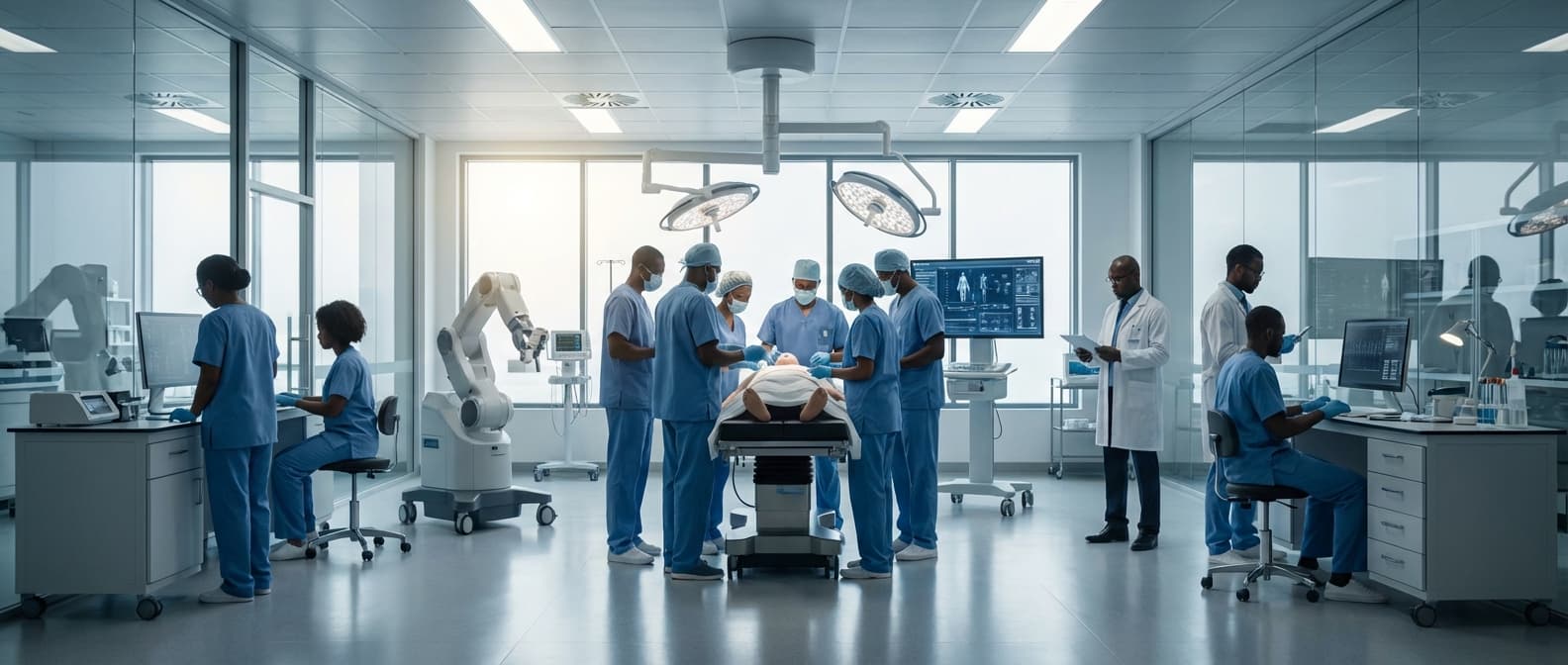
Biomedical Engineering Consulting in Chad
Engineering Excellence & Technical Support
Equipment selection, procurement and implementation consulting High-standard technical execution following OEM protocols and local regulatory frameworks.
Enhancing Diagnostic Capabilities
Leveraging advanced imaging techniques and AI-driven diagnostic tools to improve accuracy and efficiency of medical diagnoses in Chad's healthcare facilities, addressing critical gaps in specialist availability.
Optimizing Medical Device Integration & Maintenance
Implementing robust strategies for the selection, deployment, and ongoing maintenance of essential medical equipment, ensuring reliable operation and longevity to support patient care across remote and urban settings.
Developing Localized Healthcare Infrastructure Solutions
Providing expert consultation on the design and implementation of sustainable biomedical infrastructure, including specialized labs and treatment centers, tailored to Chad's unique environmental and resource constraints.
What Is Biomedical Engineering Consulting In Chad?
Biomedical Engineering Consulting in Chad refers to the provision of specialized technical expertise and advisory services related to medical devices, healthcare technologies, and their integration into healthcare systems within the Chadian context. This service bridges the gap between engineering principles and clinical practice, addressing the unique challenges and opportunities present in Chad's healthcare infrastructure. Consultants offer guidance on the selection, procurement, installation, validation, maintenance, and effective utilization of biomedical equipment. They also advise on regulatory compliance, safety protocols, and strategic planning for healthcare technology adoption. The service is crucial for enhancing the quality, accessibility, and efficiency of healthcare delivery by ensuring that medical technology is appropriate, safe, and effectively managed.
| Who Needs Biomedical Engineering Consulting in Chad? | Typical Use Cases |
|---|---|
| Public Hospitals and Clinics: Government-run healthcare facilities requiring assistance with equipment acquisition, maintenance, and lifecycle management to serve the general population. | Implementing new diagnostic imaging equipment (X-ray, Ultrasound), ensuring proper installation and calibration. Establishing a preventive maintenance schedule for critical care equipment (ventilators, defibrillators) to reduce downtime. Developing a strategy for replacing aging medical devices across multiple facilities. |
| Private Healthcare Providers: Private hospitals, clinics, and diagnostic centers aiming to optimize their technology investments, improve service quality, and ensure regulatory compliance. | Selecting and procuring advanced surgical equipment for a new private hospital. Advising on the integration of a Picture Archiving and Communication System (PACS) for a radiology department. Conducting a risk assessment for the use of specific medical devices in a specialized clinic. |
| Non-Governmental Organizations (NGOs) and International Aid Agencies: Organizations involved in healthcare delivery and development projects in Chad, often requiring technical expertise for program implementation and sustainability. | Assessing the suitability of donated medical equipment for local conditions and training needs. Developing a training curriculum for local technicians on the maintenance of essential medical equipment in remote areas. Providing technical oversight for the establishment of new healthcare facilities funded by international aid. |
| Medical Device Manufacturers and Distributors: Companies seeking to ensure their products are properly introduced, supported, and compliant within the Chadian market. | Providing market-specific installation and training guidelines for new medical devices. Ensuring compliance with local import regulations and safety standards. Assisting in the establishment of local repair and maintenance capabilities for their product lines. |
| Government Ministries (Health, Science & Technology): National bodies responsible for healthcare policy, regulation, and infrastructure development. | Developing national guidelines for medical equipment procurement and management. Conducting a national assessment of healthcare technology needs and gaps. Advising on policies to promote local capacity in biomedical engineering. |
Key Aspects of Biomedical Engineering Consulting in Chad
- Technology Assessment and Selection: Evaluating current and emerging biomedical technologies to identify those best suited for Chad's specific healthcare needs, resource constraints, and existing infrastructure.
- Procurement and Acquisition Advisory: Assisting healthcare institutions in defining technical specifications, sourcing reliable suppliers, and navigating the procurement process for medical equipment.
- Installation and Commissioning Support: Overseeing the correct installation, setup, and initial operational verification of new biomedical devices to ensure they meet manufacturer specifications and safety standards.
- Validation and Performance Testing: Conducting rigorous testing and validation procedures to confirm that medical equipment is functioning accurately, reliably, and safely for clinical use.
- Maintenance and Repair Strategies: Developing and implementing robust preventive maintenance programs and advising on efficient reactive repair strategies to maximize equipment uptime and lifespan.
- Regulatory Compliance and Standards: Guiding healthcare facilities in adhering to national and international regulations, standards (e.g., WHO guidelines), and best practices for medical device management.
- Training and Capacity Building: Designing and delivering training programs for healthcare professionals (clinicians, technicians, biomedical engineers) on the operation, maintenance, and safety of medical equipment.
- Healthcare Technology Management (HTM) System Development: Assisting in the establishment and optimization of comprehensive HTM programs, including inventory management, risk assessment, and lifecycle planning.
- Infrastructure Planning and Integration: Advising on the integration of biomedical equipment with existing healthcare IT systems (e.g., HIS, EMR) and ensuring adequate power, networking, and environmental controls.
- Feasibility Studies and Project Management: Conducting feasibility assessments for new healthcare projects and providing project management support for the implementation of medical technology initiatives.
Who Needs Biomedical Engineering Consulting In Chad?
Biomedical Engineering consulting services in Chad are crucial for advancing healthcare infrastructure, improving medical device accessibility and maintenance, and enhancing the overall quality of patient care. These services bridge the gap between technological innovation and practical application within the nation's healthcare system, addressing unique challenges and opportunities specific to the Chadian context.
| Target Customer/Department | Specific Needs and Services Required | Key Benefits of Consulting |
|---|---|---|
| Ministry of Public Health | Development of national healthcare technology strategy, procurement policy development, regulatory framework establishment, infrastructure planning, training needs assessment, telemedicine implementation. | Standardized healthcare delivery, efficient resource allocation, improved patient safety, enhanced data management, strengthened regulatory oversight. |
| Ministry of Higher Education & Scientific Research | Curriculum development for biomedical engineering programs, establishment of research facilities, collaboration with international institutions, technology transfer initiatives. | Skilled local workforce development, fostering innovation, promoting advanced medical research, building national expertise. |
| Public Hospitals (e.g., Hôpital National) | Medical equipment lifecycle management, maintenance and repair program development, clinical engineering services, technology needs assessment, inventory management, staff training on equipment use and safety. | Reduced equipment downtime, improved patient care quality, cost-effective equipment utilization, enhanced staff competency, extended equipment lifespan. |
| Regional and District Health Centers | Needs assessment for appropriate medical technology, installation and commissioning of basic medical equipment, training on operation and simple maintenance, development of maintenance protocols, remote support solutions. | Increased access to essential medical services, improved diagnostic capabilities, reduced reliance on external support, enhanced service delivery in remote areas. |
| Private Hospitals and Clinics | Selection and procurement of advanced medical equipment, implementation of quality management systems, patient safety protocols, staff training, IT integration for healthcare systems, facility design and modernization. | Competitive advantage, enhanced service offerings, improved patient outcomes, compliance with international standards, optimized operational efficiency. |
| NGOs and International Aid Agencies (e.g., WHO, UNICEF, MSF) | Assessment of healthcare needs in specific regions, procurement and distribution of medical supplies and equipment, establishment of repair and maintenance networks, training of local healthcare professionals, project management for health infrastructure development. | Effective and sustainable deployment of medical resources, improved reach and impact of humanitarian aid, capacity building of local communities, efficient project execution. |
| Medical Device Manufacturers and Distributors | Market analysis, regulatory compliance assistance, establishment of distribution networks, after-sales service and support structure development, training for local technicians, product adaptation for local conditions. | Successful market entry and expansion, efficient supply chain management, sustained customer satisfaction, compliance with local regulations. |
| Educational Institutions (Universities, Technical Schools) | Development and accreditation of biomedical engineering courses, provision of laboratory equipment and training, faculty development, industry linkage programs, research project support. | Graduation of qualified biomedical engineers, advancement of scientific knowledge, fostering of practical skills, creation of a pipeline of skilled professionals. |
Target Customers and Departments for Biomedical Engineering Consulting in Chad
- Government Ministries and Agencies
- Public Hospitals and Healthcare Facilities
- Private Hospitals and Clinics
- Non-Governmental Organizations (NGOs) and International Aid Agencies
- Medical Device Manufacturers and Distributors
- Educational and Research Institutions
Biomedical Engineering Consulting Process In Chad
Biomedical Engineering consulting in Chad follows a structured workflow to ensure efficient and effective project execution. This process typically begins with an initial inquiry from a client, which then progresses through detailed needs assessment, proposal development, contract finalization, project planning, on-site execution, data analysis and reporting, and finally, post-execution support. Each stage is crucial for delivering tailored solutions that address the specific healthcare infrastructure and technological needs within Chad.
| Stage | Description | Key Activities | Deliverables |
|---|---|---|---|
| Inquiry & Initial Consultation | The client expresses interest in biomedical engineering consulting services. This stage involves understanding the client's preliminary needs and objectives. | Initial contact, brief discussion of needs, information exchange. | Understanding of client's general requirements, preliminary service interest. |
| Needs Assessment & Site Visit | A thorough evaluation of the client's existing infrastructure, equipment, and operational challenges. | On-site assessment of facilities, inventory of existing medical devices, interviews with staff. | Detailed report on current state, identification of gaps and challenges. |
| Scope Definition & Requirements Gathering | Precisely defining the project's objectives, deliverables, and technical specifications based on the needs assessment. | Collaborative workshops, detailed requirement documentation, specification development. | Clearly defined project scope, functional and technical requirements. |
| Proposal Development & Cost Estimation | Creating a comprehensive proposal outlining the proposed solutions, methodologies, timelines, and associated costs. | Developing technical solutions, creating project plans, estimating resource needs, preparing financial proposals. | Detailed project proposal, cost breakdown, implementation timeline. |
| Contract Negotiation & Finalization | Reviewing and agreeing upon the terms and conditions of the consulting engagement. | Discussions on scope, deliverables, pricing, payment terms, legal review. | Signed consulting contract. |
| Project Planning & Resource Allocation | Developing a detailed project management plan, including timelines, milestones, and resource assignments. | Creating work breakdown structures, allocating personnel and equipment, risk assessment and mitigation planning. | Project management plan, resource allocation schedule. |
| On-site Execution & Implementation | Carrying out the agreed-upon consulting activities, which may include equipment installation, maintenance, training, or infrastructure development. | Performing technical tasks, managing project execution, ensuring quality control. | Progress reports, implemented solutions, installed/repaired equipment. |
| Testing, Validation & Training | Ensuring that implemented solutions meet the specified requirements and that relevant personnel are adequately trained. | Performance testing, calibration, user training sessions, documentation of procedures. | Validated equipment/systems, trained personnel, operational manuals. |
| Data Analysis & Reporting | Analyzing collected data, evaluating project outcomes, and compiling comprehensive reports for the client. | Data compilation and analysis, performance evaluation, report writing. | Final project report, performance metrics, recommendations. |
| Client Review & Feedback | Presenting the project outcomes to the client and gathering their feedback. | Project presentation, discussion of findings, addressing client queries. | Client acceptance of deliverables, feedback incorporated into final documentation. |
| Project Closure & Handover | Formally concluding the project and transferring all relevant documentation and responsibilities to the client. | Final documentation handover, knowledge transfer, formal project sign-off. | Complete project documentation, final handover report. |
| Post-Execution Support & Follow-up | Providing ongoing support or consultation as needed after the project's official closure. | Answering follow-up questions, providing additional guidance, offering maintenance or upgrade advice. | Continued client satisfaction, potential for future engagements. |
Biomedical Engineering Consulting Workflow in Chad
- Inquiry & Initial Consultation
- Needs Assessment & Site Visit
- Scope Definition & Requirements Gathering
- Proposal Development & Cost Estimation
- Contract Negotiation & Finalization
- Project Planning & Resource Allocation
- On-site Execution & Implementation
- Testing, Validation & Training
- Data Analysis & Reporting
- Client Review & Feedback
- Project Closure & Handover
- Post-Execution Support & Follow-up
Biomedical Engineering Consulting Cost In Chad
Biomedical engineering consulting costs in Chad are influenced by a variety of factors, leading to a broad range of pricing. The complexity of the project is a primary driver; a simple equipment assessment will naturally cost less than designing a new hospital wing or developing a comprehensive medical device regulatory strategy. The experience and reputation of the consulting firm or individual also play a significant role. Highly specialized consultants with a proven track record in similar African contexts often command higher fees due to their expertise and reduced risk for the client. Furthermore, the duration of the engagement is a crucial factor, with longer-term projects typically involving a per-diem or hourly rate that may be adjusted for sustained commitment. The scope of work, including the depth of analysis, number of site visits required, travel and accommodation expenses, and the need for specialized software or equipment, all contribute to the overall cost. Local market conditions, including the availability of skilled biomedical engineers within Chad and the prevailing economic climate, also influence pricing. Clients may also seek to negotiate fixed project fees versus hourly billing depending on their budget certainty requirements.
| Service Type/Project Complexity | Estimated Cost Range (XAF) | Notes |
|---|---|---|
| Initial Consultation/Needs Assessment | 50,000 - 200,000 | Covers initial discussion, preliminary report, and scope definition. Varies based on consultant seniority. |
| Equipment Evaluation/Inventory | 150,000 - 600,000 | Includes site visits, inventorying, condition assessment, and basic recommendations. Dependent on the number and type of equipment. |
| Procurement Advisory/Specification Development | 200,000 - 1,000,000 | Assisting in defining technical specifications for medical equipment purchase. Can be a significant portion of the overall procurement budget. |
| Regulatory Compliance Advisory (Medical Devices) | 300,000 - 1,500,000+ | Guidance on local regulations, documentation, and submission processes. Complex projects with multiple device types will be at the higher end. |
| Installation Oversight/Commissioning Support | 250,000 - 800,000 | Supervising the installation and initial testing of new medical equipment. Cost depends on the number and complexity of installations. |
| Training Program Development/Delivery | 400,000 - 1,200,000 | Creating and delivering training for healthcare staff on equipment operation and maintenance. Varies with training scope and duration. |
| Biomedical Workshop/Department Setup & Design | 500,000 - 3,000,000+ | Comprehensive planning, design, and layout of biomedical engineering facilities. Highly project-dependent and can involve significant architectural input. |
| Hospital Technology Planning/Master Planning | 1,000,000 - 5,000,000+ | Long-term strategic planning for medical technology integration. Typically involves extensive research, data analysis, and stakeholder engagement. |
| Per Diem Rate (Senior Consultant) | 100,000 - 300,000+ | Daily rate for experienced consultants, often excluding travel and accommodation, which are billed separately. |
Key Pricing Factors for Biomedical Engineering Consulting in Chad
- Project Complexity and Scope
- Consultant Experience and Reputation
- Project Duration
- Travel and Accommodation Expenses
- Need for Specialized Tools/Software
- Local Market Dynamics and Availability of Expertise
- Negotiated Fee Structure (Fixed vs. Hourly)
Affordable Biomedical Engineering Consulting Options
Navigating the complexities of biomedical engineering can be a significant undertaking, especially for startups, smaller companies, or those with budget constraints. Fortunately, there are affordable consulting options that provide invaluable expertise without breaking the bank. This involves understanding how to leverage consulting services through strategic "value bundles" and implementing effective "cost-saving strategies."
| Cost-Saving Strategy | Description | Example Application |
|---|---|---|
| Retainer Agreements | Secure ongoing access to a consultant's expertise for a fixed monthly fee. This is ideal for continuous guidance and troubleshooting. | A startup with an evolving product design might use a retainer for regular design reviews and problem-solving. |
| Project-Based Consulting | Engage consultants for specific, well-defined projects with clear deliverables and timelines. This allows for focused expertise when needed. | A company needing to conduct specific biocompatibility testing might hire consultants for that isolated project. |
| Phased Consulting | Break down a large project into smaller, manageable phases, with consulting services engaged only for critical stages. | Engage regulatory consultants for the initial submission planning, then for review and response phases, rather than for the entire development lifecycle. |
| Offshore/Nearshore Consultants | Leverage the expertise of consultants located in regions with lower overhead costs, often while maintaining high-quality standards. | A US-based company could contract with a team in Eastern Europe or India for software development or data analysis aspects of their medical device. |
| Hybrid Consulting Models | Combine in-house expertise with external consultants, where consultants focus on specialized tasks or provide strategic oversight. | A company's internal R&D team handles the core engineering, while external consultants are brought in for specific regulatory compliance advice. |
| Leveraging AI and Automation Tools | Utilize AI-powered platforms for tasks like literature reviews, data analysis, or preliminary regulatory research, reducing the need for manual consultant input. | Employing AI tools to scan scientific literature for relevant research and competitor analysis before engaging a consultant for strategic interpretation. |
| Collaborative Networks and Alliances | Partner with other small companies or academic institutions to share consulting costs or resources. | Two medical device startups might jointly hire a consultant for a shared regulatory training session. |
Understanding Value Bundles
- {"title":"What are Value Bundles?","description":"Value bundles are pre-packaged service offerings that combine several consulting services into a single, often discounted, package. Instead of hiring consultants for individual tasks, you opt for a comprehensive solution designed to address a specific project phase or business need. This can lead to significant cost savings and a more streamlined approach."}
- {"title":"Common Value Bundle Components","description":"These bundles typically include a combination of services such as initial feasibility studies, regulatory pathway assessment, prototype design, testing protocols, intellectual property strategy, or even market research assistance. The specific components are often tailored to common project needs within the biomedical sector."}
- {"title":"Benefits of Value Bundles","description":"Key advantages include predictable pricing, integrated expertise (multiple specialists working in concert), faster project initiation, and often a lower overall cost compared to procuring each service individually. They provide a clear roadmap and a defined scope, reducing ambiguity and potential overruns."}
Verified Providers In Chad
In Chad's evolving healthcare landscape, identifying reliable and credentialed medical providers is paramount for individuals and organizations seeking quality care. Franance Health stands out as a leading platform dedicated to verifying healthcare professionals and facilities, ensuring a benchmark of excellence and trustworthiness. This commitment to rigorous credentialing distinguishes Franance Health providers as the superior choice for a multitude of reasons, ranging from enhanced patient safety to improved health outcomes and greater peace of mind.
| Aspect | Franance Health Verified Providers | Unverified Providers |
|---|---|---|
| Patient Safety | High - Rigorously vetted, reduced risk of error or malpractice. | Variable - Potential for unqualified or uncertified individuals, increased risk. |
| Professional Competence | Assured - Meets established educational, licensing, and experience criteria. | Unknown - Qualifications and experience may be unconfirmed or misrepresented. |
| Transparency | High - Clear access to credentialing information. | Low/None - Limited or no verifiable information available. |
| Trustworthiness | High - Built on a foundation of verified credentials and standards. | Low - Requires significant personal due diligence and carries inherent risk. |
| Health Outcomes | Improved - Access to skilled and appropriate care leads to better results. | Potentially Compromised - Inadequate care or misdiagnosis can lead to poor outcomes. |
| Ease of Access to Quality Care | Streamlined - Curated list of reliable professionals. | Challenging - Requires extensive research and vetting. |
Why Franance Health Verified Providers in Chad Represent the Best Choice:
- Uncompromised Patient Safety: Franance Health's stringent verification process scrutinizes educational backgrounds, professional licenses, certifications, and past performance records. This meticulous vetting significantly reduces the risk of encountering unqualified or fraudulent practitioners, thereby prioritizing patient safety above all else.
- Access to Qualified and Experienced Professionals: Our verification ensures that providers have met and continue to meet the highest professional standards. This translates to access to skilled doctors, nurses, specialists, and allied health professionals with the expertise and experience necessary to address a wide range of medical needs.
- Trust and Transparency: In a sector where trust is critical, Franance Health brings transparency to the forefront. Our verified provider listings provide clear and accessible information about a practitioner's qualifications, empowering patients to make informed decisions about their care.
- Improved Health Outcomes: By connecting individuals with vetted and competent healthcare providers, Franance Health contributes to better health outcomes. Patients are more likely to receive accurate diagnoses, effective treatments, and appropriate management of their conditions.
- Streamlined Healthcare Navigation: Navigating the healthcare system in any country can be challenging. Franance Health simplifies this process by offering a curated list of reliable providers, saving patients time and reducing the stress associated with finding trustworthy medical assistance.
- Adherence to International Standards: Franance Health aligns its verification protocols with recognized international healthcare standards, ensuring that providers in Chad meet global benchmarks for quality and practice.
- Reduced Risk for Organizations: For businesses, NGOs, and international organizations operating in Chad, partnering with Franance Health verified providers offers a crucial layer of risk mitigation. It ensures that employees and beneficiaries receive care from reputable sources.
- Continuous Quality Assurance: Franance Health's commitment extends beyond initial verification, often involving ongoing monitoring and re-credentialing to ensure that providers consistently maintain their high standards.
Scope Of Work For Biomedical Engineering Consulting
This Scope of Work (SOW) outlines the consulting services to be provided by [Consulting Firm Name] (hereinafter referred to as "Consultant") to [Client Organization Name] (hereinafter referred to as "Client") in the field of Biomedical Engineering. The project focuses on [Brief Project Description, e.g., 'the design and validation of a novel diagnostic device' or 'regulatory pathway assessment for a medical software application']. This SOW details the objectives, tasks, technical deliverables, and standard specifications governing the successful completion of the project. The Consultant will leverage its expertise in biomedical engineering principles, regulatory affairs, and product development to support the Client's goals.
| Task ID | Task Description | Key Activities | Deliverables | Estimated Effort (Person-Weeks) | Standard Specifications/References |
|---|---|---|---|---|---|
| 1.0 | Project Planning and Initiation | Kick-off meeting, detailed project plan development, resource allocation, risk assessment. | Project Plan, Communication Protocol. | 1.5 | PMI PMBOK Guide; ISO 9001 (Quality Management). |
| 2.0 | Conceptual Design and Feasibility Study (If applicable) | Literature review, patent search, brainstorming sessions, conceptual model development, preliminary risk analysis, material selection, initial cost estimation. | Feasibility Report, Conceptual Design Document, Preliminary Risk Analysis Report. | 3.0 | ISO 13485 (Quality Management Systems for Medical Devices); relevant ASTM standards for materials; IEC 60601 series (Medical Electrical Equipment). |
| 3.0 | Detailed Design and Development | System architecture design, subsystem design (e.g., electrical, mechanical, software), component selection and sourcing, CAD modeling, simulation and analysis, early prototyping. | Detailed Design Specifications, CAD Drawings, Bill of Materials (BOM), Simulation Reports, Prototype Specifications. | 5.0 | ISO 14971 (Risk Management for Medical Devices); IEC 62304 (Software Life Cycle Processes); relevant industry-specific design standards (e.g., FDA guidance documents). |
| 4.0 | Verification and Validation (V&V) | Development of V&V plans, execution of verification tests (e.g., functional, performance, environmental), execution of validation tests (e.g., usability, clinical relevance), documentation of results. | Verification Test Protocols, Verification Test Reports, Validation Test Protocols, Validation Test Reports, Design History File (DHF) contributions. | 4.0 | IEC 60601-1-2 (Electromagnetic Compatibility); ISO 10993 series (Biological Evaluation of Medical Devices); relevant FDA premarket submission guidance. |
| 5.0 | Regulatory Pathway Assessment and Strategy | Identification of applicable regulatory frameworks (e.g., FDA, CE Mark), classification of the device, development of regulatory submission strategy, identification of required documentation. | Regulatory Pathway Report, Regulatory Strategy Document, List of Required Documentation. | 2.0 | FDA 21 CFR Part 820 (Quality System Regulation); EU Medical Device Regulation (MDR) 2017/745; guidance from relevant regulatory bodies. |
| 6.0 | Technical Documentation and Reporting | Preparation of technical reports, creation of user manuals, development of manufacturing instructions, contribution to technical sections of regulatory submissions. | Final Technical Report, User Manual Draft, Manufacturing Instructions Draft, Contribution to DHF/Technical File. | 2.5 | Content tailored to specific regulatory requirements and client needs; adherence to general technical writing best practices. |
| 7.0 | Project Management and Communication | Regular progress meetings, status reporting, issue resolution, knowledge transfer sessions, final project review. | Weekly/Bi-weekly Status Reports, Meeting Minutes, Final Project Report. | 1.5 | Agreed-upon communication frequency and format; Client-Consultant Collaboration Platform. |
Project Objectives
- To provide expert biomedical engineering guidance and analysis throughout the project lifecycle.
- To ensure the developed or assessed solutions meet all relevant technical and regulatory standards.
- To facilitate effective communication and knowledge transfer between the Consultant and Client teams.
- To deliver high-quality technical documentation and reports as specified.
- To contribute to the successful realization of [Specific Project Outcome, e.g., 'a functional prototype' or 'a clear regulatory strategy'].
Service Level Agreement For Biomedical Engineering Consulting
This Service Level Agreement (SLA) outlines the response times and uptime guarantees for Biomedical Engineering Consulting services provided by [Your Company Name] to [Client Name]. This agreement is effective as of [Start Date] and shall remain in effect until [End Date], unless terminated earlier in accordance with the Master Service Agreement.
| Service Category | Response Time Target | Uptime Guarantee (for relevant services) | Notes/Exclusions |
|---|---|---|---|
| Critical System Failure (e.g., life support equipment malfunction) | 1 Hour (within business hours) | N/A (Focus on rapid response and resolution) | Requires immediate notification from Client. Excludes pre-existing known issues or scheduled maintenance. |
| Urgent Technical Support (e.g., non-critical equipment malfunction, software issues) | 4 Business Hours | N/A (Focus on prompt support) | Requires clear and detailed description of the issue. |
| Routine Consultations & Project Support (e.g., planning, design review, implementation assistance) | 1 Business Day | N/A (Focus on scheduled availability) | Subject to consultant availability and pre-booked schedules. |
| Preventive Maintenance Scheduling & Coordination | 2 Business Days | N/A (Focus on proactive planning) | Dependent on timely information and access provided by the Client. |
| Regulatory Compliance Advisory & Audits | 3 Business Days | N/A (Focus on focused expertise) | Requires comprehensive documentation and clear scope from the Client. |
Key Performance Indicators (KPIs)
- Response Time: The maximum time allowed for [Your Company Name] to acknowledge and initiate work on a reported issue or request.
- Resolution Time: The target time frame for resolving reported issues or completing requested services. This may vary based on the complexity and nature of the request.
- System Uptime: The percentage of time that critical systems or services are available and operational, as defined by the scope of consulting services.
- Availability of Personnel: The guaranteed availability of qualified biomedical engineering consultants during agreed-upon business hours.
Frequently Asked Questions

Ready when you are
Let's scope your Biomedical Engineering Consulting in Chad project in Chad.

Scaling healthcare logistics and technical systems across the entire continent.