
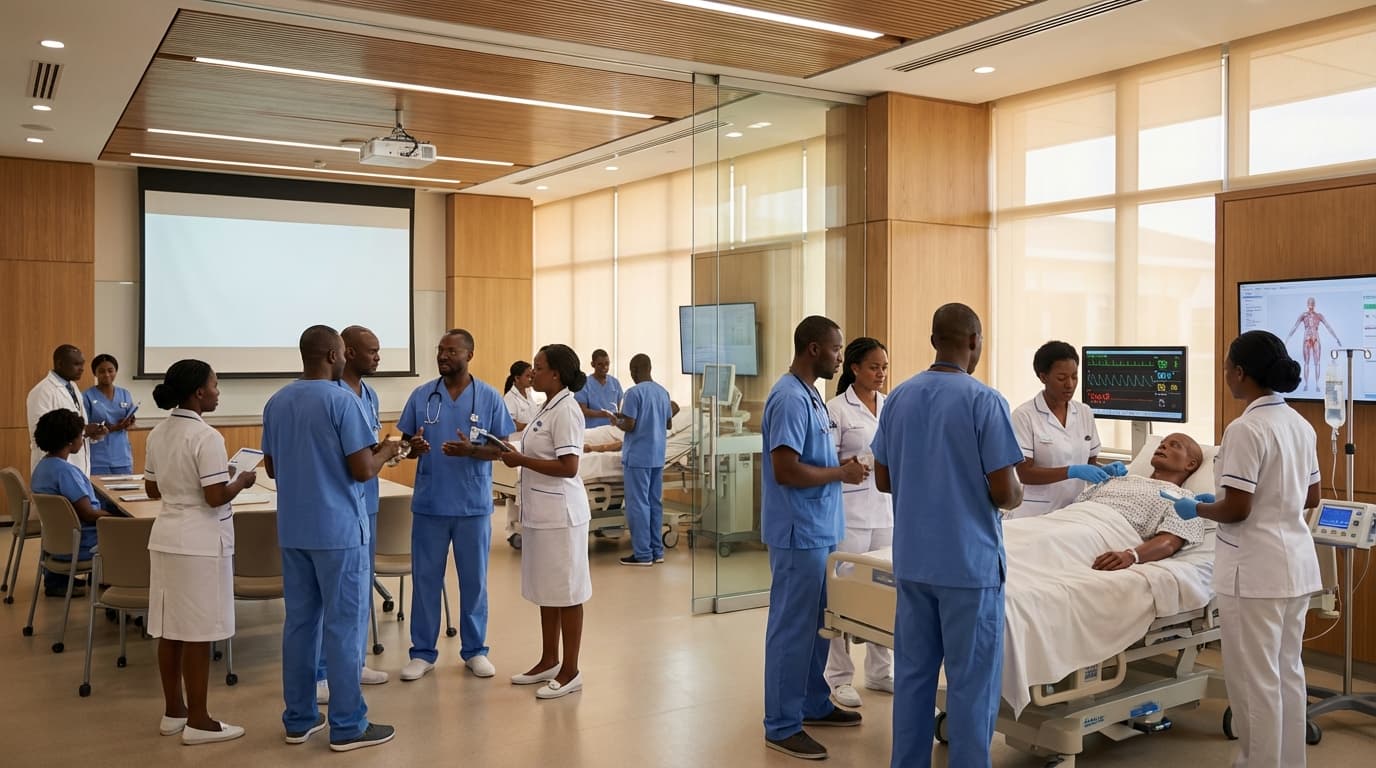
Equipment Training & Education in Central African Republic
Engineering Excellence & Technical Support
Comprehensive equipment training and certification programs High-standard technical execution following OEM protocols and local regulatory frameworks.
Mobile Training Units (MTUs) Deployed
We've launched a fleet of Mobile Training Units equipped with simulators and hands-on equipment, bringing essential operational and maintenance training directly to remote communities and operational sites across the Central African Republic. This reduces travel time and costs for personnel, maximizing their availability for critical tasks.
Localized Maintenance & Repair Workshops
Developing and delivering region-specific workshops focused on common equipment failures and repair procedures. Our training emphasizes using locally available tools and materials where possible, empowering field technicians to perform immediate, effective maintenance, thereby increasing equipment uptime and reducing reliance on external support.
Digital Skills & E-Learning Platform
Implementing a robust e-learning platform accessible via mobile devices, offering digital modules on equipment operation, safety protocols, and troubleshooting. This initiative bridges geographical barriers, provides standardized training content, and allows for continuous learning and skill development for our workforce in the Central African Republic.
What Is Equipment Training & Education In Central African Republic?
Equipment training and education in the Central African Republic (CAR) encompasses the systematic impartation of knowledge and practical skills necessary for the safe, efficient, and effective operation, maintenance, and repair of various types of equipment. This service is critical in a developing nation like the CAR where access to advanced technical expertise can be limited, and where proper equipment utilization is fundamental to infrastructure development, economic activity, public services, and humanitarian aid delivery. The training aims to build local capacity, reduce equipment downtime, improve operational longevity, and enhance safety standards, thereby maximizing the return on investment in machinery and technology.
| Target Audience | Need for Training | Typical Use Cases |
|---|---|---|
| Heavy Equipment Operators (e.g., bulldozers, excavators, loaders) | To ensure safe and efficient operation in construction, mining, and infrastructure projects, reducing accidents and wear. | Construction of roads, bridges, and buildings; disaster relief operations (clearing debris); mining operations; agricultural land preparation. |
| Agricultural Machinery Technicians and Operators (e.g., tractors, harvesters, irrigation systems) | To maximize crop yields, improve farming efficiency, and extend the lifespan of agricultural equipment, supporting food security. | Farming cooperatives; government agricultural extension services; large-scale commercial farms; humanitarian food production initiatives. |
| Healthcare Facility Technicians and Clinicians (e.g., medical imaging devices, laboratory equipment, generators) | To ensure accurate diagnosis, effective treatment, and reliable power supply, critical for public health services. | Hospitals and clinics (urban and rural); mobile health units; diagnostic laboratories; power generation for essential services. |
| Water and Sanitation System Personnel (e.g., pumps, purification units, generators) | To maintain consistent access to clean water and reliable sanitation, essential for public health and disease prevention. | Municipal water treatment plants; community water points; WASH (Water, Sanitation, and Hygiene) projects; refugee camps. |
| Logistics and Transport Personnel (e.g., forklifts, trucks, generators for logistics hubs) | To facilitate the efficient movement of goods and aid, supporting supply chains and humanitarian relief efforts. | Warehousing and distribution centers; humanitarian aid organizations; transportation companies. |
| Mine Workers and Supervisors (e.g., drilling rigs, hauling trucks, processing machinery) | To ensure safety in hazardous environments and optimize resource extraction, contributing to the economy. | Mining companies operating in the CAR. |
Key Components of Equipment Training & Education in CAR
- Operational Proficiency: Training operators on the correct procedures for starting, running, controlling, and shutting down specific equipment. This includes understanding control panels, instrumentation, and essential operational parameters.
- Preventive Maintenance: Educating personnel on routine inspection, lubrication, cleaning, and minor adjustments required to prevent equipment failure. This often involves understanding service intervals and fluid checks.
- Basic Troubleshooting and Repair: Equipping technicians with the ability to identify common malfunctions, diagnose underlying issues, and perform fundamental repairs using available tools and resources. This may include understanding basic electrical, hydraulic, and mechanical principles.
- Safety Protocols and Hazard Recognition: Comprehensive instruction on operating equipment safely, identifying potential hazards (e.g., moving parts, electrical sources, chemical exposures), and implementing appropriate personal protective equipment (PPE) and emergency procedures.
- Documentation and Record-Keeping: Training on the importance of maintaining operational logs, maintenance records, and incident reports for tracking equipment performance, scheduling repairs, and ensuring accountability.
- Specialized Application Training: Instruction tailored to specific industry requirements, such as heavy machinery for construction, agricultural equipment for farming, or medical devices for healthcare facilities.
Who Needs Equipment Training & Education In Central African Republic?
In the Central African Republic (CAR), a robust need for equipment training and education exists across various sectors to foster economic development, improve infrastructure, enhance public services, and ensure safety. This training is crucial for maximizing the efficiency and lifespan of equipment, minimizing operational costs, and empowering local workforces.
| Target Customer/Sector | Key Departments/Units | Types of Equipment Requiring Training | Primary Training Needs |
|---|---|---|---|
| Government Ministries & Agencies | Ministry of Infrastructure & Public Works, Ministry of Health, Ministry of Agriculture & Livestock, Ministry of Energy & Water, Ministry of Defense & Armed Forces, Ministry of Education, Ministry of Transport | Construction machinery (bulldozers, excavators, graders), medical equipment (diagnostic tools, surgical instruments), agricultural machinery (tractors, harvesters), water pumps, power generators, vehicles (trucks, buses, ambulances), educational equipment (computers, projectors) | Operation, routine maintenance, basic repairs, safety protocols, specialized usage for specific tasks |
| Private Sector Businesses | Mining and Extractive Industries, Agriculture and Agribusiness, Construction Companies, Manufacturing and Small Enterprises, Transportation and Logistics, Telecommunications, Energy Sector | Heavy-duty mining equipment, processing machinery, agricultural machinery and tools, construction equipment, factory machinery, logistics vehicles, telecommunications infrastructure tools, power generation units | Advanced operation techniques, preventative maintenance, troubleshooting and repair, safety management systems, efficiency optimization, quality control |
| NGOs & International Organizations | Health programs, agricultural development projects, infrastructure repair teams, water and sanitation initiatives, education support, emergency response units | Water purification systems, generators, medical supplies and equipment, farming tools, basic construction tools, communication devices, vehicles for field operations | Field operation and maintenance in remote areas, rapid deployment setup, safe handling, basic repair for sustainability, usage in challenging environments |
| Local Communities & Artisans | Local craftspeople, smallholder farmers, community-based infrastructure maintenance groups, mechanics and technicians | Hand tools, woodworking machinery, sewing machines, welding equipment, small engines, basic pumps, bicycles and motorbikes | Tool handling and safety, basic maintenance, repair techniques, efficient usage for income generation, sustainable practices |
Target Customers and Departments for Equipment Training & Education in CAR
- Government Ministries & Agencies: Essential for the effective operation and maintenance of public assets and services.
- Private Sector Businesses: Critical for productivity, safety, and competitiveness, particularly in resource-based industries and emerging sectors.
- Non-Governmental Organizations (NGOs) & International Organizations: Vital for the successful implementation of development projects and humanitarian aid.
- Local Communities & Artisans: Empowering individuals with skills to utilize and maintain tools for livelihoods and local development.
Equipment Training & Education Process In Central African Republic
The Equipment Training & Education Process in the Central African Republic (CAR) is designed to ensure that personnel are proficient in operating, maintaining, and troubleshooting essential equipment, thereby maximizing its lifespan and operational effectiveness. This process is crucial for various sectors, including healthcare, agriculture, infrastructure development, and security. The workflow typically begins with an identified need or inquiry and culminates in successful training execution and ongoing support.
| Stage | Description | Key Activities | Responsible Parties | Potential Challenges in CAR |
|---|---|---|---|---|
| Inquiry & Needs Assessment | The initial phase where the need for training is identified, and the specific equipment and target audience are determined. This involves understanding the skill gaps and learning objectives. | Receiving training requests, conducting site visits, interviewing stakeholders, assessing current skill levels, defining specific learning outcomes. | Project Managers, Department Heads, Equipment Users, Local Partners, NGOs. | Difficulty in reaching remote locations, language barriers, limited access to current equipment for assessment, political instability affecting access. |
| Curriculum Development & Customization | Creating or adapting training materials to suit the specific equipment, the CAR context, and the learners' literacy levels and cultural background. This includes theoretical and practical components. | Developing training modules (manuals, presentations, hands-on exercises), translating materials into local languages (e.g., Sango), incorporating safety protocols relevant to the CAR environment. | Training Specialists, Subject Matter Experts (SMEs), Local Educators, Translators. | Lack of locally relevant training materials, limited availability of SMEs, budget constraints for translation and adaptation, cultural nuances in learning. |
| Trainer Identification & Preparation | Selecting qualified individuals to deliver the training and equipping them with the necessary knowledge, skills, and resources. | Identifying potential trainers (local or international), assessing their expertise, conducting 'train-the-trainer' sessions, providing trainers with all necessary documentation and equipment. | HR Departments, Training Coordinators, Technical Experts, International Organizations. | Shortage of qualified local trainers, difficulty in retaining trained personnel, limited capacity for advanced technical training, travel restrictions for international trainers. |
| Logistics & Scheduling | Planning and coordinating all practical aspects of the training, including venue, dates, transportation, accommodation, and equipment availability. | Booking training venues, scheduling dates and times, arranging transportation for participants and trainers, booking accommodation, ensuring equipment is functional and available at the training site, obtaining necessary permits. | Logistics Officers, Project Administrators, Local Government Officials, Transportation Providers. | Poor road infrastructure, unreliable transportation, limited availability of suitable training venues, security concerns impacting travel, power outages affecting equipment and venues. |
| Training Execution | The actual delivery of the training program to the target audience, incorporating a mix of theoretical instruction, practical demonstrations, and hands-on exercises. | Conducting classroom sessions, demonstrating equipment operation, facilitating hands-on practice, addressing participant questions, conducting simulations. | Trainers, Participants, Technical Support Staff. | Language barriers during sessions, low literacy levels affecting comprehension, resistance to new methods, inadequate practical training facilities, equipment malfunctions during training. |
| Evaluation & Feedback | Assessing the effectiveness of the training and gathering feedback from participants and trainers to identify areas for improvement. | Administering pre- and post-training assessments (quizzes, practical tests), collecting participant feedback forms, conducting debriefing sessions with trainers, documenting outcomes. | Training Coordinators, Evaluation Specialists, Participants, Trainers. | Difficulty in administering objective assessments, participant reluctance to provide honest feedback, limited capacity for data analysis, lack of follow-up mechanisms for assessment results. |
| Post-Training Support & Refresher Courses | Providing ongoing support to trainees and offering periodic refresher courses to reinforce learning and address evolving needs or new equipment features. | Establishing help desks or contact points for questions, providing on-site technical assistance, organizing refresher training sessions, updating training materials based on field experience. | Technical Support Teams, Equipment Suppliers, Project Managers, Local Supervisors. | Limited technical support infrastructure, difficulty in reaching remote users for follow-up, insufficient budget for refresher courses, high staff turnover reducing the impact of training. |
Key Stages of the Equipment Training & Education Process
- Inquiry & Needs Assessment
- Curriculum Development & Customization
- Trainer Identification & Preparation
- Logistics & Scheduling
- Training Execution
- Evaluation & Feedback
- Post-Training Support & Refresher Courses
Equipment Training & Education Cost In Central African Republic
Providing equipment training and education in the Central African Republic (CAR) involves a complex interplay of factors that significantly influence pricing. These factors range from the type of equipment, the level of expertise required, the duration of the training, the location within CAR, and the specific training provider. Due to the CAR's unique socio-economic landscape, including infrastructure challenges and a developing skilled workforce, training costs can be higher compared to more developed nations. Local currency, the Central African CFA franc (XAF), is the primary medium of exchange, and prices are negotiated and often fluctuate based on current market conditions and availability of qualified trainers.
| Training Type/Equipment Category | Estimated Price Range (XAF - Central African CFA franc) | Notes |
|---|---|---|
| Basic Office Equipment (e.g., computers, printers) | 50,000 - 150,000 XAF | Per participant for a 1-2 day workshop. Covers basic operation and troubleshooting. |
| Basic Agricultural Tools (e.g., manual farming equipment, simple machinery) | 75,000 - 200,000 XAF | Per participant for a 2-3 day practical training. Focus on usage and maintenance. |
| Light Construction Equipment (e.g., small generators, basic power tools) | 100,000 - 250,000 XAF | Per participant for a 3-day course. Includes safety and operational procedures. |
| Intermediate Machinery (e.g., small water pumps, basic welding equipment) | 150,000 - 350,000 XAF | Per participant for a 3-5 day program. Covers operation and basic maintenance. |
| Heavy Construction Equipment (e.g., excavators, bulldozers) | 300,000 - 800,000 XAF | Per participant for a 1-2 week intensive course. Includes operation, safety, and basic checks. May be higher for specialized certifications. |
| Medical Equipment (e.g., basic diagnostic tools, laboratory equipment) | 200,000 - 600,000 XAF | Per participant for a 3-7 day training. Highly dependent on complexity and need for certified trainers. Can be significantly higher for advanced medical tech. |
| Agricultural Processing Machinery (e.g., small-scale mills, dryers) | 180,000 - 450,000 XAF | Per participant for a 4-6 day training. Focus on operation, maintenance, and troubleshooting. |
| Specialized Technical Equipment (e.g., communication systems, specific industrial machinery) | 400,000+ XAF | Can be significantly higher based on complexity, trainer availability, and duration. Often involves international trainers or manufacturer representatives. |
Key Pricing Factors for Equipment Training & Education in CAR
- Type of Equipment: Training on highly specialized, technical, or heavy industrial equipment (e.g., medical diagnostic machines, construction machinery, agricultural processing units) will inherently cost more than training on basic office equipment or general tools. The complexity of operation, maintenance, and safety protocols directly impacts the training duration and trainer's expertise needed.
- Level of Training: Basic user training, intermediate operational skills, advanced troubleshooting, or specialized maintenance and repair courses will have varying price points. The depth of knowledge imparted dictates the required time and qualifications of the instructor.
- Duration of Training: The length of the training program is a primary cost driver. A one-day introductory session will be significantly less expensive than a multi-week comprehensive certification program.
- Trainer Expertise and Qualifications: Highly experienced trainers with specialized certifications and practical experience in the specific equipment will command higher fees. The availability of such expertise within CAR can also influence costs.
- Location of Training: Training conducted in remote or less accessible regions of CAR may incur additional costs for travel, accommodation, and logistics for trainers. Major urban centers like Bangui might offer more competitive pricing due to better accessibility and a larger pool of potential trainers.
- Training Provider: Government-affiliated institutions, private training companies, international NGOs, or manufacturer-sponsored training will have different pricing structures. NGOs might offer subsidized training, while private providers and manufacturers typically charge market rates.
- Materials and Resources: The cost of training manuals, simulators, practical exercises, consumables, and any necessary software licenses are often factored into the overall price.
- Group Size: Per-participant costs can decrease with larger groups, as fixed costs like trainer fees and venue rental are spread across more individuals. However, very large groups might require additional trainers or facilitators, potentially increasing the overall cost.
- Customization: Tailored training programs designed to meet specific organizational needs or address particular operational challenges will generally be more expensive than standard off-the-shelf courses.
- Certification: If the training includes a formal certification, this often adds to the cost due to examination fees and administrative overhead.
Affordable Equipment Training & Education Options
Securing high-quality equipment training and education is crucial for operational efficiency, safety, and skill development. Fortunately, numerous affordable options exist, often incorporating value bundles and strategic cost-saving measures to make professional development accessible. Value bundles typically combine multiple training modules, resources, or services at a discounted rate compared to purchasing them individually. Cost-saving strategies range from leveraging online platforms and group discounts to exploring government grants and in-house training programs. By understanding these options, organizations can invest in their workforce without compromising their budget.
| Strategy/Bundle Type | Description | Cost-Saving Benefit | Example Scenario |
|---|---|---|---|
| Value Bundles | Packages of related training modules, software access, or consulting services offered at a reduced price. | Lower per-unit cost for comprehensive skill development. | A bundle including basic operator training, advanced maintenance, and safety certification for a new piece of heavy machinery. |
| Subscription Services | Ongoing access to a library of online courses, tutorials, and resources for a recurring fee. | Unlimited learning opportunities for multiple employees at a predictable cost. | A yearly subscription to an online platform offering a wide range of equipment operation and safety courses. |
| Group Discounts | Reduced pricing for multiple participants from the same organization attending a training session or purchasing a package. | Significant savings when training a team or department. | A discount offered for registering 5 or more employees for a specialized equipment troubleshooting course. |
| Early Bird Registration | Discounted rates for registering for workshops or courses well in advance of the start date. | Incentive to plan ahead and secure lower prices. | A 15% discount on a conference workshop if booked three months prior to the event. |
| Bundled Software & Training | Packages that include the purchase or subscription of equipment-related software along with user training. | Streamlined implementation and improved ROI by ensuring users can effectively utilize the technology. | Purchasing new diagnostic software that comes with a free online training module for technicians. |
| Government Grants & Subsidies | Financial assistance programs offered by local, state, or federal governments to support workforce development and training. | Potentially cover a significant portion or the entirety of training costs. | A manufacturing company receiving a grant to train its employees on advanced robotic equipment. |
| Online Learning Platforms | Web-based platforms offering a vast array of courses, often at a fraction of the cost of traditional in-person training. | Flexible learning, reduced travel expenses, and accessibility for remote employees. | Employees completing OSHA safety training modules online at their own pace. |
| Train-the-Trainer Programs | Training internal staff to become qualified instructors, who can then train their colleagues. | Long-term cost savings by building in-house expertise and reducing reliance on external trainers. | A lead technician attends a specialized course and then trains the rest of the maintenance team on new equipment upkeep. |
Affordable Equipment Training & Education Options
- Online Courses and Webinars
- Manufacturer-Specific Training
- Community College and Vocational Schools
- Industry Association Workshops
- On-the-Job Training (OJT) with Mentorship
- Apprenticeship Programs
- Government and Non-Profit Initiatives
- Train-the-Trainer Programs
Verified Providers In Central African Republic
In the Central African Republic (CAR), ensuring access to reliable and trustworthy healthcare providers is paramount. Navigating the landscape of medical services can be challenging, especially when seeking specialized care or general well-being. This is where verified providers, and specifically Franance Health, emerge as a crucial resource. Franance Health has established itself as a leading entity committed to vetting and credentialing healthcare professionals and facilities within the CAR. Their rigorous verification process is designed to instill confidence in patients, assuring them that the providers they engage with meet high standards of competence, ethical practice, and operational integrity. Choosing a Franance Health credentialed provider means opting for a level of assurance that significantly reduces risk and enhances the overall quality of care received. This commitment to transparency and accountability sets Franance Health apart, making their network the most dependable choice for healthcare in the region.
| Franance Health Verification Aspect | What it Ensures for Patients |
|---|---|
| Medical License and Certification | Confirms the provider is legally qualified and recognized to practice medicine. |
| Professional Experience and Training | Indicates the provider has the necessary practical skills and theoretical knowledge. |
| Background Checks and Ethical Standing | Assures the provider has no history of malpractice or unethical conduct, promoting patient trust. |
| Facility Infrastructure and Equipment (where applicable) | Ensures a safe and well-equipped environment conducive to quality medical care. |
| Continuing Medical Education (CME) Compliance | Guarantees the provider stays updated with the latest medical advancements and techniques. |
Key Advantages of Choosing Franance Health Verified Providers:
- Rigorous Credentialing: Franance Health employs a multi-faceted verification process that scrutinizes qualifications, licenses, experience, and adherence to ethical guidelines.
- Enhanced Patient Safety: By ensuring providers meet established standards, Franance Health actively contributes to a safer healthcare environment for all patients.
- Improved Quality of Care: Verified providers are more likely to offer up-to-date medical knowledge and employ best practices, leading to better health outcomes.
- Trust and Reliability: Patients can have greater peace of mind knowing they are engaging with professionals and facilities that have undergone thorough vetting.
- Access to Specialists: Franance Health's network often includes a diverse range of specialists, making it easier to find the specific medical expertise needed.
- Accountability and Transparency: The verification process promotes accountability within the healthcare system, fostering a more transparent environment.
Scope Of Work For Equipment Training & Education
This Scope of Work (SOW) outlines the requirements for providing comprehensive training and educational services for newly acquired equipment. The objective is to ensure the client's personnel are proficient in the operation, maintenance, and troubleshooting of the specified equipment, thereby maximizing its utility and minimizing downtime.
| Deliverable ID | Description | Quantity | Format | Standard Specifications | Acceptance Criteria |
|---|---|---|---|---|---|
| TRN-001 | Training Plan & Schedule | 1 | Document (PDF) | Clearly outlines training modules, duration, target audience, delivery methods, and proposed schedule. | Approved by Client within 5 business days of submission. |
| TRN-002 | Participant Manuals | As per trainee count | Digital (PDF) & Printed (Optional) | Contains theoretical concepts, operational steps, safety guidelines, and exercises. Content must be accurate and relevant to the equipment. | Content verified for accuracy and completeness by Client. |
| TRN-003 | Instructor-Led Training Sessions | As per Training Plan | In-person / Virtual | Delivered by certified and experienced instructors. Sessions include lectures, demonstrations, and practical exercises. | Successful completion of practical exercises by at least 90% of trainees. |
| TRN-004 | Hands-on Practical Exercises | As per Training Plan | Practical Simulation / Live Equipment Operation | Trainees perform key operational and maintenance tasks under instructor supervision. | Demonstrated proficiency in performing specified tasks by trainees. |
| TRN-005 | Assessment & Evaluation Forms | As per Training Plan | Digital (PDF/Online) & Printed | Includes knowledge-based quizzes and practical skills assessment checklists. Must be objective and clearly defined. | Completed evaluations submitted for each trainee. |
| TRN-006 | Training Certificates | As per successful trainees | Digital (PDF) & Printed | Issued to trainees who successfully complete the training and pass assessments. Includes trainee name, course title, date, and instructor signature. | Issued within 3 business days of training completion. |
| TRN-007 | Post-Training Support Plan | 1 | Document (PDF) | Outlines the availability and method of post-training support, including contact information for queries and issue resolution. | Approved by Client. |
| TRN-008 | Troubleshooting Guide | 1 | Document (PDF) | A concise guide detailing common error codes, symptoms, and recommended solutions for the equipment. | Content verified for accuracy and practicality by Client. |
| TRN-009 | Equipment User Manual (Training Version) | 1 | Document (PDF) | A distilled version of the official user manual, focusing on operational aspects relevant to the training. | Content aligned with training modules and approved by Client. |
Key Training Objectives:
- Develop and deliver customized training modules tailored to the specific equipment and client's operational environment.
- Provide hands-on practical training sessions to reinforce theoretical knowledge.
- Equip trainees with the skills to perform routine operational procedures and preventive maintenance.
- Enable trainees to identify and diagnose common faults and implement basic troubleshooting steps.
- Ensure trainees understand and adhere to all safety protocols related to equipment operation and maintenance.
- Provide comprehensive documentation, including user manuals, training guides, and troubleshooting flowcharts.
Service Level Agreement For Equipment Training & Education
This Service Level Agreement (SLA) outlines the performance commitments for Equipment Training & Education services, focusing on response times for support requests and uptime guarantees for delivered training sessions and platform access.
| Service Component | Service Level Objective (SLO) | Measurement Method | Remedy for Breach |
|---|---|---|---|
| Online Learning Platform Uptime | 99.5% during scheduled access hours | Monitoring by [Your Company/Third-Party Tool] | 10% discount on next training package for every 1% downtime below 99.5% in a billing cycle |
| Scheduled Virtual Training Session Availability | 100% | Confirmation of session start and participant attendance | Rescheduling of session at no additional cost; 5% discount on next booking if rescheduled more than once |
| Critical Technical Support Response (System Outage affecting training) | Within 1 hour during Business Hours | Timestamp of ticket creation and first acknowledgement | Pro-rated refund for training time lost due to issue |
| Standard Support Response (Content/Scheduling query) | Within 4 Business Hours | Timestamp of ticket creation and first acknowledgement | N/A (Focus on prompt resolution) |
| Training Material Availability | 99.0% | Accessibility checks of downloaded or online materials | Replacement of unavailable materials within 24 hours; 5% discount on future material purchases |
Key Service Components
- Scope of Service: This SLA covers all scheduled and on-demand training sessions conducted by certified instructors, access to online learning platforms, and technical support for training-related issues.
- Definitions: Define key terms such as 'Business Hours', 'Uptime', 'Downtime', 'Support Ticket', 'Response Time', and 'Resolution Time'.
- Service Availability: Guarantees for the availability of online training platforms and the successful delivery of scheduled virtual or in-person training sessions.
- Support Response Times: Establishes expected timelines for acknowledging and responding to different categories of support requests (e.g., technical issues, scheduling changes, content queries).
- Training Session Quality: Metrics and expectations related to the effectiveness and quality of training delivery.
- Reporting and Monitoring: Outlines how service levels will be monitored, measured, and reported to the client.
- Exclusions: Specifies situations or events that are not covered by this SLA (e.g., client-induced issues, force majeure events).
- Remedies for SLA Breaches: Details the consequences and potential remedies available to the client if service level commitments are not met.
Frequently Asked Questions

Ready when you are
Let's scope your Equipment Training & Education in Central African Republic project in Central African Republic.

Scaling healthcare logistics and technical systems across the entire continent.