
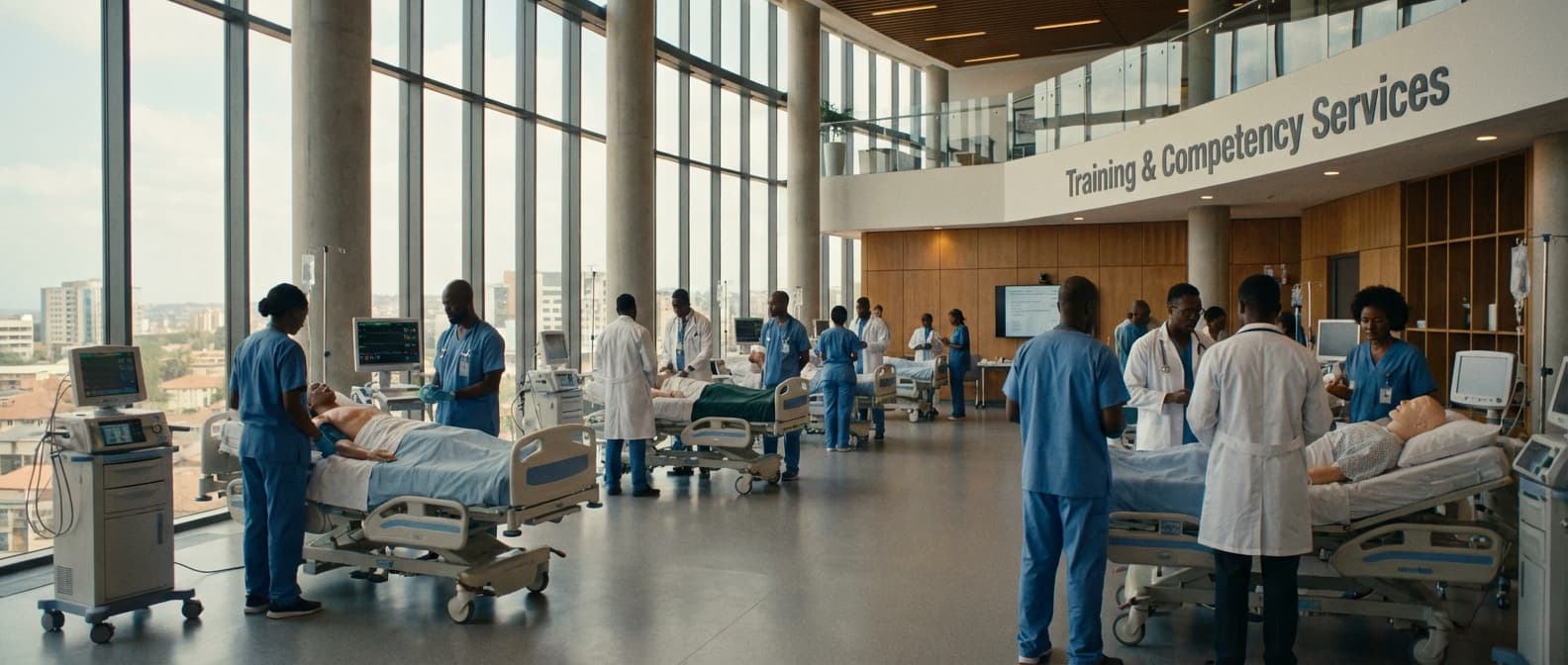
Ventilator User Training Service (Nurses) in Central African Republic
Engineering Excellence & Technical Support
Ventilator User Training Service (Nurses) High-standard technical execution following OEM protocols and local regulatory frameworks.
Ventilator Circuit Management
Learn best practices for connecting, disconnecting, and troubleshooting ventilator circuits to ensure patient safety and optimal ventilation delivery. This includes understanding different circuit types, humidity management, and leak detection.
Ventilator Mode Selection & Settings
Gain expertise in identifying appropriate ventilation modes (e.g., SIMV, A/C, PSV) based on patient condition and understanding key ventilator parameters (e.g., tidal volume, respiratory rate, PEEP, FiO2) for effective respiratory support.
Alarm Recognition & Response
Develop critical skills in recognizing common ventilator alarms, understanding their root causes, and implementing timely and appropriate interventions to address potential patient compromise and equipment malfunction.
What Is Ventilator User Training Service (Nurses) In Central African Republic?
Ventilator User Training Service (Nurses) in the Central African Republic refers to specialized educational programs designed to equip registered nurses with the requisite knowledge and practical skills for the safe and effective operation, monitoring, and troubleshooting of mechanical ventilators within a clinical setting. These programs are crucial for optimizing patient outcomes, particularly in critical care environments where mechanical ventilation is a life-sustaining intervention. The training emphasizes understanding ventilator physiology, various modes of ventilation, patient-ventilator synchrony, weaning protocols, and the recognition and management of common ventilator-associated complications. Given the often resource-limited healthcare infrastructure in the Central African Republic, this service aims to enhance the capacity of local nursing staff to manage complex respiratory conditions and ensure continuity of care.
| Target Audience | Needs Addressed | Typical Use Cases |
|---|---|---|
| Registered Nurses working in Intensive Care Units (ICUs) | Lack of specialized training in mechanical ventilator management, leading to potential patient safety risks and suboptimal care. | Management of patients with acute respiratory distress syndrome (ARDS), severe pneumonia, sepsis-induced respiratory failure, post-operative respiratory complications, and exacerbations of chronic respiratory diseases (e.g., COPD, asthma). |
| Registered Nurses in Emergency Departments (EDs) | Inability to initiate or manage mechanical ventilation promptly in critically ill patients arriving at the ED. | Stabilization of patients with acute respiratory compromise requiring immediate ventilatory support prior to transfer to ICU or definitive treatment. |
| Registered Nurses in specialized units (e.g., Neonatal Intensive Care Units - NICUs, if applicable) | Need for pediatric or neonatal-specific ventilator training tailored to the unique physiological needs of neonates and infants. | Management of premature infants with respiratory distress syndrome (RDS), meconium aspiration syndrome, and other neonatal respiratory pathologies requiring ventilatory support. |
| Healthcare Facilities (Hospitals, Health Centers with critical care capabilities) | Requirement to upskill existing nursing staff to utilize newly acquired or existing ventilator equipment effectively and safely. | Establishing or enhancing critical care services within facilities to manage severe respiratory illnesses, thereby reducing the need for patient evacuation to higher-level care centers. |
Key Components of Ventilator User Training Service (Nurses) in CAR
- Ventilator Physiology and Pathophysiology of Respiratory Failure
- Principles of Mechanical Ventilation (Invasive and Non-Invasive)
- Detailed understanding of various ventilator modes (e.g., Volume Control, Pressure Control, SIMV, CPAP, BiPAP)
- Setting up and initiating mechanical ventilation
- Monitoring of ventilator parameters and patient response
- Troubleshooting common ventilator alarms and malfunctions
- Patient-ventilator synchrony and management
- Ventilator-associated pneumonia (VAP) prevention strategies
- Weaning from mechanical ventilation protocols
- Emergency management of ventilated patients
- Documentation and record-keeping related to mechanical ventilation
- Basic principles of ventilator maintenance and infection control
Who Needs Ventilator User Training Service (Nurses) In Central African Republic?
This document outlines the critical need for Ventilator User Training Services for nurses in the Central African Republic. Given the current healthcare infrastructure and the increasing reliance on mechanical ventilation for critical care, comprehensive training is essential to ensure patient safety, optimal ventilator utilization, and improved patient outcomes. The training will equip nurses with the knowledge and skills to operate, monitor, and troubleshoot ventilators effectively.
| Department | Rationale for Training Need | Specific Training Focus |
|---|---|---|
| Intensive Care Unit (ICU) | Primary users of ventilators for critically ill patients with respiratory failure. High volume of patients requiring mechanical ventilation. | Advanced ventilator modes, weaning protocols, management of complications, troubleshooting alarms, and patient monitoring. |
| Emergency Department (ED) | Initial management of patients requiring mechanical ventilation due to acute respiratory distress or trauma. Rapid assessment and initiation of ventilation. | Basic ventilator setup, initial settings, understanding of common respiratory emergencies, and safe transport of ventilated patients. |
| Operating Room (OR) | Ventilation is crucial during surgical procedures requiring general anesthesia. Ensuring adequate oxygenation and ventilation for surgical patients. | Ventilator operation during anesthesia, management of airway pressure, and specific anesthetic considerations related to ventilation. |
| Pediatric Intensive Care Unit (PICU) | Specialized needs for ventilating pediatric patients, including infants and children. Different physiological parameters and equipment considerations. | Pediatric-specific ventilator modes, size-appropriate equipment, monitoring of vital signs in children, and management of common pediatric respiratory conditions. |
| Neonatal Intensive Care Unit (NICU) | Extremely specialized care for premature and critically ill newborns requiring mechanical ventilation. Delicate physiological systems and specialized equipment. | Neonatal ventilators, high-frequency ventilation, surfactant administration, and management of complex congenital respiratory anomalies. |
| General Wards (with critical care capacity) | Increasing trend of managing less complex ventilated patients on general wards to free up ICU beds. Requires foundational ventilator knowledge. | Basic ventilator operation, alarm recognition and response, and patient monitoring for stable ventilated patients. |
Target Customers for Ventilator User Training Service (Nurses)
- Registered Nurses (RNs)
- Licensed Practical Nurses (LPNs) / Licensed Vocational Nurses (LVNs)
- Critical Care Nurses
- Emergency Department Nurses
- Anesthesia Nurses
- Pediatric Nurses
- Neonatal Intensive Care Unit (NICU) Nurses
Ventilator User Training Service (Nurses) Process In Central African Republic
This document outlines the standard operating procedure for the Ventilator User Training Service specifically for nurses in the Central African Republic. It details the entire workflow from initial inquiry to the successful execution of the training program, ensuring a structured and efficient delivery of vital skills.
| Phase | Step | Description | Key Stakeholders | Deliverables/Outcomes |
|---|---|---|---|---|
| Phase 1: Inquiry and Needs Assessment | 1.1 Initial Contact | Healthcare facility (hospital, clinic) or Ministry of Health representative contacts the training provider with a need for ventilator user training for nurses. | Inquiring Facility/MoH, Training Provider | Confirmation of inquiry, preliminary understanding of training needs. |
| 1.2 Needs Assessment Visit/Call | Training provider conducts an in-depth assessment to understand the facility's current ventilator stock, nurse skill levels, specific ventilator models in use, existing training protocols, and logistical constraints. | Training Provider, Facility Management, Nursing Supervisors, IT Staff (if applicable) | Detailed needs assessment report, identification of target audience size and skill gaps. | |
| Phase 2: Proposal and Agreement | 2.1 Training Proposal Development | Based on the needs assessment, the training provider develops a comprehensive proposal including training objectives, curriculum outline, methodology, duration, venue requirements, trainer allocation, and cost breakdown. | Training Provider | Formal training proposal document. |
| 2.2 Proposal Review and Negotiation | The inquiring facility reviews the proposal, may request modifications, and negotiates terms and conditions. | Inquiring Facility/MoH, Training Provider | Agreement on training scope, schedule, and budget. | |
| 2.3 Contract/Agreement Signing | A formal contract or agreement is signed by both parties, outlining all agreed-upon terms and responsibilities. | Inquiring Facility/MoH, Training Provider | Signed contract/agreement. | |
| Phase 3: Pre-Training Preparation | 3.1 Curriculum Finalization | The training provider finalizes the training modules, presentations, practical exercises, and assessment tools based on the agreed curriculum and specific ventilator models. | Training Provider | Finalized training curriculum and materials. |
| 3.2 Trainer Assignment and Briefing | Experienced and qualified trainers are assigned to the program and briefed on the specific needs and context of the training. | Training Provider | Assigned trainers confirmed. | |
| 3.3 Logistics and Venue Preparation | The training venue is confirmed, necessary equipment (projectors, whiteboards, anatomical models, potentially functional ventilators if available and safe for practice) is arranged, and participant logistics (invitations, scheduling) are managed. | Training Provider, Inquiring Facility | Confirmed training venue, prepared logistics, participant invitations sent. | |
| 3.4 Participant Pre-Assessment (Optional but Recommended) | A brief pre-assessment may be conducted to gauge baseline knowledge and tailor the training content further. | Training Provider, Participants | Baseline knowledge assessment results. | |
| Phase 4: Training Execution | 4.1 Welcome and Introduction | The training begins with an overview of the program, objectives, and expectations. Introduction of trainers and participants. | Trainers, Participants | Clear understanding of training goals and structure. |
| 4.2 Theoretical Sessions | Presentation of core concepts related to mechanical ventilation, ventilator modes, patient monitoring, troubleshooting, and safety protocols. | Trainers, Participants | Acquisition of theoretical knowledge. | |
| 4.3 Practical Demonstrations and Hands-on Sessions | Demonstrations of ventilator operation, setting adjustments, alarm management, and patient connection. Hands-on practice sessions using simulators or available equipment. | Trainers, Participants | Development of practical skills in ventilator operation. | |
| 4.4 Case Studies and Scenarios | Analysis of realistic clinical scenarios to apply learned knowledge and decision-making skills. | Trainers, Participants | Enhanced critical thinking and problem-solving abilities. | |
| 4.5 Q&A and Discussion | Open forum for participants to ask questions and engage in discussions with trainers. | Trainers, Participants | Clarification of doubts and knowledge reinforcement. | |
| 4.6 Assessment/Evaluation | Post-training assessment to evaluate the participants' understanding and practical skills. This can include written tests, practical skill evaluations, or observation. | Trainers, Participants | Measurement of training effectiveness and individual learning outcomes. | |
| Phase 5: Post-Training Follow-up and Evaluation | 5.1 Training Report and Certification | The training provider submits a detailed training report including attendance, assessment results, and recommendations. Certificates of completion are issued to successful participants. | Training Provider, Participants | Official training report, certificates of completion. |
| 5.2 Facility Feedback | The training provider collects feedback from the healthcare facility management on the training delivery, relevance, and impact. | Training Provider, Facility Management | Facility feedback for continuous improvement. | |
| 5.3 Participant Feedback | Participants provide feedback on the training content, trainers, methodology, and overall experience. | Training Provider, Participants | Participant feedback for quality assurance. | |
| 5.4 Post-Training Support (Optional/As Agreed) | Depending on the agreement, follow-up technical support or refresher sessions may be offered. | Training Provider, Inquiring Facility | Sustained knowledge and skill application. | |
| 5.5 Impact Evaluation (Long-term) | Periodic review to assess the long-term impact of the training on patient care outcomes and adherence to best practices. | Training Provider, Inquiring Facility | Evidence of training's contribution to improved healthcare delivery. |
Ventilator User Training Service (Nurses) - Central African Republic Workflow
- Phase 1: Inquiry and Needs Assessment
- Phase 2: Proposal and Agreement
- Phase 3: Pre-Training Preparation
- Phase 4: Training Execution
- Phase 5: Post-Training Follow-up and Evaluation
Ventilator User Training Service (Nurses) Cost In Central African Republic
The cost of Ventilator User Training for Nurses in the Central African Republic (CAR) can vary significantly due to several factors. These factors are influenced by the CAR's unique economic landscape, the complexity of the training, the provider's expertise, and logistical considerations. It's crucial for healthcare institutions to understand these elements to budget effectively for essential staff development. The local currency is the Central African CFA franc (XAF).
| Training Type/Scope | Estimated Cost Range (XAF) |
|---|---|
| Basic Ventilator User Familiarization (1-2 days, theoretical focus with limited hands-on) | 75,000 - 250,000 |
| Comprehensive Ventilator Operation & Management for Nurses (3-5 days, in-depth theory, practical skills, troubleshooting, common modes) | 200,000 - 600,000 |
| Advanced Ventilation Techniques & Specific Model Training (e.g., NIV, HFOV, complex modes, extended duration) | 400,000 - 1,200,000+ |
| Per-Participant Cost (for group training, can vary widely based on the above factors) | 20,000 - 100,000+ |
Key Pricing Factors for Ventilator User Training (Nurses) in CAR
- Trainer Expertise and Qualifications: Highly experienced trainers with specialized knowledge in critical care ventilation and a proven track record will command higher fees. This includes certifications and years of practical application.
- Training Content and Depth: The scope of the training is a major determinant. Basic user training will be less expensive than advanced troubleshooting, specific ventilator model operation, or training on complex ventilation modes (e.g., non-invasive ventilation, high-frequency ventilation).
- Duration of Training: A one-day introductory course will naturally cost less than a multi-day comprehensive program requiring hands-on practice and case studies.
- Number of Participants: While some providers may offer a flat fee, others will have a per-participant cost. Larger groups might negotiate a lower per-person rate, but the overall cost will increase. Conversely, smaller, more personalized training sessions will likely be more expensive per individual.
- Location of Training: If the training is conducted at a facility in a major city like Bangui, logistical costs might be lower than if it requires travel to more remote or less accessible regions of the CAR. Travel and accommodation expenses for the trainers are often passed on to the client.
- Provider Type: Training can be offered by various entities: international NGOs, specialized medical training companies (though less common in CAR), local hospitals with in-house training departments, or even experienced independent consultants.
- Equipment Availability and Access: If the training requires access to specific ventilator models for hands-on practice, the cost might be affected by whether the training facility provides these or if they need to be sourced externally.
- Materials and Resources: The provision of training manuals, assessment tools, and other educational materials can influence the overall price.
- Language Barriers and Translation: If the trainers are not fluent in the primary local languages (e.g., Sango, French), translation services might be required, adding to the cost.
- Logistical Challenges within CAR: The CAR faces significant infrastructure and logistical challenges. Transportation, security, and access to reliable power can increase the overall cost of delivering training, especially outside of major urban centers.
Affordable Ventilator User Training Service (Nurses) Options
This document outlines affordable ventilator user training service options specifically tailored for nurses. We focus on delivering high-quality, accessible, and cost-effective training to ensure nurses are proficient in ventilator management, patient safety, and troubleshooting. Our approach emphasizes value bundles and strategic cost-saving measures to maximize the return on investment for healthcare institutions.
| Value Bundle Option | Included Services | Target Audience | Estimated Cost-Saving Strategy | Key Benefits | |
|---|---|---|---|---|---|
| Basic Proficiency Bundle | Core Competency Modules (online), Basic Troubleshooting Scenarios (webinar), Certificate of Completion | Newly graduated nurses, nurses new to critical care, or those requiring a foundational refresher. | Reduced instructor travel costs, standardized online content delivery, minimal dedicated simulation time. | Cost-effective foundational knowledge acquisition, immediate accessibility for basic competence. | Great for introducing new nurses to ventilator management. |
| Enhanced Skill Bundle | Core Competency Modules (blended learning: online + in-person), Hands-on Simulation Training (half-day), Advanced Troubleshooting Scenarios (interactive workshop) | Nurses with some critical care experience needing to deepen their ventilator management skills and practical application. | Leveraging online modules for theoretical knowledge reduces in-person session duration, group simulation sessions optimize trainer utilization. | Improved practical skills, increased confidence in handling complex scenarios, faster skill development. | Ideal for nurses in general ICU or step-down units. |
| Expert Clinician Bundle | All Enhanced Skill Bundle components + Advanced Simulation Scenarios (full-day), Protocol Development Workshop, Annual Refresher Course (online) | Experienced critical care nurses, charge nurses, and nurse educators who require advanced proficiency and leadership skills in ventilator management. | Bulk purchase discounts for simulation hours, train-the-trainer components for internal capacity building, reduced travel for ongoing support. | Mastery of advanced ventilation strategies, ability to mentor junior staff, contribution to protocol optimization, sustained expertise. | Best for specialized ICUs or for developing unit leaders. |
| Customizable & On-Demand Bundle | Tailored modules based on institutional needs, flexible simulation scheduling, on-site or remote delivery, continuous support. | Institutions with unique patient populations, specialized equipment, or specific training challenges. | Only pay for what you need, efficient use of resources by focusing on specific skill gaps, reduced downtime with flexible scheduling. | Maximum relevance and impact, cost efficiency by avoiding unnecessary training, agile response to evolving needs. | Perfect for adapting to new equipment or specific patient care challenges. |
Key Components of Our Affordable Ventilator Training Service for Nurses:
- Core Competency Modules: Covering essential ventilator principles, modes, settings, monitoring, and alarms.
- Hands-on Simulation Training: Utilizing high-fidelity mannequins and simulated patient scenarios.
- Troubleshooting and Emergency Management: Equipping nurses to handle common ventilator issues and critical events.
- Patient-Centered Care Integration: Emphasizing the nurse's role in patient comfort, weaning, and communication.
- Ongoing Support and Refresher Courses: Ensuring continued competence and adaptation to new technologies.
- Customizable Training Plans: Tailoring content to specific institutional needs and existing skill levels.
- Flexible Delivery Methods: Offering on-site, remote, and blended learning options.
Verified Providers In Central African Republic
In the Central African Republic, ensuring access to reliable healthcare is paramount. Verified providers play a crucial role in this, offering a level of trust and quality assurance essential for patient well-being. Franance Health stands out as a premier choice due to its stringent credentialing processes and commitment to excellence. This section details why Franance Health's verified providers are the optimal selection for healthcare needs in the region.
| Verification Aspect | Franance Health Standard | Benefit to Patients |
|---|---|---|
| Medical Licensure | Up-to-date and valid national and/or international licenses verified. | Ensures practitioners are legally authorized to practice and meet basic competency requirements. |
| Professional Certifications | Verification of specialized training and board certifications. | Confirms expertise in specific medical fields, leading to more accurate diagnoses and effective treatments. |
| Clinical Experience Review | Assessment of past performance and practice history. | Minimizes risk by identifying providers with a proven track record of patient care and ethical conduct. |
| Background Checks | Screening for any history of malpractice or disciplinary actions. | Provides an additional layer of assurance regarding the provider's integrity and trustworthiness. |
| Continuing Medical Education (CME) | Confirmation of participation in ongoing professional development. | Guarantees that providers are up-to-date with the latest medical advancements and techniques. |
Why Franance Health Providers are the Best Choice:
- Rigorous Vetting and Credentialing: Franance Health employs a multi-stage verification process for all its healthcare professionals, ensuring they meet international standards of competence and ethical practice.
- Commitment to Quality and Safety: Verification includes checks on medical licenses, certifications, and a review of their practice history, prioritizing patient safety and treatment efficacy.
- Access to Specialized Care: Franance Health connects patients with a network of specialists across various medical disciplines, ensuring comprehensive care for diverse health concerns.
- Cultural Sensitivity and Language Proficiency: Providers are often selected for their understanding of local customs and their ability to communicate effectively in local languages, fostering better patient-provider relationships.
- Transparent Reporting and Accountability: Franance Health maintains a system for patient feedback and provider performance monitoring, ensuring continuous improvement and accountability.
- Dedication to Underserved Populations: Franance Health actively partners with organizations and providers committed to reaching remote and underserved communities within the Central African Republic.
- Technological Integration: Where applicable, Franance Health promotes the use of modern medical technologies and best practices, enhancing diagnostic and treatment capabilities.
Scope Of Work For Ventilator User Training Service (Nurses)
This Scope of Work (SOW) outlines the requirements for providing comprehensive ventilator user training services specifically for nurses. The objective is to ensure that nursing staff are proficient in the safe and effective operation, monitoring, and basic troubleshooting of specific ventilator models, thereby enhancing patient care and safety. This SOW details the technical deliverables and standard specifications for the training program.
| Category | Deliverable | Standard Specification |
|---|---|---|
| Training Program Design | Curriculum Development | Customized curriculum tailored to the specific ventilator model(s) (e.g., [Specify Ventilator Model(s) here]), incorporating theoretical knowledge, practical skills, and case studies. Includes learning objectives, content modules, and assessment methods. Must align with current clinical guidelines and best practices. |
| Training Program Design | Training Materials | Comprehensive, high-quality training materials including presentations, participant manuals, quick reference guides, and competency checklists. Materials should be presented in clear, concise language with visual aids. Digital and/or hard copies to be provided as specified. |
| Training Delivery | Instructor Qualifications | Training to be delivered by certified respiratory therapists or registered nurses with extensive experience and documented expertise in mechanical ventilation and the specific ventilator model(s). Instructors must possess strong didactic and practical teaching skills. |
| Training Delivery | Training Format | A blended learning approach is preferred, combining theoretical sessions (lectures, case discussions) with hands-on practical training using actual ventilator equipment and/or high-fidelity simulators. Sessions should be interactive and facilitate Q&A. |
| Training Delivery | Training Duration & Schedule | Duration for each training session to be [Specify duration, e.g., 4 hours]. Training schedule to be agreed upon with the client and conducted at the client's designated facility. Sufficient sessions to accommodate all designated nursing staff. |
| Technical Deliverables | Hands-on Practice Sessions | Dedicated time for participants to practice ventilator setup, parameter adjustments, alarm response, and patient disconnect procedures on the actual ventilator models or simulators under instructor supervision. |
| Technical Deliverables | Ventilator Simulation (if applicable) | Utilization of functional ventilator simulators or actual equipment for realistic scenario-based training. Simulators must accurately replicate ventilator functions, alarms, and patient responses. |
| Technical Deliverables | Competency Assessment | Formal assessment of participant competency upon completion of training. This will include a written knowledge assessment and a practical skills demonstration. Passing score to be defined ([Specify passing score, e.g., 80%]). |
| Technical Deliverables | Attendance and Competency Records | Detailed records of participant attendance for each training session and individual competency assessment results. These records are to be submitted to the client within [Specify timeframe, e.g., 5 business days] of training completion. |
| Technical Deliverables | Post-Training Support | Provision of a designated contact person or resource for nurses to address follow-up questions or clarify concepts within [Specify timeframe, e.g., 30 days] post-training. |
| Standard Specifications | Ventilator Model Compliance | Training must be conducted using the following specific ventilator model(s): [List specific ventilator models, e.g., Dräger Puritan Bennett 980, GE Healthcare Engstrom Carestation]. All training exercises must be relevant to these models' functionalities and interface. |
| Standard Specifications | Patient Population Relevance | Training scenarios and examples should reflect the typical patient populations encountered by the nursing staff at the client's facility (e.g., adult, pediatric, critical care). |
| Standard Specifications | Safety Protocols | Emphasis on critical safety procedures, including infection control measures, equipment cleaning and disinfection, and troubleshooting common safety-related alarms. |
| Standard Specifications | Regulatory Compliance | Training content must adhere to all relevant healthcare regulations and institutional policies. |
| Standard Specifications | Equipment Availability | Sufficient number of functional ventilators and/or simulators available for hands-on training to ensure an optimal student-to-equipment ratio ([Specify ratio, e.g., 1:3]). |
Key Objectives
- To equip nurses with the knowledge and skills to safely set up, operate, and monitor patients on mechanical ventilation.
- To enable nurses to recognize and respond to common ventilator alarms and patient-ventilator dyssynchrony.
- To provide nurses with an understanding of basic ventilator modes and their clinical applications.
- To ensure nurses can perform routine maintenance checks and identify potential equipment malfunctions.
- To promote adherence to institutional protocols and best practices for ventilator management.
Service Level Agreement For Ventilator User Training Service (Nurses)
This Service Level Agreement (SLA) outlines the guaranteed response times and uptime for the Ventilator User Training Service specifically for nurses. This SLA is designed to ensure that nurses receive timely and reliable support and access to training resources when needed to effectively operate and manage ventilator equipment.
| Service Component | Service Level Target | Measurement Period | Remedy for Breach |
|---|---|---|---|
| Urgent Support Request (e.g., critical training issue preventing immediate patient care) | 15 minutes (acknowledgment) | 24/7 | 10% service credit for the affected monthly billing cycle per incident. Escalated to Senior Support for immediate resolution. |
| Standard Support Request (e.g., question about training content, scheduling assistance) | 2 business hours (acknowledgment and initial response) | Business Hours (9 AM - 5 PM, Monday - Friday, excluding public holidays) | 5% service credit for the affected monthly billing cycle per incident. |
| Access to Online Training Modules/Resources | 99.5% Uptime | Monthly | 10% service credit for the affected monthly billing cycle if uptime falls below the guaranteed level. |
| Scheduled Live Training Sessions (Virtual or In-Person) | 99.0% Availability | Monthly | 10% service credit for the affected monthly billing cycle if a scheduled session is cancelled or significantly disrupted due to service provider fault. |
Key Performance Indicators (KPIs)
- Response Time: The maximum time allowed for the Service Provider to acknowledge and begin addressing a support request.
- Uptime Guarantee: The percentage of time the Ventilator User Training Service is available and operational for scheduled training sessions and resource access.
Frequently Asked Questions

Ready when you are
Let's scope your Ventilator User Training Service (Nurses) in Central African Republic project in Central African Republic.

Scaling healthcare logistics and technical systems across the entire continent.