
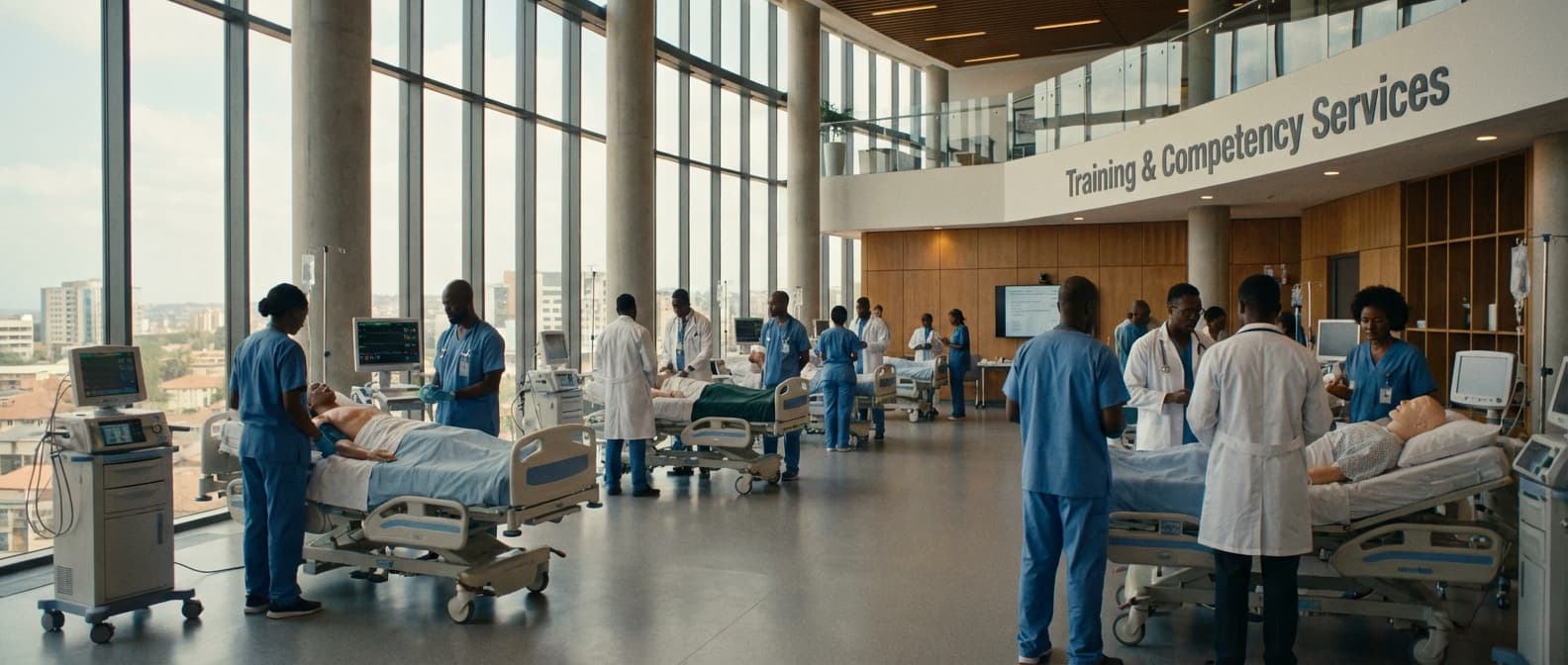
Ultrasound Application Training Service (Protocol-Based) in Central African Republic
Engineering Excellence & Technical Support
Ultrasound Application Training Service (Protocol-Based) High-standard technical execution following OEM protocols and local regulatory frameworks.
Standardized Ultrasound Protocols for Central Africa
Our training program delivers a comprehensive suite of globally recognized ultrasound protocols, meticulously adapted for the specific diagnostic needs and common pathologies encountered in the Central African Republic. This ensures consistent, high-quality image acquisition and interpretation, fostering reliable diagnostic outcomes.
Hands-on, Protocol-Driven Skill Development
Experience intensive, practical training sessions guided by our expert sonographers. We focus on precise adherence to protocol steps, enabling participants to build muscle memory and confidence in performing examinations efficiently and effectively, even in resource-limited settings.
Remote Mentorship & Protocol Adherence Support
Leverage our advanced tele-mentorship platform for ongoing support. Our trainers can remotely review case studies, provide feedback on protocol adherence, and offer guidance to ensure continuous skill refinement and problem-solving, extending learning beyond the initial training period.
What Is Ultrasound Application Training Service (Protocol-based) In Central African Republic?
Ultrasound Application Training Service (Protocol-Based) in the Central African Republic refers to specialized, structured educational programs designed to equip healthcare professionals with the skills and knowledge to perform and interpret diagnostic ultrasound examinations according to established medical protocols. This service is crucial for enhancing diagnostic capabilities and improving patient outcomes in resource-limited settings where access to specialized imaging expertise may be constrained. The protocol-based approach ensures standardized, reproducible, and clinically relevant ultrasound examinations, thereby mitigating variations in practice and maximizing the utility of the ultrasound modality.
| Target Audience | Primary Needs Addressed | Typical Use Cases |
|---|---|---|
| Radiologists (less experienced or newly trained) | Enhance specific application competencies, standardize diagnostic approaches, ensure protocol adherence. | Routine obstetric scans, basic abdominal evaluations, initial trauma assessments. |
| General Practitioners and Family Physicians | Introduce point-of-care ultrasound (POCUS) capabilities, improve initial diagnostic screening, facilitate timely referrals. | FAST scans in emergency departments, basic pelvic and abdominal assessments in primary care clinics, fetal viability assessment. |
| Obstetricians and Gynecologists | Refine diagnostic accuracy in prenatal care, improve detection of fetal anomalies, standardize pelvic imaging. | First-trimester dating scans, anomaly scans, monitoring of high-risk pregnancies, gynecological pathology assessment. |
| Surgeons (especially in emergency/trauma settings) | Integrate bedside ultrasound for rapid assessment of trauma, surgical planning, and intra-operative guidance. | Rapid assessment of internal bleeding (FAST), identification of fluid collections, guiding biopsies or aspirations. |
| Nurses and Clinical Officers | Empower allied health professionals to perform essential diagnostic ultrasound examinations, expanding access to care in remote areas. | Screening for hydronephrosis in suspected urinary tract obstructions, basic cardiac assessments in critical care, identification of pleural effusions. |
Key Components of Ultrasound Application Training Service (Protocol-Based)
- Protocol Development and Standardization: Adapting or developing universally recognized ultrasound examination protocols for specific anatomical regions or clinical indications (e.g., FAST protocol for trauma, obstetric ultrasound protocols, abdominal ultrasound protocols).
- Theoretical Instruction: Comprehensive lectures and didactic sessions covering ultrasound physics, instrumentation, image optimization, artifact identification, and anatomical/pathological correlations relevant to the specific protocols.
- Practical Hands-on Training: Supervised sessions on phantoms and, where ethically and logistically feasible, live patients, focusing on accurate probe manipulation, systematic scanning techniques as dictated by the protocols, and optimal image acquisition.
- Image Interpretation and Reporting: Training on the interpretation of ultrasound findings, identification of normal and abnormal structures, and the generation of standardized, protocol-driven reports.
- Competency Assessment: Evaluation of trainees' skills through theoretical examinations, practical scanning assessments, and case-based scenarios to ensure proficiency in adhering to protocols.
- Ongoing Support and Mentorship: Provision of continued access to trainers or experienced sonographers for guidance, case review, and troubleshooting post-training.
- Equipment and Logistical Considerations: Training often includes modules on basic ultrasound machine maintenance, troubleshooting, and optimizing workflow in the specific operational environment of the Central African Republic.
Who Needs Ultrasound Application Training Service (Protocol-based) In Central African Republic?
ultrasound applications are becoming increasingly vital in medical diagnostics, even in regions with limited resources like the Central African Republic (CAR). To ensure optimal utilization and accurate interpretation of ultrasound technology, dedicated training services are crucial. This document outlines who specifically needs protocol-based ultrasound application training in CAR and identifies the key departments and individuals who would benefit most.
| Target Customer Group | Key Departments/Units Benefiting | Rationale for Training Need |
|---|---|---|
| Physicians (General Practitioners, Specialists) | Radiology, Gynecology, Obstetrics, Pediatrics, Internal Medicine, Surgery, Emergency Medicine | To improve diagnostic accuracy for a wide range of conditions, from routine prenatal scans to complex pathologies; to integrate ultrasound into daily clinical practice for faster decision-making. |
| Radiographers/Sonographers | Radiology, Diagnostic Imaging Centers | To master standardized protocols for image acquisition, leading to high-quality, reproducible images essential for accurate diagnosis; to specialize in specific ultrasound modalities (e.g., obstetric, abdominal, vascular). |
| Midwives | Maternity Wards, Antenatal Clinics, Rural Health Centers | To perform essential obstetric ultrasound scans for monitoring fetal well-being, detecting high-risk pregnancies, and improving maternal and neonatal outcomes; to provide basic point-of-care ultrasound in remote areas. |
| Nurses (with diagnostic responsibilities) | Emergency Departments, Intensive Care Units, Surgical Wards | To acquire skills in point-of-care ultrasound (POCUS) for rapid assessment of trauma patients, hemodynamic status, and fluid management, thereby improving patient care in critical situations. |
| Healthcare Administrators/Managers | Hospital Administration, Ministry of Health | To understand the benefits and requirements of ultrasound services, enabling better resource allocation, equipment procurement, and staff development planning. |
| NGO Healthcare Workers | Field Hospitals, Mobile Clinics, Community Health Programs | To equip staff with the necessary skills to provide essential diagnostic imaging in underserved and remote populations, addressing critical gaps in healthcare access. |
| Medical Educators | Medical Schools, Nursing Schools, Paramedic Training Centers | To integrate evidence-based ultrasound curriculum into their teaching programs, ensuring the next generation of healthcare professionals is proficient in this essential diagnostic tool. |
Target Customers for Ultrasound Application Training Service (Protocol-Based) in Central African Republic
- Healthcare professionals (doctors, sonographers, midwives, nurses) working in public and private healthcare facilities.
- Medical imaging departments within hospitals and clinics.
- Maternal and child health (MCH) programs and facilities.
- Emergency and trauma care units.
- Diagnostic laboratories offering imaging services.
- Non-governmental organizations (NGOs) involved in healthcare delivery.
- Medical training institutions and teaching hospitals.
- Individual practitioners seeking to enhance their diagnostic capabilities.
- Technicians responsible for the maintenance and basic troubleshooting of ultrasound equipment.
Ultrasound Application Training Service (Protocol-based) Process In Central African Republic
This document outlines the workflow for a Protocol-Based Ultrasound Application Training Service in the Central African Republic, detailing the process from initial inquiry to successful execution of the training program. The service aims to equip healthcare professionals with the necessary skills and knowledge to effectively utilize ultrasound technology for diagnostic purposes, adhering to standardized protocols.
| Phase | Stage | Description | Key Activities | Responsible Parties | Deliverables |
|---|---|---|---|---|---|
| 1: Inquiry and Needs Assessment | Initial Contact | Prospective client (healthcare facility, NGO, government agency) expresses interest in ultrasound training. | Submit inquiry form/email; Initial phone/video call to understand basic requirements (number of trainees, desired modules, location). | Prospective Client, Training Service Provider | Inquiry acknowledged; Preliminary understanding of needs. |
| 1: Inquiry and Needs Assessment | Detailed Needs Assessment | In-depth understanding of the client's specific training requirements, existing infrastructure, and target audience. | Site visit (if feasible) or detailed questionnaire/interviews; Assessment of current skill levels, equipment availability, and specific clinical needs; Identification of target ultrasound applications and required protocols. | Training Service Provider, Prospective Client | Needs Assessment Report; List of required training modules and protocols. |
| 2: Proposal Development and Agreement | Proposal Creation | Development of a comprehensive training proposal tailored to the assessed needs. | Outline training objectives, curriculum, duration, methodology, trainers' profiles, equipment requirements, logistical arrangements, and detailed cost breakdown; Inclusion of specific protocol-based training approach. | Training Service Provider | Formal Training Proposal. |
| 2: Proposal Development and Agreement | Negotiation and Agreement | Review of the proposal by the client and negotiation of terms and conditions. | Discussion and clarification of proposal details; Finalization of contract/Memorandum of Understanding (MOU). | Prospective Client, Training Service Provider | Signed Contract/MOU; Confirmed training scope and budget. |
| 3: Pre-Training Preparation | Curriculum and Material Finalization | Adaptation and finalization of training materials based on the agreed protocols and local context. | Translating materials (if necessary); Developing case studies relevant to the Central African Republic context; Confirming use of standardized ultrasound protocols (e.g., WHO guidelines). | Training Service Provider | Finalized Training Curriculum; Training Manuals and Handouts (in relevant languages). |
| 3: Pre-Training Preparation | Logistics and Scheduling | Arrangement of all logistical aspects for the training. | Booking training venue; Arranging travel and accommodation for trainers and trainees (if applicable); Ensuring availability of ultrasound machines, phantoms, and other training equipment; Scheduling training dates. | Training Service Provider, Prospective Client | Confirmed Training Schedule; Secured Venue and Equipment. |
| 3: Pre-Training Preparation | Trainer Assignment | Selection and assignment of qualified trainers with expertise in the specific ultrasound applications and protocols. | Assigning lead trainers and support staff based on specialization and experience. | Training Service Provider | List of Assigned Trainers. |
| 3: Pre-Training Preparation | Participant Confirmation | Confirmation of participating trainees and their details. | Receiving participant lists from the client; Collecting necessary demographic information. | Prospective Client, Training Service Provider | Final Participant List. |
| 4: Training Execution | On-site Training Delivery | Conducting the training program as per the agreed schedule and curriculum. | Theoretical sessions (lectures, presentations); Practical hands-on sessions with ultrasound machines and phantoms; Case-based learning and discussions; Adherence to standardized protocols throughout practical sessions. | Training Service Provider (Trainers) | Delivered Training Sessions. |
| 4: Training Execution | Competency Assessment | Evaluating the trainees' understanding and practical skills. | Quizzes, written tests, practical skill assessments (observation of scanning techniques and protocol adherence), case study evaluations. | Training Service Provider (Trainers) | Trainee Performance Assessments. |
| 4: Training Execution | Feedback Collection | Gathering feedback from trainees on the training experience. | Distribution and collection of feedback forms. | Training Service Provider | Trainee Feedback Forms. |
| 5: Post-Training Support and Evaluation | Reporting and Certification | Providing a comprehensive report on the training and issuing certificates. | Compiling a training report including attendance, assessment results, and key learnings; Issuing certificates of completion to successful trainees. | Training Service Provider | Training Report; Certificates of Completion. |
| 5: Post-Training Support and Evaluation | Follow-up Support | Offering ongoing support to trainees and the healthcare facility. | Remote support (email, phone) for case consultations; Troubleshooting technical issues; Providing additional resources or reference materials. | Training Service Provider | Post-training support provided. |
| 5: Post-Training Support and Evaluation | Impact Evaluation | Assessing the long-term impact of the training on clinical practice. | Follow-up surveys or site visits to evaluate skill retention and application of learned protocols in real-world clinical scenarios; Measuring improvements in diagnostic accuracy or patient care. | Training Service Provider, Client | Impact Evaluation Report (optional, depending on agreement). |
Ultrasound Application Training Service (Protocol-Based) Workflow
- Phase 1: Inquiry and Needs Assessment
- Phase 2: Proposal Development and Agreement
- Phase 3: Pre-Training Preparation
- Phase 4: Training Execution
- Phase 5: Post-Training Support and Evaluation
Ultrasound Application Training Service (Protocol-based) Cost In Central African Republic
The cost of Ultrasound Application Training Services (Protocol-Based) in the Central African Republic (CAR) is influenced by several key factors, leading to a range of prices primarily denominated in the local currency, the Central African CFA franc (XAF). These services are crucial for medical professionals seeking to enhance their diagnostic skills in specific ultrasound modalities. Understanding these pricing determinants is vital for institutions and individuals budgeting for such training.
| Training Scope/Type | Estimated Cost Range (XAF) Per Participant | Notes |
|---|---|---|
| Introductory Ultrasound Application (e.g., Basic Abdominal Scan) | 150,000 - 300,000 | Typically 1-3 days. Focus on fundamental protocols and image acquisition. |
| Intermediate Ultrasound Application (e.g., Obstetrics & Gynecology Fundamentals) | 250,000 - 500,000 | Typically 3-5 days. Covers more detailed protocols, common pathologies, and advanced scanning techniques. |
| Advanced Ultrasound Application (e.g., Specialized Cardiac or Vascular Studies) | 400,000 - 800,000+ | Typically 5-10 days or modular. In-depth protocol training, complex case interpretation, and potentially certification preparation. Might involve international trainers. |
| Comprehensive Protocol-Based Training (Multiple Modalities) | 600,000 - 1,500,000+ | Multi-week programs or a series of modules. Covers a broad spectrum of applications with strict adherence to established protocols. Often includes significant hands-on practice and assessment. |
| On-Site Customized Training (Group) | Negotiable (often project-based) | Cost depends heavily on the number of participants, duration, and specific protocols. Institutions often negotiate directly for tailored programs. |
Key Factors Influencing Ultrasound Application Training Cost in CAR:
- {"title":"Duration and Intensity of Training","description":"Longer, more intensive training programs covering multiple applications or advanced techniques will naturally incur higher costs compared to shorter, introductory sessions. The number of hours dedicated to both theoretical lectures and practical, hands-on sessions is a primary driver of pricing."}
- {"title":"Expertise of Trainers","description":"The qualifications, experience, and international recognition of the ultrasound specialists conducting the training significantly impact the price. Highly sought-after experts or those with specialized sub-specialty knowledge often command higher fees."}
- {"title":"Training Location and Venue","description":"Whether the training is conducted on-site at a hospital or clinic, at a dedicated training center, or at a remote location will affect costs. On-site training may reduce travel expenses for participants but might require the training provider to factor in logistics for bringing equipment and personnel. The cost of renting suitable facilities, if not provided by the host institution, will also be a factor."}
- {"title":"Equipment and Materials Provided","description":"The availability and quality of ultrasound machines for hands-on practice, phantoms, training models, and educational materials (e.g., manuals, digital resources) contribute to the overall cost. If participants are expected to bring their own equipment, this might slightly reduce the direct training fee but still requires the training provider to have equipment for demonstration and backup."}
- {"title":"Scope of Ultrasound Applications Covered","description":"Training focused on a broad range of ultrasound applications (e.g., general radiology, obstetrics, cardiology, musculoskeletal) will generally be more expensive than training limited to a single, specific application. Protocol-based training implies adherence to established standards, which may require more in-depth coverage."}
- {"title":"Certification and Assessment","description":"If the training includes formal assessment, examinations, and the issuance of a recognized certification upon successful completion, this will add to the cost due to the resources required for evaluation and administration."}
- {"title":"Provider Reputation and Accreditation","description":"Training services offered by well-established institutions with a strong reputation and any relevant accreditations (e.g., from medical associations) may charge a premium for the perceived quality and credibility of their programs."}
- {"title":"Participant Numbers","description":"While not always the case, some training providers might offer slight discounts for larger groups or a higher per-person rate for very small, individualized sessions."}
- {"title":"Logistical and Administrative Overhead","description":"This includes costs associated with marketing, participant registration, scheduling, administrative support, and any travel or accommodation expenses for trainers if they are not local."}
Affordable Ultrasound Application Training Service (Protocol-based) Options
Our Affordable Ultrasound Application Training Service (Protocol-Based) offers a structured and cost-effective way for healthcare professionals to master essential ultrasound techniques. We focus on practical, protocol-driven learning, ensuring you gain the skills needed for accurate diagnosis and patient care. Our training is designed to be accessible, with flexible options to suit various budgets and learning preferences.
| Value Bundle Name | Included Modules/Applications | Target Audience | Standard Price (Example) | Key Cost-Saving Features |
|---|---|---|---|---|
| Foundation Essentials Bundle | Basic Physics & Knobology, Abdomen (Limited Scope), Pelvis (Transabdominal) | Entry-level sonographers, nursing students, medical residents | $750 | Focuses on core skills, reducing time spent on advanced topics initially. Group discounts available. |
| Core Clinical Applications Bundle | Abdomen (Comprehensive), Pelvis (Transvaginal & Transabdominal), OB (First Trimester) | Sonographers seeking general proficiency, radiologists, OB/GYN residents | $1200 | Bundled modules offer a significant discount compared to individual course purchases. Early bird registration discounts. |
| Specialty Focus Bundle (e.g., Vascular Access) | Basic Physics & Knobology, Vascular Access Protocols (e.g., PICC lines, central lines) | Nurses, anesthesiologists, critical care physicians | $900 | Highly specialized content for targeted skill development, reducing learning time and resources. Online-only modules for further savings. |
| Comprehensive Practice Management Bundle | All Core Clinical Applications + Introduction to Doppler, Basic Echocardiography Principles | Experienced sonographers seeking cross-training, department managers | $1800 | Maximizes learning breadth at a reduced per-module cost. Includes access to supplementary online resources. |
Key Features & Benefits
- Protocol-Driven Curriculum: Learn standardized scanning protocols for common applications, ensuring consistency and accuracy.
- Hands-on Practice: Emphasis on practical scanning sessions with expert guidance.
- Experienced Instructors: Learn from certified sonographers and experienced medical professionals.
- Flexible Scheduling: Options for in-person, hybrid, and online modules.
- Certification Preparation: Training designed to prepare you for relevant professional certifications.
- Cost-Effective Solutions: Designed to provide high-value training at competitive prices.
Verified Providers In Central African Republic
Navigating healthcare options in the Central African Republic (CAR) requires trust and reliability. When seeking verified healthcare providers, understanding the credentials of organizations like Franance Health becomes paramount. This document outlines why Franance Health stands out as a superior choice for individuals and organizations in the CAR, focusing on their commitment to quality, accessibility, and ethical practices.
| Credential Aspect | Franance Health's Assurance | Benefits for Patients/Organizations |
|---|---|---|
| Medical Licensure & Certification | Rigorous verification of all medical professionals' licenses and certifications from recognized bodies. | Ensures that healthcare services are provided by legally qualified and competent professionals. |
| Professional Experience & Specialization | Thorough vetting of professional backgrounds, specializations, and areas of expertise. | Connects patients with the most suitable specialists for their specific medical needs. |
| Facility Standards & Equipment | Assessment of healthcare facilities for adequate infrastructure, cleanliness, and availability of essential medical equipment. | Guarantees a safe and well-equipped environment for treatment and procedures. |
| Ethical Conduct & Patient Rights | Strict adherence to ethical medical practices, including patient confidentiality, informed consent, and non-discrimination. | Promotes trust, respect, and protection of patient rights throughout their healthcare journey. |
| Continuing Professional Development | Encourages and verifies ongoing training and professional development for their network providers. | Ensures that healthcare professionals remain updated with the latest medical advancements and best practices. |
Why Franance Health is the Best Choice for Verified Healthcare in CAR:
- Unwavering Commitment to Quality: Franance Health adheres to stringent international healthcare standards, ensuring that all partner providers meet rigorous criteria for medical expertise, facility infrastructure, and patient care protocols.
- Extensive Network of Verified Professionals: They have cultivated a robust network of doctors, specialists, and healthcare facilities across the CAR that have undergone a thorough vetting process, guaranteeing their qualifications and ethical standing.
- Focus on Accessibility and Affordability: Understanding the unique challenges in the CAR, Franance Health prioritizes making quality healthcare accessible and affordable through innovative service delivery models and partnerships.
- Transparent Credentialing Process: Franance Health's credentialing process is transparent and rigorous, involving verification of licenses, certifications, professional history, and adherence to ethical guidelines for all listed providers.
- Patient-Centric Approach: Their services are designed with the patient at the core, offering comprehensive support from initial consultation to follow-up care, ensuring a seamless and positive healthcare experience.
- Commitment to Ethical Practices and Patient Safety: Franance Health champions the highest ethical standards in healthcare, prioritizing patient safety, confidentiality, and informed consent in all their operations and partnerships.
- Adaptability to Local Needs: They possess a deep understanding of the specific health challenges and cultural nuances within the Central African Republic, allowing them to tailor their services effectively.
Scope Of Work For Ultrasound Application Training Service (Protocol-based)
This Scope of Work (SOW) outlines the requirements for a comprehensive ultrasound application training service, delivered in a protocol-based format. The service aims to equip ultrasound operators with the knowledge and practical skills necessary to perform specific ultrasound examinations according to established protocols. The training will focus on both theoretical understanding of ultrasound physics and anatomy relevant to each application, as well as hands-on proficiency in image acquisition, optimization, and interpretation. Technical deliverables will include training materials, competency assessments, and certification documentation. Standard specifications will ensure consistency and quality across all training modules.
| Parameter | Specification | Notes |
|---|---|---|
| Training Modality | Blended learning approach (online modules + in-person practical sessions) | Adaptable based on client needs and geographic location. |
| Protocol Adherence | Strict adherence to pre-defined, evidence-based ultrasound protocols for each application. | Protocols to be reviewed and approved by the client prior to training commencement. |
| Hands-on Practice Ratio | Minimum of 60% of training time dedicated to hands-on scanning with live models or phantoms. | Ratio may be adjusted based on the complexity of the application. |
| Image Quality Standards | Participants will be trained to achieve diagnostic-quality images as defined by international standards (e.g., AIUM guidelines). | Focus on optimal transducer selection, machine settings, and manipulation techniques. |
| Anatomical Correlation | Thorough review of relevant anatomy and physiology for each ultrasound application. | Emphasis on understanding how anatomical variations impact image acquisition and interpretation. |
| Troubleshooting and Artifact Management | Training on common ultrasound artifacts and strategies for their reduction or mitigation. | Development of problem-solving skills for challenging scans. |
| Reporting and Documentation | Guidance on appropriate reporting and documentation of ultrasound findings. | May include template examples for specific applications. |
| Trainer-Participant Ratio | Maximum of 1:4 for hands-on practical sessions. | Ensures adequate individual attention and feedback. |
| Assessment Methodology | Multi-faceted assessment including theoretical knowledge recall and practical image acquisition proficiency. | Pass mark for competency assessment to be mutually agreed upon. |
| Training Environment | Access to well-maintained ultrasound machines with appropriate probes for each application. | Clean and well-lit training space conducive to learning. |
| Customization Options | Ability to customize training content to include specific institutional protocols or advanced techniques. | Requires advance notice and agreement on scope expansion. |
Technical Deliverables
- Detailed training manuals and presentations for each ultrasound application protocol.
- Case study library with annotated ultrasound images and videos for each application.
- Interactive simulation modules or access to ultrasound simulators for hands-on practice.
- Competency assessment tools, including written examinations and practical image acquisition evaluations.
- Certification of completion for participants who successfully meet competency standards.
- Post-training support resources, such as online forums or access to expert consultation (optional).
- Trainer qualification reports and ongoing trainer development plans.
Service Level Agreement For Ultrasound Application Training Service (Protocol-based)
This Service Level Agreement (SLA) outlines the guaranteed response times and uptime for the Ultrasound Application Training Service (Protocol-Based), provided by [Your Company Name] to [Client Name]. This SLA is effective from [Start Date] to [End Date].
| Issue Category | Definition | Initial Response Time | Target Resolution Time |
|---|---|---|---|
| Critical | Complete inability to access or utilize core functionalities of the ultrasound application for training purposes, severely impacting scheduled training sessions. Requires immediate attention. | 1 Hour | 4 Business Hours |
| Major | Significant degradation of core application functionality impacting multiple users or essential training workflows. Requires prompt attention. | 4 Business Hours | 1 Business Day |
| Minor | Non-critical functionality issues, cosmetic defects, or user assistance requests that do not prevent core training activities. Can be addressed with standard support procedures. | 8 Business Hours | 3 Business Days |
Service Level Objectives (SLOs)
- Service Availability: The Ultrasound Application Training Service will be available for use by authorized users at least 99.9% of the time during scheduled training hours.
- Response Time for Critical Issues: Support requests categorized as 'Critical' will receive an initial response within 1 hour.
- Response Time for Major Issues: Support requests categorized as 'Major' will receive an initial response within 4 business hours.
- Response Time for Minor Issues: Support requests categorized as 'Minor' will receive an initial response within 8 business hours.
- Resolution Time for Critical Issues: A resolution or a viable workaround for 'Critical' issues will be provided within 4 business hours.
- Resolution Time for Major Issues: A resolution or a viable workaround for 'Major' issues will be provided within 1 business day.
- Resolution Time for Minor Issues: A resolution or a viable workaround for 'Minor' issues will be provided within 3 business days.
Frequently Asked Questions

Ready when you are
Let's scope your Ultrasound Application Training Service (Protocol-Based) in Central African Republic project in Central African Republic.

Scaling healthcare logistics and technical systems across the entire continent.