
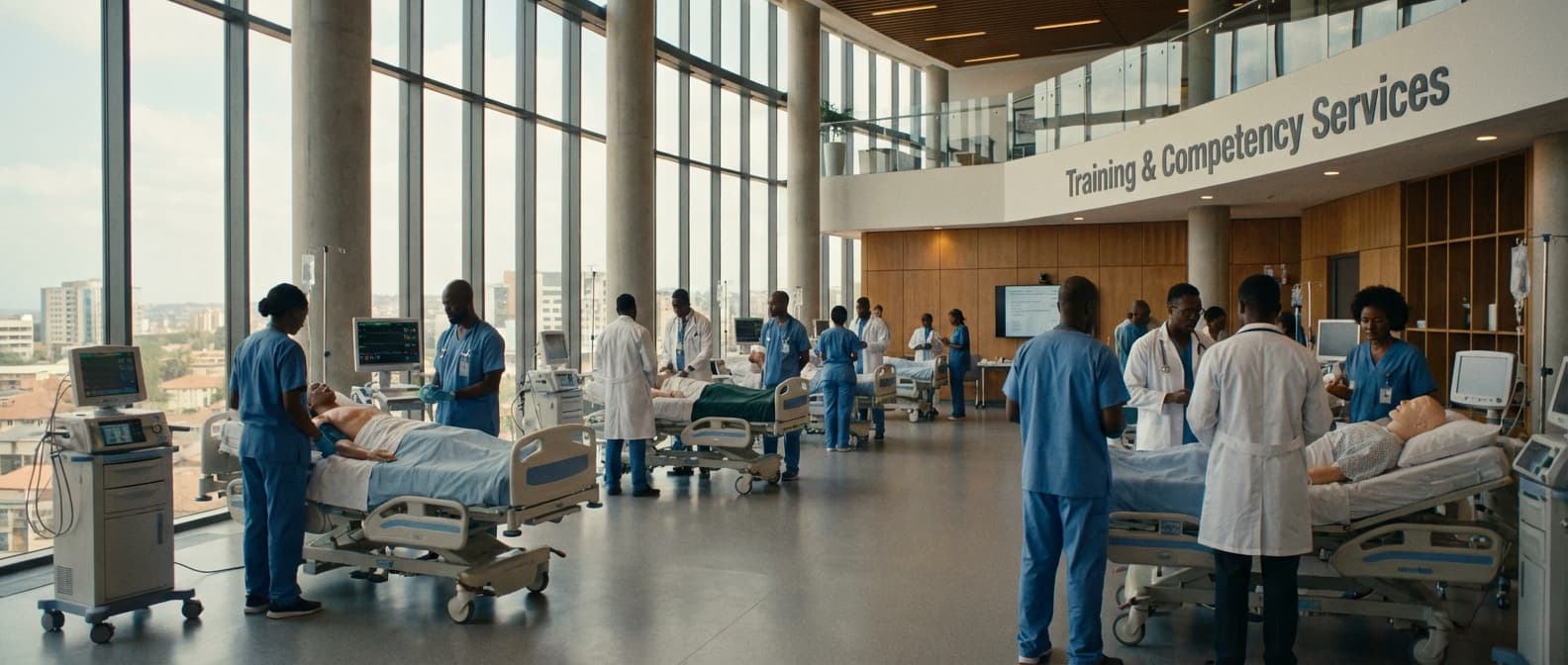
MRI Operator Training Service (Radiographers) in Central African Republic
Engineering Excellence & Technical Support
MRI Operator Training Service (Radiographers) High-standard technical execution following OEM protocols and local regulatory frameworks.
Master Advanced MRI Techniques
Gain hands-on proficiency in acquiring high-quality MRI scans for diverse anatomical regions, mastering protocols for neurological, musculoskeletal, and abdominal imaging, and understanding the latest advancements in contrast-enhanced imaging. Our training equips radiographers with the skills to optimize image quality and minimize artifacts, crucial for accurate diagnosis in resource-limited settings.
Enhance Patient Safety & Comfort
Learn best practices for patient screening, preparation, and management during MRI examinations. Our modules focus on effective communication, anxiety reduction techniques, and the safe administration of contrast agents, ensuring a positive and secure experience for all patients, including those with unique cultural considerations prevalent in the Central African Republic.
Develop Essential Troubleshooting Skills
Become adept at identifying and resolving common MRI equipment malfunctions and image quality issues. This training provides practical strategies for maintaining optimal scanner performance and troubleshooting challenges encountered in diverse clinical environments, empowering radiographers to ensure continuous service delivery and minimize downtime.
What Is Mri Operator Training Service (Radiographers) In Central African Republic?
MRI Operator Training Service (Radiographers) in the Central African Republic refers to specialized educational programs designed to equip radiographers and other qualified medical imaging professionals with the necessary theoretical knowledge and practical skills to operate Magnetic Resonance Imaging (MRI) scanners safely and effectively. This service addresses the critical need for skilled personnel in advanced diagnostic imaging within the country, aiming to enhance diagnostic accuracy and patient care in a resource-limited setting. The training typically encompasses a comprehensive curriculum covering the physics of MRI, patient safety protocols, imaging protocols, image acquisition techniques, post-processing, quality control, and troubleshooting. It is delivered through a combination of didactic lectures, hands-on simulator training, and supervised clinical experience on operational MRI systems.
| Who Needs MRI Operator Training? | Typical Use Cases | ||||||||||||
|---|---|---|---|---|---|---|---|---|---|---|---|---|---|
| Radiographers with existing experience in diagnostic imaging (e.g., X-ray, CT) seeking to specialize in MRI. | Setting up and operating new MRI facilities in hospitals and diagnostic centers. | Existing MRI operators requiring refresher courses or training on new hardware/software. | Improving the diagnostic capabilities of healthcare institutions in urban and potentially remote areas. | Medical imaging technologists working in public and private healthcare sectors. | Acquiring specialized imaging for neurological conditions (e.g., stroke, tumors, multiple sclerosis). | Radiology residents and registrars undergoing postgraduate training. | Diagnosing musculoskeletal injuries and abnormalities (e.g., ligament tears, cartilage damage). | Healthcare professionals involved in the planning and implementation of diagnostic imaging services. | Evaluating abdominal and pelvic organs for pathologies (e.g., liver lesions, ovarian cysts). | Nurses and technicians with a background in patient care and a desire to work in advanced imaging departments. | Cardiovascular imaging for assessing heart structure and function. | Researchers and academics involved in medical imaging studies. | Oncological imaging for staging and monitoring treatment response. |
Key Components of MRI Operator Training Service for Radiographers
- MRI Physics and Principles: Understanding signal generation, contrast mechanisms, pulse sequences, and image reconstruction.
- Patient Safety and Contraindication Assessment: Identifying potential risks, screening patients for metallic implants and other contraindications, and implementing safety protocols (e.g., quench procedures).
- MRI Protocols and Techniques: Developing and applying appropriate imaging protocols for various anatomical regions and pathologies, optimizing image quality, and understanding sequence parameters.
- Image Acquisition and Optimization: Practical skills in positioning patients, operating the MRI console, and adjusting parameters for optimal image acquisition.
- Image Post-processing and Analysis: Basic principles of image manipulation, windowing, and interpretation support.
- Quality Assurance and Quality Control (QA/QC): Implementing procedures to ensure consistent image quality and equipment performance.
- Troubleshooting and Artifact Management: Identifying common artifacts and implementing strategies for their reduction or elimination.
- Ethical and Legal Considerations: Understanding patient confidentiality, informed consent, and regulatory compliance.
Who Needs Mri Operator Training Service (Radiographers) In Central African Republic?
MRI Operator Training Service (Radiographers) in the Central African Republic is essential for numerous healthcare facilities and government bodies aiming to enhance diagnostic imaging capabilities. This service is crucial for ensuring the safe, effective, and efficient operation of MRI machines, leading to improved patient care and more accurate diagnoses. The primary beneficiaries are institutions and individuals involved in medical imaging and healthcare delivery across the nation.
| Target Customer Category | Specific Departments/Roles | Rationale for Training Need |
|---|---|---|
| Hospitals (Public and Private) | Radiology Department, Imaging Services, Medical Physics Department | To ensure qualified radiographers operate MRI scanners, interpret images correctly, manage patient safety protocols, and maintain equipment. This directly impacts diagnostic accuracy and patient outcomes. |
| Radiology Clinics and Imaging Centers | Lead Radiographers, MRI Technologists, Imaging Managers | To provide specialized training for staff operating advanced MRI equipment, ensuring they meet national and international standards for diagnostic imaging services. |
| Ministry of Health and Public Health Agencies | Department of Medical Equipment, Public Health Training Units, Planning and Development Units | To establish training frameworks, set standards for MRI operation, and ensure a pool of skilled personnel for public healthcare facilities. This supports national health infrastructure development. |
| Non-Governmental Organizations (NGOs) focused on Healthcare | Medical Directors, Project Managers, Clinical Staff | For NGOs operating or supporting healthcare facilities that have or plan to acquire MRI technology. Training ensures their deployed staff can utilize these critical diagnostic tools effectively. |
| International Aid Organizations | Project Coordinators, Medical Equipment Specialists | Organizations involved in donating or installing MRI equipment need to ensure local staff are trained to operate and maintain it, maximizing the impact of their aid investments. |
| Medical Training Institutions and Universities | Radiography/Medical Imaging Departments, Continuing Education Units | To integrate up-to-date MRI operator training into their curriculum, producing graduates who are immediately employable and proficient in modern imaging techniques. |
Target Customers and Departments for MRI Operator Training Service (Radiographers) in Central African Republic
- Hospitals (Public and Private)
- Radiology Clinics and Imaging Centers
- Ministry of Health and Public Health Agencies
- Non-Governmental Organizations (NGOs) focused on Healthcare
- International Aid Organizations
- Medical Training Institutions and Universities
Mri Operator Training Service (Radiographers) Process In Central African Republic
This document outlines the standard workflow for providing MRI Operator Training Services to radiographers in the Central African Republic, from the initial inquiry to the successful execution of the training program. The process is designed to be clear, efficient, and tailored to the specific needs of healthcare facilities and individual radiographers in the region.
| Stage | Description | Key Activities | Responsible Parties | Deliverables/Outcomes |
|---|---|---|---|---|
| Initial Inquiry and Needs Assessment | The process begins when a healthcare facility or individual radiographer expresses interest in MRI operator training. | Receive and acknowledge inquiry. Conduct a detailed needs assessment (e.g., existing skill levels, specific MRI equipment, desired training duration, trainee numbers, language preferences, logistical considerations). Discuss training objectives and expected outcomes. | Client (Facility/Radiographer), Training Service Provider (TSP) | Clear understanding of training requirements, identified skill gaps, confirmed training scope and objectives. |
| Proposal Development and Quotation | Based on the needs assessment, a tailored training proposal and cost estimate are prepared. | Develop a comprehensive training proposal outlining curriculum, duration, methodology (theoretical/practical), trainer qualifications, venue requirements, and a detailed breakdown of costs (including travel, accommodation, materials, and training fees). Submit the proposal and quotation to the client. | TSP, Client | Formal training proposal with curriculum, timeline, and pricing. Client's understanding of the proposed training package. |
| Agreement and Contract Finalization | Upon client acceptance of the proposal, a formal agreement is established. | Review and negotiate proposal details. Finalize contract terms and conditions. Sign the agreement, specifying payment schedules, cancellation policies, and any specific clauses. Issue invoice for initial deposit or full payment as per contract. | Client, TSP | Signed training contract/agreement. Confirmed booking of training services. Initial payment received. |
| Pre-Training Preparations | Logistics and administrative tasks are completed to ensure a smooth training experience. | Confirm trainee details. Schedule training dates and times. Arrange travel and accommodation for trainers (if applicable). Prepare training materials (manuals, presentations, case studies). Coordinate with the client on venue setup (e.g., classroom, access to MRI scanner for practical sessions). Disseminate pre-reading materials or pre-assessment questionnaires to trainees (optional). | TSP, Client | Confirmed training schedule. Prepared training environment and materials. Trainees informed of schedule and requirements. |
| Training Execution | The core training program is delivered to the radiographers. | Deliver theoretical modules (e.g., MRI physics, safety protocols, image acquisition techniques, artifact reduction). Conduct practical sessions (e.g., hands-on scanner operation, protocol optimization, image interpretation basics). Provide case study analysis and problem-solving exercises. Facilitate Q&A sessions. Administer mid-training assessments or quizzes (optional). | TSP (Trainers), Trainees | Knowledge and skill transfer. Enhanced understanding of MRI operation and safety. Practical proficiency development. |
| Post-Training Support and Evaluation | Following the training, support is provided, and the effectiveness of the program is assessed. | Conduct post-training assessments or final examinations. Provide certificates of completion. Offer follow-up support (e.g., remote consultation, Q&A sessions via email/phone) for a defined period. Gather feedback from trainees and the client through evaluation forms. Prepare a post-training report summarizing achievements, challenges, and recommendations for future training. Finalize payment as per contract. | TSP, Client, Trainees | Trainees receive certificates. Client receives a comprehensive training report. Feedback collected for continuous improvement. Long-term skill development supported. |
Key Stages of MRI Operator Training Service
- Initial Inquiry and Needs Assessment
- Proposal Development and Quotation
- Agreement and Contract Finalization
- Pre-Training Preparations
- Training Execution
- Post-Training Support and Evaluation
Mri Operator Training Service (Radiographers) Cost In Central African Republic
Providing accurate cost estimates for MRI Operator Training services for radiographers in the Central African Republic (CAR) is challenging due to several factors. The CAR has a developing healthcare infrastructure and limited specialized training providers, which can influence availability and pricing. Costs are typically negotiated directly with training institutions or individual instructors, and may not be standardized. Furthermore, the specific duration, depth, and practical component of the training will significantly impact the overall expense. The current economic climate and the potential need for specialized equipment or simulation tools for hands-on practice also play a role. Given these complexities, the following information provides a general overview of potential pricing factors and an estimated range in local currency (Central African CFA franc - XAF).
| Training Type/Duration | Estimated Cost Range (XAF) |
|---|---|
| Basic MRI Operator Theory Course (e.g., 1-2 weeks, introductory) | 250,000 - 750,000 XAF |
| Comprehensive MRI Operator Training (e.g., 3-4 weeks, including practical elements) | 700,000 - 1,500,000 XAF |
| Advanced MRI Techniques/Specialized Module (e.g., per module, 3-5 days) | 400,000 - 1,000,000 XAF |
| On-site Training with Travel & Accommodation (additional, highly variable) | Negotiable (can add 30-60% to base cost) |
Key Pricing Factors for MRI Operator Training (Radiographers) in the Central African Republic
- Training Provider: Whether the training is offered by a local healthcare institution, an international organization, or a private training company will affect the cost. International providers may be more expensive due to travel and logistical overhead.
- Duration and Intensity: The number of hours, days, or weeks of training, as well as the theoretical and practical components, will directly correlate with the price.
- Curriculum Scope: A comprehensive curriculum covering all aspects of MRI operation, safety protocols, image interpretation basics, and advanced techniques will command a higher price than a foundational course.
- Instructor Expertise: Highly experienced and certified MRI radiographers or specialized trainers will likely charge more for their services.
- Location of Training: If training needs to be conducted on-site at a specific hospital or clinic, additional travel and accommodation costs for the trainer may be incurred.
- Materials and Resources: The cost of training manuals, access to simulation software, or any specialized equipment used for practical exercises will be factored into the overall price.
- Accreditation and Certification: Training programs leading to recognized certifications may be more expensive but offer greater value.
- Group Size: The number of radiographers being trained can influence the per-person cost. Larger groups might sometimes benefit from bulk discounts.
- Language of Instruction: While French is the official language, if specific language requirements necessitate a specialized translator or instructor, this could add to the cost.
Affordable Mri Operator Training Service (Radiographers) Options
This document outlines affordable MRI operator training service options specifically tailored for radiographers. We focus on delivering high-quality education that minimizes costs without compromising essential skills. Understanding value bundles and implementing strategic cost-saving measures are key to making advanced MRI training accessible.
| Training Model | Description | Potential Cost Savings | Value Proposition |
|---|---|---|---|
| Online/Blended Learning | Combines self-paced online modules with limited in-person practical sessions. Ideal for theoretical knowledge acquisition and flexible scheduling. | Reduced travel, accommodation, and venue costs. Participants can learn at their own pace, potentially shortening overall training time. | High flexibility, accessibility from anywhere, and often a lower price point. Suitable for professionals with existing experience needing specialized MRI knowledge. |
| In-House/On-Site Training | Training delivered directly at the radiographer's facility, using their own equipment. Tailored to the specific needs and scanners of the institution. | Eliminates external travel and accommodation costs for participants. Minimizes disruption to workflow by scheduling training during off-peak hours. | Highly customized curriculum, direct application to the facility's equipment, and potential for team-based learning. Can be cost-effective for groups of radiographers. |
| Partnership Programs with Training Providers | Collaborations between healthcare facilities and specialized training organizations, often involving bulk enrollments or customized course development. | Negotiated group discounts, potentially bundled services (e.g., initial training + ongoing support). Shared resources can reduce per-person costs. | Access to expert instructors and up-to-date curricula at a more predictable cost. Can foster long-term professional development within the organization. |
| Apprenticeship/Mentorship Models | Structured on-the-job training where experienced MRI technologists mentor less experienced colleagues or new hires. | Significantly lower direct training fees. Utilizes existing staff expertise, fostering internal knowledge transfer. | Practical, hands-on experience in a real clinical setting. Builds institutional capacity and promotes a learning culture. May require a longer learning curve. |
| Modular Training Packages | Breaking down comprehensive MRI training into smaller, specialized modules (e.g., neuro imaging, musculoskeletal imaging). | Allows institutions to pay only for the specific modules required, avoiding unnecessary costs. Can be staggered over time. | Targeted skill development, allowing radiographers to specialize. Offers flexibility in learning pathways based on career goals or departmental needs. |
Key Considerations for Affordable MRI Operator Training
- Accreditation and Recognition: Ensure the training program is accredited by recognized bodies to guarantee the quality and acceptance of the certification.
- Curriculum Depth: Verify that the curriculum covers all essential aspects of MRI operation, safety protocols, image acquisition, and basic troubleshooting.
- Hands-on Experience: Prioritize programs that offer sufficient hands-on practice, ideally with access to actual MRI scanners or realistic simulators.
- Instructor Expertise: Look for trainers with extensive clinical experience and strong teaching abilities.
- Location and Accessibility: Consider training centers that are geographically convenient or offer flexible online/hybrid options to reduce travel and accommodation expenses.
- Ongoing Support: Inquire about post-training support, such as access to resources, refresher courses, or mentorship programs.
- Reputation and Reviews: Research testimonials and reviews from past participants to gauge the overall satisfaction and effectiveness of the training provider.
Verified Providers In Central African Republic
Finding verified healthcare providers in the Central African Republic (CAR) is crucial for ensuring quality and safe medical care. Franance Health stands out as a leading organization in this regard, meticulously vetting and credentialing medical professionals and facilities across the nation. Their rigorous process guarantees that providers meet high standards of competence, ethics, and patient safety, offering a much-needed layer of trust and reliability in the region's healthcare landscape. Choosing Franance Health-verified providers means prioritizing your well-being with the assurance of professional expertise.
| Credential Type | Verification Focus | Benefit to Patients |
|---|---|---|
| Medical Doctor Credentials | Licensing, Specialization, Continuing Education | Ensures diagnosis and treatment by qualified and up-to-date practitioners. |
| Nursing and Allied Health Professional Credentials | Certifications, practical skills assessment, ethical conduct | Guarantees competent and compassionate care from support staff. |
| Healthcare Facility Accreditation | Infrastructure, equipment, hygiene standards, emergency preparedness | Confirms a safe and well-equipped environment for medical procedures. |
| Specialty Practitioner Verification | Advanced training, board certifications, peer review | Provides access to experts in specific medical fields for complex conditions. |
Why Franance Health Credentials Matter
- Rigorous Vetting Process: Franance Health employs a comprehensive evaluation of medical practitioners and institutions, including verification of licenses, qualifications, and experience.
- Commitment to Patient Safety: Their credentialing ensures adherence to strict safety protocols and ethical practices, minimizing risks for patients.
- Upholding Professional Standards: Franance Health promotes and enforces high standards of medical care, contributing to improved health outcomes in the CAR.
- Enhanced Patient Trust: The 'Verified Provider' status offers a clear indicator to patients of quality and reliability, empowering them to make informed healthcare decisions.
- Access to Competent Professionals: By identifying and endorsing qualified practitioners, Franance Health facilitates access to skilled and trustworthy medical professionals.
Scope Of Work For Mri Operator Training Service (Radiographers)
This Scope of Work (SOW) outlines the requirements for a comprehensive MRI Operator Training Service specifically designed for radiographers. The objective is to equip radiographers with the necessary theoretical knowledge and practical skills to safely and effectively operate MRI scanners, ensuring high-quality diagnostic imaging and patient care. This SOW details the technical deliverables and standard specifications expected from the training provider.
| Parameter | Specification | Description |
|---|---|---|
| Training Duration | Minimum 40 hours (or as specified by regulatory bodies) | Total instructional time, including theory and practical sessions. |
| Trainer Qualifications | Certified MRI Technologist/Physicist with at least 5 years of experience | Demonstrated expertise in MRI operation, safety, and teaching. |
| Equipment for Practical Training | Fully functional MRI scanner(s) of current generation (e.g., 1.5T or 3T) | Appropriate phantoms, coils, and accessories for diverse imaging protocols. |
| Patient Safety Training | Mandatory module covering MRI safety zones, contraindications, screening, and emergency procedures | Emphasis on ferromagnetic object detection and management. |
| Image Quality Standards | Training on optimizing image parameters for various anatomical regions and pathologies | Focus on achieving diagnostic image quality with minimal artifacts. |
| Protocol Development/Customization | Introduction to standard MRI protocols and guidelines for protocol customization | Understanding of sequence parameters and their impact on image contrast and resolution. |
| Quality Assurance (QA) and Quality Control (QC) | Training on routine QA/QC procedures for MRI scanners | Understanding of performance metrics and troubleshooting basic issues. |
| Reporting and Documentation | Guidance on accurate and concise image reporting and data management | Familiarity with Picture Archiving and Communication Systems (PACS). |
| Compliance | Adherence to relevant national and international standards (e.g., ACR, ICRP) | Training content should align with current best practices and regulatory requirements. |
Technical Deliverables
- Comprehensive curriculum covering MRI physics, instrumentation, safety protocols, image acquisition techniques, and artifact recognition.
- Hands-on practical training sessions utilizing actual MRI scanners under the supervision of experienced MRI technologists/physicists.
- Development and delivery of training modules, including lectures, presentations, case studies, and interactive exercises.
- Provision of detailed training manuals, study guides, and reference materials for participants.
- Assessment tools, including written examinations, practical skills evaluations, and case-based scenarios, to measure participant competency.
- Certification of successful completion for participants meeting the defined competency standards.
- Post-training support and consultation services for a specified period to address emergent questions and challenges.
Service Level Agreement For Mri Operator Training Service (Radiographers)
This Service Level Agreement (SLA) outlines the terms and conditions for the provision of MRI Operator Training Services specifically for Radiographers. It defines the expected response times for support requests and the uptime guarantees for the training platform and associated resources. This SLA aims to ensure a high-quality and reliable training experience for all participants.
| Service Component | Service Level Objective (SLO) | Measurement Method | Remedy for Failure |
|---|---|---|---|
| Response Time for Critical Support Issues (e.g., inability to access training platform, critical system failure) | Within 2 Business Hours | Timestamp of support ticket creation and timestamp of first substantive response | 10% discount on next training module or extension of access by 1 week. |
| Response Time for Standard Support Issues (e.g., questions about content, technical queries not impacting core functionality) | Within 1 Business Day | Timestamp of support ticket creation and timestamp of first substantive response | 5% discount on next training module or extension of access by 3 days. |
| Training Platform Uptime (e.g., access to the online learning management system, simulation environments) | 99.5% Uptime during scheduled training hours | Monitoring tools tracking platform availability. Scheduled maintenance windows excluded. | |
| Access to Training Materials Uptime (e.g., PDFs, videos, interactive modules) | 99.8% Uptime during scheduled training hours | Monitoring tools tracking access to downloadable and streamable content. Scheduled maintenance windows excluded. |
Key Performance Indicators (KPIs)
- Response Time for Critical Support Issues
- Response Time for Standard Support Issues
- Training Platform Uptime
- Access to Training Materials Uptime
Frequently Asked Questions

Ready when you are
Let's scope your MRI Operator Training Service (Radiographers) in Central African Republic project in Central African Republic.

Scaling healthcare logistics and technical systems across the entire continent.