
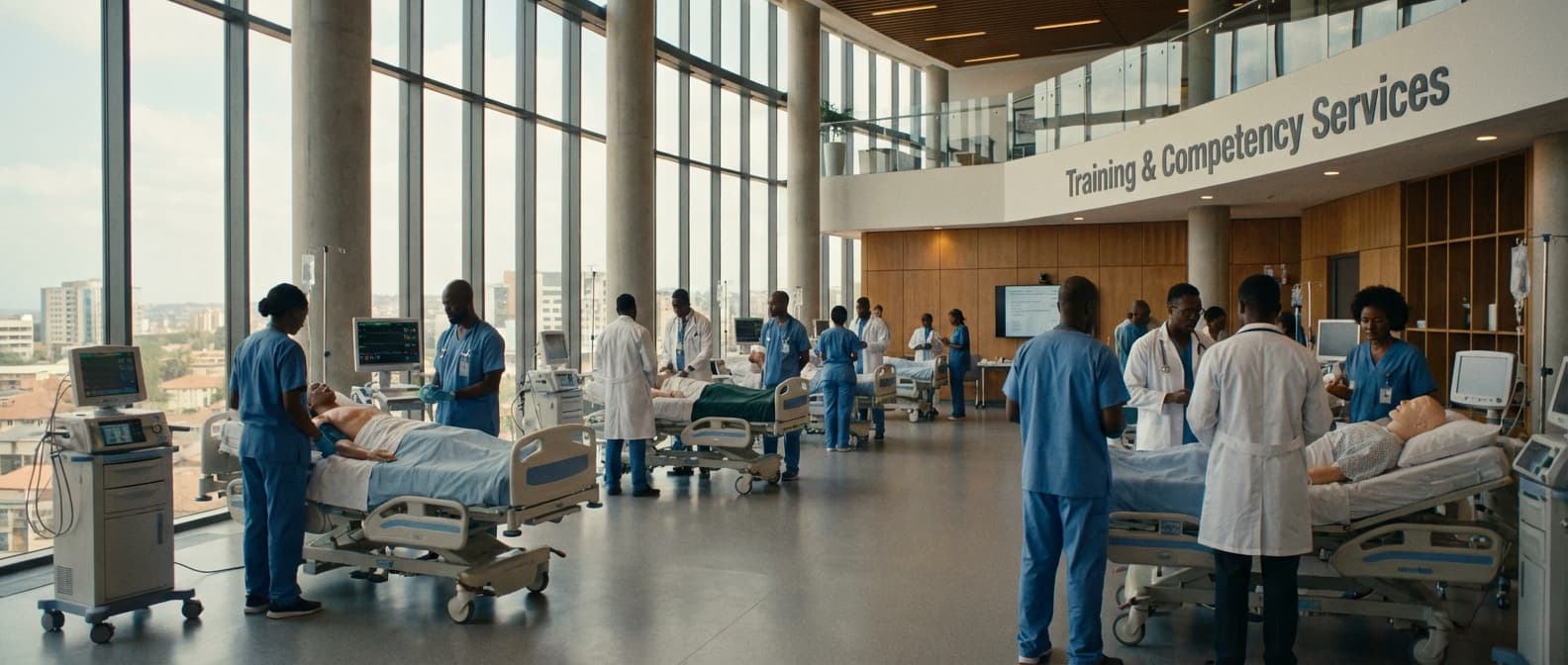
Biomedical Engineering First-Line Support Training Service in Central African Republic
Engineering Excellence & Technical Support
Biomedical Engineering First-Line Support Training Service High-standard technical execution following OEM protocols and local regulatory frameworks.
Biomedical Equipment Diagnostics & Repair
Empowering first-line support personnel with hands-on training in diagnosing common hardware failures, performing essential preventive maintenance, and executing minor repairs on critical medical devices like X-ray machines, incubators, and centrifuges, ensuring operational readiness in remote health facilities.
Digital Health Systems Integration & Troubleshooting
Training on the foundational principles of electronic health records (EHR) systems, telemedicine platforms, and medical imaging archives, enabling support staff to troubleshoot connectivity issues, manage user access, and ensure smooth data flow for improved patient care coordination.
Medical Device Safety & Regulatory Compliance
Instilling critical knowledge on patient safety protocols, electrical safety testing, sterilization procedures, and adherence to national biomedical equipment regulations, ensuring all supported devices are safe for use and meet the highest standards of healthcare delivery.
What Is Biomedical Engineering First-line Support Training Service In Central African Republic?
Biomedical Engineering First-Line Support Training Service in the Central African Republic (CAR) refers to a specialized training program designed to equip healthcare facility personnel with the fundamental knowledge and practical skills necessary to perform initial troubleshooting, maintenance, and basic repair of medical equipment. This service aims to enhance the operational availability and reliability of medical devices in a resource-constrained environment, thereby improving the quality of healthcare delivery. The training focuses on enabling local staff to address common equipment malfunctions, conduct routine preventive maintenance, and identify when advanced intervention from certified biomedical engineers is required. This proactive approach mitigates the impact of equipment downtime and reduces the dependency on external technical support, which can be scarce and costly in the CAR.
| Who Needs This Service? | Typical Use Cases |
|---|---|
| Healthcare Facility Technicians/Assistants: Individuals employed by hospitals, clinics, and health centers responsible for the day-to-day operation of these facilities. | Preventive maintenance of vital signs monitors in a rural health post to ensure continuous patient monitoring during obstetric emergencies. |
| Nurses and Clinical Officers: Healthcare professionals who directly use medical equipment and can benefit from understanding basic operational checks and troubleshooting to minimize downtime during patient care. | Basic troubleshooting of an infusion pump by nursing staff when it displays an 'occlusion' alarm, potentially resolving a minor blockage and resuming drug delivery without delay. |
| Hospital Administrative Staff (e.g., Facility Managers, Logistics Officers): Personnel responsible for asset management, procurement, and overall operational efficiency who need to understand equipment lifecycle and maintenance requirements. | Performing routine cleaning and visual inspections of laboratory centrifuges to prevent dust ingress and ensure proper balance, thereby extending the lifespan of the instrument. |
| Local Biomedical Engineering Trainees/Apprentices: Individuals pursuing a career in biomedical engineering who require foundational practical skills before undertaking more advanced training. | Replacing a cracked power cord on a portable X-ray unit to ensure electrical safety and functional integrity. |
| NGO and International Aid Organization Personnel: Staff involved in managing healthcare programs and providing technical assistance in the CAR. | Conducting battery health checks and replacement on portable ultrasound devices used for antenatal care screening in remote communities. |
| Government Health Ministry Personnel (e.g., District Health Officers): Officials overseeing the healthcare infrastructure at regional or district levels who can advocate for and implement such training programs. | Identifying and reporting malfunctioning sterilization equipment to initiate a repair request, preventing the use of non-sterile instruments in surgical procedures. |
Key Components of Biomedical Engineering First-Line Support Training:
- Basic Equipment Principles: Understanding the fundamental operating principles of common medical devices (e.g., vital signs monitors, defibrillators, infusion pumps, basic laboratory equipment).
- Preventive Maintenance (PM): Training on scheduled inspection, cleaning, lubrication, calibration, and functional testing to identify and address potential issues before they lead to failure.
- Troubleshooting and Diagnosis: Developing systematic approaches to identify the root cause of equipment malfunctions, utilizing diagnostic tools and procedures.
- Basic Repair and Parts Replacement: Instruction on performing simple repairs, such as replacing fuses, batteries, cables, and basic consumables, using manufacturer-approved parts.
- Safety Protocols: Emphasizing electrical safety, patient safety, and proper handling of medical equipment to prevent accidents and ensure proper functioning.
- Record Keeping and Reporting: Training on documenting maintenance activities, repair logs, and reporting significant issues to facilitate effective asset management and inform future interventions.
- Resource Management: Guidance on managing spare parts inventory, tools, and consumables efficiently within the facility's constraints.
- Escalation Procedures: Defining clear protocols for when and how to escalate complex technical issues to higher-level support (e.g., national biomedical engineering departments, external service providers).
Who Needs Biomedical Engineering First-line Support Training Service In Central African Republic?
Biomedical Engineering First-Line Support Training Service in the Central African Republic is crucial for ensuring the reliable operation and maintenance of medical equipment across the nation's healthcare facilities. This training equips local technicians and biomedical engineers with the fundamental skills to troubleshoot, perform basic repairs, and conduct preventative maintenance on a wide range of medical devices. This proactive approach minimizes equipment downtime, reduces reliance on external expertise, and ultimately improves the quality and accessibility of healthcare services, particularly in remote and underserved areas.
| Customer Type | Key Departments/Roles Involved | Training Needs/Benefits |
|---|---|---|
| Hospitals (Central, Regional, District) | Biomedical Engineering Department, Clinical Engineering, IT Department (for networked devices), Biomedical Technicians, Nurses and Clinical Staff (for basic troubleshooting and reporting) | On-site first-line troubleshooting and repair, routine maintenance, identification of issues requiring specialized intervention, improved equipment availability, reduced repair costs and turnaround times, enhanced patient safety, knowledge transfer to local personnel. |
| Clinics and Health Centers (Rural and Urban) | Clinical Staff, Volunteer Technicians (if any), Facility Managers | Basic equipment operation and troubleshooting, simple maintenance tasks, proper reporting of malfunctions, improved functionality of essential medical devices, bridging the gap in remote areas with limited technical expertise. |
| Government Ministries and Agencies (Ministry of Health, Ministry of Higher Education) | Health Services Directorate, Directorate of Infrastructure and Equipment, Public Procurement Agencies, University Biomedical Engineering Departments | Capacity building for national healthcare infrastructure, standardization of maintenance practices, training of future biomedical professionals, policy development for equipment management, informed procurement decisions. |
| Non-Governmental Organizations (NGOs) and International Aid Organizations | Logistics and Procurement Departments, Program Managers, Field Technicians, Project Coordinators | Ensuring sustainability of donated equipment, effective management of medical assets in project areas, empowering local staff for equipment upkeep, reducing dependence on international technical support, maximizing the impact of humanitarian aid. |
| Medical Equipment Suppliers and Distributors | Field Service Technicians, Technical Support Staff, Sales Representatives (for pre-sales technical consultation) | Enhancing the skills of local service partners, providing efficient after-sales support, building local capacity for repairs and maintenance, improving customer satisfaction, expanding market reach and service offerings. |
Target Customers and Departments
- Healthcare Facilities (Hospitals, Clinics, Health Centers)
- Government Ministries and Agencies
- Non-Governmental Organizations (NGOs) and International Aid Organizations
- Medical Equipment Suppliers and Distributors
Biomedical Engineering First-line Support Training Service Process In Central African Republic
This document outlines the service process for Biomedical Engineering First-Line Support Training in the Central African Republic, detailing the workflow from initial inquiry to the successful execution of the training program. The process is designed to be clear, efficient, and responsive to the needs of healthcare facilities and personnel requiring this specialized training.
| Stage | Description | Key Activities | Responsible Parties | Deliverables/Outcomes |
|---|---|---|---|---|
| Initial contact from a healthcare facility or organization requesting training. This stage focuses on understanding their specific requirements and current capacity. | Receive and acknowledge inquiry, conduct preliminary discussion to understand training needs (types of equipment, skill gaps, number of participants), assess existing infrastructure and available resources, determine budget constraints. | Client Organization, Training Provider Representative | Documented understanding of training needs, initial contact established, preliminary needs assessment report. |
| Based on the needs assessment, a tailored training proposal is created outlining the scope, objectives, methodology, and costs. | Develop detailed training curriculum, define learning objectives, outline training methodology (lectures, practical sessions, case studies), specify duration and location, estimate costs (trainer fees, materials, travel, accommodation), prepare a formal proposal document. | Training Provider (Technical Team, Sales/Account Manager) | Comprehensive training proposal, detailed curriculum, cost breakdown, estimated timeline. |
| Formalizing the agreement between the training provider and the client organization, including all terms and conditions. | Review and discuss the proposal with the client, negotiate terms (pricing, payment schedule, cancellation policy, liability), finalize contract, obtain signatures from authorized representatives. | Client Organization, Training Provider (Legal/Management) | Signed training agreement/contract, confirmed training dates and location. |
| Refining the training content to precisely match the client's needs and preparing all logistical arrangements for the training. | Adapt curriculum based on final client feedback, source or prepare training materials (manuals, presentations, practical equipment), arrange trainer travel and accommodation, confirm venue availability and setup, schedule participant registration. | Training Provider (Technical Team, Logistics Coordinator) | Finalized training materials, confirmed travel/accommodation for trainers, booked and prepared training venue, participant list. |
| Assigning qualified trainers and ensuring all necessary resources are in place for the commencement of training. | Select and brief trainers, ensure trainers have all required materials and equipment, confirm trainer arrival at the location, final check of venue and equipment. | Training Provider (Training Manager, Trainers) | Qualified trainers on-site, all necessary training equipment and materials available. |
| The core stage where the training is conducted according to the agreed-upon curriculum and schedule. | Conduct theoretical sessions, facilitate practical demonstrations and hands-on exercises, manage participant engagement and questions, monitor progress, adapt training pace as needed. | Trainers, Participants | Knowledge and skill transfer to participants, practical competency development. |
| Evaluating the effectiveness of the training and gathering feedback for continuous improvement. | Administer post-training assessments (quizzes, practical evaluations), collect participant feedback through surveys or interviews, conduct debriefing session with participants, compile trainer feedback. | Trainers, Participants, Training Provider (Quality Assurance) | Assessment results, participant feedback reports, trainer evaluation reports. |
| Issuing certificates of completion and providing ongoing support to reinforce learning and address future needs. | Issue certificates of completion to successful participants, provide access to post-training resources (online forums, documentation), offer limited follow-up technical support, schedule future refresher courses if required, compile final project report. | Training Provider (Administration, Technical Support) | Certificates of completion, access to support resources, final project report, satisfied client. |
Biomedical Engineering First-Line Support Training Service Process
- Inquiry & Needs Assessment
- Proposal Development & Submission
- Agreement & Contract Negotiation
- Curriculum Customization & Logistics Planning
- Trainer Deployment & Resource Allocation
- Training Delivery & Execution
- Post-Training Assessment & Feedback
- Certification & Follow-up Support
Biomedical Engineering First-line Support Training Service Cost In Central African Republic
Assessing the cost of first-line support training for biomedical engineers in the Central African Republic (CAR) involves understanding a unique set of pricing factors and considering local currency realities. This is a critical area for improving healthcare infrastructure and ensuring the proper functioning of medical equipment in a region facing significant resource challenges. The cost is not a straightforward figure but rather a composite influenced by several elements.
| Training Service Component | Estimated Cost Range (XAF) | Notes on Influencing Factors |
|---|---|---|
| **Per-Day Trainer Fee (Local Expert) | 50,000 - 150,000 | Varies with experience and specialization. Higher for international consultants. |
| Per-Day Trainer Fee (International Expert) | 200,000 - 500,000+ | Includes flights, accommodation, per diem. Significant cost driver for on-site training. |
| **Basic 3-Day First-Line Support Training (Per Participant) | 150,000 - 400,000 | Assumes local trainers, basic materials, and shared venue. Excludes travel/accommodation for participants. |
| **5-Day Specialized Training (Per Participant) | 300,000 - 700,000 | Focus on specific equipment, more hands-on. Higher end for specialized international trainers. |
| Training Materials (per participant, standard) | 10,000 - 30,000 | Manuals, handouts, basic supplies. Digital resources can be cheaper but require infrastructure. |
| **Venue Rental (per day, basic classroom) | 25,000 - 75,000 | Depends on location and amenities. Hospitals might offer free space but with limitations. |
| **Logistics & Administration (fixed per training event) | 50,000 - 200,000 | Covers local coordination, basic supplies, printing. Higher for remote locations. |
| **Travel & Accommodation (per trainer, per week within CAR) | 150,000 - 300,000 | Crucial for on-site training, highly dependent on location and security. |
| **Remote Training Platform Subscription (if applicable) | 50,000 - 150,000 (annual) | Requires reliable internet. May still need supplemental in-person practical sessions. |
Key Pricing Factors for Biomedical Engineering First-Line Support Training in CAR:
- Trainer Expertise and Qualifications: Highly experienced biomedical engineers with specialized knowledge in common medical equipment found in CAR, as well as those with international certifications, will command higher fees. Local trainers may be more cost-effective but might have limited access to the latest international training materials or methodologies.
- Training Duration and Intensity: The length of the training program, from a few days to several weeks, directly impacts the overall cost. Intensive, hands-on training sessions requiring more instructor time will be more expensive.
- Curriculum Scope and Specialization: A general first-line support course covering a broad range of equipment will differ in cost from a specialized course focusing on specific high-priority equipment (e.g., diagnostic imaging, laboratory equipment, essential surgical tools).
- Training Modality (On-site vs. Remote): On-site training, requiring trainers to travel to specific locations within CAR, will incur significant additional costs for travel, accommodation, and per diem. Remote or online training, while potentially more scalable, may face challenges with internet connectivity and the need for practical, hands-on components which are crucial for biomedical engineering.
- Training Venue and Facilities: If training is conducted at a dedicated facility, costs will include rental fees, equipment for practical sessions (e.g., simulators, dummy equipment), and materials. Training at a host hospital might reduce venue costs but could be disruptive to hospital operations.
- Training Materials and Resources: The cost of developing or acquiring up-to-date training manuals, presentations, and practical exercises is a factor. This could include licensing fees for digital resources or printing costs for physical materials.
- Logistics and Support Staff: For on-site training, costs associated with local coordination, administrative support, translation services (if needed), and security arrangements must be factored in.
- Certification and Assessment: If the training leads to a recognized certification, there might be associated examination fees and administrative costs.
- Provider Reputation and Accreditation: Well-established training providers with a proven track record and any relevant accreditations may charge a premium for their services.
- Economic Conditions and Inflation: The general economic climate in the CAR, including inflation rates and currency fluctuations, will directly influence the local cost of services and materials.
- Donor Funding and Subsidies: In many developing contexts, training initiatives are often supported by international donors or NGOs. The availability and extent of such funding can significantly influence the perceived cost and affordability for local institutions.
- Group Size and Discounting: Larger groups might benefit from economies of scale, potentially leading to a lower per-participant cost through group discounts offered by the training provider.
Affordable Biomedical Engineering First-line Support Training Service Options
Providing effective first-line support for biomedical engineering (BME) departments is crucial for maintaining equipment uptime and patient safety. This often requires specialized training for technicians who may not have extensive BME backgrounds. This document outlines affordable training service options, emphasizing value bundles and cost-saving strategies to help organizations maximize their training investments.
| Training Service Option | Description | Value Bundle Components | Cost-Saving Strategies | |
|---|---|---|---|---|
| Online Self-Paced Modules | Pre-recorded video lectures, interactive quizzes, and downloadable resources covering core BME support topics. Accessible anytime, anywhere. | Core BME fundamentals, basic troubleshooting, safety protocols. Can be purchased individually or as a package. | Lower instructor costs, reduced travel expenses. Scalable to large numbers of trainees. Bulk purchase discounts for module bundles. Utilize free introductory webinars or demos. | |
| Blended Learning Programs | Combines online self-paced modules with live virtual instructor-led sessions or in-person workshops for hands-on practice and Q&A. | In-depth troubleshooting scenarios, hands-on practice simulations (virtual or in-person), expert Q&A sessions. Bundled with online foundational content. | Reduces travel and accommodation costs compared to fully in-person training. Optimizes instructor time. Customizable modules to specific equipment needs, reducing irrelevant training. | Partner with training providers for group discounts. Leverage existing internal subject matter experts for certain sessions. |
| Vendor-Specific Training (Basic Level) | Introduction to the maintenance and support of commonly used medical devices provided by original equipment manufacturers (OEMs) or authorized third parties. | Basic operation, common error codes, routine maintenance for specific device models. Often includes access to manufacturer-specific knowledge bases. | Ensures proficiency with critical equipment. Can be a valuable component of a broader training strategy. | Negotiate training packages with equipment purchases. Look for certification programs that offer bundled training. Explore online training offerings from vendors that may be more cost-effective. |
| Train-the-Trainer Programs | Empowers experienced internal staff (e.g., senior BME technicians) to deliver foundational training to new or junior support personnel. | Curriculum development guidance, training materials, pedagogical techniques for effective instruction. Focuses on knowledge transfer within the organization. | Significant long-term cost savings by reducing reliance on external trainers. Standardizes training across the organization. Leverages internal expertise and institutional knowledge. | Invest in comprehensive train-the-trainer materials. Provide ongoing support and resources for internal trainers. Offer incentives for successful internal training delivery. |
| Online Communities and Knowledge Sharing Platforms | Facilitates peer-to-peer learning, problem-solving, and sharing of best practices among support technicians. | Forums for asking questions, sharing case studies, accessing user-generated troubleshooting guides. Can be supplemented with curated content. | Continuous learning and rapid problem resolution. Reduces the need for formal training on every unique issue. Builds a collective knowledge base. | Utilize open-source or low-cost platform solutions. Encourage active participation and contribution through recognition programs. Integrate with existing internal communication tools. |
Key Components of Affordable BME First-Line Support Training
- Fundamental Equipment Principles: Understanding basic operation, common failure modes, and safety protocols for a range of medical devices.
- Troubleshooting Methodologies: Developing systematic approaches to identify and resolve common issues before escalation.
- Preventive Maintenance Fundamentals: Learning essential checks and procedures to prolong equipment lifespan and prevent breakdowns.
- Documentation and Reporting: Training on proper record-keeping for maintenance, repairs, and incident reporting.
- Safety and Compliance: Understanding relevant medical device regulations and departmental safety procedures.
- Communication and Teamwork: Effective interaction with clinical staff and escalation pathways.
- Digital Literacy and Software Updates: Basic understanding of device software, updates, and connectivity.
Verified Providers In Central African Republic
In the Central African Republic (CAR), access to reliable and qualified healthcare providers is paramount. Franance Health stands out as a leading organization that meticulously vets and credentials healthcare professionals, ensuring patients receive the highest standard of care. Their rigorous credentialing process is designed to identify and promote providers who meet stringent ethical, educational, and professional benchmarks. This commitment to quality assurance makes Franance Health-verified providers the best choice for individuals seeking safe and effective medical services within the CAR.
| Credentialing Aspect | Franance Health's Approach | Benefit to Patients |
|---|---|---|
| Educational Background | Verification of diplomas, degrees, and specialized training from recognized institutions. | Ensures providers have foundational knowledge and expertise. |
| Professional Experience | Thorough review of past work history, including specializations and areas of practice. | Confirms practical application of knowledge and relevant skills. |
| Licensing and Certification | Confirmation of current and valid medical licenses and certifications from relevant authorities. | Guarantees adherence to legal and regulatory requirements. |
| Professional References | Contacting peers and supervisors to assess performance and professional reputation. | Provides insights into a provider's actual work ethic and capabilities. |
| Ethical Conduct Review | Screening for any history of disciplinary actions or ethical violations. | Protects patients from potentially harmful or unprofessional behavior. |
Why Franance Health Credentials Matter in the Central African Republic:
- Rigorous Verification Process: Franance Health employs a multi-faceted approach to credentialing, including verification of medical licenses, educational qualifications, and professional experience.
- Emphasis on Ethical Practice: Beyond technical skills, Franance Health assesses a provider's commitment to ethical conduct and patient-centered care.
- Continuous Monitoring: Credentialing is not a one-time event; Franance Health implements ongoing monitoring to ensure providers maintain their high standards.
- Patient Safety Focus: The ultimate goal of Franance Health's credentialing is to enhance patient safety and reduce the risks associated with unqualified practitioners.
- Building Trust: By partnering with Franance Health, patients can have greater confidence in the competence and integrity of the healthcare professionals they choose.
Scope Of Work For Biomedical Engineering First-line Support Training Service
This Scope of Work (SOW) outlines the requirements for a comprehensive Biomedical Engineering First-Line Support Training Service. The objective is to equip newly hired or transitioning biomedical engineering technicians with the foundational knowledge and practical skills necessary to effectively perform first-line support duties for a range of medical devices. This training will emphasize safety, regulatory compliance, troubleshooting methodologies, and efficient use of available resources. The training program will include a blend of theoretical instruction, hands-on practical exercises, and scenario-based simulations.
| Technical Deliverable | Description | Standard Specifications / Requirements |
|---|---|---|
| Training Curriculum | A structured curriculum covering theoretical concepts and practical skills for first-line biomedical engineering support. | Must include modules on: Electrical Safety, Basic Device Anatomy & Function, Common Malfunctions & Troubleshooting, Diagnostic Tools, Documentation Procedures, Regulatory Compliance, Customer Service Skills. Curriculum to be delivered in English, with an option for translation if specified. Minimum 80% passing score on assessments for successful completion. |
| Training Materials | All necessary documentation, presentations, and learning resources for trainees. | Includes instructor guides, trainee workbooks, presentation slides (e.g., PowerPoint, PDF), case studies, and quick reference guides. Materials must be up-to-date with current industry best practices and device manuals (generic examples or specific if provided). Digital and printable formats required. |
| Hands-on Practical Sessions | Structured laboratory or simulation exercises allowing trainees to apply learned skills. | Requires access to a dedicated training lab or simulation environment with representative medical devices (e.g., patient monitors, infusion pumps, ventilators – specific list to be provided by client). Each trainee must have supervised practical experience with at least 5 distinct device types. Session duration to be sufficient for skill mastery. Safety protocols for equipment handling must be demonstrated and practiced. |
| Competency Assessments | Methods to evaluate trainee comprehension and practical skill proficiency. | Includes written examinations (multiple choice, short answer), practical skill demonstrations (observed troubleshooting scenarios), and case study analysis. Assessments to be aligned with learning objectives. Passing grade of 80% required for each assessment type. |
| Training Completion Certificates | Formal documentation issued to trainees who successfully complete the program. | Certificates to include trainee name, course title, completion date, and a brief description of skills acquired. Digital and physical copies to be provided. Certificate to bear the training provider's and potentially the client's logo (as agreed). |
| Trainer Qualifications | Credentials and experience of the individuals delivering the training. | Trainers must possess a minimum of 5 years of direct experience in biomedical engineering, with a strong focus on technical support and troubleshooting. Relevant certifications (e.g., CBET, CRES) are highly desirable. Proven ability to effectively train and mentor adult learners. |
| Post-Training Support (Optional) | Limited support for trainees after the formal training period. | Includes access to a knowledge base or FAQ for a period of 30 days post-training. Option for limited email/phone support for clarification on training content. This does not include device-specific troubleshooting for live equipment. |
Training Objectives
- Understand the fundamental principles of biomedical engineering and medical device operation.
- Identify and adhere to relevant safety protocols and regulatory standards (e.g., FDA, HIPAA, Joint Commission).
- Develop proficiency in basic troubleshooting techniques for common medical device malfunctions.
- Learn to effectively utilize diagnostic tools and documentation for issue resolution.
- Master the process of escalating complex issues to second-line support.
- Gain practical experience with common biomedical equipment found in clinical settings.
- Understand the importance of accurate and timely documentation of all support activities.
Service Level Agreement For Biomedical Engineering First-line Support Training Service
This Service Level Agreement (SLA) outlines the response times and uptime guarantees for the Biomedical Engineering First-Line Support Training Service. This agreement is between the Provider and the Client for the duration specified in the Master Service Agreement.
| Service Component | Priority Level | Response Time Guarantee | Uptime Guarantee |
|---|---|---|---|
Definitions
- {"item":"BEM-First-Line Support Training Service","description":"Refers to the training provided to first-line support personnel on the operation, basic troubleshooting, and safety procedures of biomedical engineering equipment."}
- {"item":"Response Time","description":"The maximum time allowed for the Provider to acknowledge a reported issue and initiate troubleshooting steps."}
- {"item":"Uptime","description":"The percentage of time the training platform and associated resources are available and operational for scheduled training sessions."}
- {"item":"Scheduled Training","description":"Training sessions that have been pre-arranged and confirmed between the Provider and the Client."}
- {"item":"Critical Incident","description":"An issue that prevents scheduled training sessions from commencing or significantly disrupts an ongoing session, impacting the ability to deliver core training content."}
- {"item":"Non-Critical Incident","description":"An issue that does not prevent scheduled training sessions from commencing but may affect performance, access to supplementary materials, or non-essential features."}
Frequently Asked Questions

Ready when you are
Let's scope your Biomedical Engineering First-Line Support Training Service in Central African Republic project in Central African Republic.

Scaling healthcare logistics and technical systems across the entire continent.