
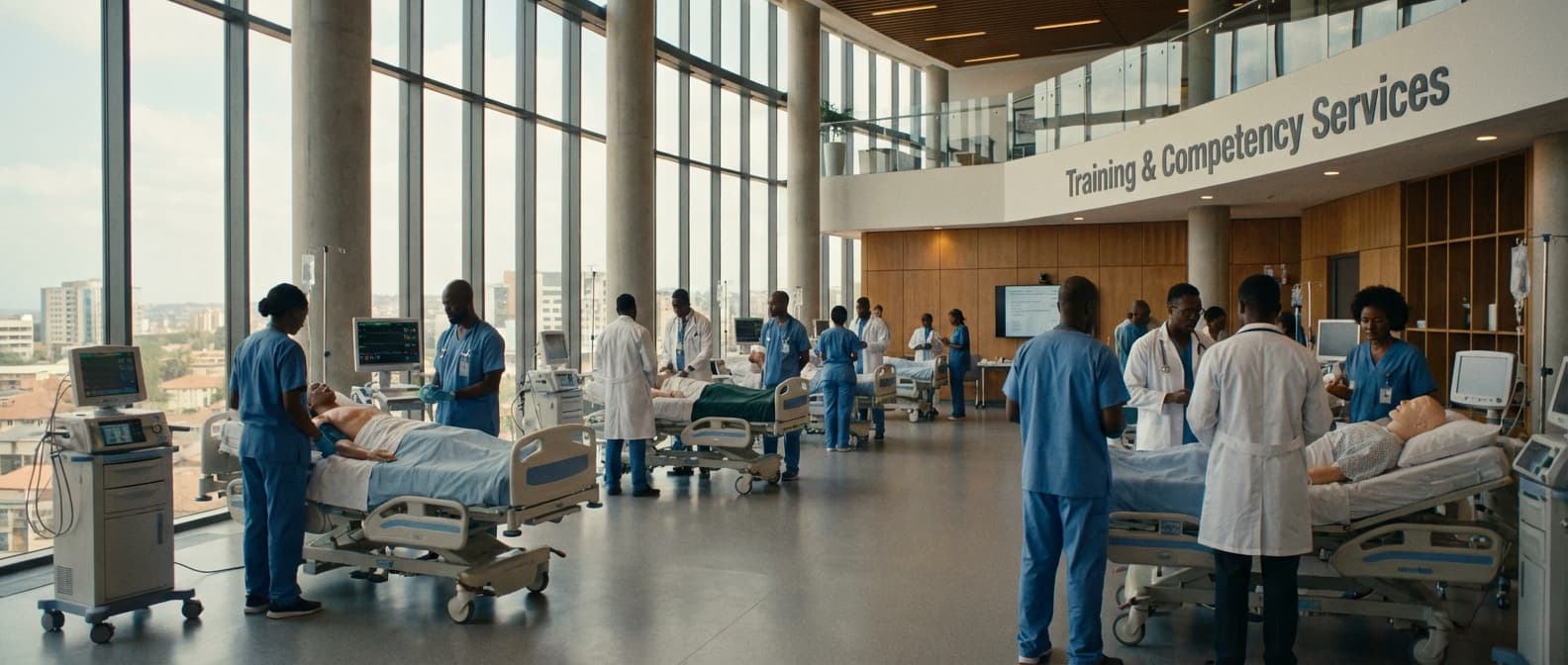
Anesthesia Workstation User Training Service in Central African Republic
Engineering Excellence & Technical Support
Anesthesia Workstation User Training Service High-standard technical execution following OEM protocols and local regulatory frameworks.
Mastering Anesthesia Workstation Essentials
Gain hands-on proficiency with critical anesthesia workstation functions, including ventilator modes, gas delivery systems, and monitoring integration, tailored for the unique environmental and resource considerations in the Central African Republic.
Advanced Ventilation Techniques & Safety Protocols
Learn advanced ventilation strategies for diverse patient populations and critical scenarios, emphasizing fail-safe operation and emergency troubleshooting protocols essential for safe anesthetic delivery in challenging settings.
Maintenance & Troubleshooting for Longevity
Acquire practical skills in routine workstation maintenance, common troubleshooting procedures, and basic repair techniques to ensure optimal performance and extended operational life of anesthesia equipment in the Central African Republic.
What Is Anesthesia Workstation User Training Service In Central African Republic?
The Anesthesia Workstation User Training Service in the Central African Republic refers to a specialized educational program designed to equip healthcare professionals with the necessary knowledge and practical skills to operate anesthesia workstations safely and effectively within the unique healthcare landscape of the CAR. This service is crucial for ensuring patient safety, optimizing anesthetic delivery, and maximizing the lifespan and functionality of sophisticated medical equipment in resource-constrained environments.
| Who Needs It | Typical Use Cases |
|---|---|
| Anesthesiologists: Licensed physicians specializing in the administration of anesthesia. Essential for all levels of anesthetic practice. | Operating Room Settings: Providing general, regional, and monitored anesthesia care for surgical procedures across various specialties (e.g., general surgery, obstetrics, pediatrics, trauma). |
| Anesthetic Nurses/Nurse Anesthetists: Advanced practice registered nurses with specialized training in anesthesia. Crucial in settings where they are authorized to administer anesthesia independently or under supervision. | Emergency Departments and Intensive Care Units: Delivering short-term anesthesia for emergent procedures, sedation for critically ill patients requiring mechanical ventilation, and airway management. |
| Anesthesia Technicians/Biomedical Engineers: Personnel responsible for the setup, maintenance, and troubleshooting of anesthesia equipment. Their training focuses on technical aspects and preventative maintenance. | Remote and Rural Healthcare Facilities: Delivering essential anesthetic services in areas with limited access to specialized care. Training ensures safe utilization of available equipment. |
| Medical Students and Residents: As part of their foundational training in anesthesiology. | Field Hospitals and Humanitarian Missions: Providing anesthesia services in disaster relief and conflict zones where specialized equipment is critical and infrastructure may be compromised. |
Key Components of Anesthesia Workstation User Training:
- Workstation Familiarization: In-depth understanding of the physical components, interfaces, and user controls of specific anesthesia workstation models.
- Pre-Use Checks and Calibration: Proficiency in performing mandatory daily, weekly, and monthly checks, including gas flow, leak testing, circuit integrity, and sensor calibration.
- Ventilator Modes and Settings: Comprehensive training on various ventilation modes (e.g., volume control, pressure control, SIMV, PSV) and the appropriate selection and adjustment of parameters based on patient physiology and surgical requirements.
- Gas Delivery and Monitoring: Accurate setting and monitoring of volatile anesthetic concentrations, oxygen, and nitrous oxide delivery. Understanding of integrated gas analysis (e.g., EtCO2, FiO2, anesthetic agent identification).
- Drug Delivery Systems: Operation of integrated vaporizers and syringe pumps, including safe filling, administration, and monitoring of infused agents.
- Alarm Management and Troubleshooting: Recognition, interpretation, and appropriate response to all audible and visual alarms. Basic troubleshooting of common equipment malfunctions.
- Patient Monitoring Integration: Understanding how the anesthesia workstation integrates with and receives data from other patient monitoring devices (ECG, SpO2, NIBP, etc.).
- Infection Control and Maintenance: Proper cleaning, disinfection, and sterilization procedures for workstation components to prevent nosocomial infections. Routine maintenance schedules and basic user-level servicing.
- Emergency Procedures: Simulation of emergency scenarios and the role of the anesthesia workstation in managing critical events.
- Documentation and Record Keeping: Accurate recording of anesthetic data, machine settings, and any deviations or interventions.
Who Needs Anesthesia Workstation User Training Service In Central African Republic?
Anesthesia workstation user training services are crucial for ensuring the safe and effective operation of advanced anesthesia equipment, particularly in regions with a growing need for modern healthcare infrastructure. In the Central African Republic, where access to specialized medical training can be limited, such services are vital for healthcare professionals to maximize the benefits of these sophisticated machines and improve patient outcomes. This training empowers clinicians to utilize the full capabilities of anesthesia workstations, leading to better patient monitoring, more precise drug delivery, and enhanced safety during surgical procedures.
| Department | Key Personnel Requiring Training | Specific Training Needs |
|---|---|---|
| Anesthesiology Department | Anesthesiologists, Nurse Anesthetists, Anesthesia Technicians | Advanced ventilation modes, patient monitoring integration, troubleshooting, drug administration protocols, emergency procedures, workstation maintenance. |
| Operating Room (OR) / Surgical Department | Surgeons (especially those performing procedures requiring complex anesthesia) | Understanding workstation capabilities and limitations, communication with anesthesia team during procedures, emergency response coordination. |
| Intensive Care Unit (ICU) | Intensivists, ICU Nurses | Post-operative care, weaning from mechanical ventilation using workstation features, monitoring critically ill patients. |
| Biomedical Engineering Department | Biomedical Engineers, Technicians | Routine maintenance, calibration, basic troubleshooting, understanding software updates, safe handling and repair of anesthesia workstations. |
| Nursing Department (General) | Registered Nurses (especially those working in peri-operative areas) | Basic understanding of workstation functions, patient monitoring, assisting the anesthesia team, recognizing critical alarms. |
Target Customers and Departments for Anesthesia Workstation User Training in Central African Republic
- Hospitals (Government and Private)
- Surgical Centers
- Clinics with Advanced Surgical Capabilities
- Medical Training Institutions
Anesthesia Workstation User Training Service Process In Central African Republic
This document outlines the user training service process for Anesthesia Workstations in the Central African Republic, from initial inquiry to successful execution. The process is designed to be efficient, transparent, and tailored to the specific needs of healthcare facilities in the region.
| Phase | Step | Description | Key Activities | Responsible Party(ies) |
|---|---|---|---|---|
| 1: Inquiry and Needs Assessment | 1.1 Initial Contact | Healthcare facility expresses interest in anesthesia workstation user training. | Email, phone call, or in-person meeting. | Client Facility, Training Provider Representative |
| 1.2 Information Gathering | Understanding the facility's current setup, number of trainees, existing equipment, and specific training requirements. | Questionnaires, site visit (if possible), discussion with clinical staff. | Training Provider Representative, Client Facility Representative (e.g., Head of Anesthesia, Biomedical Engineer) | |
| 1.3 Needs Analysis Report | Summarizing the identified training needs, target audience, and scope of training. | Internal document for the training provider. | Training Provider Representative | |
| 2: Proposal and Agreement | 2.1 Training Proposal Development | Creating a detailed proposal outlining training modules, duration, schedule, trainers, learning objectives, and cost. | Customized proposal document based on needs assessment. | Training Provider Representative |
| 2.2 Proposal Review and Negotiation | Client facility reviews the proposal, asks clarifying questions, and negotiates terms if necessary. | Meetings, email exchanges. | Client Facility Representative, Training Provider Representative | |
| 2.3 Contract/Agreement Signing | Formalizing the agreement with specific deliverables, timelines, payment terms, and responsibilities. | Legal document. | Authorized representatives from both Client Facility and Training Provider | |
| 3: Pre-Training Preparation | 3.1 Training Material Development/Customization | Adapting or creating training manuals, presentations, and practical exercises relevant to the specific workstation model and local context. | Review of workstation manuals, development of localized content. | Training Provider (Technical Trainers, Instructional Designers) |
| 3.2 Trainer Assignment and Briefing | Selecting qualified trainers and briefing them on the specific training objectives and client facility's context. | Internal trainer meetings, review of training plan. | Training Provider (Training Manager) | |
| 3.3 Logistics Coordination | Arranging travel and accommodation for trainers, confirming training venue, and ensuring availability of the anesthesia workstation for practical sessions. | Booking flights/transport, hotel reservations, venue confirmation, workstation accessibility. | Training Provider (Logistics Coordinator), Client Facility (for workstation access) | |
| 3.4 Trainee Registration and Communication | Collecting participant details and communicating the training schedule, prerequisites, and expectations to trainees. | Registration forms, welcome emails, pre-training surveys (optional). | Client Facility (HR/Training Department), Training Provider Representative | |
| 4: Training Execution | 4.1 On-site Training Delivery | Conducting theoretical sessions and hands-on practical training on the anesthesia workstation. | Lectures, demonstrations, simulations, Q&A sessions, practical exercises. | Training Provider (Certified Trainers) |
| 4.2 Competency Assessment | Evaluating trainees' understanding and practical skills through quizzes, practical assessments, and observation. | Written tests, practical skill evaluations. | Training Provider (Certified Trainers) | |
| 4.3 Feedback Collection | Gathering feedback from trainees on the training content, delivery, and overall experience. | Anonymous feedback forms. | Training Provider (Certified Trainers) | |
| 5: Post-Training Support and Evaluation | 5.1 Training Report and Certificate Issuance | Providing a comprehensive training report to the client facility and issuing certificates of completion to successful trainees. | Training summary report, certificates. | Training Provider Representative |
| 5.2 Follow-up Support | Offering post-training support through designated channels for addressing any immediate operational queries or technical issues. | Email support, dedicated hotline (if applicable). | Training Provider (Technical Support Team) | |
| 5.3 Performance Monitoring (Optional) | Assessing the impact of the training on workstation usage and patient care over time (may involve follow-up surveys or data analysis). | Client facility data, follow-up questionnaires. | Training Provider, Client Facility | |
| 5.4 Process Improvement | Reviewing training feedback and performance data to identify areas for improvement in future training programs. | Internal review meetings. | Training Provider (Training Manager) |
Anesthesia Workstation User Training Service Process
- Phase 1: Inquiry and Needs Assessment
- Phase 2: Proposal and Agreement
- Phase 3: Pre-Training Preparation
- Phase 4: Training Execution
- Phase 5: Post-Training Support and Evaluation
Anesthesia Workstation User Training Service Cost In Central African Republic
Providing anesthesia workstation user training services in the Central African Republic (CAR) involves a unique set of considerations that influence cost. Unlike highly developed healthcare markets, the CAR faces challenges such as limited access to specialized trainers, infrastructure limitations, and a unique economic landscape. The pricing for these services is therefore highly variable and depends on several key factors. These include the specific anesthesia workstation model, the duration and depth of the training, the number of participants, the trainer's qualifications and travel expenses, and any necessary customization of the training program to suit the local context and existing skill levels. Furthermore, the location within the CAR can impact logistics and associated costs. Given the scarcity of specialized training providers and the logistical complexities, costs are generally higher than in more established markets. Estimating precise ranges in the local currency (Central African CFA franc - XAF) is challenging due to the lack of publicly available benchmark data for such specialized services. However, we can outline the influencing factors and provide a qualitative understanding of the potential cost drivers.
| Cost Component | Primary Drivers in CAR Context | Potential Cost Impact (Qualitative) | Local Currency Considerations (XAF) |
|---|---|---|---|
| Trainer Fees | Expertise, international vs. local, travel necessity | High | Likely quoted in USD or EUR and converted, or a significant premium on local rates if available. |
| Travel & Accommodation | Inter-city/inter-country travel, remoteness of location, duration of stay | Very High | Significant portion of budget, dependent on flight costs, vehicle hire, and secure lodging. |
| Training Program Design & Delivery | Complexity of workstation, duration, participant numbers, need for specialization | Medium to High | Costs may be bundled by training providers. Per-participant rates can vary widely. |
| Logistics & Site Preparation | Securing venue, workstation setup, power availability, security | Medium | Local procurement costs for supplies and venue rental. |
| Ancillary Services (Translation, etc.) | Language barriers, need for specific support | Low to Medium | Direct cost for translator fees and any required materials. |
Factors Influencing Anesthesia Workstation User Training Service Costs in the CAR
- Anesthesia Workstation Model: More complex or technologically advanced workstations may require more extensive training and specialized trainers.
- Training Duration and Depth: Basic operational training will be less expensive than comprehensive advanced troubleshooting or maintenance training.
- Number of Participants: Bulk training for a larger group can sometimes reduce the per-person cost, but larger groups may also necessitate longer training sessions or more trainers.
- Trainer's Expertise and Qualifications: Highly experienced and certified trainers, especially those with international experience, will command higher fees.
- Trainer Travel and Accommodation: If trainers need to travel from outside the CAR or to remote locations within the CAR, these costs will be significant.
- Training Venue and Equipment: Costs associated with securing a suitable training facility and ensuring the workstation is available and functional for the training.
- Customization of Training Program: Tailoring the curriculum to specific hospital protocols or existing staff skill levels may incur additional development costs.
- Logistics and Accessibility: Difficult terrain, limited transportation infrastructure, and potential security considerations in certain regions can increase overall service costs.
- Language Requirements: If translation services are needed, this will add to the expense.
- Post-Training Support: The inclusion of follow-up support, refresher courses, or remote assistance can influence the overall package price.
- Certification or Assessment: Costs associated with any formal assessment or certification of trainees.
- Local Economic Conditions and Currency Fluctuations: The prevailing economic climate and exchange rates can indirectly impact pricing.
Affordable Anesthesia Workstation User Training Service Options
This document outlines affordable anesthesia workstation user training service options, emphasizing the value of our bundled training packages and effective cost-saving strategies. Investing in proper user training is crucial for safe, efficient, and compliant operation of anesthesia workstations. Our service offerings are designed to maximize your return on investment by providing comprehensive knowledge transfer at competitive price points.
| Value Bundle Option | Included Training Modules | Target Audience | Key Benefits | Estimated Cost Savings (vs. Individual Modules) |
|---|---|---|---|---|
| Basic Operator Essentials Bundle | Workstation Fundamentals, Patient Monitoring Basics, Alarm Management, Gas Delivery Systems, Ventilation Modes (Basic) | New Anesthesia Technicians, Nurses, Residents, Visiting Clinicians | Builds foundational knowledge, ensures safe basic operation, quick onboarding. | 15-20% |
| Advanced Clinical Proficiency Bundle | All Basic Modules + Advanced Ventilation Modes, Anesthetic Agent Delivery & Monitoring, Drug Calculations & Delivery, Troubleshooting Common Issues, Emergency Scenarios | Experienced Anesthesiologists, Certified Registered Nurse Anesthetists (CRNAs), Senior Technicians | Enhances clinical decision-making, optimizes workstation performance, improves patient outcomes. | 20-25% |
| Comprehensive Technician & Biomedical Bundle | All Advanced Modules + Preventive Maintenance, Routine Servicing, Basic Troubleshooting & Repair, System Calibration, Safety Checks, Regulatory Compliance Documentation | Biomedical Engineers, Anesthesia Technicians responsible for maintenance | Minimizes downtime, extends equipment lifespan, ensures regulatory adherence, reduces reliance on external repair services. | 25-30% |
| Customizable Team Training Package | Select any combination of modules tailored to specific departmental needs or skill gaps. | All personnel requiring specific skills or knowledge. | Maximum flexibility, addresses unique training requirements, cost-effective for targeted development. | Variable (based on module selection) |
Key Benefits of Bundled Training Services
- Comprehensive Skill Development: Bundles cover a wider range of topics, from basic operation to advanced troubleshooting and maintenance, ensuring users are fully proficient.
- Cost Efficiency: Purchasing training as a package is more economical than acquiring individual modules, offering significant savings.
- Streamlined Scheduling: A single training program allows for efficient planning and coordination of your staff's professional development.
- Enhanced Team Competency: Ensures a consistent and high level of understanding across your entire anesthesia team, reducing errors and improving patient safety.
- Reduced Downtime: Well-trained users are less likely to encounter operational issues, minimizing workstation downtime and associated costs.
- Compliance Assurance: Training modules are aligned with industry standards and regulatory requirements, helping your institution maintain compliance.
Verified Providers In Central African Republic
Navigating the healthcare landscape in the Central African Republic (CAR) can be challenging. Identifying truly verified and reliable healthcare providers is paramount to ensuring quality care and patient safety. Franance Health stands out as a leading organization in this domain, meticulously credentialing and vetting healthcare professionals and facilities across the CAR. Their rigorous processes and commitment to transparency make them the premier choice for anyone seeking trusted medical services. This document outlines why Franance Health's credentials signify the highest standard of care and why they are the best choice for your healthcare needs in the Central African Republic.
| Key Credentialing Criteria by Franance Health | Description |
|---|---|
| Professional Licensure and Certification | Verification of all necessary medical licenses and specialized certifications from recognized national and international bodies. |
| Education and Training Verification | Thorough review and validation of academic qualifications, medical school diplomas, and any postgraduate training. |
| Experience and Practice History | Assessment of prior work experience, including hospital affiliations, duration of practice, and areas of expertise. |
| Ethical Conduct and Disciplinary Records | Background checks for any disciplinary actions, malpractice claims, or ethical violations reported to regulatory bodies. |
| Facility Standards (for clinics/hospitals) | Evaluation of infrastructure, equipment, hygiene protocols, and patient care environment to ensure it meets established standards. |
| Continuing Medical Education (CME) | Confirmation of ongoing professional development and participation in CME activities to stay abreast of medical advancements. |
Why Franance Health Credentials Matter
- Rigorous Vetting Process: Franance Health employs a multi-stage vetting system that goes beyond basic licensing. This includes verifying medical degrees, certifications, past performance records, and adherence to ethical standards.
- Commitment to Quality and Safety: Their credentialing ensures that providers meet stringent quality and safety protocols, crucial in any healthcare setting, but especially vital in regions with limited resources.
- Enhanced Patient Trust: By choosing a Franance Health-verified provider, patients gain confidence knowing they are receiving care from qualified and reputable professionals.
- Accessibility and Information: Franance Health centralizes information about verified providers, making it easier for individuals to find the right medical assistance when they need it.
- Continuous Monitoring and Re-evaluation: The credentialing process isn't a one-time event. Franance Health actively monitors and re-evaluates its providers to ensure ongoing compliance and excellence.
- Bridging the Information Gap: They play a critical role in bridging the information gap for patients, demystifying the process of finding competent healthcare in the CAR.
Scope Of Work For Anesthesia Workstation User Training Service
This Scope of Work (SOW) outlines the requirements for providing comprehensive user training services for Anesthesia Workstations. The training will equip healthcare professionals with the necessary knowledge and practical skills to safely and effectively operate the anesthesia workstations, ensuring optimal patient care and operational efficiency. The training will cover theoretical concepts, hands-on practical sessions, troubleshooting, and maintenance awareness. Technical deliverables will include training materials, competency assessments, and a post-training report. Standard specifications for the training program are designed to ensure consistency, quality, and adherence to best practices.
| Technical Deliverable | Description | Standard Specification |
|---|---|---|
| Training Manual/User Guide | Comprehensive document detailing workstation features, operation, safety protocols, and troubleshooting. | Professionally formatted, easily navigable, and up-to-date with the latest workstation version. Available in both digital (PDF) and printed formats. Includes clear diagrams and illustrations. Content developed in accordance with the manufacturer's specifications and relevant clinical guidelines. |
| Training Presentation Slides | Visual aids used during theoretical training sessions, covering key concepts and functionalities. | High-resolution, engaging slides with concise text, relevant images, and consistent branding. Aligned with the training manual content. Developed using standard presentation software (e.g., PowerPoint, Google Slides). |
| Hands-on Practice Scenarios | Simulated patient scenarios designed to allow trainees to practice workstation operation in a controlled environment. | Realistic and varied scenarios covering common and critical anesthesia procedures. Scenarios should be clearly documented with objectives, expected outcomes, and debriefing points. Practiced on actual or high-fidelity simulation workstations. |
| Competency Assessment Forms/Checklists | Tools used to evaluate trainee's understanding and practical application of workstation operation. | Objective-based checklists with clear criteria for successful performance. Includes both theoretical knowledge assessment (e.g., multiple-choice questions, short answers) and practical skill demonstration evaluation. Forms designed for easy scoring and feedback. |
| Training Attendance Register | Record of participants who attended the training sessions. | Includes trainee name, designation, department, date of attendance, and signature. Maintained for audit purposes. |
| Post-Training Evaluation Form | Feedback form for trainees to evaluate the training program's effectiveness, instructor performance, and content relevance. | Structured questionnaire with a mix of rating scales and open-ended questions. Anonymous submission encouraged to promote honest feedback. Data compiled and analyzed for continuous improvement. |
| Training Completion Certificates | Official document awarded to trainees upon successful completion of the training program. | Individually issued certificates with trainee name, workstation model trained on, training dates, issuing organization's name and logo, and authorized signatory. Includes a unique certificate number for verification. |
| Training Summary Report | Comprehensive report summarizing the training conducted, including attendance, assessment results, and feedback. | Includes overview of training objectives, dates, locations, instructor details, number of participants, overall performance trends, identified areas for improvement, and recommendations. Delivered within 7 days of training completion. |
Key Components of the Anesthesia Workstation User Training Service
- Needs Assessment and Curriculum Development
- Training Delivery (Theoretical & Practical)
- Competency Assessment and Validation
- Documentation and Reporting
- Post-Training Support
Service Level Agreement For Anesthesia Workstation User Training Service
This Service Level Agreement (SLA) outlines the service levels for the Anesthesia Workstation User Training Service provided by [Your Company Name] to [Client Name]. It defines the response times for critical issues and the guaranteed uptime for the online training platform.
| Service Component | Description | Service Level Objective (SLO) | Measurement |
|---|---|---|---|
| Anesthesia Workstation Training Platform Uptime | The Anesthesia Workstation Training Platform will be accessible and functional for users to access training modules and resources. | 99.5% Uptime (excluding scheduled maintenance) | Platform monitoring tools tracking availability. |
| Critical Support Issue Response Time | Immediate technical issues preventing users from accessing the training platform or a critical module. | Within 1 hour during business hours ([Specify Business Hours and Timezone]) | Ticket creation time to first acknowledgment/action. |
| High Priority Support Issue Response Time | Issues that hinder the progress of training but do not completely block access (e.g., a specific module not loading correctly). | Within 4 business hours during business hours ([Specify Business Hours and Timezone]) | Ticket creation time to first acknowledgment/action. |
| Medium Priority Support Issue Response Time | General inquiries or non-critical issues related to the training platform or content. | Within 8 business hours (1 business day) during business hours ([Specify Business Hours and Timezone]) | Ticket creation time to first acknowledgment/action. |
| Scheduled Maintenance | Planned downtime for system updates, upgrades, or maintenance. Notice will be provided in advance. | Not applicable to uptime guarantees. Advance notice will be provided. | Notification sent via email to [Specify Notification Recipient(s)]. |
Key Service Components
- Scope of Service
- Training Platform Availability
- Response Times for Support
- Escalation Procedures
- Definitions
Frequently Asked Questions

Ready when you are
Let's scope your Anesthesia Workstation User Training Service in Central African Republic project in Central African Republic.

Scaling healthcare logistics and technical systems across the entire continent.