
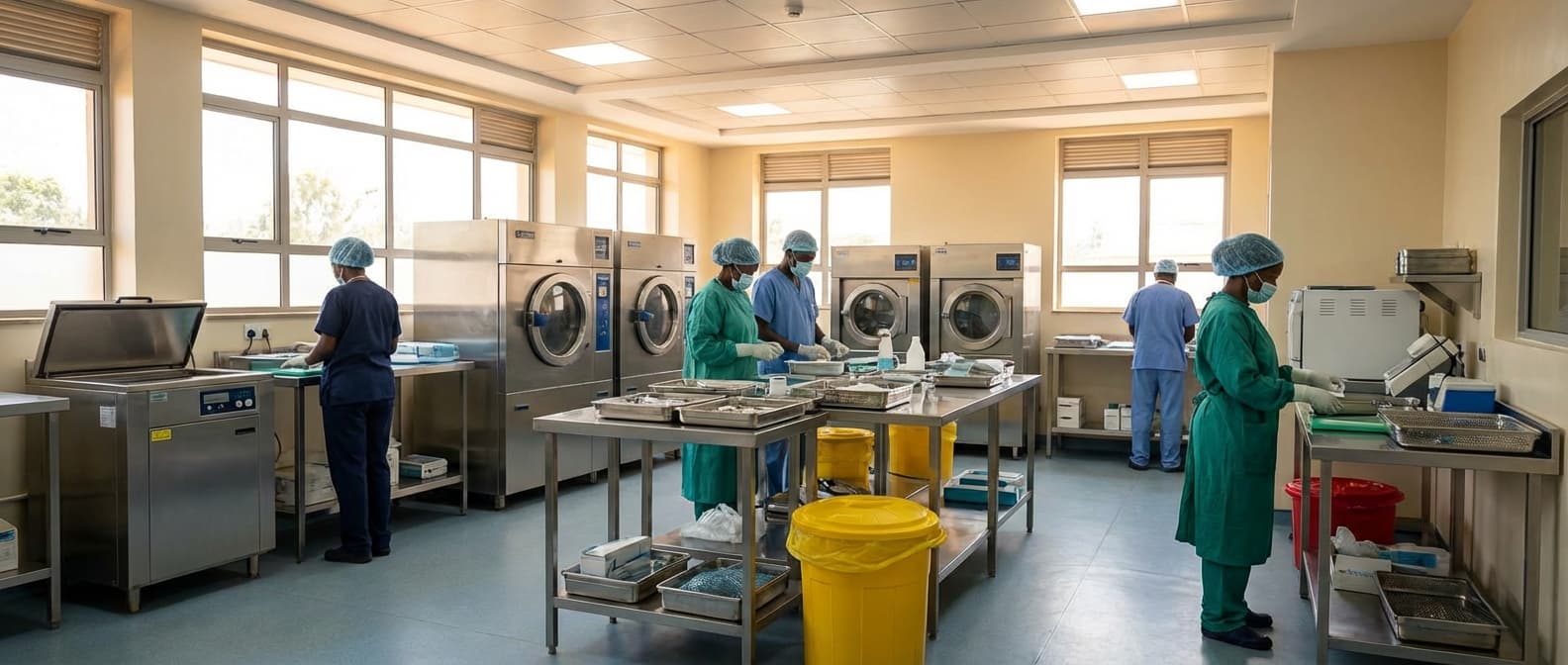
Medical Equipment Decontamination Service (Pre-Repair/Pre-Relocation) in Central African Republic
Engineering Excellence & Technical Support
Medical Equipment Decontamination Service (Pre-Repair/Pre-Relocation) High-standard technical execution following OEM protocols and local regulatory frameworks.
Enhanced Equipment Longevity
Our rigorous pre-repair and pre-relocation decontamination process eliminates harmful bioburdens and chemical residues, preventing secondary damage and extending the operational lifespan of critical medical equipment. This directly reduces the frequency of costly repairs and replacements, optimizing resource allocation for healthcare facilities.
Infection Control Assurance
By neutralizing pathogens and infectious agents before equipment enters repair workshops or undergoes relocation, we significantly mitigate the risk of cross-contamination. This vital step safeguards both medical professionals and future patients, upholding the highest standards of infection control within the Central African Republic's healthcare ecosystem.
Streamlined Operational Efficiency
Our specialized decontamination protocols ensure that medical equipment is prepared for transport or repair with minimal disruption. This proactive approach prevents delays associated with unaddressed contamination, facilitating faster turnaround times for repairs and ensuring essential medical devices are returned to service promptly, thereby maximizing operational uptime.
What Is Medical Equipment Decontamination Service (Pre-repair/pre-relocation) In Central African Republic?
Medical Equipment Decontamination Service (Pre-Repair/Pre-Relocation) in the Central African Republic (CAR) refers to the specialized process of rendering medical devices and associated instrumentation safe for handling, transport, and subsequent servicing or relocation. This service is critical in environments where biohazardous materials may be present and presents a significant infection control challenge. The primary objective is to mitigate the risk of transmission of pathogens to maintenance personnel, logistics handlers, and the environment, thereby upholding public health and safety standards within the healthcare infrastructure.
| Who Needs the Service | Typical Use Cases | Rationale for Service |
|---|---|---|
| Hospitals and Clinics in CAR | Equipment requiring repair by external technicians (manufacturer or third-party). | Prevents transmission of healthcare-associated infections (HAIs) to repair personnel and during the repair process. |
| Diagnostic Laboratories | Relocation of sensitive diagnostic instruments to new facilities or for decommissioning. | Minimizes the risk of environmental contamination with biological samples and pathogens. |
| Government Health Agencies and NGOs | Transfer of equipment between different healthcare sites or during project phases. | Ensures biosecurity and compliance with health regulations during logistical movements. |
| Medical Equipment Suppliers/Distributors | Receipt of returned equipment for refurbishment or assessment prior to resale. | Protects warehouse staff and subsequent handling personnel from residual biohazards. |
| Healthcare Facilities undergoing Renovation or Expansion | Removal of medical devices for temporary storage or relocation during construction. | Safeguards workers and maintains hygiene in areas adjacent to the construction zone. |
Key Aspects of Medical Equipment Decontamination Service (Pre-Repair/Pre-Relocation)
- Purpose: To neutralize or remove infectious agents (e.g., bacteria, viruses, fungi, prions) from medical equipment prior to it being moved or worked on by external parties.
- Scope: Encompasses the cleaning, disinfection, and, where necessary, sterilization of the external surfaces and accessible internal components of medical devices.
- Methodology: Utilizes validated decontamination agents (e.g., EPA-registered disinfectants, sporicides) and protocols tailored to the specific type of equipment and potential contaminants.
- Documentation: Involves rigorous record-keeping to track the decontamination process, including agents used, dates, personnel involved, and verification of efficacy.
- Regulatory Compliance: Adheres to national and international guidelines for infection prevention and control, as well as safe handling of medical waste and hazardous materials.
Who Needs Medical Equipment Decontamination Service (Pre-repair/pre-relocation) In Central African Republic?
This document outlines the critical need for specialized Medical Equipment Decontamination Services (Pre-Repair/Pre-Relocation) within the Central African Republic (CAR). In a region facing persistent health challenges and often operating with limited resources, ensuring the safety and efficacy of medical equipment is paramount. Before any repair or relocation of medical devices can occur, a thorough decontamination process is essential to prevent the spread of infections, protect healthcare workers, and maintain the integrity of the equipment itself. This service is particularly vital for facilities handling a wide range of medical procedures and patient populations.
| Target Customer Type | Key Departments Requiring Decontamination (Pre-Repair/Relocation) | Rationale for Service |
|---|---|---|
| Public Hospitals | All departments, with a focus on high-risk areas like ER, ICU, OR, Maternity, and Infectious Disease Wards. | To prevent cross-contamination between patients and healthcare workers during equipment servicing, ensuring patient safety and operational continuity. Essential for managing outbreaks and maintaining public health infrastructure. |
| Private Hospitals | Similar to public hospitals, with increased emphasis on maintaining a reputation for high-quality and safe patient care. | To safeguard patient trust, comply with any emerging regulatory standards, and ensure the longevity and optimal performance of expensive medical equipment. |
| NGO-Operated Healthcare Facilities | All clinical departments, especially those serving vulnerable populations and often operating in remote or resource-limited settings. | To maintain the health and safety of both patients and dedicated staff working in challenging environments. Crucial for ensuring the effectiveness of humanitarian medical aid. |
| Specialized Clinics (e.g., Dialysis Centers, Oncology Units) | Specific treatment areas, equipment rooms, and sterilization departments. | To prevent the transmission of highly transmissible or resistant pathogens, which can have severe consequences for immunocompromised patients and require specialized handling. |
| Diagnostic Laboratories | Sample processing areas, analytical equipment bays, and sample storage facilities. | To prevent contamination of diagnostic equipment with biological hazards, ensuring accurate test results and protecting laboratory personnel. |
| Blood Banks | Apheresis machines, component separation equipment, and storage units. | To maintain the sterility and safety of blood products for transfusion, preventing transfusion-transmitted infections. |
| Medical Training Institutions | Simulation labs, practical training equipment, and cadaver labs (if applicable). | To provide a safe learning environment for future healthcare professionals and prevent the spread of any potential pathogens from training materials. |
Target Customers and Departments
- Hospitals (Public, Private, NGO-operated)
- Clinics and Health Centers
- Maternity Wards
- Operating Theaters/Surgical Suites
- Intensive Care Units (ICUs)
- Emergency Rooms/Departments
- Laboratories (Diagnostic, Research)
- Blood Banks
- Rehabilitation Centers
- Mobile Medical Units/Field Hospitals
- Medical Training Institutions
Medical Equipment Decontamination Service (Pre-repair/pre-relocation) Process In Central African Republic
This document outlines the standard workflow for Medical Equipment Decontamination Services (Pre-Repair/Pre-Relocation) in the Central African Republic. This process ensures that medical devices are rendered safe for handling, repair, or relocation, mitigating risks of biological contamination. The workflow encompasses all stages from initial inquiry to the successful execution of the decontamination service.
| Stage | Description | Responsible Party | Key Activities | Deliverables/Outcomes | Considerations (CAR Specific) |
|---|---|---|---|---|---|
| The client (hospital, clinic, repair facility) contacts the decontamination service provider to request services for medical equipment requiring pre-repair or pre-relocation decontamination. | Client & Decontamination Service Provider | Client submits inquiry, provides equipment details (type, model, suspected contaminants), and intended purpose (repair/relocation). Provider conducts initial risk assessment based on information. | Initial understanding of service scope and potential risks. | Limited access to specialized equipment or trained personnel in remote areas might necessitate careful assessment of provider capabilities. |
| Based on the initial assessment, the provider prepares a detailed quotation and service agreement. | Decontamination Service Provider & Client | Provider estimates costs (personnel, consumables, specialized equipment, transport), outlines decontamination methods, turnaround time, and safety protocols. Client reviews and approves quotation, signing the service agreement. | Formalized agreement for service delivery. | Currency fluctuations and import restrictions on certain chemicals can impact pricing and availability. Clear payment terms are crucial. |
| Once the agreement is in place, the decontamination service is scheduled, and logistical arrangements are made. | Decontamination Service Provider & Client | Provider and client agree on the date and time for collection or on-site decontamination. Arrangements for transport of equipment and personnel are confirmed. This includes obtaining necessary permits or clearances for movement of equipment or personnel. | Confirmed service schedule and logistical plan. | Infrastructure challenges (poor road conditions, fuel availability, security checkpoints) can significantly impact travel times and require contingency planning. |
| Before decontamination begins, the designated area is prepared, and safety protocols are implemented. | Decontamination Service Provider | Provider ensures the work area is adequately ventilated, secured, and equipped with appropriate Personal Protective Equipment (PPE) for personnel. Waste disposal procedures are established. | Safe and controlled decontamination environment. | Availability of suitable decontamination sites might be limited. Local regulations regarding hazardous waste disposal must be strictly followed, even if infrastructure is basic. |
| The medical equipment is collected from the client's site or transferred to the provider's designated decontamination facility. | Decontamination Service Provider | Trained personnel carefully collect and transport the equipment using appropriate handling techniques and packaging to prevent further contamination or damage during transit. | Secure and documented transfer of equipment. | Security during transit is a significant concern. Escorts or specific security protocols might be required for valuable or sensitive equipment. |
| The core decontamination process is executed using approved methods and chemicals. | Decontamination Service Provider | Equipment is cleaned, disinfected, and/or sterilized according to its type and the nature of suspected contaminants. Procedures adhere to manufacturer guidelines and recognized decontamination standards. | Rendered safe for subsequent handling. | Access to a consistent supply of quality disinfectants and sterilizing agents can be challenging. Temperature and humidity control during the process might be difficult to maintain. |
| The effectiveness of the decontamination process is verified, and all steps are meticulously documented. | Decontamination Service Provider | Visual inspection, and where applicable, biological/chemical indicator testing is performed. A detailed report is generated, including equipment details, decontamination methods used, date, time, and personnel involved. | Proof of successful decontamination and service record. | Limited availability of sophisticated verification tools. Reliance on visual checks and well-documented manual processes might be necessary. |
| The decontaminated equipment is released to the client or transferred to the repair facility/new location. | Decontamination Service Provider & Client | The provider formally hands over the decontaminated equipment. The client acknowledges receipt, often with a signed release form. If for repair, it's transferred to the repair technician. If for relocation, it's moved to the new site. | Equipment is ready for its next phase. | Ensuring the client understands the 'safe to handle' status is crucial, especially if they lack internal protocols for receiving decontaminated items. |
| A brief follow-up is conducted to ensure client satisfaction and address any potential issues. | Decontamination Service Provider | Provider may check in with the client to confirm successful handling of the equipment post-decontamination and address any queries. | Client satisfaction and continuous improvement. | Establishing reliable communication channels can be challenging due to limited connectivity in certain regions. |
Key Stages of Medical Equipment Decontamination Service
- Inquiry & Initial Assessment
- Quotation & Agreement
- Scheduling & Logistics
- Site Preparation & Safety Measures
- Equipment Collection/Transfer
- Decontamination Procedure
- Verification & Documentation
- Equipment Release & Transfer Back
- Post-Service Follow-up
Medical Equipment Decontamination Service (Pre-repair/pre-relocation) Cost In Central African Republic
Estimating the cost of medical equipment decontamination services in the Central African Republic (CAR) for pre-repair or pre-relocation purposes is complex due to several influencing factors. Unlike developed nations with standardized pricing, the CAR's economic landscape, logistical challenges, and the nascent nature of specialized service providers create a more variable cost structure. The local currency, the Central African CFA franc (XAF), is used for all transactions. Services are typically provided by a limited number of specialized cleaning companies or sometimes by internal hospital maintenance teams, depending on the facility's resources and the urgency.
| Equipment Category (Approximate) | Estimated Cost Range (XAF) | Notes |
|---|---|---|
| Small Diagnostic/Examination Equipment (e.g., stethoscopes, blood pressure monitors, basic thermometers) | 5,000 - 15,000 XAF | Basic manual cleaning and disinfection. Low complexity. |
| Medium Diagnostic/Therapeutic Equipment (e.g., ECG machines, nebulizers, simple patient monitors) | 15,000 - 40,000 XAF | May involve more detailed cleaning and specific disinfectant use. Moderate complexity. |
| Complex Medical Devices (e.g., ultrasound machines, anesthesia machines, ventilators, surgical instruments in bulk) | 40,000 - 150,000+ XAF | Requires specialized knowledge, potentially multi-step cleaning, and higher-grade disinfectants. Cost is highly variable based on the exact device and contamination level. |
| Specialized Endoscopes/Surgical Loupes | 50,000 - 200,000+ XAF | Extremely high complexity, requiring specific high-level disinfection protocols and specialized technicians. Often outsourced if available. |
| Large Imaging Equipment (e.g., X-ray machines, CT scanners - external surface decontamination only) | 30,000 - 100,000 XAF | Focus on external surfaces. Internal decontamination is a separate, much more complex process. |
| On-site Decontamination (for large immovable equipment) | Additional 20,000 - 70,000 XAF (plus equipment cost) | Covers travel, setup, and logistical challenges for mobile service. |
Key Pricing Factors for Medical Equipment Decontamination in CAR:
- {"title":"Type and Complexity of Equipment","description":"More intricate equipment requiring specialized disinfection agents and techniques (e.g., endoscopes, ventilators) will naturally incur higher costs than simpler items (e.g., examination tables, basic diagnostic tools)."}
- {"title":"Level of Contamination","description":"The extent of biological or chemical contamination will dictate the intensity and duration of the decontamination process, impacting labor and material costs."}
- {"title":"Decontamination Method Employed","description":"While specific methods might be limited by local availability, the chosen approach (e.g., manual cleaning with disinfectants, steam sterilization, UV-C irradiation) will affect cost. Advanced methods, if available, will be more expensive."}
- {"title":"Location within CAR","description":"Services in major urban centers like Bangui are likely to be more accessible and potentially less expensive than in remote or conflict-affected regions, where logistics and security significantly increase operational costs."}
- {"title":"Urgency of Service","description":"Rush or emergency decontamination services will command a premium due to the need for immediate resource allocation and potential overtime for personnel."}
- {"title":"Provider Reputation and Expertise","description":"Established providers with proven track records and specialized training might charge more, reflecting their reliability and quality of service."}
- {"title":"Volume of Equipment","description":"Larger quantities of equipment may allow for economies of scale, potentially reducing the per-unit cost."}
- {"title":"Consumables and Disinfectant Availability","description":"The cost and availability of specialized disinfectants and cleaning supplies within CAR can fluctuate, impacting overall service expenses."}
- {"title":"Logistical Challenges","description":"Transportation of equipment to and from the decontamination facility, especially if it's off-site, and the associated risks (road conditions, security) will add to the cost."}
- {"title":"Certification and Documentation","description":"If specific decontamination certifications or detailed documentation are required for regulatory or international standards, this may incur additional fees."}
Affordable Medical Equipment Decontamination Service (Pre-repair/pre-relocation) Options
Ensuring medical equipment is thoroughly decontaminated before repair or relocation is a critical step for safety, compliance, and the longevity of the equipment. Our affordable medical equipment decontamination service provides essential solutions designed to offer value and significant cost savings. We understand the budgetary constraints healthcare facilities often face, and our service is structured to deliver premium decontamination without a premium price tag. By offering tailored value bundles and implementing smart cost-saving strategies, we make professional decontamination accessible and efficient. Our process adheres to strict industry standards, safeguarding against biohazards and cross-contamination, ultimately protecting both your staff and patients.
| Cost-Saving Strategy | Description | Benefit |
|---|---|---|
| Pre-booked Service Scheduling | Scheduling decontamination services in advance, especially for multiple pieces of equipment, allows for efficient route planning and resource allocation. | Reduced labor costs due to optimized scheduling, leading to lower per-unit service fees. |
| Multi-Equipment Discounts | Bundling the decontamination of several pieces of equipment in a single service visit. | Significant price reduction on each subsequent item decontaminated within the same appointment. |
| Preventative Maintenance Integration | Combining decontamination with scheduled preventative maintenance checks where feasible. | Minimizes service call frequency and associated travel costs, maximizing equipment uptime. |
| Eco-Friendly Reagent Options | Utilizing cost-effective, yet highly effective, environmentally friendly decontamination agents. | Lower material costs without compromising on disinfection efficacy, contributing to sustainability goals. |
| Digital Documentation Options | Offering digital decontamination reports instead of physical copies where appropriate. | Reduces administrative overhead and material costs associated with printing and mailing. |
Value Bundles for Decontamination Services
- Standard Decontamination Package: Ideal for routine cleaning and preparation for minor repairs. Includes surface cleaning, disinfection with EPA-approved agents, and basic equipment integrity checks.
- Enhanced Decontamination Package: Suitable for equipment that has been exposed to higher-risk environments or requires more thorough cleaning. Adds specialized treatment for porous materials and detailed internal component cleaning where applicable.
- Pre-Relocation Assurance Bundle: Comprehensive decontamination and documentation specifically for equipment being moved between departments or facilities. Includes a detailed decontamination report for compliance and peace of mind.
- Bulk Service Agreement: For facilities with a high volume of equipment requiring regular decontamination. Offers tiered discounts based on the number of units or frequency of service.
Verified Providers In Central African Republic
In the Central African Republic (CAR), ensuring access to reliable and qualified healthcare providers is paramount. Navigating the healthcare landscape can be challenging, and identifying verified professionals is crucial for safe and effective medical treatment. This is where the importance of credential verification comes into play, and Franance Health stands out as a leading entity in this regard.
| Credential Verification Aspect | Franance Health's Approach | Benefit to Patients in CAR |
|---|---|---|
| Educational Qualification Verification | Cross-referencing degrees and certifications with issuing institutions. | Ensures providers have the foundational knowledge and training required. |
| License and Registration Check | Confirming validity and status with relevant national and international medical councils. | Guarantees providers are legally authorized to practice. |
| Professional Experience Validation | Reviewing employment history and obtaining references where applicable. | Confirms practical skills and a track record of service. |
| Background Checks | Screening for any disciplinary actions or malpractice history. | Protects patients from potentially harmful practitioners. |
| Ongoing Monitoring (where applicable) | Periodic re-verification and updates to provider profiles. | Maintains the integrity and accuracy of the verified provider list. |
Why Franance Health Credentials Represent the Best Choice for Verified Providers in CAR:
- Rigorous Vetting Process: Franance Health employs a comprehensive and multi-layered vetting process for all healthcare professionals seeking to be listed on their platform. This goes beyond simple self-declaration and involves thorough background checks, verification of educational qualifications, license confirmation, and examination of professional history.
- International Standards Alignment: Franance Health adheres to international best practices in credential verification, ensuring that the standards applied are recognized globally. This provides a level of assurance to patients that the providers they are connecting with meet high benchmarks of competence and ethics.
- Focus on Local Context: While maintaining international standards, Franance Health also understands the unique challenges and specificities of the healthcare system within the Central African Republic. Their verification process is tailored to account for local licensing bodies and regulatory frameworks, ensuring relevance and accuracy.
- Transparency and Accessibility: Franance Health prioritizes transparency in its operations. Patients can access information about the verified credentials of healthcare providers, fostering trust and enabling informed decision-making. This accessibility is a key differentiator in a region where such information can be difficult to obtain.
- Commitment to Patient Safety: At its core, Franance Health's mission is to enhance patient safety and improve healthcare access. By rigorously verifying providers, they significantly mitigate the risks associated with unqualified or fraudulent medical practitioners, creating a safer environment for individuals seeking care.
- Building a Trusted Network: Through their stringent verification, Franance Health is actively building a network of trusted and reputable healthcare providers in the CAR. This network serves as a vital resource for both local communities and international organizations operating within the country, facilitating access to quality medical services.
Scope Of Work For Medical Equipment Decontamination Service (Pre-repair/pre-relocation)
This Scope of Work (SOW) outlines the requirements for medical equipment decontamination services to be performed prior to equipment repair or relocation. The objective is to ensure that all medical equipment submitted for repair or relocation is free from biohazardous materials, chemical contaminants, and other potentially infectious agents, thereby protecting service technicians, relocation personnel, and the environment. The service provider will be responsible for the complete decontamination of specified medical equipment according to established protocols and regulatory standards. This SOW details the technical deliverables, standard specifications, and general requirements for this service.
| Section | Description | Standard Specifications/Requirements |
|---|---|---|
| 1.0 Equipment Identification and Pre-Screening | Initial assessment of equipment for visible contamination and hazard classification. | All equipment must be identified with a unique asset tag or serial number. Pre-screening for gross contamination (e.g., visible blood, bodily fluids) is the responsibility of the originating department/facility prior to pickup by the service provider. Any equipment found with gross contamination upon receipt by the service provider will be rejected and returned to the originating department. |
| 2.0 Decontamination Methodology | The approved process for removing contaminants from the equipment surfaces and internal components where applicable. | The service provider shall utilize an approved, validated decontamination process. This may include, but is not limited to: manual cleaning with approved disinfectants, ultrasonic cleaning, or automated washing systems. The specific method will be dictated by the equipment type and the nature of potential contaminants. A list of approved disinfectants and cleaning agents must be provided by the service provider for review and approval. |
| 3.0 Disinfectants and Cleaning Agents | Chemicals and solutions used to eliminate biological and chemical contaminants. | All disinfectants and cleaning agents used must be EPA-registered for healthcare settings, approved by the manufacturer of the medical equipment (if applicable), and effective against a broad spectrum of pathogens (including but not limited to bacteria, viruses, fungi, and mycobacteria). Material Safety Data Sheets (MSDS) or Safety Data Sheets (SDS) for all chemicals used must be provided. Disinfectant efficacy validation data shall be available upon request. |
| 4.0 Decontamination Process for Specific Equipment Types | Tailored decontamination procedures based on the type and complexity of medical equipment. | Procedures must be developed for different categories of equipment, including but not limited to: imaging equipment (CT, MRI, X-ray), patient monitoring devices, surgical instruments, laboratory equipment, and diagnostic tools. Consideration must be given to delicate components, electronics, and materials sensitive to specific cleaning agents. Disassembly and reassembly for cleaning, if required and approved by the equipment manufacturer, will be performed by qualified technicians. |
| 5.0 Personal Protective Equipment (PPE) | Protective gear required for personnel performing decontamination. | Service provider personnel shall wear appropriate PPE, including but not limited to: gloves (nitrile or equivalent), eye protection (goggles or face shield), respiratory protection (if required by the chemicals used or hazard assessment), and protective clothing (gowns or coveralls). All PPE must meet relevant OSHA standards. |
| 6.0 Waste Management and Disposal | Procedures for handling and disposing of contaminated waste generated during the decontamination process. | All waste generated from the decontamination process, including used cleaning materials, PPE, and any contaminated disposable parts, must be handled, stored, transported, and disposed of in accordance with all applicable federal, state, and local regulations for biohazardous and/or chemical waste. The service provider is responsible for ensuring proper disposal. Documentation of disposal shall be maintained. |
| 7.0 Quality Control and Assurance | Measures to ensure the effectiveness and consistency of the decontamination service. | The service provider shall implement a robust quality control program. This may include periodic internal audits, validation of cleaning processes, and monitoring of disinfectant concentrations. The service provider must be able to demonstrate adherence to their documented quality assurance procedures. |
| 8.0 Documentation and Reporting | Records and certifications provided for each decontaminated piece of equipment. | For each decontaminated piece of equipment, the service provider shall provide a signed 'Certificate of Decontamination'. This certificate shall include: equipment identification (asset tag/serial number), date of decontamination, name/signature of the technician who performed the service, a list of cleaning agents/disinfectants used, and a statement confirming that the equipment has been decontaminated according to the agreed-upon protocols and is safe for repair or relocation. Detailed service logs will be maintained by the service provider. |
| 9.0 Training and Competency | Qualifications of personnel performing decontamination services. | All personnel performing decontamination services must be adequately trained in infection control principles, proper use of disinfectants, handling of hazardous materials, and specific decontamination procedures for medical equipment. Proof of training and competency shall be made available upon request. |
| 10.0 Facility and Equipment Requirements | Standards for the service provider's decontamination facility and equipment. | The service provider's decontamination facility must be designed and operated to prevent cross-contamination. Adequate ventilation, appropriate water supply, and waste management infrastructure are required. Any specialized decontamination equipment used by the provider must be well-maintained and calibrated. |
Key Objectives and Deliverables
- Ensure the safety of personnel involved in repair and relocation processes.
- Prevent the spread of infectious agents and biohazards.
- Comply with all relevant local, state, and federal regulations regarding medical waste and hazardous materials.
- Provide a certificate of decontamination for each piece of equipment.
- Maintain detailed records of decontamination processes and materials used.
Service Level Agreement For Medical Equipment Decontamination Service (Pre-repair/pre-relocation)
This Service Level Agreement (SLA) outlines the response times and uptime guarantees for the Medical Equipment Decontamination Service (Pre-Repair/Pre-Relocation). This service ensures that medical equipment is thoroughly decontaminated to meet safety and regulatory standards prior to undergoing repair or relocation. This SLA applies to all contracted clients and service providers involved in this decontamination process.
| Service Type | Response Time (Business Hours) | Response Time (Emergency Hours) | Uptime Guarantee (Monthly) |
|---|---|---|---|
| Decontamination (Critical Equipment) | Within 2 hours of Service Request | Within 4 hours of Service Request | 98% |
| Decontamination (Standard Equipment) | Within 4 hours of Service Request | Within 8 hours of Service Request | 95% |
Key Definitions
- Decontamination: The process of eliminating or reducing to an acceptable level the number of microorganisms on or within medical equipment, rendering it safe for further handling, repair, or relocation.
- Response Time: The maximum allowable time from the initiation of a service request (e.g., notification of need for decontamination) to the commencement of decontamination activities by the service provider.
- Uptime Guarantee: A measure of the service provider's ability to be available and ready to perform decontamination services when requested, within the agreed-upon response times.
- Service Request: A formal notification from the client to the service provider, indicating that a piece of medical equipment requires decontamination.
- Critical Equipment: Medical equipment essential for patient care, where any delay in decontamination could significantly impact patient safety or operational continuity.
- Standard Equipment: Medical equipment that is not classified as critical but still requires decontamination.
- Business Hours: Defined working hours of the service provider, typically Monday to Friday, 9:00 AM to 5:00 PM, excluding public holidays.
- Emergency Hours: Hours outside of Business Hours, including evenings, nights, weekends, and public holidays.
Frequently Asked Questions

Ready when you are
Let's scope your Medical Equipment Decontamination Service (Pre-Repair/Pre-Relocation) in Central African Republic project in Central African Republic.

Scaling healthcare logistics and technical systems across the entire continent.