
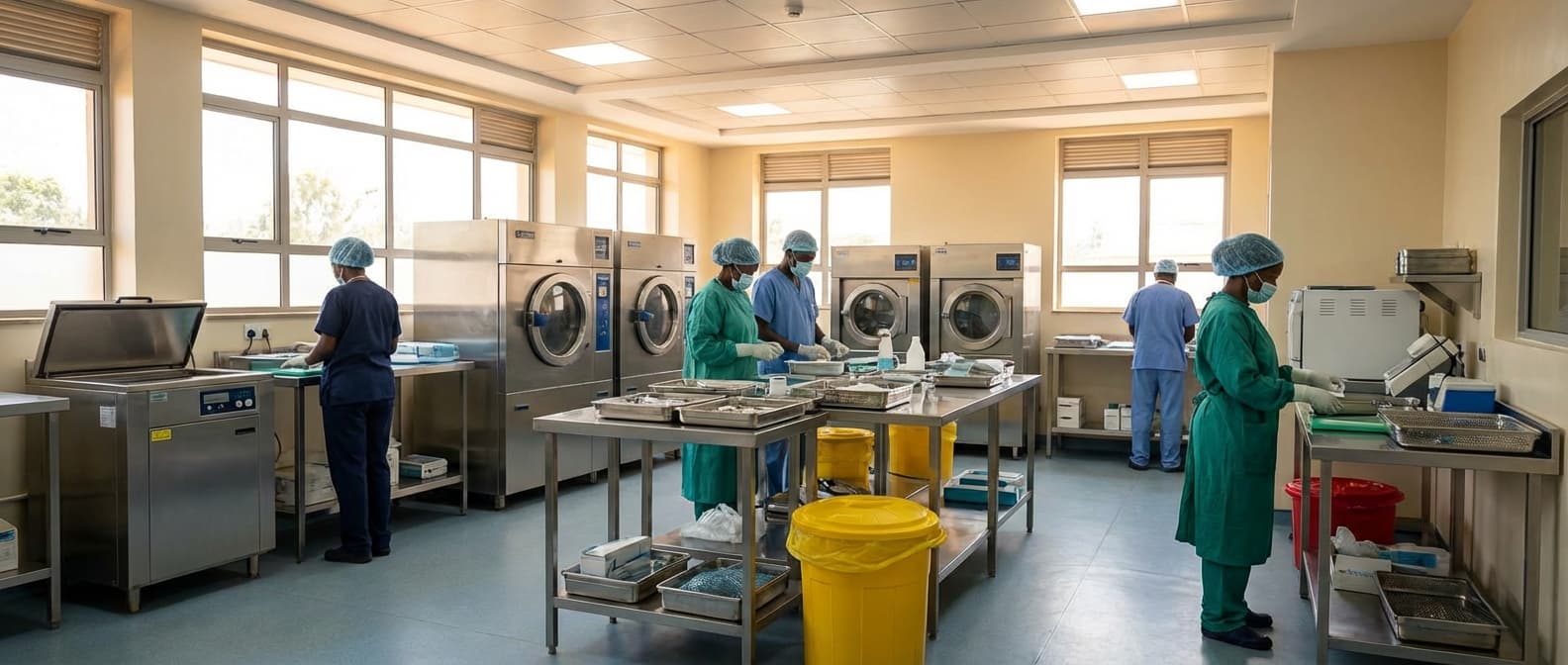
Infection-Control Readiness Support Service for Reusable Equipment in Central African Republic
Engineering Excellence & Technical Support
Infection-Control Readiness Support Service for Reusable Equipment High-standard technical execution following OEM protocols and local regulatory frameworks.
Sterilization & Disinfection Expertise
Our service provides on-site technical support for the validation and optimization of sterilization and disinfection protocols for reusable medical equipment, ensuring compliance with international safety standards and reducing the risk of healthcare-associated infections.
Equipment Maintenance & Repair
We offer expert maintenance and repair services for critical infection control equipment, including autoclaves, washing machines, and sterilization monitoring devices, guaranteeing their operational efficiency and prolonging their lifespan.
Capacity Building & Training
Our program includes hands-on training for local healthcare staff on best practices for the safe handling, cleaning, disinfection, and sterilization of reusable medical devices, empowering them to maintain high standards of infection prevention and control.
What Is Infection-control Readiness Support Service For Reusable Equipment In Central African Republic?
Infection-Control Readiness Support Service for Reusable Equipment (ICRS-RE) in the Central African Republic (CAR) refers to a specialized program designed to bolster the capacity of healthcare facilities to safely and effectively manage reusable medical devices. This service addresses critical gaps in infection prevention and control (IPC) protocols, particularly concerning the sterilization, disinfection, and maintenance of instruments and equipment that are reused on multiple patients. The overarching objective is to minimize the transmission of healthcare-associated infections (HAIs) by ensuring that reusable medical items are rendered sterile or sufficiently disinfected prior to each use, thereby protecting both patients and healthcare workers.
| Who Needs ICRS-RE? | Typical Use Cases |
|---|---|
Public and private healthcare facilities in the Central African Republic, including:
| Ensuring the sterility of surgical instruments (scalpels, forceps, retractors) prior to operative procedures. Disinfection of reusable respiratory therapy equipment (e.g., nebulizer masks, tubing) to prevent transmission of airborne pathogens. Sterilization of dental instruments (e.g., drills, mirrors) between patient appointments. Reprocessing of endoscopes and other complex medical devices requiring specialized cleaning and sterilization. Establishing safe protocols for the reuse of thermometers, stethoscopes, and blood pressure cuffs. Implementing effective decontamination procedures for instruments used in minor procedures and wound care. |
Key Components of ICRS-RE:
- Assessment of existing IPC infrastructure and practices related to reusable equipment.
- Development and implementation of standardized sterilization and disinfection protocols aligned with international guidelines (e.g., WHO, CDC).
- Provision of technical training and capacity building for healthcare personnel involved in reprocessing reusable medical devices.
- Facilitation of the procurement, installation, and maintenance of appropriate sterilization and disinfection equipment (e.g., autoclaves, washer-disinfectors, chemical indicators).
- Establishment of robust monitoring and evaluation systems to track adherence to protocols and the effectiveness of IPC measures.
- Supply chain management support for essential consumables required for sterilization and disinfection (e.g., cleaning agents, sterilants, packaging materials).
- Guidance on waste management practices associated with the reprocessing of reusable equipment.
- Development and dissemination of educational materials and standard operating procedures (SOPs).
Who Needs Infection-control Readiness Support Service For Reusable Equipment In Central African Republic?
The Infection-Control Readiness Support Service for Reusable Equipment in the Central African Republic is designed to bolster the safety and efficacy of healthcare delivery by ensuring that reusable medical devices are consistently sterilized, disinfected, and managed according to international standards. This service is crucial for preventing healthcare-associated infections (HAIs) which disproportionately impact vulnerable populations and strain limited resources.
| Customer Segment | Key Departments/Personnel | Specific Needs Addressed |
|---|---|---|
| Public Hospitals | Sterilization Unit, Operating Theatre, ICU, Maternity, Nursing Staff, IPC Officer, Hospital Management | Reliable access to sterilized instruments, prevention of surgical site infections, reduction of patient-to-patient transmission of HAIs, capacity building for sterilization staff, equipment maintenance and validation. |
| Private Clinics & Health Centers | Clinical Staff (Doctors, Nurses), Technicians, Clinic Management | Ensuring compliance with basic infection control protocols, providing safe patient care, upgrading sterilization practices, training staff on proper handling of reusable equipment. |
| Surgical Centers | Surgeons, Anesthesiologists, Operating Room Nurses, Sterilization Technicians, Quality Assurance Team | Strict adherence to sterilization guidelines for surgical instruments, reducing the risk of post-operative infections, ensuring the longevity and functionality of specialized surgical tools. |
| Laboratories | Lab Technicians, Lab Managers, Quality Control Officers | Sterilization of laboratory equipment (e.g., glassware, instruments), safe handling of biological samples, prevention of cross-contamination, compliance with biosafety standards. |
| Ministry of Health (National & Regional) | IPC Directorate, Public Health Programs, Procurement Units, Training Departments | Establishing national standards for reusable equipment management, monitoring compliance, supporting the development of training curricula, facilitating procurement of appropriate sterilization equipment and consumables, resource allocation for IPC initiatives. |
| NGOs and International Health Organizations | Program Managers, Field Coordinators, Healthcare Facility Staff | Ensuring that healthcare facilities supported by their programs meet minimum IPC standards, capacity building for local healthcare workers, implementing sustainable infection control practices, reporting on health outcomes and safety metrics. |
Target Customers and Departments
- Hospitals (Public and Private)
- Clinics and Health Centers
- Surgical Centers
- Dental Practices
- Laboratories
- Maternity Wards
- Emergency Rooms
- Intensive Care Units (ICUs)
- Operating Theaters
- Sterilization Departments (Centralized & Decentralized)
- Procurement Departments
- Infection Prevention and Control (IPC) Committees/Officers
- Ministry of Health and its regional branches
- Non-Governmental Organizations (NGOs) involved in healthcare provision
- International Health Organizations
Infection-control Readiness Support Service For Reusable Equipment Process In Central African Republic
This document outlines the workflow for the Infection-Control Readiness Support Service for Reusable Equipment Processes in the Central African Republic. This service aims to strengthen the capacity of healthcare facilities in the country to safely reprocess and manage reusable medical equipment, thereby reducing the risk of healthcare-associated infections. The process begins with an initial inquiry from a healthcare facility or governing body and culminates in the successful implementation and ongoing support of improved infection control practices for reusable equipment.
| Phase | Key Activities | Deliverables/Outcomes | Responsible Parties | Timeline (Indicative) |
|---|---|---|---|---|
| Reception of inquiry from healthcare facility or Ministry of Health. Initial discussion to understand the scope and urgency of needs. Preliminary identification of key challenges related to reusable equipment reprocessing. | Confirmation of interest in the service. Basic understanding of the facility's context. Agreement on the next steps. | Inquiring Facility/Ministry of Health, Support Service Provider | 1-2 weeks |
| Development of a detailed service proposal outlining scope, objectives, methodology, budget, and timelines. Presentation and discussion of the proposal with the inquiring party. Finalization of contractual agreement. | Formalized understanding of the service. Signed Memorandum of Understanding (MoU) or Service Level Agreement (SLA). | Support Service Provider, Inquiring Facility/Ministry of Health | 2-3 weeks |
| Deployment of a technical assessment team to the healthcare facility. Review of existing infrastructure, equipment, supplies, and human resources. Observation of current reprocessing procedures. Interviews with relevant staff. Identification of specific gaps in infrastructure, supplies, protocols, and training. | Comprehensive assessment report. Detailed gap analysis report identifying areas for improvement. | Support Service Provider (Assessment Team) | 2-4 weeks |
| Based on the gap analysis, creation of a specific, measurable, achievable, relevant, and time-bound (SMART) action plan. Prioritization of interventions. Identification of required resources (human, financial, material). Definition of key performance indicators (KPIs). | Approved and finalized action plan. Defined roles and responsibilities. | Support Service Provider, Inquiring Facility/Ministry of Health | 1-2 weeks |
| Development and delivery of customized training modules for healthcare workers on infection prevention and control (IPC) principles for reusable equipment. Topics include: cleaning, disinfection, sterilization, packaging, storage, and waste management. Hands-on practical sessions. Train-the-trainer programs. | Trained healthcare workforce. Increased knowledge and skills in safe reprocessing. Improved adherence to protocols. | Support Service Provider (Trainers), Inquiring Facility Staff | 4-8 weeks (can be staggered) |
| Facilitation or guidance for procurement of essential equipment (e.g., autoclaves, disinfectors, washing stations). Assistance with minor infrastructure modifications to create dedicated reprocessing areas. Supply chain strengthening for consumables. | Functional reprocessing areas. Availability of necessary equipment and supplies. | Support Service Provider, Inquiring Facility/Ministry of Health, Local Suppliers/Partners | Ongoing, concurrent with other phases |
| Phased implementation of new or improved reprocessing protocols. Supervision and mentorship during the initial rollout period. Establishment of quality assurance mechanisms. | Adoption of standardized and safe reprocessing procedures. Reduced risk of equipment-related infections. | Inquiring Facility Staff, Support Service Provider (Supervisors) | 4-12 weeks |
| Regular monitoring of implemented protocols and adherence to standards. Data collection on KPIs (e.g., infection rates, equipment functionality, staff competency). Periodic reviews and feedback sessions. | Performance data and reports. Identification of areas needing further adjustment. Evidence of impact and effectiveness. | Support Service Provider, Inquiring Facility/Ministry of Health | Ongoing, monthly/quarterly |
| Provision of ongoing technical assistance and troubleshooting. Periodic refresher training sessions. Support for updating protocols as guidelines evolve. Continuous quality improvement initiatives. | Sustained IPC practices. Long-term capacity of the facility. Adaptation to new challenges and technologies. | Support Service Provider, Inquiring Facility Staff | Continuous/As needed |
Infection-Control Readiness Support Service Workflow: Reusable Equipment Process
- Initial Inquiry and Needs Assessment
- Service Proposal and Agreement
- On-site Assessment and Gap Analysis
- Development of Tailored Action Plan
- Training and Capacity Building
- Procurement and Infrastructure Support
- Implementation and Rollout
- Monitoring and Evaluation
- Ongoing Support and Refresher Training
Infection-control Readiness Support Service For Reusable Equipment Cost In Central African Republic
Providing infection-control readiness support services for reusable equipment in the Central African Republic (CAR) is crucial for public health. The pricing for such services is influenced by a multitude of factors, making it challenging to provide a single, definitive cost. These factors include the scope of services, the specific type and volume of reusable equipment, the location of the service within CAR, the availability of skilled personnel, logistical complexities, and the required level of urgency. Given the economic conditions and logistical infrastructure in CAR, costs will generally be higher than in more developed nations. Local currency (Central African CFA franc - XAF) pricing will reflect these realities.
| Service Component / Equipment Category | Estimated Cost Range (XAF) | Notes |
|---|---|---|
| Initial Site Assessment & Needs Analysis | 150,000 - 500,000 | Varies by facility size and complexity. |
| Basic Disinfection & Cleaning (per item) | 10,000 - 30,000 | For simpler instruments, using standard disinfectants. |
| Advanced Sterilization (e.g., Autoclave, Plasma) (per item) | 25,000 - 75,000 | For complex surgical instruments, requires specialized cycles and consumables. |
| Sterilization Equipment Validation & Calibration (per unit) | 300,000 - 1,000,000+ | Depends on the type and condition of the equipment. May require international expert travel. |
| Staff Training (per session/person) | 50,000 - 200,000 | Includes materials and trainer fees. Can be a package deal for a facility. |
| Consumables (per sterilization cycle/batch) | 5,000 - 20,000 | Detergents, indicators, wrapping materials, etc. |
| Logistical Costs (Transportation, Accommodation) | Variable (e.g., 100,000 - 500,000+ per trip) | Highly dependent on distance and mode of transport. Can be significant for remote areas. |
| Comprehensive Service Package (e.g., per facility per year) | 2,000,000 - 10,000,000+ | Includes regular assessments, maintenance, training, and supply chain support. Highly customizable. |
| Specific Equipment Support (e.g., Endoscopes, Ventilators) | 50,000 - 250,000+ per item | Requires specialized cleaning agents, high-level disinfection, or sterilization processes. |
Key Pricing Factors for Infection-Control Readiness Support Services (Reusable Equipment) in CAR:
- Scope of Services: Comprehensive services like initial assessment, deep cleaning, sterilization, validation, staff training, and ongoing maintenance will command higher prices than isolated services.
- Equipment Type & Volume: Different medical devices require varying levels of expertise and specialized consumables for disinfection and sterilization. The number of items to be serviced will directly impact costs.
- Location & Accessibility: Services provided in remote or difficult-to-access regions within CAR will incur higher logistical costs (transportation, accommodation for personnel, security).
- Personnel Expertise & Availability: The need for highly trained and certified infection control specialists, biomedical engineers, or technicians can significantly influence pricing. Shortages of such expertise in CAR will drive up costs.
- Consumables & Sterilization Methods: The cost of disinfectants, sterilizing agents, disposable supplies (gloves, masks, filters), and the energy required for sterilization processes are direct cost components.
- Equipment Maintenance & Calibration: If the support service includes maintenance or calibration of existing sterilization equipment, these costs will be factored in.
- Training & Capacity Building: The extent and duration of training provided to local healthcare staff on infection control protocols and equipment handling will add to the overall cost.
- Regulatory Compliance & Documentation: Ensuring adherence to national and international infection control standards and providing detailed documentation will contribute to the service price.
- Urgency & Emergency Response: Services required on short notice or for emergency situations will likely incur premium charges.
- Infrastructure & Utilities: The availability and reliability of electricity, clean water, and waste disposal at the service location can impact operational costs.
- Partnerships & Local Engagement: Collaboration with local healthcare facilities, NGOs, or government bodies can sometimes lead to cost-sharing or more efficient resource utilization, potentially influencing pricing.
Affordable Infection-control Readiness Support Service For Reusable Equipment Options
Our Affordable Infection-Control Readiness Support Service is designed to equip organizations with comprehensive solutions for maintaining the highest standards of hygiene for their reusable medical equipment. We understand the critical importance of preventing healthcare-associated infections (HAIs) and the financial strain that can accompany robust infection control programs. This service focuses on providing accessible, effective, and cost-efficient strategies to ensure your reusable equipment is always safe and compliant.
We offer flexible 'Value Bundles' that combine essential services and resources into cost-effective packages. These bundles are tailored to meet the diverse needs of various healthcare settings, from small clinics to larger hospitals. By bundling services, we aim to simplify procurement, ensure comprehensive coverage, and deliver significant savings compared to sourcing individual components.
Our cost-saving strategies are embedded in every aspect of our service, including optimized processes, bulk purchasing of supplies, preventive maintenance recommendations, and data-driven insights to reduce waste and improve efficiency. We empower your staff with the knowledge and tools necessary to maintain a proactive approach to infection control, minimizing costly errors and downtime.
| Cost-Saving Strategy | Description | Benefit |
|---|---|---|
| Bulk Purchasing of Consumables | Negotiating favorable pricing for cleaning agents, disinfectants, personal protective equipment (PPE), and other essential supplies through aggregated demand. | Reduces per-unit cost, leading to significant savings on recurring supply expenses. |
| Preventive Maintenance Guidance | Providing expert recommendations and schedules for the regular maintenance of sterilization and disinfection equipment to prevent breakdowns. | Minimizes costly emergency repairs, extends equipment lifespan, and ensures operational continuity. |
| Staff Training & Empowerment | Offering standardized and specialized training programs to ensure staff competency in infection control procedures. | Reduces the likelihood of procedural errors that can lead to reprocessing, equipment damage, or HAIs, all of which are financially burdensome. |
| Optimized Workflow Analysis | Assisting in identifying and streamlining processes for cleaning, disinfection, and storage of reusable equipment. | Increases efficiency, reduces labor costs, and minimizes the risk of contamination due to mishandled equipment. |
| Data-Driven Insights & Reporting | Leveraging data to track compliance, identify trends, and optimize resource allocation related to infection control. | Enables informed decision-making, targeted interventions, and a reduction in unnecessary expenditures. |
| Focus on Reusable Equipment Longevity | Educating on proper handling and maintenance techniques specifically for reusable equipment to extend its functional life. | Decreases the frequency of costly equipment replacement. |
Key Value Bundle Options
- Essentials Bundle: Includes foundational training for staff on cleaning and disinfection protocols, a starter kit of approved cleaning agents and consumables, and basic equipment assessment checklists.
- Proactive Bundle: Builds upon the Essentials Bundle by adding regular remote support consultations, access to an online resource library of best practices and regulatory updates, and a more comprehensive consumable supply replenishment program.
- Comprehensive Bundle: Our most robust offering, encompassing all aspects of the Proactive Bundle, plus on-site training sessions, personalized risk assessments, and tailored equipment maintenance schedules. This bundle is ideal for organizations seeking a fully integrated infection control solution.
- Customizable Bundle: For organizations with unique needs or specific budget constraints, we offer the flexibility to create a bespoke bundle by selecting individual services and support modules.
Verified Providers In Central African Republic
Navigating healthcare in the Central African Republic (CAR) can be challenging. Ensuring you receive care from verified and reputable providers is paramount. Franance Health stands out as a leading entity, offering a robust network of credentialed healthcare professionals. Their commitment to stringent verification processes guarantees that their affiliated providers meet high standards of medical expertise, ethical practice, and patient safety. This dedication makes Franance Health the optimal choice for individuals seeking reliable and quality medical services within the CAR.
| Credential Aspect | Franance Health Standard | Benefit for Patients |
|---|---|---|
| Medical Licensing | Verified and up-to-date licenses from recognized bodies. | Ensures providers are legally authorized and qualified to practice. |
| Professional Experience | Thorough review of educational background and clinical experience. | Guarantees access to skilled and experienced medical practitioners. |
| Specialty Certifications | Confirmation of specialized training and certifications. | Provides access to specialists for specific medical needs. |
| Ethical Conduct | Background checks and adherence to a strict code of ethics. | Promotes trustworthy and patient-centered care. |
| Facility Standards | Where applicable, verification of clinic and hospital infrastructure. | Supports the delivery of care in safe and appropriate environments. |
Why Franance Health Credentials Matter in CAR
- Rigorous vetting of medical professionals to ensure qualifications and experience.
- Commitment to upholding ethical standards in healthcare delivery.
- Enhanced patient safety through verified practices and facilities.
- Access to a network of trusted and competent healthcare providers.
- Peace of mind knowing your health is in qualified hands.
Scope Of Work For Infection-control Readiness Support Service For Reusable Equipment
This Scope of Work (SOW) outlines the requirements for a consulting service to enhance the infection-control readiness of healthcare facilities regarding the reprocessing and management of reusable medical equipment. The service will focus on assessing current practices, identifying gaps, recommending improvements, and developing standardized protocols to ensure patient safety and regulatory compliance. This document details the technical deliverables and standard specifications expected from the service provider.
| Deliverable | Description | Standard Specifications / Key Components |
|---|---|---|
| Current State Assessment Report | Detailed analysis of existing reprocessing practices, including strengths, weaknesses, and areas for improvement. | Includes: Workflow mapping, equipment inventory and condition, staff competency assessment, policy and procedure review, regulatory compliance audit findings, risk assessment matrix. |
| Gap Analysis Report | Identification and quantification of deviations from best practices and regulatory requirements. | Includes: Specific areas of non-compliance, potential patient safety risks, recommended corrective actions ranked by priority. |
| Standard Operating Procedures (SOPs) for Reusable Equipment Reprocessing | Comprehensive, step-by-step protocols for cleaning, disinfection, and sterilization of all categories of reusable medical equipment. | Includes: Equipment-specific instructions, cleaning agent and disinfectant efficacy data, validated sterilization cycles, documentation requirements, personnel responsibilities, disposal procedures for contaminated items. |
| Training Program Manual | A structured curriculum for educating healthcare personnel on infection control principles and specific reprocessing techniques. | Includes: Learning objectives, training modules (e.g., basic infection control, specific equipment reprocessing, documentation, hazard recognition), assessment methods (e.g., quizzes, practical demonstrations), record-keeping guidelines. |
| Recommendations for Workflow Optimization & Equipment | Actionable advice for improving the efficiency, safety, and effectiveness of the reprocessing area. | Includes: Layout and design recommendations, equipment procurement guidance (e.g., washer-disinfectors, sterilizers, monitoring devices), inventory management strategies, staff scheduling and resource allocation. |
| Monitoring and Auditing Framework | A system for continuous evaluation of reprocessing practices and performance. | Includes: Key performance indicators (KPIs) for reprocessing, audit checklists (e.g., process audits, outcome audits), reporting templates, root cause analysis procedures for deviations, feedback mechanisms. |
| Final Report and Implementation Roadmap | Consolidated findings, recommendations, and a phased plan for implementing the proposed changes. | Includes: Summary of all deliverables, prioritized action plan with timelines and responsibilities, resource requirements, risk mitigation strategies for implementation. |
Key Service Objectives
- Conduct a comprehensive assessment of existing reusable equipment reprocessing workflows.
- Evaluate compliance with relevant national and international infection control guidelines (e.g., CDC, WHO, local health authorities).
- Identify deficiencies in personnel training, equipment maintenance, and environmental controls.
- Develop tailored, evidence-based protocols for cleaning, disinfection, and sterilization of all reusable equipment types.
- Provide recommendations for optimized workflow design and equipment selection.
- Develop a comprehensive training program for staff involved in reprocessing.
- Establish a framework for ongoing monitoring, auditing, and performance improvement.
Service Level Agreement For Infection-control Readiness Support Service For Reusable Equipment
This Service Level Agreement (SLA) outlines the response times and uptime guarantees for the Infection-Control Readiness Support Service for Reusable Equipment. This service ensures that critical reusable equipment is maintained in a state of optimal readiness for infection control, minimizing downtime and associated risks. The service encompasses proactive monitoring, preventative maintenance, and timely incident response related to the infection control functionality of designated reusable equipment.
| Service Component | Response Time Target | Uptime Guarantee |
|---|---|---|
| Critical Incident Response (e.g., equipment failure impacting infection control): Notification and initial diagnostic attempt | Within 30 minutes of critical incident detection. | N/A (Focus is on rapid response and resolution) |
| Critical Incident Response: Dispatch of qualified technician for on-site resolution (if required) | Within 4 business hours of critical incident detection. | N/A (Focus is on rapid response and resolution) |
| Non-Critical Incident Response: Notification and initial diagnostic attempt for non-critical issues affecting infection control functionality | Within 4 business hours of incident detection. | N/A (Focus is on timely resolution) |
| Preventative Maintenance Scheduling: Confirmation of scheduled maintenance slot | Within 2 business days of request or scheduled period. | N/A (Focus is on proactive scheduling) |
| Proactive Monitoring System Availability | N/A | 99.5% Uptime |
| Support Portal / Communication Channel Availability | N/A | 99.8% Uptime |
Key Service Components
- Proactive monitoring of infection control parameters for specified reusable equipment.
- Scheduled preventative maintenance to ensure optimal performance and compliance.
- Incident detection and notification for any deviations from infection control standards.
- On-demand support for troubleshooting and resolution of infection control-related issues.
- Regular reporting on equipment readiness and service performance.
Frequently Asked Questions

Ready when you are
Let's scope your Infection-Control Readiness Support Service for Reusable Equipment in Central African Republic project in Central African Republic.

Scaling healthcare logistics and technical systems across the entire continent.