
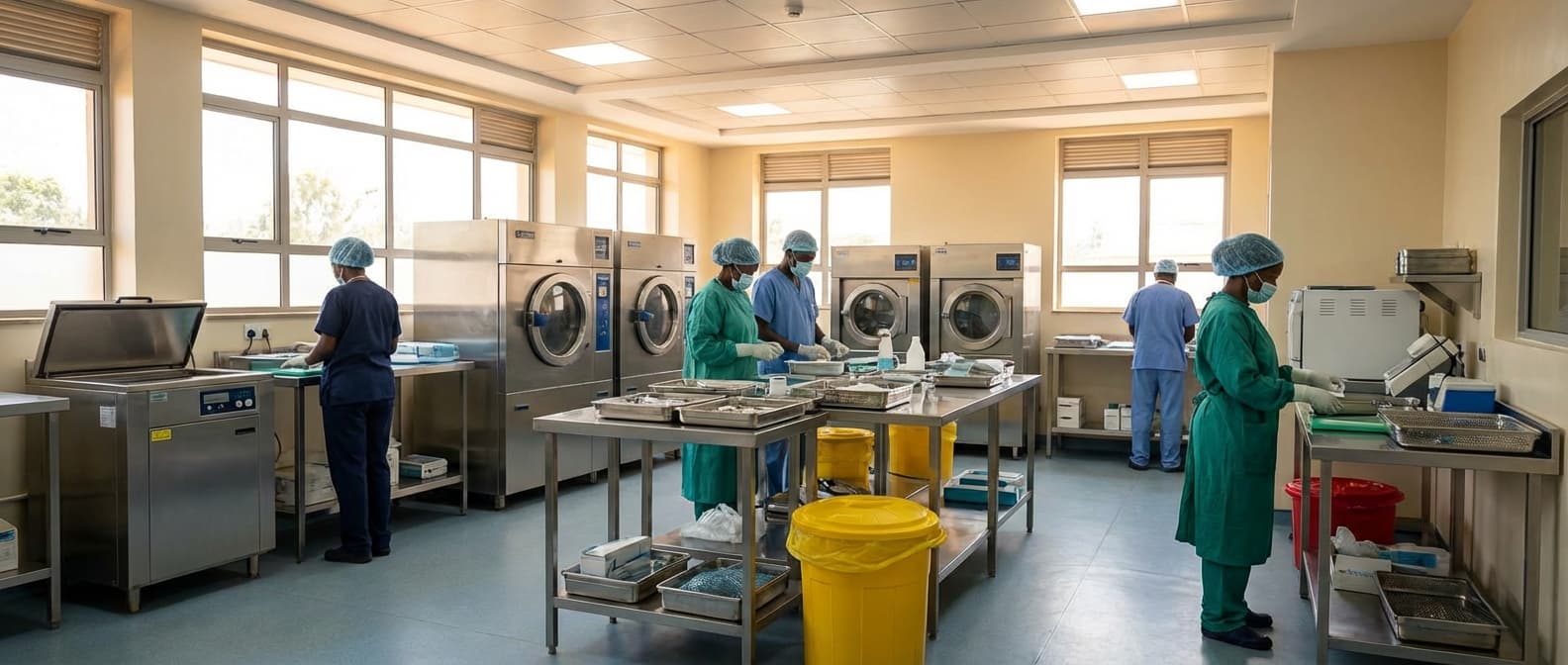
Endoscope Reprocessing Equipment Support Service in Central African Republic
Engineering Excellence & Technical Support
Endoscope Reprocessing Equipment Support Service High-standard technical execution following OEM protocols and local regulatory frameworks.
Rapid On-Site Repair & Preventative Maintenance
Ensuring minimal downtime for critical endoscope reprocessing equipment in remote CAR facilities through swift on-site technical support and scheduled preventative maintenance, maximizing operational efficiency and patient safety.
Optimized Workflow & Compliance Training
Providing expert technical guidance to optimize reprocessing workflows and deliver comprehensive training on equipment operation and maintenance, ensuring adherence to international standards and best practices within the Central African Republic's healthcare settings.
Sustainable Equipment Longevity & Parts Support
Facilitating the long-term operational viability of endoscope reprocessing equipment through specialized technical support, including the sourcing and provision of critical spare parts, even in challenging logistical environments across the Central African Republic.
What Is Endoscope Reprocessing Equipment Support Service In Central African Republic?
Endoscope reprocessing equipment support service in the Central African Republic (CAR) refers to the provision of specialized technical assistance, maintenance, repair, and potentially installation services for automated endoscope reprocessors (AERs) and associated sterilization/disinfection equipment used in healthcare facilities. This service is critical for ensuring the safe and effective reuse of flexible and rigid endoscopes, thereby preventing the transmission of healthcare-associated infections (HAAs) and maintaining the operational readiness of endoscopic procedures. Given the limited infrastructure and technical expertise often found in developing regions like the CAR, such support is indispensable.
| Who Needs Endoscope Reprocessing Equipment Support Service? | Typical Use Cases | ||||
|---|---|---|---|---|---|
| Hospitals and Clinics: Particularly those performing endoscopic procedures (gastroscopy, colonoscopy, bronchoscopy, cystoscopy, laparoscopy, etc.) | Diagnostic Endoscopy Units: Centers dedicated to gastrointestinal, pulmonary, or urological diagnostics. | Surgical Departments: Where endoscopes are utilized for minimally invasive surgical interventions. | Non-Governmental Organizations (NGOs) and International Aid Agencies: Operating healthcare facilities or supporting national health systems in the CAR. | Government Health Ministries: Responsible for overseeing the quality and safety of healthcare services, including infection prevention and control. | Large Polyclinics and Medical Centers: Facilities with a significant patient volume requiring endoscopic services. |
| Preventing Endoscope-Related HAAs: Ensuring effective disinfection/sterilization of reusable endoscopes to eliminate pathogens like bacteria, viruses, and prions. | Maintaining Equipment Functionality: Minimizing downtime of AERs and related systems to ensure continuous availability of endoscopes for patient care. | Compliance with Infection Control Standards: Adhering to national and international guidelines for reprocessing medical devices. | Extending Equipment Lifespan: Proactive maintenance to prevent premature failure and costly replacements. | Ensuring Diagnostic and Therapeutic Accuracy: Functioning equipment is crucial for successful endoscopic procedures. | Capacity Building: Training local technical staff to enhance self-sufficiency in equipment maintenance. |
Key Components of Endoscope Reprocessing Equipment Support Service:
- Preventive Maintenance: Scheduled inspections, cleaning, calibration, and part replacements to ensure optimal equipment performance and longevity.
- Corrective Maintenance/Repair: Diagnosis and resolution of equipment malfunctions, including component replacement and system troubleshooting.
- Installation and Commissioning: Proper setup, testing, and validation of new or relocated endoscope reprocessing equipment.
- Validation and Performance Testing: Verification that equipment meets established standards for disinfection efficacy (e.g., ANSI/AAMI ST58, EN ISO 15883 series).
- Technical Training: Education for local biomedical technicians and sterile processing personnel on equipment operation, maintenance, and troubleshooting.
- Parts and Consumables Supply: Ensuring availability of genuine or compatible spare parts, detergents, disinfectants, and other consumables required for reprocessing.
- Documentation and Record Keeping: Maintaining detailed service logs, maintenance reports, and calibration certificates.
- Emergency Support: Rapid response to critical equipment failures to minimize downtime.
Who Needs Endoscope Reprocessing Equipment Support Service In Central African Republic?
Ensuring the highest standards of patient safety and infection control in healthcare facilities across the Central African Republic (CAR) is paramount. A critical, yet often overlooked, aspect of this is the proper reprocessing of endoscopes. Endoscopes, due to their invasive nature and complex design, require meticulous cleaning, disinfection, and sterilization between uses. Failure to do so can lead to the transmission of serious infections. Therefore, robust support services for endoscope reprocessing equipment are essential.
| Customer Type | Specific Needs/Pain Points | Departments Involved | Impact of Support Service |
|---|---|---|---|
| Public Hospitals (e.g., Hôpital Général de Référence de Bangui) | Limited budgets, potential equipment downtime, lack of specialized technicians, difficulty accessing spare parts, need for reliable disinfection protocols. | Gastroenterology, Pulmonology, Surgery, IPC, Biomedical Engineering, CSSD. | Ensures consistent availability of functional endoscopes, reduces infection transmission, maintains operational efficiency, improves patient outcomes. |
| Private Hospitals/Clinics (e.g., Hôpital de la Communauté Baptiste, Hôpital Louis Pasteur) | Focus on high patient throughput, need for rapid turnaround times, maintaining reputation, compliance with international standards (where applicable). | Gastroenterology, Urology, Gynecology, IPC, Biomedical Engineering, CSSD. | Minimizes equipment downtime, supports high-volume procedures, enhances patient safety, builds trust and credibility. |
| NGO Healthcare Providers (e.g., Doctors Without Borders, other humanitarian organizations) | Operating in remote or challenging environments, reliance on durable and easily maintainable equipment, need for rapid response to equipment failures, training local staff. | All departments performing endoscopic procedures, IPC, Field Service/Maintenance Teams. | Enables provision of critical diagnostic and therapeutic services in difficult settings, ensures sustainability of services, empowers local healthcare professionals. |
| Government Health Institutions (Ministry of Health and its agencies) | Developing national healthcare standards, capacity building, procurement planning, ensuring equitable access to safe medical procedures. | IPC Departments, Planning & Statistics, Procurement Units. | Facilitates the establishment and enforcement of reprocessing standards, supports national infection control initiatives, contributes to overall healthcare system strengthening. |
| International Aid Organizations | Funding and supporting healthcare infrastructure, capacity building programs, project oversight, ensuring effective use of resources. | Project Management Teams, Technical Advisors, Monitoring & Evaluation Units. | Ensures the long-term effectiveness and safety of supported healthcare facilities, validates the impact of their investments in endoscope reprocessing. |
Target Customers and Departments for Endoscope Reprocessing Equipment Support Service in Central African Republic:
- {"items":["Hospitals (Public and Private)","Larger Clinics and Medical Centers","Specialty Endoscopy Centers","Government Health Institutions","Non-Governmental Organization (NGO) Healthcare Providers","International Aid Organizations with Healthcare Programs"],"title":"Primary Target Customers:"}
- {"items":["Gastroenterology Departments (requiring gastroscopes, colonoscopes, duodenoscopes)","Pulmonology Departments (requiring bronchoscopes)","Urology Departments (requiring cystoscopes, ureteroscopes)","Gynecology Departments (requiring hysteroscopes)","ENT (Ear, Nose, and Throat) Departments (requiring otoscopes, rhinoscope, laryngoscopes - though some may be less complex, reprocessing is still vital)","Surgical Departments (for laparoscopic and arthroscopic procedures, which utilize similar reprocessing principles)","Infection Prevention and Control (IPC) Departments/Committees","Biomedical Engineering Departments","Central Sterile Supply Departments (CSSDs) / Sterilization Units","Procurement and Logistics Departments"],"title":"Key Departments within Target Organizations:"}
Endoscope Reprocessing Equipment Support Service Process In Central African Republic
This document outlines the workflow for providing Endoscope Reprocessing Equipment Support Services in the Central African Republic (CAR). The process is designed to ensure efficient and effective resolution of issues related to the maintenance, repair, and operational support of endoscope reprocessing equipment, critical for healthcare infection control. The workflow begins with an initial inquiry and progresses through assessment, planning, execution, and post-service follow-up, ensuring client satisfaction and equipment reliability.
| Stage | Key Activities | Responsible Party | Expected Outcome |
|---|---|---|---|
| Inquiry | Client reports equipment issue, provides basic details. | Client | Service request initiated. |
| Assessment & Triage | Remote diagnosis, problem categorization, priority setting. | Service Provider Support Team | Understanding of issue, prioritized request. |
| Planning | Scope definition, scheduling, resource allocation, parts check, client approval. | Service Provider Management | Approved service plan, confirmed schedule. |
| Logistics & Deployment | Travel arrangements, FSE preparation, part shipment. | Service Provider Operations/Logistics | FSE ready for deployment. |
| Execution | On-site diagnosis, repair, maintenance, part replacement. | Field Service Engineer (FSE) | Repaired and functional equipment. |
| Validation | Equipment testing, performance verification, safety checks. | Field Service Engineer (FSE) | Verified operational equipment. |
| Handover & Reporting | Equipment delivery, service report presentation, client sign-off. | Field Service Engineer (FSE) | Client confirmation of service completion. |
| Follow-up | Check-in, performance verification, feedback collection. | Service Provider Support Team | Client satisfaction, issue resolution confirmation. |
| Closure | Invoicing, payment processing, record keeping. | Service Provider Finance/Admin | Completed service record, financial reconciliation. |
Endoscope Reprocessing Equipment Support Service Workflow
- {"step":1,"title":"Inquiry & Initial Contact","description":"Client (hospital, clinic, or healthcare facility) initiates contact regarding an issue with their endoscope reprocessing equipment. This can be via phone, email, or through a designated service portal. The inquiry includes details about the equipment model, nature of the problem, and urgency."}
- {"step":2,"title":"Needs Assessment & Triage","description":"Service provider receives the inquiry and performs an initial assessment. This involves gathering more specific technical details, understanding the impact of the issue on operations, and prioritizing the service request based on severity and client needs. Remote troubleshooting may be attempted at this stage."}
- {"step":3,"title":"Service Request Confirmation & Planning","description":"Based on the assessment, a formal service request is created. This includes defining the scope of work, estimating time and resources, and potentially scheduling an on-site visit. If parts are required, their availability and lead time are checked. Client approval for the proposed service plan is obtained."}
- {"step":4,"title":"Logistics & On-Site Deployment (if applicable)","description":"For on-site services, a qualified field service engineer (FSE) is dispatched. This involves coordinating travel arrangements to the CAR, ensuring the FSE has the necessary tools, equipment, and any required spare parts. Communication with the client regarding the FSE's arrival is maintained."}
- {"step":5,"title":"On-Site Diagnosis & Repair Execution","description":"Upon arrival, the FSE performs a thorough on-site diagnosis of the equipment. The identified issue is addressed through repair, calibration, or replacement of faulty components. This phase prioritizes minimizing downtime for the healthcare facility."}
- {"step":6,"title":"Testing & Validation","description":"After repair or maintenance, the equipment undergoes rigorous testing to ensure it is functioning optimally and meets all performance specifications. This includes functional tests and validation of reprocessing cycles to confirm proper operation and safety."}
- {"step":7,"title":"Client Handover & Documentation","description":"The FSE formally hands over the operational equipment to the client. A detailed service report is provided, outlining the work performed, parts used, and any recommendations for future maintenance. Client signature on the service report confirms satisfaction and completion of the on-site service."}
- {"step":8,"title":"Post-Service Follow-up","description":"A follow-up is conducted within a defined period after service completion. This is to ensure the equipment continues to function correctly and to address any lingering concerns the client may have. Feedback on the service experience is also gathered."}
- {"step":9,"title":"Invoicing & Closure","description":"Once the service is confirmed as complete and satisfactory, the final invoice is generated and submitted to the client. Upon payment, the service request is officially closed in the system."}
Endoscope Reprocessing Equipment Support Service Cost In Central African Republic
The cost of endoscope reprocessing equipment support services in the Central African Republic (CAR) is influenced by a combination of global and local factors. Due to the developing nature of the healthcare infrastructure in the CAR and the relative rarity of specialized medical equipment, servicing often involves international travel for technicians, import duties on spare parts, and the inherent logistical challenges of reaching remote healthcare facilities. The pricing is therefore subject to significant variability.
Key pricing factors include:
- Type of Endoscope: Different endoscope models and their associated reprocessing equipment (e.g., automated endoscope reprocessors, high-level disinfectors) have varying levels of complexity and require specialized knowledge and parts. More advanced or older models might have higher servicing costs.
- Nature of the Service: This can range from routine preventative maintenance and calibration to emergency repairs and software updates. Preventative maintenance is generally less costly than urgent on-site repairs.
- Technician's Origin and Travel Costs: If technicians need to be flown in from neighboring countries or international locations, their travel, accommodation, and daily per diems will significantly increase the overall cost. The CAR's geographical location can exacerbate these expenses.
- Spare Parts Availability and Importation: The availability of original equipment manufacturer (OEM) spare parts can be limited within the CAR. Importing these parts often incurs import duties, taxes, and customs clearance fees, adding to the final service price.
- Frequency and Duration of Service: Annual service contracts for preventative maintenance might offer a more predictable, albeit higher upfront, cost compared to ad-hoc repair services. The duration of the on-site service visit also impacts labor costs.
- Geographic Location within CAR: While major cities like Bangui might have slightly better accessibility, reaching more remote hospitals or clinics can involve additional transportation costs and time, driving up the service price.
- Service Provider: The reputation, experience, and established presence of the service provider (whether a local agent, a regional distributor, or a direct OEM service arm) will influence their pricing structure.
- Currency Exchange Rates: Fluctuations in the exchange rate between the local currency (Central African CFA franc - XAF) and currencies in which parts or international labor are priced can impact the final cost in XAF.
| Service Type | Estimated Price Range (XAF) - Low | Estimated Price Range (XAF) - High | Notes |
|---|---|---|---|
| Annual Preventative Maintenance (Basic) | 1,500,000 | 4,000,000 | Includes inspection, cleaning, calibration. May not include international technician travel if not bundled. |
| Annual Preventative Maintenance (Comprehensive) | 3,000,000 | 7,000,000 | Includes comprehensive checks, software updates, potential minor part replacements. Often includes a provision for limited international technician visits. |
| On-Site Emergency Repair (Per Visit, excluding parts) | 1,000,000 | 3,000,000 | Covers diagnostic and labor. Does not include travel costs if international technician is required, which can add 1,500,000 - 5,000,000+ XAF. |
| Major Component Replacement (e.g., pump, heater) - Labor Only | 1,500,000 | 4,000,000 | Labor costs for skilled technician. Part cost is additional and highly variable. |
| Spare Parts (Estimated Cost, per incident) | 500,000 | 3,000,000+ | Highly dependent on the part. Import duties and taxes are a significant factor. |
| Full System Overhaul/Refurbishment | 10,000,000 | 30,000,000+ | Significant investment, may involve shipping equipment for major work. Dependent on scope and parts needed. |
Typical Pricing Factors for Endoscope Reprocessing Equipment Support Services in Central African Republic
- Endoscope Model Complexity
- Service Type (Maintenance vs. Repair)
- International Technician Travel & Logistics
- Spare Part Importation Costs & Duties
- Service Contract Duration
- Geographical Accessibility within CAR
- Service Provider's Market Position
- Foreign Exchange Rate Volatility
Affordable Endoscope Reprocessing Equipment Support Service Options
Maintaining the integrity and efficiency of endoscope reprocessing is crucial for patient safety and operational continuity. Affordable endoscope reprocessing equipment support service options are vital for healthcare facilities, especially those with budget constraints. This involves understanding how value bundles and strategic cost-saving measures can provide comprehensive support without exorbitant costs.
| Service Component | Typical Cost (Unbundled) | Value Bundle Advantage | Cost-Saving Potential |
|---|---|---|---|
| Preventive Maintenance (Annual) | $X,XXX - $Y,XXX per unit | Included at a negotiated rate | Up to 15% reduction |
| Emergency Repair Call-out | $XXX - $X,XXX (plus parts/labor) | Priority response, capped labor rates | Significant savings on unplanned downtime |
| Parts Replacement | Variable, per part | Discounted parts pricing, pre-negotiated rates | 5-10% reduction on parts costs |
| Staff Training Session | $X,XXX per session | Regular refreshers/updates included | Cost-effective ongoing education |
| Software Updates/Upgrades | Potentially additional fees | Included with service contract | Avoids unexpected upgrade costs |
Cost-Saving Strategies for Endoscope Reprocessing Equipment Support
- {"title":"Proactive Preventive Maintenance","description":"Regular, scheduled maintenance is far more cost-effective than reactive repairs. It prevents major breakdowns, extends equipment lifespan, and reduces the need for expensive emergency services."}
- {"title":"Extended Warranties and Service Contracts","description":"Negotiating multi-year service contracts or extended warranties upfront can lock in pricing and provide peace of mind for a defined period. Compare rates from different providers and consider bundled options."}
- {"title":"Remote Diagnostics and Support","description":"Leverage providers that offer remote troubleshooting capabilities. This can resolve many minor issues without the need for an on-site technician, saving time and travel costs."}
- {"title":"Staff Training and Competency","description":"Well-trained staff are less likely to misuse or damage equipment, leading to fewer repair needs. Invest in ongoing training and competency assessments, which can often be included in value bundles."}
- {"title":"Used or Refurbished Equipment Options","description":"For facilities with extremely tight budgets, consider purchasing certified pre-owned or refurbished endoscope reprocessing equipment from reputable vendors. These often come with warranties and can be significantly cheaper than new units."}
- {"title":"Negotiating Vendor Agreements","description":"Don't hesitate to negotiate terms, pricing, and service level agreements (SLAs) with equipment manufacturers and third-party service providers. Bundling multiple pieces of equipment or services from a single vendor can lead to discounts."}
- {"title":"In-House vs. Third-Party Support Analysis","description":"Periodically evaluate the cost-effectiveness of in-house technical staff versus outsourcing. For specialized equipment like endoscope reprocessors, third-party specialized support is often more cost-efficient and effective."}
Verified Providers In Central African Republic
In the Central African Republic (CAR), ensuring access to reliable and trustworthy healthcare providers is paramount, especially given the country's complex humanitarian and developmental landscape. Franance Health has emerged as a leading entity, distinguished by its rigorous credentialing process and unwavering commitment to quality care. This document outlines why Franance Health credentials represent the best choice for individuals and organizations seeking medical services in the CAR.
| Criterion | Franance Health Approach | Benefits for Patients/Organizations |
|---|---|---|
| Professional Qualification & Licensing | Mandatory verification of degrees, diplomas, and active licenses with recognized authorities. | Assurance of legally recognized and academically sound medical professionals. |
| Clinical Experience & Expertise | Detailed review of work history, specialized training, and proven track record in relevant medical fields. | Access to experienced practitioners with demonstrable skills in their respective specialties. |
| Background & Integrity Checks | Thorough vetting for any past malpractice claims, disciplinary actions, or criminal records relevant to professional conduct. | Reduced risk of encountering unqualified or ethically compromised practitioners. |
| Language Proficiency & Communication | Assessment of communication skills, including proficiency in local languages and ability to convey information clearly to diverse patient populations. | Improved patient understanding, trust, and adherence to treatment plans. |
| Commitment to Continuous Professional Development | Requirement for providers to engage in ongoing training and stay updated with the latest medical advancements. | Healthcare delivered by professionals at the forefront of medical knowledge and techniques. |
| Adherence to Local Regulations & Cultural Norms | Ensuring providers are knowledgeable about and compliant with CAR's healthcare regulations and sensitive to cultural practices. | Culturally appropriate and legally compliant medical services. |
Key Pillars of Franance Health Credentialing
- Rigorous Verification of Medical Professionals: Franance Health employs a multi-layered verification process for all its affiliated healthcare professionals. This includes exhaustive background checks, verification of academic qualifications and professional licenses with relevant national and international bodies, and thorough assessment of clinical experience and expertise.
- Adherence to International Standards: Franance Health is committed to upholding and exceeding international benchmarks for healthcare quality and safety. Their credentialing protocols align with recognized global best practices, ensuring that providers meet the highest standards of competence and ethical conduct.
- Ongoing Performance Monitoring: Credentialing is not a one-time event with Franance Health. They implement a continuous performance monitoring system, which includes regular audits, patient feedback mechanisms, and peer review processes, to ensure sustained quality of care and address any emerging concerns promptly.
- Focus on Cultural Competence and Local Context: Understanding the unique socio-cultural dynamics of the Central African Republic is crucial for effective healthcare delivery. Franance Health's credentialing process assesses providers' cultural sensitivity, communication skills, and their ability to adapt to the specific needs and challenges faced by the local population.
- Commitment to Ethical Practice and Patient Rights: Franance Health places a strong emphasis on the ethical responsibilities of healthcare providers. Their credentialing ensures that all affiliated professionals are committed to patient autonomy, confidentiality, informed consent, and the principle of 'do no harm'.
Scope Of Work For Endoscope Reprocessing Equipment Support Service
This Scope of Work (SOW) outlines the requirements for Endoscope Reprocessing Equipment Support Services. The objective is to ensure the reliable, efficient, and safe operation of endoscope reprocessing equipment through comprehensive maintenance, repair, and support. This SOW details the technical deliverables and standard specifications expected from the service provider.
| Equipment Type | Manufacturer/Model (Examples) | Standard Specification | Performance Criteria | Maintenance Frequency (PM) |
|---|---|---|---|---|
| Automated Endoscope Reprocessors (AERs) | Olympus, Fujinon, Pentax, STERIS | Compliance with ANSI/AAMI ST91, HTM 01-01, ISO 13485 | Successful completion of all cleaning, disinfection, and rinsing cycles without error. | Quarterly (or as per manufacturer's recommendation) |
| Endoscope Leak Testers | Various | Accurate leak detection within specified pressure ranges. | Consistent and reliable leak detection for all endoscope types. | Semi-annually |
| Ultrasonic Cleaning Baths | Various | Effective cavitation and cleaning performance. | Consistent cleaning results across all cycles. | Semi-annually |
| Drying and Storage Cabinets | Various | Maintained humidity and airflow within specified limits. | Effective drying and protection of reprocessed endoscopes. | Annually |
| Ancillary Equipment (e.g., scopes washers, caddies) | Various | Operational integrity and safety. | Reliable performance according to intended use. | As per manufacturer's recommendation or semi-annually |
Technical Deliverables
- Preventive Maintenance (PM) services as per manufacturer's recommendations and regulatory requirements.
- Corrective Maintenance (CM) and repair services for all covered endoscope reprocessing equipment.
- On-site technical support and troubleshooting for equipment malfunctions.
- Provision of genuine or equivalent replacement parts.
- Calibration and performance verification of equipment.
- Training for hospital staff on basic equipment operation and troubleshooting.
- Detailed service reports for all PM and CM activities.
- Compliance with all relevant local, national, and international regulations and standards.
- Adherence to the hospital's infection control policies and procedures.
- Regular equipment performance monitoring and reporting.
Service Level Agreement For Endoscope Reprocessing Equipment Support Service
This Service Level Agreement (SLA) outlines the terms and conditions for support services provided for Endoscope Reprocessing Equipment. It defines the expected response times for reported issues and establishes uptime guarantees for the supported equipment to ensure continuous and efficient operation of the sterile processing department.
| Incident Severity | Response Time Target | Resolution Time Target | Uptime Guarantee |
|---|---|---|---|
| Critical Incident | 1 Hour (from acknowledgment) | 4 Business Hours (for initial repair attempt) | 98% (during scheduled operating hours) |
| Major Incident | 2 Business Hours (from acknowledgment) | 8 Business Hours (for resolution) | 99% (during scheduled operating hours) |
| Minor Incident | 4 Business Hours (from acknowledgment) | 2 Business Days (for resolution) | N/A (expected to be resolved within standard maintenance cycles) |
Key Definitions
- Service Request: A documented request from the Client to the Service Provider for technical assistance or repair of Endoscope Reprocessing Equipment.
- Critical Incident: An event that renders Endoscope Reprocessing Equipment inoperable, significantly impacting patient care and requiring immediate attention.
- Major Incident: An event that degrades the performance of Endoscope Reprocessing Equipment, affecting its efficiency but not rendering it completely inoperable.
- Minor Incident: An event that causes minor malfunctions or cosmetic issues with Endoscope Reprocessing Equipment, not impacting its core functionality.
- Uptime: The percentage of time the Endoscope Reprocessing Equipment is operational and available for use during scheduled operating hours.
- Scheduled Operating Hours: The hours of operation for the sterile processing department as defined by the Client, excluding scheduled maintenance periods.
Frequently Asked Questions

Ready when you are
Let's scope your Endoscope Reprocessing Equipment Support Service in Central African Republic project in Central African Republic.

Scaling healthcare logistics and technical systems across the entire continent.