
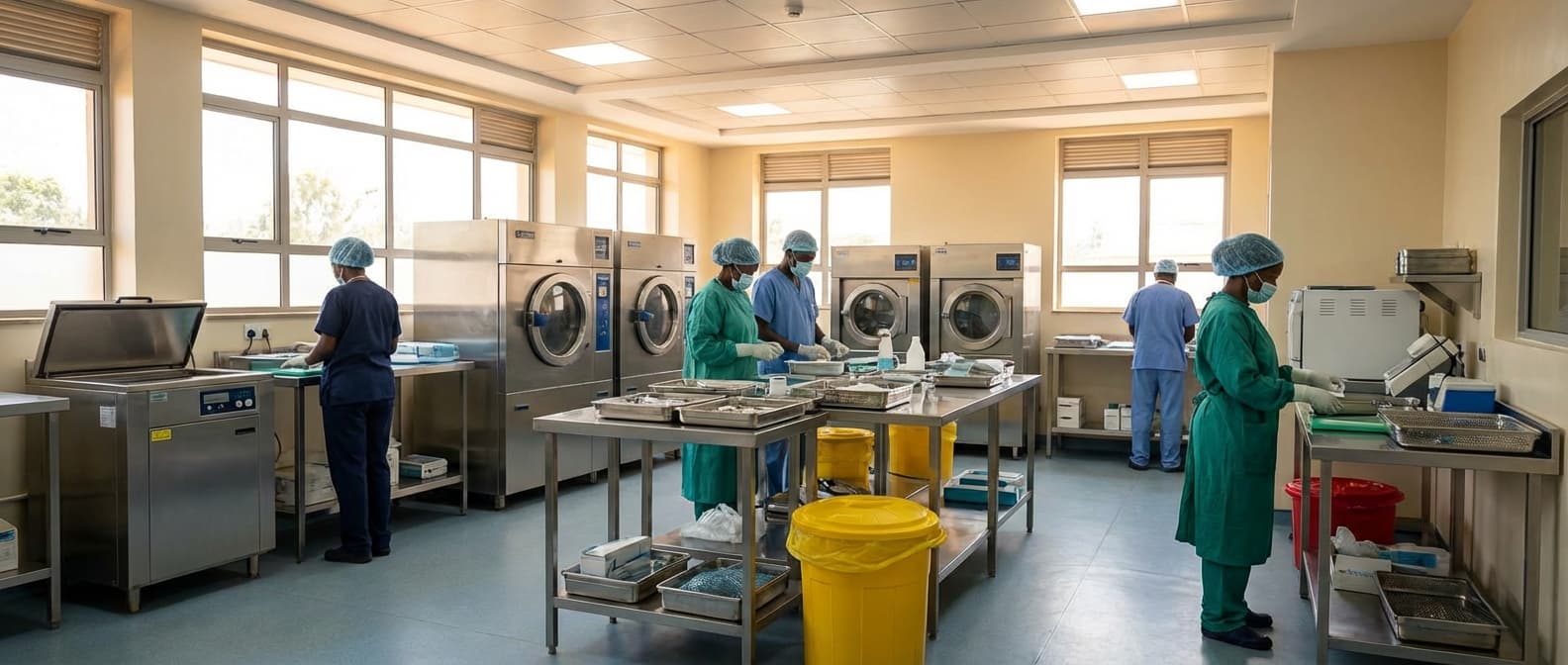
Autoclave Validation Support Service in Central African Republic
Engineering Excellence & Technical Support
Autoclave Validation Support Service High-standard technical execution following OEM protocols and local regulatory frameworks.
Ensuring Sterility Assurance Levels (SALs) with Expert Autoclave Validation
Our comprehensive autoclave validation services in the Central African Republic guarantee your sterilization cycles consistently achieve the required Sterility Assurance Levels (SALs). We employ rigorous testing methodologies, including biological and chemical indicator challenges, to confirm effective microbial inactivation and compliance with international standards, safeguarding patient safety and regulatory adherence.
Data-Driven Validation for Reliable Performance Monitoring
Leveraging advanced data logging and analysis tools, our validation process in the Central African Republic provides irrefutable evidence of autoclave performance. We meticulously record critical parameters like temperature, pressure, and time, offering detailed reports that highlight process consistency, identify potential deviations, and enable proactive maintenance, thereby minimizing downtime and ensuring ongoing operational efficiency.
Navigating Local & International Standards for Seamless Compliance
Our Autoclave Validation Support Service in the Central African Republic is adept at navigating the complex landscape of local and international regulatory requirements. We provide expert guidance and documentation to ensure your autoclaves meet the stringent demands of health authorities, facilitating smooth audits and maintaining the highest standards of infection control across your healthcare facilities.
What Is Autoclave Validation Support Service In Central African Republic?
Autoclave validation support services in the Central African Republic (CAR) refer to a specialized set of technical procedures and documentation designed to ensure that steam sterilization equipment (autoclaves) consistently and effectively render medical devices and other materials free from viable microorganisms. This validation process is critical for infection prevention and control, maintaining patient safety, and complying with regulatory standards. The service typically encompasses several phases, including installation qualification (IQ), operational qualification (OQ), and performance qualification (PQ). IQ verifies that the autoclave is installed correctly according to manufacturer specifications and relevant safety standards. OQ confirms that the autoclave operates within its intended parameters and setpoints, validating the functionality of all critical components and control systems. PQ demonstrates that the validated sterilization cycles consistently achieve the required microbial kill for the specific load types and configurations intended for use. The service is essential for any facility in the CAR that utilizes autoclaves for sterilization purposes.
| Phase | Objective | Key Activities | Documentation |
|---|---|---|---|
| Installation Qualification (IQ) | To confirm that the autoclave is installed according to manufacturer specifications, environmental requirements, and applicable standards. | Verification of utilities (power, water, steam quality), physical installation, calibration of sensors, and review of manufacturer documentation. | IQ Protocol, IQ Report, Installation Verification Checklist. |
| Operational Qualification (OQ) | To verify that the autoclave operates correctly throughout its specified operating range and that critical control systems perform as intended. | Testing of temperature, pressure, and time controls; alarm functions; door sealing; vacuum systems; and cycle repeatability under no-load conditions. | OQ Protocol, OQ Report, Calibration Certificates. |
| Performance Qualification (PQ) | To demonstrate that the autoclave, under typical and worst-case load conditions, consistently achieves the required level of sterilization. | Running sterilization cycles with biological indicators (BIs) and/or chemical indicators (CIs) placed at critical locations within representative loads, followed by incubation of BIs and analysis of CI results. | PQ Protocol, PQ Report, Biological Indicator Test Results, Chemical Indicator Observations, Load Configuration Documentation. |
Who Needs Autoclave Validation Support Service?
- Hospitals and Clinics (both public and private)
- Dental Practices
- Laboratories (medical, research, and industrial)
- Veterinary Clinics
- Pharmaceutical Manufacturing Facilities
- Any organization involved in the sterilization of reusable medical or critical equipment.
Who Needs Autoclave Validation Support Service In Central African Republic?
For organizations in the Central African Republic that rely on sterilized medical equipment and laboratory instruments, ensuring the efficacy and safety of their sterilization processes is paramount. Autoclave validation is a critical regulatory requirement and a fundamental aspect of infection control. This service ensures that autoclaves are consistently achieving the necessary temperature, pressure, and time parameters to effectively kill microorganisms, thus preventing the transmission of infections and guaranteeing reliable experimental results. Without proper validation, there's a significant risk of under-sterilization, leading to patient harm and compromised research, as well as potential non-compliance with health and safety standards.
| Customer Type | Key Departments Requiring Support |
|---|---|
| Hospitals and Clinics | Sterile Processing Department (SPD), Operating Rooms, Intensive Care Units (ICUs), Emergency Departments, Outpatient Clinics, Dental Clinics within hospitals, Infection Control Department |
| Diagnostic Laboratories | Microbiology, Pathology, Hematology, Chemistry, Central Sterilization Unit |
| Research Institutions | All laboratories utilizing sterilized equipment for experiments, biosafety laboratories |
| Dental Practices | Sterilization areas, treatment rooms |
| Veterinary Clinics | Surgical suites, sterilization areas |
| Pharmaceutical Manufacturing Facilities | Quality Control (QC) Labs, Production areas requiring sterile equipment |
| NGOs with Healthcare Operations | Mobile clinics, field hospitals, community health centers |
| Government Health Ministries and Agencies | Regulatory bodies overseeing healthcare standards, public health laboratories |
Target Customers and Departments for Autoclave Validation Support Service in the Central African Republic
- Hospitals and Clinics
- Diagnostic Laboratories
- Research Institutions
- Dental Practices
- Veterinary Clinics
- Pharmaceutical Manufacturing Facilities
- Non-Governmental Organizations (NGOs) with healthcare operations
- Government Health Ministries and Agencies
Autoclave Validation Support Service Process In Central African Republic
The Autoclave Validation Support Service Process in the Central African Republic outlines the systematic steps undertaken from a client's initial inquiry to the successful completion of autoclave validation. This process ensures that autoclaves used in healthcare facilities, laboratories, and other critical settings meet regulatory and operational standards for effective sterilization. The workflow is designed for clarity, efficiency, and comprehensive documentation, guaranteeing the reliability of sterilization processes and the safety of patients and personnel.
| Stage | Description | Key Activities | Deliverables/Outcomes | Responsible Party |
|---|---|---|---|---|
| The client expresses interest in autoclave validation services. | Client contacts service provider, discusses general needs, and seeks information. | Understanding of client's requirements, preliminary advice provided. | Client, Service Provider |
| Detailed understanding of the client's specific validation requirements. | Site visit (if feasible) or detailed questionnaire, identification of autoclave type, size, intended use, and relevant standards (e.g., ISO, local health regulations). | Comprehensive understanding of validation scope, customized quotation provided, including services, equipment, and costs. | Service Provider, Client (for information) |
| Formalization of the service agreement and planning of the validation activities. | Review and signing of the service contract/proposal, negotiation of terms and conditions, scheduling of validation dates, confirmation of personnel and equipment availability. | Signed agreement, confirmed validation schedule. | Client, Service Provider |
| Ensuring the autoclave and surrounding environment are ready for validation. | Client ensures autoclave is operational, clean, and accessible. Service provider confirms required utilities (power, water) are available. Pre-calibration checks of measurement devices (if requested). | Autoclave ready for testing, conducive testing environment. | Client, Service Provider |
| Performing the physical validation tests according to established protocols. | Installation Qualification (IQ), Operational Qualification (OQ), and Performance Qualification (PQ) tests are conducted using calibrated equipment (temperature probes, pressure sensors, biological indicators, chemical indicators). Data collection. | Raw validation data, test logs, calibration certificates of equipment. | Service Provider |
| Processing the collected data to determine autoclave performance. | Analysis of temperature, pressure, and sterilization cycle data. Evaluation against predefined acceptance criteria. Preparation of a draft validation report. | Interim findings, draft validation report. | Service Provider |
| Addressing any deviations or failures identified during the validation process. | If validation fails, client identifies and implements corrective actions. Service provider performs re-validation of specific parameters or the entire process. | Corrective actions implemented, successful re-validation results. | Client, Service Provider |
| Issuance of the official validation documentation. | Finalization of the validation report including all test results, analyses, conclusions, and recommendations. Issuance of a validation certificate. | Final Autoclave Validation Report, Validation Certificate. | Service Provider |
| Providing continued support and advice to the client. | Discussing report findings, recommending preventative maintenance schedules, offering re-validation planning for future cycles. | Client satisfaction, ongoing relationship, assurance of continued compliance. | Service Provider, Client |
Autoclave Validation Support Service Process Workflow
- Inquiry and Initial Consultation
- Needs Assessment and Quotation
- Agreement and Scheduling
- Pre-Validation Site Preparation
- On-Site Validation Execution
- Data Analysis and Reporting
- Rectification and Re-validation (if necessary)
- Final Report and Certification
- Follow-up and Ongoing Support
Autoclave Validation Support Service Cost In Central African Republic
Autoclave validation is a critical process for ensuring the sterility of medical and laboratory equipment in the Central African Republic (CAR). The cost of this service can vary significantly based on several key factors. Understanding these elements is essential for accurate budgeting and procurement.
| Service Component | Estimated Cost Range (XAF - Central African CFA franc) | Notes |
|---|---|---|
| Initial Consultation & Site Assessment | 50,000 - 150,000 | Understanding autoclave type, facility needs, and logistical planning. |
| Full Autoclave Validation (Installation Qualification - IQ, Operational Qualification - OQ, Performance Qualification - PQ) | 500,000 - 2,000,000+ | This is the core service. The range is highly dependent on the factors mentioned above. Larger or more complex autoclaves, and multiple cycles, will push towards the higher end. This typically includes calibration of probes. |
| Re-validation (Annual/Bi-annual) | 400,000 - 1,500,000+ | Generally less expensive than initial full validation, but still subject to autoclave size and complexity. |
| Travel & Logistics (per trip) | 100,000 - 400,000+ | Highly variable based on location within CAR. Includes fuel, vehicle maintenance, and potential accommodation/per diems for technicians. |
| Consumables (e.g., biological indicators, chemical indicators) | 50,000 - 150,000 | Cost of materials used during the validation cycles. |
| Report Generation & Documentation | Included in validation cost, but specialized reporting may incur extra. | Comprehensive reports are standard. |
| Minor Calibration Adjustments (if identified during validation) | Included or additional 50,000 - 200,000 | Often bundled, but significant adjustments might be extra. |
Key Pricing Factors for Autoclave Validation Support Service in CAR
- Type and Size of Autoclave: Larger, more complex, or specialized autoclaves (e.g., high-pressure, vacuum-assisted) generally incur higher validation costs due to the increased time, complexity, and potentially specialized equipment required for testing.
- Number of Validation Cycles: A full validation typically involves multiple cycles (e.g., empty, loaded, worst-case scenarios). The more cycles required, the higher the overall cost.
- Geographic Location within CAR: Travel and logistical costs for the validation technician can significantly impact the price. Remote or less accessible locations will likely be more expensive due to increased travel time, accommodation, and potential transportation challenges within the CAR.
- Validation Protocol and Standards: Adherence to specific international (e.g., ISO, AAMI) or national standards will influence the scope and rigor of the validation, thereby affecting cost. More stringent protocols demand more thorough testing and documentation.
- Frequency of Validation: While not directly a per-service cost, regular validation contracts might offer slightly more favorable rates over time compared to ad-hoc services.
- Validation Service Provider: The experience, reputation, and operational overhead of the service provider will influence their pricing. Local providers might have lower overheads than international companies operating in the CAR.
- Included Services: The cost can vary depending on whether the service includes only the validation itself, or if it also encompasses calibration, repairs, or recommendations for process improvement.
- Documentation and Reporting Requirements: The level of detail and format of the final validation report can also influence the price, especially if extensive, customized reporting is requested.
Affordable Autoclave Validation Support Service Options
Acquiring and maintaining an autoclave requires a rigorous validation process to ensure its performance meets regulatory standards for sterilization. Affordable Autoclave Validation Support Service Options are designed to make this essential task more accessible to businesses of all sizes. These services offer expertise, compliance assurance, and cost-effectiveness through structured value bundles and strategic cost-saving approaches.
| Service Component | Description | Value Proposition | Cost-Saving Strategy |
|---|---|---|---|
| IQ (Installation Qualification) | Verification that the autoclave is installed correctly according to manufacturer specifications and relevant industry standards. | Ensures a solid foundation for all subsequent validation steps, preventing potential installation-related failures. | Bundling IQ with OQ can reduce separate site visit costs and administrative overhead. |
| OQ (Operational Qualification) | Testing the autoclave's performance at its operational limits (high and low) to confirm it functions as intended across its designed range. | Confirms that the equipment can reliably operate under various conditions, crucial for consistent sterilization. | Utilizing standardized test protocols developed by the service provider can expedite OQ execution. |
| PQ (Performance Qualification) | Demonstrating that the autoclave consistently produces a sterile product under normal operating conditions, typically using biological and chemical indicators. | Provides the highest level of assurance that the sterilization process is effective and meets regulatory requirements. | Negotiating multi-year PQ contracts can lock in preferential pricing and ensure continuous compliance. |
| Calibration Services | Regular calibration of critical parameters like temperature, pressure, and time sensors to ensure accuracy. | Maintains the integrity of the sterilization cycle and prevents drift that could lead to failed validation. | Combining calibration with routine maintenance services can result in discounted rates. |
| Protocol Development & Review | Creation and review of validation protocols tailored to specific autoclave models, loads, and regulatory requirements. | Ensures that validation activities are thorough, documented correctly, and meet all necessary standards. | Utilizing template-based protocol development can significantly reduce consulting time and associated costs. |
| Documentation Management | Assistance with organizing, compiling, and maintaining all validation documentation for easy access and audit readiness. | Streamlines audit preparation and reduces the risk of compliance issues due to missing or incomplete records. | Cloud-based documentation platforms offered by some service providers can reduce physical storage costs and improve accessibility. |
| Revalidation Support | Guidance and execution of revalidation activities after significant repairs, equipment modifications, or periodic scheduled intervals. | Ensures continued compliance and operational readiness throughout the autoclave's lifecycle. | Pre-scheduling revalidation services can provide discounts and ensure timely completion to avoid operational disruptions. |
Understanding Affordable Autoclave Validation Support Service Options
- What is Autoclave Validation? Autoclave validation is a documented process that provides a high degree of assurance that an autoclave will consistently perform according to its predetermined specifications and intended use, effectively sterilizing medical devices, laboratory equipment, or other sensitive materials.
- Why is it Important? Regulatory compliance (e.g., FDA, ISO), patient safety, product integrity, and operational efficiency are all critically dependent on validated sterilization processes.
- Benefits of Support Services: Access to expert knowledge, reduced risk of non-compliance, streamlined validation processes, improved operational uptime, and potential for cost savings.
Verified Providers In Central African Republic
In the Central African Republic (CAR), ensuring access to reliable and high-quality healthcare is paramount, especially for vulnerable populations. The selection of healthcare providers is a critical decision, and understanding their credentials is key. Franance Health stands out as a leading organization committed to providing essential medical services. Their dedication to stringent credentialing processes and ethical practices makes them a trusted and optimal choice for healthcare delivery in the CAR.
| Credential | Franance Health's Commitment | Why it Matters in CAR |
|---|---|---|
| Rigorous Vetting Process | Franance Health implements a comprehensive vetting process for all its medical personnel and facilities, including background checks, verification of qualifications, and ongoing performance reviews. | In a region where resources can be strained, this ensures that only qualified and trustworthy individuals are providing care, minimizing risks for patients. |
| Adherence to International Standards | Franance Health aligns its operational protocols with recognized international healthcare standards and best practices. | This commitment guarantees a baseline level of quality and safety for medical services, even in challenging environments. |
| Transparency and Accountability | The organization prioritizes transparency in its operations and maintains robust accountability mechanisms for all its activities and personnel. | This fosters trust among communities and partners, ensuring that aid and services are delivered effectively and without corruption. |
| Focus on Local Capacity Building | Franance Health invests in training and empowering local healthcare workers, enhancing the sustainability of healthcare services within the CAR. | By building local capacity, they ensure that the CAR can develop a resilient and self-sufficient healthcare system in the long term. |
| Partnerships with Global Health Leaders | Franance Health collaborates with leading international health organizations and NGOs, leveraging their expertise and resources. | These strategic partnerships strengthen Franance Health's ability to deliver comprehensive and impactful healthcare solutions, often reaching underserved populations. |
Key Indicators of Verified Healthcare Providers in the Central African Republic
- Accreditation and Certification: Reputable organizations undergo rigorous assessments by national and international health bodies, confirming adherence to established quality standards.
- Licensed Professionals: Ensuring all medical personnel possess valid licenses and certifications from relevant professional boards is fundamental.
- Track Record and Reputation: A history of successful service delivery, positive patient feedback, and a strong ethical standing are vital indicators.
- Commitment to Ethical Practices: Adherence to principles of patient confidentiality, informed consent, and non-discrimination.
- Partnerships with Reputable Organizations: Collaboration with established NGOs, international health organizations, and governmental health ministries signifies credibility and support.
Scope Of Work For Autoclave Validation Support Service
This Scope of Work (SOW) outlines the services to be provided by [Service Provider Name] to [Client Name] for Autoclave Validation Support. The objective is to ensure the autoclave system consistently meets predefined performance standards and regulatory requirements, guaranteeing sterility of processed materials. This SOW details the technical deliverables, standard specifications, and associated activities.
| Technical Deliverable | Description | Standard Specification / Requirement | Verification Method |
|---|---|---|---|
| Installation Qualification (IQ) Report | Confirms the autoclave is installed according to manufacturer's specifications and relevant standards. | Compliance with manufacturer's installation manual, local building codes, and electrical safety standards. | Visual inspection, review of documentation, equipment checks. |
| Operational Qualification (OQ) Report | Verifies the autoclave operates within its defined operational parameters under normal and extreme conditions. | Successful execution of pre-defined test cycles covering: temperature uniformity, pressure control, cycle timing, and alarm functions. | Temperature mapping studies, pressure logging, cycle run-time measurements, alarm response tests. |
| Performance Qualification (PQ) Report | Demonstrates the autoclave consistently delivers a validated sterilization process with representative product loads. | Successful sterilization of multiple representative loads under normal operating conditions, confirmed by biological and/or chemical indicators. Adherence to established critical process parameters (CPPs). | Biological indicator (BI) studies (e.g., spore testing), chemical indicator (CI) usage and interpretation, thermocouple mapping of loads, process cycle data analysis. |
| Validation Protocol(s) | Detailed plans outlining the scope, objectives, responsibilities, test methods, acceptance criteria, and schedule for IQ, OQ, and PQ. | Written and approved by both [Client Name] and [Service Provider Name] prior to execution. Includes specific load configurations, cycle parameters, and number of runs. | Review and formal approval process. |
| Final Validation Report | Comprehensive summary of all validation activities, results, deviations (if any), and conclusions. | Presents all data, analyses, and recommendations. Confirms the autoclave's suitability for its intended use. Meets regulatory expectations (e.g., FDA, EMA). | Review and formal approval by [Client Name]'s Quality Assurance. |
| Calibration Certificates for Validation Equipment | Proof that all measurement equipment used during validation (thermocouples, pressure gauges, etc.) is calibrated. | Traceable to national or international standards. Within calibration due date. | Review of provided certificates. |
| Load Configuration Definition | Identification and documentation of representative product loads for PQ studies. | Includes details on product type, packaging, density, and arrangement within the autoclave. Reflects typical and worst-case scenarios. | Review of client-provided documentation and discussions. |
| Acceptance Criteria Definition | Predefined quantitative and qualitative criteria that must be met for each stage of validation. | Based on regulatory guidelines, industry standards (e.g., ISO 17665), and client-specific requirements. Examples: temperature within ±2°C of setpoint, F0 value ≥ 3. | Agreement during protocol development phase. |
Key Objectives
- Verify the autoclave's ability to achieve and maintain the required sterilization parameters (temperature, pressure, time) across all load configurations.
- Confirm the effective penetration of the sterilizing agent (e.g., steam) to all points within the autoclave chamber and the load.
- Demonstrate the destruction of viable microorganisms to acceptable levels.
- Document all validation activities and results in a comprehensive report for regulatory compliance and internal quality assurance.
- Provide recommendations for operational improvements or recalibration if deficiencies are identified.
Service Level Agreement For Autoclave Validation Support Service
This Service Level Agreement (SLA) outlines the response times and uptime guarantees for the Autoclave Validation Support Service provided by [Your Company Name] (hereinafter referred to as "Provider") to [Client Company Name] (hereinafter referred to as "Client"). This SLA is an integral part of the Master Service Agreement between the Provider and the Client.
| Service Component | Response Time Target (Business Hours) | Uptime Guarantee |
|---|---|---|
| Initial Response to Critical Support Request (e.g., Autoclave Unusable) | 1 Hour | N/A (Focus on response, not uptime) |
| Initial Response to High Priority Support Request (e.g., Validation Failure) | 2 Business Hours | N/A (Focus on response, not uptime) |
| Initial Response to Medium Priority Support Request (e.g., Inquiry about Validation Protocol) | 4 Business Hours | N/A (Focus on response, not uptime) |
| Initial Response to Low Priority Support Request (e.g., General Information Request) | 1 Business Day | N/A (Focus on response, not uptime) |
| Remote Support Availability | 24/7 | 99.5% |
| On-Site Support Availability (if applicable and contracted) | Within 48 Business Hours of request acceptance | N/A (Focus on dispatch and resolution, not continuous uptime) |
| Availability of Documentation Portal (e.g., validation reports, protocols) | N/A | 99.8% |
Key Service Commitments
- This SLA defines the expected performance levels for the Autoclave Validation Support Service.
- The Provider commits to meeting or exceeding these defined service levels.
- This document outlines the methodology for measuring and reporting on these service levels.
- Any deviations from these service levels will be addressed according to the escalation procedures outlined herein.
Frequently Asked Questions

Ready when you are
Let's scope your Autoclave Validation Support Service in Central African Republic project in Central African Republic.

Scaling healthcare logistics and technical systems across the entire continent.