
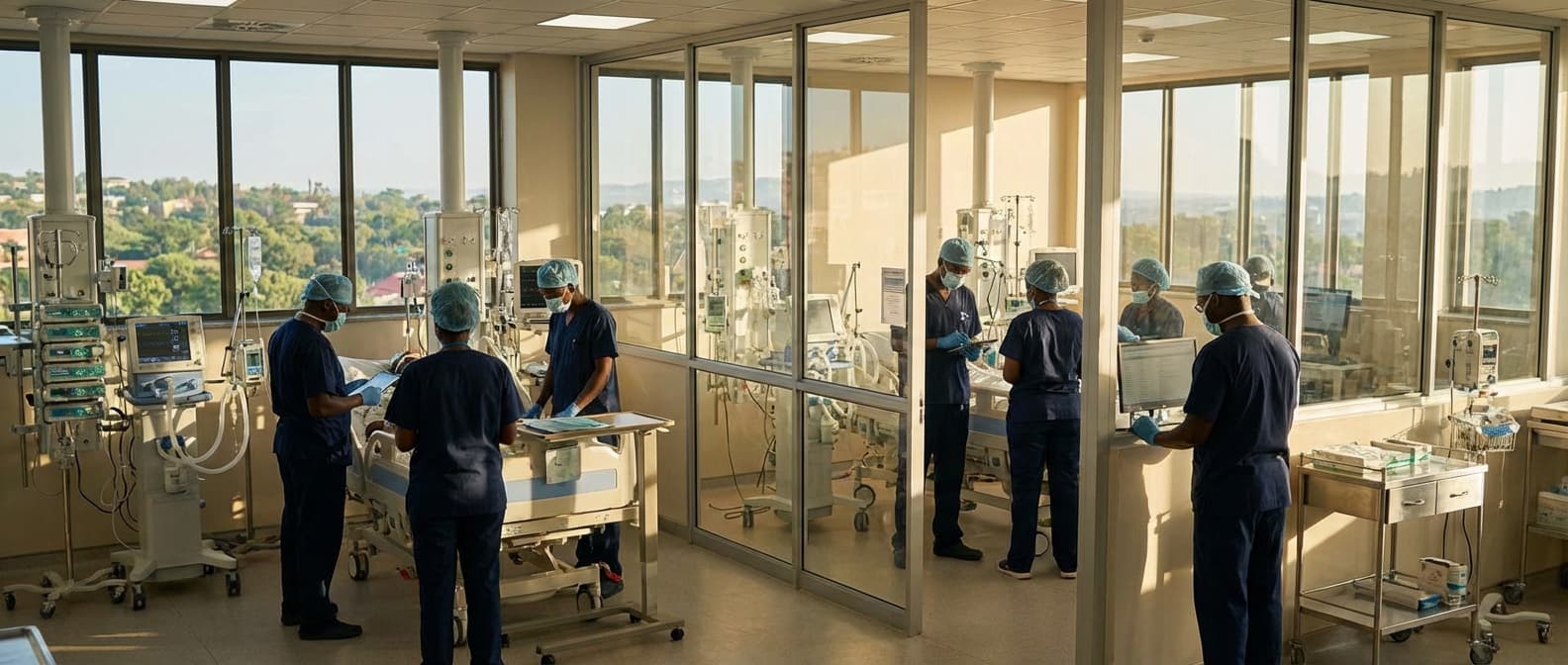
Ventilator Fleet Management & PM in Central African Republic
Engineering Excellence & Technical Support
Preventive maintenance and fleet management for ICU ventilators High-standard technical execution following OEM protocols and local regulatory frameworks.
Real-time Ventilator Deployment Tracking
Leveraging GPS and IoT sensors, our system provides live location and operational status for every ventilator in the Central African Republic, ensuring rapid deployment to critical areas and minimizing downtime.
Proactive Preventative Maintenance Scheduling
Utilizing predictive analytics based on usage data and environmental factors, we schedule preventative maintenance for ventilators before failures occur, extending equipment lifespan and ensuring consistent availability during health emergencies.
Centralized Digital Inventory & Service History
A secure, cloud-based platform maintains a comprehensive digital inventory of all ventilators, including make, model, service history, and spare parts availability, facilitating efficient resource allocation and streamlined repair processes across the nation.
What Is Ventilator Fleet Management & Pm In Central African Republic?
Ventilator Fleet Management and Preventive Maintenance (PM) in the Central African Republic (CAR) refers to the comprehensive operational and upkeep strategy for mechanical ventilation devices utilized in healthcare settings. This service encompasses the entire lifecycle of ventilators, from initial acquisition and deployment to ongoing operational monitoring, routine servicing, and eventual decommissioning. The primary objective is to ensure the sustained availability, reliability, and optimal performance of critical respiratory support equipment, thereby safeguarding patient outcomes and enhancing the capacity of healthcare providers to manage respiratory emergencies and chronic conditions. Given the CAR's often resource-constrained healthcare infrastructure, robust ventilator fleet management is paramount to maximizing the utility and lifespan of these complex medical devices.
| Who Needs Ventilator Fleet Management & PM? | Typical Use Cases |
|---|---|
| Central African Republic Ministry of Health (MOH): Responsible for national health policy, resource allocation, and oversight of public healthcare facilities. | Public Hospitals and Referral Centers: Facilities with intensive care units (ICUs), emergency departments, and surgical theaters requiring continuous respiratory support for critically ill patients. |
| Non-Governmental Organizations (NGOs) Operating Healthcare Facilities: International and local organizations providing medical services, often in remote or underserved areas. | Field Hospitals and Mobile Clinics: Temporary or semi-permanent medical units deployed during public health emergencies (e.g., epidemics, natural disasters) or in regions with limited permanent infrastructure. |
| Private Healthcare Providers: Clinics and hospitals offering specialized care, particularly those with surgical or critical care capabilities. | Respiratory Care Units: Dedicated departments within hospitals focused on managing patients with complex respiratory conditions. |
| Biomedical Engineering Departments/Teams: The technical personnel responsible for the upkeep and repair of medical equipment. | Emergency Medical Services (EMS): While primary responsibility may lie with the receiving facility, EMS may utilize ventilators during patient transport, necessitating operational readiness. |
| International Health Organizations (WHO, UNICEF, etc.): Involved in supporting healthcare infrastructure development and emergency response in the CAR. | Pandemic Preparedness and Response: Ensuring sufficient operational ventilators are available to manage surges in patients requiring mechanical ventilation during infectious disease outbreaks. |
| Training Institutions: Medical schools and technical colleges involved in educating healthcare professionals and technicians. | Management of Chronic Respiratory Diseases: Long-term care for patients with conditions like Chronic Obstructive Pulmonary Disease (COPD) requiring intermittent or continuous ventilatory support. |
| Donors and Funding Agencies: Organizations providing financial or material support for healthcare initiatives. | Surgical Procedures: Providing ventilatory support during anesthesia and post-operative recovery for patients undergoing surgery. |
| Management of Acute Respiratory Distress Syndrome (ARDS): Supporting lung function in patients with severe lung injury. | |
| Neonatal and Pediatric Intensive Care: Providing ventilatory support for premature infants and children with respiratory insufficiency. | |
| Trauma and Critical Care: Supporting patients with severe injuries affecting respiratory function. | |
| Anesthesia Support: During procedures where spontaneous breathing is not feasible. |
Key Components of Ventilator Fleet Management & PM in CAR
- Inventory Management: Establishing and maintaining an accurate, real-time inventory of all ventilators, including their specifications, location, acquisition date, and current status (operational, under repair, in storage).
- Asset Tracking and Traceability: Implementing systems (e.g., barcodes, RFID) for tracking individual ventilator units, their maintenance history, and user assignments to ensure accountability and facilitate recall or firmware update management.
- Preventive Maintenance (PM) Scheduling and Execution: Developing and adhering to manufacturer-recommended and contextually adapted PM schedules. This involves planned inspections, cleaning, calibration, testing of critical components (e.g., batteries, sensors, valves), and replacement of wear-and-tear parts to mitigate failure risks.
- Corrective Maintenance and Repair: Establishing protocols for prompt diagnosis and repair of ventilator malfunctions. This includes identifying qualified technicians, securing necessary spare parts, and managing repair turnaround times to minimize downtime.
- Performance Monitoring and Optimization: Regularly assessing ventilator performance against established benchmarks. This may involve analyzing usage patterns, identifying potential inefficiencies, and implementing adjustments to optimize settings for specific patient populations or clinical scenarios.
- Training and Competency Assurance: Providing comprehensive training to biomedical technicians on the operation, maintenance, and troubleshooting of specific ventilator models. Training may also extend to clinical staff on the proper use and basic checks of the equipment.
- Logistics and Supply Chain Management: Ensuring a consistent and reliable supply of consumables, spare parts, and reagents essential for ventilator operation and maintenance. This is particularly critical in the CAR due to potential logistical challenges.
- Regulatory Compliance and Documentation: Maintaining detailed records of all maintenance activities, repairs, certifications, and training. This ensures compliance with any relevant national or international healthcare standards and facilitates auditing.
- Decommissioning and Disposal: Establishing procedures for the safe and environmentally responsible decommissioning and disposal of aging or irreparable ventilator units.
Who Needs Ventilator Fleet Management & Pm In Central African Republic?
Effective ventilator fleet management and preventative maintenance (PM) are critical in the Central African Republic (CAR) to ensure the availability and reliability of life-saving respiratory support. Given the resource constraints and unique challenges faced by the healthcare system in CAR, robust fleet management is not a luxury but a necessity for addressing respiratory emergencies, chronic respiratory conditions, and the aftermath of public health crises. This includes ensuring ventilators are operational, properly calibrated, and readily accessible when needed most, thereby directly impacting patient outcomes and the capacity of healthcare facilities.
| Target Customer/Department | Key Responsibilities & Needs | Specific Benefits of Fleet Management & PM |
|---|---|---|
| Ministry of Health (National Level) | National health policy, resource allocation, procurement standards, national emergency preparedness, oversight of public healthcare infrastructure. | Ensures equitable distribution of functional ventilators across the country, informs procurement strategies based on usage and maintenance data, strengthens national response capacity for epidemics and disasters. |
| Provincial/Regional Health Directorates | Regional healthcare planning, supervision of district hospitals, management of regional medical supplies and equipment. | Facilitates efficient allocation of ventilators within a region, ensures regional compliance with maintenance schedules, supports local capacity building for equipment upkeep. |
| Public Hospitals (e.g., Central Hospital, Regional Hospitals) | Direct patient care, management of critical care units (ICUs), emergency departments, surgical wards, procurement and maintenance of medical equipment. | Maximizes operational uptime of critical ventilators, reduces unexpected breakdowns during patient care, optimizes spare parts inventory, ensures equipment longevity and cost-effectiveness. |
| District Health Centers/Clinics (with respiratory support capacity) | Primary and secondary healthcare services, management of common respiratory illnesses, potential first-line responders for respiratory distress. | Ensures essential ventilators at the local level are functional, improves diagnostic and treatment capabilities for respiratory conditions, reduces patient transfers due to equipment failure. |
| Non-Governmental Organizations (NGOs) - Healthcare Focus | Provision of medical services in underserved areas, implementation of specific health programs (e.g., maternal and child health, emergency medical response), equipment donation and support. | Ensures donated or managed ventilators are properly maintained, extends the lifespan of vital equipment in project sites, supports sustainable healthcare delivery models, allows for effective reporting on asset utilization and condition. |
| International Health Organizations (e.g., WHO, UNICEF) | Technical assistance, coordination of health initiatives, provision of essential medical supplies and equipment, emergency response support. | Provides a framework for global best practices in equipment management, supports national capacity building for PM, ensures standardized maintenance protocols, facilitates data collection for global health assessments. |
| Biomedical Engineering Departments/Technicians | Installation, calibration, repair, and routine maintenance of medical equipment, including ventilators. | Crucial for executing PM tasks, diagnosing and resolving technical issues, ensuring equipment safety and performance standards are met, providing essential technical expertise within facilities. |
| Procurement & Logistics Departments | Acquisition of medical equipment and supplies, inventory management, warehousing, and distribution. | Informs evidence-based procurement decisions for new ventilators and spare parts, optimizes inventory levels to prevent stockouts and overstocking, streamlines the supply chain for maintenance needs. |
| Clinical Staff (Doctors, Nurses, Respiratory Therapists) | Direct patient care, operation of ventilators, identification of equipment malfunctions. | Ensures ventilators are used correctly, provides timely reporting of equipment issues, facilitates smooth patient transitions by having reliable equipment available. |
Target Customers and Departments for Ventilator Fleet Management & PM in Central African Republic
- Government Ministry of Health
- Public Hospitals and Healthcare Facilities
- Non-Governmental Organizations (NGOs) involved in healthcare
- International Health Organizations (e.g., WHO, UNICEF) operating in CAR
- Private Healthcare Providers (where they exist)
Ventilator Fleet Management & Pm Process In Central African Republic
This document outlines the workflow for ventilator fleet management and preventive maintenance (PM) processes within the Central African Republic (CAR). The process aims to ensure the operational readiness of vital medical equipment, minimize downtime, and optimize resource allocation for healthcare facilities across the nation.
| Phase | Description | Key Activities | Responsible Parties | Inputs | Outputs | Key Performance Indicators (KPIs) |
|---|---|---|---|---|---|---|
| Initial identification of ventilator needs or issues within a healthcare facility. |
| Healthcare Facility Staff, Regional Health Offices, Ministry of Health (MoH) | Facility requests, MoH directives, needs assessment reports | Identified needs, prioritized equipment list | Number of inquiries received, time to initial assessment. |
| Acquiring new ventilators or replacing faulty ones, and formally documenting them. |
| MoH Procurement Department, Procurement Partners, Logistics Teams, Biomedical Engineers | Prioritized equipment list, budget allocation, technical specifications | Acquired ventilators, registered equipment, installation reports | On-time procurement, cost per unit, registration completeness. |
| Planning regular maintenance to prevent breakdowns. |
| Central Biomedical Engineering Unit, Regional Biomedical Technicians, Facility Managers | Equipment inventory, manufacturer PM guidelines, historical maintenance data | PM schedule, technician assignments, notification logs | PM schedule adherence rate, lead time for scheduling. |
| Carrying out scheduled maintenance tasks. |
| Biomedical Technicians | PM checklist, spare parts, tools, equipment manuals | Completed PM checklists, updated equipment logs, functional ventilators | PM completion rate, time taken per PM, number of issues identified during PM. |
| Addressing issues identified during PM or reported malfunctions. |
| Biomedical Technicians, Specialized Repair Services (if needed), Parts Suppliers | Fault reports, diagnostic results, spare parts, repair manuals | Repaired ventilators, calibration certificates, repair reports | Mean time to repair (MTTR), first-time fix rate, repair cost. |
| Tracking equipment status, maintenance history, and identifying trends. |
| Central Biomedical Engineering Unit, Regional Biomedical Technicians, MoH Data Analysts | Completed PM checklists, repair reports, equipment logs, incident reports | Performance reports, maintenance summaries, trend analysis, updated database | Data accuracy, report generation timeliness, insights derived. |
| Improving the overall efficiency and lifespan of the ventilator fleet through strategic planning and skill development. |
| MoH, Central Biomedical Engineering Unit, Training Institutions, Manufacturers' Representatives | Fleet performance reports, training needs assessments, budget for training | Optimized fleet allocation, trained staff, improved equipment longevity | Reduction in equipment downtime, improvement in staff competency, cost savings. |
Ventilator Fleet Management & PM Process Workflow
- Inquiry and Needs Assessment
- Equipment Procurement & Registration
- Preventive Maintenance Scheduling
- PM Execution
- Repair and Calibration
- Reporting & Data Analysis
- Fleet Optimization & Training
Ventilator Fleet Management & Pm Cost In Central African Republic
Managing ventilator fleets in the Central African Republic (CAR) presents unique challenges due to its developing infrastructure, limited access to advanced medical equipment, and the specific economic landscape. This discussion will explore the pricing factors and approximate cost ranges for ventilator fleet management and preventive maintenance (PM) services in the local currency, the Central African CFA franc (XAF). These costs are highly variable and depend on several critical elements, ranging from the type and age of ventilators to the availability of skilled technicians and spare parts.
| Service/Item | Estimated Cost Range (XAF) - Low | Estimated Cost Range (XAF) - High | Notes |
|---|---|---|---|
| Basic Ventilator PM (per unit, annual) | 75,000 | 250,000 | Covers basic checks, calibration, and filter replacement. May be done by a general biomedical technician. |
| Comprehensive Ventilator PM (per unit, annual) | 200,000 | 750,000+ | Includes detailed diagnostics, component testing, software updates, and potential minor part replacement. Requires specialized technician. |
| On-Demand Repair (per service call, excluding parts) | 50,000 | 200,000 | Labor cost for a technician visit. Travel costs may be additional, especially in remote areas. |
| Ventilator Spare Part (common component, e.g., sensor, filter set) | 20,000 | 150,000 | Highly variable. May be significantly higher for specialized parts or if imported. |
| Ventilator Spare Part (complex component, e.g., mainboard, compressor) | 150,000 | 1,000,000+ | Can be as expensive as a significant portion of a new basic ventilator. Importation costs are a major factor. |
| Biomedical Technician Labor (daily rate) | 60,000 | 180,000 | Reflects scarcity of skilled personnel. Higher for specialized ventilator technicians. |
| Full Service Contract (e.g., for 10 ventilators, annual) | 5,000,000 | 20,000,000+ | Includes PM, unlimited or capped repairs, parts, and guaranteed response times. Negotiable based on fleet size and contract duration. |
| Training for Local Staff (basic maintenance) | 500,000 | 2,000,000 | Per training session or program. Depends on the complexity and duration. |
Key Pricing Factors for Ventilator Fleet Management & PM in CAR
- Ventilator Type and Age: Newer, more sophisticated ventilators (e.g., ICU ventilators with advanced modes) will have higher acquisition and maintenance costs. Older, simpler models may be cheaper to maintain but could be less reliable and harder to source parts for.
- Volume of Fleet: Larger fleets may benefit from economies of scale in terms of service contracts, bulk purchasing of parts, and dedicated technician teams. Smaller, ad-hoc needs can be more expensive per unit.
- Service Provider Expertise and Availability: The number of qualified biomedical engineers or technicians with specific ventilator expertise in CAR is likely limited. This scarcity drives up labor costs.
- Spare Parts Availability and Cost: Importing specialized ventilator parts can be expensive due to transportation, customs duties, and potential markups. Local availability, if any, might be limited to common components.
- Preventive Maintenance (PM) Schedule and Scope: The frequency of PM (e.g., annual, semi-annual) and the thoroughness of the service (e.g., basic check-up vs. comprehensive overhaul) directly impact costs.
- Location and Accessibility: Facilities in remote or difficult-to-access areas will incur higher travel and logistical costs for service technicians and parts delivery.
- Contractual Agreements: Comprehensive service contracts that include parts, labor, and guaranteed response times will be more expensive than ad-hoc service calls.
- Training and Capacity Building: If fleet management involves training local staff to perform basic maintenance or troubleshooting, this will add to the overall cost.
- Currency Exchange Rates and Inflation: Fluctuations in the XAF exchange rate against major currencies (USD, EUR) where parts are often sourced, and local inflation, will significantly impact the real cost of services and parts.
- Government Regulations and Taxes: Import duties, taxes, and regulatory fees can add to the cost of equipment and services.
Affordable Ventilator Fleet Management & Pm Options
Effective management of a hospital's ventilator fleet is crucial for patient care and operational efficiency. This includes proactive preventative maintenance (PM) to ensure reliability, efficient deployment, and cost-effective procurement and servicing. This document outlines strategies for affordable ventilator fleet management and PM, focusing on value bundles and cost-saving opportunities.
| Value Bundle Option | Description | Potential Cost Savings | Key Considerations |
|---|---|---|---|
| Comprehensive Manufacturer Service Package | Includes routine PM, all parts and labor for repairs, and potential software updates, all bundled into a single annual contract. Often includes loaner equipment during extended repairs. | Predictable budgeting, reduced risk of unexpected repair costs, access to OEM-trained technicians and genuine parts. May include discounts on new equipment purchases. | Can be the most expensive option upfront. Ensure contract terms are clearly understood (e.g., exclusions, response times, escalation procedures). May have less flexibility for non-standard repairs. |
| Managed Service Provider (MSP) Bundle | A third-party biomedical service company manages the entire PM program, performing all scheduled maintenance and responding to repair calls. Often includes parts and labor. | Potentially lower cost than OEM contracts due to competitive bidding and efficient operations. Access to expertise across multiple ventilator brands. Reduced administrative burden for the hospital. | Thorough vetting of MSP is crucial. Ensure their technicians are certified and experienced with your specific ventilator models. Service level agreements (SLAs) must be robust. |
| Hybrid In-House & Third-Party PM | Hospital's in-house biomedical team performs basic PM tasks and minor repairs, while a third-party provider handles more complex diagnostics, specialized repairs, and major overhauls. | Significant cost savings by leveraging internal resources for routine tasks. Faster response times for common issues. Flexibility to scale service based on need. | Requires a skilled in-house biomedical team. Careful selection of third-party partners for specialized services is essential. Coordination between internal and external teams is key. |
| PM Contract with Spare Parts Allowance | A service contract covering labor and scheduled PM, with a separate allowance or pre-negotiated pricing for common replacement parts. The hospital may stock some high-use parts. | Cost control over parts replacement. Reduced reliance on expedited shipping for critical components. Greater transparency in parts pricing. | Accurate forecasting of parts needs is critical to avoid overstocking or shortages. Requires effective inventory management practices. |
| Usage-Based PM & Repair Service | PM scheduling and repair services are tiered based on the actual usage hours of the ventilators. This can be offered by OEMs or MSPs. | Ensures that PM is performed when truly needed, potentially reducing unnecessary service on low-usage equipment. More cost-effective for fleets with variable utilization. | Requires accurate tracking of ventilator usage hours. May require specific software or hardware integration to monitor usage data. |
Key Components of Affordable Ventilator Fleet Management & PM
- Preventative Maintenance (PM) Optimization: Implementing a robust PM schedule tailored to ventilator usage and manufacturer recommendations.
- Service Contract Analysis: Evaluating and negotiating service contracts to ensure competitive pricing and comprehensive coverage.
- Third-Party Service Providers: Exploring the benefits and cost-effectiveness of utilizing specialized third-party biomedical service companies.
- In-House Biomedical Engineering: Assessing the feasibility and cost-savings of performing certain PM tasks with trained in-house staff.
- Parts Inventory Management: Strategically managing spare parts to minimize downtime and reduce expedited shipping costs.
- Asset Tracking and Utilization: Implementing systems to track ventilator location, usage patterns, and maintenance history for better decision-making.
- Technology Integration: Leveraging software solutions for PM scheduling, work order management, and data analysis.
- End-of-Life Planning: Developing a strategy for timely replacement and responsible disposal or refurbishment of aging equipment.
Verified Providers In Central African Republic
In the Central African Republic, ensuring access to reliable healthcare is paramount. Franance Health stands out as a leading provider, distinguished by its rigorous credentialing process and unwavering commitment to quality care. This dedication translates into a superior patient experience, making Franance Health the optimal choice for individuals and organizations seeking trusted medical services.
| Credentialing Aspect | Franance Health's Standard | Benefit to Patients |
|---|---|---|
| License Verification | Mandatory and thoroughly checked against official registries. | Ensures providers are legally qualified and authorized to practice. |
| Specialization Confirmation | Verification of relevant degrees, fellowships, and board certifications. | Guarantees access to specialists with the appropriate expertise for specific medical needs. |
| Experience Assessment | Review of past performance, references, and documented clinical experience. | Increases confidence in the provider's practical skills and ability to manage diverse cases. |
| Ethical Standards | Screening for any history of malpractice or ethical breaches; adherence to a strict code of conduct. | Promotes trust and ensures patients receive care with integrity and professionalism. |
| Continuing Education | Requirement for ongoing training and participation in professional development programs. | Ensures patients benefit from up-to-date medical knowledge and treatment approaches. |
Key Indicators of Franance Health's Superiority:
- Extensive Vetting and Certification: Franance Health employs a multi-layered vetting system for all its healthcare professionals. This includes thorough background checks, verification of medical licenses, confirmation of specialized training and certifications, and rigorous assessments of practical skills. Only providers who meet the highest standards are credentialed.
- Commitment to Ongoing Professional Development: Credentialing is not a one-time event with Franance Health. They mandate and facilitate continuous professional development for their network of providers, ensuring they remain at the forefront of medical advancements and best practices. This includes regular training, participation in medical conferences, and adherence to evolving treatment protocols.
- Patient-Centric Approach: Franance Health's credentialing process actively seeks providers who demonstrate a strong commitment to patient well-being, ethical conduct, and effective communication. This means patients can expect compassionate care, clear explanations of diagnoses and treatment options, and a respectful healthcare experience.
- Compliance and Regulatory Adherence: Franance Health operates in strict accordance with all relevant national and international healthcare regulations. Their credentialing ensures that all affiliated providers are compliant, providing an additional layer of assurance for patients and partners.
- Robust Quality Assurance Mechanisms: Beyond initial credentialing, Franance Health implements ongoing quality assurance programs. This includes patient feedback mechanisms, peer reviews, and performance monitoring to consistently uphold the highest standards of care.
Scope Of Work For Ventilator Fleet Management & Pm
This document outlines the Scope of Work (SOW) for Ventilator Fleet Management and Preventative Maintenance (PM) services. It details the technical deliverables and standard specifications required to ensure the optimal performance, reliability, and longevity of the organization's ventilator fleet. The objective is to maintain a state of readiness for all critical medical equipment, minimizing downtime and ensuring patient safety.
| Technical Deliverable | Description | Standard Specification / Requirement |
|---|---|---|
| Updated Fleet Inventory Database | A centralized, digital database containing detailed information for each ventilator. | Each entry must include: Manufacturer, Model, Serial Number, Asset Tag, Purchase Date, Warranty Expiration, Location, Current Status (Operational, PM Due, Out of Service), Maintenance History Log Link. Accessible via secure network login. |
| Completed Preventative Maintenance (PM) Records | Documentation of all completed PM tasks for each ventilator. | Each PM record must include: Date of Service, Technician Name/ID, PM Checklist Completed, Calibration Results (if applicable), Part Numbers Replaced, Sign-off by Technician and Supervisor. Must be completed within 10% of the scheduled due date. |
| Corrective Maintenance Service Reports | Detailed reports for all corrective maintenance and repair activities. | Each report must include: Date of Issue, Date of Resolution, Equipment ID, Reported Problem, Diagnosis, Action Taken, Parts Used (Part Number, Quantity), Technician Name/ID, Downtime Duration, Patient Impact Assessment (if applicable), Sign-off. Mean Time To Repair (MTTR) target: < X hours for critical failures. |
| Calibration Certificates | Certificates confirming that ventilators have been calibrated to manufacturer specifications. | Each certificate must include: Equipment ID, Calibration Date, Calibration Due Date, Standards Used (traceable to national/international standards), Results of calibration tests, Name and signature of certified technician/organization. Calibration frequency to follow manufacturer recommendations and regulatory mandates. |
| Performance Monitoring Dashboard/Report | A dashboard or report summarizing key fleet performance metrics. | Key Metrics: Fleet Uptime Percentage, PM Compliance Rate, Average Repair Turnaround Time, Number of Equipment Failures per Category, Cost of Maintenance per Ventilator Type. Reporting frequency: Monthly. |
| Spare Parts Inventory Management Report | A report detailing the current stock levels and usage of critical spare parts. | Each report must include: Part Number, Description, Quantity On Hand, Reorder Point, Supplier Information, Usage History (last 6 months). Minimum stock levels to be maintained for critical components to ensure < Y hours of unavailability due to part shortage. |
| Training Records | Documentation of training provided to relevant personnel. | Records must include: Trainee Name, Training Topic (e.g., specific ventilator model operation, basic troubleshooting), Date of Training, Trainer Name, Competency Assessment Results. |
| Compliance Audit Findings and Remediation Plan | Documentation related to compliance audits and subsequent action plans. | Audit reports should identify any non-compliance with regulations (e.g., FDA, Joint Commission) or internal policies. Remediation plans must outline specific actions, responsible parties, and timelines for correction. |
Key Areas of Scope of Work
- Fleet Inventory and Asset Management: Establishing and maintaining a comprehensive, up-to-date inventory of all ventilators, including model, serial number, purchase date, location, and maintenance history.
- Preventative Maintenance (PM) Program: Developing and executing a robust PM schedule aligned with manufacturer recommendations and regulatory requirements. This includes scheduled inspections, cleaning, calibration, functional testing, and replacement of wear-and-tear components.
- Corrective Maintenance and Repair: Responding promptly to equipment malfunctions, diagnosing issues, performing necessary repairs, and ensuring minimal downtime.
- Performance Monitoring and Reporting: Tracking key performance indicators (KPIs) related to equipment uptime, PM completion rates, repair turnaround times, and overall fleet health. Providing regular reports to stakeholders.
- Calibration and Certification: Ensuring all ventilators are accurately calibrated and certified according to industry standards and regulatory guidelines.
- Parts and Consumables Management: Managing an adequate stock of critical spare parts and consumables to facilitate efficient repairs and PM.
- Training and Competency: Providing or facilitating training for relevant personnel on the operation, basic maintenance, and troubleshooting of the ventilator fleet.
- Documentation and Record Keeping: Maintaining meticulous records of all maintenance activities, repairs, calibrations, and inventory changes.
- Compliance and Regulatory Adherence: Ensuring all activities comply with relevant healthcare regulations, accreditation standards, and internal policies.
- Disaster Recovery and Contingency Planning: Contributing to the development and execution of plans for the management of the ventilator fleet during emergencies or disasters.
Service Level Agreement For Ventilator Fleet Management & Pm
This Service Level Agreement (SLA) outlines the guaranteed response times and uptime for the ventilator fleet management and preventative maintenance (PM) services provided by [Your Company Name] (hereinafter referred to as "Provider") to [Client Name] (hereinafter referred to as "Client"). This SLA aims to ensure the continuous and reliable operation of the Client's ventilator fleet.
| Service Category | Service Level Objective (SLO) | Uptime Guarantee | Response Time (Critical) | Response Time (Standard) |
|---|---|---|---|---|
| Preventative Maintenance (Scheduled) | 100% completion of scheduled PMs within the agreed-upon timeframe. | N/A (Focus on proactive maintenance) | N/A | N/A |
| Remote Monitoring & Diagnostics | Continuous (24/7/365) monitoring of all active ventilator units. | 99.9% availability of monitoring systems. | Within 15 minutes of critical alert identification. | Within 2 hours of standard notification. |
| On-site Technical Support & Repair (Critical Failure) | Resolution of critical equipment failures that render a ventilator non-operational. | 99.5% uptime for the overall ventilator fleet. | On-site arrival within 4 hours of confirmed critical failure notification. | N/A |
| On-site Technical Support & Repair (Standard Issue) | Resolution of non-critical issues impacting performance or requiring immediate attention. | 99.5% uptime for the overall ventilator fleet. | N/A | On-site arrival within 8 business hours of confirmed notification. |
| Spare Parts Availability | Availability of critical spare parts to support timely repairs. | N/A (Supported by response times) | Within 24 hours for critical part requests. | Within 48 hours for standard part requests. |
Scope of Services
- Proactive and reactive preventative maintenance (PM) scheduling and execution.
- Remote monitoring and diagnostics of ventilator units.
- On-site technical support and repair services.
- Inventory management of spare parts for ventilators.
- Reporting on fleet status, PM completion, and incident resolution.
Frequently Asked Questions

Ready when you are
Let's scope your Ventilator Fleet Management & PM in Central African Republic project in Central African Republic.

Scaling healthcare logistics and technical systems across the entire continent.