
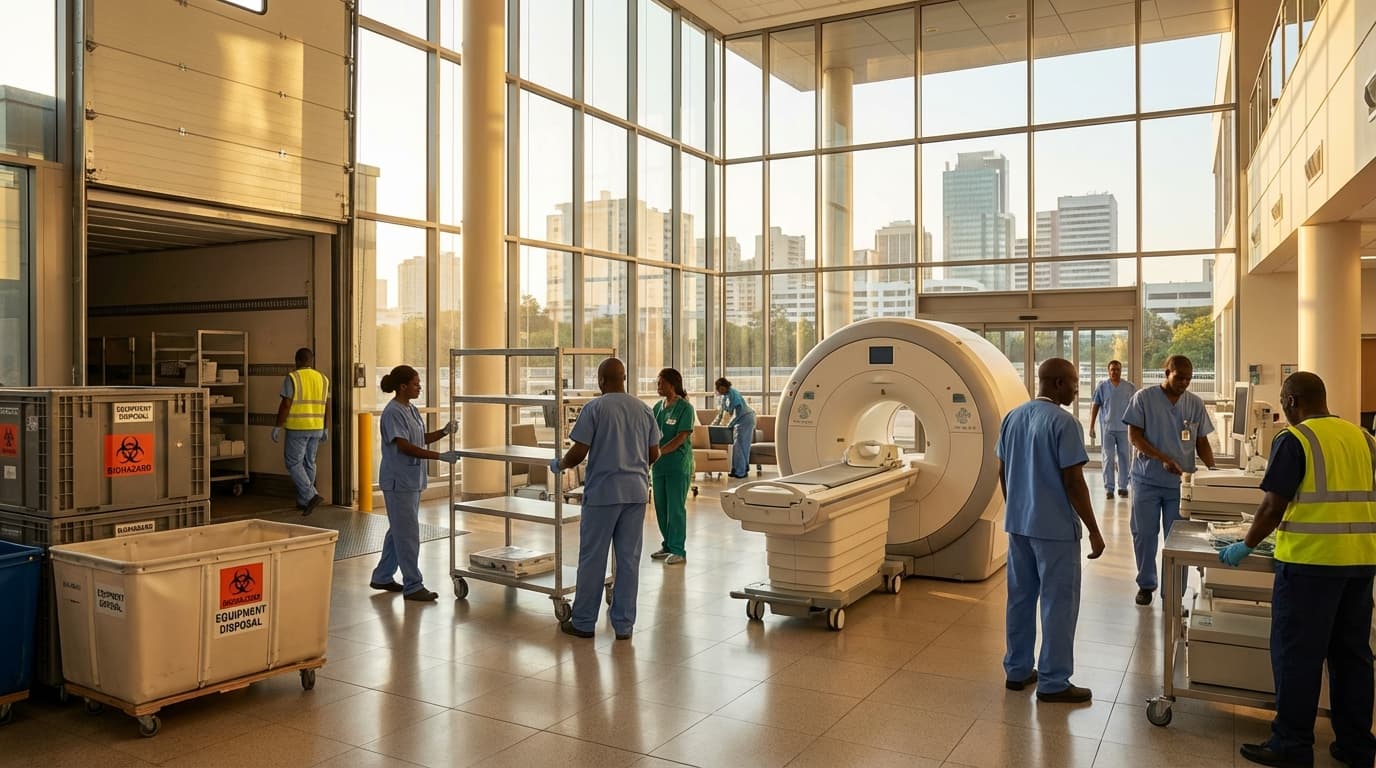
Site Restoration Service After Equipment Removal in Central African Republic
Engineering Excellence & Technical Support
Site Restoration Service After Equipment Removal High-standard technical execution following OEM protocols and local regulatory frameworks.
Soil Stabilization & Erosion Control
Implementing advanced bio-engineering techniques and native vegetation re-seeding to restore soil integrity, prevent erosion, and re-establish natural ground cover on disturbed sites following equipment removal, ensuring long-term land stability in challenging Central African Republic environments.
Hydrological System Remediation
Expertly assessing and remediating impacts on local hydrological systems, including the restoration of natural drainage patterns, rehabilitation of watercourses affected by heavy machinery, and ensuring the return of clean water flow to surrounding ecosystems.
Biodiversity Reintroduction & Habitat Restoration
Conducting comprehensive ecological surveys to identify and reintroduce native flora and fauna, creating suitable habitats for endangered species, and fostering the recovery of local biodiversity to pre-disturbance levels. This includes targeted planting programs and the removal of invasive species introduced during operations.
What Is Site Restoration Service After Equipment Removal In Central African Republic?
Site restoration after equipment removal in the Central African Republic refers to the comprehensive process of returning a site, previously utilized for industrial, commercial, or operational purposes, to its original or a designated safe and environmentally sound condition following the decommissioning and extraction of installed equipment. This service is critical for mitigating environmental impact, ensuring public safety, and complying with regulatory frameworks. The scope typically encompasses the dismantling and removal of residual materials, remediation of any contamination, and the re-establishment of the site's original topography or a new functional landscape.
| Who Needs Site Restoration? | Typical Use Cases in Central African Republic | |
|---|---|---|
| Mining Operations: Companies involved in mineral extraction (e.g., diamonds, gold, coltan) that are ceasing operations or relocating equipment. | Closure of mining sites, including open-pit mines, underground shafts, and processing facilities. | Removal of large-scale extraction machinery, processing plants, and associated infrastructure. |
| Oil and Gas Sector: Entities involved in exploration, extraction, or processing of hydrocarbons. | Decommissioning of exploration well sites, processing plants, and pipelines. | Removal of drilling rigs, storage tanks, and processing units. |
| Infrastructure Projects: Government or private entities managing large-scale construction or development projects. | Removal of temporary or permanent equipment from construction sites (e.g., dams, roads, power plants). | Dismantling of heavy machinery, modular buildings, and associated temporary structures. |
| Industrial Facilities: Manufacturers or processors ceasing operations or relocating production lines. | Closure of factories, workshops, and processing centers. | Removal of production machinery, assembly lines, and industrial waste. |
| Logistics and Warehousing: Companies that have operated large storage or distribution centers. | Dismantling of warehousing structures and associated equipment. | Removal of cranes, conveyor systems, and storage racks. |
Key Components of Site Restoration Service:
- Decontamination: Removal and disposal of hazardous materials, residual chemicals, and operational byproducts.
- Demolition and Decommissioning: Safe dismantling and removal of remaining structures, foundations, and piping associated with the removed equipment.
- Soil and Groundwater Remediation: Treatment or removal of contaminated soil and groundwater to meet established environmental standards.
- Revegetation and Landscaping: Re-establishment of native vegetation or landscaping to stabilize the site and prevent erosion.
- Waste Management: Proper segregation, treatment, and disposal of all debris and waste generated during the restoration process.
- Environmental Monitoring: Post-restoration monitoring to ensure the effectiveness of remediation efforts and compliance with regulations.
Who Needs Site Restoration Service After Equipment Removal In Central African Republic?
Site restoration after equipment removal in the Central African Republic is a critical service for a variety of entities that operate heavy machinery, infrastructure, or industrial equipment. This process ensures that land is returned to a safe, stable, and environmentally sound condition, minimizing long-term impacts and meeting regulatory requirements. The demand for such services arises from the deconstruction, decommissioning, or relocation of various types of installations.
| Customer Segment | Key Departments Involved | Typical Equipment/Activities Requiring Restoration |
|---|---|---|
| Mining Companies | Operations, Environmental Health & Safety (EHS), Decommissioning & Closure, Engineering | Excavators, drills, crushers, conveyor belts, processing plants, exploration rigs |
| Oil & Gas Companies | Drilling, Production, EHS, Engineering, Decommissioning, Pipeline Management | Drilling rigs, wellheads, pumps, storage tanks, pipelines, processing units |
| Construction & Infrastructure | Project Management, Site Operations, EHS, Engineering | Cranes, excavators, bulldozers, concrete batching plants, temporary housing, scaffolding |
| Logistics & Transportation | Operations, Facilities Management, EHS | Forklifts, conveyor systems, specialized loading/unloading equipment, warehouse structures |
| Government Agencies | Public Works, Environmental Protection, Natural Resources, Emergency Management | Construction equipment for public projects, dam infrastructure, communication towers, temporary military installations |
| Aid & Humanitarian Organizations | Logistics, Operations, Program Management, EHS | Temporary shelters, water purification units, generators, field hospitals, construction equipment for development projects |
| Agricultural Corporations | Farm Operations, Facilities Management, EHS | Tractors, harvesters, large-scale irrigation systems, processing machinery |
Target Customers & Departments for Site Restoration Services
- Mining Companies: Operators of open-pit mines, underground mines, and associated processing facilities.
- Oil & Gas Exploration and Production Companies: Those involved in drilling, extraction, pipeline construction, and refinery operations.
- Construction and Infrastructure Development Companies: Firms that build and dismantle temporary or permanent structures, roads, bridges, and other large-scale projects.
- Logistics and Transportation Companies: Businesses managing ports, warehouses, and large distribution centers that may have had specialized equipment installed.
- Government Agencies and Parastatals: Entities responsible for public infrastructure, natural resource management, and disaster relief operations that may require site remediation.
- International Aid and Humanitarian Organizations: Groups involved in development projects, establishing temporary facilities, or responding to crises, often needing to restore sites post-operation.
- Agricultural and Agribusiness Corporations: Large-scale agricultural operations that might utilize heavy machinery or irrigation systems requiring removal and site restoration.
Site Restoration Service After Equipment Removal Process In Central African Republic
This document outlines the comprehensive workflow for Site Restoration Services following equipment removal in the Central African Republic (CAR). Our process ensures a thorough and responsible approach, from the initial client inquiry to the final successful completion of the restoration project, adhering to local regulations and environmental best practices.
| Phase | Key Activities | Description | Responsible Party | Deliverables |
|---|---|---|---|---|
| Phase 1: Inquiry and Initial Assessment | Client Inquiry, Site Visit, Scope Definition, Risk Assessment | Receive initial request from client. Conduct on-site visit to understand the scope of equipment removal, site conditions, potential hazards, and regulatory requirements specific to CAR. Define the preliminary restoration objectives. | Client, Service Provider (Site Manager, Environmental Specialist) | Preliminary Site Assessment Report, Understanding of Restoration Scope |
| Phase 2: Proposal and Contract | Detailed Scope of Work, Costing, Timeline, Contract Negotiation | Develop a detailed proposal outlining the restoration methodology, materials, equipment, personnel, timeline, and cost. Negotiate terms and conditions, ensuring compliance with local CAR laws and any international standards. | Service Provider, Client | Formal Proposal, Signed Contract/Service Agreement |
| Phase 3: Pre-Restoration Planning and Mobilization | Permitting, Logistics, Team Assembly, Equipment Procurement, Safety Briefing | Obtain necessary permits from relevant CAR authorities. Plan logistics for transportation of personnel and equipment to the site. Assemble and train the restoration team, emphasizing safety protocols and CAR-specific environmental considerations. Procure required materials and equipment. | Service Provider (Project Manager, Logistics Coordinator) | Permits, Mobilized Team and Equipment, Detailed Project Plan |
| Phase 4: Site Preparation and Demolition (if required) | Site Clearing, Obstacle Removal, Demolition of Ancillary Structures | Clear the site of any remaining debris or vegetation not part of the planned restoration. Demolish any ancillary structures or foundations related to the removed equipment, ensuring safe dismantling and disposal of materials. | Service Provider (On-site Crew, Demolition Specialists) | Cleared Site, Disposed of Demolition Waste |
| Phase 5: Decontamination and Waste Management | Soil/Water Testing, Contaminant Removal, Hazardous Waste Disposal | Conduct soil and water testing to identify any contamination from removed equipment. Implement appropriate decontamination procedures. Segregate and dispose of all hazardous and non-hazardous waste in accordance with CAR regulations and international best practices. | Service Provider (Environmental Technicians, Waste Management Team) | Decontaminated Soil/Water Samples, Waste Manifests, Disposal Certificates |
| Phase 6: Landscaping and Revegetation | Soil Remediation, Grading, Topsoil Replacement, Planting | Remediate soil as necessary. Grade the site to achieve desired contours and drainage. Replace or amend topsoil to support vegetation. Plant native species appropriate to the CAR environment to promote natural regeneration and ecological balance. | Service Provider (Landscaping Crew, Botanist) | Restored Topography, Planted Vegetation |
| Phase 7: Final Inspection and Handover | Site Walkthrough, Quality Control, Client Sign-off | Conduct a thorough final inspection with the client to ensure all restoration objectives have been met and comply with the agreed-upon scope. Address any outstanding concerns. Obtain formal client sign-off. | Service Provider, Client | Final Inspection Report, Client Acceptance Document |
| Phase 8: Post-Restoration Monitoring | Vegetation Growth Monitoring, Environmental Impact Assessment | If required by contract or regulation, monitor vegetation growth and the overall environmental recovery of the site for a specified period to ensure long-term success and identify any unforeseen issues. | Service Provider (Environmental Specialist) | Post-Restoration Monitoring Reports |
Site Restoration Service Workflow
- Phase 1: Inquiry and Initial Assessment
- Phase 2: Proposal and Contract
- Phase 3: Pre-Restoration Planning and Mobilization
- Phase 4: Site Preparation and Demolition (if required)
- Phase 5: Decontamination and Waste Management
- Phase 6: Landscaping and Revegetation
- Phase 7: Final Inspection and Handover
- Phase 8: Post-Restoration Monitoring
Site Restoration Service After Equipment Removal Cost In Central African Republic
Site restoration after equipment removal in the Central African Republic is a complex process with variable costs. These costs are influenced by several key factors. The scale and type of equipment removed are primary drivers, as larger or more specialized machinery often leave behind more extensive damage or require specialized removal techniques. The environmental conditions of the site also play a significant role; remote locations with difficult terrain can increase logistical challenges and associated expenses. The extent of soil contamination or damage to existing structures necessitates more intensive remediation and repair work. Furthermore, the availability and cost of local labor, specialized equipment, and necessary materials (like topsoil, vegetation, or concrete) will directly impact the overall price. Regulatory requirements for environmental compliance and site closure also add to the cost, as specific procedures and reporting may be mandated. The specific type of restoration desired – from basic leveling to full ecological rehabilitation – will also determine the budget.
| Restoration Scope | Estimated Cost Range (XAF) | Notes |
|---|---|---|
| Basic Site Clearing and Leveling | 500,000 - 2,000,000 | Removal of debris, minor grading, initial soil disturbance. |
| Moderate Restoration (including minor soil remediation) | 1,500,000 - 7,500,000 | Includes basic clearing, grading, removal of minor contaminants, and initial seeding/planting. |
| Comprehensive Ecological Restoration | 5,000,000 - 25,000,000+ | Involves significant soil remediation, re-vegetation with native species, habitat restoration, and potentially long-term monitoring. Costs can vary significantly based on the complexity of the ecosystem and the extent of damage. |
| Specialized Remediation (e.g., hazardous material removal) | Negotiable (Significantly higher) | Costs depend entirely on the nature and quantity of hazardous materials, specialized disposal methods, and regulatory requirements. |
Pricing Factors for Site Restoration in the Central African Republic
- Scale and type of equipment removed
- Site accessibility and terrain (remote vs. accessible, difficult vs. easy)
- Extent of soil contamination or damage
- Damage to existing infrastructure or structures
- Availability and cost of local labor
- Availability and cost of specialized machinery and tools
- Cost and availability of restoration materials (soil, vegetation, concrete, etc.)
- Environmental regulations and compliance requirements
- Desired level of restoration (basic leveling vs. ecological rehabilitation)
- Duration of the restoration project
- Permitting and licensing fees
Affordable Site Restoration Service After Equipment Removal Options
When heavy equipment needs to be removed from a site, the aftermath often includes damage to the ground, vegetation, and potentially structures. Our Affordable Site Restoration Service is designed to bring your property back to its pre-equipment state efficiently and economically. We understand that cost is a significant factor, which is why we offer flexible value bundles and employ various cost-saving strategies to ensure you receive the best possible service at a competitive price.
| Cost-Saving Strategy | Description | Benefit to Client |
|---|---|---|
| Early Planning & Assessment | Engaging our services early in the equipment removal process allows for better planning and potentially less invasive restoration needs. | Reduces the extent of damage, leading to lower restoration costs. |
| Bulk Material Sourcing | We leverage our established relationships with suppliers to purchase soil, seed, and mulch in bulk, negotiating better prices. | Lower material costs passed on to the client. |
| Efficient Equipment Utilization | Utilizing the right machinery for the job minimizes labor time and fuel consumption. | Reduced operational costs contribute to a lower overall service price. |
| Native & Drought-Tolerant Vegetation | Recommending and planting species that are indigenous to your area and require less water. | Lower maintenance costs post-restoration and increased resilience. |
| Phased Restoration Approach | For larger projects, breaking down the restoration into manageable phases allows for budgeting and execution over time. | Spreads the cost over a period, making it more manageable for the client's cash flow. |
| Bundled Service Discounts | Our pre-defined value bundles offer a discounted rate compared to purchasing individual services separately. | Direct savings on comprehensive restoration packages. |
Value Bundles for Site Restoration
- {"title":"Basic Re-Sloping & Seeding","description":"Ideal for minor ground disturbance. This bundle focuses on re-grading uneven surfaces caused by equipment tracks and tires, followed by the application of top-quality seed to encourage rapid vegetation regrowth. Includes basic debris removal of soil and small rocks."}
- {"title":"Standard Ground Repair & Landscaping","description":"For moderate damage. This bundle encompasses re-sloping, debris removal (including larger rocks and small concrete fragments), soil amendment for optimal growth, and a broader selection of seed or sod options. We also include basic mulching to retain moisture and suppress weeds."}
- {"title":"Comprehensive Site Recovery","description":"Our most extensive offering for significant damage. This bundle includes all aspects of the standard package, plus advanced soil testing and remediation, planting of native vegetation for long-term sustainability, minor fence repair, and professional landscaping design to enhance the site's aesthetic appeal and functionality."}
- {"title":"Customizable Restoration Packages","description":"We understand that every site is unique. Work with our experts to create a bespoke restoration plan tailored to your specific needs and budget. This allows you to select individual services and combine them for a personalized solution."}
Verified Providers In Central African Republic
In the Central African Republic (CAR), ensuring access to reliable and trustworthy healthcare providers is paramount. Franance Health has emerged as a leading organization dedicated to verifying healthcare professionals and facilities, offering a crucial layer of assurance for both citizens and international organizations operating in the region. Their rigorous credentialing process not only validates the qualifications and expertise of individual practitioners but also assesses the operational integrity and ethical standards of healthcare institutions.
| Credential Type | Verification Focus | Benefit to Patients | Benefit to Organizations |
|---|---|---|---|
| Individual Practitioner Credentials | Medical licenses, educational background, specialty training, ethical conduct | Confidence in the qualifications and ethical practice of their doctor/nurse. | Access to a pool of vetted medical professionals for employment or partnership. |
| Healthcare Facility Accreditation | Infrastructure, equipment, hygiene standards, administrative processes, quality of care protocols | Assurance of receiving care in a safe, well-equipped, and well-managed environment. | Identification of reliable partners for health program implementation and service delivery. |
| Specialized Services Verification | Specific expertise and equipment for advanced medical procedures (e.g., surgery, diagnostics) | Access to specialized medical care with assurance of competence. | Ability to commission and oversee specialized medical interventions with confidence. |
Why Franance Health Credentials Matter in the CAR
- Unparalleled Verification Process: Franance Health employs a multi-faceted approach to credentialing, meticulously reviewing academic records, professional licenses, peer references, and continuous professional development. This thoroughness minimizes the risk of unqualified individuals practicing medicine.
- Commitment to Ethical Standards: Beyond technical qualifications, Franance Health assesses adherence to ethical medical practices and patient care principles. This ensures that verified providers prioritize patient well-being and operate with integrity.
- Enhanced Patient Safety: By identifying and endorsing qualified professionals and facilities, Franance Health directly contributes to improved patient safety and outcomes within the CAR's healthcare system.
- Support for International Aid and Investment: For NGOs, government agencies, and private investors working in the CAR, Franance Health's verified provider lists offer a critical resource for identifying reliable partners and ensuring the effective allocation of resources towards quality healthcare.
- Promoting Trust and Confidence: In a challenging operational environment, Franance Health's seal of approval fosters trust and confidence in the healthcare services available, encouraging greater utilization of legitimate medical resources.
- Facilitating Access to Care: By making it easier to identify legitimate providers, Franance Health helps individuals navigate the healthcare landscape and access the appropriate medical attention they need.
Scope Of Work For Site Restoration Service After Equipment Removal
This Scope of Work (SOW) outlines the requirements for site restoration services following the removal of equipment. The objective is to return the site to a safe, stable, and environmentally sound condition that meets or exceeds pre-existing conditions where feasible and specified. This SOW details the technical deliverables and standard specifications required for successful completion of the restoration activities.
| Activity | Description | Technical Deliverables | Standard Specifications / References |
|---|---|---|---|
| Site Assessment and Planning | Conduct a comprehensive assessment of the site to identify any residual impacts from equipment operation and removal. Develop a detailed restoration plan based on findings. | Site assessment report, Restoration plan with detailed methodologies, proposed timelines, and resource allocation, Risk assessment and mitigation plan. | ASTM E1527-13 (Phase I Environmental Site Assessment), ASTM D4427 (Phase II Environmental Site Assessment), Site-specific soil and groundwater sampling protocols, Relevant local, state, and federal environmental regulations. |
| Demolition and Decommissioning | Safely and systematically demolish and remove any remaining foundations, structures, or ancillary equipment associated with the removed machinery, ensuring proper waste disposal. | Demolition permits and plans, Asbestos/lead abatement reports (if applicable), Hazardous material survey, Waste manifest and disposal certificates. | OSHA 1926 Subpart (Demolition), EPA hazardous waste regulations (40 CFR Parts 260-279), Local building codes and demolition ordinances. |
| Soil Remediation and Contaminant Management | Characterize and remediate any soil or groundwater contamination identified during the site assessment, utilizing approved methods to meet regulatory standards. | Soil and groundwater analytical reports, Remedial action plan (RAP), Remediation progress reports, Closure documentation for remediation activities. | EPA guidelines for soil and groundwater remediation, RCRA regulations (if applicable), Best Management Practices (BMPs) for contaminant cleanup, Site-specific cleanup objectives. |
| Grading and Earthwork | Restore original topography or achieve a stable, graded contour that promotes proper drainage and prevents erosion. This includes backfilling excavations and compacting fill material. | As-built grading plan, Compaction test reports, Erosion control plan and implementation records. | ASTM D1556 (Sand Cone Method for Density), ASTM D6938 (Nuclear Methods for Density), NRCS (Natural Resources Conservation Service) grading standards, Erosion and Sediment Control Manuals (local/state). |
| Revegetation and Landscaping | Establish appropriate vegetation to stabilize the soil, prevent erosion, and aesthetically restore the site. This may include seeding, sodding, or planting native species. | Revegetation plan (including species selection), Planting/seeding schedule, Success monitoring reports (e.g., vegetation cover percentage), Maintenance plan. | Native plant species lists for the region, USDA Plant Hardiness Zone Maps, NRCS erosion control guidelines, Site-specific soil amendment recommendations. |
| Final Site Inspection and Documentation | Conduct a final walk-through and inspection to verify that all restoration activities have been completed to the agreed-upon standards. Compile all documentation for project closure. | Final site inspection report, Photographic documentation of restored site, All executed permits, reports, and certificates from previous stages, Final project report. | Client-specific acceptance criteria, Regulatory agency closure requirements, Record-keeping standards for environmental projects. |
Key Restoration Phases
- Site Assessment and Planning
- Demolition and Decommissioning (if applicable to remaining structures)
- Soil Remediation and Contaminant Management
- Grading and Earthwork
- Revegetation and Landscaping
- Final Site Inspection and Documentation
Service Level Agreement For Site Restoration Service After Equipment Removal
This Service Level Agreement (SLA) outlines the response times and uptime guarantees for site restoration services provided by [Your Company Name] following the removal of equipment at client locations. This SLA is designed to ensure a prompt and effective restoration process, minimizing disruption and restoring the site to its agreed-upon condition within defined timeframes. The scope of this SLA covers all active service contracts that include site restoration as a deliverable.
| Service Level | Response Time (Business Hours) | Restoration Completion Time (Business Hours) | Uptime Guarantee |
|---|---|---|---|
| Standard Restoration | 4 business hours | 48 business hours | 99.5% |
| Expedited Restoration (if applicable/agreed) | 2 business hours | 24 business hours | 99.9% |
Key Definitions
- Equipment Removal: The physical disconnection, dismantling, and removal of installed equipment from the client's premises.
- Site Restoration: The process of returning the site to its pre-installation or a mutually agreed-upon condition, which may include patching, painting, flooring repair, debris removal, and landscaping.
- Downtime: The period during which the restored site is unavailable for its intended use due to a failure to meet the restoration requirements outlined in this SLA.
- Response Time: The maximum time allowed for [Your Company Name] to acknowledge a reported restoration issue and dispatch a technician or initiate corrective action.
- Restoration Completion Time: The maximum time allowed for [Your Company Name] to fully resolve a reported restoration issue and bring the site back to the agreed-upon condition.
Frequently Asked Questions

Ready when you are
Let's scope your Site Restoration Service After Equipment Removal in Central African Republic project in Central African Republic.

Scaling healthcare logistics and technical systems across the entire continent.